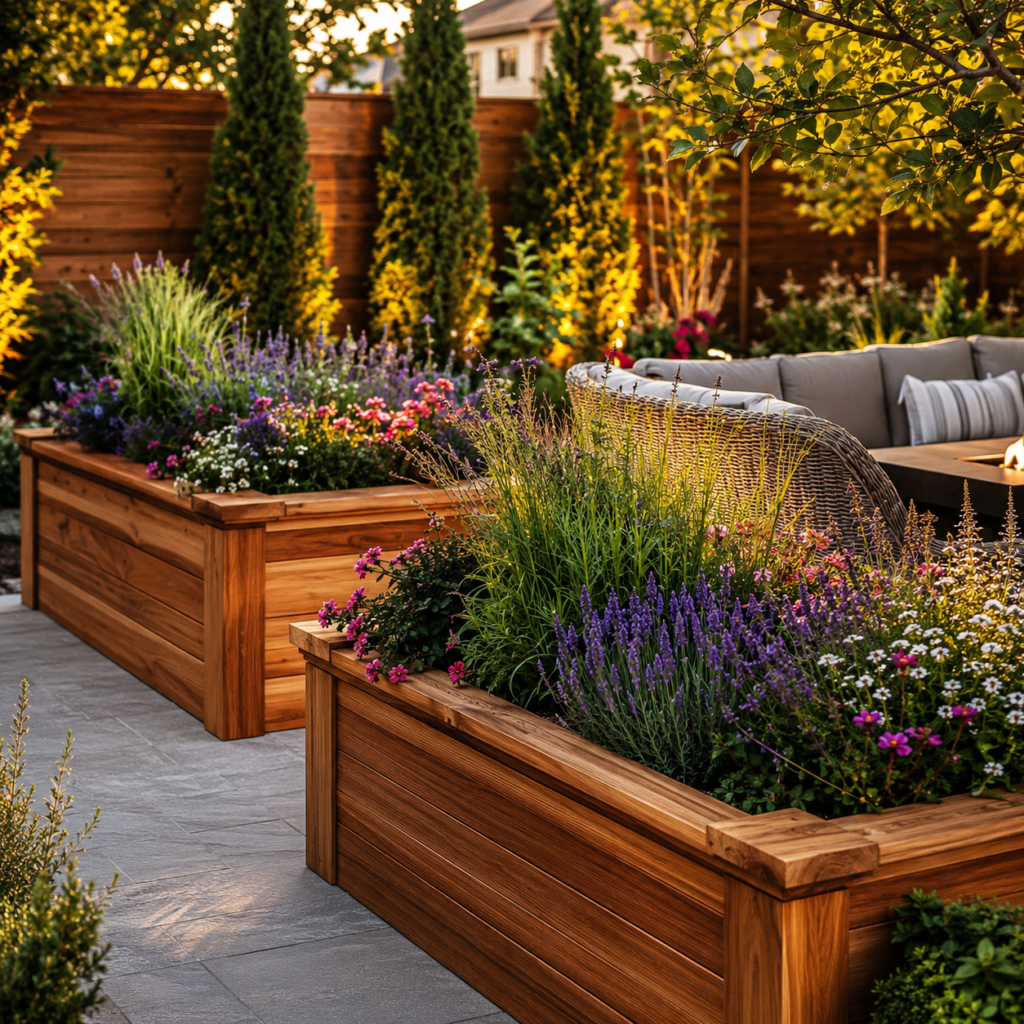
Wooden backyard planters remain one of the most popular landscaping features because they add warmth, texture, and natural beauty to outdoor spaces. Unlike plastic, metal, or concrete containers, wood blends seamlessly with plants, gardens, patios, and surrounding landscapes. Whether used for flowers, vegetables, herbs, or decorative shrubs, wooden planters create a welcoming environment that feels connected to nature.
From simple DIY planter boxes to luxury cedar containers, wooden backyard planters offer endless design possibilities. They can complement rustic cottage gardens, modern outdoor living areas, traditional landscapes, and even small urban backyards. With the right wood species, proper construction, and thoughtful plant selection, wooden planters can remain attractive and functional for many years while enhancing the overall appearance of your outdoor space.
Why Are Wooden Backyard Planters So Popular?
Wooden backyard planters are popular because they combine practicality with natural beauty. The warm appearance of wood softens hardscape elements such as patios, walkways, retaining walls, and outdoor furniture. Unlike synthetic materials, wood develops character over time and often becomes more attractive as it ages.
Another reason for their popularity is versatility. Wooden planters are available in countless sizes, shapes, and styles. Homeowners can choose compact planter boxes for small patios, raised beds for vegetable gardens, oversized containers for focal points, or custom-built designs tailored to specific landscaping goals.
One factor that separates wooden planters from many other materials is their ability to blend naturally into almost any outdoor environment. Whether a backyard features modern architecture, rustic landscaping, cottage gardens, or traditional outdoor living spaces, wood rarely feels out of place. This flexibility allows homeowners to update plant selections and garden styles over time without needing to replace their containers.
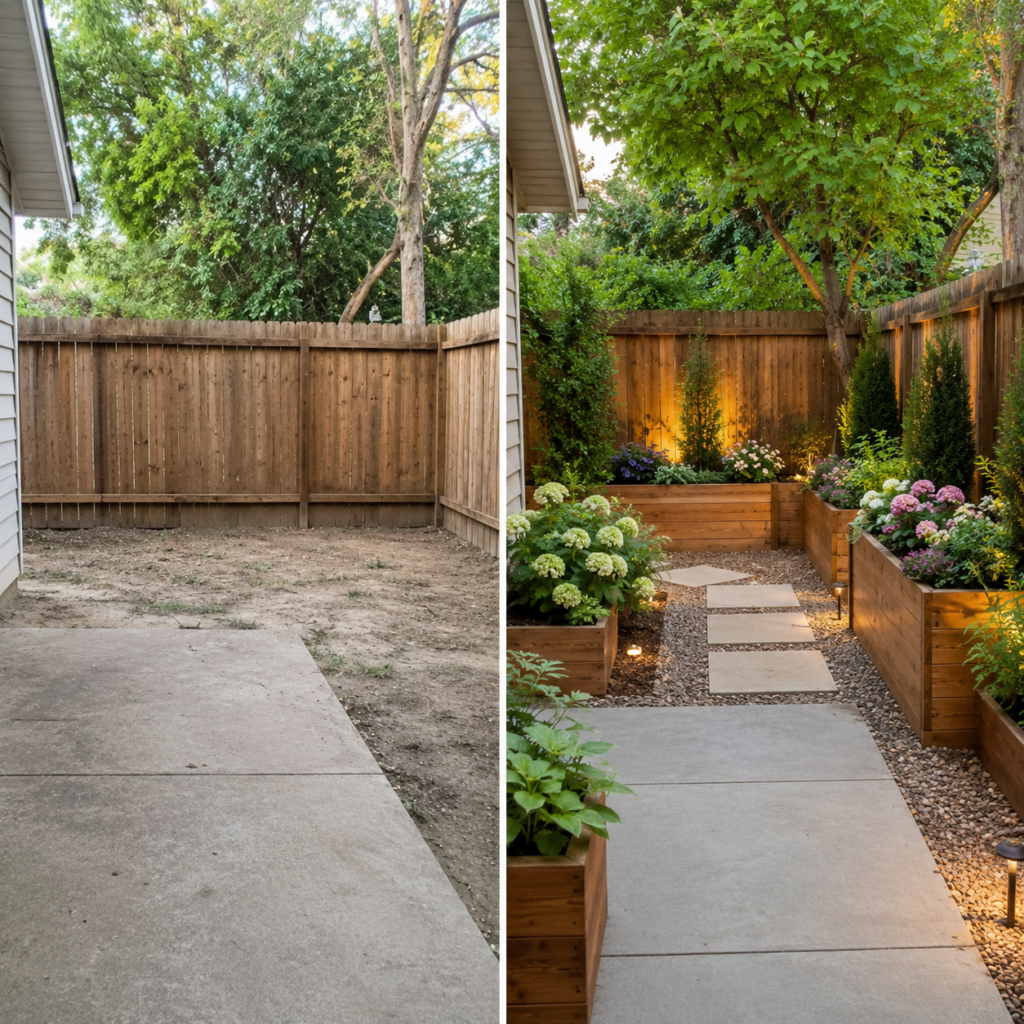
In real-world backyard design projects, wooden planters are often used to create visual transitions between patios, lawns, flower beds, and seating areas. Designers frequently recommend wood because it helps soften hard edges while introducing natural texture into the landscape. The result is an outdoor space that feels warmer and more inviting compared to environments dominated by concrete, plastic, or metal.
Additional advantages include:
- Natural appearance
- Excellent insulation for roots
- Easy customization
- Wide range of wood species
- Compatibility with vegetables, flowers, and herbs
- Environmentally friendly material options
- DIY-friendly construction
Best Wood for Outdoor Planters
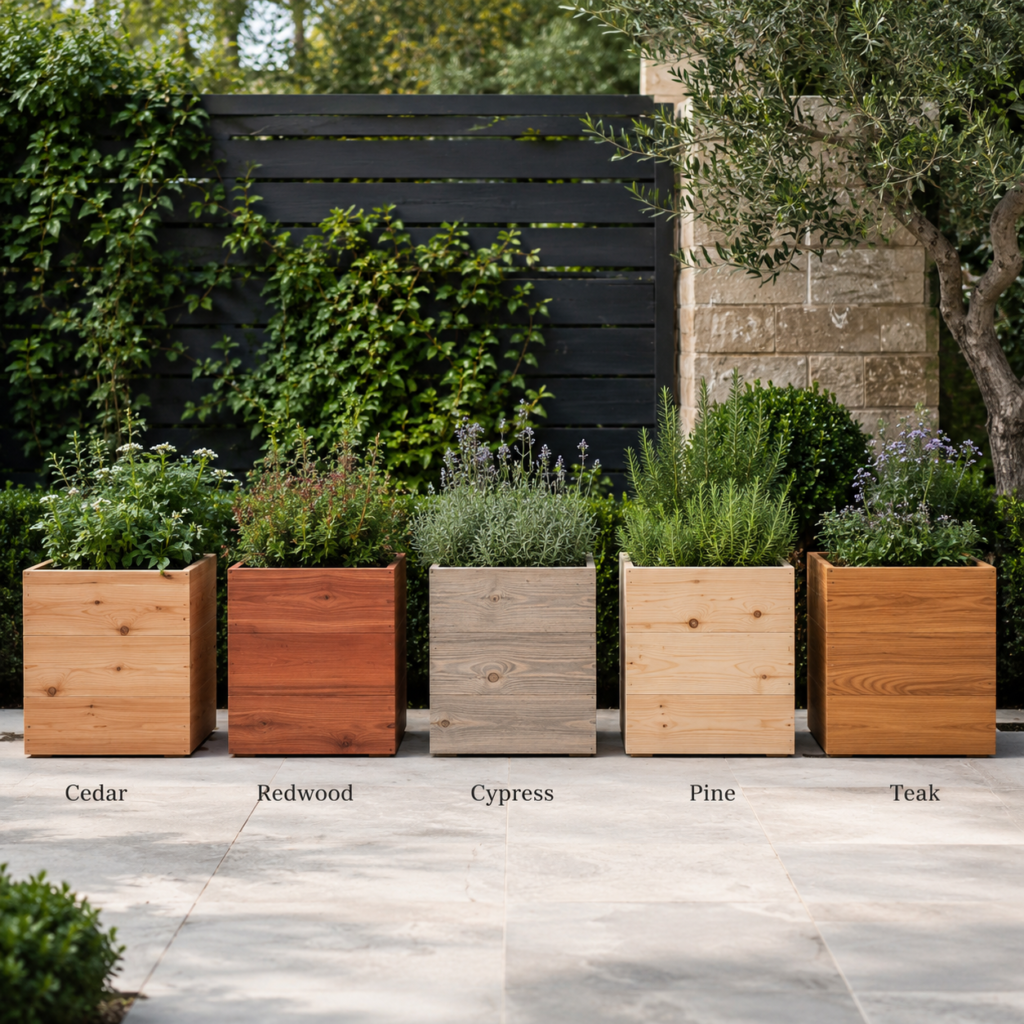
The best wood for outdoor planters combines durability, rot resistance, appearance, and value. Not all wood species perform equally well outdoors, so selecting the right material is one of the most important decisions when building or purchasing wooden planters.
When comparing wood options, consider:
- Expected lifespan
- Local climate conditions
- Initial cost
- Maintenance requirements
- Availability
- Sustainability
- Intended use
| Wood | Lifespan | Cost | Rot Resistance |
| Cedar | High | Medium | Excellent |
| Redwood | High | High | Excellent |
| Cypress | Medium-High | Medium | Very Good |
| Pine | Medium | Low | Moderate |
| Teak | Very High | Very High | Excellent |
Cedar
Cedar is widely considered the best overall wood for outdoor planters. It naturally contains oils that resist moisture, decay, insects, and fungal growth. Cedar also maintains its attractive appearance for many years and develops a beautiful silvery-gray patina if left untreated.
For many homeowners, cedar offers the ideal balance of beauty, durability, and cost.
Redwood
Redwood is another premium choice for wooden backyard planters. Like cedar, it naturally resists moisture and insects without requiring chemical treatment.
The primary drawback is higher cost compared to cedar and pine.
How Long Do Wooden Planters Last?
The lifespan of a wooden planter depends on several factors, including wood species, climate conditions, construction quality, drainage, and maintenance practices. Properly built wooden planters can last much longer than many homeowners expect.
Average lifespan estimates:
| Wood Type | Expected Lifespan |
| Cedar | 10–20+ Years |
| Redwood | 10–20+ Years |
| Cypress | 8–15 Years |
| Pine | 5–10 Years |
| Teak | 20+ Years |
Several factors influence durability:
- Drainage quality
- Soil moisture levels
- Exposure to rain and snow
- Sunlight intensity
- Protective finishes
- Ground contact
Poor drainage is often the leading cause of premature failure. Water trapped inside a planter accelerates decay and shortens its lifespan. Proper drainage holes and well-draining soil significantly improve durability.
Best Plants for Wooden Planters
Wooden planters support an enormous variety of plants because wood naturally helps moderate soil temperatures and provides excellent growing conditions. The insulating properties of wood help protect roots from rapid temperature fluctuations, making containers more stable throughout the growing season. This advantage allows flowers, vegetables, herbs, shrubs, and even small trees to thrive when planted in properly designed wooden containers.
Choosing the right plants depends largely on planter size, sunlight exposure, and climate. Deep wooden planters can support vegetables, shrubs, and dwarf trees, while smaller containers work well for annual flowers and herbs. One reason wooden planters remain so popular is their versatility. Homeowners can easily redesign plant combinations each season without changing the container itself, creating fresh looks year after year.
Popular choices include flowers such as petunias, geraniums, and salvia, vegetables such as tomatoes and peppers, and herbs such as basil, rosemary, and thyme.
For homeowners seeking year-round structure, larger wooden planters can hold boxwood, dwarf evergreens, olive trees, and Japanese maples. A practical approach is combining permanent plants such as shrubs with seasonal flowers. This creates a layered design that remains attractive throughout the year while reducing the need for complete replanting. The flexibility of wooden planters makes them suitable for nearly every gardening goal, from colorful flower displays to productive vegetable gardens.
What Size Wooden Planter Do You Need?
Choosing the correct planter size is one of the most important factors in plant health and long-term success. A planter that is too small can restrict root growth, reduce water retention, and limit plant development. On the other hand, a properly sized wooden planter provides enough room for roots to expand, improves moisture stability, and supports healthier growth throughout the season.
Recommended Planter Depths
| Plant Type | Recommended Depth |
| Herbs | 6–12 Inches |
| Lettuce | 6–10 Inches |
| Strawberries | 8–12 Inches |
| Peppers | 12–18 Inches |
| Tomatoes | 18–24 Inches |
| Shrubs | 18–30 Inches |
| Small Trees | 24–36+ Inches |
Raised Wooden Planter Ideas
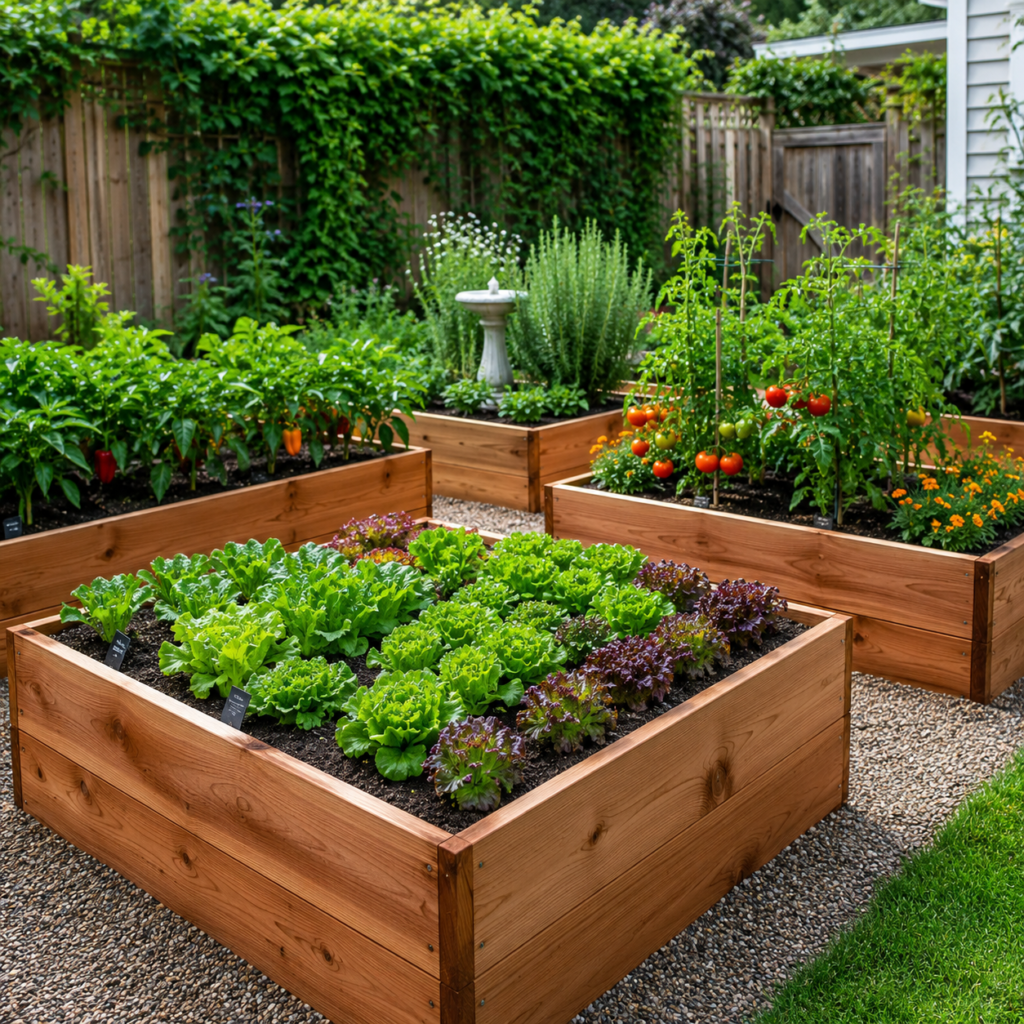
Raised wooden planters improve drainage, soil quality, and accessibility. By elevating the growing area above ground level, raised planters create a controlled environment that supports stronger root development and reduces many common gardening challenges. They are especially popular among vegetable gardeners because they allow complete control over soil quality and moisture management.
One of the greatest benefits of raised wooden planters is accessibility. Traditional gardening often requires frequent bending, kneeling, and digging. Raised beds bring plants closer to a comfortable working height, making planting, watering, weeding, and harvesting easier. This advantage is particularly valuable for older gardeners or anyone with mobility limitations. Raised beds often warm faster in spring, helping extend the growing season.
Benefits of raised wooden planters include:
- Improved drainage
- Easier maintenance
- Better soil control
In real-world backyard gardens, cedar raised beds are often used to create organized growing zones for vegetables, herbs, and flowers. Matching raised planters can transform a cluttered outdoor area into a structured and attractive landscape. For homeowners seeking both beauty and productivity, raised wooden planters consistently provide one of the highest returns on investment because they improve plant health while enhancing overall backyard design.
Small Wooden Planter Ideas
Small backyards can still benefit from beautiful landscaping, and wooden planters are often one of the easiest ways to maximize limited space. Wooden planters can be moved and rearranged as needs change. They help define outdoor living areas, introduce greenery to hard surfaces, and create visual interest without requiring large amounts of space. For homeowners working with patios, courtyards, balconies, or narrow side yards, wooden planters can dramatically improve both functionality and appearance.
One of the biggest advantages of small wooden planters is their ability to create vertical and layered planting designs. Rather than spreading plants across the ground, gardeners can use stacked, tiered, or wall-mounted planters to increase growing space. This approach allows even the smallest backyard to support flowers, herbs, vegetables, and decorative shrubs. Strategic placement can also make compact spaces feel larger by drawing the eye upward and creating depth within the landscape.
Popular options include window boxes, vertical planters, tiered planters, and compact herb gardens.
Plants that work particularly well include:
- Herbs
- Strawberries
- Petunias
- Lavender
- Compact shrubs
- Ornamental grasses
- Succulents
DIY Wooden Planter Box Ideas
DIY wooden planter boxes remain one of the most popular backyard improvement projects because they are affordable, customizable, and beginner friendly. Many simple designs require only basic tools and materials, making them accessible even to homeowners with limited woodworking experience. Building your own planter also allows complete control over dimensions, style, wood species, and finishes, ensuring the final product fits your landscape perfectly.
DIY planters can significantly reduce costs. High-quality cedar planters purchased from garden centers can become expensive, especially when multiple containers are needed. Building similar designs at home often reduces costs significantly while allowing customization that commercial products may not offer. Many homeowners also enjoy the satisfaction of creating something functional that improves their outdoor space.
Common DIY projects include cedar planter boxes, raised beds, pallet planters, and decorative flower containers.
Before building a planter, consider:
- Drainage requirements
- Soil depth
- Plant size
- Wood durability
- Hardware quality
- Sunlight exposure
Using corrosion-resistant screws and weather-resistant materials helps improve longevity. Many experienced gardeners also line the interior with landscape fabric to reduce direct soil contact while maintaining drainage. These small construction details can significantly extend planter life.
Rustic Wooden Planter Ideas
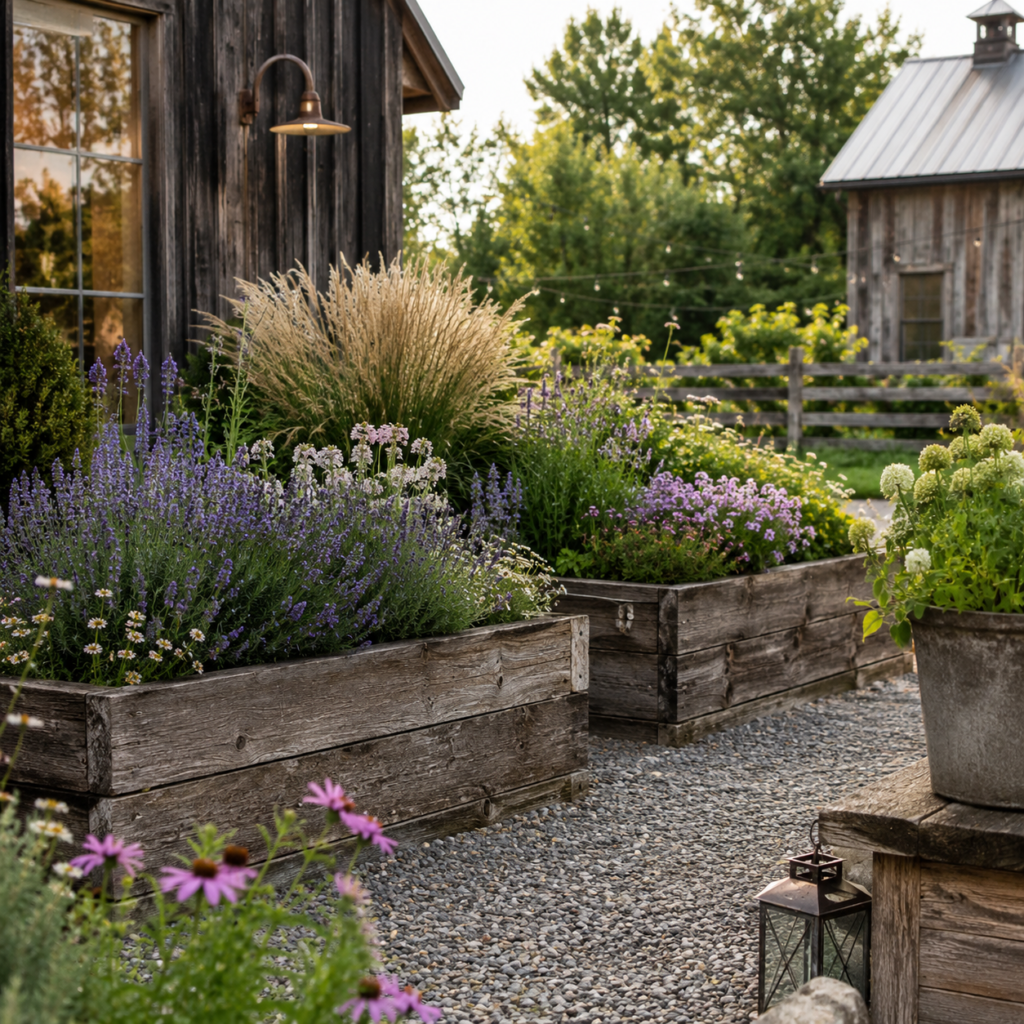
Rustic wooden planters bring warmth, charm, and personality to backyard landscapes. Their weathered appearance and natural textures help create outdoor spaces that feel welcoming and established. Unlike perfectly polished modern containers, rustic planters embrace imperfections such as knots, grain variations, and aged surfaces, adding character that many homeowners find appealing.
Rustic designs work especially well in farmhouse landscapes, cottage gardens, country properties, and informal outdoor living spaces. They pair naturally with flowering perennials, ornamental grasses, herbs, and native plants. Reclaimed materials can add character while supporting more sustainable landscaping.
Popular rustic planter materials include:
- Reclaimed barn wood
- Old fence boards
- Weathered cedar
- Recycled timber
- Vintage crates
- Wooden barrels
- Pallet wood
Popular choices include lavender, coneflowers, hydrangeas, rosemary, and ornamental grasses.
A common design technique is mixing flowers, herbs, and grasses within the same planter. This layered approach creates a relaxed cottage-garden appearance that feels natural rather than overly structured. Many homeowners also incorporate rustic planters near patios, garden entrances, and pathways to create focal points that immediately draw attention.
Modern Wooden Planter Ideas
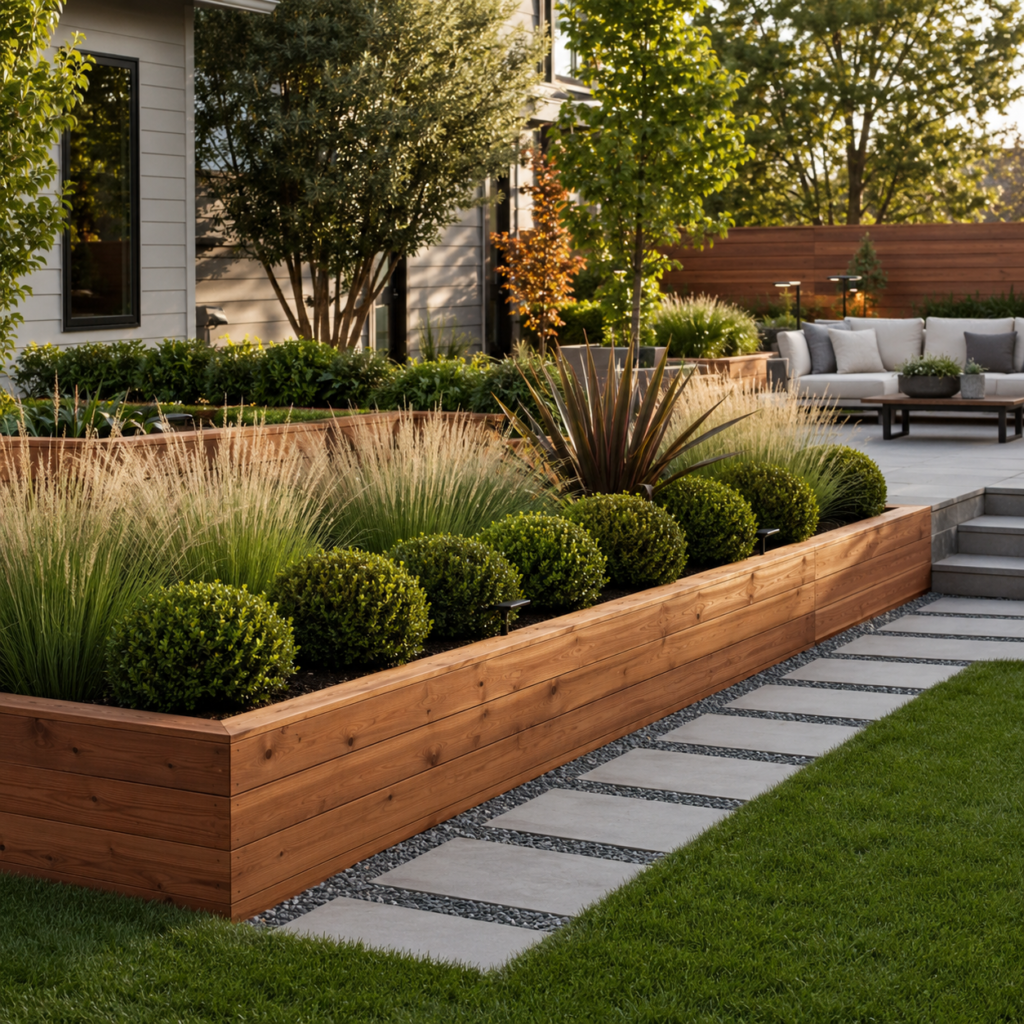
Modern wooden planters prove that natural materials can work beautifully within contemporary landscapes. While many people associate modern design with concrete, steel, and glass, wood introduces warmth that helps balance these harder materials. The result is a landscape that feels sophisticated without becoming cold or sterile.
Contemporary planter designs typically emphasize simplicity, clean lines, and strong geometry. Long rectangular planters, oversized cubes, and minimalist raised containers are especially popular. Cedar remains one of the most commonly used woods because of its attractive grain patterns, durability, and ability to complement modern architecture.
Popular modern planter styles include:
- Linear cedar planters
- Oversized cube planters
- Raised planter benches
- Architectural planter walls
- Geometric containers
- Privacy screen planters
Modern wooden planters are often paired with steel, concrete, or natural stone for additional contrast.
Popular plant choices include boxwood, olive trees, ornamental grasses, and dwarf evergreens.
One effective strategy is limiting the plant palette to just a few species. This creates a cleaner, more intentional appearance that aligns with modern design principles. Matching planters placed throughout the landscape can further strengthen visual consistency and help unify outdoor living areas.
Wooden Planters for Vegetable Gardens
Wooden planters have become one of the most popular solutions for backyard vegetable gardening because they combine productivity, organization, and visual appeal. Raised wooden beds allow gardeners to control soil quality, improve drainage, and create growing environments that support healthier plants and larger harvests. Whether growing a few herbs or a complete kitchen garden, wooden planters provide flexibility that traditional in-ground gardening often cannot match.
They also help reduce weed pressure and make garden maintenance more manageable throughout the growing season. This combination of convenience and productivity explains why raised wooden vegetable beds continue to grow in popularity.
Vegetables such as tomatoes, peppers, lettuce, cucumbers, carrots, and beans perform particularly well in wooden planters.
Additional benefits include:
- Better drainage
- Improved soil control
- Easier harvesting
- Reduced compaction
- Cleaner produce
- More organized garden layouts
Many homeowners create matching cedar raised beds arranged in rows or geometric patterns. This design not only improves growing efficiency but also creates a visually appealing landscape feature. Combining vegetables with herbs and edible flowers can further enhance both productivity and appearance.
Wooden Planter Ideas for Vegetable Gardens
Cedar, redwood, and untreated cypress are generally considered safe for vegetable gardens because they naturally resist decay without chemical preservatives. Avoid old pressure-treated lumber, railroad ties, or reclaimed wood of unknown origin when growing edible crops.
Wood vs Other Planter Materials
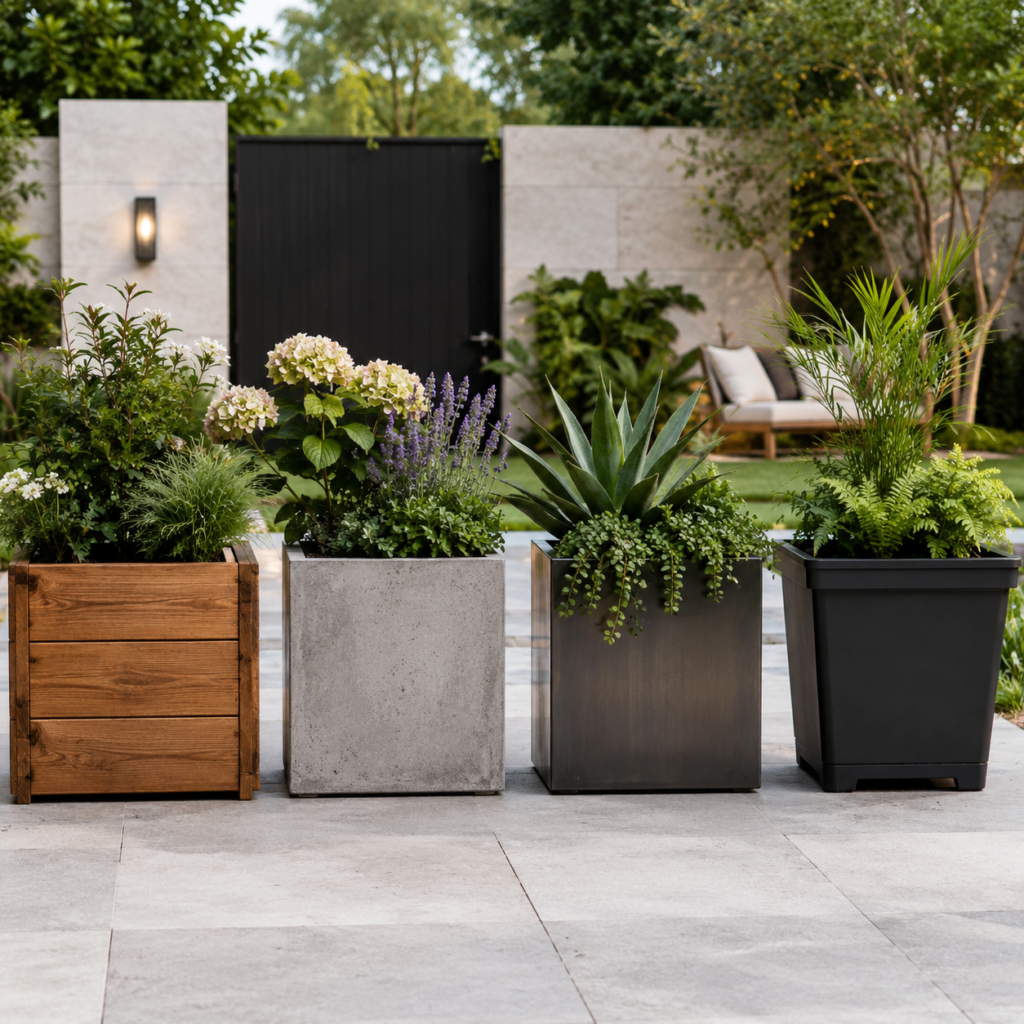
Choosing the right planter material depends on appearance, durability, maintenance, budget, and overall landscape goals. Wooden planters perform extremely well in many situations, but understanding how they compare to alternative materials helps homeowners make informed decisions.
Wood vs Concrete
Concrete planters offer exceptional durability and stability. However, they are significantly heavier and often create a colder visual appearance.
| Feature | Wood | Concrete |
| Appearance | Warm & Natural | Modern & Architectural |
| Weight | Lightweight | Very Heavy |
| Cost | Moderate | Moderate to High |
| DIY Friendly | Excellent | Limited |
| Root Insulation | Excellent | Moderate |
Wood generally wins for warmth, flexibility, and ease of installation.
Wood vs Metal
Metal planters provide a sleek contemporary appearance but can heat up quickly in direct sunlight.
| Feature | Wood | Metal |
| Heat Retention | Moderate | High |
| Natural Appearance | Excellent | Limited |
| Modern Appeal | High | Very High |
| Customization | Easy | Moderate |
Wood offers a softer appearance that blends more naturally with plants.
Wood vs Plastic
Plastic containers are inexpensive and lightweight but often lack the visual appeal of wood.
| Feature | Wood | Plastic |
| Appearance | Premium | Basic |
| Sustainability | High | Lower |
| Durability | High | Moderate |
| Landscape Value | High | Low |
How to Prevent Wood Rot
Preventing rot is one of the most important aspects of maintaining wooden backyard planters. Fortunately, proper design and basic maintenance can dramatically extend their lifespan.
The first priority is drainage. Standing water is the leading cause of wood deterioration. Every planter should include adequate drainage holes to allow excess moisture to escape.
The most effective strategies include proper drainage, quality potting soil, good airflow, and keeping planters elevated off the ground.
Many gardeners also install planter liners to separate moist soil from direct wood contact. These liners help reduce prolonged moisture exposure while preserving structural integrity.
Should Wooden Planters Be Sealed?
Sealing is optional but often beneficial.
Suitable options include:
- Exterior-grade wood sealers
- Natural penetrating oils
- Water-based protective finishes
When growing vegetables, always use products labeled safe for edible gardening applications.
Common Mistakes That Cause Rot
Avoid:
- Poor drainage
- Constant ground contact
- Overwatering
- Using untreated softwood in wet climates
- Blocking airflow beneath containers
Luxury Wooden Planter Ideas
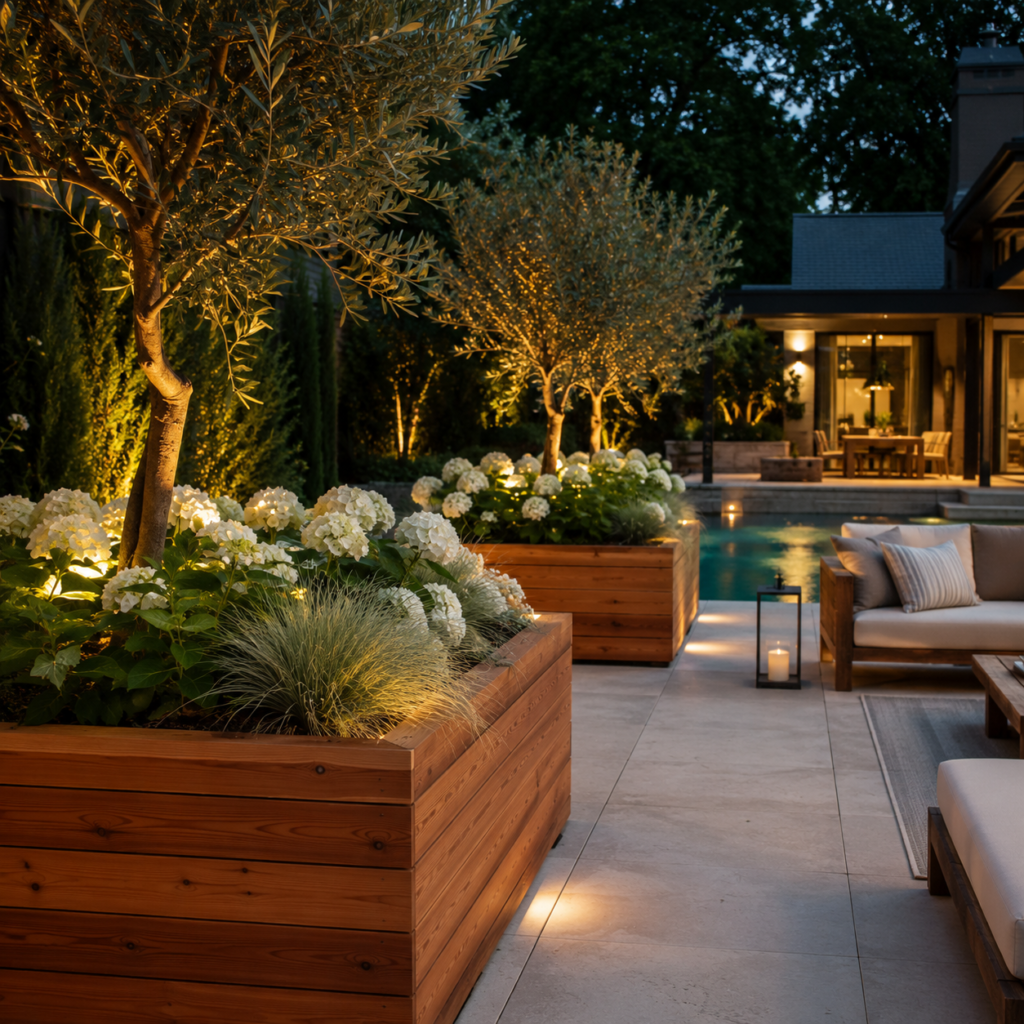
Luxury wooden planters combine natural warmth with high-end landscape design. Oversized cedar and teak planters are often used to create focal points around patios, pools, entrances, and outdoor living spaces.
Cottage Garden Wooden Planters
Cottage garden wooden planters feature weathered cedar, reclaimed wood, and overflowing plant combinations. Lavender, coneflowers, foxgloves, daisies, and salvia create the colorful, layered look that defines traditional cottage gardens.
Farmhouse Wooden Planters
Farmhouse wooden planters combine rustic charm with practical design. Reclaimed wood, cedar boxes, and wooden barrels pair beautifully with hydrangeas, lavender, rosemary, and ornamental grasses.
Mediterranean Wooden Planters
Mediterranean wooden planters emphasize drought-tolerant plants and natural textures. Cedar or teak containers filled with olive trees, lavender, rosemary, thyme, and sage create a relaxed, resort-inspired atmosphere.
Contemporary Wooden Planters
Contemporary wooden planters feature clean lines, geometric shapes, and carefully selected plant palettes. Long cedar troughs paired with boxwood, ornamental grasses, and olive trees help create a refined modern landscape.
Minimalist Wooden Planters
Minimalist wooden planters focus on simplicity and visual balance. Smooth cedar containers combined with ornamental grasses, dwarf evergreens, or small trees deliver strong impact with minimal clutter.
Luxury Estate Wooden Planters
Luxury estate wooden planters use oversized cedar or teak containers as landscape focal points. Olive trees, Japanese maples, white hydrangeas, and architectural grasses help create an elegant, high-end outdoor environment.
Cost of Wooden Backyard Planters
Wooden backyard planters are available at virtually every budget level. Costs vary based on wood species, planter size, design complexity, hardware quality, and whether the planter is purchased or built as a DIY project.
Simple pine planter boxes are often inexpensive, while custom cedar or teak planters can become significant landscape investments.
Typical Cost Ranges
| Planter Type | Estimated Cost |
| Small Wooden Planter | $20–$75 |
| Medium Planter Box | $75–$200 |
| Large Cedar Planter | $200–$800 |
| Custom Luxury Planter | $800–$3,000+ |
When evaluating cost, durability should be considered alongside purchase price.
Are Wooden Planters Eco-Friendly?
Wooden planters are often one of the most environmentally friendly container options available. As a renewable resource, responsibly harvested wood generally has a lower environmental impact than many synthetic materials.
Many homeowners choose wood because it aligns with sustainable landscaping principles while still providing excellent durability and visual appeal.
Environmentally responsible options include:
- FSC-certified lumber
- Reclaimed wood
- Recycled timber
- Sustainably harvested cedar
- Sustainably harvested cypress
Wood also stores carbon throughout its usable lifespan, contributing to its environmental advantages.
FAQs
What is the best wood for outdoor planters?
Cedar is the best overall choice because it naturally resists rot, insects, and moisture. Redwood is another excellent option, while pine is a more affordable alternative for budget-conscious gardeners.
How long do wooden backyard planters last?
Most cedar and redwood planters last 10–20 years or more with proper care. Pine planters typically last 5–10 years depending on climate, drainage, and maintenance.
Are wooden planters safe for growing vegetables?
Yes. Untreated cedar, redwood, and cypress are commonly used for vegetable gardens because they naturally resist decay without requiring chemical preservatives.
What size wooden planter do I need?
Herbs usually need 6–12 inches of soil depth, while tomatoes often require 18–24 inches. Larger shrubs and small trees need deeper containers for healthy root growth.
Do wooden planters need drainage holes?
Yes. Drainage holes prevent water buildup, protect plant roots, and help reduce the risk of wood rot over time.
Are cedar planters worth the extra cost?
For many homeowners, yes. Cedar offers excellent durability, natural rot resistance, and a long lifespan, making it a strong long-term investment.
Should I line a wooden planter with plastic?
A breathable liner or landscape fabric can help reduce moisture exposure while maintaining drainage. Avoid completely trapping water inside the planter.
Do wooden planters attract termites?
Cedar and redwood naturally resist insects better than many softwoods. Proper drainage and keeping planters off the ground can further reduce termite risk.
Can wooden planters stay outside during winter?
Yes. Most wooden planters can remain outdoors year-round if they have proper drainage and are built from durable wood species.
What is the longest-lasting wood for outdoor planters?
Teak generally lasts the longest due to its natural oils and exceptional weather resistance. Cedar and redwood are also highly durable and more commonly used.

Myra is the founder and lead writer of Backyard Planter Ideas, where she shares practical, well-researched guidance on planter design, plant selection, and outdoor styling. Her goal is to help homeowners create attractive, functional garden spaces with clear, reliable, and easy-to-apply advice.