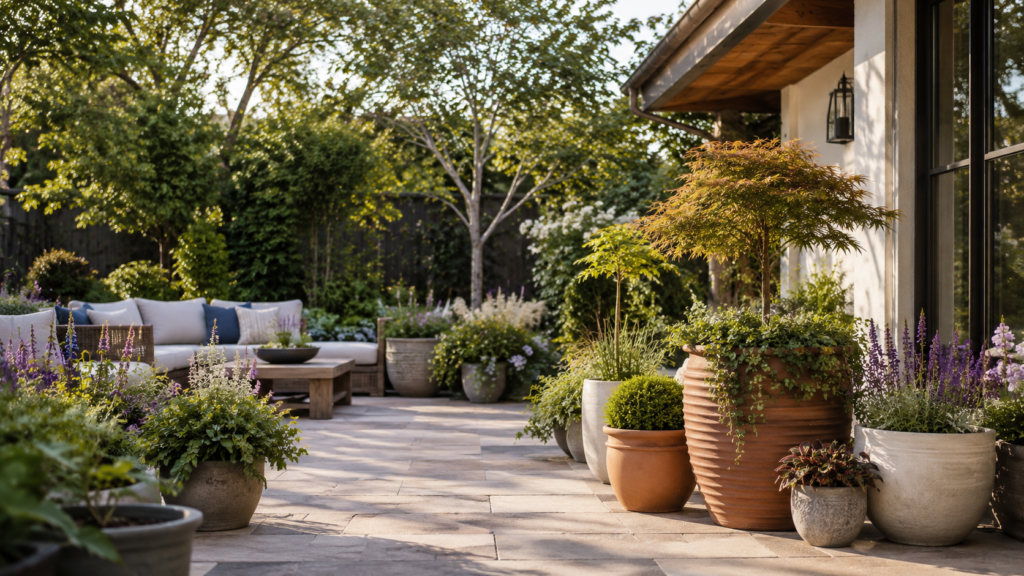
The best backyard ideas with potted plants use coordinated containers to define patios, add privacy, grow herbs, or improve unused corners. Start with three pots at different heights, choose plants with compatible needs, and repeat one material, plant, or color.
This guide covers 21 design ideas plus pot selection, planting, troubleshooting, and planning.
Which Backyard Ideas With Potted Plants Work Best?
Choose the first project according to the problem you want to solve. An exposed patio needs screening, an empty corner needs a focal group, and a narrow yard needs vertical planting.
Best Choices at a Glance
- Empty patio corner: Three coordinated pots
- Backyard privacy: Deep troughs with shrubs or trellises
- Small yard: Vertical planters and narrow containers
- Sunny area: Large pale pots with heat-tolerant plants
- Shaded corner: Layered foliage in light-colored pots
- Rental backyard: Lightweight pots on caddies
- Low maintenance: Large pots with repeated plants
- Edible garden: Herbs and vegetables near the kitchen
- Year-round structure: Evergreen anchors with seasonal accents
Choose the largest permanent feature first, such as a trough, trellis, or structural planter.
Quick Idea Index
- Three-pot focal cluster
- Layered corner arrangement
- Framed patio entrance
- Movable patio border
- Tabletop planter
- Fragrant seating-area pots
- Tall privacy planters
- Trellis planter
- Staggered privacy screen
- Vertical herb wall
- Hanging or railing planters
- Miniature corner garden
- Pots on plant caddies
- Mediterranean grouping
- Pollinator station
- Layered shade display
- Pale pots for dark corners
- Repeated resilient plants
- Self-watering or irrigated pots
- Edible container station
- Permanent structure with seasonal accents
Which Backyard Layout Works Best?
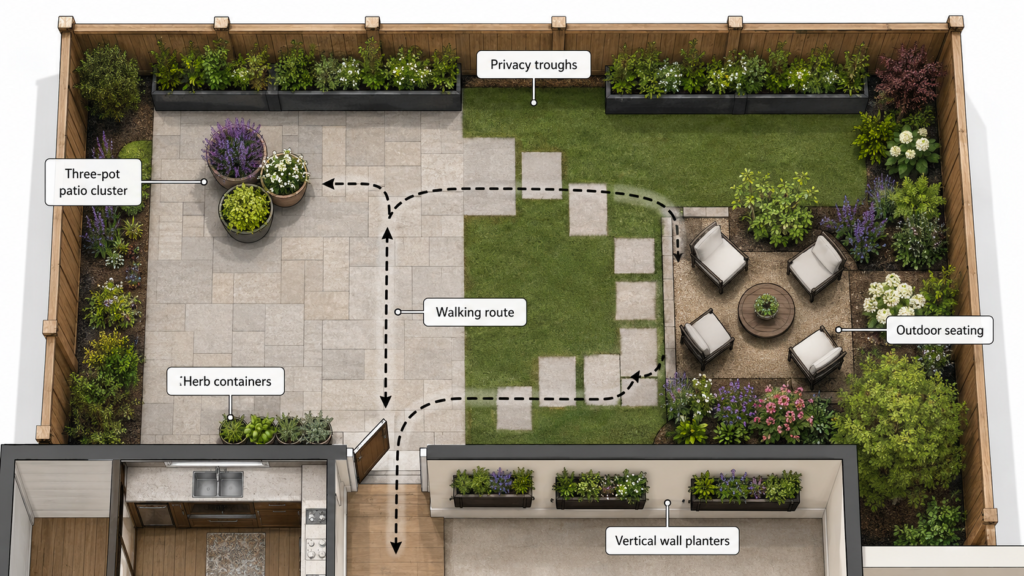
The right layout depends on the available space, main viewing angle, and purpose of the containers. A patio display requires a different arrangement from a privacy screen, herb station, or narrow-yard garden.
| Backyard situation | Recommended arrangement | Main benefit |
|---|---|---|
| Small patio | Three-pot corner group | Adds depth without blocking movement |
| Bare fence | Troughs or climbing planters | Softens the boundary |
| Dining area | Matching corner pots | Frames the outdoor room |
| Sunny paving | Large drought-tolerant pots | Reduces moisture stress |
| Shaded corner | Layered foliage containers | Adds lasting texture |
| Rental yard | Lightweight movable pots | Avoids permanent changes |
| Large lawn | Oversized focal planters | Adds scale and structure |
| Narrow yard | Wall pots and vertical planters | Preserves floor space |
Keep pots clear of doors, steps, chairs, grills, and paths. Use a tall structural plant, a rounded middle layer, and a trailing or low front layer. Arrange the group for the main view.
How Does Climate Affect Pots?
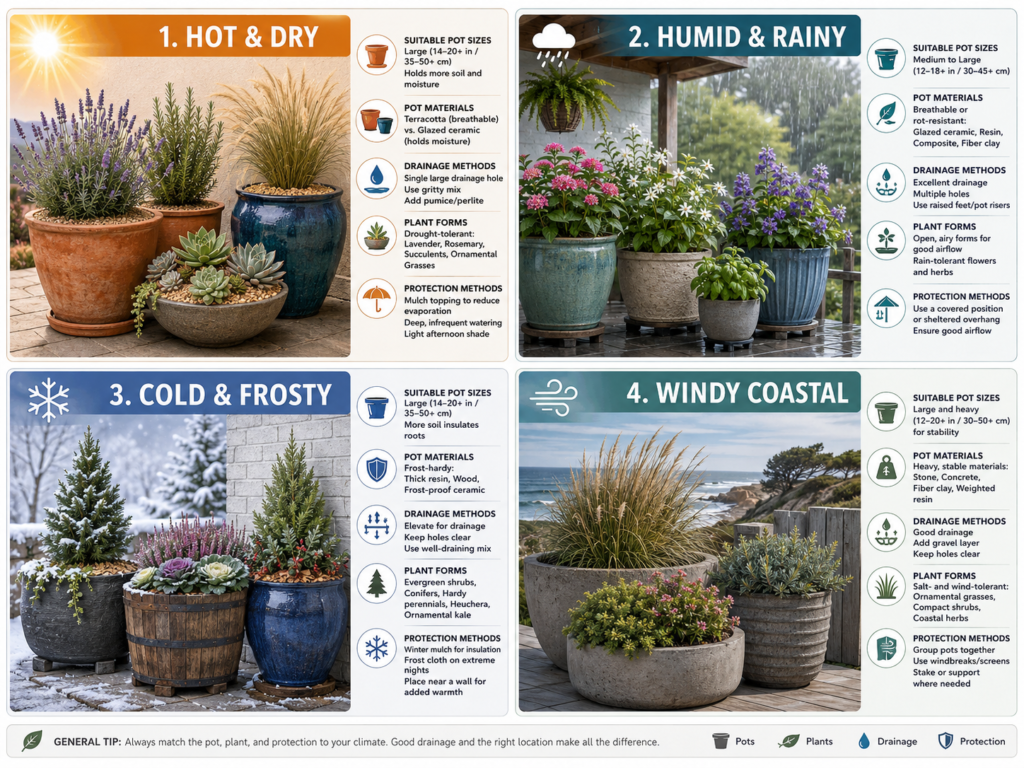
Climate should shape pot material, size, drainage, plant selection, and watering before style is considered. Container roots experience faster temperature and moisture changes than roots in the ground.
| Growing condition | Prioritize | Avoid |
|---|---|---|
| Hot and dry | Large pale pots, mulch, drought-tolerant plants | Small dark containers |
| Humid and rainy | Strong drainage and airflow | Permanently wet outer pots |
| Cold and frosty | Hardy plants and frost-rated pots | Fragile porous ceramics |
| Windy or coastal | Wide heavy pots and secured supports | Tall narrow planters |
| Mild climate | Evergreen structure | Assuming plants remain compact |
| High-altitude sun | UV-resistant containers | Thin exposed plastic |
Adapt examples locally: substitute plants of similar form, use larger pots in hot or windy sites, raise containers in wet climates, and check invasive status and root hardiness.
Regional and Safety Note: Plant hardiness, invasive status, toxicity, thorns, and legal restrictions vary. Check local guidance before planting near children, pets, paths, play areas, or natural habitats.
How Should You Group Pots?
Group pots in odd numbers, vary their heights, and repeat one unifying feature. Three containers suit most small spaces, while five may work in a larger corner with one clear focal point.
Pots can vary in size while sharing a material, color, finish, or plant.
1. Create a Three-Pot Focal Cluster
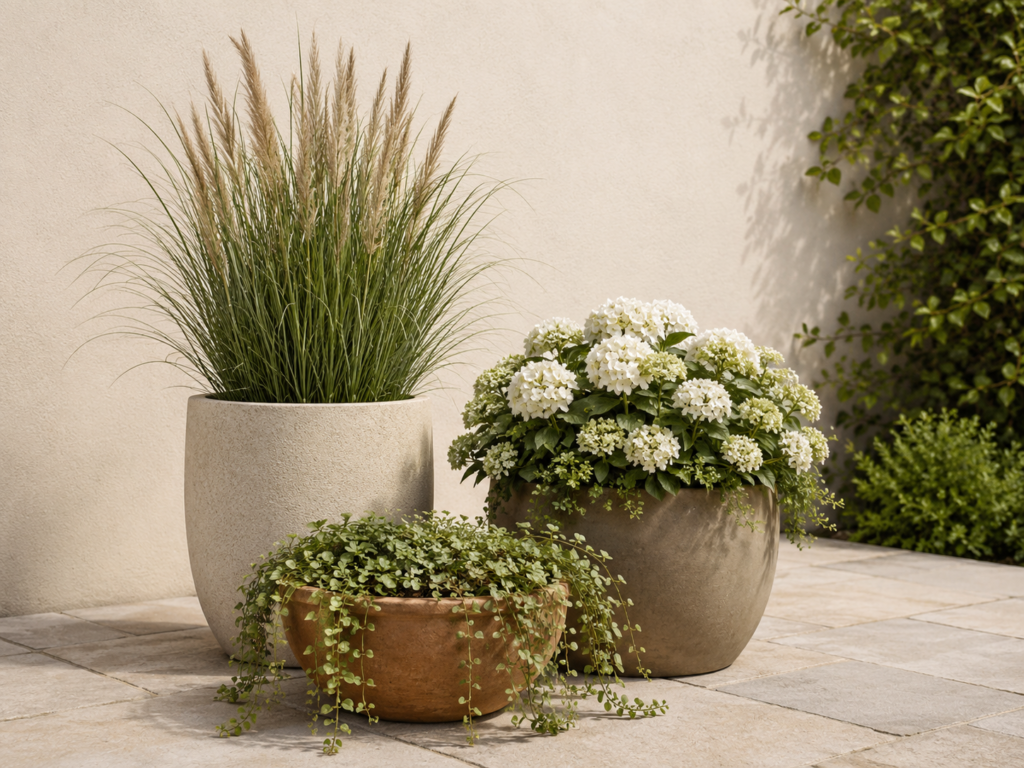
Use one tall pot, one medium pot, and one low container. Arrange them in a loose triangle, with the tallest plant at the back.
Combine an upright grass or shrub, a rounded foliage or flowering plant, and a low herb or trailing plant.
2. Build a Layered Corner Arrangement
Place the tallest planter near a wall or fence while leaving room for growth. Move the medium container slightly forward and position the smallest near the outer edge.
Repeat one material, flower color, foliage plant, or finish. Leave enough space to see and maintain each pot.
How Can Pots Style a Patio?
Use pots to frame entrances, soften corners, establish focal points, and divide activity zones without reducing usable patio space. Place the largest containers at the edges rather than in central walkways.
3. Frame the Patio Entrance
Place matching or closely related planters on either side of the back door, patio step, or main opening.
Suitable choices include rosemary, compact evergreens, ornamental grasses, or seasonal combinations.
4. Create a Movable Patio Border
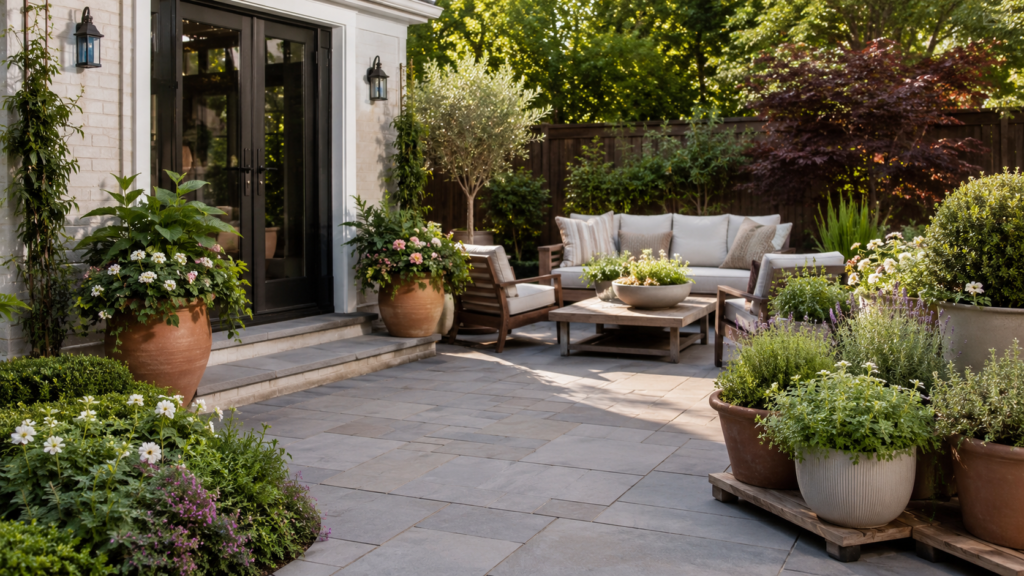
Arrange related containers along one patio edge to imitate a garden bed. Repeat one plant every second or third pot.
Repeat grasses between flowering or herb pots and leave access for care.
5. Add a Low Tabletop Planter
Use a shallow bowl with succulents, compact herbs, or low flowers. Keep the planting below eye level so it does not interrupt conversation.
Protect the table with a tray or pot feet.
6. Position Fragrant Pots Near Seating
Use lavender, rosemary, thyme, mint, scented pelargoniums, or suitable jasmines near seating, but keep pollinator-heavy plants away from food and maintain clearance around heat sources.
How Can Pots Add Privacy?
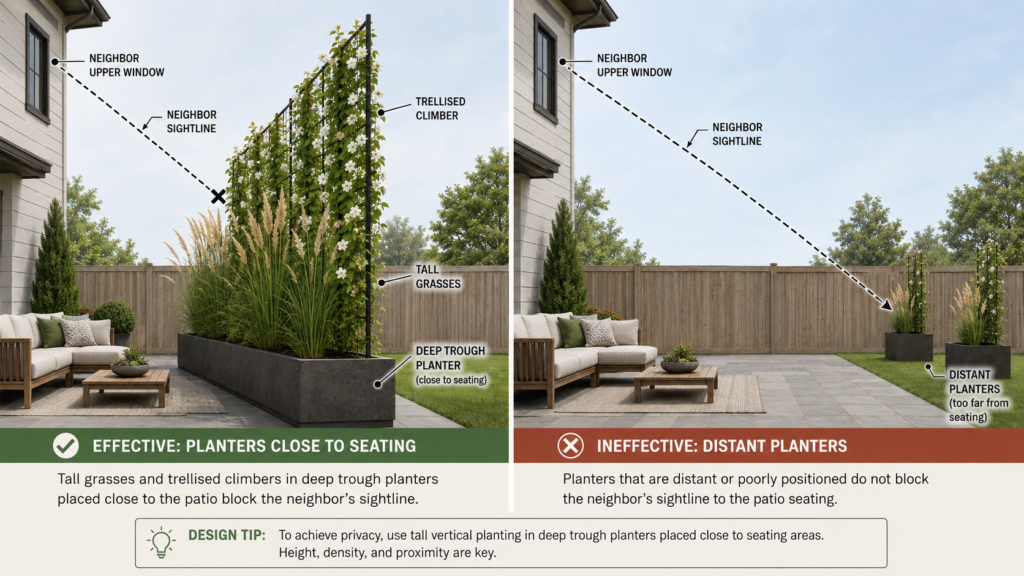
Use deep, stable planters with upright shrubs, grasses, or trellised climbers to interrupt exposed sightlines. Check the view from the seated position before placing containers.
7. Build a Row of Tall Privacy Planters
Rectangular troughs create a cleaner screen than unrelated pots. Use upright evergreens, clumping grasses, compact conifers, or non-invasive bamboo with enough root volume for stability.
8. Combine a Planter With a Trellis
A deep trough with a fixed trellis saves floor space and can support suitable climbers. Size the support for mature foliage and wind pressure.
9. Use Staggered Privacy Screening
Place tall pots in exposed sightlines and medium foliage plants between them. This preserves light and airflow while creating a softer screen.
Plan a More Stable Container Privacy Screen
A 1.5 m or 5 ft screen near seating may outperform taller plants at a distant fence. Use broad bases and secured supports.
How Can Pots Fit Small Yards?
Use fewer, larger containers, grow upward, and keep the main walking route open. Many small pots make a compact yard look crowded and increase maintenance.
Favor plants that provide more than one benefit, such as privacy, food, or year-round structure.
10. Install a Vertical Herb Wall
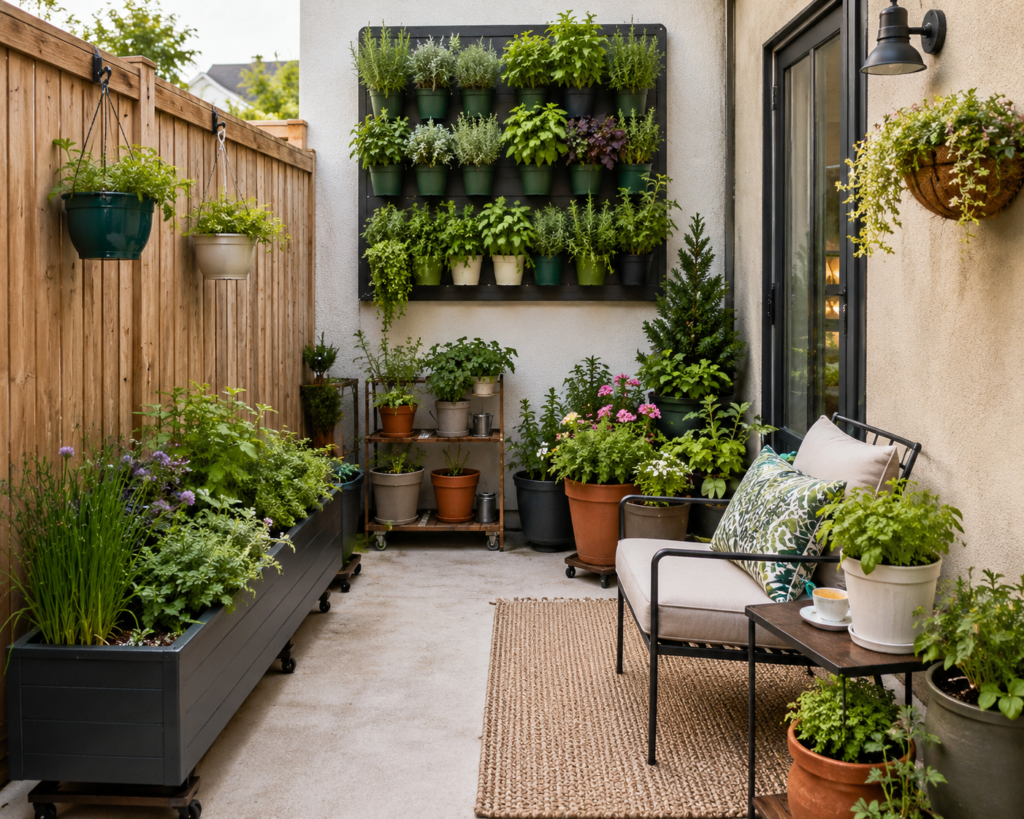
Use wall planters, stacked pots, or a freestanding tower. Separate dry-loving herbs from moisture-loving ones and confirm the support can carry wet potting mix.
11. Use Hanging or Railing Planters
Hanging and railing containers suit strawberries, trailing flowers, herbs, and ferns while preserving floor space. Keep them clear of doors and seating.
12. Create a Miniature Corner Garden
Combine one compact tree or tall shrub with a medium foliage plant and a low trailing container.
This creates a complete layered scene in less than a square meter. A supporting guide to backyard corner planter designs can provide more layout options.
13. Put Movable Pots on Plant Caddies
Wheeled caddies simplify cleaning, storm protection, and seasonal moves. Choose one rated for the full wet weight.
Which Pots Work in Full Sun?
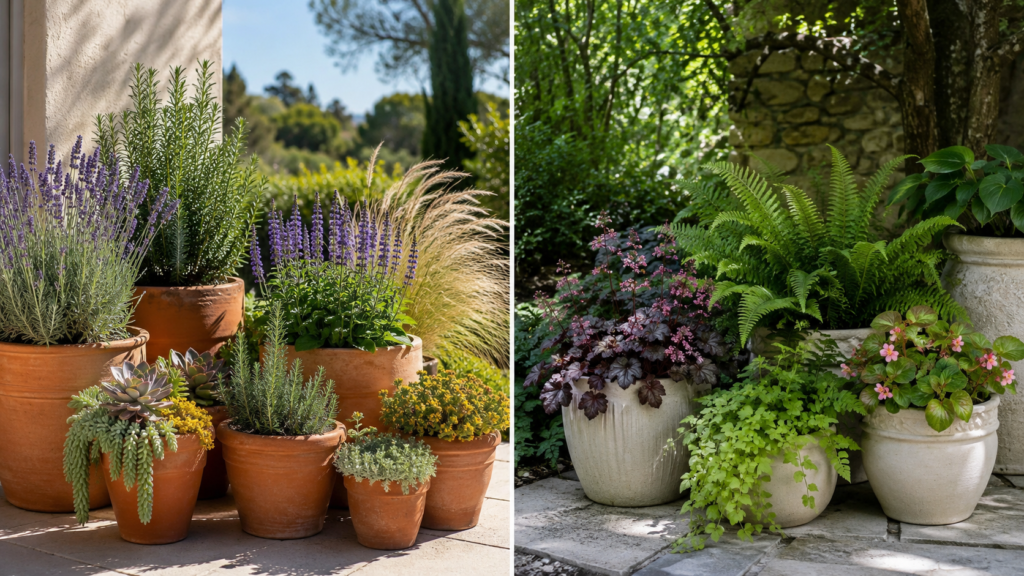
Choose plants that tolerate direct sun, warm roots, and faster moisture loss. Even drought-tolerant plants may need regular watering when confined to containers.
Suitable options include lavender, rosemary, thyme, salvia, zinnias, succulents, grasses, compact citrus, peppers, and patio tomatoes.
14. Create a Mediterranean-Style Grouping
Combine terracotta pots with rosemary, lavender, thyme, sage, and one climate-suitable structural plant.
Use silver-green foliage and a restrained flower palette.
15. Build a Pollinator Container Station
Group suitable flowering plants with overlapping bloom periods.
Use salvias, flowering herbs, zinnias, agastache, or native perennials with overlapping bloom times. Place them away from dining tables and use large mulched pots.
Which Pots Work in Shade?
Use foliage color, shape, and texture where flowering may be limited. Broad leaves, fine ferns, silver markings, lime-green foliage, and burgundy tones create depth.
Bright shade beneath an open canopy provides more light than deep shade beside a wall.
Potential choices include ferns, hostas, heucheras, begonias, coleus, carex, mint, and parsley.
16. Make a Layered Shade Display
Place a tall fern or structural plant at the back. Add a broad-leaved plant in the middle and trailing foliage at the front.
Contrast matters more than quantity; pair lime-green foliage with burgundy or silver leaves.
17. Brighten Shade With Pale Pots
Pale pots can lift a dark corner. Repeat one finish and check below the surface before watering because shade slows drying.
How Can You Reduce Pot Care?
Use larger pots, repeat reliable plants, and group containers with similar care needs. One stable planter is often easier to manage than several small pots in full sun.
18. Repeat One Resilient Plant
A sequence of grasses, evergreens, lavender, or durable perennials looks intentional and allows plants to be watered, pruned, and fed together.
19. Add Self-Watering or Drip-Irrigated Containers
Reservoir planters, drip emitters, timers, mulch, and larger pots can reduce watering work. Group plants by moisture needs.
Self-watering systems are unsuitable for plants that prefer dry roots.
How Can You Grow Food in Pots?
Place edible containers near the kitchen, provide enough root space, and group crops with compatible needs. Convenient placement encourages regular watering, harvesting, and pest checks.
20. Create an Edible Container Station
Arrange containers near a back door, outdoor kitchen, or dining area.
Choose Herbs With Compatible Water Needs
Useful herbs include basil, parsley, chives, thyme, rosemary, sage, oregano, and mint. Keep mint alone and separate dry-loving herbs from basil and parsley.
Select Compact Vegetable Varieties
Choose patio, bush, dwarf, or container cultivars of tomatoes, peppers, beans, cucumbers, strawberries, and salad leaves.
Give Productive Crops Enough Root Space
Tomatoes, peppers, and cucumbers need more soil volume than herbs, lettuce, and radishes.
Add Supports Early
Install cages, stakes, or trellises at planting time. Make sure the container is heavy enough to support mature growth.
How Do You Choose Outdoor Pots?
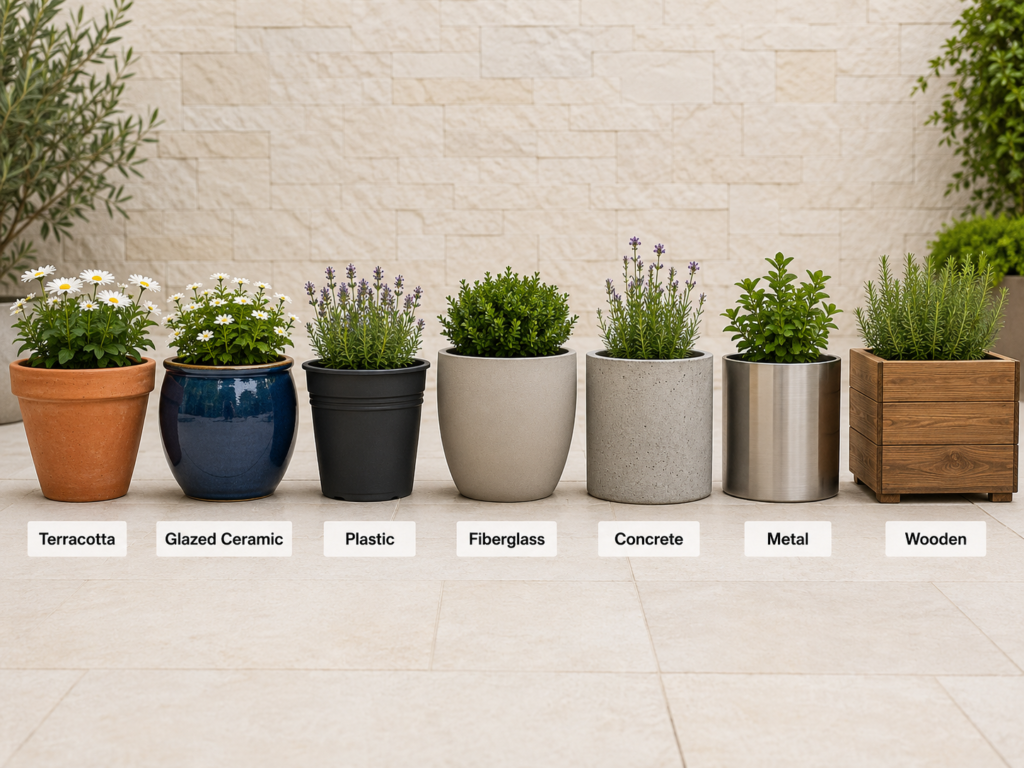
Choose containers according to plant size, weather exposure, drainage, final weight, and whether the pot must move. The wrong material can create heat, frost, stability, or maintenance problems.
| Pot material | Main advantage | Main limitation |
|---|---|---|
| Terracotta | Natural appearance and airflow | Dries quickly and may crack |
| Glazed ceramic | Strong color and moisture retention | Heavy and breakable |
| Plastic | Lightweight and affordable | Quality varies |
| Fiberglass | Lightweight with premium appearance | Often expensive |
| Concrete | Stable and durable | Extremely heavy |
| Metal | Contemporary appearance | Can overheat |
| Wood | Warm and natural | May decay |
Compare Pots According to Real Backyard Conditions
Before purchasing, confirm drainage, final weight, weather rating, wind stability, heat exposure, root depth, and whether the pot must move.
Concrete, ceramic, and thick fiberglass suit permanent focal points; plastic and lightweight fiberglass are easier to move. Use a draining nursery pot inside decorative containers without holes.
How Should You Plant and Water Pots?
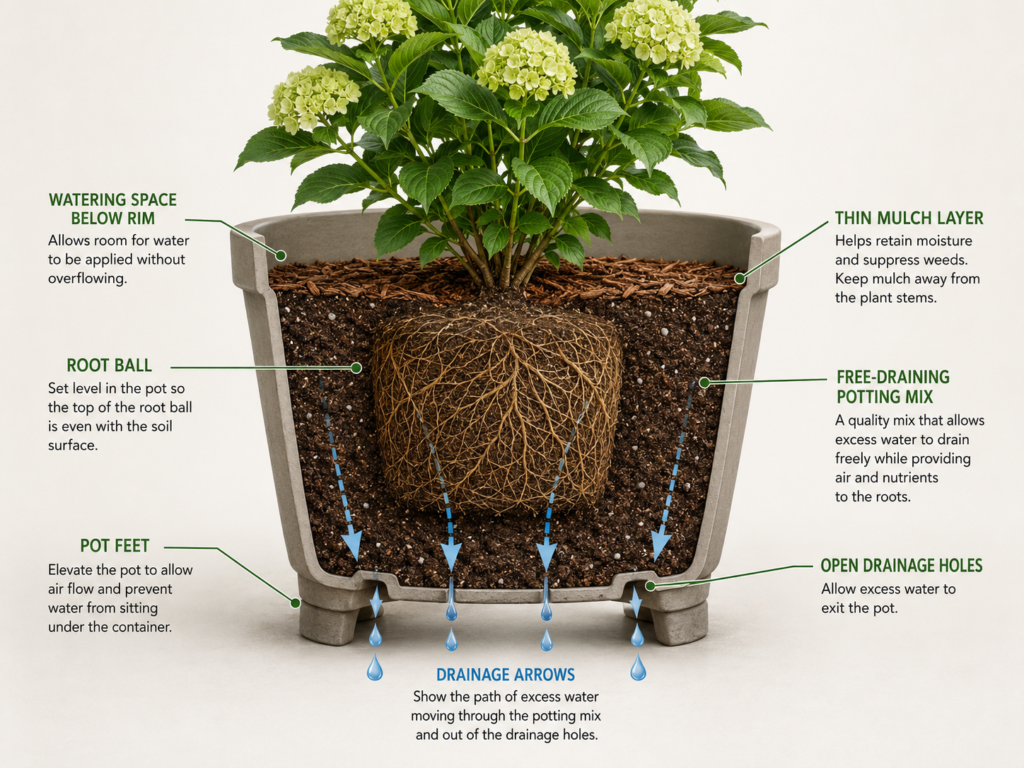
Use free-draining potting mix, keep drainage holes open, leave space below the rim, and water until excess moisture escapes. Water according to conditions rather than a fixed timetable.
Use container potting mix rather than garden soil. Keep drainage holes open, set the plant at its original depth, fill around the roots, leave space below the rim, and water until excess drains.
A stone layer does not correct poor drainage. Water slowly, then check below the surface before watering again. Pot size, material, roots, sun, wind, and rain all change drying time.
How Do You Fix Pot Problems?
Most problems result from incorrect watering, poor drainage, restricted roots, excessive heat, or unsuitable placement. Check moisture and roots before adding water or fertilizer.
| Symptom | Likely cause | First action |
|---|---|---|
| Water runs down the edge | Mix is extremely dry | Rehydrate slowly |
| Lower leaves turn yellow | Excess water or poor drainage | Check the lower root zone |
| Plant wilts in wet mix | Root or heat stress | Inspect drainage |
| Pot tips in wind | Pot is too light or narrow | Use a heavier container |
| Roots exit drainage holes | Plant is root-bound | Repot one size larger |
| White crust forms | Mineral or fertilizer buildup | Flush the mix |
| Growth leans sideways | Uneven light | Rotate the pot |
| Leaf edges scorch | Heat, wind, or salt stress | Add protection |
| Mix stays wet for days | Oversized pot or poor drainage | Reduce watering |
Diagnose moisture, drainage, pests, light, weather, then roots. Avoid several major changes on the same day.
How Can Pots Add Year-Round Interest?
Combine permanent structural plants with smaller seasonal accents. Evergreens, grasses, and shrubs provide structure while flowers, bulbs, and trailing plants add seasonal change.
21. Combine Permanent Structure With Seasonal Accents
Use the largest pots for evergreens, grasses, topiary, or small trees. Add smaller containers with bulbs, seasonal flowers, foliage, or trailing accents.
In cold climates, choose frost-resistant pots and protect roots. In warm climates, use pale containers, mulch, heat-tolerant plants, and afternoon protection where needed.
What Seasonal Care Do Pots Need?
Seasonal care protects permanent plants and allows decorative accents to change without rebuilding the entire display.
| Season | Main tasks |
|---|---|
| Spring | Inspect, refresh, repot, install supports |
| Summer | Water, deadhead, check pests and irrigation |
| Autumn | Reduce feeding and replace accents |
| Winter | Protect roots and improve drainage |
Spring Container Care
- Check drainage, remove dead growth, and refresh the upper mix.
- Repot crowded plants and install supports.
Summer Container Care
- Check moisture, water deeply, and remove faded flowers.
- Inspect for pests and test irrigation.
Autumn Container Care
- Replace tired plants, reduce feeding, and remove diseased material.
- Move tender plants before cold weather.
Winter Container Care
- Raise waterlogged pots and protect exposed roots.
- Group or shelter vulnerable containers.
Use permanent structural plants in large pots and seasonal color in smaller ones.
What Makes Pots Look Cluttered?
The main problem is a lack of hierarchy. When every pot has a different color, shape, height, plant, and position, the display loses focus.
Avoid scattered tiny pots, blocked paths, incompatible plants, poor drainage, too many colors, visible dead growth, and top-heavy containers.
Group pots in threes or fives, repeat one material or plant, remove failures, and preserve open space.
A smaller group of healthy plants usually looks better than a large collection of struggling pots.
What Does a Small-Patio Layout Need?
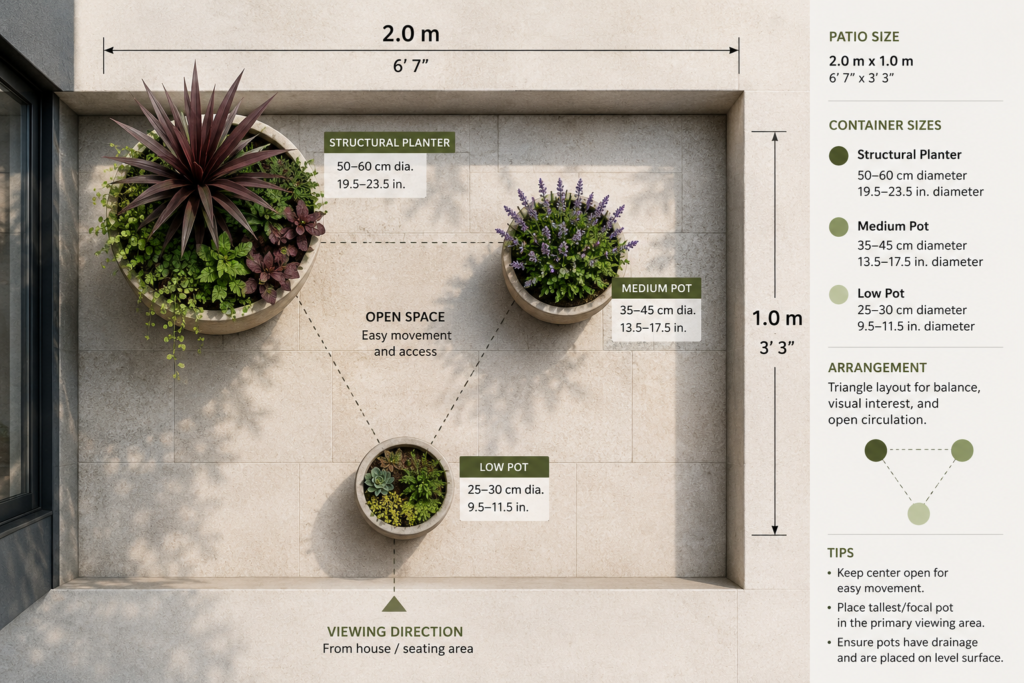
A 2 m by 1 m, or about 6.5 ft by 3.3 ft, patio corner can support a complete three-pot arrangement without blocking movement.
Use one 50–60 cm or 20–24 in structural planter, one 35–45 cm or 14–18 in medium pot, and one 25–30 cm or 10–12 in low pot.
Place the largest pot near the wall, the medium pot slightly forward, and the lowest near the outer edge.
Sunny Layout Example
- Back: Rosemary, grass, or compact shrub
- Middle: Salvia, pelargonium, or perennial
- Front: Thyme, succulent, or trailing flowers
- Shared feature: Terracotta or one flower color
- Main risk: Rapid drying
Shaded Layout Example
- Back: Fern or structural foliage
- Middle: Heuchera, begonia, or broad-leaved plant
- Front: Trailing foliage
- Shared feature: Pale ceramic or neutral composite
- Main risk: Overwatering
Check the arrangement from indoors, the main seat, and the walking route.
How Can You Make Over Pots in One Day?
Transform one visible area with three coordinated containers and compatible plants. Focusing on one zone creates a finished result without redesigning the entire yard.
Follow this process:
- Select the main view and measure the area.
- Observe light and wind.
- Choose one tall, one medium, and one low pot.
- Repeat one color or material.
- Select compatible plants.
- Test the empty arrangement.
- Plant with suitable mix and drainage.
- Clean the containers.
Try rosemary, salvia, and thyme in sun, or fern, heuchera, and trailing foliage in shade.
What Should You Plan Before Buying?
Plan around purpose, measurements, sunlight, weather exposure, mature size, and realistic maintenance. Preparation reduces impulse purchases and unsuitable plant choices.
Check the purpose, measurements, light, wind, circulation, drainage, mature plant size, watering method, and repeated design feature before buying.
Budget for pots, mix, mulch, fertilizer, supports, caddies, irrigation, seasonal replacements, and weather protection. Solve one backyard problem first.
How Can One Pot Idea Shape a Yard?
Use the first successful arrangement as the visual model for the rest of the backyard. Repeat selected materials, plant forms, and colors instead of designing every area independently.
- Identify one problem and measure the area.
- Observe light, wind, and circulation.
- Select the largest planter and supporting pots.
- Choose compatible plants.
- Confirm drainage and watering.
- Review the empty layout before planting.
Connect separate zones through repetition, then use supporting guides for patio, privacy, shade, watering, and sizing.
FAQs
How do you arrange potted plants in a backyard?
Group pots in threes or fives at different heights. Place the tallest plant at the back and medium or trailing plants toward the front.
What are the best potted plants for a backyard?
Choose plants suited to the local climate, light, and watering routine. Herbs, flowers, grasses, shrubs, vegetables, and small trees can all work.
What potted plants are best for privacy?
Upright shrubs, grasses, compact conifers, and trellised climbers provide screening. Use deep, stable pots in the direct sightline.
Can potted plants make a small backyard look bigger?
Yes. Keep the center open, use larger pots around the edges, and grow upward with climbers or vertical planters.
Do outdoor planters need drainage holes?
Yes. Drainage holes let excess water escape. Decorative pots without holes should hold a separate draining nursery pot.
How often should backyard pots be watered?
Check the growing mix instead of following a fixed schedule. Heat, wind, direct sun, and small pots increase watering needs.
What potted plants work in full sun?
Lavender, rosemary, thyme, salvia, zinnias, succulents, grasses, peppers, and patio tomatoes are common choices where climate permits.
What potted plants grow in shade?
Ferns, hostas, heucheras, begonias, coleus, carex, mint, and parsley may suit shaded containers.
How do you stop pots from looking cluttered?
Use fewer, larger containers, repeat one material or plant, and leave open space around each grouping.
Can outdoor potted plants survive winter?
Some can when both plant and pot suit the local climate. Protect roots, improve drainage, and shelter vulnerable containers.
Myra is the founder and lead writer of Backyard Planter Ideas, where she shares practical, well-researched guidance on planter design, plant selection, and outdoor styling. Her goal is to help homeowners create attractive, functional garden spaces with clear, reliable, and easy-to-apply advice.