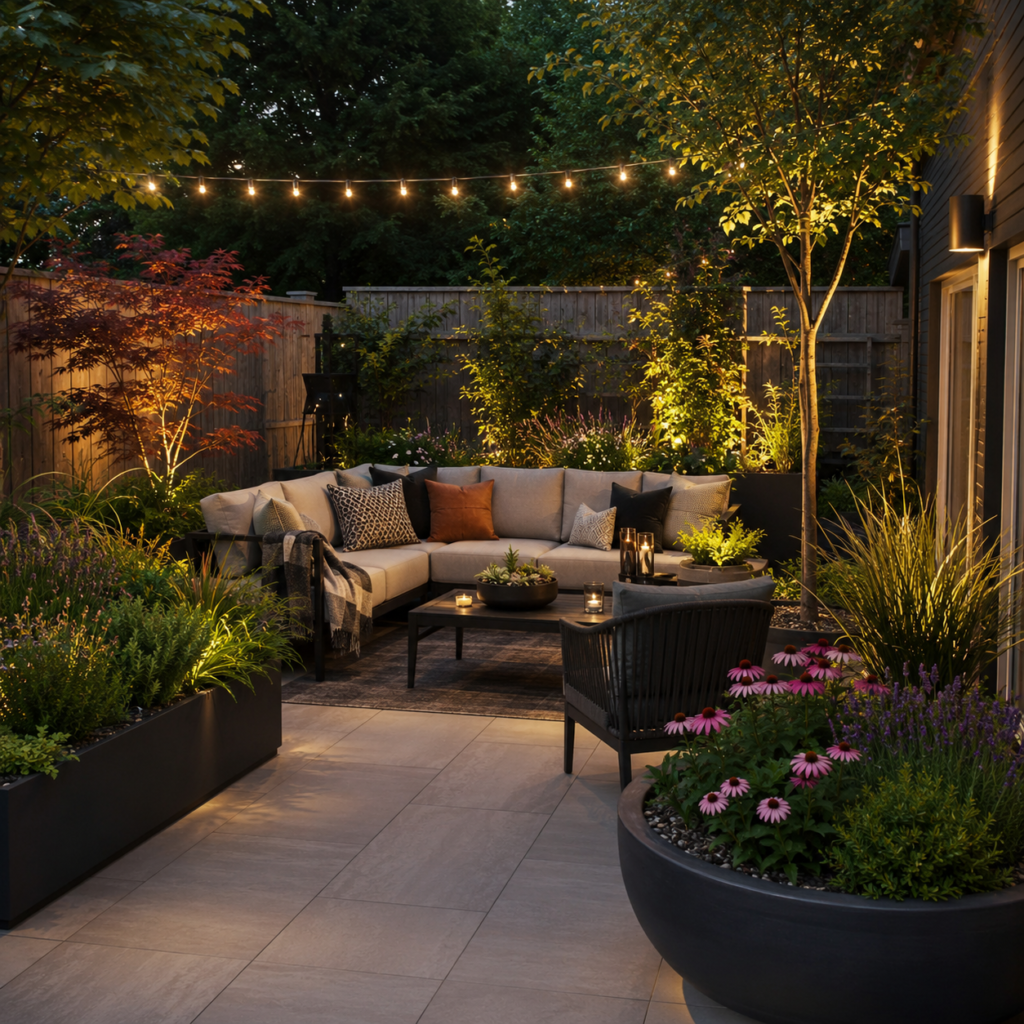
Backyard patio planter ideas help turn a plain outdoor surface into a cozy, colorful, and functional living space. Use large planters to frame seating areas, tall planters for privacy, flower pots for seasonal color, herbs near dining areas, and modern containers to match your patio furniture and backyard style.
The best part is flexibility. You can use patio planters on small patios, large outdoor living areas, poolside spaces, rented homes, covered patios, balconies, courtyard gardens, and backyard dining zones. You do not need to rebuild the patio or change the hardscape. The right planter arrangement can add privacy, color, structure, shade, herbs, flowers, and a more welcoming atmosphere.
Patio Planter Buying Guide
The easiest backyard patio planter setup starts with one large corner planter, two medium planters beside the seating area, and one long rectangular planter along a wall, fence, or patio edge.
Before buying planters, look at your patio size, sunlight, furniture layout, privacy needs, and maintenance level. A small patio needs space-saving planters, while a large patio needs bigger containers that match the scale of the furniture. An exposed patio needs tall planters, and a dining patio benefits from herbs, flowers, or fragrant plants near the table.
- Small patio: Choose vertical planters, wall planters, railing planters, or slim rectangular containers.
- Large patio: Use oversized planters, small trees, long trough planters, and grouped containers.
- Exposed patio: Use tall privacy planters with bamboo, ornamental grasses, arborvitae, or trellis vines.
- Dining patio: Add herb planters with basil, rosemary, thyme, parsley, mint, or oregano.
- Modern patio: Choose repeated black, concrete, fiberglass, or metal planters with simple greenery.
- Low-maintenance patio: Use larger containers, self-watering planters, hardy shrubs, and drought-tolerant plants.
Best Patio Planter Ideas by Need
The best backyard patio planter idea depends on what problem you want to solve first. Some patios need privacy, some need color, some need better layout, and others need greenery without using too much floor space. Choosing planters by need makes the design easier because you are not just buying attractive pots. You are choosing containers that improve how the patio looks, feels, and functions.
| Patio Need | Best Planter Idea | Best Plant Choices |
| Privacy | Tall rectangular planters | Bamboo, arborvitae, grasses, jasmine |
| Small space | Vertical or wall planters | Herbs, trailing flowers, ferns |
| Modern style | Black or concrete planters | Boxwood, olive trees, agave, grasses |
| Color | Flower pots and mixed containers | Petunias, geraniums, begonias, calibrachoa |
| Dining area | Herb planters | Basil, rosemary, thyme, parsley |
| Low maintenance | Large self-watering planters | Lavender, rosemary, sedum, dwarf conifers |
What Are Backyard Patio Planter Ideas?
Backyard patio planter ideas use pots, containers, planter boxes, flowers, shrubs, grasses, herbs, vines, and small trees to improve a patio’s appearance and function. They are useful on hard outdoor surfaces where regular garden beds are difficult to create.
These ideas are not only about decoration. A good patio planter should solve a real design or lifestyle problem. It can frame a seating area, hide an ugly fence, add flowers beside the door, create privacy from neighbors, or make outdoor dining more useful with herbs. This is why patio planters work for both small and large backyards. They allow homeowners and renters to add structure, beauty, and comfort without changing the whole landscape.
Good backyard patio planter ideas usually focus on:
- Softening hard concrete, stone, tile, or paver surfaces
- Adding greenery where in-ground planting is not possible
- Creating privacy beside seating or dining areas
- Adding seasonal color with flowers
- Growing herbs or vegetables near outdoor kitchens
- Making empty patio corners feel finished
- Matching the patio style with the right planter material
How to Arrange Patio Planters
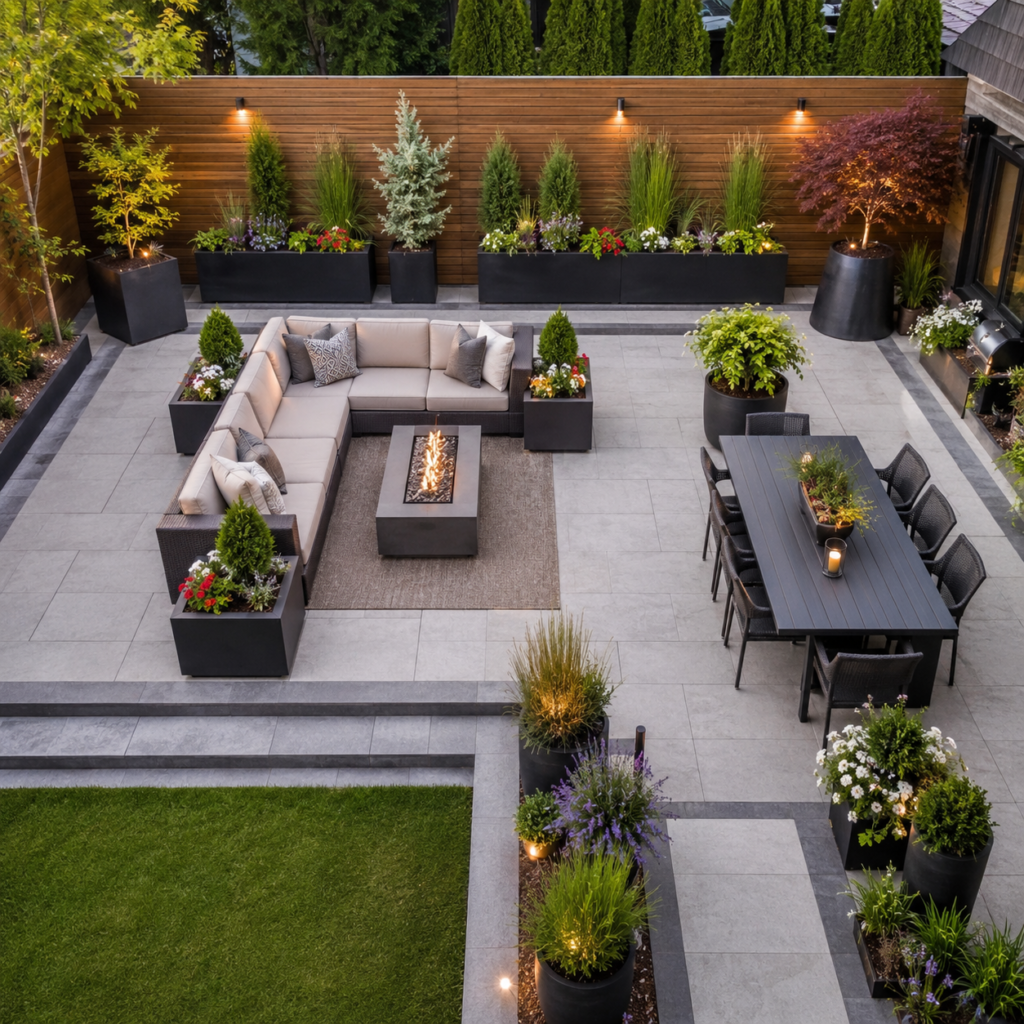
Arrange planters on a patio by placing them around the most important outdoor living zones, such as seating areas, dining spaces, patio doors, corners, walls, steps, and fence edges. The best arrangement keeps walking paths open while using plants to frame the space. A patio should still feel easy to move through, so avoid placing large containers where people need to walk, pull out chairs, open doors, or carry food.
Use this simple placement guide:
| Patio Area | Best Planter Type | Best Plants |
| Patio corners | Tall square planters | Olive tree, bamboo, grasses |
| Sofa sides | Medium round pots | Hydrangea, lavender, boxwood |
| Dining area | Herb planters | Basil, rosemary, thyme |
| Wall edge | Rectangular troughs | Jasmine, ivy, ferns |
| Pool patio | Low-mess planters | Agave, grasses, boxwood |
| Small patio | Vertical or hanging planters | Trailing flowers, herbs |
Helpful arrangement tips:
- Keep 24–36 inches of walking space where possible
- Use tall plants at the back and low plants near the front
- Group pots in threes for a natural look
- Use matching planters for a modern patio
- Avoid blocking drains, steps, doors, and furniture movement
- Place heavy planters before filling them with soil
Best Patio Planter Sizes
The best patio planter size depends on the plant, patio space, and visual scale of the outdoor furniture. Small flowers and herbs can grow in medium pots, but shrubs, grasses, bamboo, and small trees need larger containers with deeper root space and better stability. If the planter is too small, the plant may dry out quickly, become root-bound, or look weak beside large furniture.
| Planter Size | Best Use | Good Plant Choices |
| Small | Accent color, steps, tabletops | Annual flowers, herbs, succulents |
| Medium | Doorways, sofa sides, grouped pots | Lavender, geraniums, ferns, rosemary |
| Large | Corners, privacy, structure | Boxwood, grasses, hydrangeas, shrubs |
| Extra large | Statement design, small trees | Olive trees, citrus, Japanese maple, bamboo |
Best Planters for Small Patios
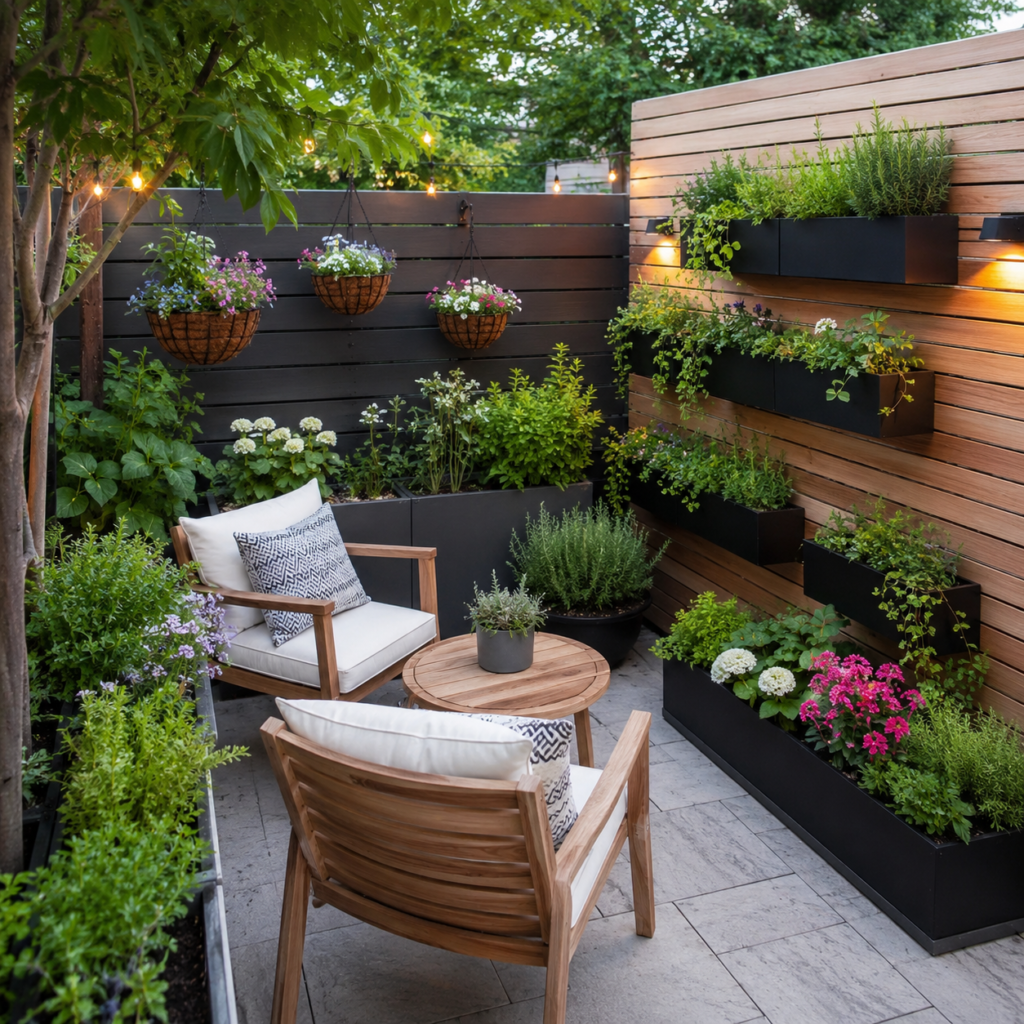
The best planters for small backyard patios are slim rectangular boxes, vertical planters, hanging baskets, railing planters, wall planters, tiered stands, and corner containers. They add greenery without stealing floor space or making the patio feel crowded.
For small spaces, vertical design is usually the best solution. Instead of spreading plants across the patio floor, use walls, railings, corners, and overhead areas. A vertical planter can hold herbs, strawberries, small flowers, or trailing plants. A hanging basket can soften a patio cover without using any floor space. A slim trough planter can sit along a wall or fence and create greenery without blocking movement. These choices help small patios feel styled instead of packed.
Best small backyard patio planter ideas include:
- Slim trough planters along a fence or wall
- Wall-mounted herb planters near the kitchen door
- Hanging baskets with trailing flowers
- Tiered plant stands in unused corners
- Tall narrow planters for light privacy
- Railing planters for raised patios or balconies
- Stackable planters for herbs and strawberries
How Large Planters Finish a Patio
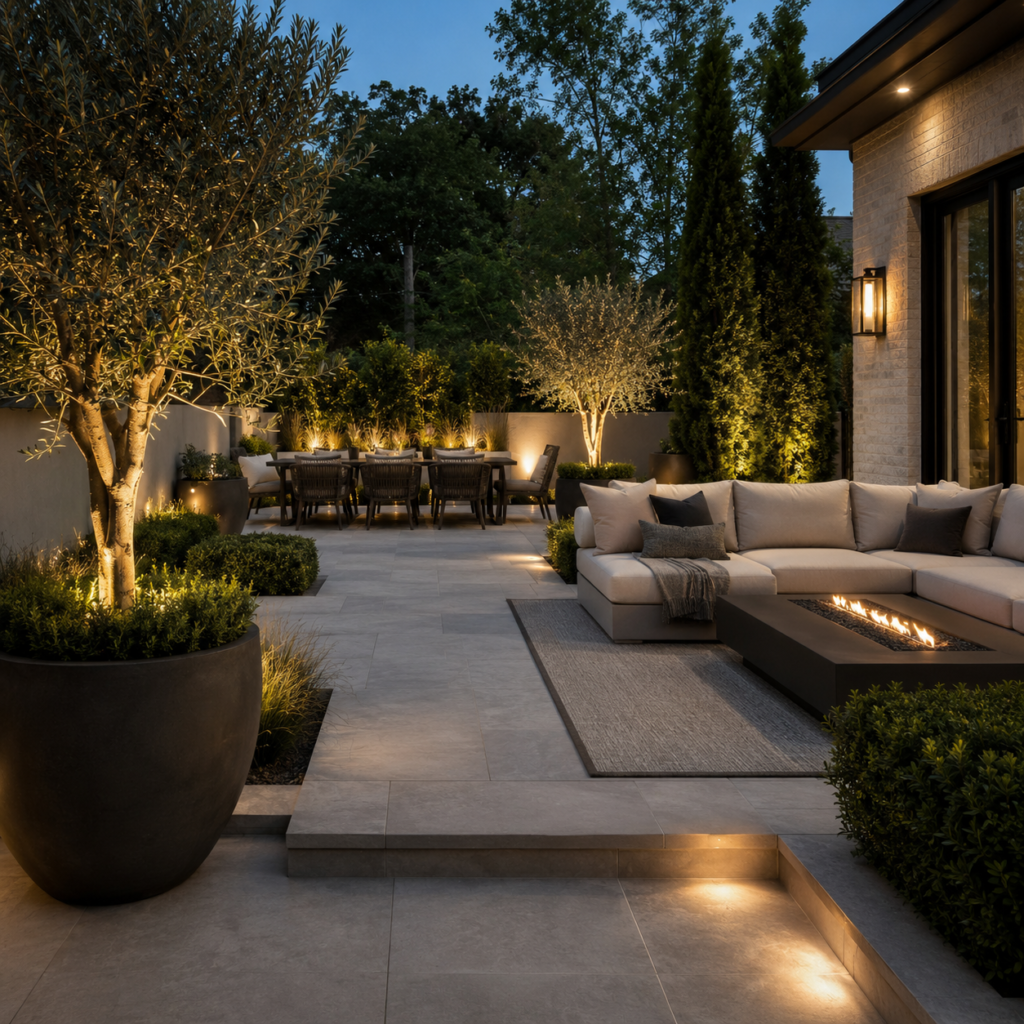
Large patio planters make a backyard feel finished by adding structure, height, balance, and visual weight. Many patios look incomplete because the furniture is large but the plants are too small. A tiny pot beside a full outdoor sofa often looks weak. A large planter, on the other hand, can match the scale of the patio and make the whole space feel more intentional.
Large planters work well on wide patios, modern outdoor spaces, poolside patios, and open concrete or paver areas. Use paired tall planters beside doors, long rectangular planters behind sofas, or large round pots in empty corners.
Good plants for large patio planters include:
- Olive trees
- Japanese maples
- Dwarf citrus trees
- Boxwood
- Ornamental grasses
- Clumping bamboo
- Dwarf conifers
Use large patio planters when the patio feels bare, oversized, exposed, or disconnected from the garden. They add the scale and structure that small pots cannot provide.
Best Plants for Patio Planters
The best plants for backyard patio planters are the ones that match the patio’s sunlight, heat, shade, wind, planter size, and watering routine. Good options include lavender, rosemary, boxwood, ornamental grasses, hydrangeas, petunias, geraniums, ferns, hostas, bamboo, dwarf citrus, Japanese maple, herbs, and compact evergreen shrubs. A plant may look beautiful in a photo, but it will only work if it suits the real patio conditions.
Patios can be tougher than garden beds because hard surfaces reflect heat, containers dry quickly, covered areas block rainfall, and wind can affect tall plants. Choose plants for the actual patio conditions before choosing them for style.
Best full-sun patio plants:
- Lavender
- Rosemary
- Salvia
- Petunias
- Geraniums
- Lantana
- Ornamental grasses
- Agave
Best shade patio plants:
- Ferns
- Hostas
- Begonias
- Impatiens
- Caladiums
- Heuchera
Best low-maintenance patio plants:
- Boxwood
- Dwarf conifers
- Ornamental grasses
- Lavender
- Rosemary
- Agave
Best Planters for Covered Patios
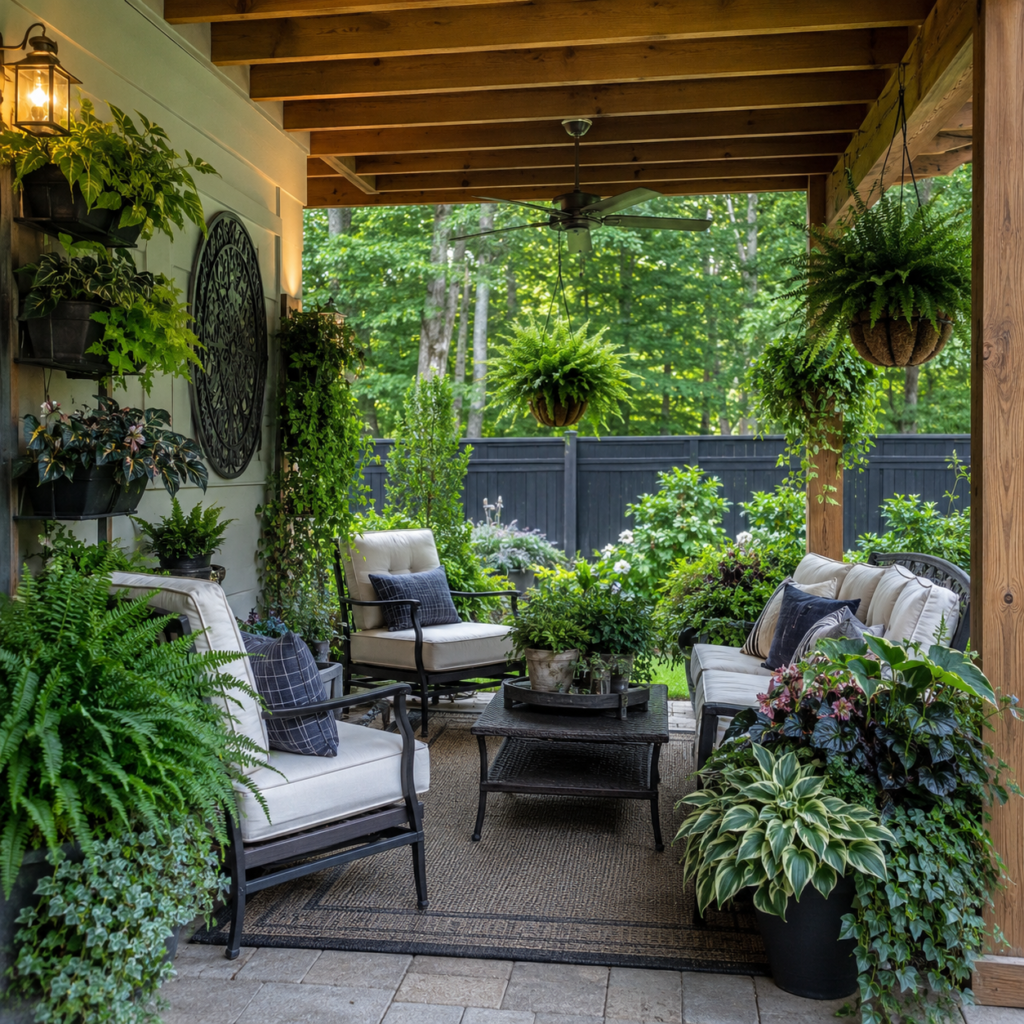
Covered patios need planters that work with lower light, limited rainfall, and protected outdoor conditions. Shade-tolerant plants, hanging baskets, wall planters, lightweight containers, and medium decorative pots often work better than full-sun flowers or large thirsty shrubs. A covered patio may still be outside, but the roof, pergola, balcony, or overhang can change the growing conditions completely.
- Use ferns, begonias, caladiums, ivy, hostas, and heuchera for shaded covered patios.
- Use hanging baskets to soften beams, pergolas, and patio covers.
- Choose lightweight planters if hanging from hooks, beams, or overhead structures.
- Check soil moisture often because rain may not reach the containers.
- Avoid full-sun flowers in deep shade because they may stretch, fade, or stop blooming.
- Use wall planters or tiered stands when floor space is limited.
Patio Planters for Privacy
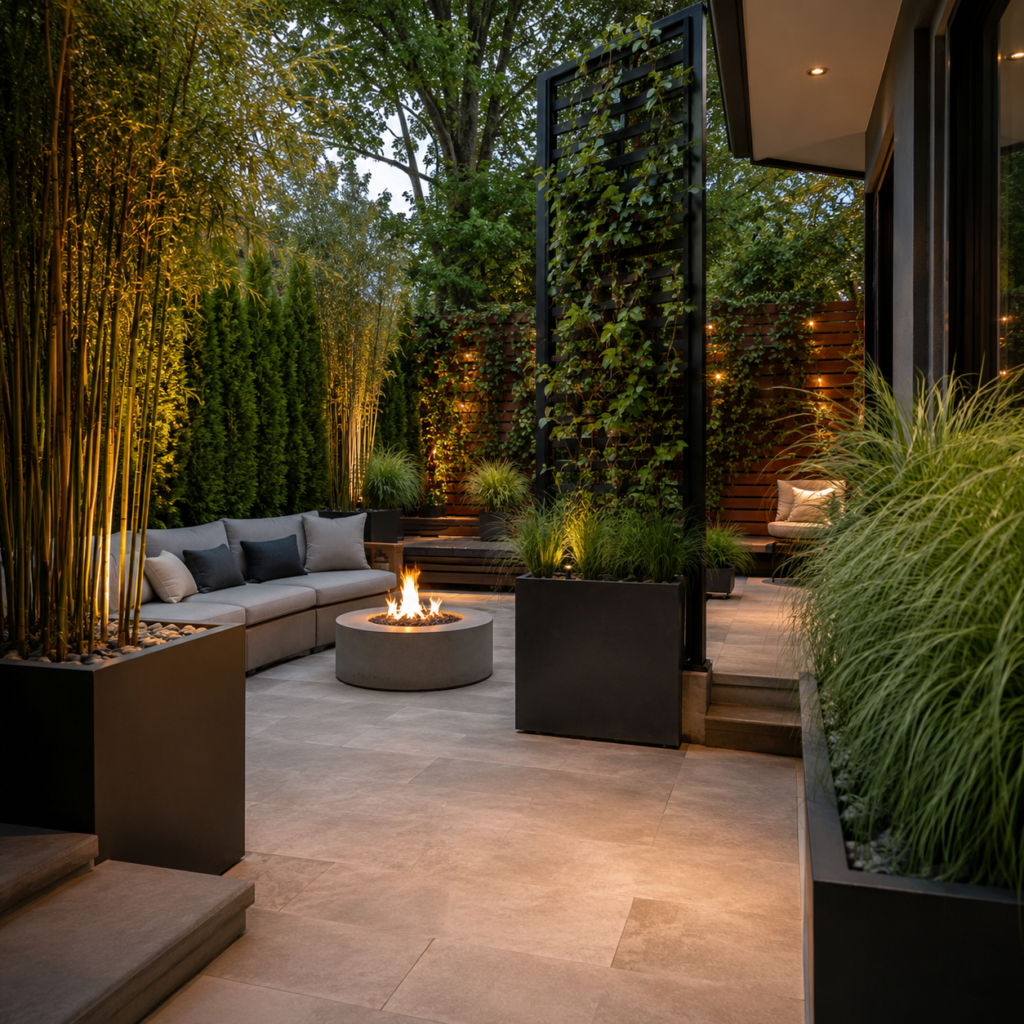
Use patio planters for privacy by placing tall containers, dense shrubs, bamboo, trellis planters, climbing vines, or evergreen plants between the seating area and the unwanted view. Privacy planters are useful when a patio feels exposed to neighbors, sidewalks, windows, driveways, or nearby homes. They create a softer solution than a fence and can often be adjusted as your needs change.
Tall rectangular planters are best for privacy because they cover more horizontal space. Place them behind seating, beside dining areas, along fence gaps, or use trellis planters where vertical screening is needed.
Best plants for patio privacy planters include:
- Clumping bamboo
- Arborvitae
- Boxwood
- Podocarpus
- Holly
- Ornamental grasses
- Star jasmine on trellis
- Dwarf conifers
Privacy planter placement tips:
- Place tall planters behind seating areas
- Use long trough planters along fence gaps
- Add trellis planters for vertical screening
- Choose evergreens for year-round privacy
- Use grasses for soft seasonal coverage
- Avoid thorny plants near narrow walkways
- Leave room for pruning and watering
Modern Patio Planter Ideas
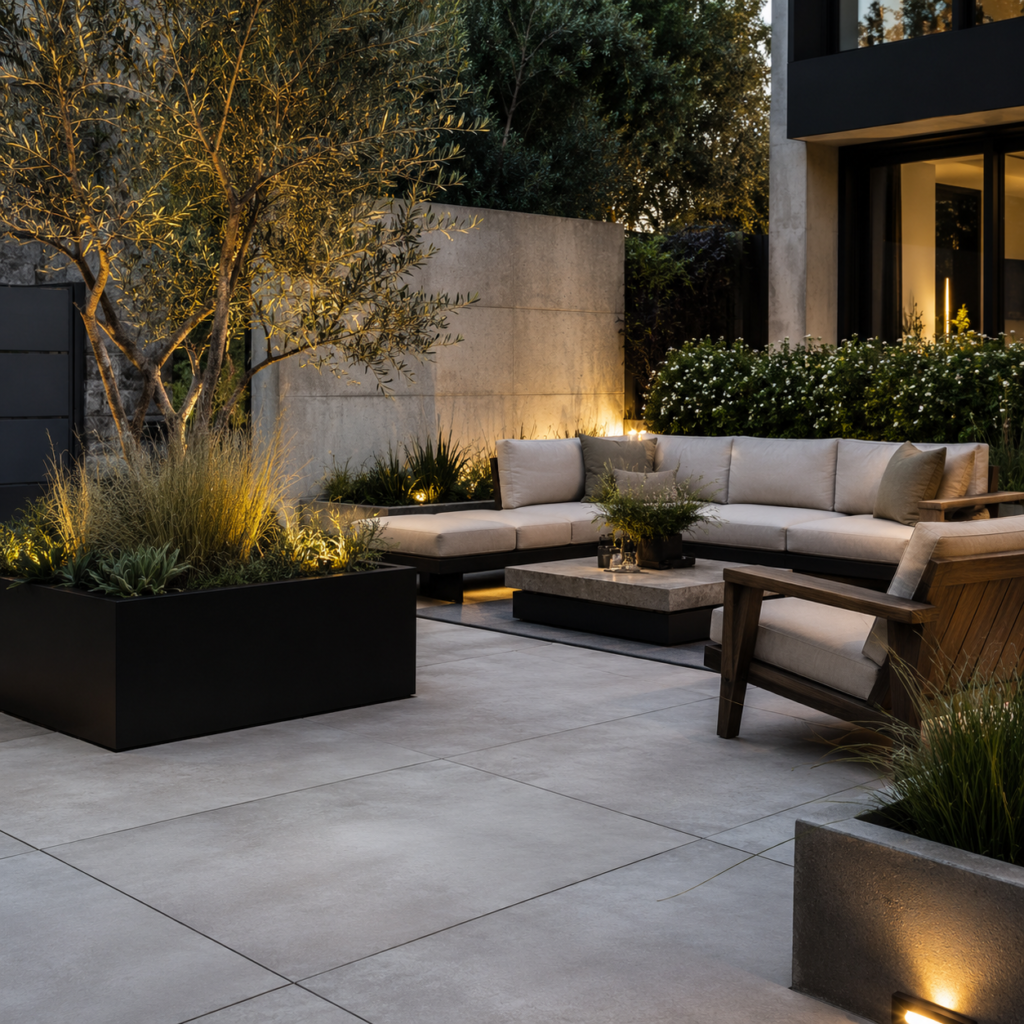
Modern backyard patio planter ideas use clean lines, simple shapes, repeated containers, neutral colors, and controlled plant choices. Concrete cubes, black troughs, tall square planters, corten steel containers, and smooth wooden boxes all work well.
Best plants for modern patio planters include:
- Boxwood
- Olive trees
- Agave
- Yucca
- Ornamental grasses
- Japanese maple
- Dwarf conifers
Modern patio planter ideas include:
- Long black trough planters behind an outdoor sofa
- Concrete cube planters with olive trees
- Matching square planters beside patio doors
- Built-in wooden planters with bench seating
- Minimal grass planters along a fence
- Repeated planters with one plant type
Flower Planters for Patio Color
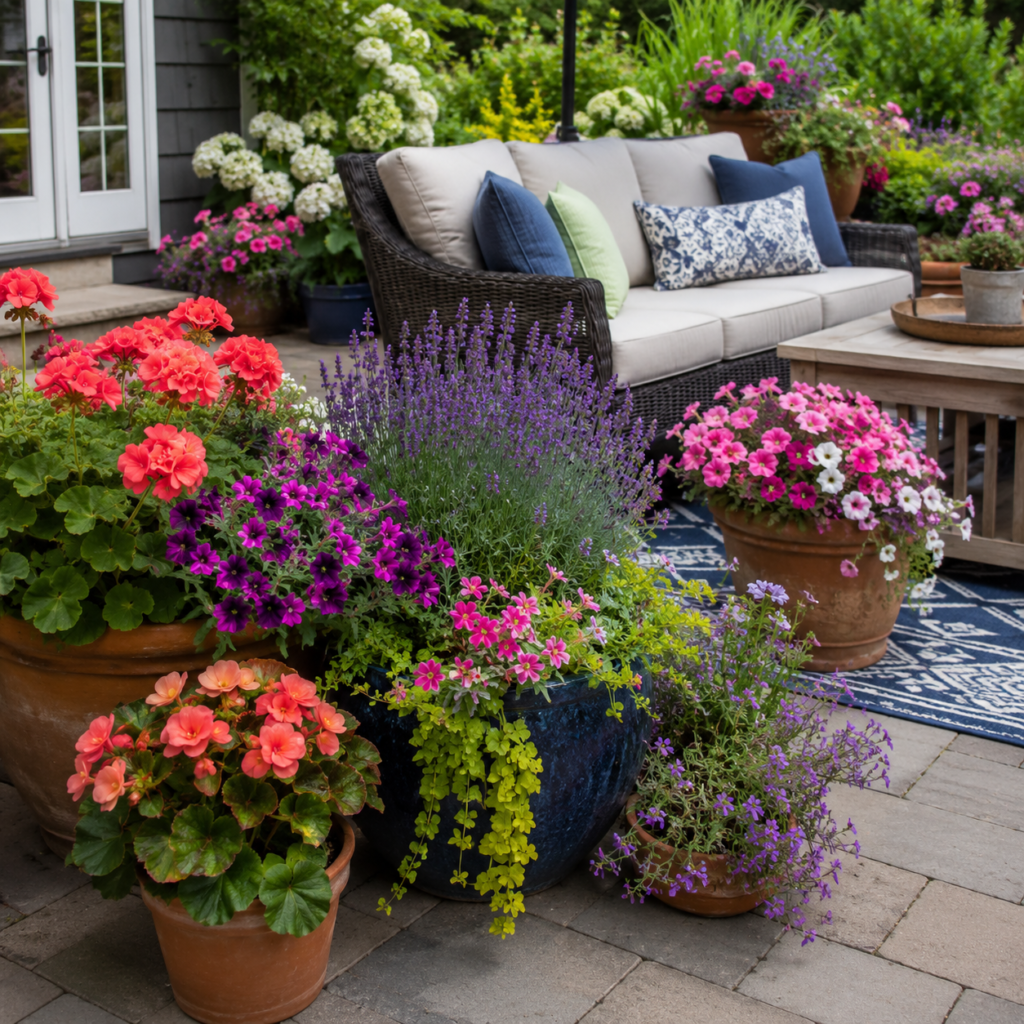
Flower planters add patio color through annuals, perennials, trailing plants, mixed containers, and seasonal displays. They work well near doors, seating areas, steps, and patio edges.
Use the thriller, filler, spiller method:
- Thriller: tall plant for height and drama
- Filler: medium flowers for fullness
- Spiller: trailing plants that soften the edge
Best sunny patio flowers:
- Petunias
- Geraniums
- Marigolds
- Zinnias
- Lantana
- Verbena
- Salvia
Best shaded patio flowers:
- Begonias
- Impatiens
- Fuchsias
- Caladiums
- Coleus
- Heuchera
Are Wooden Patio Planters Good?
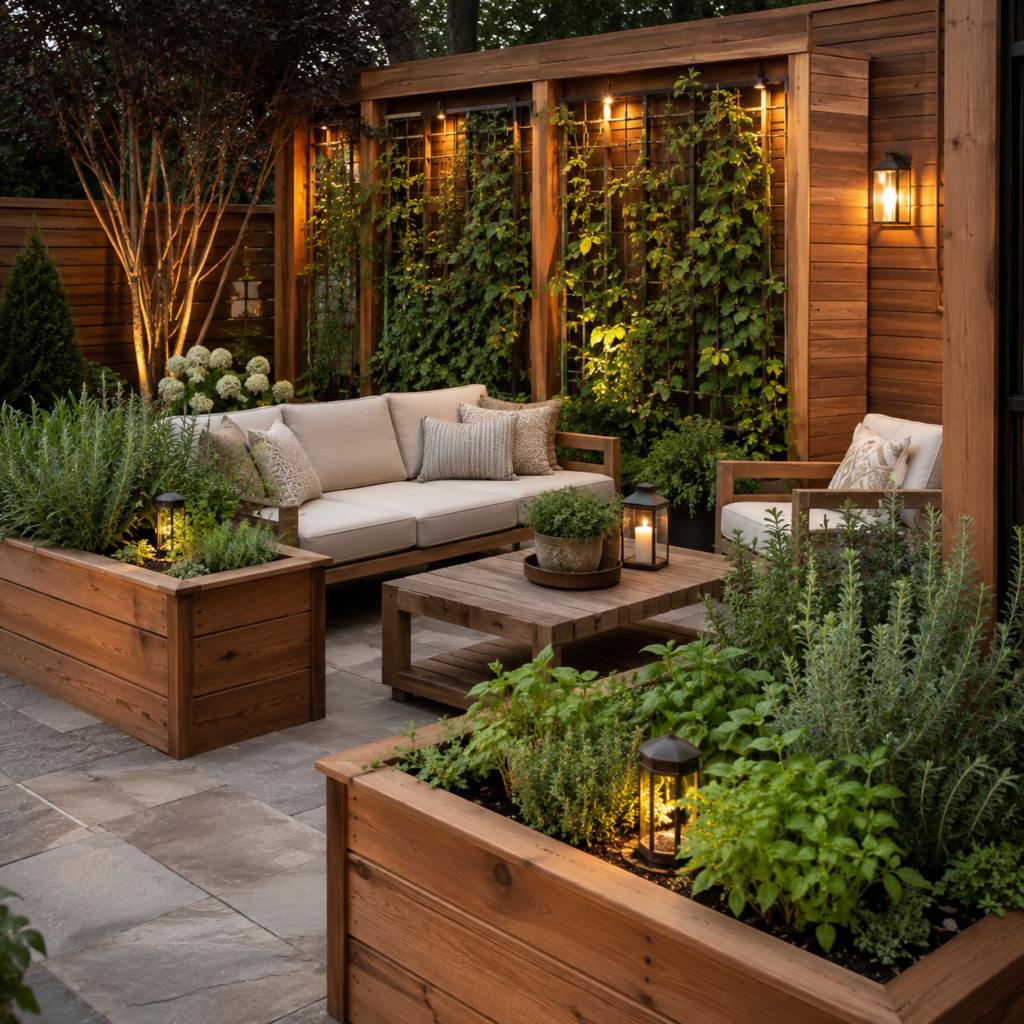
Wooden patio planters are a good choice when you want warmth, natural texture, and a softer look around hard patio surfaces. Cedar, redwood, teak, and properly treated outdoor wood pair well with fences, decks, pergolas, furniture, and rustic or modern backyard styles.
Wooden patio planters work well for:
- Raised herb planters
- Long rectangular planter boxes
- Built-in bench planters
- Privacy planter screens
- Vegetable patio planters
- Rustic flower boxes
- Modern slatted planters
- Deck and patio border planters
Important care tips:
- Use rot-resistant wood when possible
- Add proper drainage holes
- Raise the planter slightly from the patio surface
- Use a liner that still allows drainage
- Seal, stain, or oil the wood if needed
Herbs and Vegetables in Patio Planters
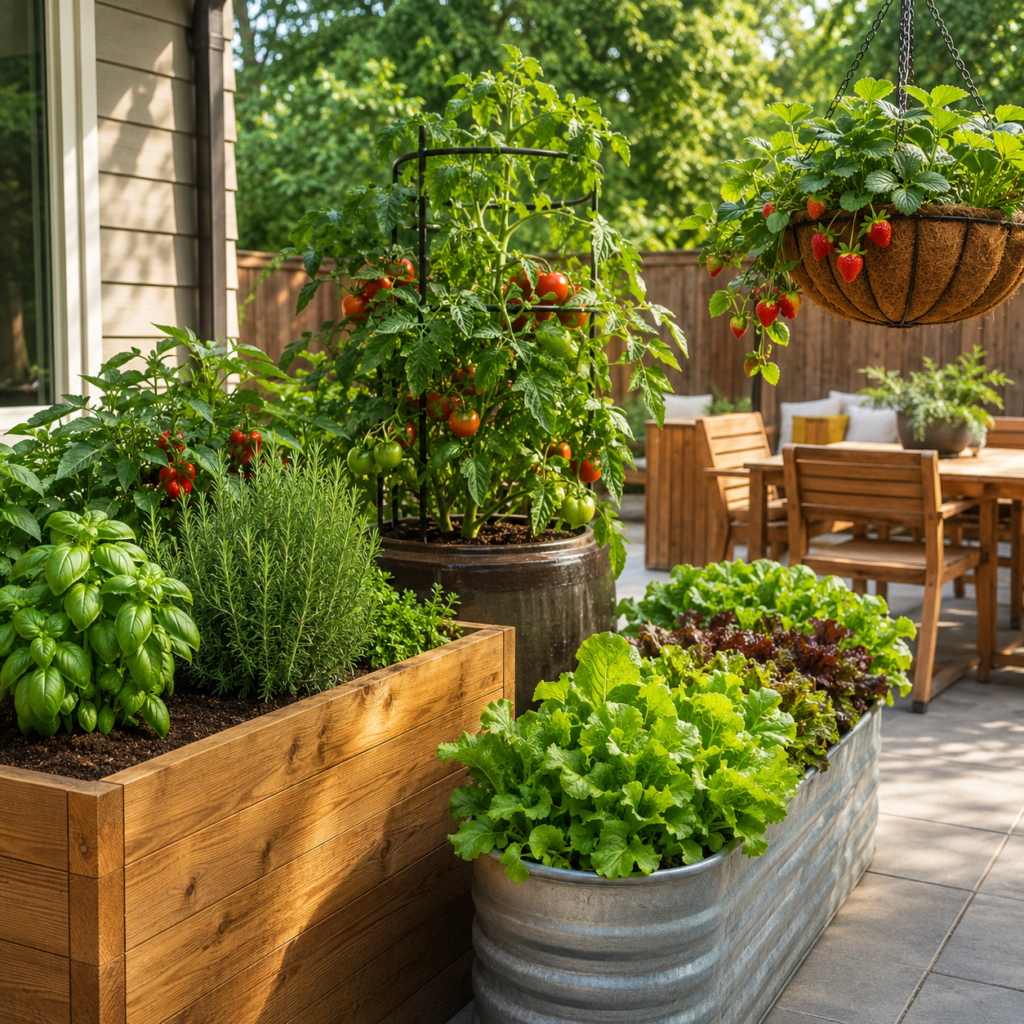
Yes, herbs and vegetables can grow well in patio planters when they receive enough sunlight, drainage, root space, and consistent watering. A backyard patio keeps useful plants close to the kitchen, grill, and outdoor dining area.
Herbs are usually the easiest edible plants for patio containers. Basil, rosemary, thyme, parsley, oregano, chives, cilantro, and mint can all work well in pots. Mint should usually be kept in its own container because it spreads aggressively. Vegetables need more space and sunlight. Tomatoes and peppers need deeper containers, while lettuce, spinach, radishes, and strawberries can grow in shallower or hanging planters.
Good edible plants for patio planters include:
- Basil
- Rosemary
- Thyme
- Mint
- Parsley
- Cherry tomatoes
- Peppers
- Lettuce
- Strawberries
- Compact cucumbers
Best Patio Planter Materials
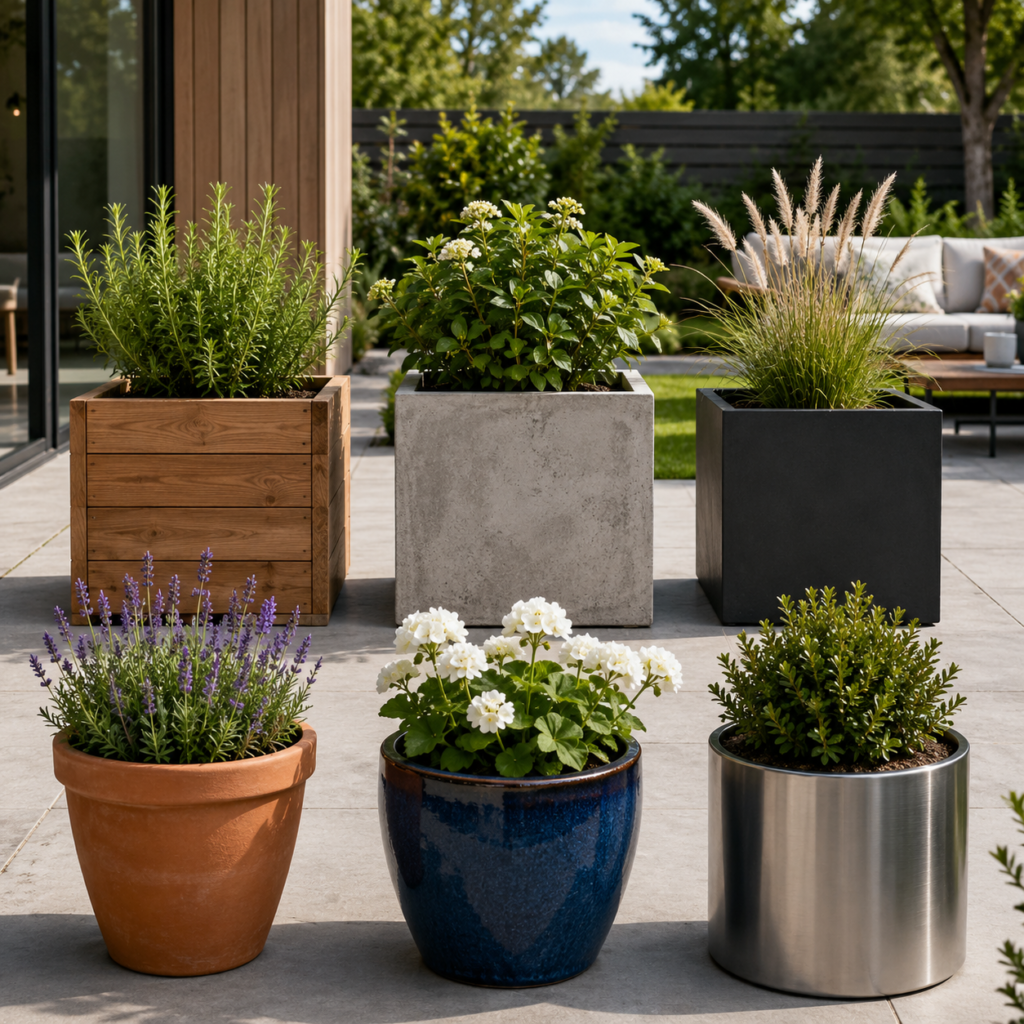
Choose patio planter materials based on style, weight, durability, cost, climate, and maintenance. The material affects appearance, watering, mobility, and long-term outdoor performance.
Concrete planters feel modern, heavy, and architectural. They are excellent for large patios, windy areas, pool patios, and permanent layouts. Wood planters feel warm and natural, making them ideal for cozy patios, raised herb beds, and rustic or modern backyard designs. Fiberglass planters are lightweight and clean-looking, so they work well for flexible layouts. Metal planters look sleek, but they can heat up in strong sun. Terracotta feels classic and breathable, while ceramic adds polish and color.
Use this comparison table:
| Material | Best For | Pros | Watch Out For |
| Wood | Natural patios | Warm, DIY-friendly | Needs protection |
| Concrete | Modern patios | Heavy, durable | Hard to move |
| Fiberglass | Flexible layouts | Lightweight, clean look | Can look less natural |
| Metal | Modern designs | Sleek, strong | Can heat up |
| Terracotta | Mediterranean patios | Classic, breathable | Dries quickly |
| Ceramic | Decorative patios | Colorful, polished | Can crack in frost |
Patio Designer Insight
A patio planter should be chosen after checking sunlight, walking space, surface protection, and final weight. Many planter problems happen because a container looks good online but becomes too heavy, too hot, too wet, or too large for the real patio layout. After soil and water are added, large planters become much heavier than expected, while dark metal containers can heat up in strong sun.
- Check sunlight first: Plant health depends on the actual light the patio receives.
- Check walking space: Planters should not block doors, chairs, steps, or walkways.
- Check surface protection: Use pot feet, risers, trays, or saucers to reduce stains.
- Check final weight: Soil, water, plants, and containers can become very heavy.
- Check drainage: Most patio planters need drainage holes to prevent soggy soil.
Low-Maintenance Patio Planters
Keep patio planters low-maintenance by choosing the right pot size, using drainage holes, adding mulch, grouping plants with similar needs, and selecting hardy plants that match the patio’s sun, shade, heat, and wind. Most planter problems happen because the plant, pot, and location do not match. A shade plant placed on a hot patio will struggle. A thirsty plant in a tiny pot will dry too fast. A container without drainage can cause root rot.
On raised decks or balconies, planter weight should be considered before buying large containers. Soil, water, and mature plants can make a planter much heavier than expected. If weight or movement is a concern, choose lightweight fiberglass, resin, or composite planters instead of concrete, stone, or oversized ceramic pots.
Low-maintenance patio planter tips:
- Use larger containers when possible
- Make sure every planter drains properly
- Add mulch to reduce evaporation
- Group plants with similar water needs
- Use self-watering planters for herbs and flowers
- Install drip irrigation for larger patio setups
- Use pot feet or risers to protect the patio surface
Patio Planter Mistakes to Avoid
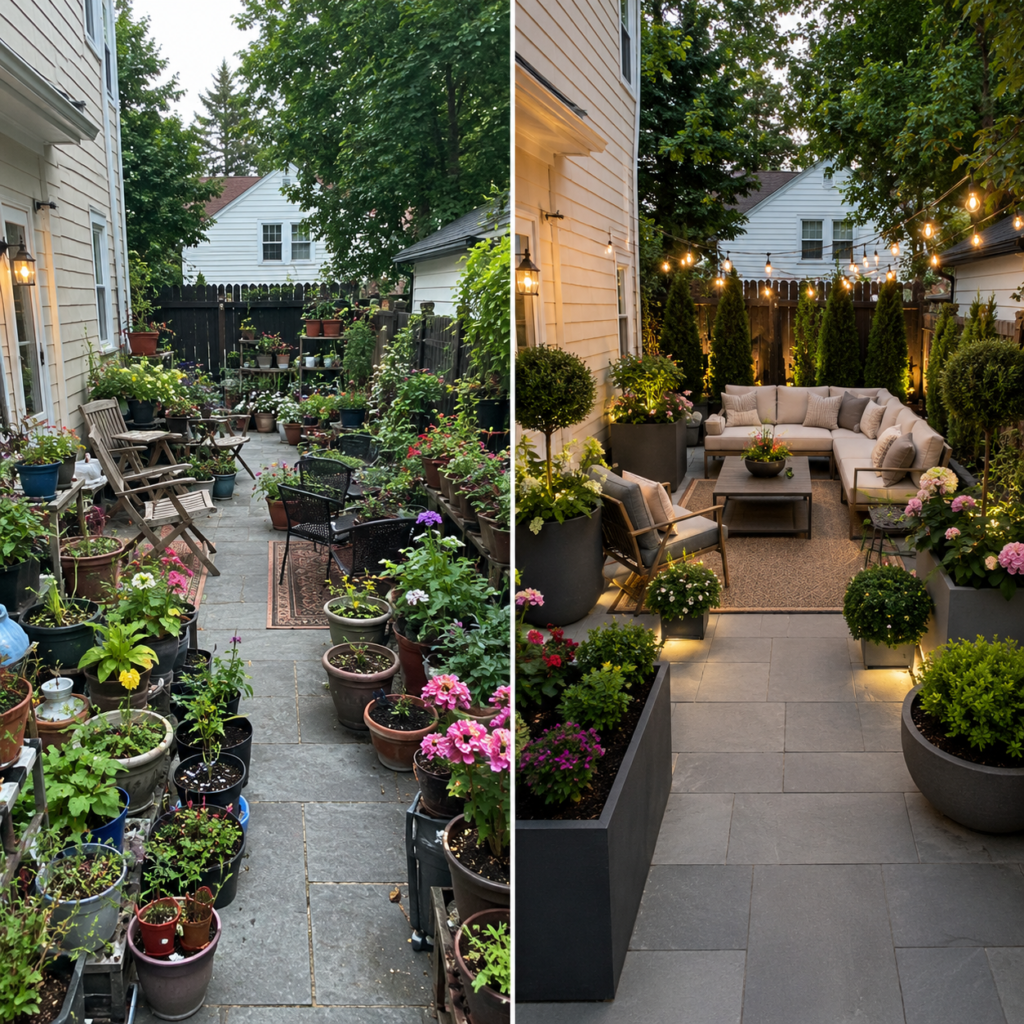
The biggest patio planter mistakes are using pots that are too small, blocking walkways, ignoring drainage, choosing the wrong plants for the sunlight, and scattering too many unrelated containers across the patio. These mistakes can make even expensive planters look messy, crowded, or difficult to maintain. A beautiful planter should improve the patio, not create new problems.
Before buying planters, check where people walk, where chairs move, where water drains, and how much sun the patio receives. Also think about how heavy the planter will become after soil, plants, and water are added. In real backyard patios, many design problems happen because the planter looks good alone but does not fit the actual space, furniture, or care routine.
- Do not use tiny pots beside large patio furniture.
- Do not block doors, drains, steps, walkways, or chair movement.
- Do not mix sun-loving and shade-loving plants in the same planter.
- Do not choose heavy planters if you may need to move them later.
- Do not forget drainage holes or patio surface protection.
- Do not scatter too many different planter styles across a small patio.
- Do not use thirsty plants in tiny containers on hot sunny patios.
Are Patio Planters Worth It?
Backyard patio planters are worth it if you want a fast, flexible way to improve outdoor space without rebuilding the patio. They can add privacy, color, structure, food, and a more finished outdoor living feel.
Backyard patio planters are worth considering if you want to:
- Make a plain patio feel softer
- Add color without planting garden beds
- Create privacy around seating
- Grow herbs or vegetables near the kitchen
- Improve a rental patio without permanent changes
- Define outdoor living zones
- Add greenery around furniture
- Make the backyard feel more finished
Patio Planter Makeover Example
A 12 x 14 foot concrete backyard patio looked empty because the sofa, grill, and dining set sat directly on a plain slab with no greenery. The patio had furniture, but no softness, height, privacy, or natural boundary around the seating area.
Instead of replacing the patio, planters were added in specific zones: two tall planters behind the sofa, one long planter along the fence, three flower pots near the door, one herb planter beside the table, and one small tree in the empty corner.
What improved:
- The seating area felt more private
- The fence line looked less plain
- The patio door became more welcoming
- The dining area became more useful
- The empty corner gained height and structure
- The patio felt connected to the backyard
Best Patio Planter Setup
Choose your patio planter setup based on the main problem you want to solve. Small patios need space-saving planters, exposed patios need privacy planters, plain patios need large containers, and dining patios benefit from herbs or flowers near the table.
- Choose tall planters if privacy is your main goal.
- Choose large planters if the patio feels empty or unfinished.
- Choose flower pots if the space needs color quickly.
- Choose herb planters if you cook or eat outside often.
- Choose black or concrete planters if you want a modern look.
- Choose wooden planters if you want warmth and natural texture.
- Choose vertical planters if the patio is small or narrow.
- Choose self-watering planters if you want easier maintenance.
FAQs
How many planters should a patio have?
Most patios look good with three to seven planters, depending on size. Small patios need fewer larger or vertical planters, while large patios can handle oversized containers and grouped pots.
What planters are best for covered patios?
Covered patios work best with shade-tolerant plants, hanging baskets, wall planters, and containers that are easy to water because rain may not reach them.
What are the best backyard patio planter ideas?
The best ideas include large corner planters, privacy planter screens, flower pots near seating, herb planters beside dining areas, and rectangular planter boxes along patio edges.
How do I arrange planters on a patio?
Place tall planters in corners or behind seating, medium pots beside furniture, and smaller planters near doors or steps. Keep walkways open and avoid random clutter.
What plants grow best in patio planters?
Good choices include lavender, rosemary, boxwood, ornamental grasses, hydrangeas, petunias, geraniums, herbs, dwarf citrus, bamboo, and small patio trees.
Can patio planters create privacy?
Yes, tall planters with bamboo, arborvitae, grasses, trellis vines, or evergreen shrubs can block views and make a backyard patio feel more private.
What size planters are best for patios?
Small patios need slim or vertical planters. Larger patios can handle oversized pots, long troughs, and tall planters that match the scale of outdoor furniture.
Are patio planters good for vegetables?
Yes, many vegetables grow well in patio planters. Tomatoes, peppers, lettuce, herbs, strawberries, and compact vegetables are good options if the patio gets enough sun.
Do patio planters need drainage holes?
Yes, most patio planters need drainage holes to prevent soggy soil and root rot. Use pot feet or saucers carefully to protect patio flooring.
How do I make patio planters look expensive?
Use fewer larger planters, repeat the same material, choose a simple plant palette, add height with shrubs or grasses, and place planters around seating areas intentionally.
Myra is the founder and lead writer of Backyard Planter Ideas, where she shares practical, well-researched guidance on planter design, plant selection, and outdoor styling. Her goal is to help homeowners create attractive, functional garden spaces with clear, reliable, and easy-to-apply advice.