
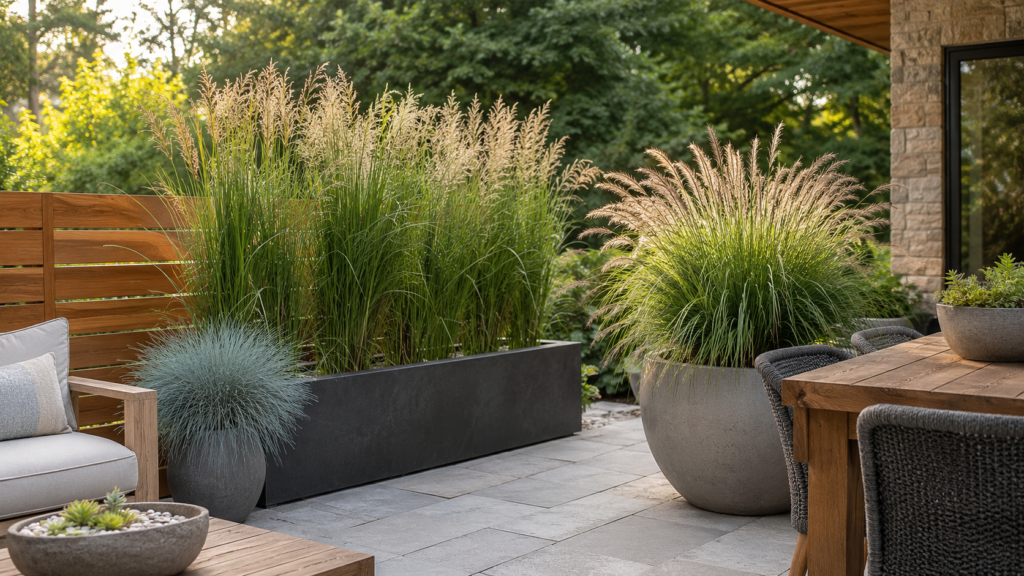
The best ornamental grass planter ideas match the grass’s mature shape, sunlight and moisture needs with a stable container and a clear purpose. Use upright grasses in rectangular troughs for privacy, arching grasses in wide pots as focal points, and compact fescues or sedges in lower bowls for small patios. Every planter should provide adequate root space, open drainage and enough stability to support the plant after it matures.
Choose an Ornamental Grass Planter in 60 Seconds
Start with the function of the planter rather than its appearance. A privacy screen needs tall, upright grasses in a deep trough, while a decorative focal point works better with one arching grass in a wide container. Small patios need compact plants, and shaded spaces require forest grasses or suitable sedges. These ornamental grass planter ideas can be adapted by changing the grass form, container size and growing conditions.
| Your goal | Grass form | Recommended planter |
|---|---|---|
| Privacy | Tall and upright | Deep rectangular trough |
| Focal point | Arching or plume-forming | Wide round or square pot |
| Small patio | Compact and mounding | Bowl or low cylinder |
| Modern design | Upright or blue-gray | Black, concrete or metal planter |
| Partial shade | Cascading forest grass or sedge | Wide bowl |
| Low-water display | Compact dry-condition grass | Terracotta or stone pot |
| Balcony screen | Narrow and upright | Broad-based trough |
| Winter structure | Persistent stems or evergreen foliage | Frost-resistant planter |
Before buying, check:
- Mature height and spread
- Daily sunlight
- Wind exposure
- Moisture preference
- Filled planter weight
- Seasonal or year-round privacy needs
- Winter hardiness
- Local invasive-plant guidance
- Space for future division
How We Selected These Ornamental Grass Planter Ideas
These ideas were evaluated as complete grass-and-planter systems, with attention to mature size, root space, stability, light, moisture compatibility, seasonal value and maintenance. The goal was to identify combinations that remain balanced and manageable after the plants mature, not only when they are newly planted.
The main criteria were mature dimensions, root manageability, planter stability, regional suitability, maintenance demand and long-term proportion. Always confirm the exact botanical name and cultivar before purchasing because broad labels such as fountain grass, switchgrass and Carex can include plants with very different sizes and requirements.
Choose Ornamental Grass Planters by Climate and Growing Conditions
Climate affects watering, flowering, winter survival and planter durability. Container roots face greater temperature swings, so dark pots may overheat and small exposed containers may freeze deeply.
| Conditions | Prioritize | Avoid |
|---|---|---|
| Cold winters | Hardy cultivars and frost-resistant pots | Tender grasses without protection |
| Hot, dry summers | Heat-tolerant grasses and larger containers | Small dark pots |
| Humid summers | Open spacing and air circulation | Congested crowns |
| Partial shade | Japanese forest grass and suitable Carex | Full-sun grasses in deep shade |
| Heavy rain | Free drainage and raised pots | Trapped runoff |
| Windy locations | Compact grasses and broad bases | Tall grasses in narrow pots |
| Balconies | Lightweight containers and controlled drainage | Excessive filled weight |
| Mild winters | Evergreen sedges and tender options | Assuming all non-native plants are safe |
Choose for climate first, then select the plant and planter. The most reliable ornamental grass planter ideas begin with plants suited to the local climate rather than containers selected only for appearance.
Statement Ornamental Grass Planter Ideas
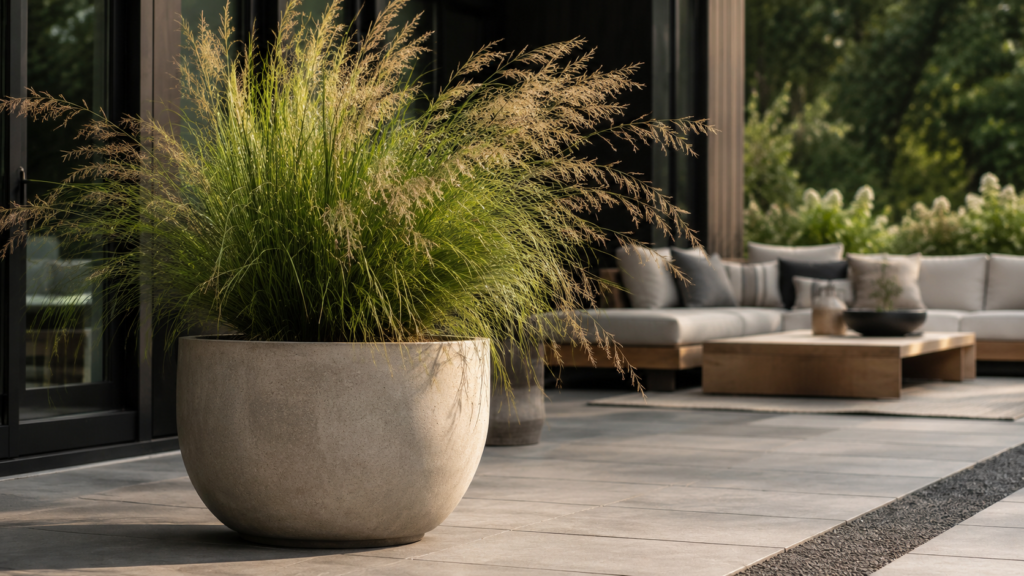
Statement planters create one clear focal point. They work near entrances, seating areas, pathways and empty patio corners. The grass should remain dominant rather than disappearing inside an overcrowded combination. These statement ornamental grass planter ideas use one dominant plant or a repeated cultivar to create a clear focal point.
1. Oversized Single-Grass Focal Pot
Plant one arching or plume-forming grass in a large round, square or tapered pot. A single specimen receives the full root zone and retains a clear silhouette.
Use a neutral container so the foliage and seed heads remain the main feature. Leave enough open space for the mature leaves to move without brushing against furniture or walkways.
2. Matching Grass Planters at an Entrance
Place two matching containers beside a door, gate or staircase. Repeating the same grass creates symmetry, while the foliage softens the formal arrangement.
Choose a controlled upright or arching cultivar whose mature width will not obstruct the entrance. Keep both pots at the same planting level and use identical surface finishes.
3. Tall Column Planter With Upright Grass
A column planter adds height without using the floor space of a broad pot. Pair it with a narrow upright grass rather than a wide cascading variety.
Stability is essential. Use a broad or reinforced base, place the container on a level surface and avoid exposed balcony edges.
4. Low Bowl With Compact Blue-Gray Grass
Compact blue fescue creates a low sculptural mound in a concrete, terracotta or stone-effect bowl. Its blue-gray foliage contrasts well with dark or warm-toned containers.
Keep the design simple with one grass, a thin mineral mulch and perhaps one low dry-condition companion.
5. Repeated Grasses in a Long Corten-Style Trough
Repeat one cultivar along a long trough to create rhythm and seasonal screening. Upright grasses produce a formal line, while arching grasses create softer movement.
Space plants according to mature spread rather than nursery-pot size. Leave access for irrigation and future division.
Mixed Ornamental Grass Container Combinations
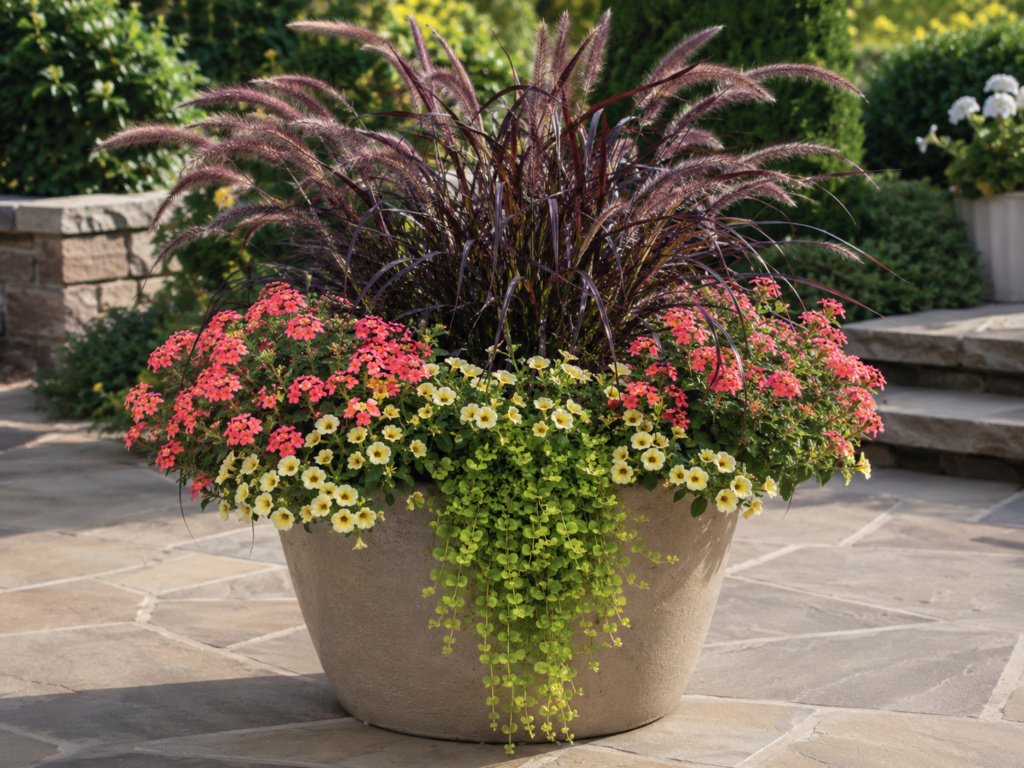
Mixed planters should be built around compatible light and moisture requirements. The grass normally provides height, lower plants fill the middle and a restrained trailer softens the rim.
6. Purple Fountain Grass With Trailing Flowers
Place purple fountain grass in the center or rear of a large sunny pot. Surround it with compatible calibrachoa, verbena or trailing petunias.
Warm flowers reinforce the burgundy foliage, while white flowers create a lighter contrast. Plan for seasonal replacement or protected overwintering in cold climates.
Regional Safety Note for Purple Fountain Grass
The name purple fountain grass may refer to different species, cultivars or hybrids. Their invasive status is not the same everywhere.
Check the complete botanical and cultivar name against a current regional database. Do not assume that the green species, red cultivar and sterile hybrids have identical behavior.
7. Golden Japanese Forest Grass With Heuchera and Ivy
Combine Japanese forest grass with dark heuchera and a restrained trailing foliage plant. The golden cascading grass brightens partial shade, while burgundy leaves provide contrast.
Use a wide bowl and maintain moderate moisture. Protect the foliage from intense afternoon heat.
8. Blue Fescue With Sedum and Creeping Thyme
Plant blue fescue with sedums and creeping thyme for a dry, sunny arrangement. The fescue provides the main mound, while broader succulent foliage adds contrast.
Use a freely draining pot and avoid moisture-loving companions. Keep the planting open enough for air to circulate around the crown.
9. Fiber Optic Grass With Moisture-Loving Flowers
Use fiber optic grass or another moisture-loving grass-like plant in a glazed or moisture-managing container. Pair it only with plants that enjoy consistently moist conditions.
Do not combine it with blue fescue, lavender, thyme or succulents.
10. Bronze Sedge With Dark-Leaved Fillers
Combine bronze Carex with burgundy heuchera or another dark foliage plant. A pale or charcoal planter helps the fine bronze leaves remain visible.
Keep the color palette controlled and confirm the selected Carex cultivar’s hardiness and moisture needs.
Functional Grass Planters for Difficult Backyard Spaces
Grass planters can create privacy, separate outdoor zones and soften boundaries where permanent planting is impossible. Weight, wind and access are as important as appearance.
11. Rectangular Privacy Planters
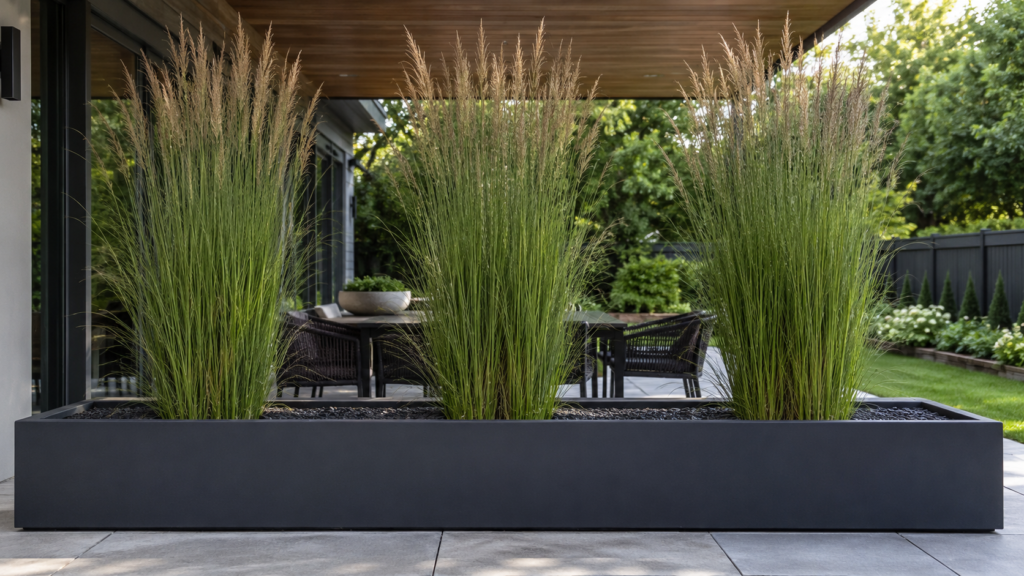
Use deep rectangular troughs with upright grasses such as compact switchgrass or feather reed grass cultivars. They provide vertical structure without the broad spread of heavily arching grasses.
Most deciduous grasses provide seasonal rather than permanent green privacy. Combine them with a structural screen when year-round coverage is essential.
How Many Grasses Do You Need for a Privacy Planter?
Use this formula:
Number of plants = usable planter length ÷ mature plant width
A 72-inch trough can hold approximately three grasses expected to spread 24 inches each:
72 ÷ 24 = 3 plants
Leave space at both ends and avoid adding extra plants for instant density. Correct spacing reduces competition and makes future division easier.
12. Movable Grass Planter on Locking Casters
Use a compact or medium grass in a lightweight composite planter on an outdoor-rated caddy. This makes it possible to adjust privacy and seating layouts.
The caddy must support the fully watered weight. Lock the wheels after positioning and avoid very tall plants that become unstable during movement.
13. Layered Grass Planters for an Empty Corner
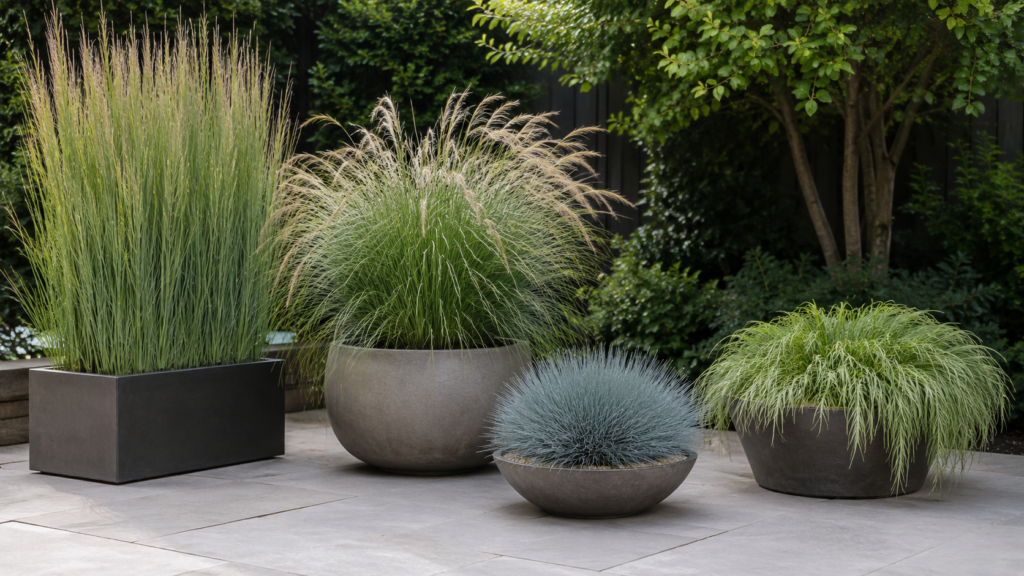
Group three separate pots at different heights. Place an upright grass at the back, an arching grass or sedge in the middle and a compact mound at the front.
Separate containers allow plants with different moisture needs to appear together without sharing one root zone.
14. Narrow Grass Trough for a Balcony
Use a narrow trough inside the balcony railing. Select compact or narrow plants that will not block doors, drains or walking routes.
Confirm structural weight limits, control runoff and avoid extremely tall grasses in exposed upper-level locations.
15. Repeated Grass Planters to Soften a Fence
Place matching planters at regular intervals along a plain fence. Repetition breaks up the hard surface while leaving it accessible for maintenance.
Choose foliage that contrasts with the boundary, such as blue-gray grass against warm timber or gold foliage against charcoal panels.
Ornamental Grass Planters by Garden Style
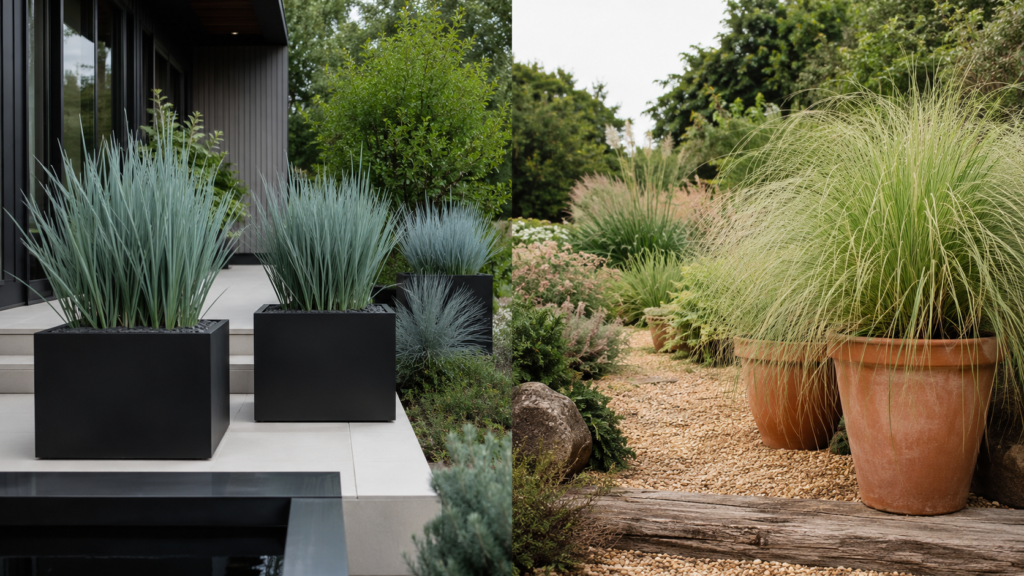
Planter finish can change the character of the same plant. Repeat materials and colors already present in the landscape so the containers feel connected to the backyard.
16. Matte Black Architectural Planter
Pair upright green, gold or blue-gray foliage with a matte black container. Use one cultivar, simple mulch and purposeful spacing.
Monitor moisture and root-zone heat in strong sun because thin black walls can become hot.
17. Terracotta Naturalistic Grass Grouping
Group terracotta pots containing upright, arching and compact grasses. Repeat a similar clay tone while varying planter height.
Terracotta works well near brick, gravel and timber but may require more frequent watering in hot weather.
18. Four-Season Grass and Seed-Head Display
Choose a grass with persistent stems, seed heads or autumn color. Use a weather-resistant planter and leave healthy dried growth standing through winter where appropriate.
Raise the pot on feet to improve drainage and remove only severely damaged stems before spring cleanup.
Should You Choose an Annual, Perennial or Evergreen Grass-Like Plant?
Choose a seasonal grass for immediate summer impact, especially where tender perennials cannot overwinter outdoors. Use hardy perennials in large long-term containers, and select evergreen sedges when winter foliage or partial-shade performance matters.
| Type | Best use | Main limitation |
|---|---|---|
| Annual grass | Immediate seasonal display | Replacement required |
| Tender perennial | Dramatic foliage and plumes | Winter protection |
| Hardy perennial | Permanent large planter | Division and root space |
| Deciduous perennial | Seasonal privacy and seed heads | Spring cutback |
| Evergreen sedge | Shade and winter foliage | Cultivar requirements vary |
| Moisture-loving rush | Wet container designs | Incompatible with dry plants |
A permanent planter does not always need a permanent plant. In severe climates, a replaceable seasonal grass may produce a more predictable result.
True Grass, Sedge, Rush or Grass-Like Plant?
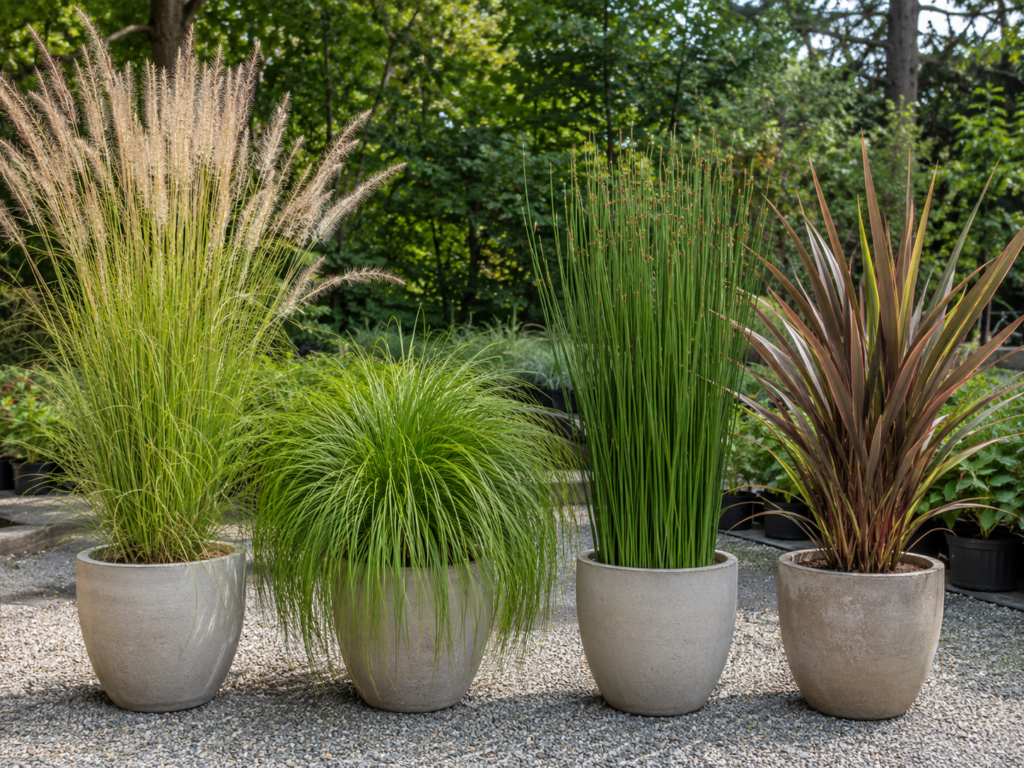
Ornamental grass is often used as a visual category. True grasses belong to the Poaceae family, sedges include Carex, and rushes include Juncus. Other narrow-leaved plants may resemble grasses while belonging to different families.
| Category | Examples | Typical use |
|---|---|---|
| True grass | Festuca, Panicum, Calamagrostis | Sun, structure and plumes |
| Sedge | Carex | Shade and foliage displays |
| Club-rush | Isolepis | Moist containers |
| Rush | Juncus | Wet or contemporary designs |
| Other grass-like plants | Cordyline, Acorus, Dianella | Architectural foliage |
Always check the exact plant label. Similar-looking plants can require very different moisture, light and winter conditions.
Best Ornamental Grasses for Planters
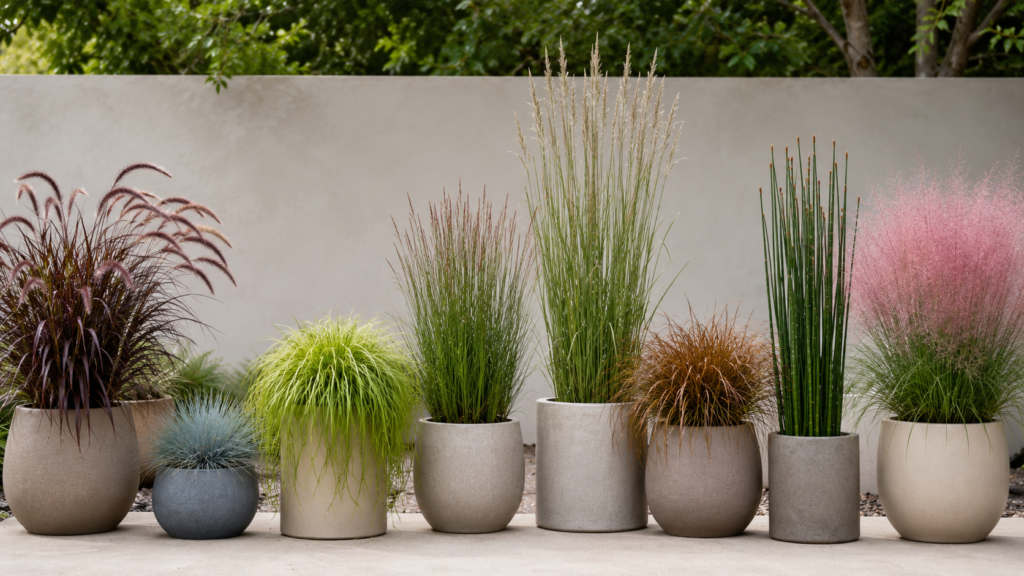
The best plants for ornamental grass planter ideas remain proportional to the container and manageable as their roots mature.
| Plant | Form | Best use | Main caution |
|---|---|---|---|
| Purple fountain grass | Arching | Seasonal focal pot | Tender and region-dependent |
| Blue fescue | Compact mound | Small sunny bowls | Avoid wet soil |
| Japanese forest grass | Cascading | Shaded containers | Avoid harsh sun |
| Compact switchgrass | Upright | Privacy troughs | Needs substantial root space |
| Feather reed grass | Narrow and vertical | Architectural planters | May weaken in shade |
| Carex cultivars | Mounding or cascading | Shade and winter foliage | Requirements vary |
| Juncus cultivars | Upright stems | Moist contemporary pots | Not suitable for dry combinations |
| Pink muhly grass | Airy and arching | Autumn focal display | Needs width and sunlight |
Cultivar-Level Container Suitability Score
Score each option from 1 to 5 for:
- Size control
- Root manageability
- Wind stability
- Moisture compatibility
- Seasonal value
A plant scoring 19–21 out of 25 is generally a strong container candidate when correctly matched to its location. However, the purpose matters more than the total score. Blue fescue may be easier to manage than switchgrass, but it cannot provide privacy.
How to Adjust the Score for Your Location
Reduce suitability when:
- The plant is near its hardiness limit.
- The pot is exposed to severe wind.
- The container is too small.
- Light is below the plant’s preference.
- Companion plants need different moisture.
- Winter protection is unavailable.
Increase suitability when the cultivar is regionally proven, the root volume is generous and watering can be controlled.
Match the Planter to the Grass
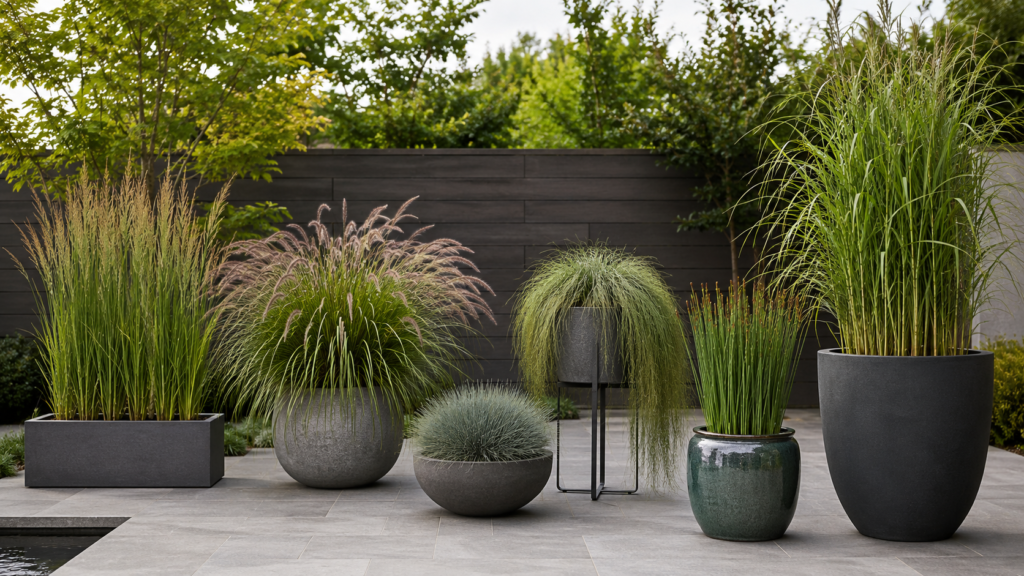
| Grass form | Best planter | Use |
|---|---|---|
| Upright | Square or rectangular | Privacy and entrances |
| Arching | Wide round pot | Focal points |
| Compact | Bowl or low cylinder | Small patios |
| Cascading | Wide elevated bowl | Shade |
| Moisture-loving | Glazed pot | Wet container designs |
| Tall screen grass | Deep heavy trough | Outdoor zoning |
Choose material according to weight, climate and watering needs:
- Terracotta: Natural but dries quickly
- Ceramic: Moisture-retentive but heavy
- Concrete: Stable but difficult to move
- Composite: Lightweight and practical
- Metal: Modern but temperature-sensitive
- Wood: Suitable for troughs with proper drainage
The planter must provide functional drainage, safe filled weight, enough root volume and access for future division.
Plan Your Ornamental Grass Planter Before You Buy
Plan the plant, container, growing medium and drainage together. Before ordering, confirm:
- Botanical and cultivar name
- Mature dimensions
- Light and moisture needs
- Regional hardiness
- Planter root volume
- Base stability
- Drainage holes
- Safe filled weight
- Winter protection
- Access for division
- Runoff control
Buy companion plants only after confirming that they share the grass’s light, moisture and seasonal care requirements.
How to Plant Ornamental Grass in a Container
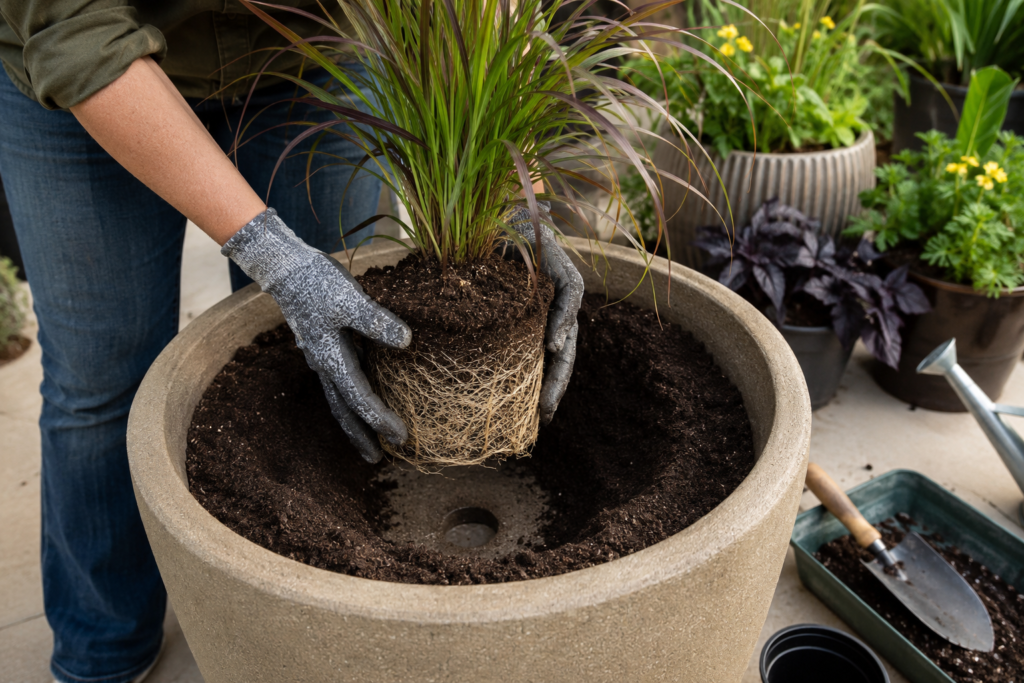
Successful ornamental grass planter ideas depend on correct planting depth, drainage and enough space for future root development.
- Confirm the mature height and width.
- Check hardiness and regional suitability.
- Select a stable planter with drainage.
- Use a quality container-growing medium.
- Loosen tightly circling roots.
- Keep the crown at its original depth.
- Add only compatible companion plants.
- Firm the medium gently.
- Water until excess drains from the base.
- Add a light surface mulch.
- Recheck stability after watering.
Do not use stones at the bottom as a substitute for drainage holes. Water still needs a clear route out of the container.
Seasonal Care Calendar for Ornamental Grass Planters
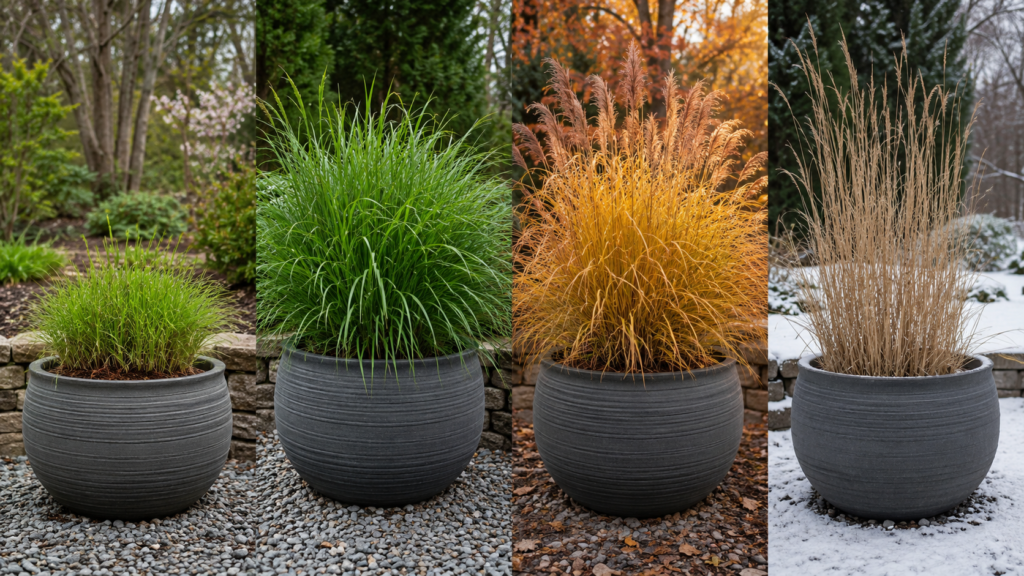
Spring
Cut back deciduous grasses before strong new growth appears. Tidy evergreen sedges, divide congested clumps and refresh exhausted growing medium.
Summer
Check moisture frequently, especially during hot or windy weather. Water deeply, inspect tall pots after storms and avoid excessive fertilizer.
Autumn
Retain attractive seed heads, remove failed annual companions and move tender grasses before frost. Clear drainage before prolonged rainfall.
Winter
Raise pots on feet, protect vulnerable containers and avoid saturated soil. A grass that is hardy in the ground may be less resilient in an exposed pot.
Why Is My Potted Ornamental Grass Struggling?
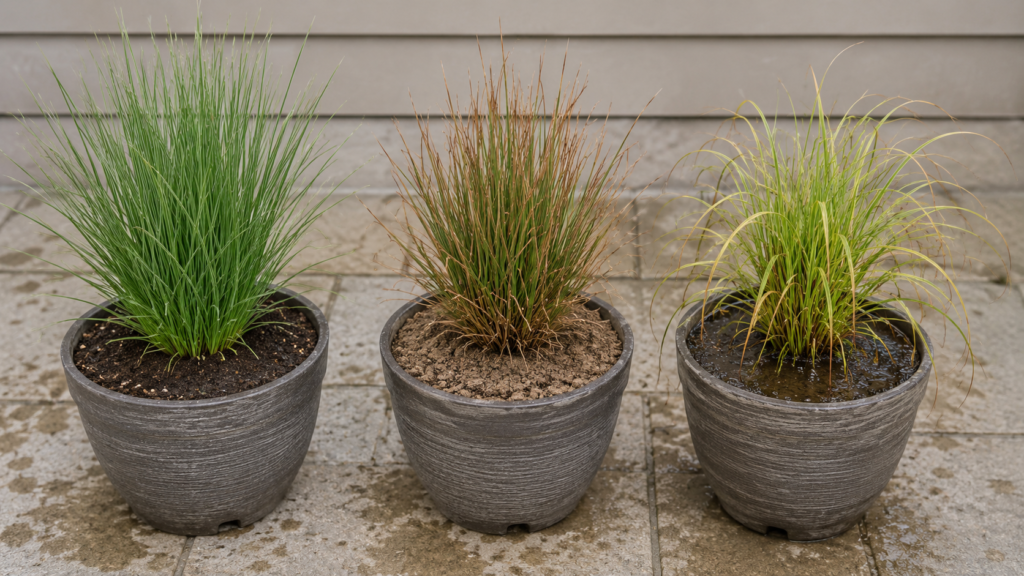
| Symptom | Likely cause | First action |
|---|---|---|
| Brown tips | Dryness, heat or salt buildup | Check deep moisture |
| Yellow foliage | Waterlogging or root stress | Inspect drainage |
| Flopping | Shade or excessive feeding | Review sunlight |
| Few plumes | Immaturity or low light | Check age and exposure |
| Dead center | Congestion | Divide the clump |
| Water runs through | Root-bound plant | Repot or divide |
| Soil stays wet | Blocked holes or dense mix | Restore drainage |
| Pot tips | Light base or excessive height | Stabilize or replace |
| Weak winter return | Root freezing or saturation | Improve protection |
Correct the physical cause before applying fertilizer or additional water.
Seven Mistakes That Make Ornamental Grass Planters Fail
1. Choosing by Nursery Size
Always check mature height and spread.
2. Using a Lightweight Pot
Tall grasses need broad, stable bases.
3. Mixing Opposing Water Needs
Choose companions by growing requirements, not color alone.
4. Blocking Drainage
Keep holes open and remove standing water.
5. Expecting Permanent Privacy
Many grasses provide seasonal screening only.
6. Ignoring Regional Guidance
Check the exact botanical name locally.
7. Leaving the Grass Root-Bound
Inspect annually and divide before congestion damages the planter.
Ornamental Grass Planter FAQs
Can ornamental grasses grow well in planters?
Yes. They perform well with enough root space, suitable light, regular watering and free drainage.
What are the best ornamental grasses for containers?
Blue fescue, Japanese forest grass, pink muhly grass, compact switchgrass and feather reed grass are strong options.
What size planter does ornamental grass need?
Match the container to the plant’s mature spread, height and root vigor. Tall grasses need large, stable troughs.
Do grass planters need drainage holes?
Yes. Drainage holes prevent excess water from remaining around the roots.
How often should potted grass be watered?
Check the root zone rather than following a fixed schedule. Water thoroughly when the growing medium begins to dry.
Which grasses are best for privacy planters?
Upright switchgrass and feather reed grass cultivars work well in deep rectangular troughs.
Can ornamental grasses survive winter in pots?
Hardy grasses can survive in large, well-drained containers, although exposed roots may need protection.
When should potted grasses be cut back?
Cut back deciduous grasses in early to mid-spring before new growth develops.
Why is my potted grass turning brown?
Possible causes include drought, heat, waterlogging, root congestion or natural dormancy.
Are purple fountain grasses invasive?
Regional classifications vary. Check the exact species and cultivar with a local authority.
Final Ornamental Grass Planter Decision Matrix
| Need | Best starting option | Planter |
|---|---|---|
| Privacy | Upright switchgrass or feather reed grass | Deep trough |
| Small sunny patio | Blue fescue | Medium bowl |
| Partial shade | Japanese forest grass | Wide bowl |
| Summer focal point | Purple fountain grass where suitable | Large stable pot |
| Autumn display | Pink muhly grass | Broad container |
| Winter foliage | Suitable Carex | Frost-resistant pot |
| Moist conditions | Fiber optic grass or rush | Glazed planter |
| Windy site | Compact grass | Heavy low bowl |
| Movable display | Medium grass | Composite pot on caddy |
| Modern design | Repeated upright grass | Black or metal trough |
Prioritize safety, plant health, function, climate and maintenance before appearance. Use these ornamental grass planter ideas as flexible starting points, then adjust the plant, container and care plan for your climate and available space.
Create a Grass Planter That Fits Your Space
The best ornamental grass planter fits the space, remains stable and can be maintained realistically. Use upright grasses for screening, arching grasses for focal points and compact grasses for small or exposed areas.
Follow this process:
- Define the planter’s purpose.
- Measure the location.
- Check sunlight and wind.
- Select the grass by mature form.
- Confirm regional suitability.
- Choose a stable container.
- Add compatible companions.
- Plan seasonal care.
- Preserve access for division.
- Review the design at maturity.
Choose the plant and container as one coordinated system. A properly matched arrangement will remain healthier, safer and more attractive than a decorative pot filled with an unsuitable grass.

Myra is the founder and lead writer of Backyard Planter Ideas, where she shares practical, well-researched guidance on planter design, plant selection, and outdoor styling. Her goal is to help homeowners create attractive, functional garden spaces with clear, reliable, and easy-to-apply advice.