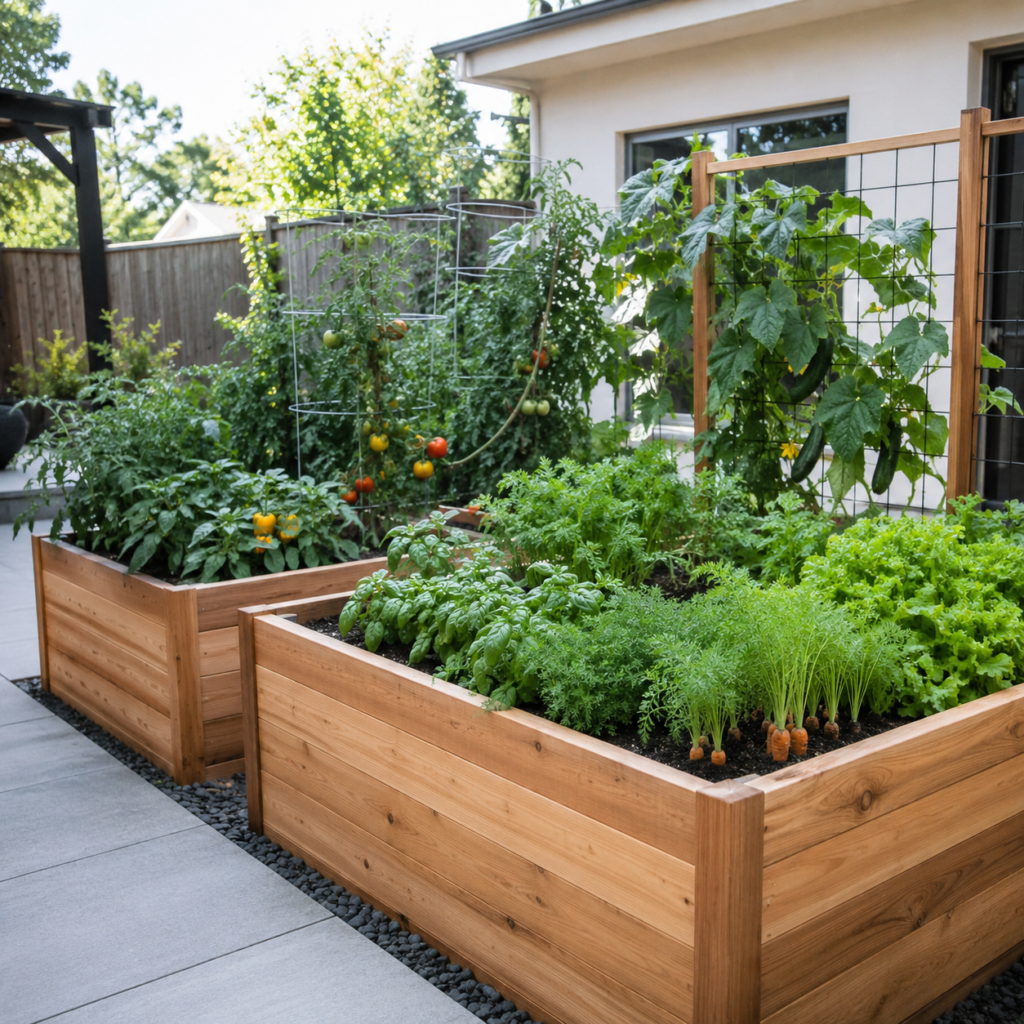
Vegetable planter box ideas are perfect for growing tomatoes, peppers, herbs, lettuce, carrots, cucumbers, beans, and other edible plants in small outdoor spaces. The best designs use deep soil, strong drainage, safe materials, full sun, and smart layouts so you can grow more food without needing a large backyard.
A good vegetable planter box is not just a wooden box filled with soil. It is a controlled growing space where depth, drainage, crop choice, sunlight, watering, and plant spacing all work together. When these details are right, a small backyard, patio, deck, or side yard can become a productive edible garden.
For backyardplanterideas.online, this guide focuses on practical vegetable planter box ideas that look good, grow well, and help beginners avoid the most common mistakes.
Quick Best Picks
The quickest way to choose the right vegetable planter box is to match the box with your space, crop type, and maintenance routine. For most beginners, a 12–18 inch deep cedar raised box is the best all-around option for herbs, lettuce, peppers, bush beans, carrots, and compact vegetables.
| Need | Best Vegetable Planter Box Idea |
| Best overall | 12–18 inch deep cedar raised box |
| Best for beginners | Lettuce, herbs, radish, and pepper box |
| Best for tomatoes | 18–24 inch deep box with cage |
| Best for small patios | Narrow trellis planter box |
| Best low maintenance | Self-watering vegetable planter box |
| Best for vertical space | Cucumber and bean trellis box |
For tomatoes, cucumbers, eggplants, and potatoes, choose a deeper 18–24 inch box because these crops need more root space, moisture, and support. For small patios, a narrow trellis planter box works better than a wide bed because it grows upward instead of spreading across the floor.
Best Ideas for Small Spaces
The best vegetable planter box ideas for small spaces use deep boxes, compact crops, vertical support, and simple layouts. A small planter box can grow salad greens, herbs, peppers, bush beans, carrots, cucumbers, or cherry tomatoes when the box size matches the plant’s root needs. This is why small-space vegetable gardening works best when you think beyond decoration and focus on function first.
Small-space vegetable gardening works best when you think in layers. Tall crops should go at the back, medium crops in the center, and low-growing herbs or greens near the front edge. This keeps sunlight open and makes harvesting easier. A box against a fence, deck railing, patio wall, or sunny walkway can produce more than many people expect.
Some of the best small-space vegetable planter box ideas include:
- A narrow cedar box for lettuce, herbs, and green onions
- A deep tomato planter box with a cage or stake
- A trellis planter box for cucumbers, peas, or pole beans
- A patio vegetable box with peppers, basil, and compact tomatoes
- A salad planter box with lettuce, spinach, arugula, and radishes
- A fence-side vegetable planter box for vertical growing
- A tiered planter box for herbs and shallow greens
- A raised wooden box near the kitchen door for quick harvesting
Where to Place Planter Boxes
The best place for a vegetable planter box is a sunny, accessible area near water, away from heavy foot traffic, and close enough for regular harvesting. A planter box that looks good but is hard to water will quickly become frustrating. For most homeowners, the best locations are along a patio edge, beside a fence, near the kitchen door, beside a deck, or in the sunniest part of a small backyard.
Placement should match the crop. Herbs and salad greens are useful near the kitchen because you harvest them often. Tomatoes, cucumbers, peppers, and beans need stronger sunlight, so they should go where the light is best. Trellis crops work well near fences, walls, or patio edges because vertical support saves floor space. On decks, placement needs extra care because filled planter boxes can become heavy, and water runoff can stain or damage boards if drainage is not managed.
Good vegetable planter box placement ideas include:
- Near the kitchen for herbs, lettuce, and green onions
- Along a sunny patio edge for peppers and compact tomatoes
- Against a fence for cucumbers, peas, and pole beans
- Beside a deck railing if weight and drainage are safe
- Near a water source for easier maintenance
- Away from narrow walkways where plants may get bumped
- In open sun for fruiting vegetables
- In partial relief from harsh afternoon heat for leafy greens
Best Vegetables for Planter Boxes
The easiest vegetables for planter boxes are lettuce, spinach, radishes, herbs, green onions, bush beans, peppers, cherry tomatoes, compact carrots, and cucumbers with support. These crops perform well because they adapt to controlled soil, regular watering, and limited space. Leafy greens are usually the most beginner-friendly choice because they grow quickly, do not need extremely deep soil, and can be harvested in stages. Instead of pulling the whole plant, you can cut outer leaves and let the center keep producing.
Root crops can also work well in planter boxes when the soil is loose and deep enough. Radishes are the easiest because they grow fast and do not need much depth. Carrots, beets, and turnips need deeper boxes, but they often grow better in planter boxes than compacted ground because the soil stays softer. Fruiting vegetables need more space and stronger planning. Tomatoes, peppers, eggplants, and cucumbers need deeper soil, regular feeding, steady moisture, and enough sunlight to produce properly.
How Deep Should Planter Boxes Be?
Most vegetable planter boxes should be at least 12 inches deep, but tomatoes, cucumbers, peppers, eggplants, potatoes, and deep-rooted vegetables perform better in 18–24 inches of soil. Shallow boxes are best for lettuce, herbs, spinach, radishes, and microgreens. Depth matters because vegetable roots need space to anchor, absorb water, and take up nutrients. A shallow planter may look attractive, but it can dry out quickly and limit root growth, especially in hot weather.
A shallow 6–8 inch vegetable planter box can still be useful when you choose the right crops. It works well for quick crops like lettuce, spinach, arugula, radishes, and microgreens. A 10–12 inch box is more flexible and can grow herbs, green onions, compact greens, baby carrots, and some small bush vegetables. A 12–18 inch box is the best middle-ground depth for most home gardeners because it works for peppers, bush beans, beets, carrots, compact eggplants, and many mixed vegetable layouts.
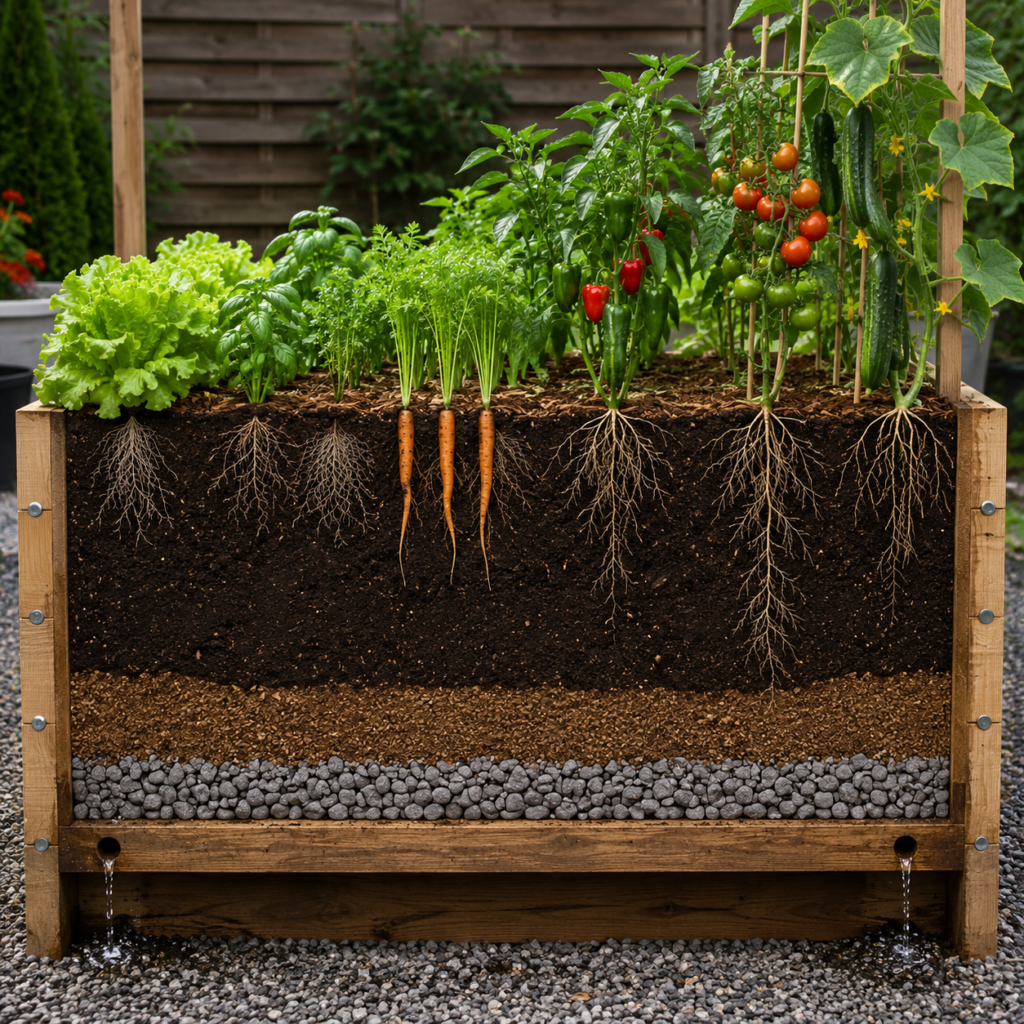
A simple rule is this: shallow boxes grow leaves, medium boxes grow roots and peppers, and deep boxes grow large fruiting crops. If you want one all-purpose vegetable planter box, choose 12–18 inches deep. If tomatoes and cucumbers are your main goal, choose 18–24 inches whenever possible.
Crop Depth and Spacing Guide
Vegetable planter boxes perform better when each crop has enough root depth and growing space. Many beginners choose the right vegetables but plant them too close together, which causes weak growth, poor airflow, smaller harvests, and faster moisture loss. Depth helps the roots grow downward, while spacing helps the leaves receive light and air. Both details matter if you want a healthy planter box instead of a crowded, stressful garden.
A box can look empty when seedlings are young, but vegetables expand quickly. Lettuce spreads outward, tomatoes grow tall and heavy, cucumbers climb and vine, and peppers need room around their stems. Good spacing also makes watering, pruning, and harvesting much easier. If you are unsure, leave slightly more space instead of forcing extra plants into the box.
| Crop | Minimum Depth | Spacing in Box | Best Box Type |
| Lettuce | 6–8 in | 6–8 in apart | Wide shallow box |
| Spinach | 6–8 in | 4–6 in apart | Salad planter |
| Radish | 6–8 in | 2–3 in apart | Fast harvest box |
| Green onions | 6–10 in | 2–4 in apart | Edge planting box |
| Herbs | 6–10 in | 6–12 in apart | Kitchen planter |
| Carrots | 12–18 in | 2–3 in apart | Deep loose soil box |
| Beets | 12–18 in | 3–4 in apart | Medium-depth box |
| Peppers | 12–18 in | 12–18 in apart | Sunny raised box |
| Bush beans | 12–18 in | 6–8 in apart | Medium box |
| Tomatoes | 18–24 in | 18–24 in apart | Deep support box |
| Cucumbers | 18–24 in | 12–18 in apart | Trellis box |
Best Materials for Vegetable Boxes
The best materials for vegetable planter boxes are cedar, redwood, untreated wood, galvanized metal, food-safe composite, and durable raised bed kits. The safest choice is a material that is weather-resistant, strong, well-drained, and suitable for edible plants. Because vegetables are grown for eating, material safety matters more here than it does with purely decorative flower planters. A beautiful box is not worth using if the material is old, unknown, or coated with questionable chemicals.
Cedar is one of the best all-around choices for backyard vegetable planter boxes. It looks natural, handles outdoor conditions well, and fits beautifully into modern, rustic, farmhouse, and cottage-style gardens. Redwood is another premium option and can last a long time outdoors, but it usually costs more. Untreated pine is cheaper and easy to find, but it does not last as long. Galvanized metal planter boxes are popular for modern backyards, while food-safe composite boxes are useful when low maintenance is the main goal.
Best material choices by goal:
- Best overall look: cedar vegetable planter box
- Best premium option: redwood planter box
- Best budget option: untreated pine box
- Best modern look: galvanized metal planter box
- Best low-maintenance option: food-safe composite box
- Best DIY beginner option: cedar or untreated pine raised box
- Best clean patio look: metal trough-style vegetable planter
- Best natural backyard style: cedar box with herbs and greens
Raised Boxes vs Regular Pots
Raised vegetable planter boxes are better when you want more growing space, easier layout control, better access, and a cleaner backyard design. Regular pots are better for single plants, small herbs, movable crops, or renters who need flexibility. A raised vegetable planter box feels more like a mini garden bed because it gives roots more shared soil volume. This helps moisture stay more stable than in tiny pots and gives you more control over spacing, crop combinations, and harvest access.
Regular pots are still useful, but they are more limited. One pot usually supports one main plant, which can work for herbs, dwarf tomatoes, peppers, strawberries, or small greens. The problem begins when you want a complete edible garden layout with several crops. Grow bags are another option and work well for potatoes, peppers, and temporary gardens, but they can dry out faster and often look less polished in a designed backyard. Elevated vegetable planter boxes are excellent for patios, seniors, renters, and anyone who wants less bending.
Best choice by growing situation:
- Raised planter box: best for mixed vegetables and backyard layouts
- Regular pot: best for one plant at a time
- Grow bag: best for potatoes, peppers, and temporary gardens
- Trough planter: best for herbs, greens, onions, and long rows
- Elevated planter: best for patios, seniors, and easy-access gardening
- Deep raised box: best for tomatoes, cucumbers, peppers, and eggplants
- Small pots: best for herbs, green onions, and movable plants
Best Vegetable Box Layout
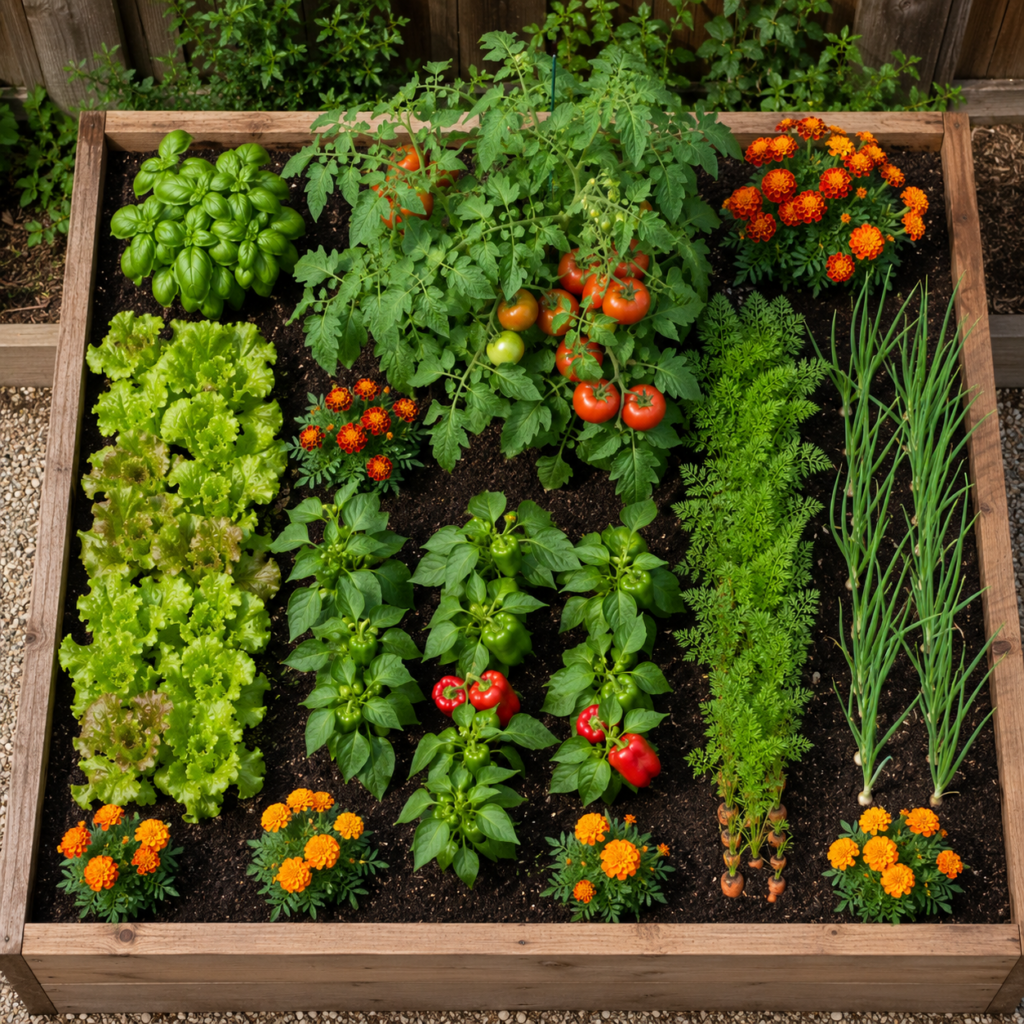
The best vegetable planter box layout places tall crops at the back, medium crops in the center, and low-growing herbs or greens at the front. This keeps sunlight open, improves airflow, and makes watering, pruning, and harvesting easier. A good layout prevents one plant from ruining the rest of the box. Tomatoes can shade lettuce, cucumbers can spread over peppers, and large squash can take over a small planter if you do not plan the space.
Start by choosing one main crop per box. This could be tomatoes, peppers, cucumbers, salad greens, herbs, carrots, or beans. Then choose smaller companion plants that fit around it. For example, a tomato planter box can include basil and lettuce near the edges, but it should not include too many extra tomato plants in the same small space. The best layout is not always the fullest layout. A slightly open vegetable planter box usually performs better than an overcrowded one.
Strong vegetable planter box layout ideas include:
- Tomato, basil, and lettuce box: one compact tomato at the back or center, basil nearby, lettuce along the front edge
- Pepper, onion, and herb box: two or three pepper plants with green onions, parsley, thyme, or basil around the edges
- Cucumber trellis and lettuce box: cucumbers at the back with a trellis, lettuce or radishes in front
- Salad planter box: lettuce, spinach, arugula, radishes, and green onions in a wide shallow box
- Salsa garden box: tomato, pepper, green onions, cilantro, and basil in one themed box
- Root vegetable box: carrots, beets, radishes, and turnips in loose deep soil
- Pollinator edge box: marigolds, nasturtiums, or calendula near the edges
Can Tomatoes Grow in Planter Boxes?
Yes, tomatoes can grow in planter boxes if the box is deep, sunny, well-drained, and strong enough to support the plant. Compact or determinate tomatoes are easier for planter boxes than large indeterminate varieties. Tomatoes are heavy feeders and thirsty plants, so they need consistent moisture, strong sunlight, and support from a cage, stake, or trellis. A shallow decorative box is not enough for a healthy tomato plant because the roots need space and the plant needs stability.
For beginners, cherry tomatoes and determinate tomatoes are usually easier. They stay more compact and are simpler to manage in a planter box. Large indeterminate tomatoes can grow tall and heavy, so they need deeper soil and stronger support. Place tomatoes where they receive strong sunlight. Most fruiting vegetables perform best with long hours of direct sun. If the box receives too much shade, the plant may grow leaves but produce fewer tomatoes.
A good tomato planter box setup includes:
- 18–24 inches of soil depth when possible
- Drainage holes or open-bottom drainage
- A strong tomato cage, stake, or trellis
- Quality potting mix instead of heavy garden soil
- Mulch to reduce moisture loss
- Space around the plant for airflow
Best Trellis Planter Box Ideas
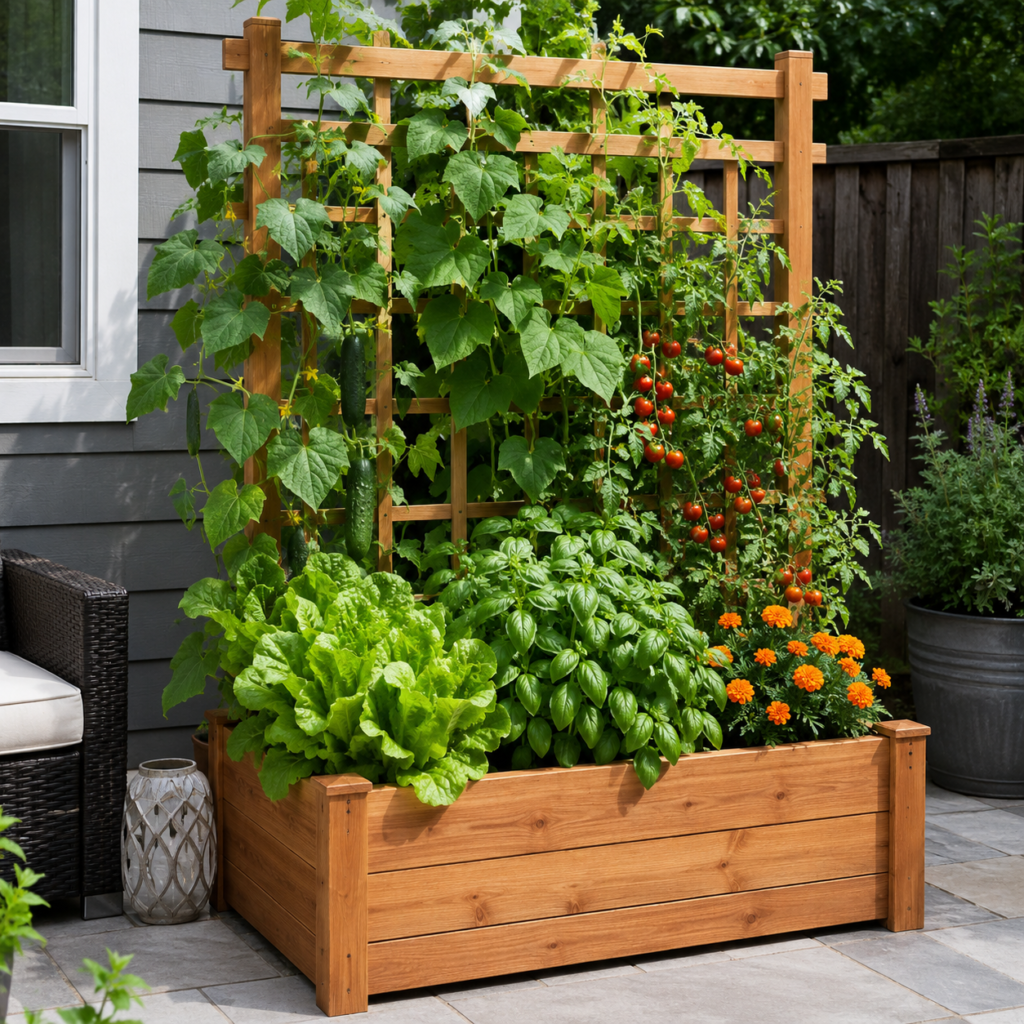
Trellis planter boxes work best for cucumbers, pole beans, peas, compact melons, and climbing tomatoes. They save ground space by moving growth upward, making them ideal for small backyards, patios, decks, and fence-side vegetable gardens. A trellis turns a simple planter box into a vertical growing system. Instead of letting vines spread across the patio or soil surface, the trellis lifts them upward, improves airflow, saves space, and makes harvesting easier.
Cucumbers are one of the best vegetables for a trellis planter box because they naturally climb when supported and produce cleaner fruit when kept off the ground. Pole beans and peas are also excellent choices because they grow upward without needing a wide bed. Tomatoes can also use vertical support, but they need stronger cages or stakes. A lightweight decorative trellis may not hold a mature tomato plant, so use sturdy wood, metal, or reinforced support for heavier crops.
Best trellis vegetable planter box ideas include:
- Cedar trellis planter box for cucumbers
- Fence-backed planter box for beans and peas
- Black metal trellis box for modern patios
- Tomato cage planter box for cherry tomatoes
- Tall narrow side-yard trellis box
- Rolling trellis planter for flexible patio placement
- Privacy vegetable planter with cucumbers or pole beans
- A-frame trellis box for peas and climbing crops
- Long backyard trellis box beside a seating area
A trellis planter box can also improve backyard privacy. Place a long planter box near a seating area and grow cucumbers, pole beans, peas, or climbing flowers. The result is part edible garden and part living screen. When building a trellis planter box, make sure the box is heavy and deep enough to stay stable because tall trellises can catch wind.
Sun and Water Needs
Most vegetable planter boxes need strong sunlight and consistent moisture to grow well. Fruiting vegetables like tomatoes, peppers, cucumbers, eggplants, and beans need the sunniest practical spot because they use more energy to produce flowers and fruit. Leafy greens such as lettuce, spinach, arugula, and herbs can tolerate slightly less sun, especially in hot climates, but they still need enough light to grow full and healthy.
Watering is just as important as sunlight. Planter boxes dry out faster than in-ground beds because the soil volume is limited and the sides are exposed to heat and wind. Small boxes, metal boxes, deck planters, and patio planters can dry especially fast during warm weather. A deeper box holds moisture longer, while mulch helps slow evaporation from the soil surface. Instead of watering randomly, check the top 1–2 inches of soil. If it feels dry, the box likely needs water.
Use this sunlight and watering guide:
- Tomatoes, peppers, cucumbers, and beans need the brightest location
- Lettuce, spinach, herbs, and radishes can handle slightly less intense sun
- Small boxes dry faster than large boxes
- Metal and dark-colored boxes may heat up faster in full sun
- Mulch helps protect soil moisture
- Water deeply so moisture reaches the roots
- Check soil before watering instead of guessing
- Move small planters if afternoon heat is damaging the plants
How to Add Drainage
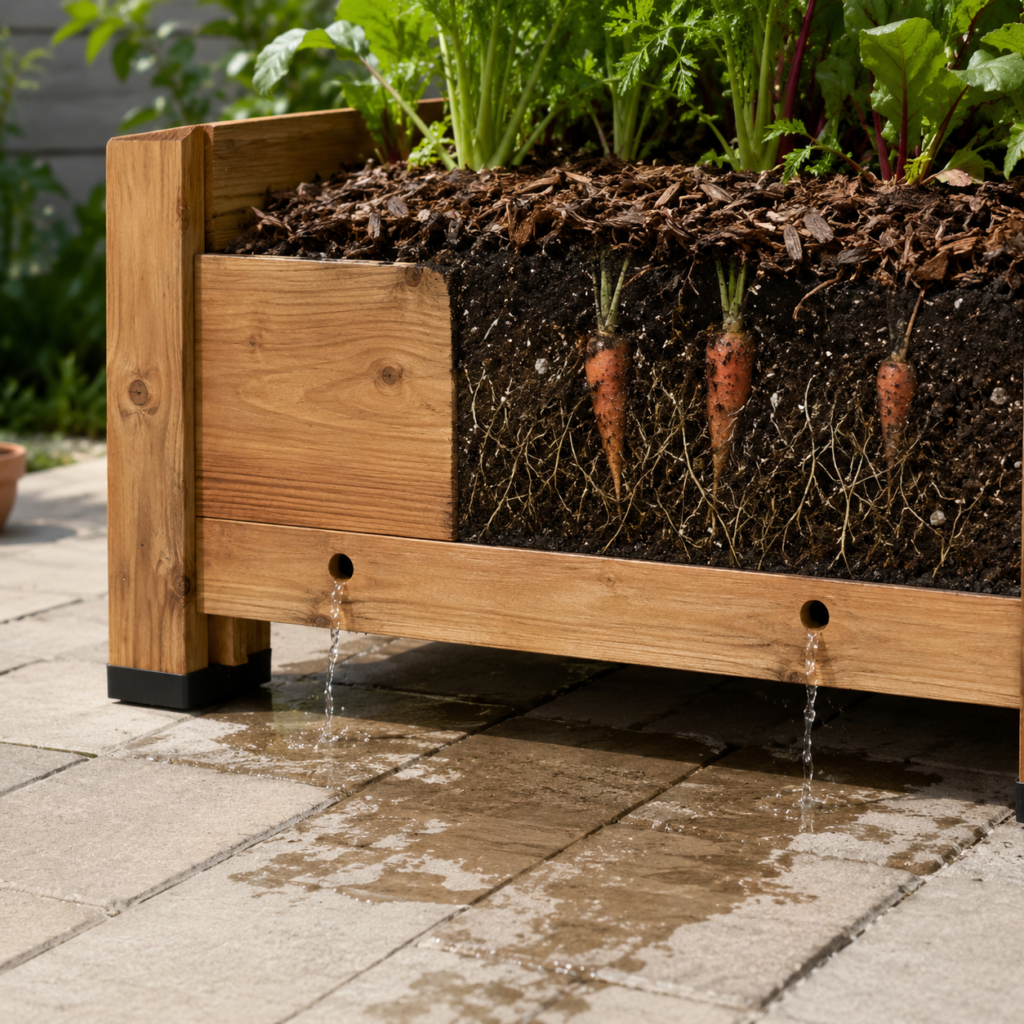
Vegetable planter boxes need drainage holes, loose potting mix, raised feet, and a clear path for extra water to escape. Poor drainage causes soggy soil, weak roots, yellow leaves, fungal problems, and failed vegetable growth. Drainage is one of the most important parts of any vegetable planter box because vegetables need moisture, but they do not want roots sitting in stale water. If the bottom of the box holds water, roots can suffocate and rot.
For a closed-bottom wooden planter box, drill several drainage holes along the bottom. If the box sits on a patio or deck, raise it slightly with feet, blocks, or small risers so water can escape. A box sitting flat against a surface may block the holes. Do not use heavy garden soil in a planter box because it can compact, drain poorly, and become too dense for container roots. A lighter potting mix is usually better because it holds moisture while still allowing air and water movement.
A good drainage setup includes:
- Drainage holes in the bottom or low sides
- Raised feet or small blocks under the box
- Potting mix instead of compact garden soil
- Mulch on top to slow evaporation
- Mesh or screen only if soil is falling out
- No blocked drainage holes
- No water trapped under the planter
- Space under deck planters so boards can dry
- A watering routine based on soil moisture, not guesswork
Biggest Planter Box Mistakes
The biggest vegetable planter box mistakes are using a box that is too shallow, planting too many vegetables, forgetting drainage holes, using heavy garden soil, placing boxes in shade, and skipping regular watering during hot weather. Most vegetable planter box failures come from design problems, not bad luck. The box may look beautiful at first, but if it lacks depth, drainage, sunlight, or spacing, the plants struggle within a few weeks.
The first mistake is choosing a shallow box for deep crops. Lettuce can grow in a shallow planter, but tomatoes and cucumbers need much more soil volume. The second mistake is overcrowding. A new planter box looks empty when seedlings are small, so beginners often plant too much. As the plants mature, they compete for light, water, and nutrients. Poor drainage is another common mistake because soggy soil weakens vegetable roots.
Avoid these common mistakes:
- Using shallow boxes for tomatoes or cucumbers
- Planting too many vegetables in one box
- Forgetting drainage holes
- Filling the box with heavy garden soil
- Placing fruiting vegetables in shade
- Skipping mulch in hot weather
- Letting vines spread without support
- Ignoring deck weight and water runoff
- Mixing too many heavy feeders together
- Watering randomly instead of checking soil moisture
- Adding support too late after plants become heavy
- Choosing material without checking if it is suitable for edible plants
Build or Buy?
Build a vegetable planter box if you want a custom size, lower cost, or a specific backyard layout. Buy one if you want a cleaner finish, faster setup, elevated design, self-watering feature, or less cutting and measuring. DIY vegetable planter boxes are great for homeowners who want control over size and design. You can build a long narrow box for a side yard, a deep cedar box for tomatoes, or a trellis planter box for cucumbers and beans.
A ready-made planter box is better when speed matters. Many beginners do not want to measure lumber, cut boards, drill frames, or choose hardware. A good raised planter kit can be assembled faster and still look polished. Elevated planter boxes are useful for patios, balconies, seniors, and anyone who wants less bending. Self-watering vegetable planter boxes are useful in hot climates or busy households because they help keep moisture more consistent, especially for thirsty crops.
Choose based on your real need:
- DIY cedar box: best for custom backyard layouts and serious gardeners
- Ready-made raised box: best for beginners who want fast setup
- Elevated planter: best for patios, seniors, and easy access
- Self-watering box: best for hot weather and busy schedules
- Trellis planter kit: best for cucumbers, beans, peas, and vertical growing
- Metal trough box: best for modern backyard design
- Small wooden box: best for herbs, lettuce, and quick kitchen harvests
Final Thoughts
Vegetable planter boxes work best when the box depth, crop choice, drainage, sunlight, and watering routine match each other. Start with easy crops like lettuce, herbs, radishes, peppers, and cherry tomatoes, then use deeper boxes for tomatoes, cucumbers, carrots, eggplants, and potatoes.
The best vegetable planter box is not always the biggest one. It is the one that fits your space, grows healthy plants, and stays easy to water, harvest, and maintain.
FAQs
What are the best vegetable planter box ideas for beginners?
The best beginner ideas are simple raised boxes with lettuce, herbs, radishes, green onions, peppers, and cherry tomatoes. A 12–18 inch deep box is easiest to manage.
What vegetables grow best in planter boxes?
Lettuce, spinach, radishes, herbs, bush beans, peppers, carrots, cherry tomatoes, and cucumbers grow well in planter boxes. Match the crop with the right box depth.
How deep should a vegetable planter box be?
Most vegetable planter boxes should be at least 12 inches deep. Tomatoes, cucumbers, carrots, peppers, eggplants, and potatoes grow better in 18–24 inches.
What size planter box is best for vegetables?
A 3×6 foot box that is 12–18 inches deep is a good beginner size. It gives enough room for herbs, greens, peppers, and one compact tomato plant.
Do vegetable planter boxes need drainage holes?
Yes, vegetable planter boxes need drainage holes. Without drainage, soil can stay soggy and cause weak roots, yellow leaves, and poor vegetable growth.
What is the best material for vegetable planter boxes?
Cedar is one of the best materials because it is durable, natural-looking, and outdoor-friendly. Redwood, untreated pine, galvanized metal, and food-safe composite can also work.
Can tomatoes grow in vegetable planter boxes?
Yes, tomatoes can grow in planter boxes if the box is deep, sunny, and well-drained. Use an 18–24 inch box with a cage, stake, or trellis.
Can you grow carrots in a planter box?
Yes, carrots can grow in a planter box with loose soil and enough depth. Use a 12–18 inch deep box, or choose shorter carrot varieties for smaller planters.
Are trellis planter boxes good for vegetables?
Yes, trellis planter boxes are great for cucumbers, pole beans, peas, and climbing tomatoes. They save space, improve airflow, and make harvesting easier.
What soil should I use in a vegetable planter box?
Use a light, well-draining potting mix instead of heavy garden soil. Potting mix drains better and gives vegetable roots more room to grow.
How often should you water vegetable planter boxes?
Water when the top 1–2 inches of soil feel dry. Small boxes, metal boxes, and sunny patio planters may need more frequent watering in hot weather.
Where should I place a vegetable planter box?
Place it in a sunny, easy-to-reach area near a water source. Tomatoes, peppers, cucumbers, and beans need the brightest spot.
Are raised vegetable planter boxes better than pots?
Raised planter boxes are better for mixed crops, cleaner layouts, and larger harvests. Pots are better for single plants, herbs, renters, and movable crops.
Should I build or buy a vegetable planter box?
Build one if you want custom size and lower cost. Buy one if you want faster setup, cleaner finishing, elevated height, or self-watering features.
What is the biggest mistake with vegetable planter boxes?
The biggest mistake is using a shallow or overcrowded box. Poor drainage, heavy soil, too little sun, no trellis, and irregular watering also cause problems.

Myra is the founder and lead writer of Backyard Planter Ideas, where she shares practical, well-researched guidance on planter design, plant selection, and outdoor styling. Her goal is to help homeowners create attractive, functional garden spaces with clear, reliable, and easy-to-apply advice.