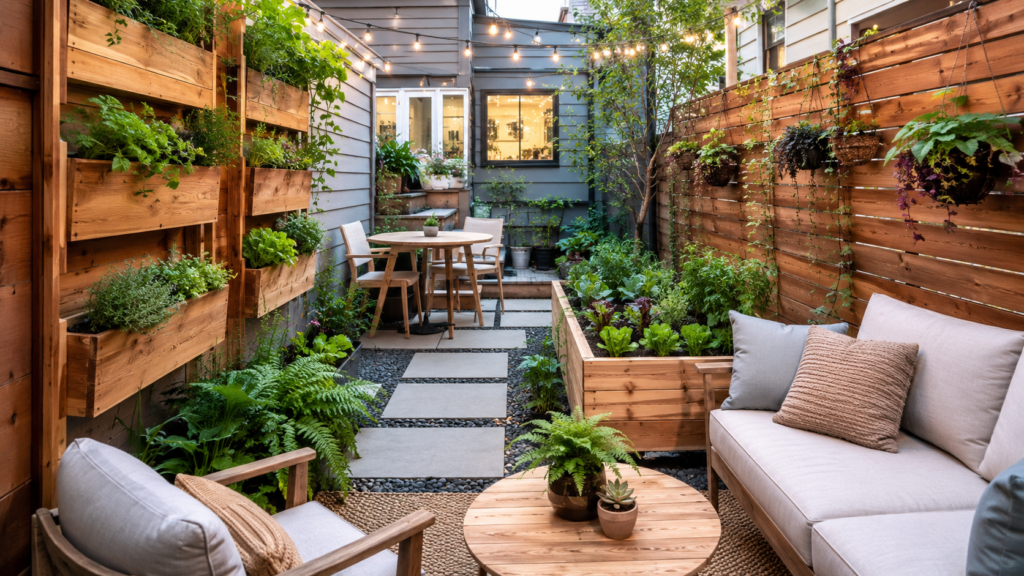
Small backyard planter ideas work best when they improve organization, increase vertical growing space, and create visual openness without overcrowding the yard. Smart layouts, layered greenery, compact raised beds, and vertical planter systems can make even the smallest outdoor space feel larger, brighter, and more functional while still supporting flowers, herbs, vegetables, and decorative plants.
Why Do Some Small Backyards Feel Cramped?
Many small backyards feel cramped because the layout interrupts visual flow instead of guiding it naturally. Oversized planter boxes, bulky outdoor furniture, poor spacing, and random decorative elements often consume more visual space than the backyard can realistically support. In compact outdoor environments, organization matters more than quantity. A backyard with fewer well-positioned planters usually feels significantly larger than a crowded garden filled with mismatched containers and oversized accessories.
Another overlooked issue is the lack of layered structure. When every planter sits at ground level and occupies central walking space, the backyard loses openness very quickly. Human movement patterns strongly influence spatial perception. If pathways feel blocked or narrow, the entire backyard immediately feels smaller and less comfortable. This is why modern compact landscaping focuses heavily on perimeter layouts and vertical organization rather than filling every inch with greenery.
The most common reasons tiny backyards feel smaller include:
- Oversized decorative planters
- Dark bulky materials
- No vertical gardening strategy
- Blocking natural pathways
- Too many furniture pieces
- Poor lighting placement
- Random planter heights
- Excessive decorative clutter
- No visual focal point
- Lack of organized zoning
A real-world example can be seen in many urban patio renovations where homeowners remove half of their containers and instantly improve the perceived size of the backyard. Simply relocating planters to fences and corners often creates dramatic openness without spending money on major renovations.
Which Planter Layouts Make Tiny Backyards Look Bigger?
The best planter layouts for small backyards improve organization and planting efficiency without overcrowding the space. Compact yards usually work best when planters stay along the edges instead of filling the center. Perimeter layouts preserve walking space and create a cleaner structure than scattered containers.
Narrow raised beds along fences improve organization without consuming too much floor area. Randomly placed pots often interrupt movement and make tiny backyards feel cluttered. Corner shelves and slim triangular planters also maximize unused areas without blocking pathways.
The most effective small backyard planter layouts include:
- Perimeter planter placement
- Narrow raised beds
- Vertical planter walls
- Hanging planters
- Multi-level shelving
- Open center pathways
- Foldable furniture
- Zoned planting areas
Linear layouts work especially well in narrow spaces because long planter lines visually stretch the yard. Curved layouts can soften sharp corners in compact patios and courtyards.
A strong real-world example is a small apartment backyard that replaced large floor containers with narrow raised beds, one vertical herb wall, and hanging baskets. The layout immediately improved movement and usable space.
The most successful compact backyard designs prioritize spacing, accessibility, and efficient planter placement instead of excessive decoration.
What Planter Sizes Work Best for Different Small Backyard Dimensions?
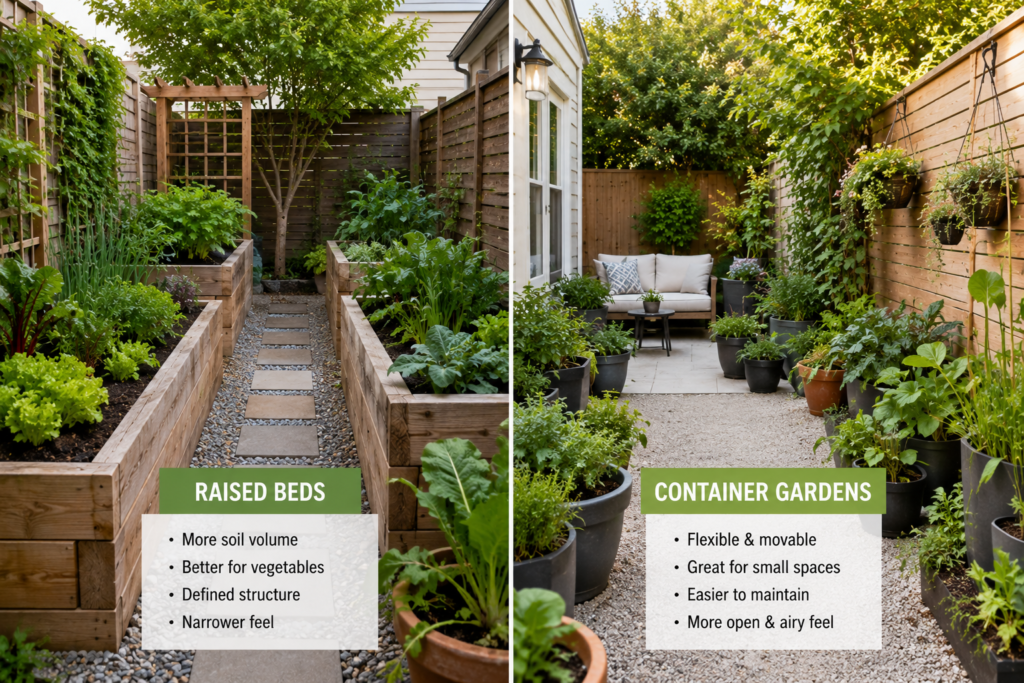
The best planter size for a small backyard depends entirely on the available walking space, backyard proportions, and intended garden use. Many homeowners accidentally choose oversized planters because they focus only on planting capacity instead of spatial balance. In compact outdoor areas, large containers can quickly dominate movement pathways and reduce visual openness. This is why narrow raised beds, slim-profile containers, and vertical systems usually outperform bulky decorative planters in tiny spaces.
Backyard dimensions should guide every layout decision. A 5×7-foot patio needs a completely different planting strategy than a 10×12-foot courtyard. Smaller spaces benefit most from vertical gardening and perimeter layouts, while slightly larger patios can support narrow raised beds combined with compact seating. Real-world backyard transformations often improve dramatically once oversized containers are replaced with lighter modular systems that preserve visibility across the yard.
Recommended planter setups by backyard size:
| Backyard Size | Recommended Setup |
| 5×7 ft | Vertical wall planters + hanging baskets |
| 6×8 ft | Slim perimeter containers + foldable seating |
| 8×10 ft | Narrow raised beds + layered greenery |
| 10×12 ft | Mixed raised beds + compact dining area |
| Balcony patio | Rail planters + stackable shelves |
The ideal planter depth also depends on plant type. Herbs and lettuce grow well in shallow containers, while tomatoes and root vegetables require deeper beds. Choosing the correct depth prevents wasted space while improving long-term plant health.
Recommended planter depths:
- Herbs: 6–8 inches
- Lettuce: 6–8 inches
- Strawberries: 8–10 inches
- Peppers: 10–12 inches
- Tomatoes: 12–18 inches
- Root vegetables: 10–14 inches
Decision clarity matters because tiny backyards should never feel overloaded. A smaller number of properly sized planters almost always creates a cleaner and more luxurious outdoor atmosphere than oversized containers competing for limited space.
Are Vertical Planters Better for Small Outdoor Spaces?
Vertical planters are one of the most effective solutions for small outdoor spaces because they shift gardening upward instead of outward. In tiny backyards, floor space is extremely limited, so using wall height becomes essential for increasing planting capacity without sacrificing movement. This vertical approach allows homeowners to grow herbs, flowers, vegetables, and decorative greenery while preserving usable floor space.
Traditional container gardening quickly consumes usable square footage. Vertical gardening changes the entire spatial dynamic by using fences, walls, trellises, shelves, and hanging systems instead of relying only on ground-level pots.
The biggest advantages of vertical planters include:
- Increased growing capacity
- Better use of wall space
- Cleaner backyard organization
- Improved airflow around plants
- Easier maintenance access
- Stronger visual layering
- Enhanced depth perception
- More open walking space
- Better zoning opportunities
- Modern aesthetic appeal
Wall-mounted pocket systems work extremely well for herbs and compact flowers, while trellises support climbing vegetables like cucumbers, peas, and beans. Ladder shelves are ideal for layered decorative containers because they create height variation without adding visual heaviness.
However, balance matters. Covering every fence with dense greenery can make a tiny backyard feel enclosed instead of open. Successful vertical gardening uses selective layering rather than excessive plant coverage. Real-world compact gardens usually perform best when one or two walls become focal points while the remaining space stays visually lighter.
How Do Raised Planters Improve Tiny Backyard Design?
Raised planters improve tiny backyard design by adding structure, organization, and functional zoning. Small outdoor spaces often feel chaotic when containers are randomly scattered across the yard. Raised beds create clearly defined planting areas, which immediately improves visual order and makes compact backyards appear cleaner and more intentional.
Another major advantage is spatial control. Raised planters help homeowners organize vegetables, flowers, herbs, and decorative greenery into dedicated sections instead of mixing everything together. This separation improves maintenance efficiency while reducing visual clutter. Even a narrow raised bed can transform a compact backyard into a more balanced and usable outdoor environment.
The biggest benefits of raised planters include:
- Stronger backyard organization
- Improved drainage performance
- Easier plant maintenance
- Better root management
- Clear planting zones
- Improved accessibility
- More efficient layouts
- Reduced soil compaction
- Cleaner visual structure
- Enhanced modern landscaping appearance
Long narrow raised beds usually work best in tiny spaces because they preserve walking areas while maximizing planting efficiency. Wide square beds often consume too much floor space and can make compact yards feel crowded very quickly.
A real-world example is a narrow side-yard garden that replaced scattered pots with slim cedar raised beds along both fences. The transformation improved movement, simplified watering, and created a cleaner visual line that made the backyard feel longer and more organized.
Material choice also affects perceived space. Cedar and light composite beds usually feel visually lighter than bulky brick or concrete systems. Pairing raised beds with vertical trellises creates even more efficiency by allowing climbing plants to grow upward instead of outward.
Which Plants Work Best in Small Backyard Planters?
The best plants for small backyard planters are compact, manageable, and easy to organize. Large aggressive plants can quickly overwhelm tiny outdoor spaces and make layouts harder to maintain.
The best plants for compact backyard planters usually include:
- Compact herbs
- Dwarf vegetables
- Ornamental grasses
- Trailing flowers
- Compact shrubs
Layering different plant types creates a more balanced backyard design. Upright plants add height, while trailing plants soften edges without consuming extra floor space.
How Can Hanging Planters Save Space?
Hanging planters save space by moving greenery upward instead of consuming valuable floor area. In compact backyards, preserving walking space is one of the most important layout priorities.
The biggest benefits of hanging planters include:
- Saves floor space
- Adds vertical layering
- Improves organization
- Increases planting capacity
- Works well in patios and balconies
Hanging baskets work especially well for trailing plants because the downward growth softens hard edges without creating excessive bulk. Placement still matters, since hanging containers installed too low can make compact spaces feel crowded.
What Colors Make Small Outdoor Spaces Feel Larger?
Color selection strongly affects how spacious a backyard feels. Light colors usually reflect more light and create a cleaner appearance, while dark bulky materials can make compact areas feel heavier.
The best colors for small backyard planters usually include:
- White
- Soft gray
- Beige
- Natural cedar
These tones improve brightness and work well with most outdoor design styles. Consistent planter colors also help compact backyards feel more organized.
Which Backyard Design Styles Work Best in Tiny Outdoor Spaces?
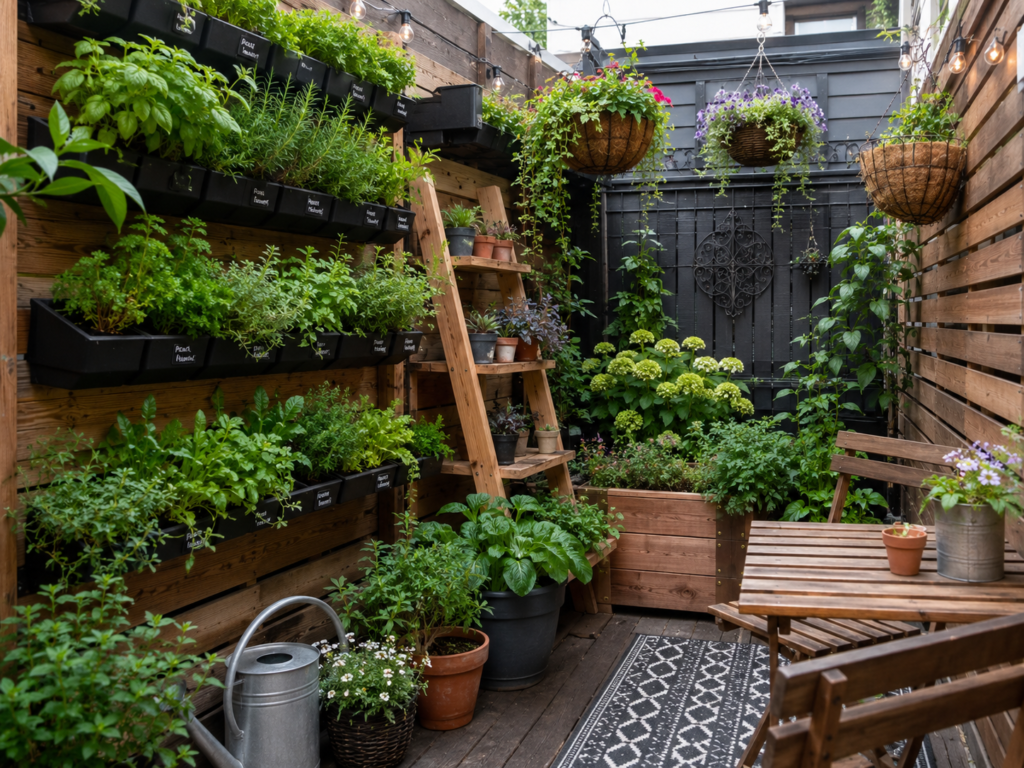
Small backyard design styles work best when they simplify the layout instead of overcrowding it with excessive decoration. Certain outdoor aesthetics naturally support compact spaces because they prioritize organization, clean lines, and controlled planting density.
The most effective small backyard styles include:
- Modern minimalist
- Japanese-inspired
- Mediterranean
- Scandinavian
Modern minimalist patios usually rely on neutral planters and structured greenery, while Japanese-inspired layouts focus on balance and natural textures. Mediterranean patios often use warm materials and climbing plants, while Scandinavian styles emphasize simplicity and functionality.
These design styles usually perform well in compact backyards because they create cleaner layouts without excessive visual clutter.
Which Backyard Planter Materials Look Less Bulky?
Material choice strongly affects how visually heavy planters feel in a small backyard. Large concrete containers often dominate compact spaces, while lighter materials create a cleaner and more balanced appearance.
The best planter materials for compact backyards usually include:
- Cedar
- Resin
- Fiberglass
- Thin-profile metal
Cedar remains popular because it feels warm and lightweight, while thin-profile metal planters work well in modern layouts because they reduce visual bulk. Using consistent planter materials throughout the backyard also creates a cleaner and more organized design.
What Small Backyard Planter Setup Works Best for Different Budgets?
The best small backyard planter setup depends on budget, maintenance expectations, and available space. Compact outdoor areas can still look highly organized and functional without expensive landscaping when efficient planter systems and simple layouts are used properly.
Recommended backyard setups by budget level:
| Budget Range | Recommended Setup |
| Under $100 | Vertical wall planters, foldable furniture, self-watering containers, DIY raised beds |
| $100–250 | Narrow raised beds, layered containers, compact seating |
| $500+ | Drip irrigation, modular planters, built-in seating, integrated lighting |
A real-world example is a renter-friendly patio makeover that used hanging baskets, vertical shelves, and narrow containers instead of bulky decorative planters. The setup improved functionality while keeping the budget low.
Decision clarity matters because compact backyards do not require expensive renovations to feel attractive and usable. Organized layouts and efficient planter placement usually create a larger impact than excessive decorative upgrades.
How Much Space Should You Leave Between Planters?
Spacing is one of the most important factors in small backyard design. Even well-designed planters can make a backyard feel crowded when placed too closely together. Proper spacing improves movement, airflow, sunlight exposure, and maintenance access.
Most compact backyard layouts should maintain:
- 24–30 inches walkway space
- 6–12 inches between containers
Strategic spacing improves airflow, usability, and long-term plant health.
What Mistakes Make Small Backyards Look Smaller?
Many small backyard problems come from design overload rather than limited square footage. Tiny outdoor spaces become cramped when oversized furniture, bulky planters, and excessive decoration compete for space at the same time. Compact backyards usually function better when layouts remain simple, organized, and easy to maintain.
The most common mistakes that make small backyards feel smaller include:
- Oversized planters
- Blocked pathways
- Excessive furniture
- Poor lighting
- Random placement
- Overcrowding
A real-world issue commonly seen in urban patios is excessive vertical layering. Many homeowners install dense wall gardens filled with trailing plants, only to discover later that airflow becomes restricted and maintenance becomes difficult. Smaller grouped arrangements usually remain healthier and easier to manage.
Signs a small backyard layout is becoming overcrowded include:
- Narrow walking paths
- Difficult watering access
- Plants overlapping heavily
- Poor airflow between containers
- Furniture becoming unusable
The most successful compact backyards usually prioritize organized spacing, accessible movement areas, and efficient planter placement instead of excessive decoration.
Can Small Backyard Planters Still Grow Vegetables?
Small backyard planters can grow vegetables very successfully when space is used efficiently. Compact gardening systems often produce strong yields because the growing areas are easier to organize and maintain.
The best vegetables for small backyard planters usually include:
- Lettuce
- Tomatoes
- Peppers
- Cucumbers
- Strawberries
Vertical supports improve growing efficiency because climbing plants use wall height instead of consuming extra floor space. Deep containers and narrow raised beds also work well for compact vegetable gardening setups.
Efficient vegetable gardening depends more on layout planning and plant selection than total backyard size.
How Do Small Backyard Planters Change Across Different Seasons?
Small backyard planters change throughout the year because temperature, rainfall, and sunlight affect plant growth and watering needs. Compact containers dry out faster during summer and often retain moisture longer during winter, making seasonal adjustments important for long-term plant health.
Seasonal backyard maintenance usually includes:
- Adjust watering frequency
- Rotate seasonal flowers
- Protect frost-sensitive plants
- Reduce overcrowded foliage
Portable containers are especially useful because they can be repositioned depending on seasonal sunlight and weather conditions. Smaller seasonal rotations also tend to remain healthier and easier to maintain than heavily overcrowded planting displays.
The best year-round plants for compact backyard systems usually include:
- Lavender
- Rosemary
- Evergreen shrubs
- Ornamental grasses
Flexible planter systems generally perform better across changing seasons than rigid overcrowded layouts.
Which Lighting Ideas Help Tiny Backyards Feel Open?
Lighting changes how a backyard feels after sunset and can improve comfort in compact outdoor spaces. Small backyards usually work best with soft layered lighting instead of harsh overhead fixtures that create heavy shadows.
The most effective lighting ideas include:
- String lights
- Solar pathway lights
- Fence lighting
- Warm ambient lighting
String lights are especially useful because they visually extend the backyard without consuming floor space. Solar lighting also works well in compact patios because it reduces visible wiring and keeps the layout cleaner.
Best Low-Maintenance Setup for Small Backyards
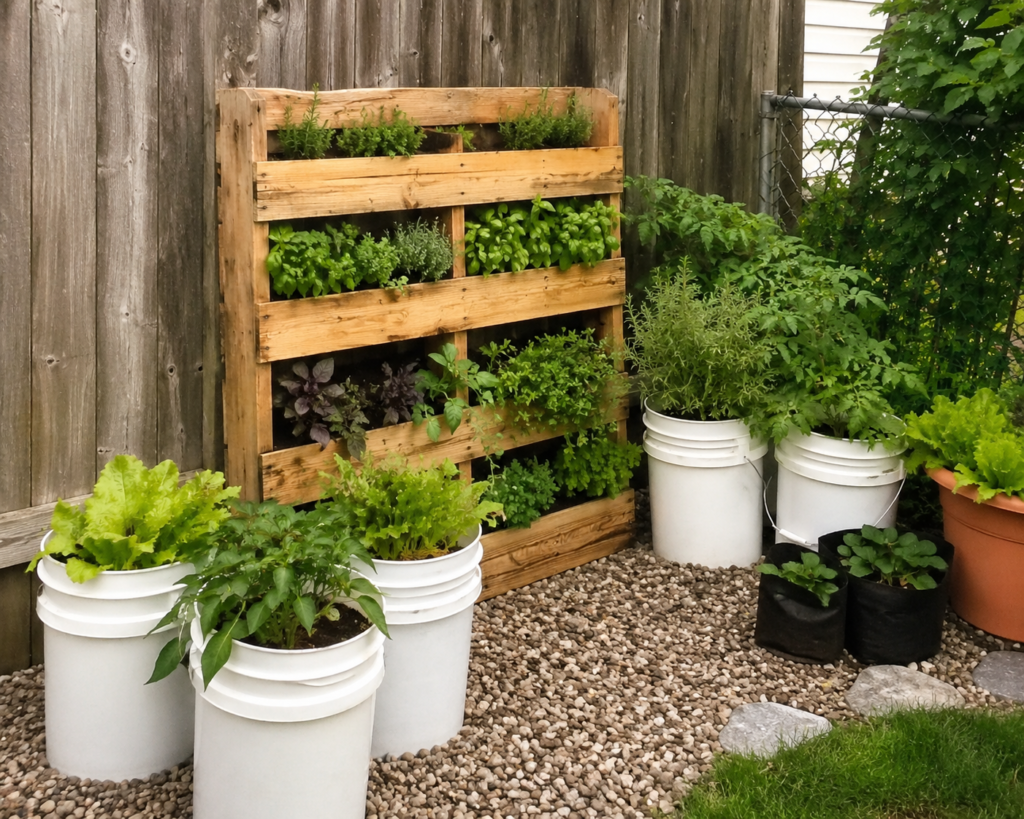
The best low-maintenance small backyard setup focuses on simplicity, durability, and efficient watering systems. Overcomplicated layouts often become difficult to manage in compact outdoor spaces, especially when too many containers and high-maintenance plants are involved.
A practical low-maintenance setup usually includes:
- Raised beds
- Drip irrigation
- Drought-tolerant plants
- Mulch coverage
These systems reduce watering demands, improve organization, and simplify long-term maintenance. Compact herbs, ornamental grasses, evergreen shrubs, and hardy perennials usually perform well in low-maintenance backyard layouts.
Simple organized planter systems often stay healthier and easier to maintain than overcrowded decorative gardens.
Best Beginner Setup for Tiny Backyards
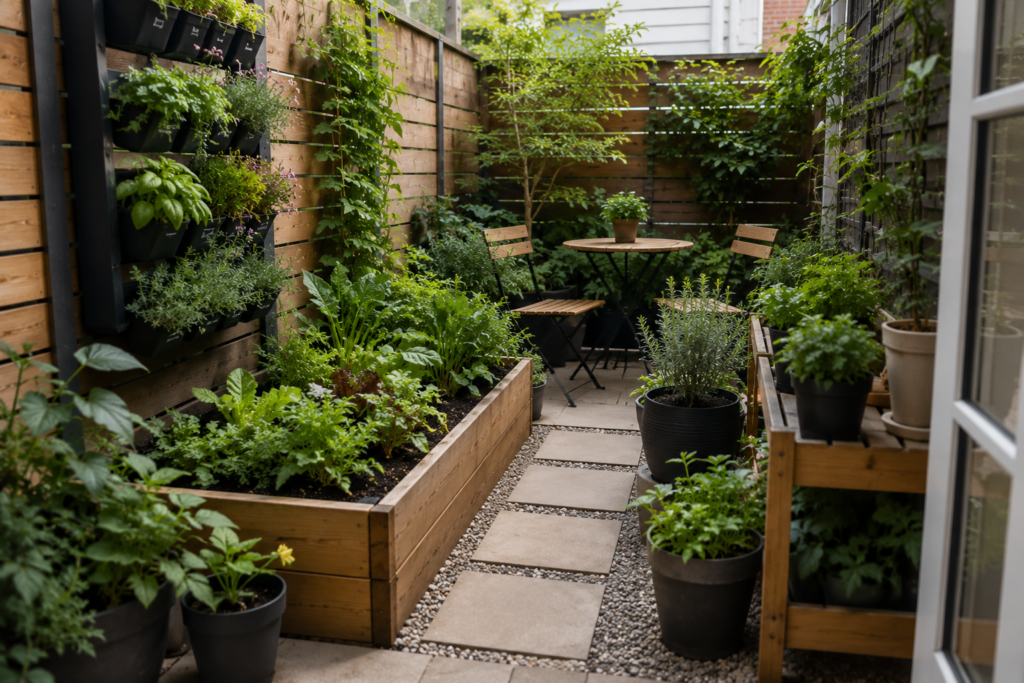
The best beginner setup for tiny backyards is usually simple, organized, and easy to maintain. Many new gardeners start with overcrowded layouts that quickly become difficult to water and manage. Compact outdoor spaces work better when the setup focuses on a few efficient planting systems instead of excessive decoration.
A beginner-friendly backyard setup usually includes:
- Vertical herb wall
- Narrow raised beds
- Foldable seating
- Lightweight containers
Simple layouts are easier to maintain long term while still providing enough space for herbs, flowers, and vegetables. Vertical systems and narrow raised beds also help preserve movement space in compact patios and courtyards.
The easiest plants for beginners usually include:
- Herbs
- Lettuce
- Strawberries
- Ornamental grasses
These plants are compact, manageable, and adapt well to small backyard planter systems.
Final Thoughts
Small backyard planter ideas work best when they prioritize efficient layouts, vertical gardening, organized spacing, and compact planting systems. Narrow raised beds, hanging planters, and perimeter layouts can transform tiny outdoor areas into functional and attractive gardens without overcrowding the space. Strategic planter placement usually creates a larger impact than adding excessive decoration.
FAQs
What are the best planter ideas for small backyards?
Vertical planters, narrow raised beds, hanging baskets, and perimeter layouts usually work best in compact outdoor spaces. These systems maximize planting space while keeping the backyard visually open and organized.
How do you make a tiny backyard look bigger with planters?
Place planters along fences and corners instead of blocking the center of the yard. Light colors, layered heights, and open pathways also help compact backyards feel larger.
Are vertical planters worth it for small outdoor spaces?
Yes, vertical planters increase growing space without consuming floor area. They also improve organization and create stronger visual depth in tiny backyards.
What size planter works best in a tiny backyard?
Slim and narrow planters usually work better than oversized containers. Compact raised beds and lightweight vertical systems help preserve walking space.
Which plants grow best in small backyard planters?
Herbs, dwarf vegetables, ornamental grasses, strawberries, and trailing flowers usually perform best because they stay manageable in compact spaces.
Can small backyard planters grow vegetables successfully?
Yes, small backyard planters can grow tomatoes, lettuce, peppers, herbs, cucumbers, and strawberries effectively when vertical supports and deep containers are used properly.
What mistakes make small backyard planter layouts fail?
Oversized containers, blocked pathways, inconsistent materials, and overcrowded greenery are the most common mistakes in tiny backyard layouts.
What is the easiest low-maintenance planter setup for beginners?
A simple setup with vertical herb planters, slim raised beds, and drought-tolerant plants is usually the easiest option for beginners.
Which backyard style works best for tiny outdoor spaces?
Modern minimalist, Japanese-inspired, and Scandinavian backyard styles usually work best because they prioritize simplicity and visual openness.
What is the best layout for a narrow backyard garden?
Perimeter layouts and vertical gardening systems usually work best because they keep the center walkway open while maximizing planting space.
What is the best overall strategy for designing a small backyard planter garden?
The best strategy combines vertical gardening, perimeter layouts, layered greenery, compact raised beds, and open pathways for a cleaner and more spacious backyard design.
Myra is the founder and lead writer of Backyard Planter Ideas, where she shares practical, well-researched guidance on planter design, plant selection, and outdoor styling. Her goal is to help homeowners create attractive, functional garden spaces with clear, reliable, and easy-to-apply advice.