Hanging backyard planter ideas are one of the most effective ways to add greenery, flowers, herbs, and layered landscaping to outdoor spaces without consuming valuable ground area. They help patios, pergolas, fences, balconies, and compact backyards feel more decorative, functional, and visually complete. Modern outdoor hanging systems also support vertical gardening trends that combine beauty with efficient space usage.
Unlike traditional ground planters, hanging baskets naturally create movement and dimension. Cascading foliage softens hard surfaces while suspended flowers improve backyard atmosphere from eye level upward. The best outdoor hanging planter setups combine durable materials, proper drainage, structural safety, weather-resistant mounting systems, and plants suited to the local climate and sunlight exposure.
What Are Hanging Backyard Planter Ideas?
Hanging backyard planter ideas are vertical gardening systems that suspend flowers, herbs, vegetables, or decorative greenery from pergolas, ceilings, fences, railings, or wall brackets. They help maximize outdoor space, improve backyard aesthetics, reduce patio clutter, and create layered landscaping in both large and small outdoor environments.
Best Outdoor Hanging Planter Styles
Different outdoor environments require different hanging planter styles because sunlight exposure, wind, rainfall, and available support structures vary dramatically between backyards. A hanging planter that performs well under a covered pergola may fail quickly on an exposed fence line facing constant sun and wind. Choosing the correct style improves durability, maintenance efficiency, and overall visual balance.
Traditional hanging baskets remain the most common option because they are lightweight, affordable, and widely compatible with flowering plants. However, modern outdoor spaces increasingly use wall-mounted systems, tiered hanging arrangements, and architectural planter frames that create more structured vertical landscaping. These layouts often feel cleaner and more intentional than randomly spaced hanging baskets.
Homeowners should also consider maintenance accessibility. Decorative hanging systems may look impressive initially, but difficult watering access often becomes frustrating over time. Planters placed too high can quickly become neglected during summer heat.
Most effective outdoor hanging planter styles
- Wire hanging baskets with coir liners
- Wall-mounted vertical planter systems
- Pergola hanging basket rows
- Tiered hanging planter towers
- Railing-mounted hanging baskets
- Macrame outdoor hanging planters
- Metal architectural hanging frames
Modern pergola layouts also commonly use symmetrical hanging rows because they create a cleaner luxury appearance. Even spacing helps outdoor spaces feel professionally designed instead of visually cluttered.
Best Hanging Planter Styles
| Backyard Situation | Best Hanging Planter Type | Why It Works |
| Small patio | Wall-mounted planters | Saves floor space |
| Pergola seating area | Symmetrical hanging baskets | Creates layered luxury look |
| Windy backyard | Heavy resin planters | Better stability |
| Hot climate | Self-watering baskets | Slower moisture loss |
| Rental balcony | Railing planters | No ceiling drilling needed |
| Herb garden | Tiered hanging systems | Easy harvesting |
Best Plants for Hanging Planters
The best plants for outdoor hanging planters are varieties that tolerate elevated airflow, faster soil drying, and warmer root temperatures. Since hanging baskets are exposed on all sides, they lose moisture much faster than ground planters. Plants that naturally trail or cascade downward usually perform best because they create fuller visual coverage and softer vertical movement.
Flowering plants remain the most popular option because they provide strong seasonal color and decorative impact. Petunias, calibrachoa, verbena, and fuchsia are especially common because they bloom heavily while adapting well to hanging conditions. Trailing vines such as ivy and creeping Jenny add additional depth by extending beyond basket edges and creating layered greenery.
Edible hanging gardens have also become increasingly popular. Many homeowners now combine decorative flowers with herbs and strawberries to create functional outdoor spaces that produce food while still maintaining visual appeal.
Best plants for outdoor hanging baskets
- Petunias
- Calibrachoa
- Ivy
- Strawberries
- Basil
- Mint
- Sweet potato vine
- Lobelia
- Nasturtiums
- Trailing succulents
Heat tolerance is another major factor many beginners underestimate. Dark hanging baskets placed in direct sun can become extremely hot during summer afternoons. Plants that thrive in cooler ground soil may struggle in elevated containers exposed to intense sunlight and airflow.
In real backyard conditions, drought-resistant flowers and trailing vines usually outperform moisture-sensitive varieties. Homeowners in hot climates often achieve better long-term results using lantana, verbena, or portulaca instead of delicate moisture-dependent flowers that require constant watering.
How to Hang Planters Safely
Safe installation is one of the most important parts of any outdoor hanging planter system because wet soil significantly increases basket weight. Many decorative hooks and lightweight beams appear strong initially but eventually weaken under constant outdoor exposure and repeated watering cycles. Poor installation is one of the leading causes of hanging planter failure.
Heavy hanging baskets should always attach to structural supports rather than decorative trim pieces or thin wood panels. Pergolas, porch ceilings, and wall brackets must handle not only basket weight but also additional stress from wind movement and rain saturation. Large ceramic planters can become surprisingly heavy once fully watered.
Weather resistance also matters. Outdoor hardware constantly faces moisture, sunlight, and temperature fluctuations that gradually weaken cheap materials. Rust-resistant stainless steel or powder-coated hardware usually lasts significantly longer outdoors.
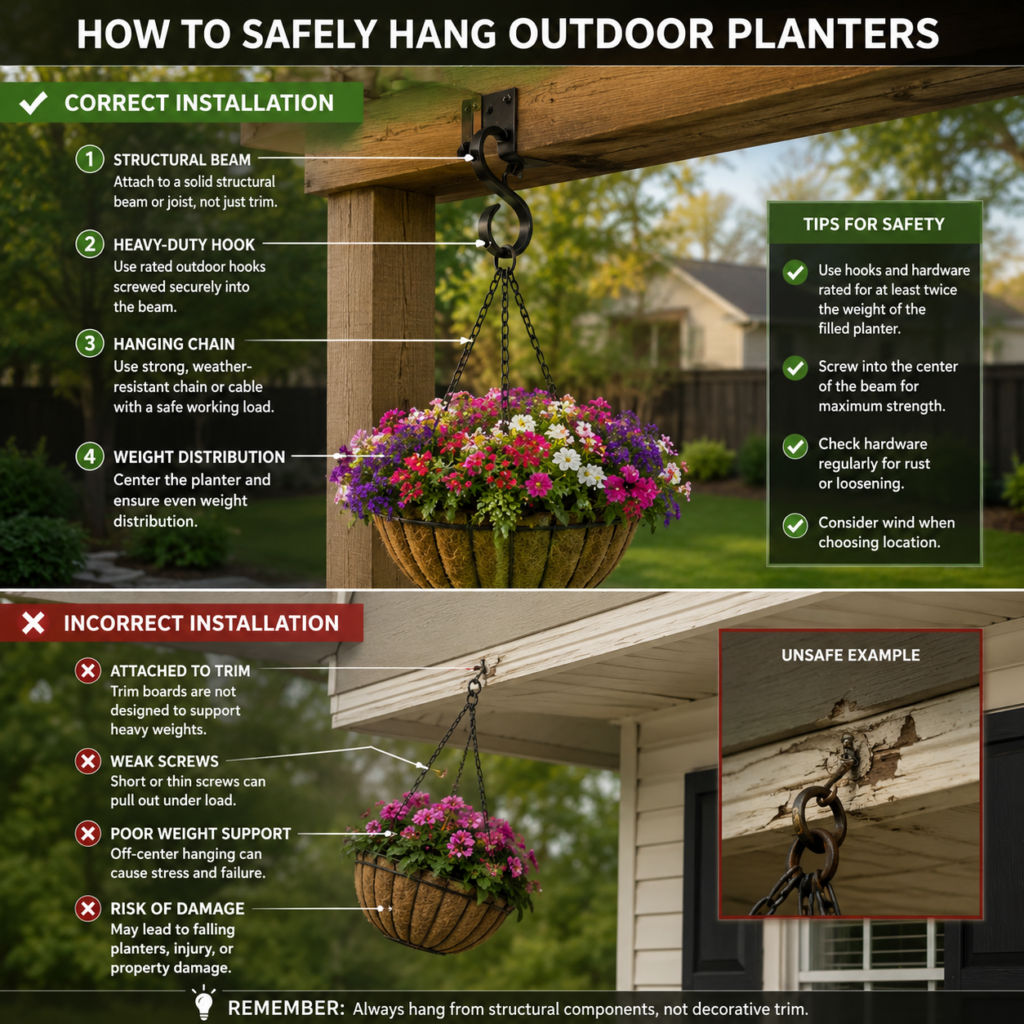
Essential hanging planter safety practices
- Use structural support beams
- Choose rust-resistant hooks
- Calculate wet basket weight
- Avoid overloaded hanging chains
- Check hardware regularly
- Protect baskets from strong wind
- Use secure anchor points
Wind exposure is often ignored during installation planning. In open backyards, hanging baskets may swing aggressively during storms, damaging hooks, chains, or nearby walls. Wind movement also increases moisture loss and stem breakage.
In real-world outdoor layouts, covered patios and pergola interiors usually provide the safest hanging locations because they reduce both weather exposure and structural stress. Proper installation dramatically improves long-term safety while reducing maintenance and replacement costs over time.
Best Hanging Planter Materials
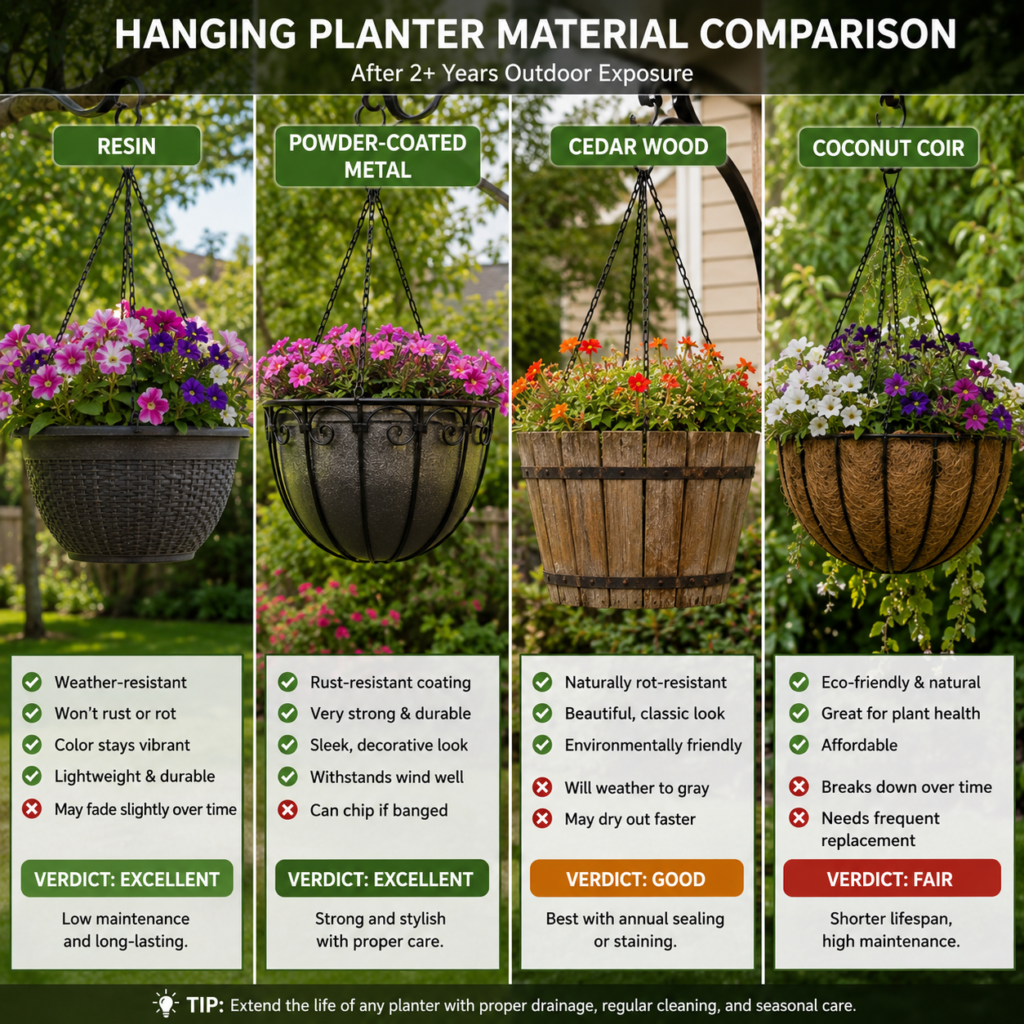
Outdoor durability depends heavily on planter material quality because constant sunlight, moisture, wind, and temperature fluctuations gradually break down weak containers. Some hanging planter materials may look attractive initially but deteriorate quickly after one or two outdoor seasons. Choosing durable materials reduces replacement costs and improves long-term backyard aesthetics.
Metal hanging planters are popular in modern outdoor spaces because they provide strong structural stability and clean architectural lines. Powder-coated metal performs far better outdoors than untreated steel because it resists rust and moisture damage more effectively. However, metal containers may heat up quickly in direct sunlight, potentially stressing sensitive roots.
Resin and fiberglass planters are increasingly common because they combine lightweight handling with strong weather resistance. High-quality resin containers resist cracking, fading, and water absorption better than cheap plastic alternatives.
Long-lasting outdoor hanging planter materials
- Powder-coated metal
- UV-resistant resin
- Fiberglass
- Cedar wood
- Coconut coir liners
- Heavy-duty recycled plastic
Wooden hanging planters create a warm natural appearance that fits rustic and farmhouse backyard styles. Cedar performs especially well because it naturally resists insects and moisture better than many untreated woods. However, wooden baskets still require periodic sealing and maintenance to prevent gradual deterioration.
Coir-lined hanging baskets remain visually popular because they provide excellent airflow and a classic garden aesthetic. Their main weakness is rapid drying. In hot climates, coir baskets may require watering twice daily during peak summer conditions. Homeowners wanting lower-maintenance systems often prefer resin or self-watering containers instead.
Are Hanging Planters Good for Small Spaces?
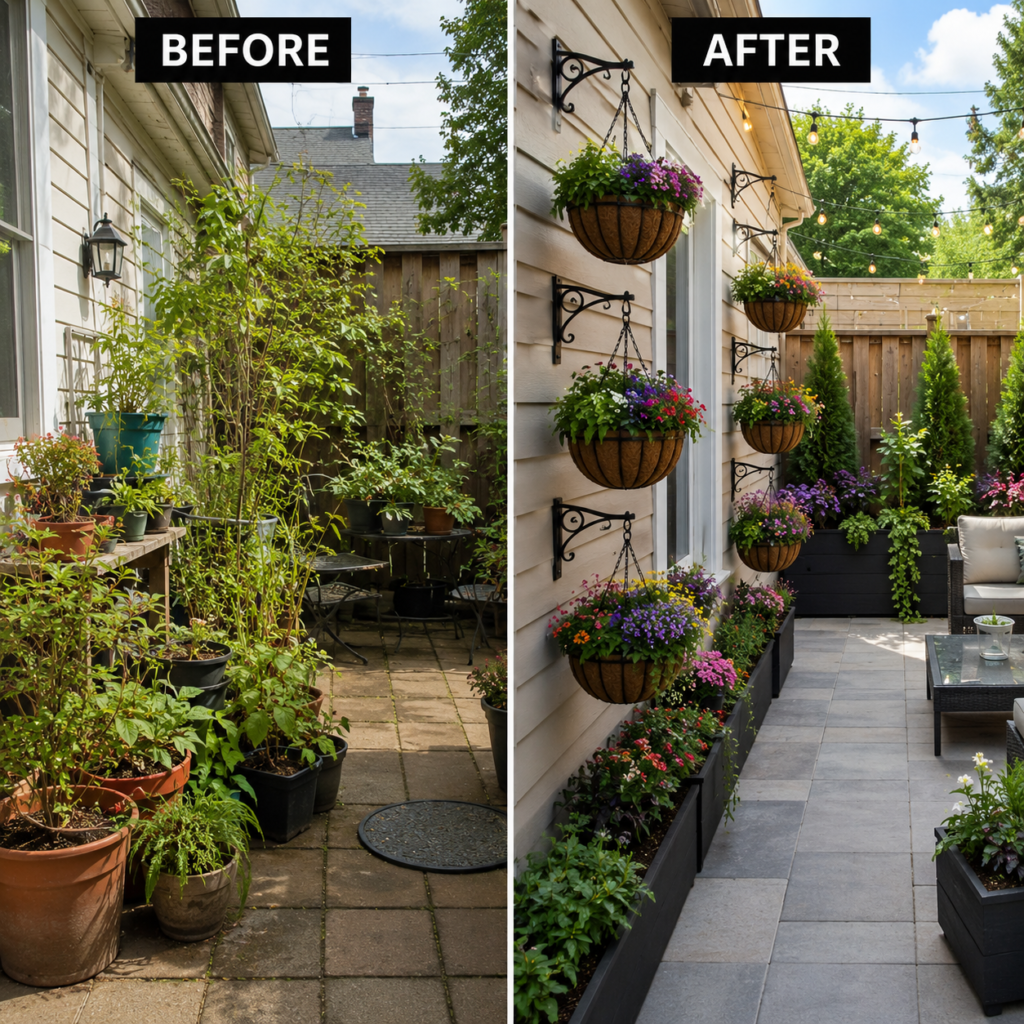
Hanging backyard planters are one of the most effective gardening solutions for compact outdoor spaces because they make use of overhead and wall-mounted areas that would otherwise go unused. Small patios, balconies, narrow side yards, and urban backyards often lack room for large garden beds, making hanging planters a practical way to add greenery without sacrificing functionality.
Instead of relying solely on ground-level containers, homeowners can attach planters to fences, walls, railings, or pergolas to introduce flowers, herbs, and trailing plants. Hanging baskets also draw the eye upward, helping compact backyards feel more balanced and visually appealing.
Why hanging planters work well in small backyards
- Preserve walking space
- Keep patios less crowded
- Use walls and fences efficiently
- Improve visual depth
- Fit balconies and patios
- Work well in rental properties
Fence-mounted planters are especially useful in narrow backyards because they transform unused fence lines into productive planting areas. In most outdoor layouts, combining a few hanging planters with select ground containers creates the best balance. Too many baskets can make a small patio feel visually busy, so thoughtful spacing is important.
Best Patio and Pergola Ideas
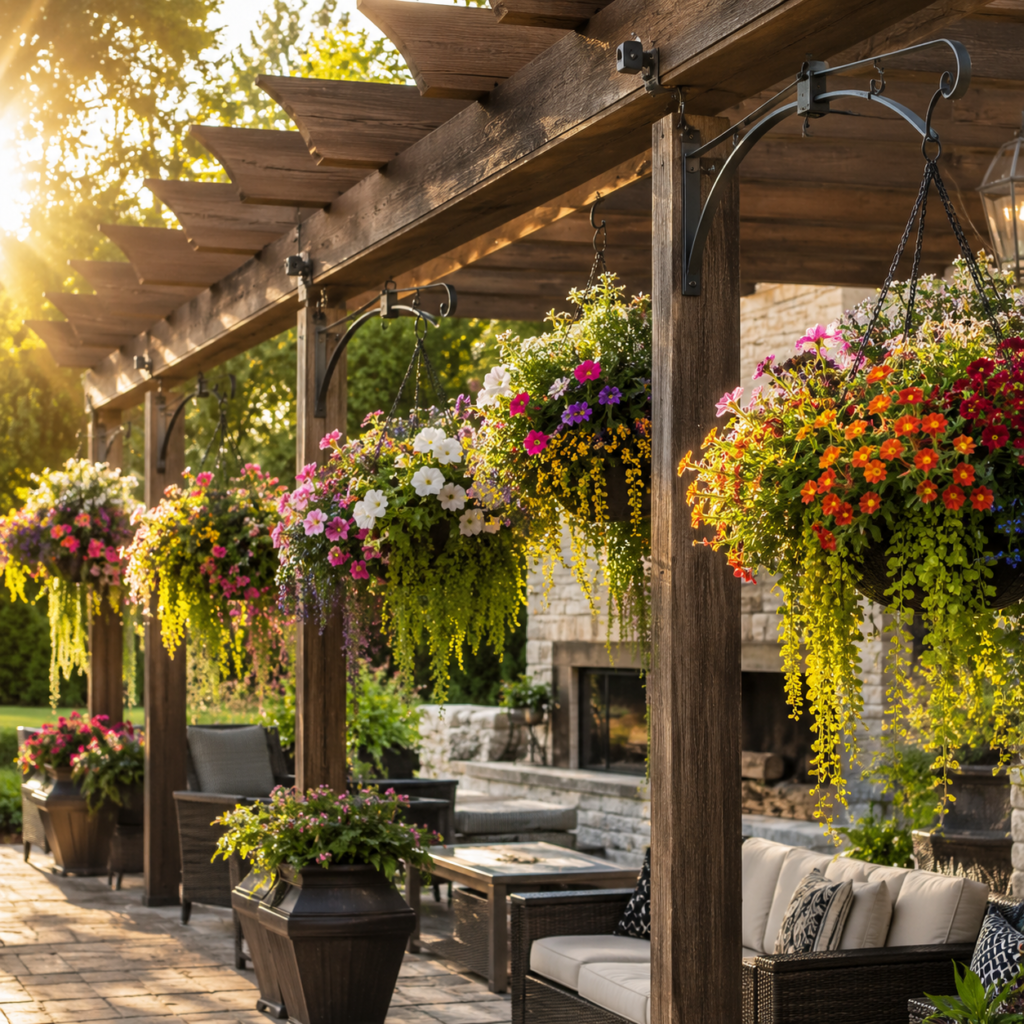
Pergolas and patios are naturally suited for hanging planter systems because they provide structural support while helping outdoor spaces feel more immersive and decorative. Hanging greenery attached to overhead beams creates layered visual depth that transforms simple patios into more luxurious outdoor living environments.
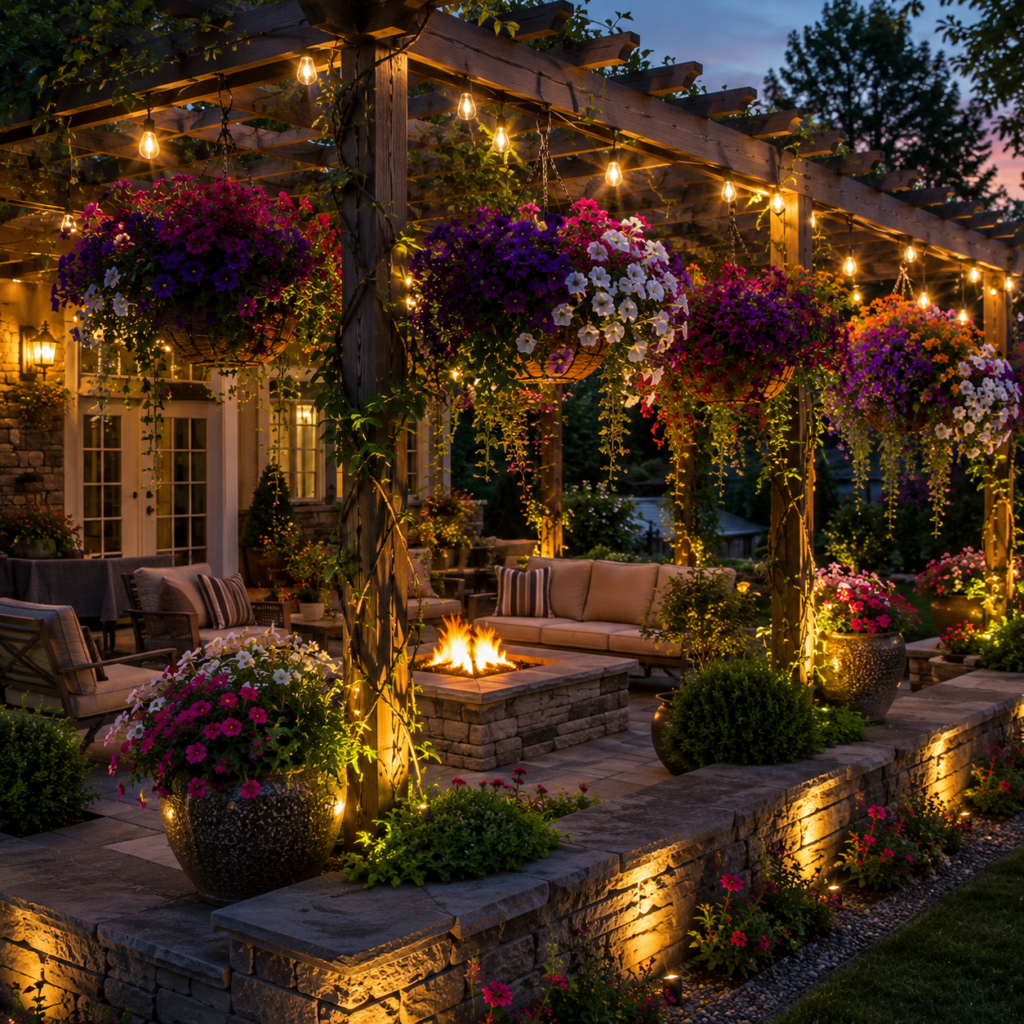
One of the most effective pergola layouts involves symmetrical rows of hanging flower baskets spaced evenly across the structure. This creates rhythm, organization, and stronger visual balance. Cascading flowers hanging above outdoor seating areas also soften hard architectural lines and improve overall atmosphere.
Patio herb gardens are another increasingly popular option because they combine practical gardening with decorative appeal. Hanging basil, thyme, mint, and oregano near dining areas creates both greenery and convenient cooking access.
Popular patio and pergola hanging planter ideas
- Pergola flower basket rows
- Hanging herb gardens
- Tiered corner hanging systems
- Railing-mounted patio baskets
- Hanging strawberry planters
- Mixed greenery pergola layouts
Layering multiple plant heights is one of the most effective outdoor design strategies. Combining hanging baskets overhead with floor planters and climbing vines below creates a more complete garden environment rather than isolated decorative pieces.
In real backyard spaces, pergola-centered hanging systems often become focal points because they frame seating areas while adding shade, texture, and natural movement. Even relatively small pergolas can feel significantly more upscale when integrated with trailing greenery and flowering hanging baskets.
Can Vegetables Grow in Hanging Planters?
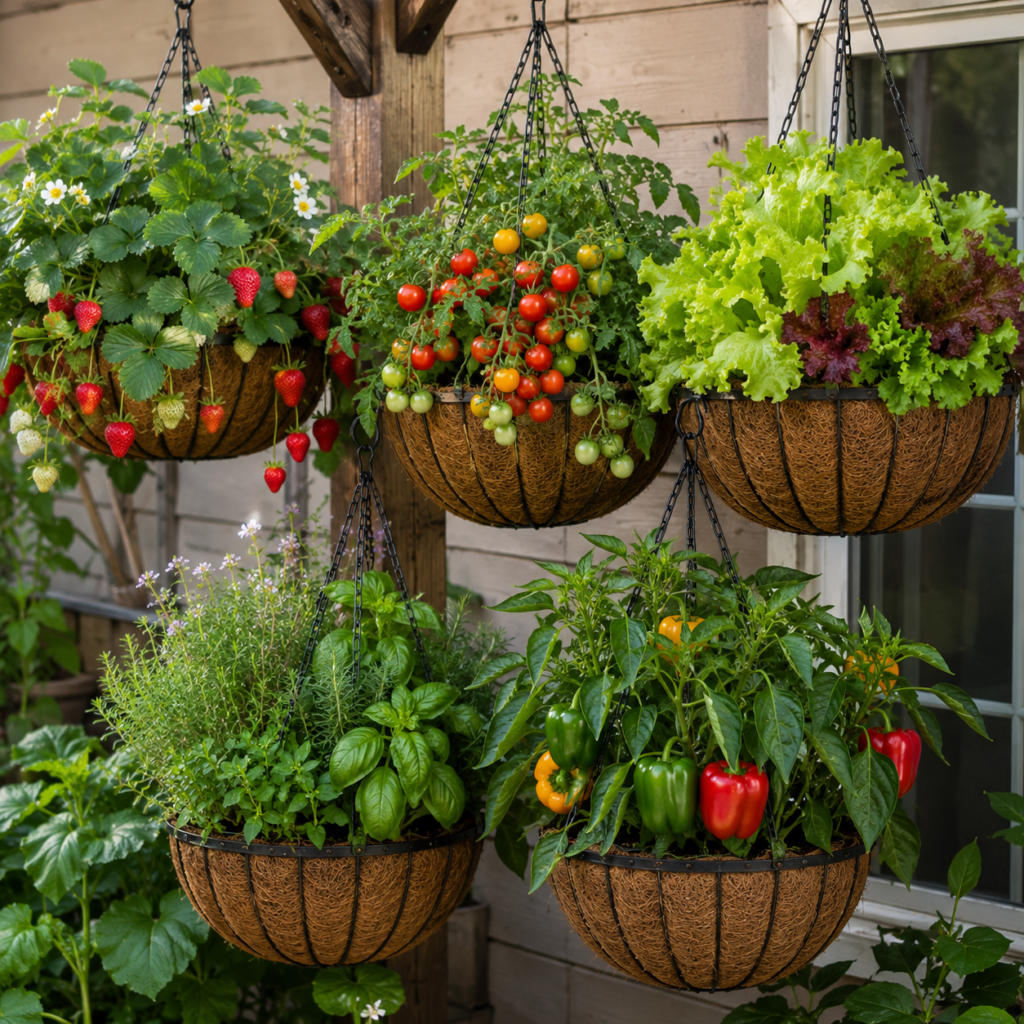
Many vegetables grow successfully in hanging backyard planters, especially lightweight varieties with compact root systems. Hanging edible gardens have become increasingly popular because they combine decorative landscaping with practical food production. They are particularly useful in small backyards where traditional vegetable beds may not fit.
Cherry tomatoes, strawberries, lettuce, spinach, peppers, and herbs are among the most successful edible hanging plants because they adapt well to container environments and elevated airflow. Trailing strawberries are especially effective because the fruit hangs cleanly below the basket instead of touching soil.
However, vegetable baskets require more consistent maintenance than ornamental flower baskets. Edible plants generally consume nutrients and moisture more aggressively during growth and fruiting periods.
Best vegetables for hanging planter systems
- Strawberries
- Cherry tomatoes
- Lettuce
- Spinach
- Peppers
- Basil
- Parsley
- Mint
Proper soil selection is extremely important for edible hanging gardens. Dense garden soil often becomes compacted and poorly aerated inside hanging containers. High-quality potting mix with organic matter and moisture retention performs much better.
In real-world outdoor gardening, one of the biggest challenges is watering frequency. Hanging vegetable baskets may dry extremely quickly during hot weather, especially when exposed to wind and direct sunlight. Self-watering containers or drip irrigation systems can dramatically improve long-term success for edible hanging gardens.
Common Hanging Planter Mistakes
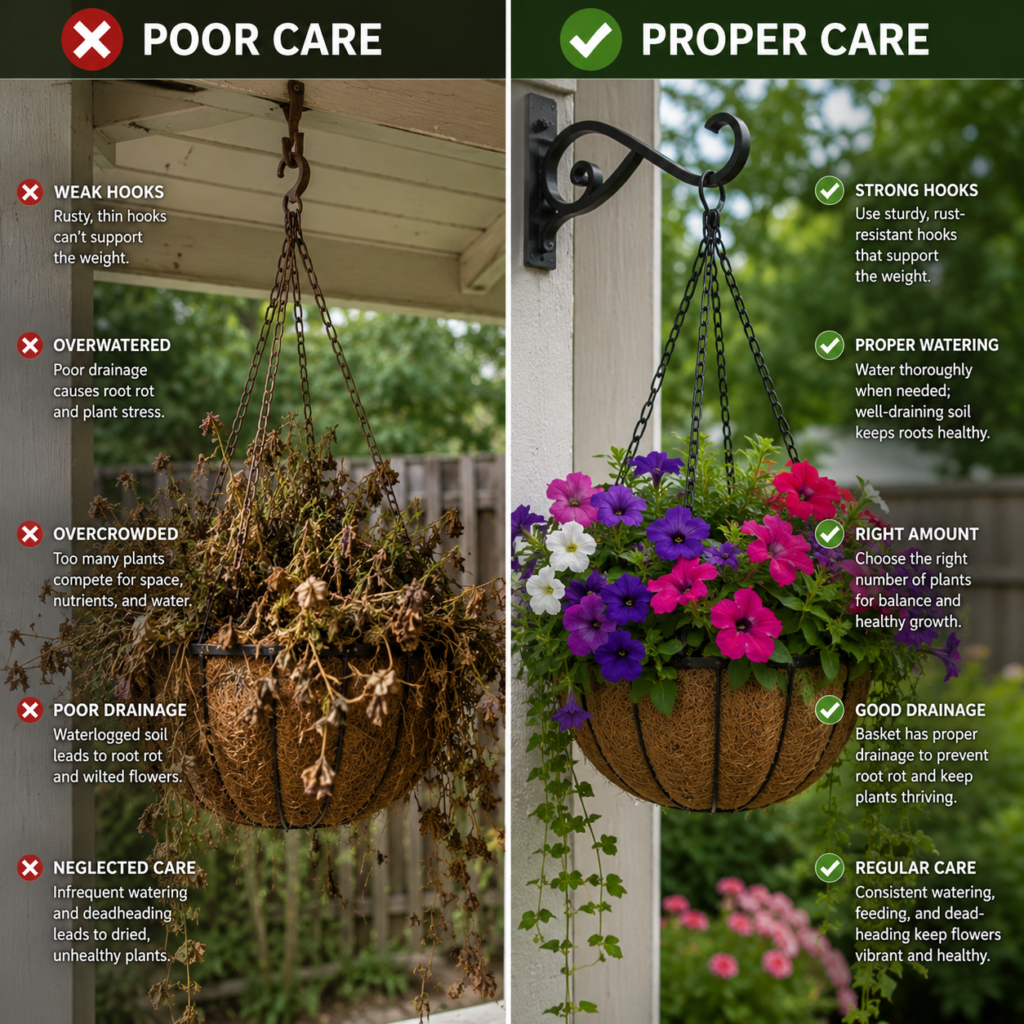
Many outdoor hanging baskets decline because of preventable maintenance and installation mistakes. Two of the most common problems are overwatering and underwatering. Excess moisture can lead to root rot, fungal growth, yellow leaves, and weak stems, especially when drainage is poor. At the same time, hanging baskets dry out much faster than ground planters because airflow surrounds the container on all sides. Insufficient watering often causes crispy foliage, flower drop, soil shrinkage, and heat stress during warm weather.
Common watering-related problems include:
- Root rot
- Fungus growth
- Yellow leaves
- Weak stems
- Crispy foliage
- Flower drop
- Soil shrinkage
- Heat stress
Poor drainage, inconsistent watering routines, and failing to adjust watering frequency during hot weather can quickly reduce plant health and flowering performance.
Why Hanging Baskets Dry Fast
Explain:
- airflow exposure
- elevated heat
- smaller soil volume
- direct sun reflection from patios
Then explain fixes:
- mulch topping
- self-watering systems
- morning watering
- larger baskets
Overcrowding Plants
Overcrowded baskets compete aggressively for:
- Moisture
- Nutrients
- Sunlight
- Root space
This often leads to poor airflow and disease spread.
Weak Structural Support
Low-quality hooks and weak mounting points may eventually fail under wet basket weight.
This creates both safety risks and plant damage.
How Climate Affects Hanging Planters
Climate directly affects watering frequency, material lifespan, plant health, and long-term maintenance.
Hot Climate Challenges
Hot regions increase:
- Soil evaporation
- Root heat stress
- Basket drying speed
Heat-resistant plants perform best in direct sun.
Rainy Climate Problems
Constant rain may cause:
- Root saturation
- Fungal disease
- Hook corrosion
- Soil nutrient washout
Proper drainage becomes critical.
Cold Climate Considerations
Freeze-thaw cycles can crack:
- Ceramic planters
- Cheap plastic baskets
- Weak mounting systems
Cold-hardy materials survive longer outdoors.
Hanging Planter Maintenance Needs
Explain:
- daily summer watering
- fertilizer washout
- pruning
- deadheading flowers
- replacing seasonal plants
This improves:
- authenticity
- trust
- realistic expectations
Hanging vs Ground Planters
Both systems offer different advantages depending on backyard goals.
Advantages of Hanging Planters
Hanging systems provide:
- Better vertical usage
- Decorative layering
- Cleaner patio layouts
- Easier visibility
They also reduce some ground pests.
Advantages of Ground Planters
Ground containers often provide:
- Larger root capacity
- Better moisture stability
- Less frequent watering
- Higher vegetable productivity
Large plants usually perform better at ground level.
Best Combined Backyard Strategy
Many modern backyards combine both systems together.
For example:
- Hanging flowers overhead
- Raised beds below
- Climbing vines on trellises
- Floor planters for shrubs
This creates balanced layered landscaping.
Best Layouts for Hanging Planters
Proper layout planning dramatically improves visual harmony and maintenance efficiency.
Pergola-Centered Layouts
Pergolas naturally support:
- Symmetrical basket spacing
- Layered vine systems
- Overhead greenery
These layouts create luxury outdoor living aesthetics.
Fence-Based Vertical Layouts
Fence-mounted hanging systems work well for:
- Compact backyards
- Privacy enhancement
- Herb gardens
- Decorative flower walls
Corner Hanging Garden Layouts
Unused backyard corners can become focal points with:
- Tiered hanging systems
- Multi-height baskets
- Cascading vines
This improves space utilization.
How Hanging Planters Improve Aesthetics
Hanging greenery improves backyard aesthetics by adding layered elevation, natural movement, and softer visual texture throughout outdoor spaces. Plants suspended above eye level help soften the appearance of concrete patios, wooden fences, brick walls, and metal railings, creating a more balanced and inviting environment. Flowering baskets introduce seasonal color, while trailing vines and mixed foliage add depth, motion, and visual contrast that make landscapes feel richer and more visually dynamic.
This layered greenery is often associated with resort-style patios, café-inspired outdoor seating areas, modern pergolas, and luxury landscaping designs because it creates a lush, professionally styled atmosphere. By adding greenery at multiple heights rather than concentrating all plants at ground level, hanging planters make backyards feel more immersive, elegant, and thoughtfully designed, even in smaller spaces.
Are Hanging Planters Worth It?
Hanging backyard planter ideas are one of the most effective ways to improve outdoor spaces without requiring major landscaping changes. They maximize vertical gardening potential while adding color, texture, greenery, and decorative depth to patios, pergolas, fences, porches, and compact backyards.
The best results come from combining:
- Weather-resistant materials
- Strong structural support
- Proper drainage
- Climate-appropriate plants
- Balanced watering routines
When properly planned, hanging planter systems can dramatically improve both backyard aesthetics and gardening efficiency while supporting flowers, herbs, decorative foliage, and even edible plants in limited outdoor space.
FAQs
What are hanging backyard planter ideas?
Hanging backyard planter ideas are vertical gardening systems that suspend flowers, herbs, or greenery from pergolas, fences, railings, or ceilings. They help maximize outdoor space while improving backyard aesthetics and decorative layering.
Are hanging backyard planters good for small backyards?
Yes. Hanging planters save floor space by using vertical areas instead of cluttering patios or walkways. They work especially well in compact backyards, balconies, and narrow outdoor spaces.
Which plants grow best in outdoor hanging planters?
Trailing flowers and lightweight plants usually perform best. Popular options include petunias, ivy, strawberries, verbena, basil, mint, and sweet potato vine.
How often should outdoor hanging baskets be watered?
Outdoor hanging baskets usually need more frequent watering than ground planters because they dry faster from airflow and sunlight exposure. During summer, many require daily watering.
Why do hanging baskets dry out so quickly?
Hanging baskets dry faster because air surrounds the container on all sides, increasing evaporation. Direct sun, wind exposure, and smaller soil volume also speed up moisture loss.
What is the best material for outdoor hanging planters?
Resin, fiberglass, powder-coated metal, and cedar are among the best outdoor materials because they resist moisture, UV damage, and weather exposure more effectively.
Are self-watering hanging planters worth it?
Yes, especially in hot climates. Self-watering planters help maintain consistent moisture levels and reduce watering frequency during warm weather.
Can vegetables grow in hanging backyard planters?
Yes. Strawberries, cherry tomatoes, lettuce, spinach, peppers, basil, and other lightweight edible plants grow well in hanging systems.
How do you safely hang heavy outdoor planters?
Heavy planters should attach to structural beams or strong wall brackets using rust-resistant hardware. Always consider wet soil weight before installation.
Which hanging plants attract pollinators?
Plants like verbena, petunias, lantana, nasturtiums, and fuchsia commonly attract bees, butterflies, and hummingbirds while adding decorative color.
Are hanging planters better than raised garden beds?
Hanging planters are better for vertical gardening and decorative layering, while raised beds usually provide more root space and better vegetable productivity.
What are the most common mistakes with hanging backyard planters?
Common mistakes include poor drainage, weak hanging hardware, overcrowding plants, and inconsistent watering during hot weather.
Where should hanging planters be placed in a backyard?
Popular locations include pergolas, covered patios, fence lines, porch ceilings, and protected seating areas with suitable sunlight exposure.
How do you make hanging backyard planters look professionally designed?
Professional layouts usually use balanced spacing, coordinated planter materials, layered greenery, and repeating flower colors for a cleaner visual appearance.
Myra is the founder and lead writer of Backyard Planter Ideas, where she shares practical, well-researched guidance on planter design, plant selection, and outdoor styling. Her goal is to help homeowners create attractive, functional garden spaces with clear, reliable, and easy-to-apply advice.