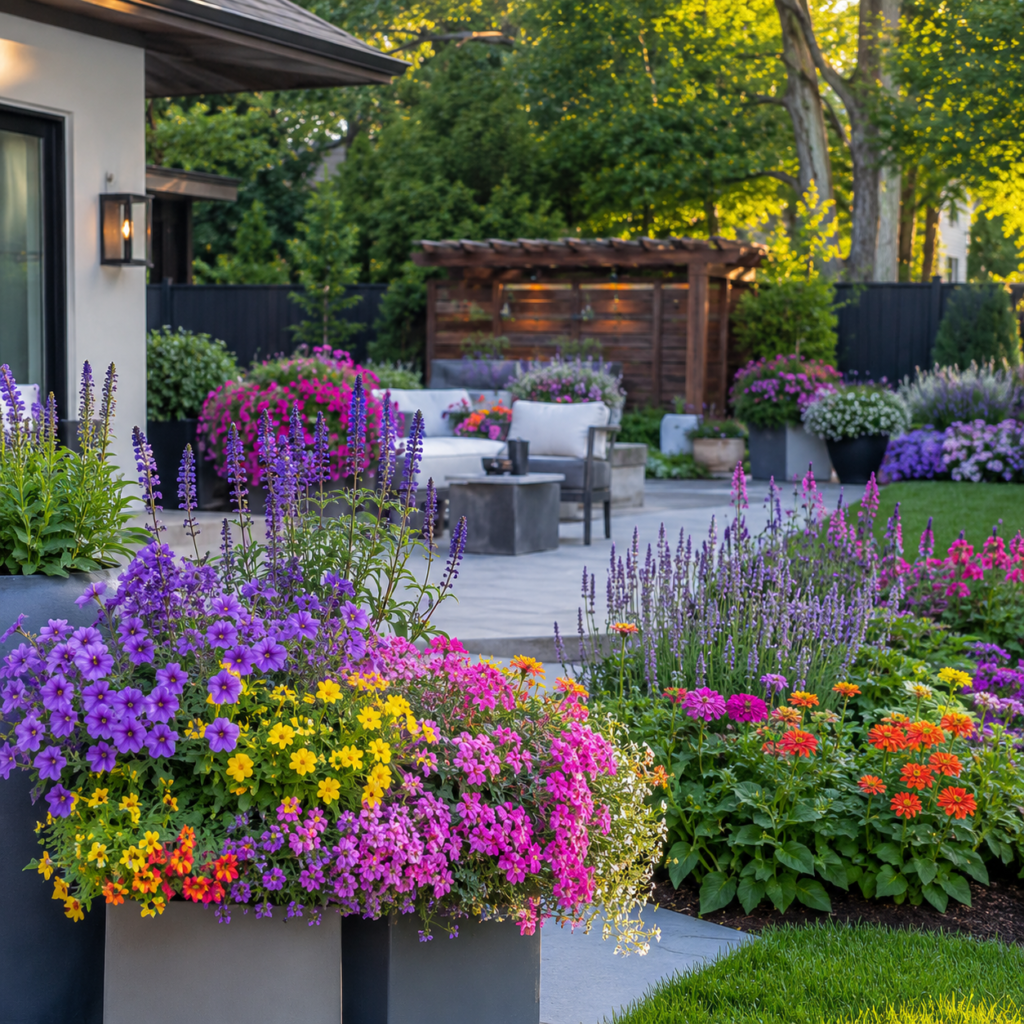
Flower backyard planter ideas are one of the most effective ways to bring continuous color, texture, and personality into outdoor living spaces. Unlike traditional flower beds that require dedicated landscape areas, planters provide flexibility and allow homeowners to create vibrant displays almost anywhere in the backyard. Whether placed around patios, pathways, pools, decks, or outdoor dining spaces, flower planters instantly make outdoor environments feel more welcoming and professionally designed.
The biggest advantage of flower planters is the ability to control growing conditions while showcasing a wide variety of flowers throughout the season. By selecting the right combinations of annuals, perennials, fillers, and trailing plants, homeowners can create containers that remain attractive from spring until the first frost. The best flower backyard planter ideas combine color planning, bloom timing, and practical maintenance strategies to ensure long-lasting beauty with manageable effort.
Why Are Flower Planters Popular?
Flower backyard planter ideas remain popular because they provide one of the quickest ways to add color, texture, and visual interest to an outdoor space. Unlike large landscaping projects that require significant time and investment, a few well-designed planters filled with flowers can dramatically enhance a backyard’s appearance in a short period. They work equally well in small patios, compact gardens, and large outdoor living areas, making them a versatile solution for almost any backyard design.
Flower planters also help soften hardscape elements such as concrete, stone, wood, and metal while creating attractive focal points around patios, walkways, and seating areas. Their ability to instantly brighten outdoor spaces makes them a favorite choice for homeowners seeking a more inviting and vibrant backyard environment.
Benefits that drive their popularity include:
- Instant color and visual impact
- Improved curb appeal
- Enhanced outdoor entertaining areas
- Easy customization
- Suitable for small and large backyards
- Ability to attract pollinators
Longest-Blooming Planter Flowers
Long-lasting flowers are one of the most important factors in successful backyard planter designs because they provide continuous color with less maintenance. Instead of selecting flowers based only on their appearance at the nursery, it is often better to prioritize bloom duration, heat tolerance, disease resistance, and overall reliability. This approach helps planters remain attractive from late spring through fall rather than looking impressive for only a few weeks.
When evaluating flowers for backyard planters, consider:
- Bloom duration
- Heat tolerance
- Disease resistance
- Water requirements
- Growth habit
- Pollinator value
- Deadheading needs
Homeowners who focus on these characteristics typically achieve more consistent results and enjoy colorful planters for a much longer period.
Best Long-Blooming Annuals
Annual flowers are popular because they produce abundant blooms throughout a single growing season. Petunias, calibrachoa, verbena, lantana, and zinnias are among the longest-blooming annual flowers. These varieties can provide continuous color for several months when properly watered and fertilized.
Other reliable annual choices include:
- Angelonia
- Marigolds
- Geraniums
- Begonias
- Impatiens
These flowers are widely used in professional landscape designs because they deliver dependable color with relatively low maintenance.
Best Long-Blooming Perennials
Perennials provide long-term value by returning year after year while adding structure and seasonal color to planter displays.
Reliable perennial planter flowers include:
- Coneflowers
- Salvia
- Coreopsis
- Lavender
- Shasta Daisy
- Gaillardia
- Black-Eyed Susan
- Catmint
Best Flowers for Every Condition
Choosing the right flowers for your backyard planters depends heavily on the growing conditions available. Many planter failures occur because homeowners select flowers based on appearance alone without considering sunlight, heat exposure, container size, or maintenance requirements. Matching flowers to their ideal environment significantly improves bloom production, plant health, and overall planter performance throughout the season.
Understanding these differences helps create backyard planters that remain attractive with less maintenance and fewer plant replacements.
Best Flowers for Full Sun
- Petunias
- Lantana
- Salvia
- Zinnias
- Verbena
Best Flowers for Partial Shade
- Begonias
- Impatiens
- Torenia
- Lobelia
- Fuchsia
Best Flowers for Small Planters
- Calibrachoa
- Alyssum
- Compact Petunias
- Lobelia
Best Flowers for Large Planters
- Canna Lily
- Lavender
- Salvia
- Angelonia
Best Flowers for Hot Climates
- Portulaca
- Lantana
- Verbena
- Angelonia
Best Flowers for Pollinators
- Coneflower
- Bee Balm
- Salvia
- Verbena
- Lavender
How to Create Season-Long Color
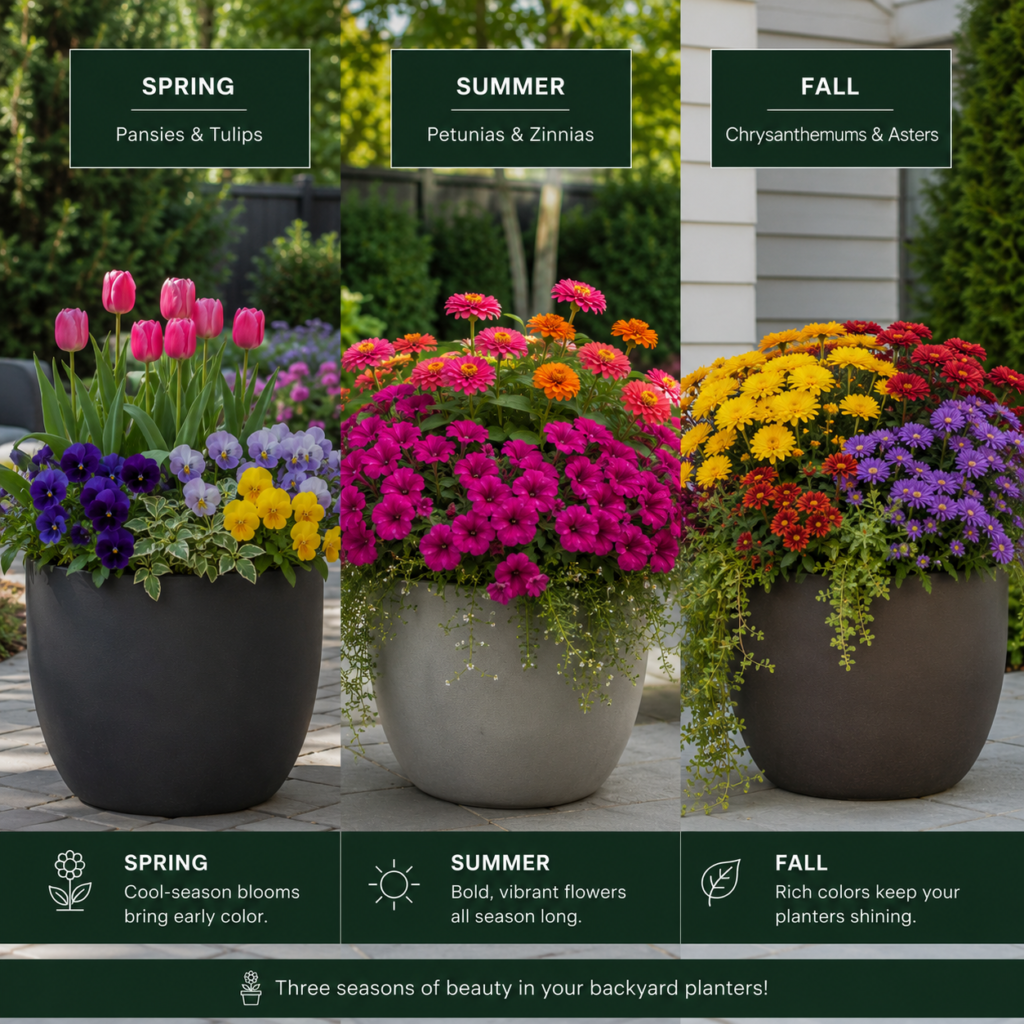
One of the biggest mistakes gardeners make is designing flower planters that look spectacular for a few weeks but gradually lose color as the season progresses. Creating planters that bloom continuously from spring through fall requires a strategy known as succession planting. This approach ensures that different flowers reach peak performance at different times of the growing season.
This approach ensures that different flowers reach peak performance at different times of the growing season.
Important principles include:
- Mix early, mid, and late-season bloomers
- Include evergreen foliage where possible
- Use long-blooming annuals
- Add seasonal replacements when needed
- Deadhead regularly
- Fertilize consistently
Spring Flowers
Spring flowers provide the first burst of color after winter and help backyard planters transition into the growing season. Because temperatures remain relatively cool, many spring flowers perform exceptionally well and create attractive displays before summer annuals become established.
Excellent spring flowers include:
- Pansies
- Violas
- Primroses
- Snapdragons
- Dianthus
- Tulips
- Daffodils
These flowers thrive in cool temperatures and provide reliable early-season color, making them ideal choices for spring backyard planters.
Summer Flowers
Summer is when most backyard flower planters reach their peak performance. Longer days, warmer temperatures, and abundant sunlight encourage continuous blooming, but containers also face greater stress from heat and evaporation. Choosing heat-tolerant, reliable flowers helps maintain color and healthy growth throughout the season.
Top summer flowering plants include:
- Petunias
- Calibrachoa
- Zinnias
- Lantana
- Verbena
- Angelonia
- Marigolds
- Geraniums
- Salvia
- Portulaca
Large containers generally perform better during summer because they retain moisture longer and help protect roots from extreme temperatures. With proper watering and fertilization, summer flower planters can become the visual centerpiece of a backyard, providing vibrant color and lush growth for months.
Fall Flowers
Fall flower planters help extend seasonal color well beyond summer, keeping patios, entrances, and backyard spaces attractive until frost arrives.
Popular fall flowering plants include:
- Chrysanthemums
- Asters
- Pansies
- Celosia
- Sedum
- Ornamental Kale
- Ornamental Cabbage
- Black-Eyed Susan
Combining these flowers with ornamental grasses and foliage plants can create attractive fall displays that continue providing color and texture throughout the autumn season.
Thriller Filler Spiller Method
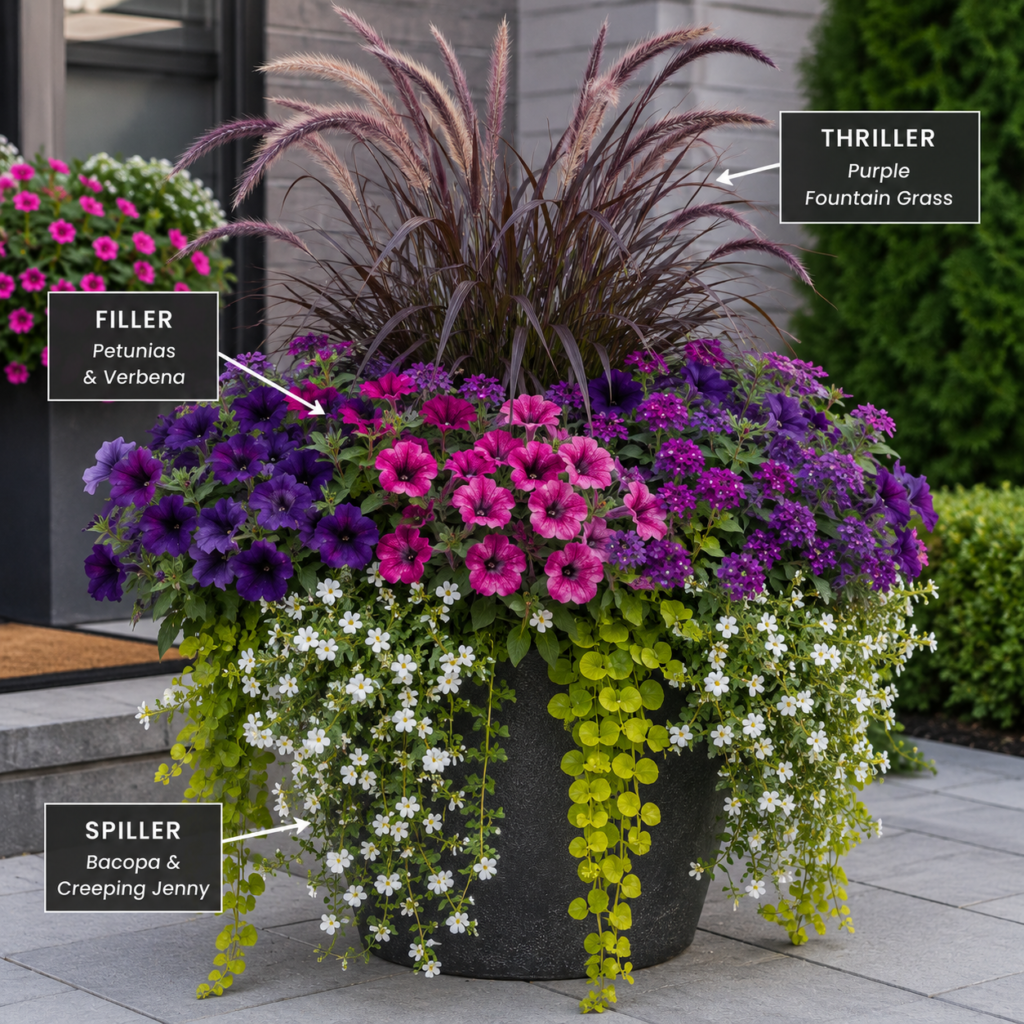
The Thriller Filler Spiller method is one of the most widely used container design principles in professional landscaping. It provides a simple but highly effective framework for building balanced flower planters that look attractive from every angle. Rather than randomly selecting plants, this method assigns specific roles to each plant type, resulting in containers that appear organized, full, and visually appealing.
The three planting roles include:
- Thriller
- Filler
- Spiller
Thriller
Thrillers serve as the focal point of the planter. These plants are typically the tallest element and establish the overall structure of the design.
Examples include:
- Purple Fountain Grass
- Salvia
- Canna Lily
- Cordyline
- Tall Angelonia
Filler
Fillers occupy the middle layer and create density throughout the planter. Their role is to connect the thriller and spiller components while adding abundant flowers and foliage.
Popular filler plants include:
- Petunias
- Geraniums
- Coleus
- Begonias
- Marigolds
Spiller
Spillers soften the edges of containers by cascading over the sides. They add movement and help integrate the planter with surrounding landscapes.
Excellent spillers include:
- Bacopa
- Creeping Jenny
- Lobelia
- Sweet Potato Vine
- Trailing Verbena
Best Flowers for Full Sun
Full sun planters receive at least six hours of direct sunlight daily, making them ideal for many flowering plants. However, intense sunlight can also create challenging growing conditions. Containers exposed to full sun often dry out quickly, and root temperatures can become significantly higher than those found in garden beds.
Selecting flowers that tolerate both sunlight and heat is essential for long-term success. Many of the most colorful flowering plants actually perform best in these conditions because sunlight fuels stronger growth and more abundant blooming. Professional landscapers often place high-impact flower containers in sunny locations specifically because these areas allow maximum flower production.
Top full-sun flowers include:
- Petunias
- Lantana
- Salvia
- Verbena
- Angelonia
- Zinnias
- Marigolds
- Portulaca
- Geraniums
- Calibrachoa
To improve full-sun planter performance:
- Use larger containers
- Water deeply
- Apply mulch to soil surfaces
- Fertilize regularly
- Remove spent blooms
These flowers and care practices help maintain strong growth and continuous blooms throughout the growing season.
Best Flowers for Shade
Shade planters offer opportunities to bring vibrant color into areas where many sun-loving flowers cannot survive. Covered patios, tree-shaded seating areas, north-facing walls, and partially sheltered backyards often require specialized flower selections to achieve successful results.
Shade planters are ideal for covered patios, tree-shaded areas, and other locations that receive limited sunlight. By selecting flowers adapted to lower light conditions, gardeners can create colorful and attractive displays even in shaded parts of the backyard.
Excellent shade flowers include:
- Impatiens
- Begonias
- Torenia
- Fuchsia
- Lobelia
- Astilbe
- Browallia
- Heuchera
Best Flower Planter Combinations
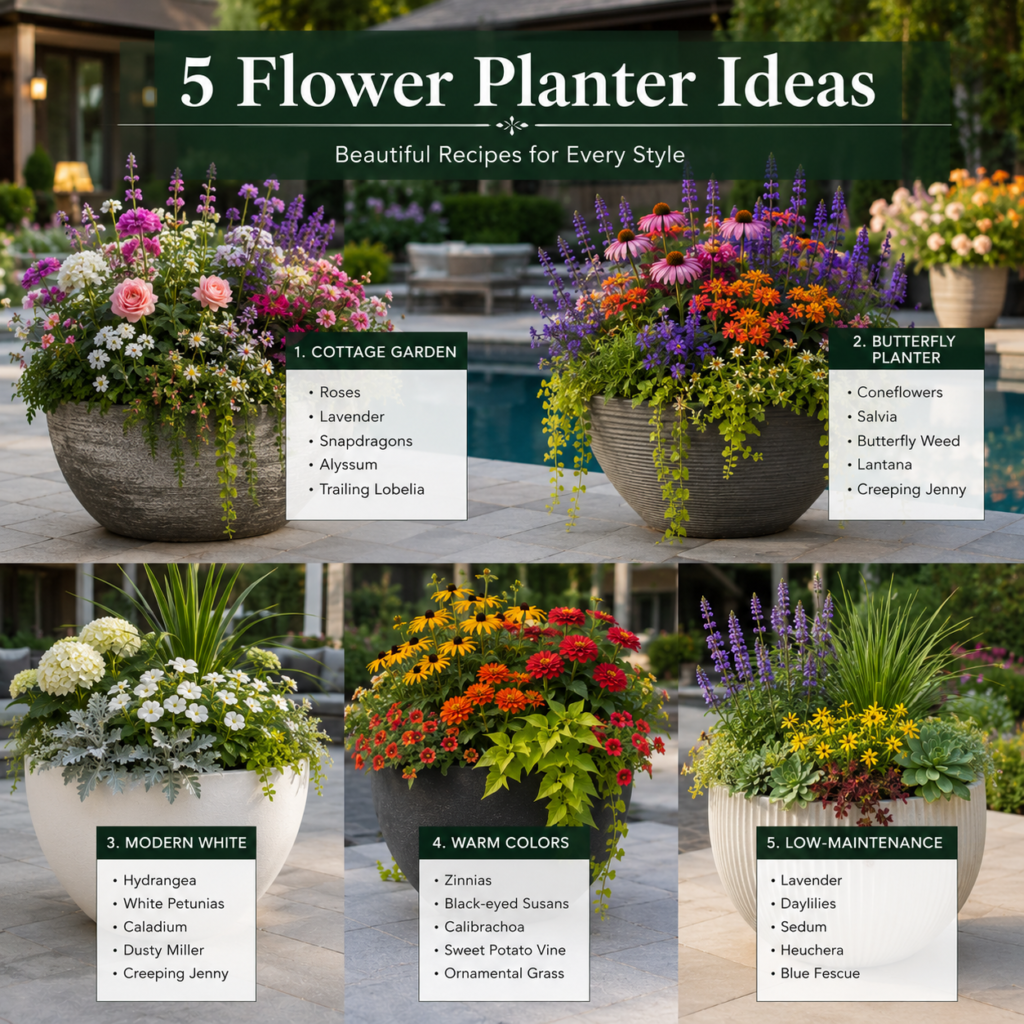
Using established flower recipes also removes much of the guesswork from planter design. Instead of wondering which flowers work together, gardeners can follow combinations that have already been tested in residential landscapes. These combinations provide season-long color while maintaining visual harmony and proper plant balance.
Cottage Garden Planter
- Purple Salvia
- Pink Petunias
- White Bacopa
Butterfly Planter
- Lantana
- Verbena
- Coneflowers
Modern White Planter
- White Petunias
- White Verbena
- Dusty Miller
Warm Color Planter
- Orange Zinnias
- Yellow Marigolds
- Red Geraniums
Low-Maintenance Planter
- Lavender
- Salvia
- Verbena
Best Flower Color Combinations
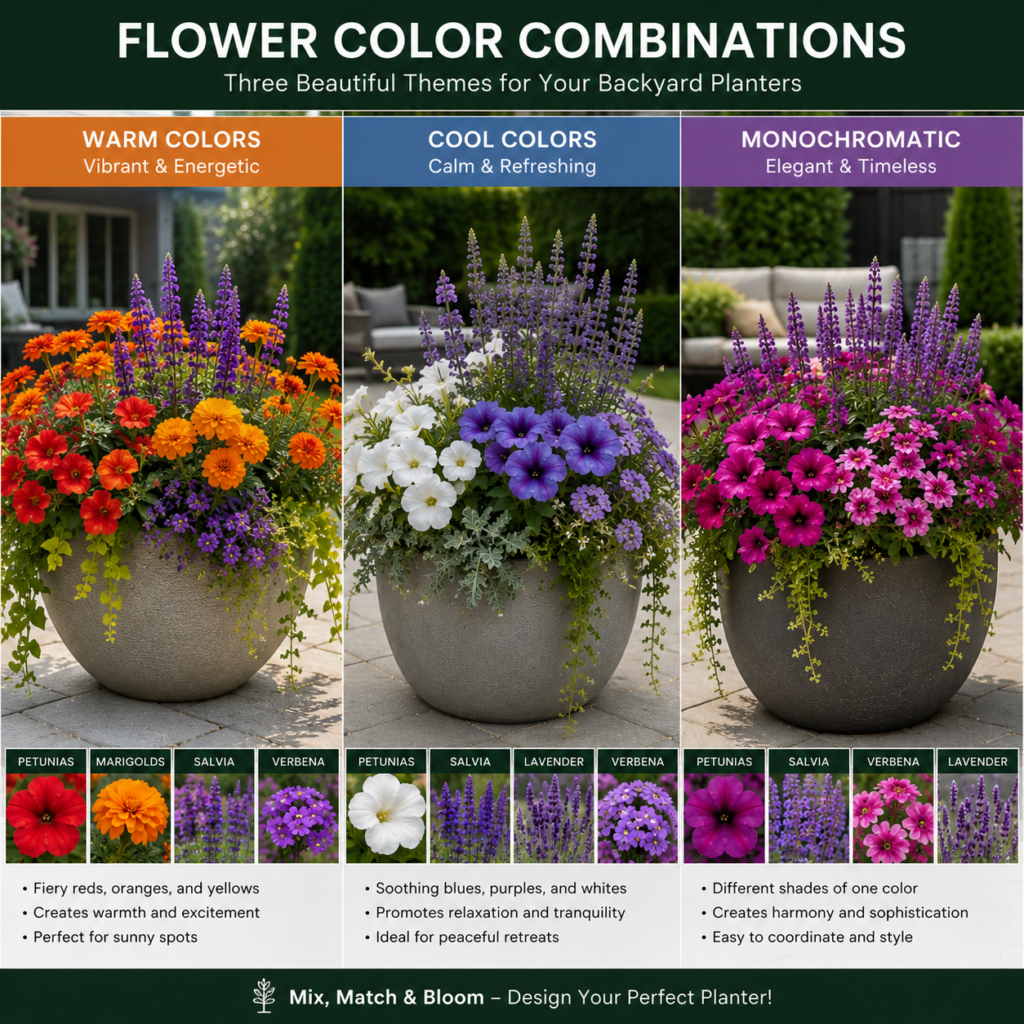
A well-planned color scheme can make a planter feel energetic, relaxing, luxurious, dramatic, or elegant. The most successful flower backyard planter ideas typically limit the number of dominant colors to avoid visual clutter while creating stronger overall harmony.
Color combinations should also complement nearby landscape elements such as patio materials, outdoor furniture, home exteriors, and surrounding plantings. This creates a more cohesive backyard design rather than making containers feel disconnected from the rest of the landscape.
Popular color approaches include:
- Warm color schemes
- Cool color schemes
- Monochromatic designs
- Complementary contrasts
- Seasonal palettes
Warm Color Themes
Warm-colored flower planters create strong visual impact and naturally draw attention in backyard landscapes. Colors such as red, orange, yellow, and coral work especially well around patios, entrances, dining areas, and other focal points where a lively atmosphere is desired.
Popular warm-color flower combinations include:
- Red Geraniums + Yellow Marigolds
- Orange Zinnias + Red Salvia
- Coral Petunias + Golden Lantana
- Yellow Calibrachoa + Orange Celosia
- Red Verbena + Gold Marigolds
Cool Color Themes
Cool-colored flower planters create a calm and sophisticated atmosphere while helping outdoor spaces feel more open and spacious. Shades of blue, purple, lavender, pink, and white are especially effective around pools, seating areas, and modern backyard designs.
Popular cool-color combinations include:
- Purple Salvia + White Bacopa
- Lavender + White Petunias
- Blue Lobelia + Silver Dusty Miller
- Purple Verbena + White Calibrachoa
- Lavender Angelonia + White Alyssum
Monochromatic Designs
Monochromatic flower planters use different shades of a single color to create a cohesive and sophisticated appearance. These designs are popular in luxury landscapes because they feel organized, intentional, and visually refined.
Popular monochromatic themes include:
- White flower gardens
- Pink flower collections
- Purple-themed containers
- Blue flower combinations
- Yellow-only displays
Examples include:
- White Petunias + White Bacopa + White Verbena
- Purple Salvia + Purple Petunias + Lavender
- Pink Calibrachoa + Pink Geraniums + Pink Verbena
Best Pollinator Flowers
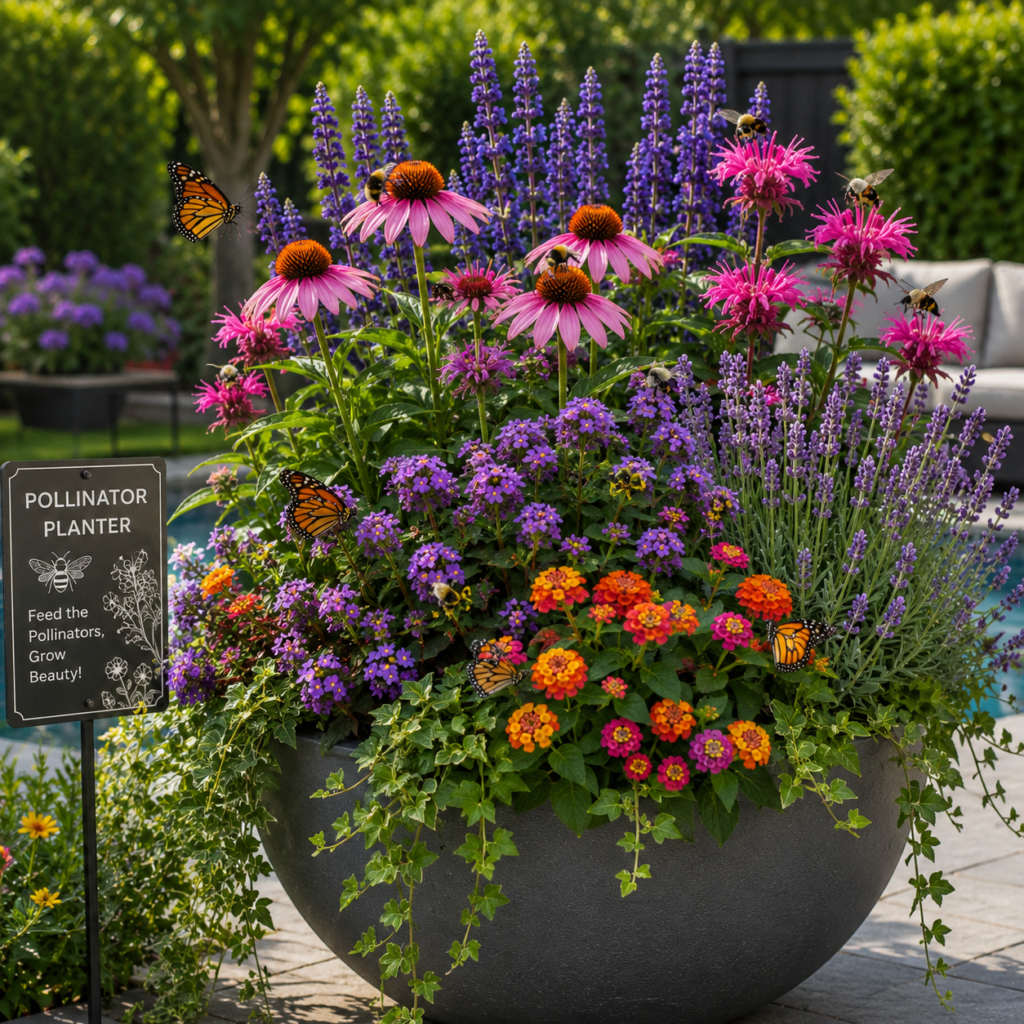
Pollinator-friendly flower planters provide beauty while supporting important ecological functions. Bees, butterflies, and other pollinating insects play a critical role in plant reproduction, food production, and ecosystem health. Creating backyard planters that attract pollinators benefits both the garden and the surrounding environment.
Many flowering plants naturally produce nectar and pollen that attract beneficial insects throughout the growing season. By selecting the right flowers, homeowners can create colorful displays filled with movement and activity while helping local pollinator populations.
Excellent pollinator flowers include:
- Coneflowers
- Salvia
- Verbena
- Lavender
- Zinnias
- Lantana
- Coreopsis
- Black-Eyed Susan
- Gaillardia
- Bee Balm
To maximize pollinator activity:
- Use diverse flower species
- Plant flowers in clusters
- Avoid excessive pesticide use
- Include native plants where possible
- Maintain continuous bloom periods
Large Flower Planter Ideas
Large flower planters create strong focal points in backyard landscapes while providing ample space for healthy root growth and improved moisture retention. They are ideal for framing entrances, defining seating areas, and adding visual impact to larger outdoor spaces.
Large planters work exceptionally well as focal points. They can anchor outdoor seating areas, frame entrances, define pathways, and create visual balance within expansive backyard spaces. Because they accommodate larger plants, they also offer greater flexibility when implementing the Thriller Filler Spiller design method.
Popular large planter combinations include:
- Purple Fountain Grass + Petunias + Bacopa
- Canna Lily + Coleus + Sweet Potato Vine
- Salvia + Verbena + Creeping Jenny
- Lavender + White Petunias + Lobelia
- Angelonia + Calibrachoa + Trailing Verbena
Benefits of large containers include:
- Better moisture retention
- Reduced maintenance
- Greater plant diversity
- Improved root health
- Strong visual presence
Small Flower Planter Ideas
Small flower planters may occupy less space, but they can still deliver significant visual impact when designed thoughtfully. In compact backyards, patios, balconies, and courtyards, smaller containers often provide more flexibility than oversized planters. They can be grouped together, rearranged seasonally, and used to highlight specific areas of the landscape.
Small flower planters are ideal for patios, balconies, courtyards, and compact backyards where space is limited. When grouped thoughtfully, they can create attractive focal points and add significant color to outdoor areas.
Excellent flowers for small containers include:
- Calibrachoa
- Lobelia
- Alyssum
- Dwarf Zinnias
- Compact Petunias
- Begonias
- Mini Marigolds
- Trailing Verbena
Design strategies for small planters include:
- Grouping containers in odd numbers
- Repeating flower colors
- Mixing heights and textures
- Using coordinated planter materials
- Creating seasonal container collections
Flower planters are particularly effective for:
- Framing patios
- Highlighting entrances
- Defining walkways
- Enhancing pool areas
- Softening hardscapes
- Creating privacy screens
- Adding seasonal interest
Luxury Flower Planters
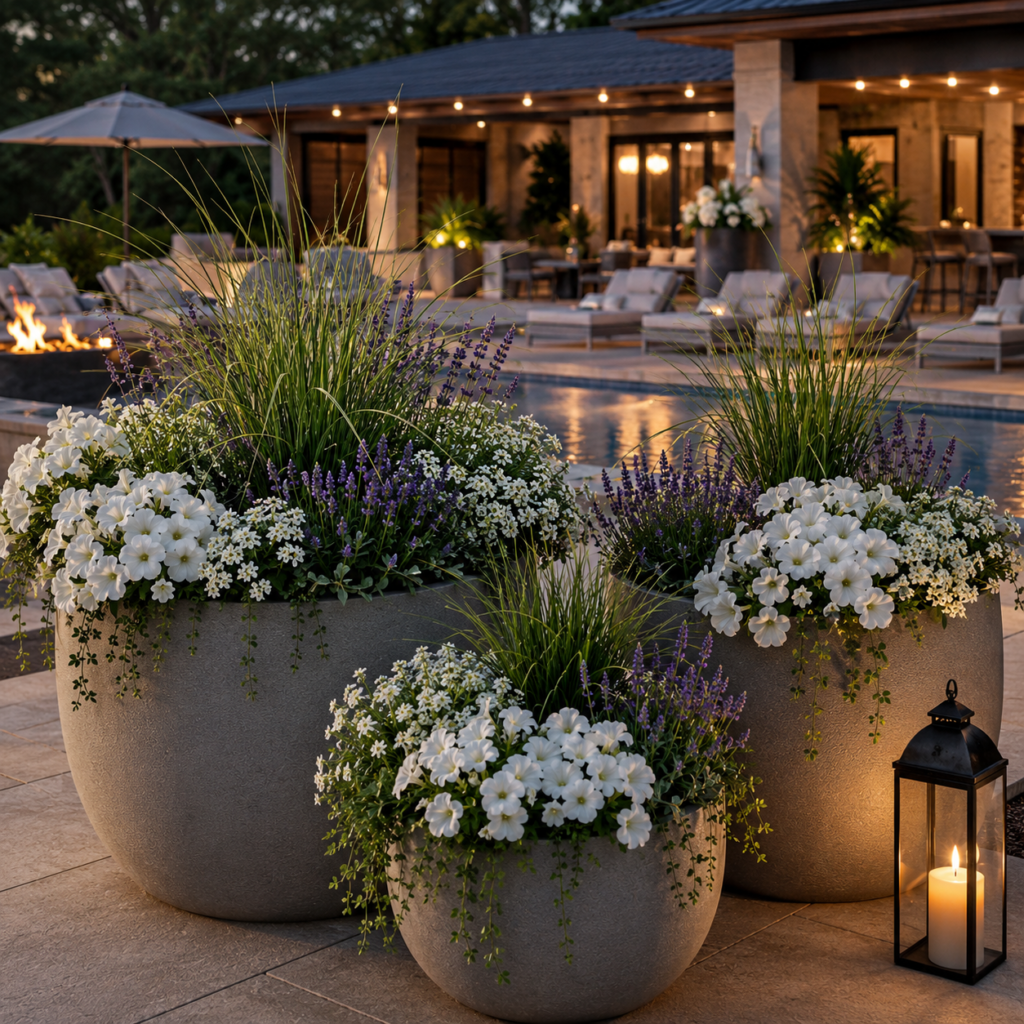
Luxury flower backyard planter ideas focus on creating high-end outdoor spaces that resemble boutique resorts, luxury hotels, and professionally designed estates. While colorful flowers remain important, luxury planter designs also emphasize scale, balance, premium materials, and sophisticated color palettes.
Luxury flower planter features often include:
- Oversized concrete planters
- Architectural containers
- Monochromatic flower schemes
- Premium materials
- Strategic landscape lighting
- Resort-style layouts
Popular luxury flower combinations include:
- White Petunias + Lavender + Silver Dusty Miller
- White Verbena + Olive Trees + Bacopa
- Purple Salvia + Lavender + Ornamental Grasses
- White Calibrachoa + Boxwood + Lobelia
Common Flower Planter Mistakes
One of the biggest mistakes is overcrowding containers. Flowers purchased from garden centers are often small, making planters appear sparse initially. Many gardeners respond by planting too many flowers in one container. While the planter may look full on day one, plants quickly compete for water, nutrients, sunlight, and root space. This competition often leads to weaker growth and fewer blooms later in the season.
Containers dry out faster than garden beds, especially during hot weather. However, overwatering can be just as damaging as underwatering because constantly wet soil increases the risk of root rot and fungal diseases.
Mistakes that frequently reduce planter performance include:
- Overcrowding plants
- Using containers without drainage holes
- Overwatering or underwatering
- Using garden soil instead of potting mix
- Ignoring fertilization
- Choosing flowers for the wrong light conditions
- Failing to deadhead spent blooms
- Using containers that are too small
Seasonal Maintenance Checklist
Even the most beautiful flower planters require routine maintenance to remain healthy and colorful throughout the growing season. Fortunately, most maintenance tasks are simple when performed consistently. Following a seasonal checklist helps prevent common problems while supporting stronger growth and longer bloom periods.
Professional landscapers rarely rely on reactive maintenance. Instead, they follow seasonal schedules that address plant needs before issues develop. This proactive approach improves flower quality while reducing stress on both plants and gardeners.
Spring Checklist
- Refresh potting soil
- Apply slow-release fertilizer
- Plant cool-season flowers
- Inspect drainage systems
Summer Checklist
- Water deeply
- Deadhead spent flowers
- Monitor pests
- Apply supplemental fertilizer
Fall Checklist
- Replace declining annuals
- Add chrysanthemums or asters
- Remove damaged foliage
- Prepare for cooler temperatures
Winter Checklist
- Empty sensitive containers
- Protect perennial roots
- Store fragile planters
- Remove dead plant material
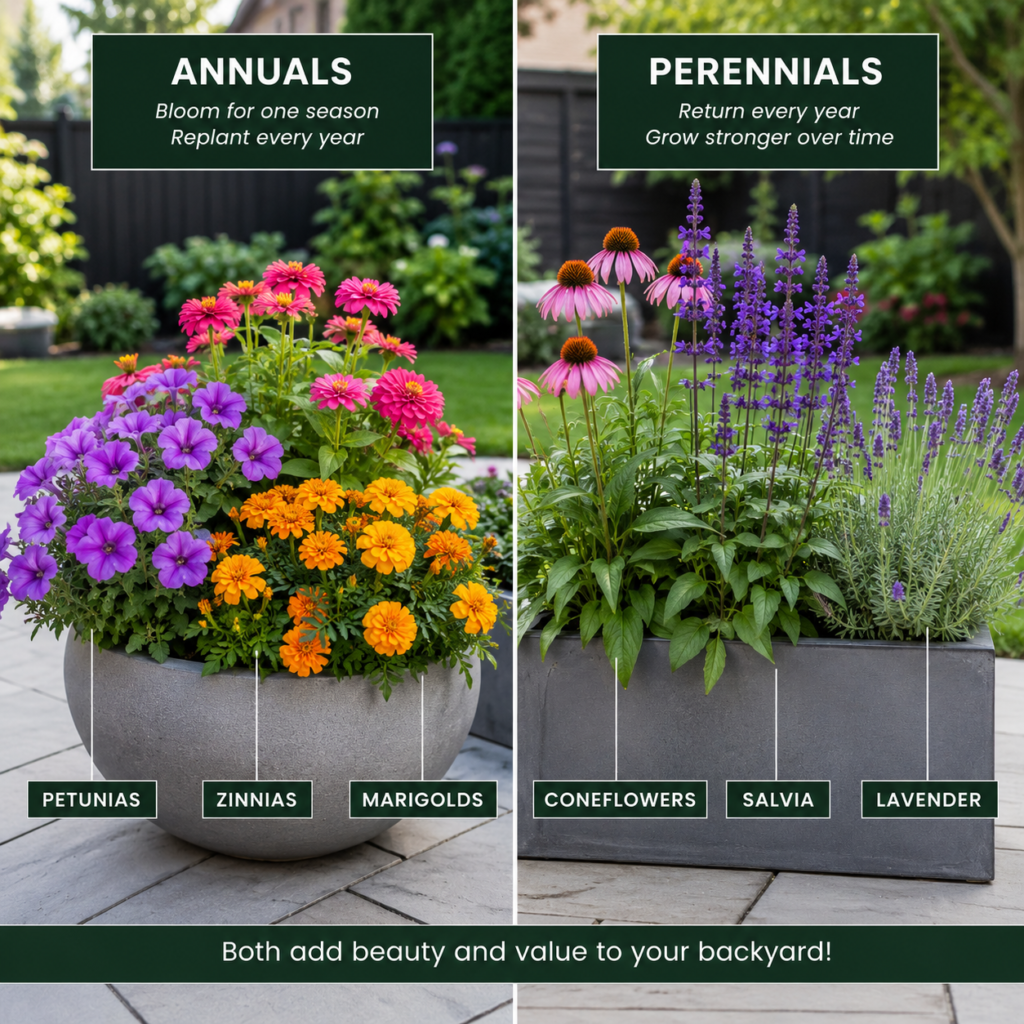
Annuals vs Perennials
Because they complete their entire life cycle within one season, they devote tremendous energy to producing flowers. This typically results in continuous blooms and vibrant color throughout spring, summer, and fall. Annuals are especially popular among homeowners who want dramatic seasonal displays and frequent opportunities to experiment with new flower combinations.
Annual vs Perennial Comparison Table
| Feature | Annuals | Perennials |
| Bloom Duration | Entire Season | Shorter Bloom Cycles |
| Color Intensity | Very High | Moderate |
| Replant Required | Yes | No |
| Cost Over Time | Higher | Lower |
| Pollinator Value | High | High |
| Beginner Friendly | Excellent | Good |
| Seasonal Impact | Outstanding | Moderate |
| Long-Term Value | Lower | Higher |
This makes them attractive for gardeners seeking long-term performance and lower replacement costs.
Many experienced gardeners combine annuals and perennials within the same container. This strategy provides the best of both worlds. Perennials create structure and long-term value, while annuals fill gaps with season-long color and bloom production.
Low-Maintenance Flower Planters
These flowers are particularly useful for busy homeowners, vacation properties, rental homes, and gardeners seeking reliable results with minimal effort.
Excellent low-maintenance flowers include:
- Lantana
- Salvia
- Lavender
- Coneflowers
- Verbena
- Portulaca
- Gaillardia
- Black-Eyed Susan
- Angelonia
- Coreopsis
Additional strategies that reduce maintenance include:
- Using self-watering containers
- Installing drip irrigation
- Applying slow-release fertilizer
- Choosing large planters
- Adding mulch to container surfaces
- Selecting drought-tolerant varieties
Best Flower Planter Ideas for Color
The most successful flower backyard planter ideas are not necessarily the most expensive or complicated. Instead, they combine thoughtful plant selection, strategic design principles, and seasonal planning to create containers that remain colorful and attractive for months. Whether the goal is improving curb appeal, enhancing outdoor entertaining spaces, or simply enjoying more flowers throughout the year, container gardening offers tremendous flexibility and creative potential.
The flower combinations that consistently perform best often include:
- Petunias
- Calibrachoa
- Lantana
- Salvia
- Verbena
- Zinnias
- Lavender
- Coneflowers
- Angelonia
- Bacopa
The best flower backyard planter ideas combine reliable bloomers, proper plant selection, and seasonal maintenance to provide continuous color from spring through fall.
FAQs
What flowers bloom the longest in backyard planters?
Petunias, calibrachoa, verbena, lantana, and zinnias are among the longest-blooming container flowers. With proper care, they can provide color from late spring until frost.
How do you keep flower planters blooming all season?
Use long-blooming flowers, remove faded blooms, and fertilize regularly. Mixing spring, summer, and fall bloomers also helps maintain continuous color.
What are the best flowers for full sun backyard planters?
Petunias, lantana, salvia, zinnias, and marigolds thrive in full sun. These flowers tolerate heat well and bloom heavily throughout summer.
What flowers grow best in shaded backyard planters?
Impatiens, begonias, torenia, and lobelia perform well in shade. They provide reliable color even with limited direct sunlight.
What is the Thriller Filler Spiller method?
It is a planter design technique using a tall focal plant, medium flowering plants, and trailing plants. This creates a balanced and professional-looking container.
Are annuals or perennials better for flower planters?
Annuals provide longer-lasting color, while perennials return every year. Many gardeners combine both for the best results.
Which flowers attract butterflies and bees?
Lantana, salvia, lavender, verbena, and coneflowers are excellent pollinator flowers. They provide nectar throughout the growing season.
How often should flower planters be watered?
Water when the top inch of soil feels dry. During hot weather, containers may need watering daily.
What are the best flowers for small backyard planters?
Calibrachoa, alyssum, lobelia, and compact petunias are excellent choices. They provide abundant color without overcrowding small containers.
How much do flower backyard planters cost?
Small flower planters often cost $20–$75, while larger decorative displays can cost several hundred dollars. Costs vary by planter size and materials.
Myra is the founder and lead writer of Backyard Planter Ideas, where she shares practical, well-researched guidance on planter design, plant selection, and outdoor styling. Her goal is to help homeowners create attractive, functional garden spaces with clear, reliable, and easy-to-apply advice.