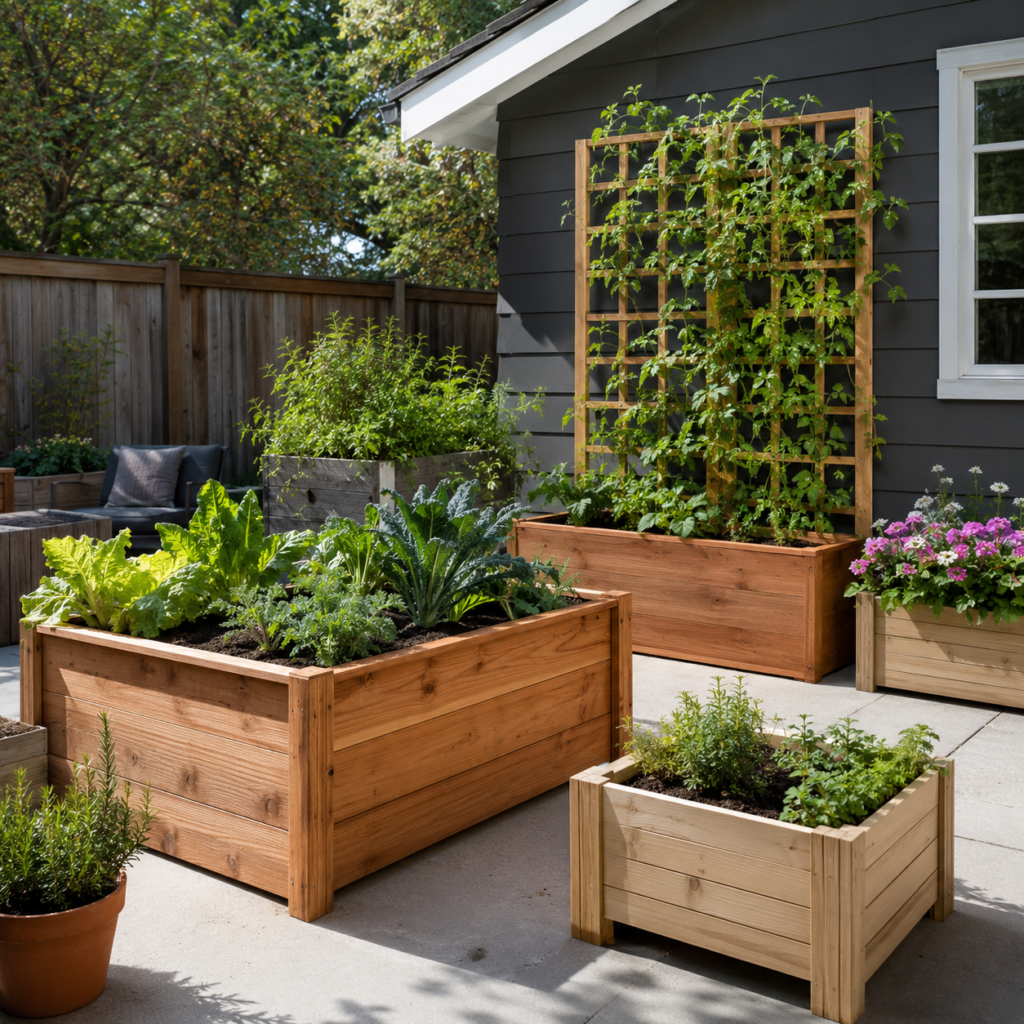
DIY planter box ideas work best when they match your space, budget, plant type, and maintenance level. The easiest options include cedar boxes, raised planter boxes, trellis boxes, rolling planters, herb boxes, and privacy planter boxes with drainage, outdoor-safe wood, and enough soil depth for healthy roots.
Planter boxes are one of the easiest ways to improve a backyard without changing the whole landscape. They help you grow flowers, herbs, vegetables, vines, and small shrubs in a controlled space. They also make patios, decks, fences, and small backyards look more organized, finished, and useful.
In this guide, you will find practical DIY planter box ideas for backyards, patios, decks, vegetables, flowers, privacy, and beginner-friendly builds.
Quick DIY Planter Box Guide
The best DIY planter box ideas combine durable materials, proper drainage, enough soil depth, and a design that matches your outdoor space. For most homeowners, a simple cedar planter box, raised vegetable planter, trellis planter, rolling planter, or herb box offers the best balance of appearance, function, and long-term value.
Best DIY planter box options:
- Cedar planter box for durability
- Raised planter box for vegetables
- Trellis planter box for privacy
- Herb planter near the kitchen
- Rolling planter for patios and decks
- Fence planter for backyard borders
- Budget planter made from fence pickets
- Deep planter for tomatoes and peppers
The best choice depends on your available space, sunlight, budget, and the plants you want to grow.
Best DIY Planter Box Ideas
The best DIY planter box ideas are simple to build, easy to water, and designed around the plants you want to grow. For most backyards, cedar boxes, raised planter boxes, trellis planters, rolling planters, herb boxes, and privacy planter boxes offer the strongest mix of beauty and function. A classic rectangular wooden planter box is the best starting point because it works almost anywhere. You can place it beside a patio, along a walkway, near a fence, beside outdoor seating, or under a sunny wall. The shape is simple, the build is beginner-friendly, and the design can be adjusted for flowers, herbs, vegetables, or ornamental grasses.
Best DIY planter box ideas include:
- Cedar planter boxes for a natural, long-lasting outdoor look
- Raised planter boxes for vegetables, herbs, and easier gardening
- Trellis planter boxes for privacy, vines, and vertical greenery
- Rolling planter boxes for patios, decks, and flexible layouts
- Tiered planter boxes for small spaces and layered flowers
- Herb planter boxes near kitchens, grills, or sunny patios
- Long fence planter boxes to soften plain backyard boundaries
- Budget planter boxes made from fence pickets or scrap wood
Easiest DIY Planter Box
The easiest DIY planter box for beginners is a simple rectangular wooden box made from cedar boards, fence pickets, or untreated pine. It needs only basic cuts, screws, drainage holes, and outdoor potting mix. The design is simple enough for a first woodworking project but useful enough for real garden planting. A beginner planter box should avoid complicated angles, built-in benches, curved shapes, heavy frames, or advanced joinery. The goal is to build something strong, square, and functional.
For beginners, size matters because oversized planter boxes become heavy, expensive, and harder to move. A box that is too small dries out fast and limits plant choices. A good beginner size is around 24–36 inches long, 10–14 inches wide, and 10–12 inches deep. This size is manageable, affordable, and useful for herbs, flowers, lettuce, strawberries, and small ornamentals. In real-world use, this size also fits patios, decks, balconies, side yards, and small backyard corners without blocking movement.
A beginner-friendly DIY planter box should include:
- Four side boards
- Bottom support boards
- Drainage holes
- Exterior screws
- Outdoor-safe wood
- Potting mix, not heavy garden soil
- Optional liner or landscape fabric
- Small feet or risers for airflow
DIY Planter Box Tools
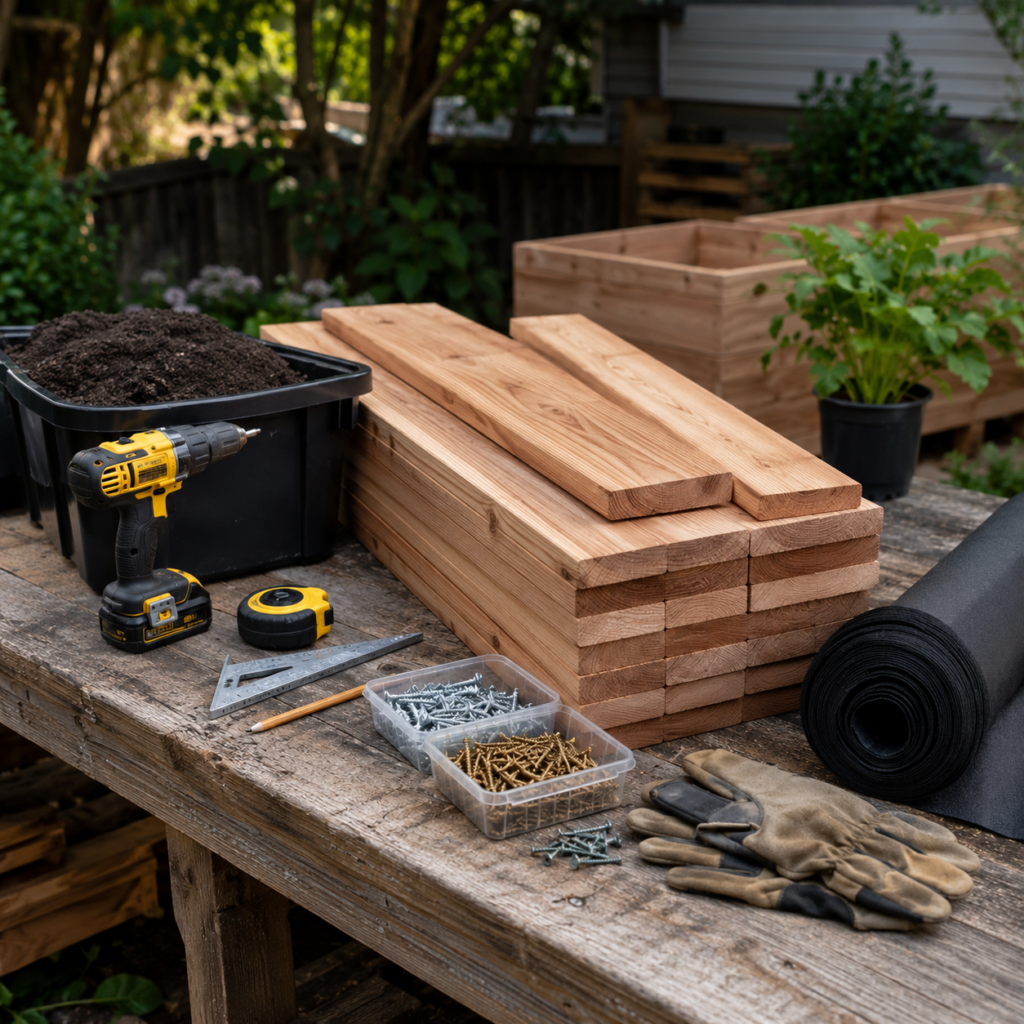
Most DIY planter boxes require only basic woodworking tools and readily available materials. You do not need a professional workshop to build an attractive and functional planter box. Many beginner-friendly projects can be completed in a single afternoon using simple cuts, exterior screws, and outdoor-safe lumber.
The key is focusing on durability rather than complexity. Strong corners, proper drainage, and weather-resistant materials will have a bigger impact on long-term success than decorative trim or advanced joinery. Even a simple rectangular planter can last for years when built correctly and protected from trapped moisture.
Basic DIY planter box tools:
- Drill and drill bits
- Circular saw or miter saw
- Measuring tape
- Carpenter’s square
- Pencil or marker
- Sandpaper or sanding block
- Safety glasses
- Clamps (optional)
Common planter box materials:
- Cedar boards
- Pine boards
- Redwood boards
- Fence pickets
- Exterior screws
- Landscape fabric
- Pot feet or risers
- Outdoor potting mix
- Optional exterior stain or sealer
Best Wood for Planter Boxes
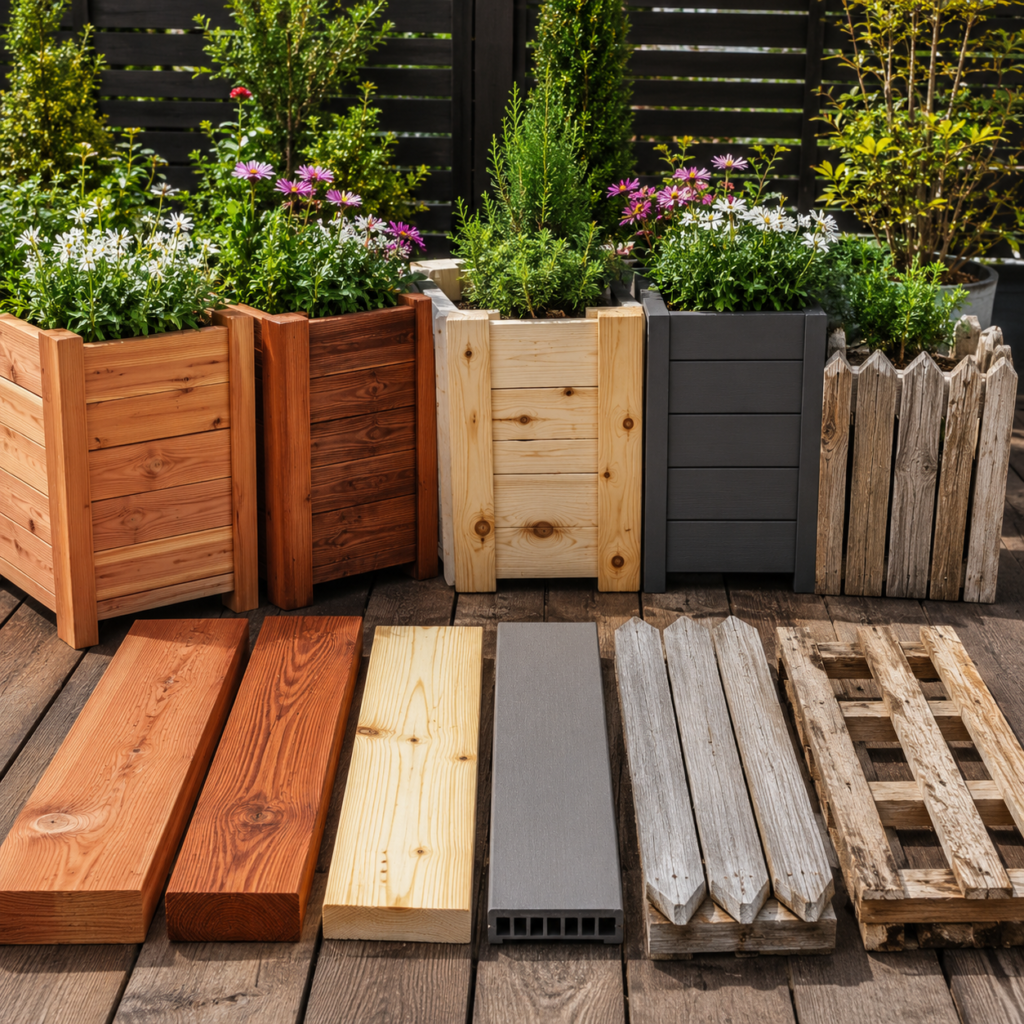
The best wood for DIY planter boxes is cedar because it is naturally rot-resistant, lightweight, attractive, and reliable outdoors. Redwood is another excellent option, but it is usually more expensive. Pine and fence pickets are budget-friendly, but they need more care to last outside. Wood choice affects planter lifespan, safety, weight, cost, and appearance because a planter box stays in contact with moisture, soil, fertilizer, and outdoor weather.
Cedar is the best all-around option for backyard planter boxes because it has a warm natural color, resists decay better than many common woods, and works well for both flowers and vegetables. Redwood is excellent for premium planter boxes because it resists decay, looks rich, and can last for years, but the price is often higher. Pine is affordable and easy to find, so it works for painted planters, temporary boxes, and budget projects. However, untreated pine can rot faster when exposed to wet soil and rain.
Best wood options:
| Wood Type | Best For | Main Benefit | Main Concern |
| Cedar | Most DIY planter boxes | Natural rot resistance | Higher cost than pine |
| Redwood | Premium backyard planters | Long-lasting and beautiful | Expensive |
| Pine | Budget planter boxes | Affordable and easy to cut | Shorter outdoor lifespan |
| Fence pickets | Cheap long boxes | Low cost and accessible | Thinner boards |
| Pallet wood | Rustic decorative boxes | Recycled look | Safety uncertainty |
| Composite boards | Modern low-maintenance boxes | Durable and clean-looking | Can cost more |
Pallet wood can be used only with caution. Avoid unknown, stained, oily, or chemically treated pallets. If you plan to grow edible plants, only use pallet wood that is clearly marked safe, clean, and heat-treated. For edible gardens, many gardeners still prefer cedar, redwood, untreated wood, or food-safe lining.
DIY Planter Box Cost
The cost of a DIY planter box depends on its size, material, and complexity. Small herb planters can be built for very little money, while large raised vegetable planters and trellis planters require more lumber and hardware. Fortunately, DIY planter boxes are often significantly cheaper than comparable store-bought versions.
Material choice has the biggest effect on cost. Cedar and redwood typically cost more but last longer outdoors. Pine and fence pickets are more budget-friendly and work well for decorative planters or short-term projects. Hardware, soil, and optional finishes should also be included when estimating your budget.
| Planter Type | Estimated DIY Cost |
| Small herb planter | $15–$40 |
| Fence picket flower box | $20–$60 |
| Simple pine planter box | $25–$75 |
| Cedar planter box | $50–$120 |
| Raised vegetable planter | $80–$200 |
| Trellis planter box | $100–$250 |
| Rolling planter box | $60–$180 |
| Large privacy planter | $120–$300+ |
Factors that affect cost:
- Lumber type
- Planter size
- Soil volume required
- Hardware quality
- Wheels or casters
- Trellis materials
- Paint or stain
- Decorative finishes
DIY Planter Box Depth
A DIY planter box should be deep enough for the plant’s root system. Most herbs and flowers need 8–12 inches of soil, while vegetables like tomatoes, peppers, cucumbers, and small shrubs need deeper boxes. Shallow boxes dry out faster and limit healthy root growth. A box can look beautiful but still fail if it does not provide enough room for roots, moisture, and nutrients.
For beginner backyard planters, 10–12 inches deep is a safe general depth for many herbs and annual flowers. If you want vegetables, aim for 12–18 inches or more. If you want shrubs, ornamental grasses, or privacy plants, choose larger and deeper boxes. Real-world placement also matters. A planter on hot concrete or a sunny deck dries out faster than one placed on soil or in partial shade, so deeper boxes perform better in hot exposed locations.
Recommended planter box depths:
| Plant Type | Minimum Depth | Better Depth |
| Small herbs | 6 inches | 8–10 inches |
| Lettuce | 6–8 inches | 10 inches |
| Annual flowers | 8 inches | 10–12 inches |
| Strawberries | 8 inches | 10–12 inches |
| Peppers | 12 inches | 14–16 inches |
| Tomatoes | 14 inches | 18+ inches |
| Cucumbers | 12 inches | 16–18 inches |
| Small shrubs | 16 inches | 20–24 inches |
| Ornamental grasses | 14 inches | 18–24 inches |
Depth also affects watering frequency. Shallow planter boxes heat up quickly and lose moisture faster, especially on sunny patios, decks, and concrete surfaces. Deeper boxes hold moisture longer and give plants more protection during hot afternoons. This is why deep boxes are better for tomatoes, peppers, cucumbers, shrubs, and tall ornamental grasses.
Best Planter Box Sizes
Choosing the right planter size is just as important as choosing the right depth. A planter that fits the available space will look more natural, improve accessibility, and reduce maintenance challenges. Oversized planters can overwhelm small patios, while undersized planters may look insignificant in larger backyards.
Before building, measure the available space and think about how people move through the area. Leave enough room for walkways, furniture, doors, and routine maintenance. A planter should enhance the space rather than create obstacles.
| Location | Recommended Planter Size |
| Small patio | 24–36 inches long |
| Balcony | Narrow lightweight planter |
| Deck railing area | 8–12 inch wide planter |
| Fence line | 4–6 foot planter |
| Vegetable garden | 12–18+ inch deep planter |
| Privacy screen area | Deep planter with trellis |
| Walkway edge | Narrow rectangular planter |
| Backyard corner | L-shaped or oversized planter |
When choosing planter size:
- Consider mature plant size
- Leave walking space
- Account for watering access
- Avoid blocking views
- Match planter scale to the backyard
Planter Box Drainage
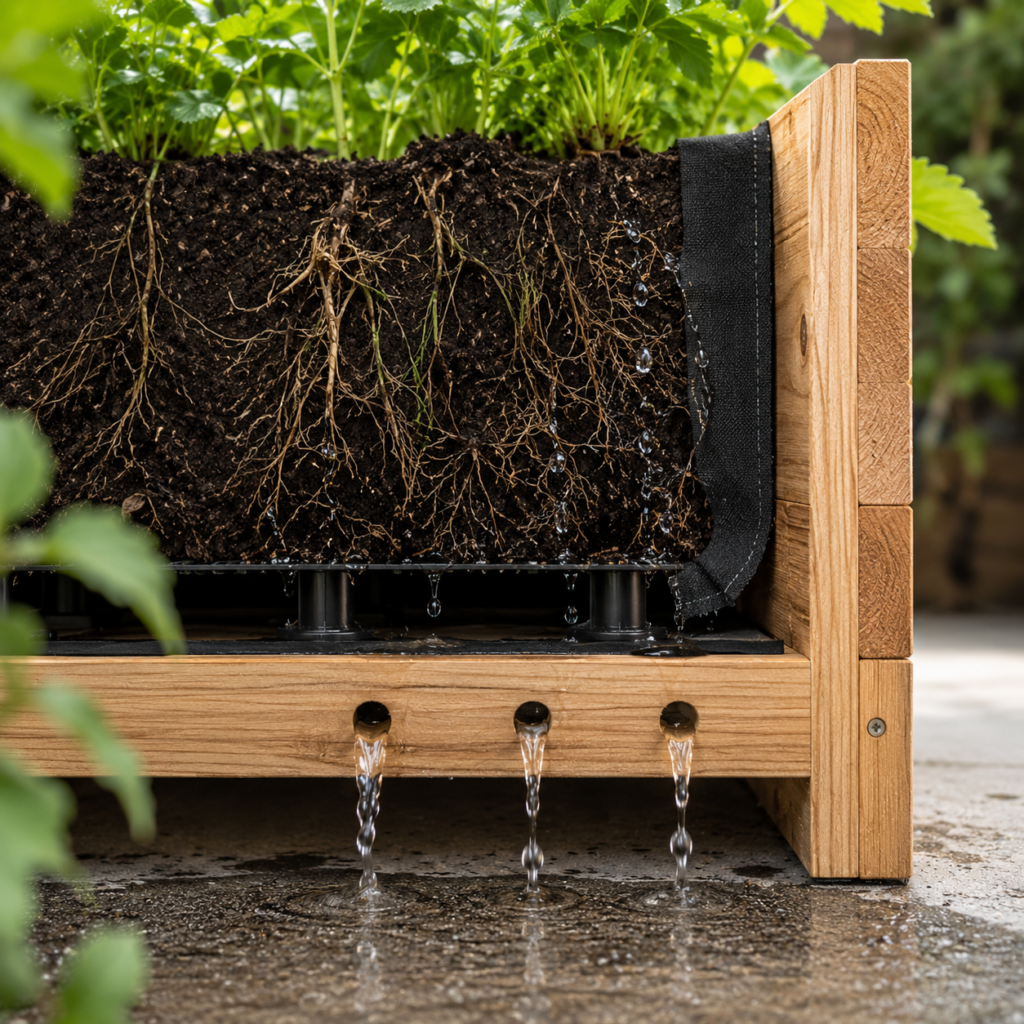
Yes, DIY planter boxes need drainage holes because excess water must escape from the soil. Without drainage, water collects at the bottom, roots suffocate, soil turns sour, and plants may die even when they look watered correctly. Drainage is not optional in outdoor planter boxes because rain, overwatering, and compact soil can quickly create a soggy root zone.
A good drainage system includes holes in the bottom, raised feet or small blocks, and lightweight outdoor potting mix. Some gardeners also add mesh or landscape fabric over the holes to stop soil from washing out. The fabric should not block water movement. The goal is simple: water should move through the soil, leave the planter, and not sit trapped against the wood. This is especially important for planter boxes placed on patios, decks, and concrete surfaces.
Good drainage setup includes:
- Several holes across the bottom
- Raised feet for airflow under the planter
- Outdoor potting mix instead of heavy garden soil
- Mesh or landscape fabric over large holes
- Mulch on top to reduce surface drying
- A slight gap between liner and drainage holes
Avoid adding a thick gravel layer at the bottom as a replacement for drainage holes. Gravel does not solve poor drainage if water still cannot escape. The most important step is giving water a way out. Wooden planter boxes also need protection from trapped moisture. If a box sits flat on wet concrete or soil, the bottom boards may rot faster.
Practical Experience Note
One of the most common reasons DIY planter boxes fail is trapped moisture. Multiple drainage holes, raised feet, and quality potting mix usually have a bigger impact on success than decorative details.
DIY Raised Planter Ideas
The best DIY raised planter box ideas include waist-high vegetable boxes, legged herb planters, long rectangular patio boxes, elevated flower boxes, and deep raised boxes for tomatoes and peppers. Raised boxes make gardening easier because they improve access, control soil quality, and reduce bending. They also create cleaner backyard zones, especially when the ground soil is poor, compacted, rocky, or difficult to plant directly.
A raised planter box is different from a simple ground-level box because it lifts the growing area higher. This is useful for people who want easier maintenance, cleaner edges, and better control over the planting zone. Waist-high raised boxes are excellent for gardeners who want less bending. Smaller elevated herb planters work well near a grill, kitchen door, or seating area where herbs are easy to harvest while cooking. Long rectangular raised boxes work well along fences, deck edges, and sunny backyard walls.
Raised planter box ideas include:
- Waist-high vegetable planter box
- Elevated herb planter near the kitchen
- Long raised box along a fence
- Raised flower box beside a patio
- Deep tomato planter box
- Raised strawberry planter
- Narrow raised box for small yards
- L-shaped raised planter for corners
Raised boxes should be stable because soil becomes heavy after watering. Thin legs, weak screws, or poor support can cause sagging. Use strong corner posts, bottom supports, exterior screws, and cross braces for larger boxes. If the planter will hold tomatoes, peppers, cucumbers, or shrubs, build deeper and stronger than you think you need.
Cheap DIY Planter Box Ideas
Cheap DIY planter box ideas include fence-picket planters, scrap wood boxes, crate-style planters, simple pine boxes, repurposed drawers, cinder block planter edges, and basic rectangular boxes with minimal trim. The best budget design uses simple materials but still includes drainage, outdoor durability, and enough soil depth for the plants. Cheap should never mean weak, unsafe, or poorly drained.
A budget planter box should reduce cost by using simple shapes, standard board sizes, and fewer decorative details. Fence pickets are popular because they are affordable, easy to cut, and available in long pieces. They work well for flower boxes, herb boxes, and lightweight patio planters. For bigger vegetable boxes, you may need stronger framing behind the pickets. Scrap wood can also work if it is clean, safe, and not rotten.
Cheap DIY planter box ideas:
- Fence picket flower box
- Simple pine herb planter
- Scrap wood patio planter
- Crate-style planter box
- Reclaimed wood decorative box
- Basic rectangular vegetable box
- Small tabletop herb box
- Painted budget planter with outdoor paint
DIY Trellis Planter Box
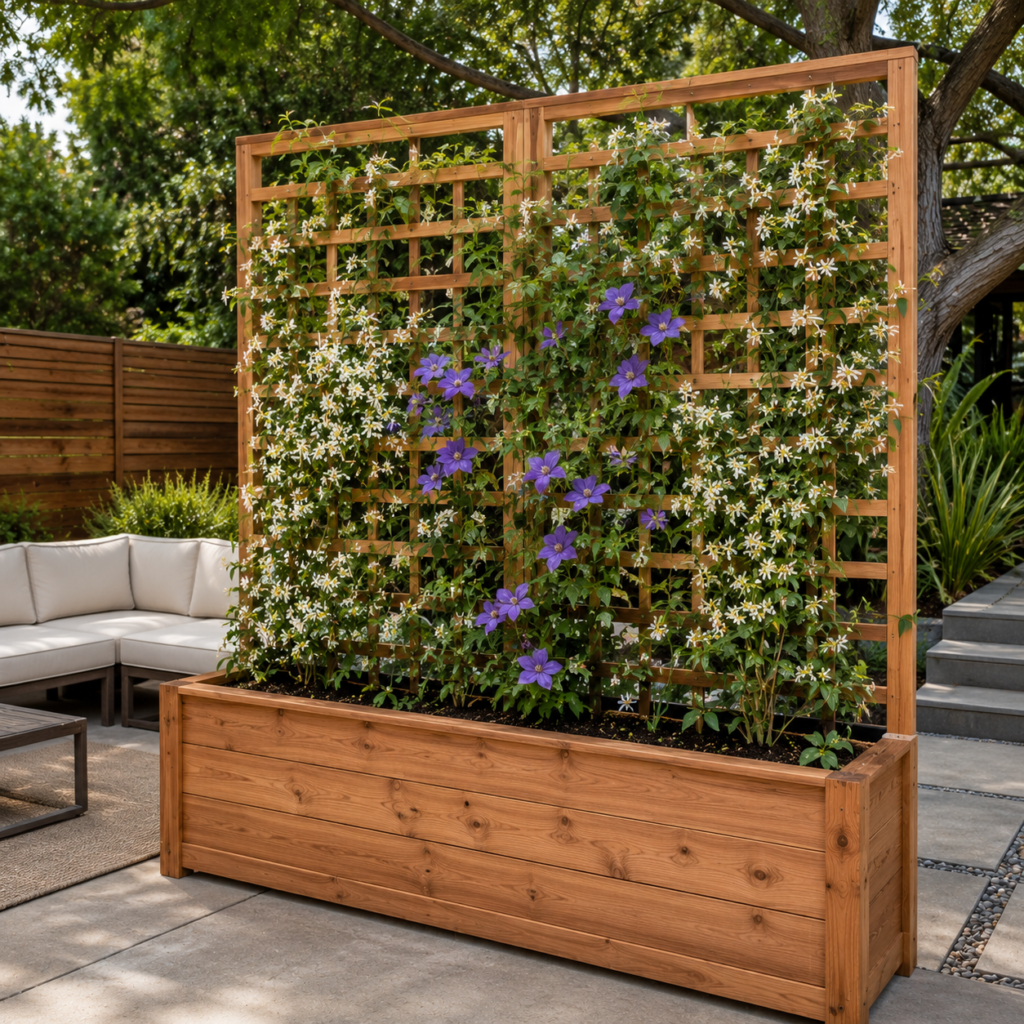
Yes, you can build a DIY planter box with a trellis, and it is one of the best ideas for privacy, climbing plants, small patios, and vertical gardening. The planter holds the soil while the trellis supports vines, flowers, vegetables, or screening plants. This makes it useful for backyards where ground space is limited but vertical space is available.
A trellis planter box solves two problems at once. It adds planting space and creates vertical height. This is useful when your backyard is small, your fence looks plain, or your patio needs a soft privacy screen. Instead of building a large permanent structure, you can use climbing plants to add greenery. The best plants for trellis planter boxes include jasmine, clematis, mandevilla, climbing roses, beans, peas, cucumbers, and ornamental vines.
Good trellis planter ideas:
- Cedar planter box with lattice trellis
- Black wooden planter with modern vertical slats
- Vegetable planter with cucumber trellis
- Privacy planter beside patio seating
- Rolling trellis planter for flexible screens
- Fence-side planter with climbing vines
- Narrow balcony-style trellis box
A good trellis planter box needs balance. As plants grow upward, wind pressure increases. A narrow or lightweight box can tip over if the trellis is tall and the plant becomes heavy. Use a deep, wide base and strong back supports. If the planter is against a wall or fence, secure it safely without damaging the surface.
For privacy, a trellis height of 5–6 feet often works well. For vegetables, the height depends on the crop. Cucumbers and beans may need strong vertical support, while flowering vines need a structure they can grip or be tied to.
Trellis Stability Considerations: Tall trellises add weight and wind exposure. For stability, pair a 5–6 foot trellis with a deeper planter box and reinforced supports, especially in exposed backyard locations.
Best Plants for Planter Boxes
The best plants for DIY planter boxes are herbs, annual flowers, compact vegetables, strawberries, trailing plants, ornamental grasses, and small shrubs. The right choice depends on sunlight, box depth, water needs, and how much maintenance you want. A sunny planter box can support flowers, herbs, and vegetables, while a shaded planter needs foliage plants and shade-tolerant flowers.
Herbs are one of the easiest options. Basil, parsley, thyme, oregano, rosemary, mint, and chives grow well in planter boxes with good light and drainage. Mint should usually be kept in its own box because it spreads aggressively. Flowers add fast color to backyard planters. Petunias, marigolds, geraniums, zinnias, calibrachoa, alyssum, and begonias are popular choices. Vegetables need more depth and sun, especially tomatoes, peppers, cucumbers, and beans.
Best plants by planter type:
| Planter Box Type | Best Plants |
| Small herb box | Basil, thyme, parsley, chives |
| Flower box | Petunias, marigolds, geraniums, zinnias |
| Deep vegetable box | Tomatoes, peppers, cucumbers, beans |
| Trellis planter | Jasmine, clematis, peas, beans, cucumbers |
| Shade planter | Ferns, hostas, heuchera, impatiens |
| Low-maintenance box | Rosemary, lavender, sedum, ornamental grasses |
| Privacy planter | Tall grasses, vines, shrubs |
DIY Planter Box Mistakes
The biggest DIY planter box mistakes are poor drainage, shallow soil, weak wood, overcrowding, using heavy garden soil, skipping support, and placing heavy boxes on weak decks. Most planter problems happen because the box looks finished but does not function well for roots, water, and outdoor weather. A planter box must be designed for plant health first and appearance second.
The first mistake is building a box without enough drainage. Plants need water, but roots also need oxygen. When water collects at the bottom, roots become stressed and soil smells sour. The second mistake is making the planter too shallow. A shallow box may work for small herbs or annuals, but it will not support tomatoes, peppers, shrubs, or tall grasses. The third mistake is using the wrong material, such as thin indoor wood, unsafe pallets, or untreated scrap pieces.
Avoid these common mistakes:
- No drainage holes
- Box sits flat on wet ground
- Soil depth is too shallow
- Heavy garden soil is used instead of potting mix
- Plants are overcrowded
- Weak legs or bottom supports
- Unsafe wood for edible plants
- No access for watering
- Planter is too heavy for a deck
- Trellis is too tall for the base
Deck safety is important. Wet soil is heavy, and large planter boxes can add serious weight. If you are placing a large box on a raised deck, use smaller boxes, spread the weight, or check whether the deck can handle it. Another mistake is building before choosing plants. Always choose the plant type first, then build the box around its needs.
How to Build a Planter Box
Building a simple DIY planter box is easier than many beginners expect. Most projects require only basic lumber, exterior screws, and a few common tools. The goal is not to create complicated woodworking details but to build a strong structure that supports healthy plant growth.
A basic planter box can often be completed in one afternoon. Once you understand the process, the same design can be adapted for flowers, herbs, vegetables, trellis systems, and raised planter boxes. Many homeowners start with one simple planter and later build matching versions throughout the backyard.
Basic DIY planter box steps:
- Measure the available space
- Select outdoor-safe lumber
- Cut side and bottom boards
- Assemble the rectangular frame
- Add bottom supports if needed
- Drill drainage holes
- Raise the planter slightly off the ground
- Add landscape fabric if desired
- Fill with quality potting mix
- Install plants based on sunlight needs
Before planting, check:
- Drainage holes are open
- Screws are secure
- Planter sits level
- Soil depth matches plant requirements
- Water drains freely
Build vs Buy Planter Box
You should build a planter box if you need a custom size, want to save money on larger designs, or enjoy DIY projects. You should buy one if you need a fast setup, do not own tools, or want a polished finish without measuring, cutting, or assembling. The right choice depends on your time, skill level, budget, and how specific your backyard space is.
DIY gives you control. You can choose the exact length, depth, height, color, material, and layout. This is useful for odd corners, narrow patios, fence lines, and custom vegetable gardens. DIY also makes it easier to match several planters across one backyard. Buying is easier when time matters. Ready-made planter boxes are useful for renters, busy homeowners, and people who do not want to handle tools.
Build-or-buy comparison:
| Situation | Better Choice | Why |
| Need custom size | Build DIY | You control dimensions |
| Need fast setup | Buy | No cutting or assembly |
| Tight budget | Build DIY | Large boxes can cost less |
| No tools | Buy | Easier and safer |
| Want premium finish | Buy or advanced DIY | Depends on skill level |
| Large vegetable box | Build DIY | Better value |
| Small decorative planter | Buy | Often affordable |
| Matching multiple boxes | Build DIY | Easier to repeat style |
The smartest approach is often mixed. Build large functional planters yourself and buy smaller decorative pots or inserts. This gives you custom structure without making every piece from scratch. If the planter needs to fit a strange corner or support vegetables, DIY is usually better. If you only need one small decorative planter beside a door, buying may be easier.
FAQs
What is the easiest DIY planter box to build?
A simple rectangular wooden planter box is the easiest to build. Use cedar, pine, or fence pickets with screws, drainage holes, and potting mix.
What is the cheapest way to build a planter box?
Use fence pickets, pine boards, or clean scrap wood. Keep the shape simple and spend only on good screws, drainage, and soil.
What wood is best for DIY planter boxes?
Cedar is the best overall choice because it resists rot naturally. Redwood is premium, while pine is cheaper but less durable outdoors.
How deep should a DIY planter box be?
Most herbs and flowers need 8–12 inches of depth. Tomatoes, peppers, cucumbers, and shrubs usually need 14–18 inches or more.
Do DIY planter boxes need drainage holes?
Yes, drainage holes are necessary. Without them, water collects at the bottom and can cause root rot.
What should I put at the bottom of a planter box?
Use drainage holes, landscape fabric, and quality outdoor potting mix. Do not block water from escaping.
Should I line a wooden planter box?
Yes, lining helps reduce soil loss and protect the wood. Keep the drainage holes open so water can escape.
Can I build a planter box without power tools?
Yes, you can use pre-cut lumber, hand tools, and exterior screws. Power tools only make the job faster.
Can DIY planter boxes sit on a deck?
Yes, but wet soil makes planter boxes heavy. Use pot feet, protect the deck surface, and avoid oversized boxes on weak areas.
What plants grow best in DIY planter boxes?
Herbs, annual flowers, lettuce, strawberries, peppers, compact tomatoes, trailing plants, and ornamental grasses grow well in planter boxes.
How long do wooden planter boxes last?
Cedar and redwood planter boxes can last several years with good drainage. Untreated pine usually has a shorter outdoor lifespan.
Is it cheaper to build or buy a planter box?
Building is usually cheaper for large or custom planter boxes. Buying is easier for small decorative planters.
Myra is the founder and lead writer of Backyard Planter Ideas, where she shares practical, well-researched guidance on planter design, plant selection, and outdoor styling. Her goal is to help homeowners create attractive, functional garden spaces with clear, reliable, and easy-to-apply advice.