
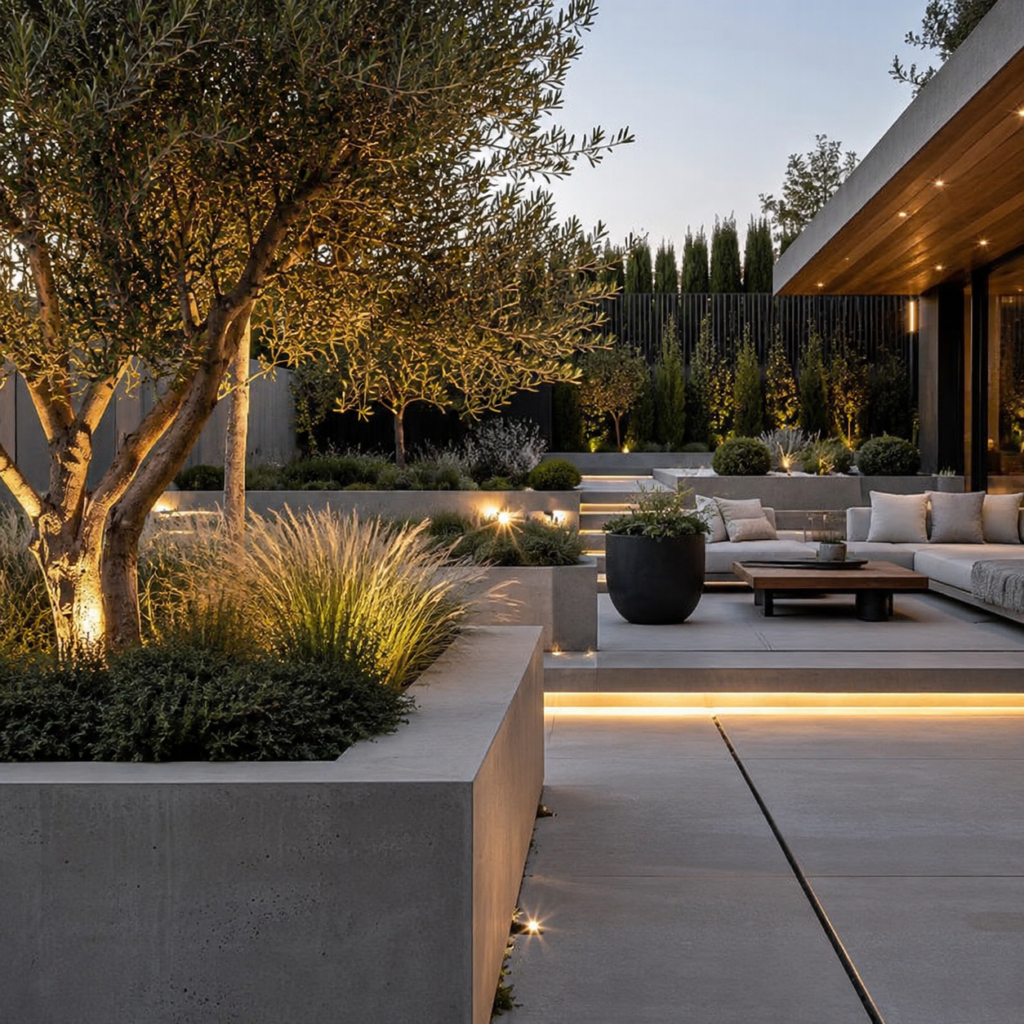
Concrete backyard planter ideas have become a defining feature of modern outdoor design because they combine visual strength, long-term durability, and architectural simplicity. Unlike temporary containers that may deteriorate after a few seasons, concrete planters create a permanent landscape element that helps organize outdoor spaces while enhancing their overall appearance. Their clean lines and neutral tones make them suitable for almost every backyard style, from minimalist urban courtyards to large luxury gardens.
Many homeowners initially choose concrete planters because of their appearance, but they often continue using them because of their practicality. A well-placed concrete planter can frame a patio, define an outdoor dining area, provide privacy, or showcase statement plants that become focal points within the landscape. Because concrete complements materials such as wood, steel, stone, and porcelain pavers, it integrates seamlessly into contemporary backyard designs.
Key reasons homeowners choose concrete planters include:
- Long lifespan and durability
- Modern architectural appearance
- Stability in windy conditions
- Compatibility with large plants and trees
- Low maintenance requirements
- Luxury landscape appeal
- Strong visual structure
- Year-round outdoor performance
Why Choose Concrete Planters?
Concrete backyard planters continue to rise in popularity because they address both design and practical landscaping needs. Modern homeowners are increasingly looking for outdoor features that provide lasting value rather than short-term decorative appeal. Concrete planters fit this demand perfectly because they combine durability with timeless aesthetics. Unlike plastic containers that may fade or wooden planters that eventually deteriorate, concrete remains stable and attractive for decades when properly maintained.
Another reason for their popularity is the growing influence of modern landscaping trends. Contemporary outdoor spaces often emphasize simplicity, clean lines, and structural balance. Concrete naturally supports these design principles because it introduces strong architectural forms without overwhelming the surrounding landscape. A simple rectangular concrete planter filled with ornamental grasses can often create a more sophisticated look than multiple decorative containers competing for attention.
Concrete planters are widely used around patios, pools, and outdoor living spaces because they combine durability with a premium appearance.
Why Concrete Fits Modern Backyards
Modern backyard design revolves around structure, balance, and intentional simplicity. Concrete planters align perfectly with these principles because they provide visual organization without introducing unnecessary complexity. Their clean geometric shapes naturally complement contemporary homes, helping create a seamless transition between architecture and landscape. Rather than serving merely as plant containers, concrete planters become design elements that define spaces and guide visual flow throughout the backyard.
One of the reasons designers consistently choose concrete is its versatility. Concrete works equally well in minimalist gardens, industrial-inspired landscapes, Mediterranean courtyards, and luxury outdoor living environments. Its neutral color palette allows surrounding plants and architectural features to remain the focus while still contributing substantial visual weight. This balance is difficult to achieve with brightly colored or heavily decorative containers that can quickly dominate a space.
Oversized concrete planters reduce visual clutter and help create a more organized, professionally designed landscape.
Best Outdoor Concrete Planters
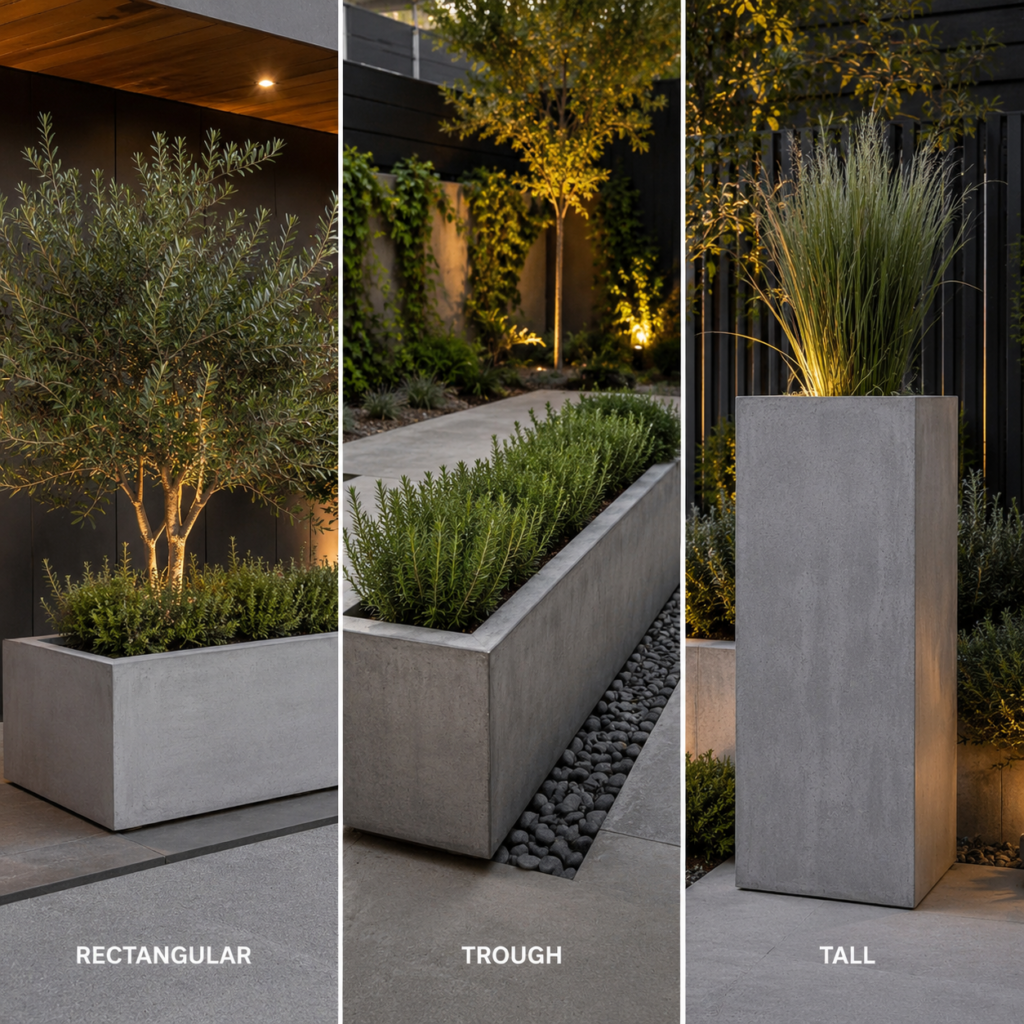
Different concrete planter shapes serve different purposes, from creating privacy and defining patios to adding vertical interest and focal points.
Rectangular planters remain one of the most versatile options because they provide strong architectural lines and work well along patios, fences, and pathways. Cube planters create symmetry and are frequently used to frame entrances or anchor outdoor living spaces. Trough planters excel in defining outdoor rooms, while tall column planters introduce vertical interest that draws the eye upward. Bowl planters offer softer forms that help balance landscapes dominated by straight lines and angular architecture.
Popular outdoor concrete planter styles include:
- Rectangular planters for borders and privacy
- Trough planters for long planting displays
- Tall column planters for vertical impact
- Oversized statement planters for luxury spaces
Real-world landscape projects often combine multiple planter styles to create visual variety while maintaining consistency through material selection. For example, rectangular troughs may define a patio perimeter while matching cube planters frame an adjacent dining area. This layered approach creates depth and sophistication without introducing conflicting design elements. Selecting planter shapes based on function rather than appearance alone usually leads to more successful long-term landscape outcomes.
Are Concrete Planters Good for Plants?
Concrete planters support healthy root growth by providing stable soil temperatures, strong root protection, and better moisture consistency than many lightweight containers.
Concrete also provides a stable growing environment because it does not flex, warp, or deteriorate easily. The rigid structure protects roots while helping soil maintain consistent moisture levels. This stability becomes especially important for large shrubs, ornamental grasses, and small trees that may remain in the same planter for many years. However, drainage remains essential. Even the highest-quality concrete planter can become problematic if water cannot escape properly.
In real-world landscaping, many professional designers favor concrete planters because they create predictable growing conditions. Plants are less likely to experience extreme stress caused by overheating or rapid drying. Homeowners should still select quality potting mixes and ensure drainage holes remain unobstructed, but when these basics are addressed, concrete planters provide an excellent environment for healthy plant growth. The result is stronger roots, more consistent performance, and plants that often require less intervention throughout the growing season.
Best Plants for Concrete Planters
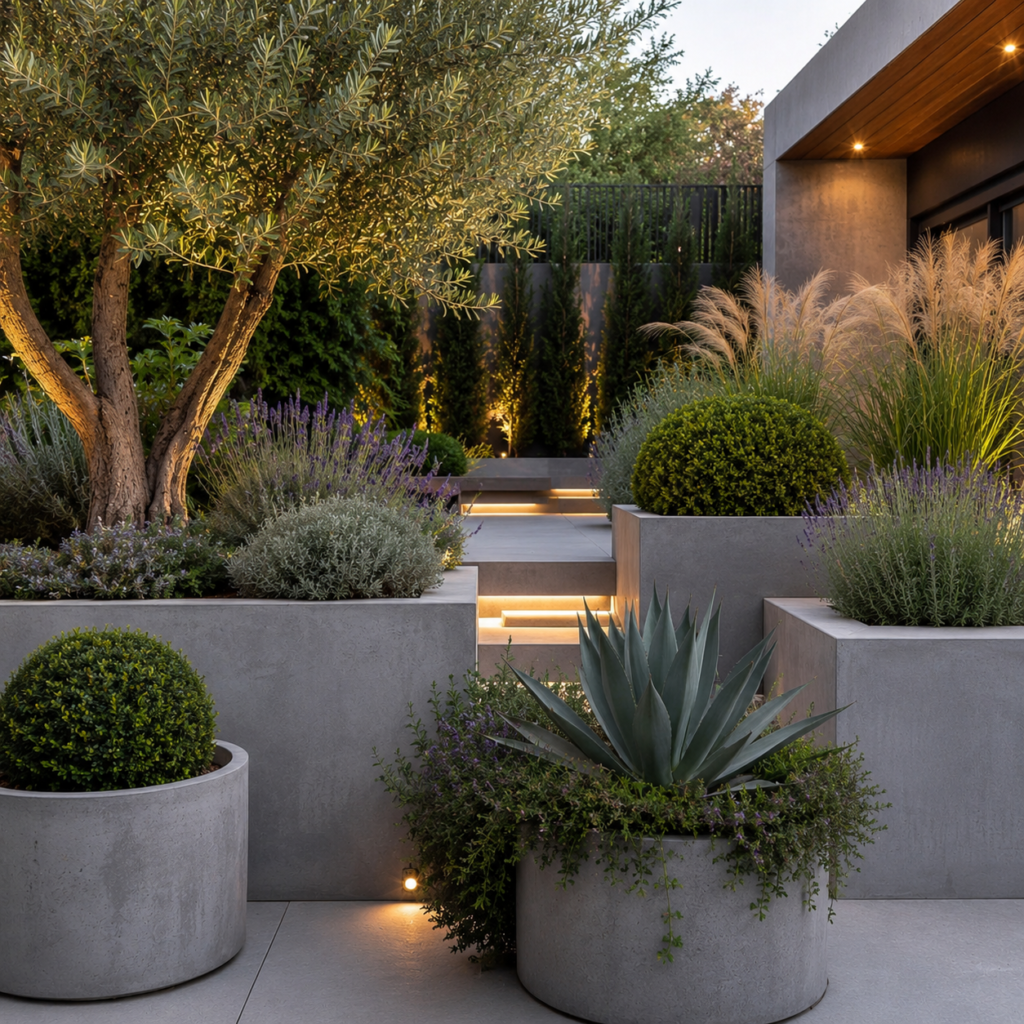
Plants with strong architectural form, texture, and drought tolerance often perform best in concrete planters.
Ornamental grasses remain one of the most popular choices because their movement contrasts beautifully with the solid structure of concrete. Olive trees, boxwood, evergreen shrubs, and architectural succulents also perform exceptionally well because they provide strong visual structure. These plants align naturally with modern landscape aesthetics and often require relatively little maintenance once established. Lavender adds softness and fragrance while still maintaining the clean appearance associated with contemporary design.
Top plants for concrete planters include:
- Feather reed grass
- Fountain grass
- Blue oat grass
- Olive trees
- Lavender
- Agave
- Aloe
- Sedum
- Boxwood
- Arborvitae
For a cleaner and more luxurious appearance, limit each planter to one or two plant varieties rather than mixing many species together.
Creating a Luxury Backyard Look
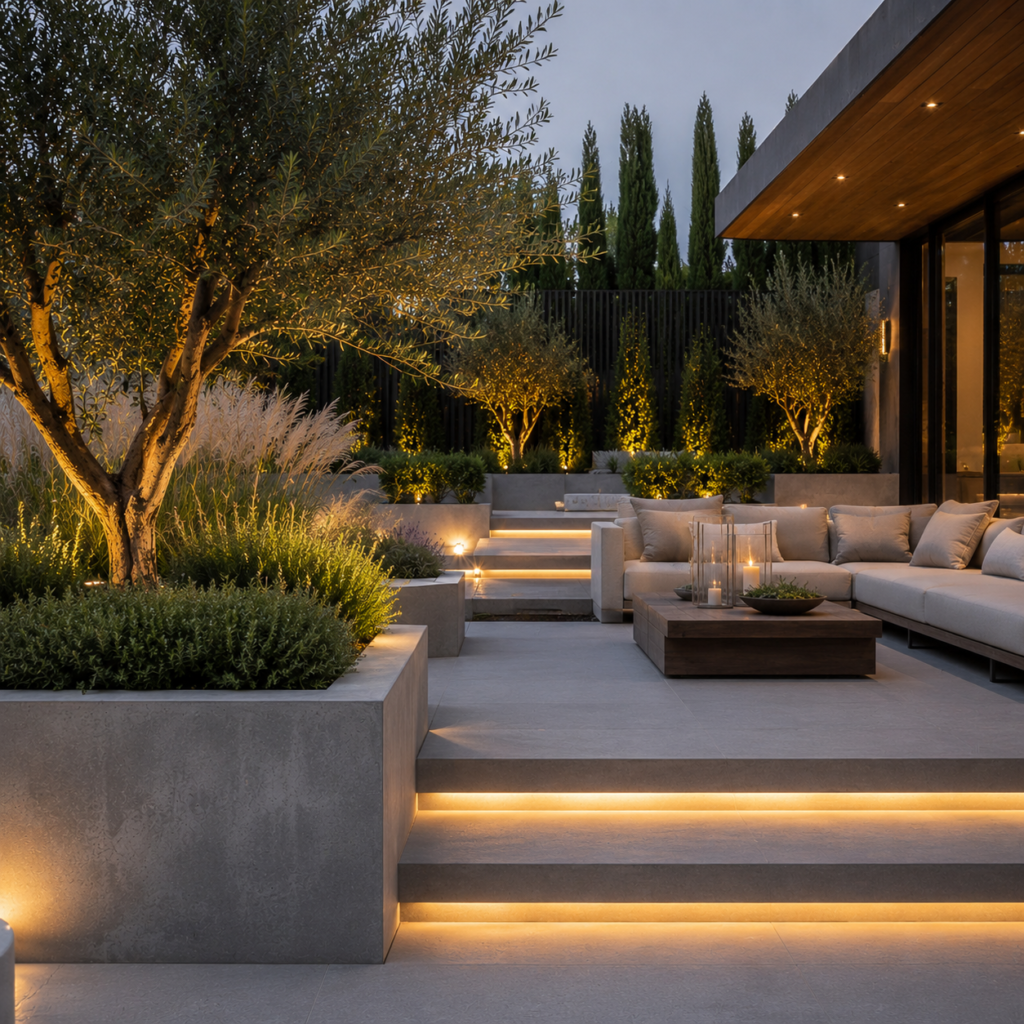
Luxury landscapes are rarely defined by how many elements they contain. Instead, they are characterized by thoughtful design decisions, premium materials, and visual consistency. Concrete planters contribute to a luxury backyard appearance because they naturally introduce structure, permanence, and architectural sophistication. Their substantial presence communicates quality while allowing plants to remain the primary visual feature. This combination is one reason concrete planters are frequently used in resorts, boutique hotels, and professionally designed outdoor living spaces.
One of the most effective luxury design techniques involves repetition. Using the same planter style throughout a backyard creates cohesion and makes the landscape feel intentionally curated. Oversized planters are another common strategy because larger containers often appear more expensive and visually significant. Pairing these planters with mature ornamental grasses, olive trees, or sculptural shrubs instantly creates a refined atmosphere. Lighting can further enhance the effect by highlighting both the planter form and the plants themselves after sunset.
Luxury landscapes prioritize scale, repetition, and quality materials. Large concrete planters often create more impact than multiple decorative accessories.
Popular finishes include natural gray, charcoal, matte black, and white concrete.
Best Concrete Planter Colors
Even the most beautiful concrete planters can feel ineffective if they are arranged without a clear design strategy. Layout determines how people experience a space and how effectively planters contribute to the overall landscape composition. Successful planter layouts help organize outdoor areas, establish focal points, and create visual flow throughout the backyard. The best arrangements are functional as well as attractive, serving practical purposes while enhancing aesthetics.
One of the most common applications involves using concrete planters to define outdoor rooms. Large planters can separate dining areas from lounging spaces without requiring permanent walls or fencing. Patio borders are another effective use because they soften hard surfaces while creating a natural transition between paving and planting. Around pools, concrete planters provide structure and help establish a resort-like atmosphere. Entryways benefit from symmetrical planter placement that creates a welcoming and intentional first impression.
Group planters together rather than scattering them individually. Matching planters create stronger focal points and improve visual flow.
Concrete vs Fiberglass Planters
Concrete and fiberglass planters both work well outdoors, but they differ significantly in weight, durability, and installation requirements.
Concrete planters are known for their durability, substantial appearance, and long lifespan. They create a sense of permanence that many homeowners associate with luxury outdoor design. Fiberglass planters, on the other hand, have gained popularity because they mimic the appearance of concrete while remaining significantly lighter. This makes installation easier and allows planters to be repositioned when needed. However, while fiberglass can closely resemble concrete, it often lacks the same visual depth and authentic material presence.
Fiberglass advantages:
- Lightweight construction
- Easier transportation
- Simpler installation
- Better for rooftops and decks
- Wider finish options
- Easier repositioning
Concrete is usually best for permanent installations, while fiberglass works well when weight and mobility are priorities.
Concrete Planters in Hot Climates
Homeowners living in warm regions often worry that concrete planters may become too hot and damage plant roots. While this concern is understandable, concrete generally performs better in hot climates than many people expect. Unlike thin metal containers that rapidly absorb and transfer heat into the soil, concrete acts as thermal mass. It absorbs heat gradually and releases it more slowly, helping moderate root-zone temperatures throughout the day.
This temperature-buffering effect can actually benefit plants by reducing extreme fluctuations. Larger concrete planters are especially effective because their thick walls and larger soil volume help insulate roots from excessive heat. However, successful hot-climate gardening still depends on choosing suitable plants and implementing proper watering practices.
Strategies for hot climates include:
- Selecting drought-tolerant plants
- Using mulch to reduce evaporation
- Choosing larger planter sizes
- Watering deeply rather than frequently
- Providing afternoon shade when necessary
- Using high-quality potting mixes
- Monitoring drainage during heat waves
- Avoiding overcrowded plantings
Larger concrete planters perform especially well in hot climates because they retain moisture longer and protect roots from temperature fluctuations.
Concrete Planter Maintenance
Concrete planters require minimal maintenance, but occasional cleaning and drainage inspections help preserve their appearance and performance.
Cleaning is usually the most common maintenance task. Outdoor environments expose planters to dust, pollen, algae, water stains, and environmental debris. Fortunately, most buildup can be removed using water, a soft brush, and occasional mild soap. In climates with significant rainfall, some homeowners choose to seal concrete periodically to reduce moisture absorption and minimize staining. While sealing is not always required, it can help preserve appearance and improve long-term durability.
Routine maintenance includes:
- Cleaning dirt and debris
- Checking drainage holes
- Monitoring for cracks
- Removing algae buildup
- Occasional sealing
- Inspecting soil levels
- Trimming surrounding vegetation
- Refreshing potting mix when needed
Regular drainage checks are the most important maintenance task because blocked holes can lead to root and winter damage.
Common Concrete Planter Mistakes
Most concrete planter problems result from poor planning, inadequate drainage, or incorrect plant selection rather than the planter itself.
Poor drainage remains the most frequent problem. Concrete planters are extremely durable, but plants cannot thrive in waterlogged soil. Failing to ensure proper drainage often leads to root rot, declining plant health, and unnecessary frustration. Another common mistake involves choosing planters that are too small for mature plant growth. While a plant may initially appear appropriately sized, restricted root space can eventually limit development and increase maintenance requirements.
Mistakes to avoid:
- Ignoring drainage requirements
- Choosing undersized planters
- Overcrowding plants
- Selecting incompatible species
- Placing planters without considering weight
- Using poor-quality soil
- Neglecting seasonal maintenance
- Creating visually cluttered arrangements
A less obvious mistake involves purchasing too many planters. Homeowners often assume that more containers create a better landscape, but excessive planter use can make a backyard feel crowded and disorganized. Professional designers frequently achieve stronger results using fewer, larger planters placed strategically. This creates clearer focal points and allows each planter to contribute meaningfully to the overall design. By avoiding common mistakes and focusing on thoughtful placement, proper drainage, and appropriate plant selection, homeowners can maximize both the beauty and functionality of their concrete planter installations.
Choosing the Right Planter Size
Choosing the correct planter size is one of the most overlooked aspects of backyard design. Many homeowners focus on planter style, color, or plant selection while underestimating the importance of scale. In reality, planter size often has a greater impact on the overall appearance of a landscape than the specific plants growing inside it. A planter that is too small can make a backyard feel unfinished, while one that is properly proportioned creates visual balance and strengthens the entire design.
Professional landscape designers often follow a simple principle: the larger the surrounding space, the larger the planter should be. Small containers tend to disappear visually when placed next to large patios, expansive lawns, or modern homes with strong architectural features. Oversized concrete planters create presence and help anchor outdoor spaces. They also provide more root room, allowing plants to mature properly without becoming root-bound too quickly.
Guidelines for selecting planter size:
- Large patios benefit from oversized planters
- Small yards often look better with fewer larger containers
- Tall plants require deeper planters
- Wide shrubs need broader root space
- Entryways benefit from matching large planters
- Poolside landscapes often require substantial scale
- Modern homes typically suit larger geometric planters
- Focal points should have the biggest containers
A practical example can be seen in luxury resort landscapes. Designers rarely use multiple small containers scattered throughout a property. Instead, they rely on a handful of large statement planters to create impact. This approach reduces visual clutter while increasing sophistication. When selecting concrete planters, homeowners should think about the mature size of both the plant and the surrounding space. A planter that feels slightly oversized today often looks perfectly proportioned several years later once plants have fully developed.
Concrete Planter Lifespan
High-quality concrete planters are designed for decades of outdoor use and often outlast plastic, wood, and many metal alternatives.
The lifespan of a concrete planter depends on several factors, including manufacturing quality, climate conditions, drainage performance, and maintenance practices. High-quality planters made from properly cured concrete can remain structurally sound for 20 to 50 years or longer. In some commercial settings, concrete landscape elements remain functional for generations. This longevity helps justify the higher upfront cost compared to plastic or wood alternatives.
Factors that influence lifespan include:
- Concrete quality
- Proper curing during manufacturing
- Drainage effectiveness
- Freeze-thaw exposure
- Maintenance habits
- Soil conditions
- Planter placement
- Environmental stress levels
Unlike plastic, wood, or metal, concrete resists most forms of deterioration, making it one of the longest-lasting planter materials available.
Concrete Planter Costs
Concrete planter prices vary based on size, material quality, reinforcement, and design complexity.
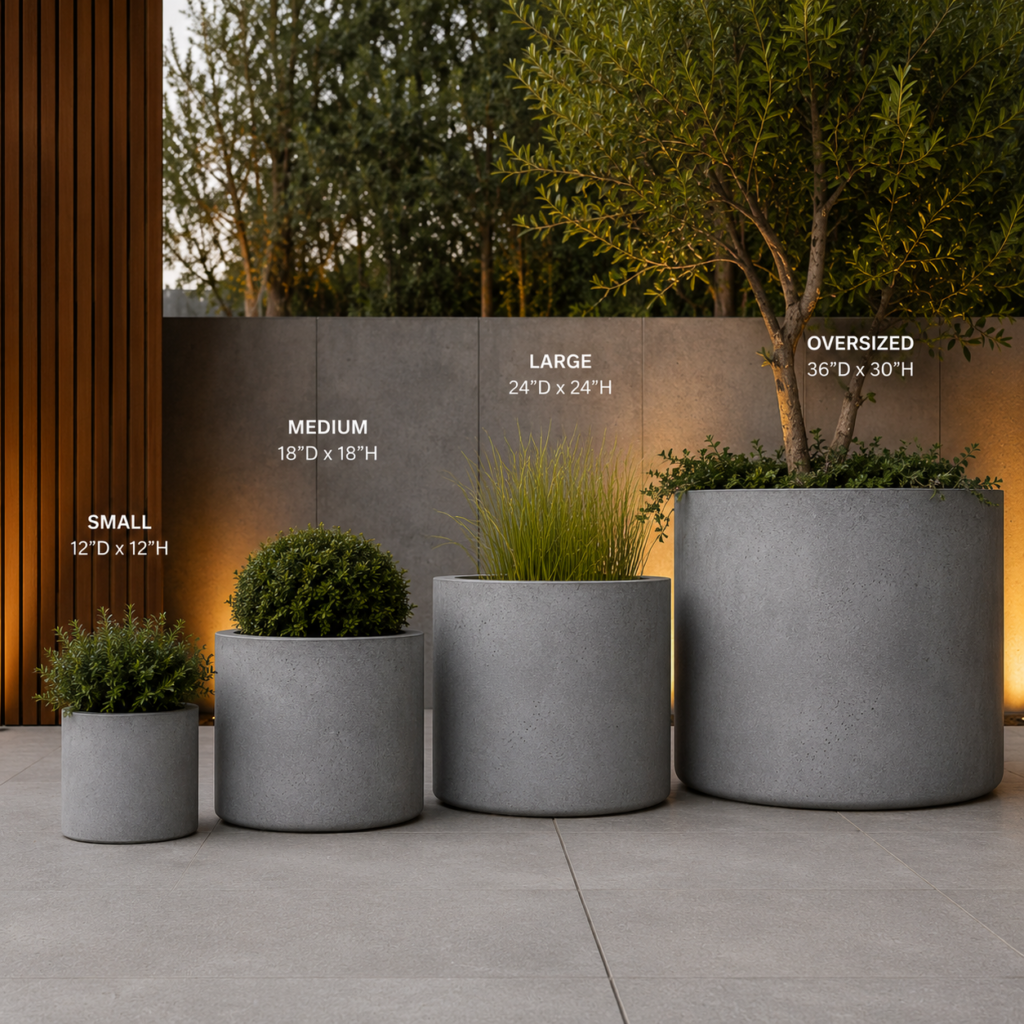
Smaller planters may appear inexpensive, but larger architectural containers can become substantial landscape investments. Factors such as reinforced construction, GFRC technology, lightweight concrete composites, custom finishes, and oversized dimensions often increase pricing. Common planter materials include traditional cast concrete, GFRC (Glass Fiber Reinforced Concrete), and lightweight concrete blends, with lighter materials often costing more because of advanced manufacturing processes.
Typical Price Ranges
| Size | Average Cost |
| Small | $40–$120 |
| Medium | $120–$350 |
| Large | $350–$900 |
| Oversized | $900–$3,000+ |
Other Factors Affecting Cost
- Material type
- Thickness
- Reinforcement technology
- Custom finishes
- Shipping expenses
- Installation requirements
- Weight and handling requirements
- Brand reputation
Lightweight concrete planters often cost more than traditional options but can reduce transportation and installation challenges. High-quality GFRC planters provide a similar appearance to standard concrete while significantly reducing weight, making them popular for rooftops, decks, balconies, and other areas with structural limitations.
Although premium concrete planters cost more upfront, their durability, longevity, and low maintenance requirements often make them more economical over the long term.
Are Concrete Planters Worth It?
Concrete planters combine durability, architectural appeal, and long-term value, making them one of the most practical choices for modern backyard landscapes.
Throughout modern landscape design, concrete planters are used to define outdoor rooms, frame architectural features, create privacy, and showcase statement plants. Their neutral appearance allows them to complement virtually any backyard style while maintaining a clean and timeless character. Whether used in minimalist patios, luxury poolside environments, or contemporary entertainment spaces, concrete planters consistently deliver strong visual impact.
For homeowners seeking a backyard that feels professionally designed, concrete planters often provide one of the highest returns on investment. They help create organization, reinforce architectural themes, and elevate the overall appearance of outdoor spaces. While the initial cost may exceed some alternatives, the durability and visual benefits typically justify the expense. When selected thoughtfully and integrated into a cohesive landscape plan, concrete planters become much more than containers—they become foundational design elements that shape the entire outdoor experience.
FAQs
Are Concrete Backyard Planters Worth the Investment?
Yes. Concrete planters offer excellent long-term value because they are highly durable, low maintenance, and can last for decades. Their premium appearance also enhances modern backyard designs.
Do Concrete Planters Crack in Winter?
Quality concrete planters rarely crack if drainage holes remain clear. Most winter damage occurs when trapped water freezes and expands inside the planter.
Which Plants Grow Best in Concrete Planters?
Ornamental grasses, olive trees, lavender, boxwood, agave, and evergreen shrubs perform exceptionally well in concrete containers. These plants complement modern landscape designs.
Do Concrete Planters Need Drainage Holes?
Yes. Proper drainage holes are essential to prevent waterlogging, root rot, and poor plant health. Good drainage is one of the most important factors for success.
Can Concrete Planters Stay Outside Year-Round?
Most outdoor-rated concrete planters are designed for year-round use. Proper drainage helps prevent damage caused by freezing and thawing conditions.
How Long Do Concrete Planters Last?
High-quality concrete planters often last 20 to 50 years or longer. Their lifespan depends on material quality, drainage, and environmental conditions.
What Size Concrete Planter Should I Choose?
Choose a planter based on the mature size of the plant and the scale of your backyard. Larger planters generally provide better growing conditions and visual impact.
What Color Concrete Planter Looks Best in a Modern Backyard?
Charcoal gray, matte black, and natural concrete finishes are the most popular choices. These colors complement contemporary architecture and highlight surrounding plants.

Myra is the founder and lead writer of Backyard Planter Ideas, where she shares practical, well-researched guidance on planter design, plant selection, and outdoor styling. Her goal is to help homeowners create attractive, functional garden spaces with clear, reliable, and easy-to-apply advice.