
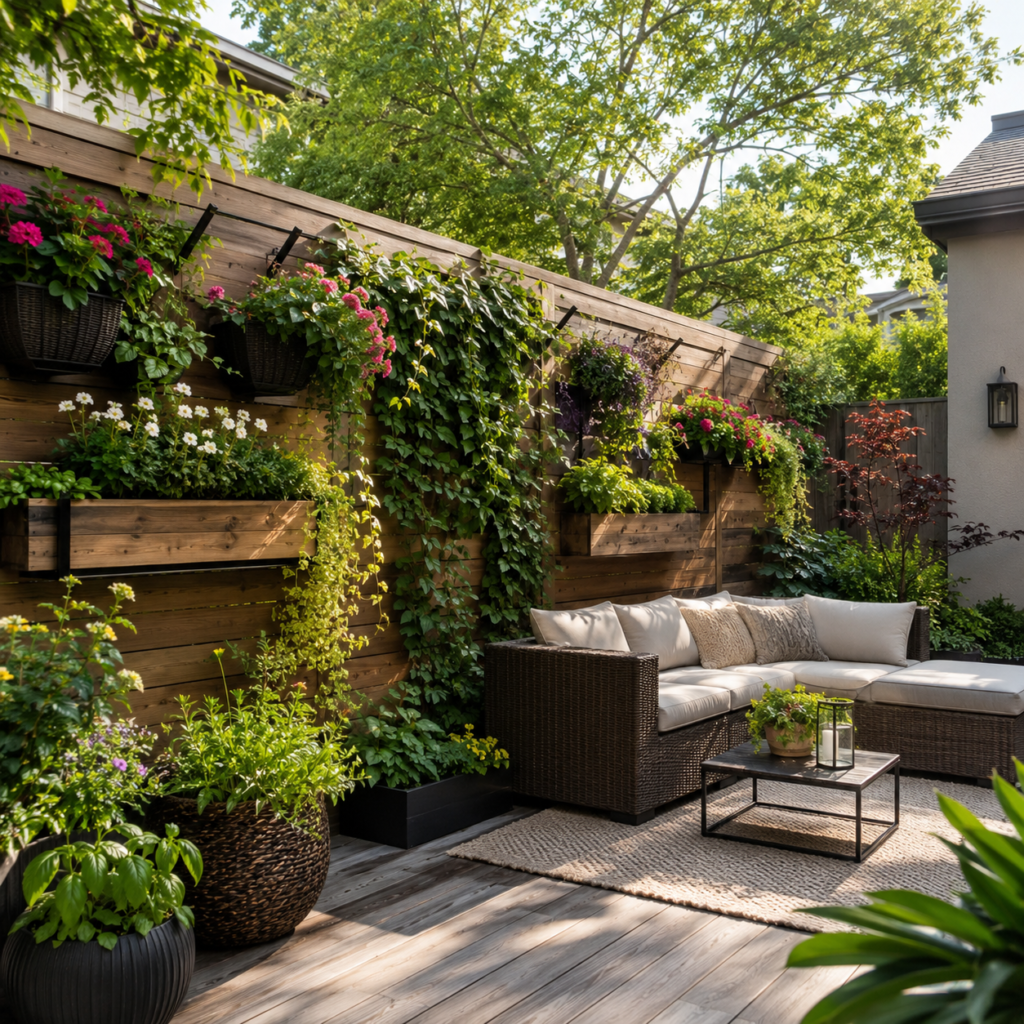
Backyard fence planter ideas include hanging fence planters, mounted planter boxes, vertical garden pockets, herb planters, flower boxes, and privacy planters. The best option depends on your fence material, sunlight, drainage, planter weight, and whether you want decoration, edible plants, privacy, or a small-space garden.
A plain backyard fence can easily feel like a hard boundary. It closes the yard, but it often adds very little beauty on its own. Fence planters solve that problem by turning unused vertical space into a growing surface. Instead of relying only on ground beds, patio pots, or raised planters, you can use the fence line for color, herbs, trailing plants, privacy, and seasonal interest.
The most important thing is choosing a fence planter that matches your fence. A strong wood privacy fence can handle different planter styles than an old leaning fence, a vinyl fence, or a chain-link fence. Good fence planter design is not only about what looks pretty. It is also about weight, water drainage, airflow, brackets, sunlight, and long-term fence safety.
This guide covers the best backyard fence planter ideas, which styles work for different yards, what plants to use, how to avoid fence damage, and how to make your fence planters look intentional instead of cluttered.
Best Backyard Fence Planter Ideas
The best backyard fence planter ideas include hanging planter boxes, mounted flower boxes, vertical pocket gardens, herb shelves, over-the-fence planters, trellis planters, and tall privacy planters placed along the fence line. Each idea works best for a different backyard problem, so the right choice depends on whether you want beauty, privacy, food, or better use of a small outdoor space.
A plain fence can become a feature wall when the planter style is chosen with purpose. For quick color, hanging fence planters and flower boxes are usually the easiest choice. They add blooms at eye level and make the fence feel more connected to the garden. For small backyards, vertical fence gardens are more practical because they stack plants upward instead of spreading containers across the floor. For privacy, taller base planters and trellis planters work better because they add height and density where the fence feels exposed.
In a real backyard, the best design is often a mix of planter types. A seating area may need tall privacy planters behind it. A kitchen-side fence may need herb planters. A long plain fence may need repeated flower boxes to create rhythm. This layered approach creates a more useful and natural-looking space than placing one random planter on the fence.
Good backyard fence planter ideas include:
- Hanging fence planters for flowers and trailing plants
- Mounted wooden boxes for a permanent garden look
- Vertical pocket planters for herbs and small flowers
- Over-the-fence planters for renters and easy movement
- Trellis planters for privacy and climbing plants
- Tall ground planters placed in front of the fence
- Fence shelves for small pots and herb containers
Choose the idea based on the fence first, then the plant. A strong fence can support more mounted features, while an older fence may need lightweight hooks or freestanding planters placed in front of it.
Best Fence Planter Styles
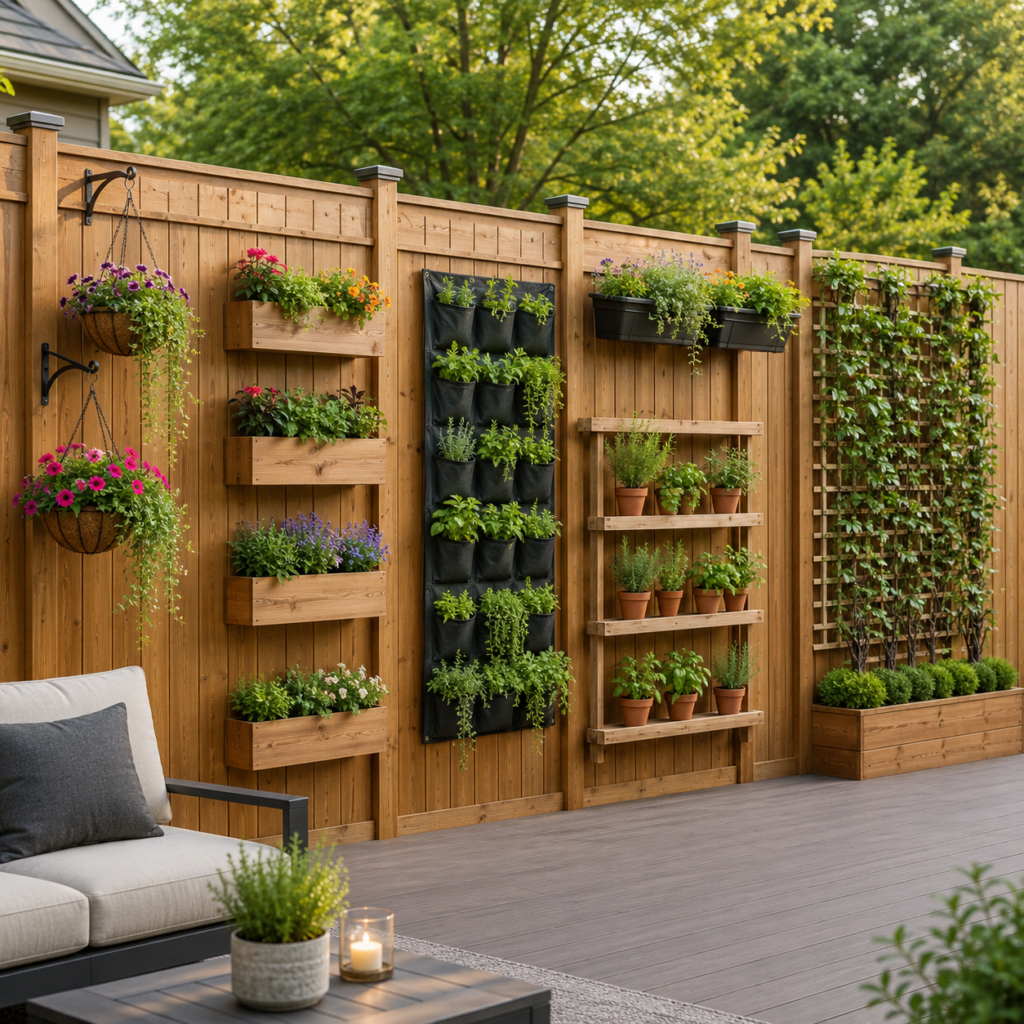
The best fence planter style depends on your goal, fence type, available sunlight, budget, and whether you want a permanent or removable setup. Decoration, herbs, privacy, small-space gardening, and renter-friendly planting all need slightly different planter solutions.
If your goal is color, use hanging baskets, flower boxes, or repeated mounted planters. These styles create strong visual rhythm along the fence and work best when the containers match in size, material, or color. If your goal is edible planting, use shallow herb planters, fence shelves, or vertical pockets. Herbs do not usually need deep containers, but they do need drainage and enough sunlight. If your goal is privacy, choose taller ground planters, trellis planters, or large containers placed in front of the fence.
The fence material should guide your decision. A strong wood fence can usually handle more mounted options if the weight is controlled. A vinyl fence often needs lightweight over-the-fence planters because drilling may not be ideal. A chain-link fence works well with hooks, baskets, and lightweight hanging pots. An old fence should not carry heavy boxes, even if the design looks attractive.
Use this decision table before choosing your planter style:
| Planter Style | Best For | Avoid If |
|---|---|---|
| Hanging fence planters | Flowers, herbs, renters | Fence is weak or leaning |
| Mounted planter boxes | Permanent flower displays | You do not want screw holes |
| Vertical pocket planters | Small-space gardens | Fence has poor airflow |
| Over-the-fence planters | Easy removable setup | Fence top is uneven |
| Tall base planters | Privacy and screening | Walkway is very narrow |
| Trellis planters | Vines and vertical height | Fence gets no sunlight |
| Fence shelves | Herbs and small pots | Wind exposure is high |
Best Planters for Each Fence Type
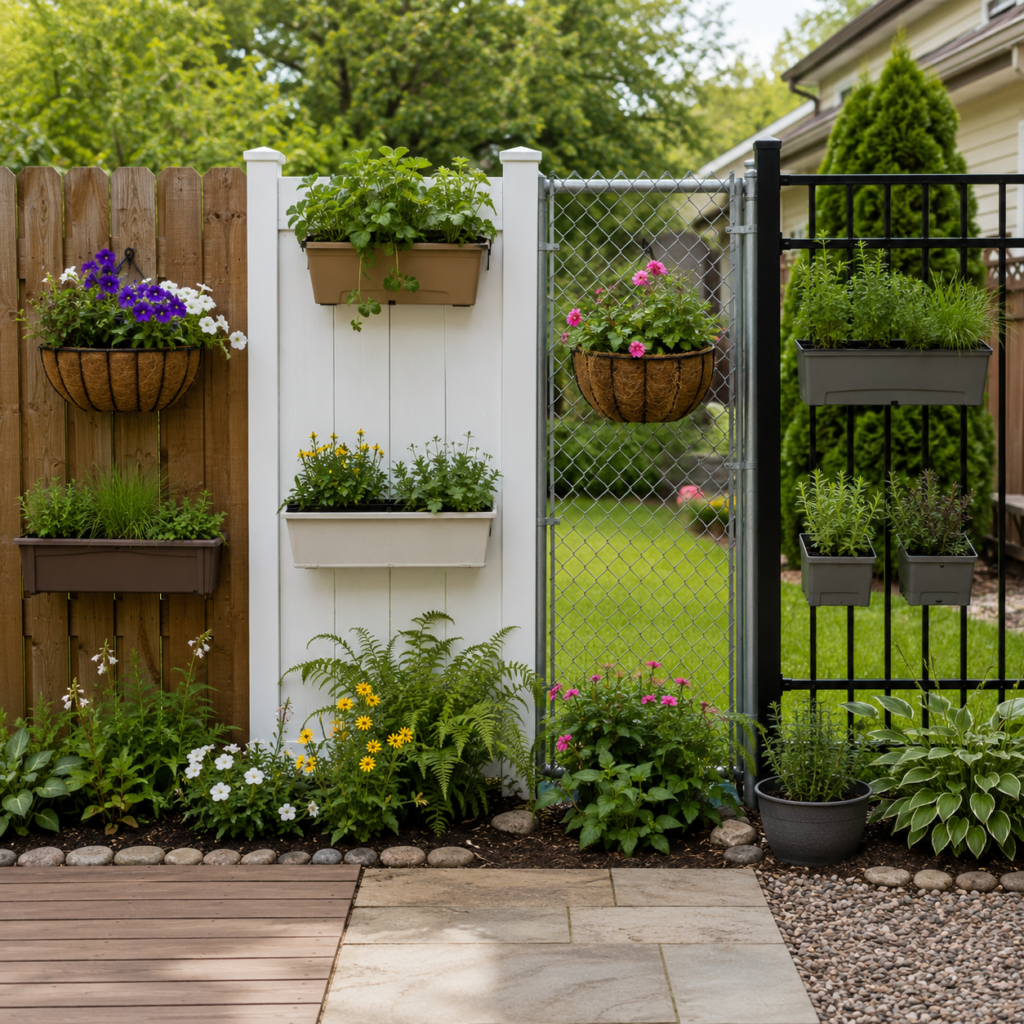
Fence planter choice should match the fence material because wood, vinyl, chain-link, and metal fences handle weight, moisture, heat, and mounting differently. A planter that works well on a strong wood fence may not be safe for a thin vinyl panel, an old leaning fence, or a hot metal fence in full afternoon sun.
Wood fences are the most flexible because they can usually support mounted boxes, hooks, shelves, and brackets when attached near posts or horizontal rails. Vinyl fences need more caution because drilling can weaken panels or create permanent damage, so lightweight over-the-fence planters are often safer. Chain-link fences work well with hanging baskets, S-hooks, and lightweight pots because the open structure gives many attachment points. Metal fences can support clamp-on planters or hanging baskets, but heat buildup may stress plants in hot climates.
| Fence Type | Best Planter Choice | Avoid |
| Wood fence | Mounted boxes, hooks, shelves, trellis planters | Heavy wet boxes on weak panels |
| Vinyl fence | Over-the-fence planters, lightweight resin pots | Drilling without support |
| Chain-link fence | Hanging baskets, S-hooks, pocket planters | Large rigid boxes |
| Metal fence | Clamp-on baskets, lightweight planters | Heat-sensitive plants in full sun |
| Old fence | Freestanding planters in front | Mounted heavy containers |
| Privacy fence | Flower boxes, trellis planters, vertical panels | Blocking airflow behind wet planters |
Use these practical rules:
- Mount heavier planters near fence posts, not thin panels.
- Use no-drill fence planters for vinyl fences when possible.
- Use S-hooks and baskets for chain-link fences.
- Keep heavy ceramic, stone, and concrete planters on the ground.
- Avoid trapping wet soil against wood fence boards.
- Test old fences by gently pushing them before adding weight.
Can Fence Planters Damage Fences?
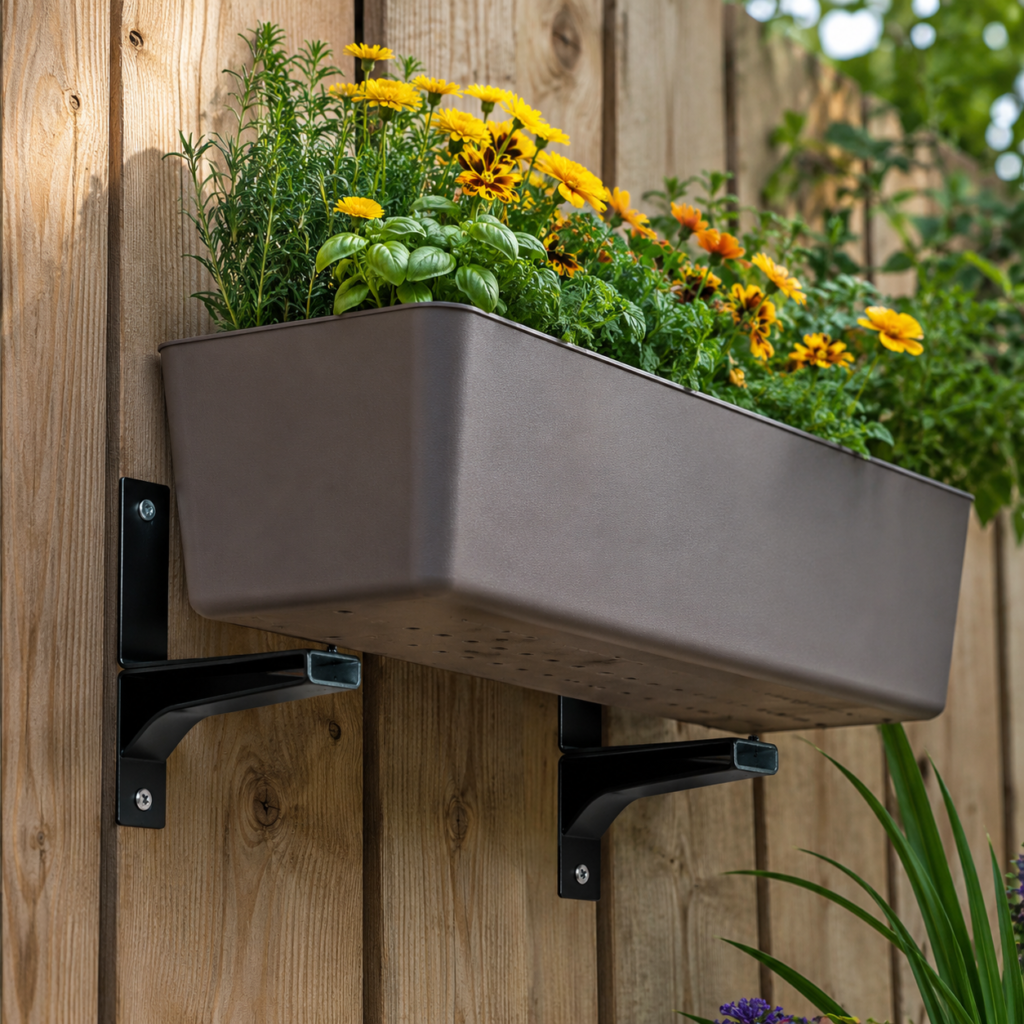
Fence planters can damage a fence if they are too heavy, hold moisture against the boards, block airflow, or are attached with weak hardware. Good drainage, lightweight containers, proper spacing, and strong outdoor-rated brackets reduce most long-term risks.
The most common problem is moisture. When a planter sits directly against a wood fence, water can stay trapped between the planter and the boards. Over time, this can cause staining, mildew, peeling paint, or wood rot. This is more likely when the planter has poor drainage or when wet soil presses against the fence surface. A small air gap behind mounted planter boxes can make a big difference because it allows the fence to dry after rain or watering.
Weight is another major concern. Soil becomes much heavier after watering, and plants add weight as they mature. Large boxes filled with wet soil can pull on fence boards, loosen screws, or stress fence posts. A strong post can carry more load than a thin fence panel, so mounted planters should be placed carefully. If the fence already moves in the wind, it is not a good candidate for heavy hanging planters.
Use this fence-safe planter checklist before installation:
- Choose lightweight planters where possible
- Use containers with drainage holes
- Leave a small air gap behind mounted boxes
- Avoid pressing wet soil directly against wood
- Use outdoor-rated screws, hooks, and brackets
- Mount heavier planters near posts, not weak panels
- Check brackets after storms or strong wind
- Keep ceramic, stone, and concrete planters on the ground
- Avoid overloading old or leaning fences
- Empty saucers if water collects after rain
A fence planter should decorate the fence, not shorten its life. If the structure is questionable, use ground planters, trellis planters, or freestanding vertical shelves instead of attaching heavy containers to the fence.
Best Plants for Fence Planters
The best plants for fence planters are compact flowers, trailing plants, herbs, shallow-rooted edibles, and vines that match the sunlight on the fence. Plant choice should always follow light exposure, container depth, heat, wind, and watering needs.
A sunny fence can support many colorful flowering plants. Petunias, geraniums, calibrachoa, lantana, lavender, thyme, rosemary, and ornamental grasses can work well in bright conditions. These plants add color and fragrance, but they may need more frequent watering because fence planters are exposed to sun, wind, and reflected heat. A fence that receives strong afternoon sun can become hotter than a normal garden bed, so heat-tolerant plants are usually safer.
A partly shaded fence needs different plants. Begonias, impatiens, ferns, parsley, mint, coleus, and ivy can handle softer light. These plants are useful when the fence is shaded by the house, trees, a pergola, or neighboring buildings. The mistake many beginners make is choosing flowers only because they look attractive at the nursery. A plant that loves full sun may struggle badly on a shaded fence.
Use this simple plant guide:
| Fence Condition | Best Plants |
|---|---|
| Full sun fence | Petunias, geraniums, lavender, rosemary, lantana |
| Partial shade fence | Begonias, impatiens, parsley, mint, coleus |
| Hot fence | Thyme, lantana, ornamental grasses, lavender |
| Narrow planter | Herbs, pansies, alyssum, trailing lobelia |
| Privacy goal | Clematis, jasmine, climbing roses, tall grasses |
| Trailing look | Sweet potato vine, ivy, nasturtium, trailing petunia |
| Edible use | Basil, parsley, thyme, oregano, chives |
For the best look, mix upright plants, filler plants, and trailing plants. Upright plants add height, filler plants create fullness, and trailing plants soften the fence line. Avoid large shrubs, trees, and deep-rooted vegetables in shallow fence planters.
Small Backyard Fence Planter Ideas
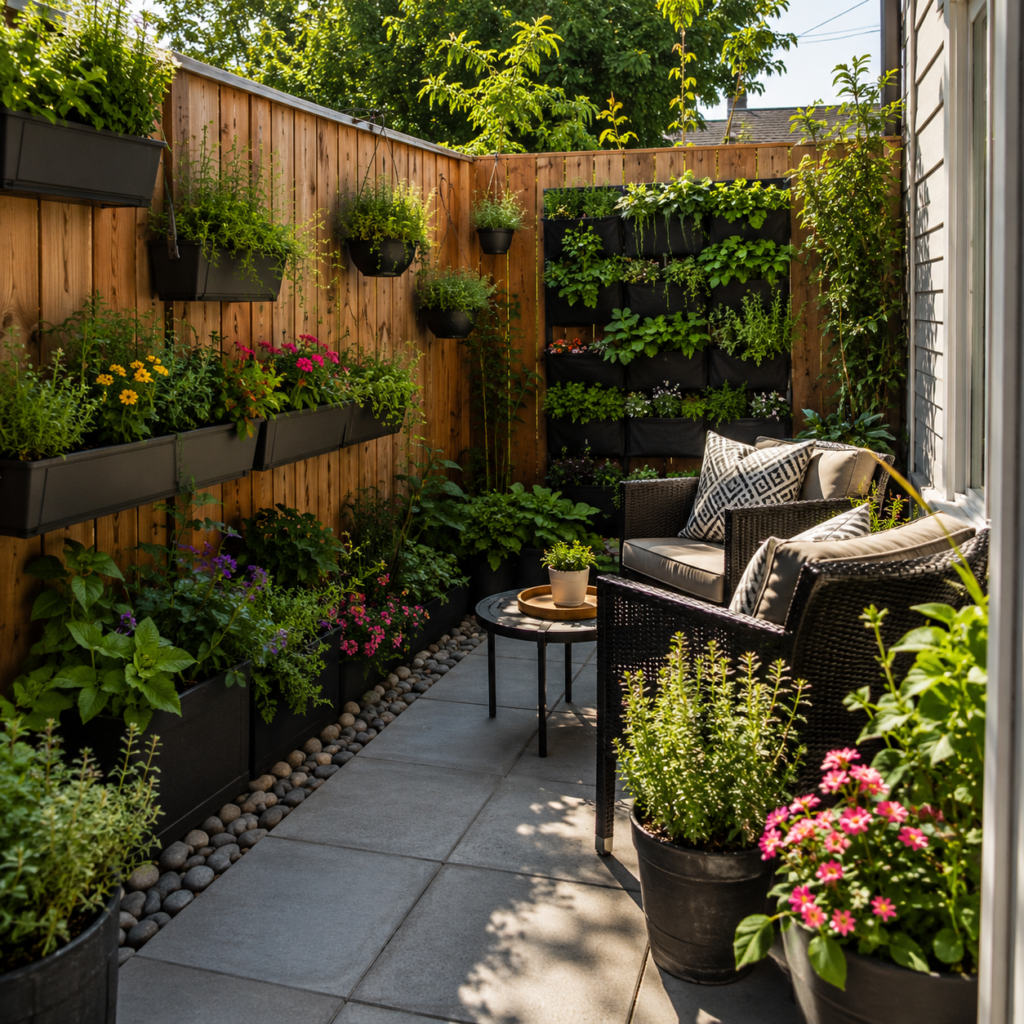
The best fence planter ideas for small backyards are vertical pocket planters, slim mounted boxes, hanging pots, corner fence planters, and over-the-fence containers that save floor space while adding greenery and color.
Small backyards need every inch to work harder. A large planter on the ground may look beautiful, but it can block walkways, seating areas, doors, or storage access. Fence planters solve this by moving plants upward. They add life to the yard without taking away usable space. This is especially helpful on patios, decks, narrow side yards, townhouse gardens, and rental backyards.
Vertical pocket planters are one of the strongest choices for tiny yards. They can hold herbs, strawberries, small flowers, or foliage plants in stacked rows. Slim mounted boxes are another good option because they add color without pushing too far into the yard. Hanging pots can work well too, but they should be repeated in a clean pattern instead of scattered randomly across the fence.
Small backyard fence planter ideas include:
- Vertical pocket planters for herbs and small flowers
- Slim fence boxes that do not block walkways
- Hanging pots repeated in groups of three
- Corner fence planters for unused spaces
- Over-the-fence planters for rental patios
- Narrow herb shelves near the kitchen door
- Trellis planters for height without width
For very small yards, avoid bulky containers and too many plant types. Choose a limited palette and repeat the same material or color. A small backyard fence planter layout should make the space feel larger, softer, and more organized. If the fence starts to feel crowded, reduce the number of containers and improve spacing.
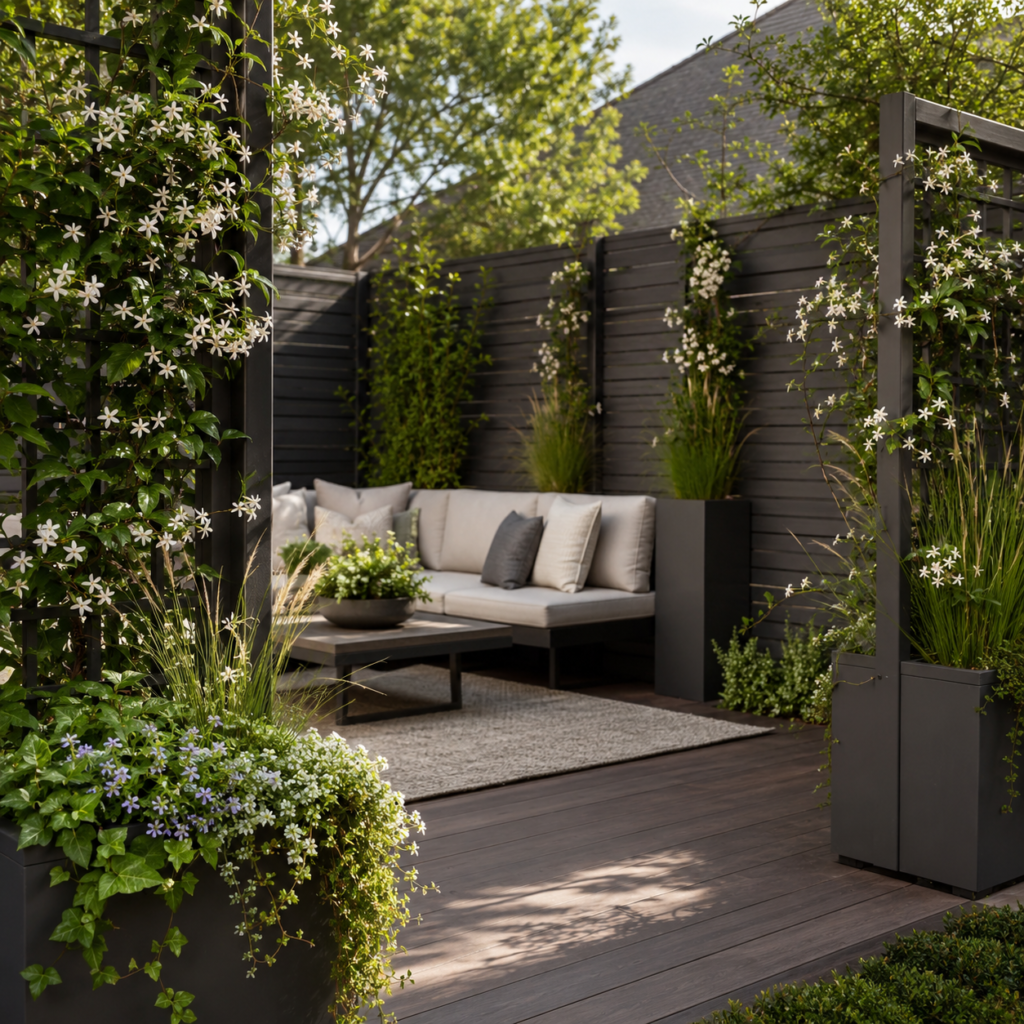
Fence Planters for Privacy
Fence planters can add privacy by layering tall containers, trellis planters, climbing vines, and dense foliage along exposed fence lines. They are useful when the fence is not high enough, feels too open, or leaves seating areas visible.
Privacy does not always require building a taller fence. In many backyards, the problem is not the full fence line. It may be one exposed seating corner, one neighbor-facing patio, one gap above the fence, or one section behind an outdoor sofa. Planters can target those areas without the cost and difficulty of replacing the entire fence. This makes them practical for homeowners who want privacy but do not want a major construction project.
Tall base planters are the easiest privacy option. Place them in front of the fence and fill them with upright plants. Ornamental grasses, compact evergreens, bamboo-style clumping plants, and tall flowering plants can soften views. Trellis planters are even better when you want vertical height because they can support jasmine, clematis, climbing roses, honeysuckle, or annual vines.
Privacy fence planter ideas include:
- Tall rectangular planters behind seating areas
- Planter boxes with attached trellises
- Climbing vines on freestanding trellis panels
- Ornamental grasses in repeated containers
- Dense evergreen shrubs in large base planters
- Layered planting with tall, medium, and trailing plants
- Corner privacy planters near patios or hot tubs
Avoid aggressive vines that attach strongly to fence boards and become hard to remove. A freestanding trellis placed slightly in front of the fence is often safer. Also, make sure tall planters are stable because privacy plants can catch wind. Wider containers, heavier bases, and secure trellis systems are safer than narrow lightweight pots.
Easy DIY Fence Planter Ideas
Easy DIY backyard fence planter ideas include wooden planter boxes, pallet planters, painted tin pots, gutter planters, hanging baskets, herb shelves, and recycled containers mounted safely along the fence.
DIY fence planters are popular because they can be customized to the fence size, yard style, and budget. A simple wood box can be built to fit one fence panel. A row of recycled pots can create a colorful cottage look. A pallet can become a vertical herb garden with small containers attached. DIY is especially useful when standard store-bought planters do not fit the exact space.
A basic wooden fence planter box is one of the best beginner DIY options. Use outdoor-friendly wood, add drainage holes, and avoid making the box too deep or heavy. A shallow flower box is usually safer than a large soil-filled trough mounted high on the fence. Painted tin pots are another simple idea. They can be hung from hooks or attached to a rail, but each container should have drainage holes.
Easy DIY fence planter ideas include:
- Simple cedar or pine flower boxes
- Painted tin cans or metal pots
- Gutter planters for herbs or strawberries
- Pallet planters with small containers
- Hanging baskets on outdoor hooks
- Narrow fence shelves for herb pots
- Recycled containers with drainage holes
- Freestanding ladder shelves placed against the fence
DIY planters should still follow safety rules. Add drainage, avoid excess weight, use outdoor hardware, and check that the fence can handle the load. A cheap DIY idea becomes expensive if it damages the fence. If the fence is weak, build a freestanding planter that sits in front of it instead of attaching weight directly to the boards.
How to Attach Fence Planters Safely
Attach fence planters safely with outdoor-rated hooks, brackets, rails, or freestanding supports. Avoid mounting heavy planters to weak boards, old fence panels, or vinyl fences without proper support.
Before installing anything, inspect the fence. Check whether the boards are solid, the posts are stable, and the fence does not move too much in the wind. If the fence is old, leaning, cracked, or soft from moisture, avoid hanging planters directly on it. A beautiful planter is not worth damaging the fence or creating a safety problem. In that case, use ground planters, trellis planters, or freestanding shelves placed in front of the fence.
For wood fences, the safest mounting points are usually the posts or horizontal rails, not thin decorative boards. Planter boxes should be attached with outdoor screws and strong brackets. Pre-drilling holes can help prevent splitting. For vinyl fences, avoid drilling unless you know the fence can support the planter. Over-the-fence hooks or removable planters are usually safer. For chain-link fences, lightweight hanging baskets and pots work well when secured properly.
Safe installation tips include:
- Inspect the fence before adding weight
- Use outdoor-rated screws, hooks, and brackets
- Mount heavier planters close to posts or rails
- Pre-drill wood to reduce splitting
- Keep drainage away from the fence when possible
- Leave airflow behind mounted boxes
- Avoid drilling into vinyl without support
- Check hardware after storms or heavy watering
Also consider wind. A fence-mounted planter can move during storms if it is not secured. Check hooks, screws, and brackets regularly. Safe installation is about balancing beauty, drainage, weight, airflow, and fence strength.
Fence Planter Mistakes to Avoid
The biggest fence planter mistakes are using heavy containers, ignoring drainage, choosing the wrong plants, mounting planters on weak fences, and creating a cluttered layout. These mistakes can make the fence look messy or cause real damage over time.
The first mistake is underestimating weight. A planter may seem light when empty, but soil, water, and mature plants add weight quickly. Heavy planters should stay on the ground or be supported by strong posts and brackets. The second mistake is poor drainage. A planter without drainage holes can drown roots, hold extra water, increase weight, and create moisture problems near the fence.
The third mistake is trapping moisture. Planters mounted flat against wood can keep the fence damp. Leave airflow behind planter boxes and avoid designs that press wet material directly onto boards. The fourth mistake is choosing plants based only on appearance. A sunny fence needs sun-loving plants. A shaded fence needs shade-tolerant plants. Hot fences need tough plants that can handle reflected heat.
Avoid these common fence planter mistakes:
- Hanging heavy containers on weak fence panels
- Using planters without drainage holes
- Letting wet soil press directly against wood
- Choosing plants without checking sunlight
- Mixing too many planter styles
- Blocking gates, paths, or hose access
- Ignoring wind exposure
- Forgetting seasonal maintenance
- Drilling into vinyl fences without support
- Letting aggressive vines attach directly to the fence
Are Fence Planters Right for You?
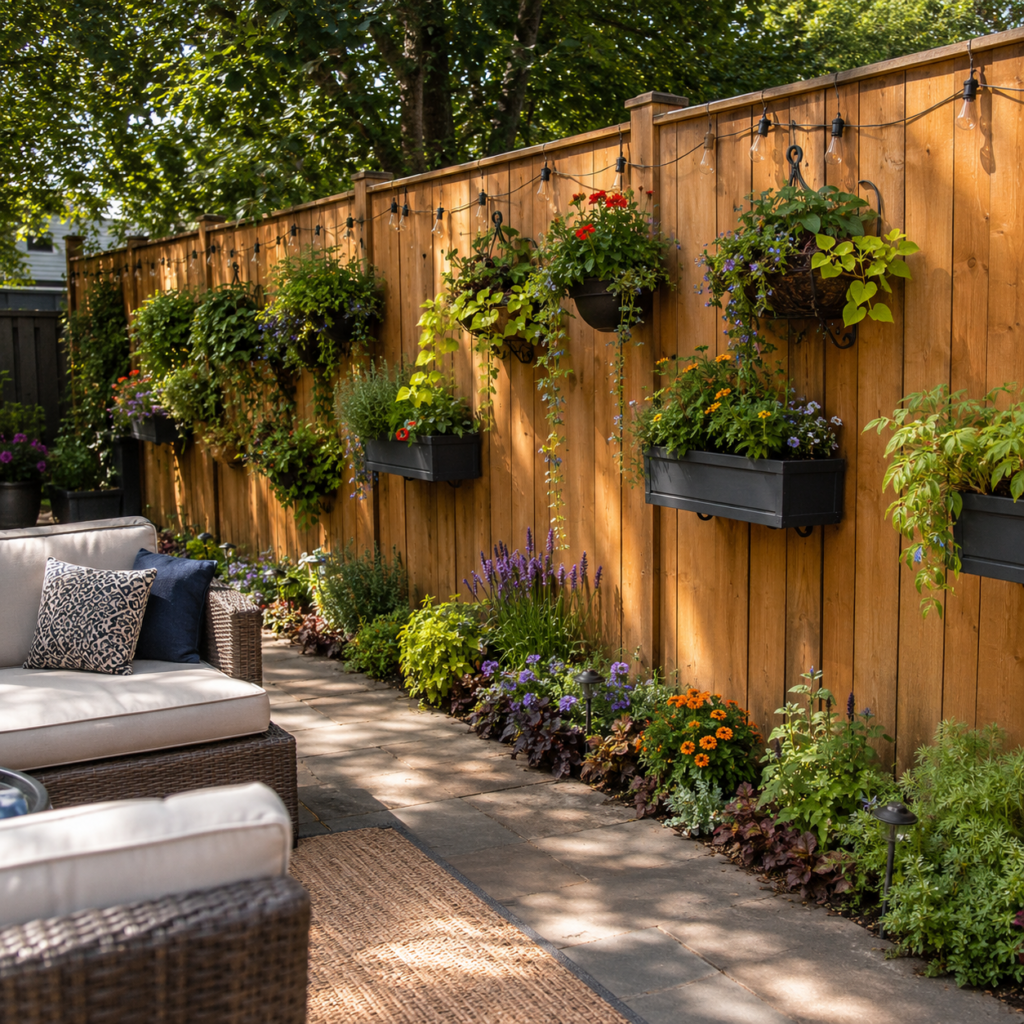
Backyard fence planter ideas are right for your space if you want more color, herbs, privacy, or vertical planting without using much ground space. They work especially well in small backyards, patios, side yards, rental gardens, and plain fence areas that need a softer garden look.
Choose flower boxes for beauty, herb planters for function, trellis planters for privacy, and vertical pockets for small spaces. If your fence is weak, use freestanding planters in front instead of mounting weight directly onto the boards.
FAQs
What are the best backyard fence planter ideas?
The best backyard fence planter ideas include hanging planter boxes, vertical pocket planters, flower boxes, herb shelves, and trellis planters. Choose based on fence strength, sunlight, drainage, and available space.
Can fence planters damage a fence?
Yes, fence planters can damage a fence if they are too heavy, trap moisture, or use weak hardware. Use lightweight planters, drainage holes, outdoor brackets, and airflow behind boxes.
What plants are best for fence planters?
Good fence planter plants include petunias, geraniums, herbs, ivy, sweet potato vine, begonias, rosemary, thyme, and compact grasses. Match plants to the fence’s sun exposure.
Do fence planters need drainage holes?
Yes, fence planters need drainage holes to prevent soggy soil, root rot, and extra water weight. Drainage also helps reduce moisture problems on wooden fences.
What is the safest planter for a fence?
The safest fence planter is lightweight, weather-resistant, well-drained, and attached with strong outdoor hooks or brackets. Heavy ceramic, stone, and concrete planters should stay on the ground.
Can I put planters on a vinyl fence?
Yes, but use lightweight over-the-fence planters. Avoid drilling into vinyl or attaching heavy soil-filled boxes unless the fence is designed to support them.
How do I stop fence planters from rotting wood?
Use drainage holes, leave airflow behind planter boxes, and keep wet soil away from wood boards. Sealed planters and outdoor-rated brackets also reduce rot risk.
What are the best no-drill fence planter ideas?
The best no-drill ideas are over-the-fence planters, S-hook baskets, ladder shelves, removable pocket planters, and tall planters placed in front of the fence.

Myra is the founder and lead writer of Backyard Planter Ideas, where she shares practical, well-researched guidance on planter design, plant selection, and outdoor styling. Her goal is to help homeowners create attractive, functional garden spaces with clear, reliable, and easy-to-apply advice.