
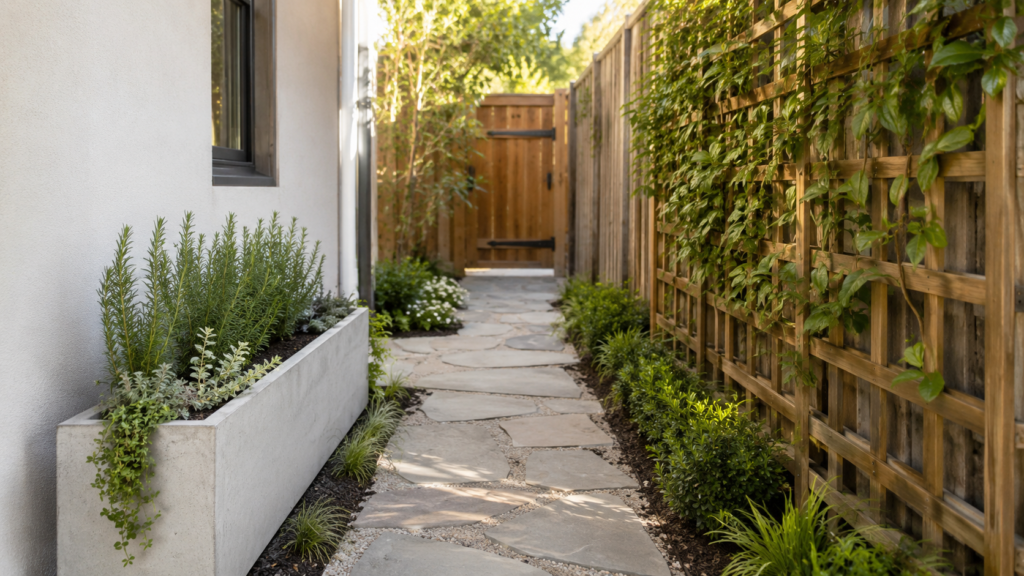
The best side yard planter ideas add growing space without blocking access between the front and back of the property. Measure the narrowest part of the passage, check sunlight and drainage, and locate gates, vents, meters and utility equipment before selecting containers.
Slim troughs, vertical gardens, trellis planters and movable containers usually work best because they use one edge or the vertical plane. For most narrow side yards, a freestanding trough with a trellis provides the best balance of planting space, privacy and flexibility.
The finished layout should remain practical after plants mature, leaving enough room for people, bins, tools, bicycles and maintenance work.
Best Side Yard Planter Ideas
Choose the planter according to the side yard’s main condition rather than appearance alone.
| Side yard condition | Best planter type |
|---|---|
| Very narrow passage | Vertical or fence-mounted planter |
| Shaded side yard | Layered foliage container |
| Privacy problem | Freestanding trellis planter |
| Paved surface | Trough or raised container |
| Rental property | Lightweight movable planter |
| Kitchen-side passage | Herb or salad trough |
| Hot wall | Large pale-coloured container |
| Wet ground | Elevated planter with open drainage |
| Utility corridor | Planter on locking wheels |
| Sloping ground | Smaller containers on level pads |
Side yard planter types
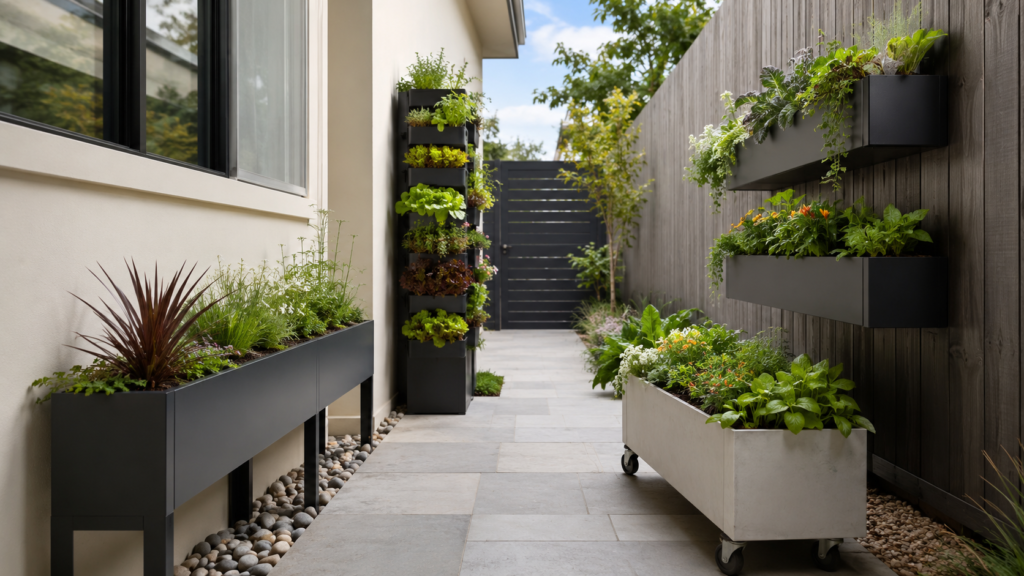
Vertical planters suit spaces where floor width is limited. Long troughs create a cleaner planting line than many small pots, while mobile containers preserve access to meters, air-conditioning units and storage areas.
Large containers usually require less frequent watering than small pots. Trellis planters are best for privacy, climbing vegetables or disguising an unattractive boundary.
Always consider the plant’s mature width. A slim trough filled with arching grasses or broad shrubs can eventually obstruct the path.
Plan Your Side Yard Planters
Treat the side yard as a working route before turning it into a garden. Many layouts fail because they are designed around an empty passage rather than daily use.
Measure the width at several points. Downpipes, gate posts, steps, utility boxes and wall projections often create hidden narrow sections.
Record:
- The narrowest total width
- The clear route needed for walking
- Gate and door movement
- Access for bins, tools and bicycles
- Maintenance space behind the planter
- The planter’s proposed depth
- The plant’s mature spread
Use this planning formula:
Maximum planter depth = total width − clear route − maintenance gap
Side yard planter width
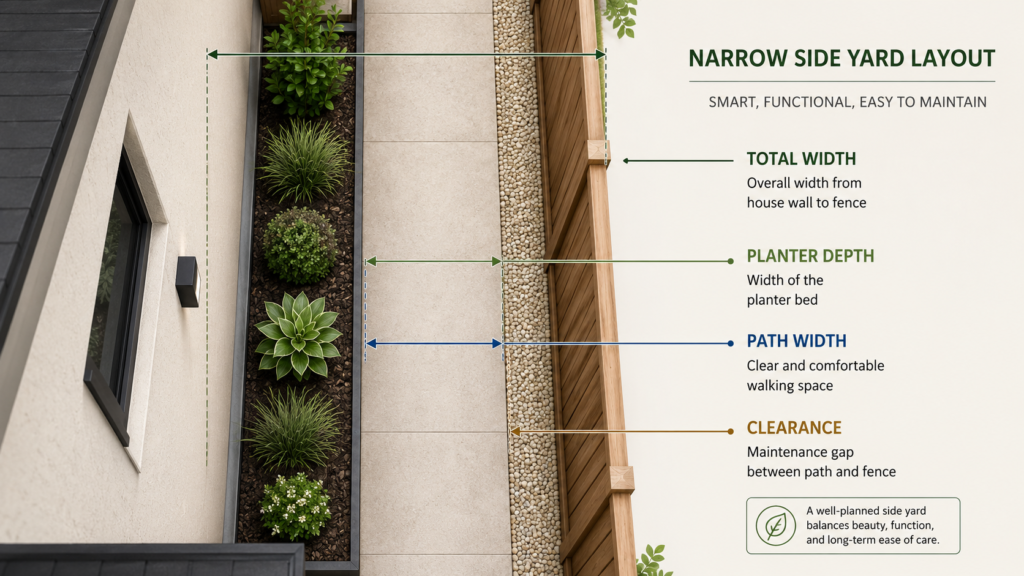
For example, a side yard measuring 1.5 metres wide may need a 90-centimetre route and a 10-centimetre gap behind the planter. That leaves approximately 50 centimetres for the planter.
This is a planning guide, not a universal access rule. Local regulations or household needs may require more clearance.
Mark the proposed footprint with tape or boxes. Walk through the passage carrying the largest item that normally enters the backyard, and open the gate fully.
Check Sunlight
Observe the area in the morning, around midday and during the afternoon. Side yards often receive uneven light because the house and boundary fence create a narrow channel.
Identify whether the location receives:
- Direct sun
- Morning sun
- Strong afternoon sun
- Bright indirect light
- Partial shade
- Deep shade
- Reflected wall heat
Choose plants after checking the real conditions. A flowering plant selected only for colour may struggle in deep shade, while a dark pot may overheat beside a sunny wall.
Check Drainage
Inspect the passage during or after rain. Look for gutter overflow, downpipe discharge, puddles and water moving towards the house.
Planter drainage should not:
- Flow towards foundations
- Soak timber fencing
- Stain walls
- Enter neighbouring property
- Collect around equipment
- Create a slippery path
- Block drains or inspection covers
Protect Utilities
Keep meters, vents, taps, drains and air-conditioning equipment accessible. Use movable planters or removable screens where technicians may need access.
Do not enclose mechanical equipment with dense foliage. Airflow and service clearance must remain open.
Space-Saving Side Yard Planter Ideas
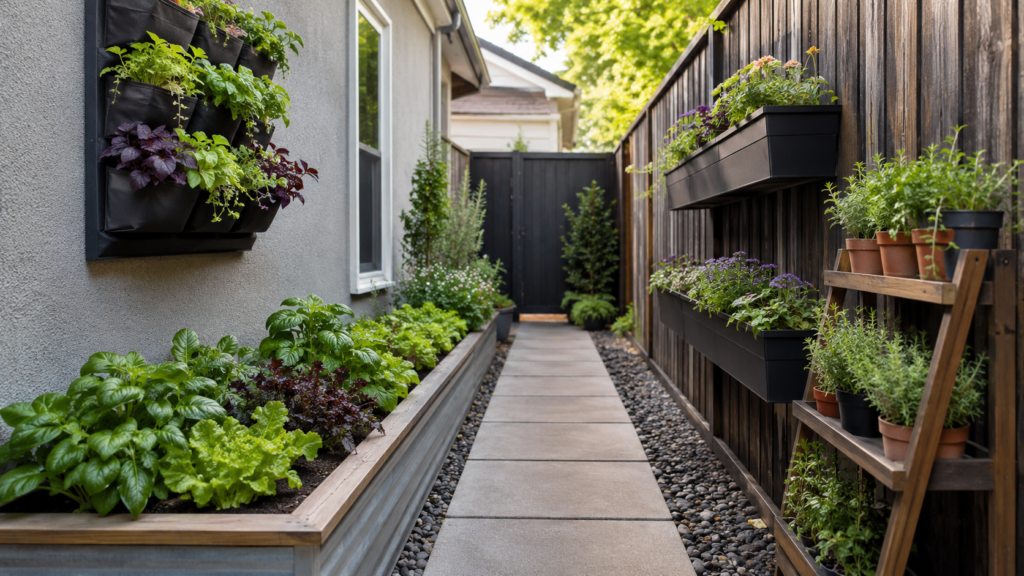
The strongest narrow-space designs use one wall, one edge or vertical space. Avoid filling both sides of the passage.
1. Install a Slim Raised Planter
A long raised planter creates one organised planting line and looks cleaner than several unrelated pots. Use it for repeated grasses, compact flowers, herbs or salad crops.
Choose two or three plant types rather than a different plant every few centimetres. Repetition makes the side yard look longer and more intentional.
2. Use a Freestanding Trough
A freestanding trough works well on paving, concrete or gravel. It creates the effect of a built-in bed without permanent construction.
Fibreglass, composite and recycled-plastic troughs are easier to move than concrete. Timber offers custom sizing but needs protection from moisture.
Leave enough room behind the planter for fence painting, cleaning and repairs.
3. Create a Vertical Planter
Vertical systems add growing space without using much of the path. They can support herbs, strawberries, foliage plants and compact flowers.
Options include:
- Wall pockets
- Stacked pots
- Modular panels
- Freestanding towers
- Timber frames
- Metal grids
Check the complete wet weight before attaching a system to a fence or wall. Use a freestanding frame where structural strength is uncertain.
Upper pockets may dry faster than lower ones, so inspect each level separately.
4. Add Fence Planter Boxes
Fence-mounted boxes introduce colour at eye level without occupying the ground. Use one long horizontal box or a controlled row of matching containers.
Confirm that the fence and brackets can carry wet growing medium and mature plants. Avoid attaching heavy boxes to weak, shared or leaning fences.
Leave airflow behind the boxes and direct water away from timber.
5. Use a Tiered Shelf
A tiered shelf is useful for herbs, seedlings, salad leaves and seasonal flowers.
Place brighter, drier plants on upper shelves and moisture-tolerant plants lower down. Keep trailing plants away from the walking edge.
Choose an open-frame unit so the passage does not feel blocked.
6. Add Planters on Wheels
Mobile containers are ideal where the side yard also serves as a bin route, storage corridor or utility area.
Use them for:
- Temporary privacy
- Utility screening
- Tender plants
- Seasonal displays
- Herbs needing changing light
Choose locking wheels rated for the filled planter’s weight. Wet growing medium, mature plants and a trellis can make a container much heavier than expected.
Privacy and Shade Planter Ideas
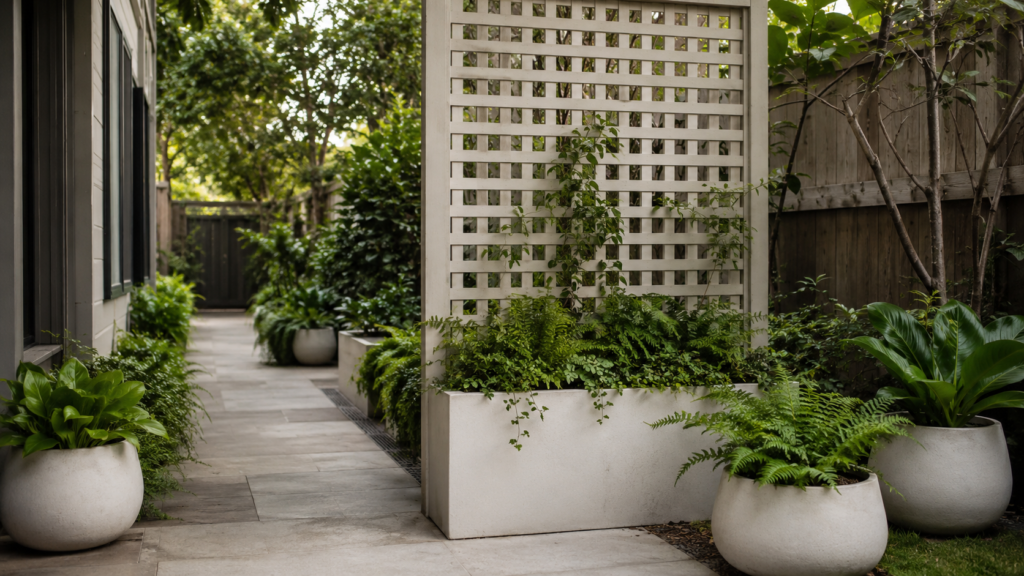
Privacy planters should block a specific view rather than cover the entire boundary. Stand where privacy is needed and identify the line between the viewer and the window, gate or seating area.
7. Build a Trellis Planter
A freestanding trellis planter combines vertical growth with a narrow footprint. It can support flowering climbers, annual vines, climbing vegetables or trained evergreen plants.
Install the support before planting. The container must remain stable once the climber matures.
8. Repeat Tall Troughs
A row of matching troughs creates a structured screen near gates, windows or exposed seating areas.
Choose plants with:
- Upright growth
- Manageable roots
- Limited mature width
- Good container performance
- Suitable local hardiness
Space plants according to mature size rather than nursery size.
9. Grow an Espalier Plant
An espalier tree or shrub grows in a flat plane, making it useful where height is needed without a broad canopy.
It can provide flowers, fruit, seasonal interest or structured greenery. Use a stable container and secure support frame.
Fruit performance depends on sunlight, climate and pollination, so choose a locally suitable variety.
10. Screen Utilities With Movable Planters
Use mobile troughs or a freestanding slatted screen to interrupt the view of utility equipment without enclosing it.
Keep fans, vents and service panels clear. A technician should be able to access the equipment easily.
11. Create a Layered Foliage Planter
In shade, use foliage shape and texture instead of relying entirely on flowers.
A balanced container may include:
- One upright fern or sedge
- One rounded foliage plant
- One contrasting leaf colour
- One low trailing plant
- One seasonal flowering accent
Choose plants for the actual shade level. Bright indirect light, partial shade and deep shade are different conditions.
12. Build a Woodland Corridor
Repeated ferns, foliage plants and natural-looking containers can create a calm woodland effect.
Use:
- Stone-effect pots
- Gravel or stepping stones
- Timber details
- Soft lighting
- One climbing plant
- A focal container
Keep most planting on one side so the passage remains open.
13. Use Pale Containers
Cream, pale grey, light terracotta and weathered-stone planters can brighten a dark side yard.
Pair them with deep green foliage, silver leaves, white flowers or pale gravel. Use one dominant finish rather than mixing many materials.
14. Grow Shade-Tolerant Herbs
A side yard with partial light may support parsley, chives, mint, coriander, lettuce, rocket and selected leafy greens.
Keep mint in its own pot because it spreads aggressively. Do not combine moisture-loving herbs with rosemary or thyme, which prefer brighter, freer-draining conditions.
Edible Side Yard Planter Ideas
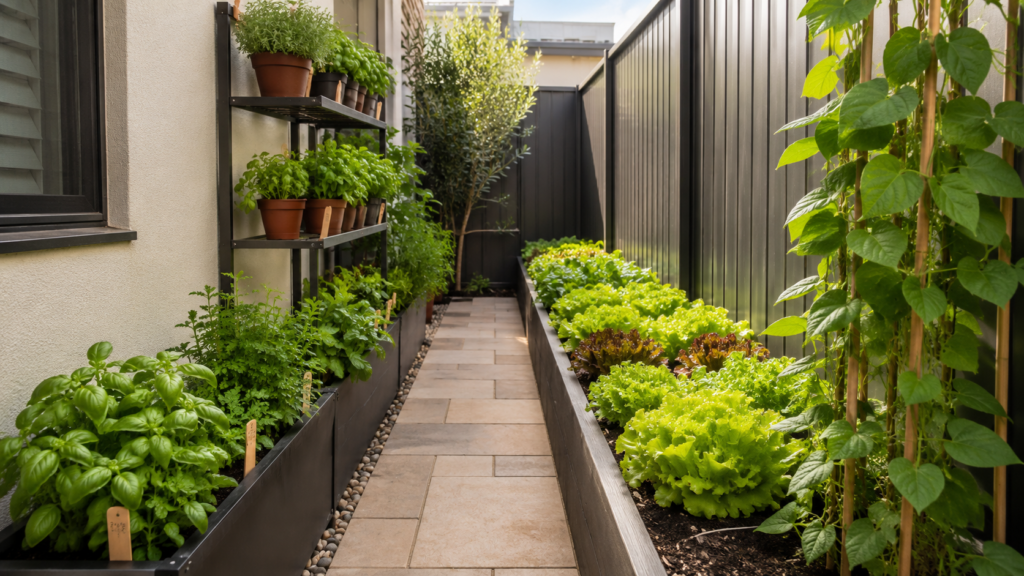
A side yard close to the kitchen can become productive when crops are matched to the available light.
15. Build a Herb Station
Use one trough, tiered shelf or line of labelled containers.
Group herbs by water and light needs:
- Rosemary, thyme, sage and oregano prefer brighter, drier conditions
- Parsley, chives, mint and coriander tolerate more consistent moisture
Place frequently harvested herbs near the kitchen door and at a comfortable height.
16. Grow Salad Crops
A long trough can hold lettuce, rocket, radishes, spring onions and other compact leafy crops.
Divide the planter into sections and sow smaller batches at intervals. Succession sowing creates a longer harvest instead of producing everything at once.
Keep leaves within the planter edge.
17. Grow Climbing Vegetables
A deep planter with a trellis can support peas, beans, compact cucumbers, supported tomatoes and selected climbing varieties.
Install the trellis before planting and choose container-suitable cultivars. Position it so mature foliage does not cover windows or block neighbouring light.
18. Add Pollinator Flowers
Combine edible plants with locally suitable flowers where they share similar light and water requirements.
Avoid overcrowding. Vegetables and herbs still need airflow, root space and easy harvesting access.
Choose pollinator plants recommended for the local region.
Low-Maintenance Side Yard Planter Ideas
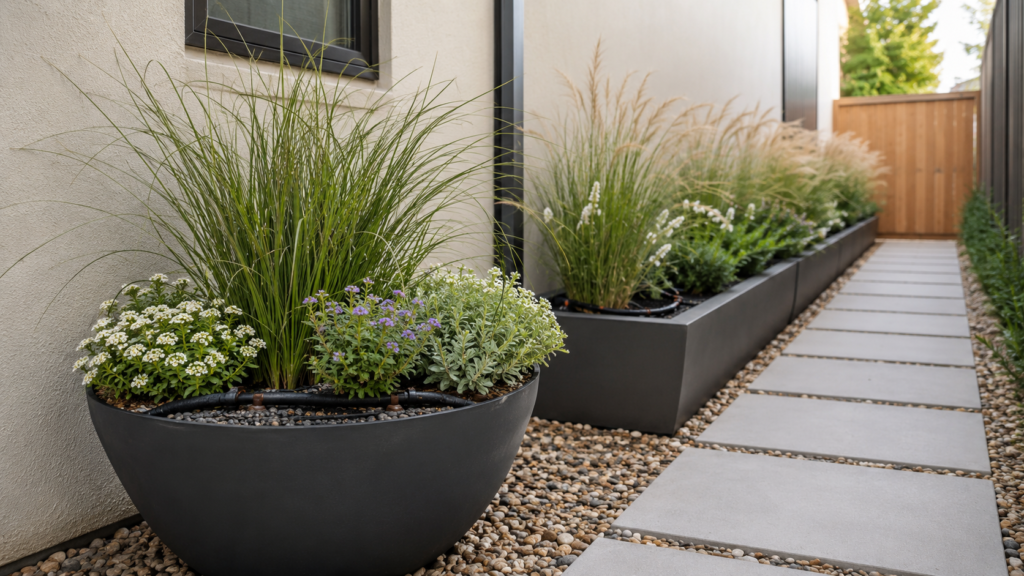
Low-maintenance gardens use fewer containers, larger soil volumes and plants with compatible needs.
19. Use One Large Container
One substantial pot holds moisture more evenly and creates less clutter than many small containers.
It can support:
- A compact shrub
- An ornamental grass
- A small tree
- Seasonal flowers
- A foliage display
- An edible crop
Choose the final position before filling it because a large wet container may be difficult to move.
20. Use Self-Watering Planters
Reservoir planters provide more consistent moisture for leafy vegetables, seasonal flowers and moderate-moisture herbs.
They are less suitable for plants that prefer drying between watering. Check the overflow after heavy rain and continue testing the growing medium manually.
21. Install Microirrigation
A drip line delivers water near the roots without spraying walls and paths.
Inspect regularly for:
- Blocked emitters
- Split pipes
- Leaks
- Loose connectors
- Uneven pressure
- Incorrect watering duration
Do not place drought-tolerant plants and thirsty vegetables on the same schedule.
22. Create a Low-Water Planter
Select locally adapted plants with similar moisture needs.
Consider summer heat, rainfall, humidity, frost, wind, drainage and coastal exposure. A useful combination is one structural plant, one flowering plant and one low-growing plant.
Decorative Side Yard Planter Ideas
Decorative layouts should create visual flow. Repeat at least one element, such as container colour, flower colour, plant shape or material.
23. Create a Modern Layout
Use matching rectangular planters positioned at regular intervals.
Keep the design simple:
- One planter finish
- One repeated plant
- One path material
- One lighting style
- A restrained colour palette
Leave visible wall or fence space between planters. Negative space makes a narrow passage feel larger.
24. Create a Cottage Group
Combine terracotta, timber and galvanised containers, but repeat one flower colour, herb or foliage texture.
Place taller pots at the back, rounded containers in the middle and lower plants near the front. Keep the walking edge clear.
25. Add a Focal Planter
Place one larger container at the end of the side yard to draw the eye through the passage.
It may hold a small tree, clipped evergreen, sculptural grass, flowering climber or seasonal display.
Align it with the view from the gate, path or window. Keep the foreground simple.
Planters for Difficult Side Yards
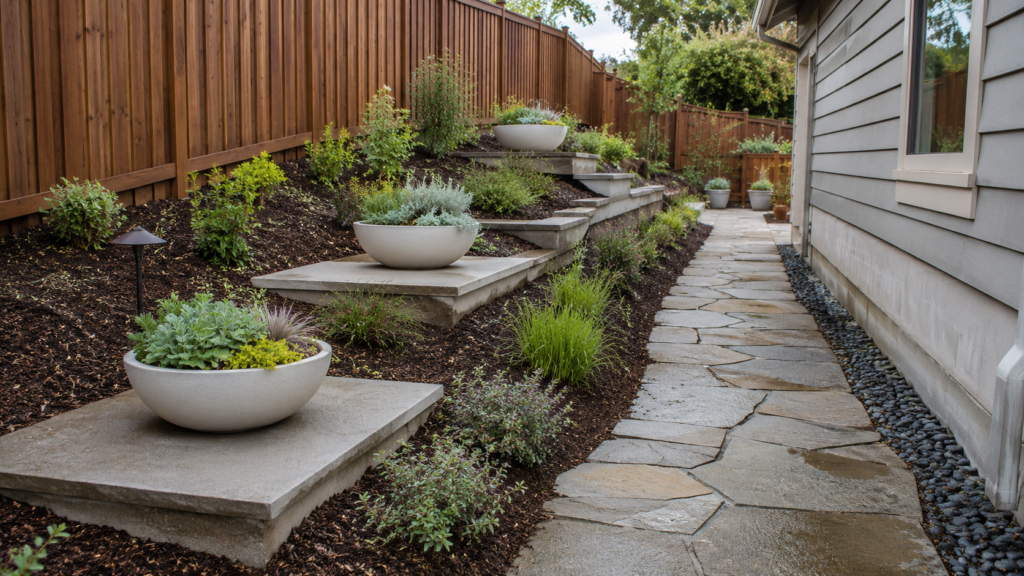
Some passages need more than a standard arrangement.
Rental Properties
Use lightweight troughs, grow bags, freestanding trellises, tiered shelves and mobile containers.
Avoid drilling into walls or fences without permission. Choose planters that can be transported after filling.
Sloping Ground
Place smaller containers on level pads rather than putting one long trough directly on the slope.
Control water moving downhill. A leaking upper emitter can oversaturate every container beneath it.
Do not level heavy pots with loose bricks or temporary blocks.
Hot and Windy Passages
Use larger, pale containers beside reflective walls. In windy side yards, choose low, broad bases, flexible plants and secure trellises.
A narrow passage may act like a wind tunnel, so avoid top-heavy planting.
Cold or Wet Climates
Choose frost-resistant containers and locally hardy plants. Raise pots where necessary and keep drainage outlets open.
Small containers are more vulnerable to temperature changes and waterlogging than larger ones.
Best Plants and Materials
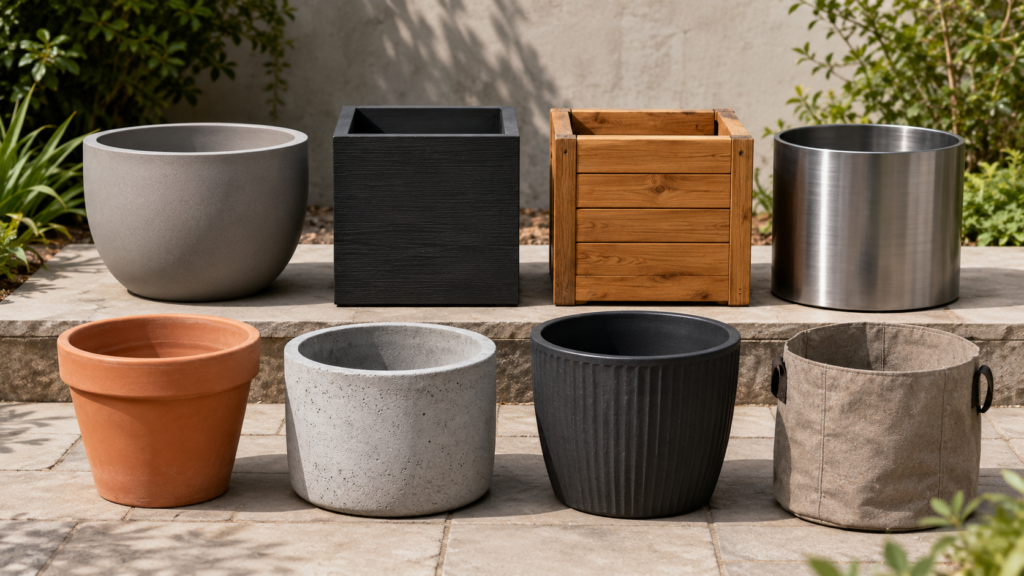
Plant selection should begin with light, climate and mature size.
Good plant characteristics include:
- Upright form for narrow passages
- Shade tolerance for enclosed spaces
- Compact roots
- Local climate suitability
- Manageable maintenance
- Verified pet safety where needed
Before buying, check:
- Mature height and width
- Root requirements
- Light and water needs
- Hardiness
- Toxicity
- Container suitability
Planter material affects weight, moisture loss and durability.
- Fibreglass: Lightweight and useful for large movable troughs
- Composite: Low maintenance with a modern appearance
- Timber: Good for custom sizes but needs moisture protection
- Metal: Slim and contemporary but may overheat
- Terracotta: Attractive and breathable but dries quickly
- Concrete: Stable in wind but difficult to move
- Recycled plastic: Lightweight and suitable for rentals
- Fabric grow bags: Affordable for temporary edible growing
Choose according to climate, final weight and future movement.
Planting and Maintenance
Use container growing medium rather than dense garden soil, which can compact, restrict airflow and drain poorly.
Before planting:
- Confirm drainage holes are open
- Place the container in its final position
- Leave space below the rim
- Install trellises first
- Arrange plants by mature size
Place taller plants towards the back, rounded plants in the middle and lower plants near the front. Keep thorny, stiff or trailing growth away from the route.
After planting, water until the full root zone is moist and excess water drains from the base.
Weekly Tasks
- Check moisture
- Inspect emitters
- Remove fallen leaves
- Tie climbing growth
- Keep gates and paths clear
- Check drainage
Monthly Tasks
- Trim plants extending into the route
- Inspect brackets and trellises
- Clean soil from paving
- Rotate movable containers
- Remove weeds
- Check wheels and locks
Seasonal Tasks
- Replace tired annuals
- Protect tender plants
- Reassess sunlight
- Flush irrigation lines
- Repot root-bound plants
- Inspect planter materials
- Review mature plant size
Common Problems and Fixes
Use the plant, soil and location together when diagnosing problems.
- Wilting in dry soil: Water thoroughly and review container size
- Wilting in wet soil: Check drainage and roots
- Scorched leaves: Investigate reflected heat
- Growth leaning into the path: Rotate the pot
- Few flowers: Check sunlight and feeding
- Water runs straight through: Check for compacted or root-filled mix
- Water remains on top: Clear blocked drainage
- Trellis moves: Reinforce the support
- Planter tips: Use a heavier base
- Wall stains: Redirect drainage
- Uneven irrigation: Clean emitters
- Algae appears: Reduce moisture and improve airflow
Keep a seven-day record of weather, watering and symptoms before replacing plants.
Side Yard Planter Costs
The total cost depends on planter size, material, growing medium, plants, irrigation, delivery and installation.
Broad planning ranges include:
- £50–£100: One basic container
- £100–£250: A trough, herb station or vertical planter
- £250–£600: Coordinated planters with irrigation
- £600–£1,500: Premium planters or screening
- Above £1,500: Custom fabrication, lighting or professional work
These are general estimates and vary by country and supplier.
Compare:
- Basic ready-made planter
- Premium ready-made planter
- DIY equivalent
Evaluate cost, lifespan, movement, maintenance and fit. Prioritise correct size, drainage and stability before decorative finishes.
Side Yard Planter Buying Checklist
Before buying, confirm:
- The planter fits the measured space
- The route remains usable after plants mature
- The material suits the climate
- Drainage holes are adequate
- The filled weight suits the surface
- The container can move if required
- The depth suits the plant
- The trellis can resist wind
- Water has a safe outlet
- Utilities remain accessible
- Gates and doors open fully
- Pet and child safety has been checked
Do not buy a planter only because it fits the empty passage. It must also fit after soil, foliage and irrigation are added.
Side Yard Planter FAQs
What are the best planters for a narrow side yard?
Slim troughs, vertical planters, fence boxes and trellis planters work best. They provide growing space while keeping the route open.
How deep should a side yard planter be?
It should provide enough root space without restricting access. Herbs and flowers need less depth than shrubs, climbers and small trees.
Can a planter sit beside the house?
Yes, provided it does not cover vents, utilities or inspection points. Direct drainage away from walls and foundations.
Do outdoor planters need drainage holes?
Most outdoor planters need open drainage holes. Without them, roots may remain waterlogged.
What grows in a shady side yard?
Ferns, sedges, hostas, foliage plants and selected leafy crops may work. Choose according to the shade level and climate.
Can vegetables grow in side yard containers?
Yes. Herbs, salad leaves, radishes, peas, beans and compact tomatoes can grow where light, water and root space are suitable.
How can planters create privacy?
Use a trellis planter, tall trough or upright plants to block a specific view. One well-positioned screen is often enough.
What is the easiest low-maintenance setup?
Use one or two large containers with locally suitable plants sharing similar water needs.
Which planter material is best?
Fibreglass and composite are lightweight, while concrete offers stability. Timber, metal and terracotta work when matched to the climate.
Which planters are best for renters?
Use lightweight troughs, grow bags, tiered shelves and planters on wheels. Avoid permanent attachments without approval.
Best Side Yard Planter Setup
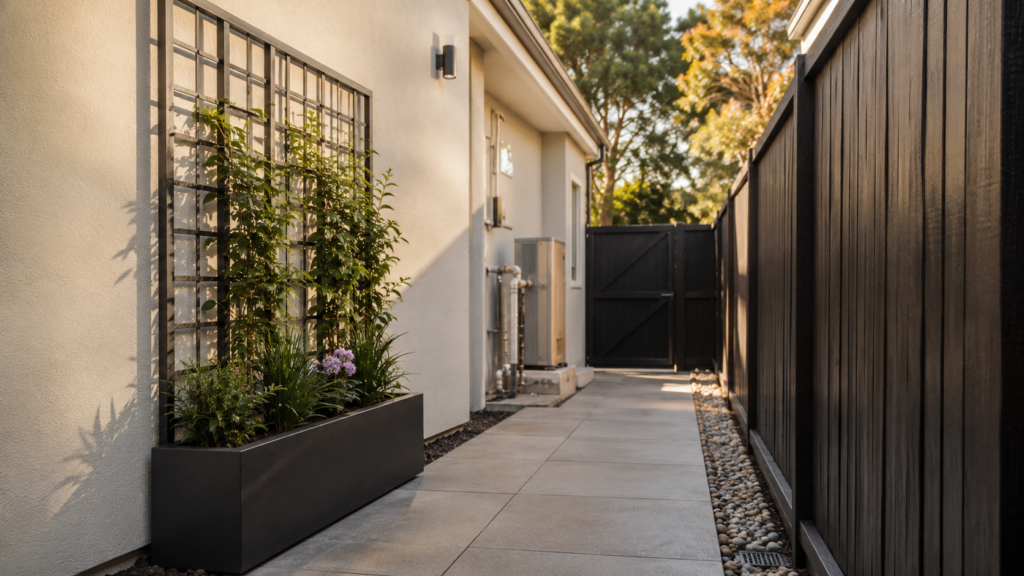
For most narrow passages, the best setup is one slim freestanding trough with a vertical trellis. It provides planting space, height and privacy without filling the path.
Before installation:
- Measure the narrowest point
- Mark the walking route
- Check gate movement
- Observe sunlight
- Inspect drainage
- Locate utilities
- Select plants by mature size
- Confirm maintenance access
Begin with one movable planter and observe how it performs during normal use, rain, heat and seasonal light changes. Add matching containers only after the first position proves practical.
A successful side yard needs a clear purpose, correctly sized containers, suitable plants and enough open space to remain useful.

Myra is the founder and lead writer of Backyard Planter Ideas, where she shares practical, well-researched guidance on planter design, plant selection, and outdoor styling. Her goal is to help homeowners create attractive, functional garden spaces with clear, reliable, and easy-to-apply advice.