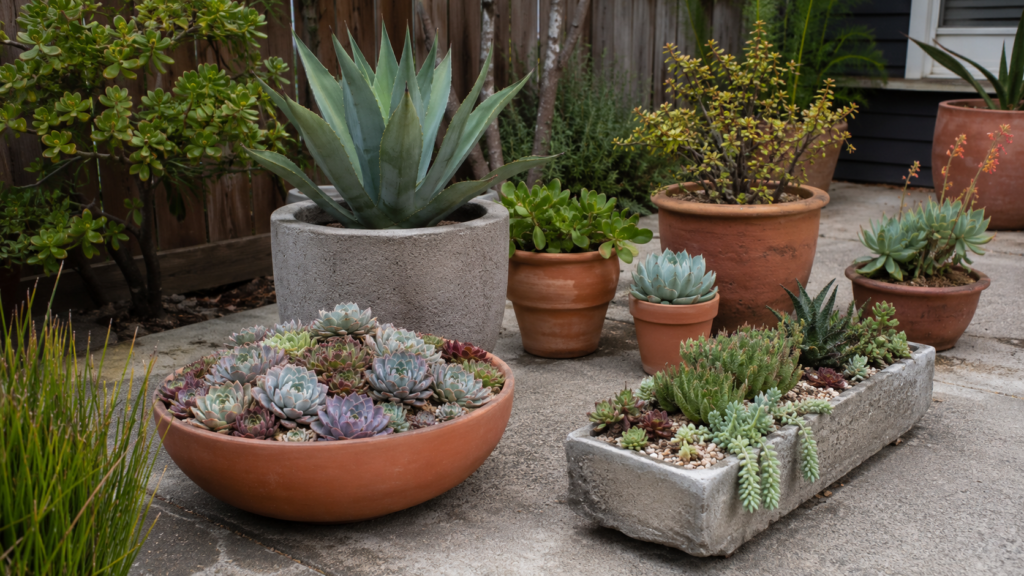
Outdoor succulent planter ideas range from shallow bowls and terracotta groupings to statement pots, concrete troughs, hanging baskets, and vertical displays. The best arrangements combine compatible plants, reliable drainage, suitable light, and contrasting shapes while leaving enough room for mature growth.
Succulents work well in outdoor containers because rosettes add detail, architectural plants create height, low growers fill gaps, and trailing types soften edges. Long-term success depends on more than appearance, though. Container material, rainfall, reflected heat, mature plant size, winter conditions, and maintenance all affect how a planter performs.
What Makes a Good Outdoor Succulent Planter?
A good succulent planter balances drainage, plant compatibility, container size, sunlight, mature growth, and visual structure. Avoid designing only for planting day. Succulents widen, produce offsets, trail, and compete for light, so leaving some visible soil is often better than filling every gap immediately.
Conditions can vary even within one patio. A pot under a roof may stay dry while another nearby becomes saturated by rain. A dark container against a west-facing wall may become much hotter than a terracotta pot receiving morning sun.
A practical planter should have:
- Functional drainage holes.
- Plants with similar light and moisture needs.
- Enough room for mature growth.
- A pot proportionate to the plants.
- Stability for wind and weather.
- Safe placement away from paths if foliage is sharp.
Before planting, picture the arrangement several months later. If the focal plant will outgrow the container, trailing stems will enter a walkway, or the pot cannot be moved when necessary, choose a different design.
Quick Decision Check
Use the site itself to narrow the design before choosing plants. For a hot, exposed position, prioritize a stable container and species suited to stronger sun. For a balcony or cold climate, favor lighter pots that can be moved. Where rainfall is frequent, drainage becomes more important than decorative depth. If the planter will be viewed from several directions, use a balanced composition; if it sits against a wall, keep taller plants toward the back.
This simple site-first approach prevents buying an attractive planter that becomes difficult to maintain once it is filled.
Which Outdoor Succulent Planter Ideas Work Best?
The best design depends on location, viewing distance, sunlight, rainfall, available space, and maintenance. Detailed rosette combinations work well close up, while large specimens and grouped containers create more impact from farther away.
Create a Mixed Succulent Bowl
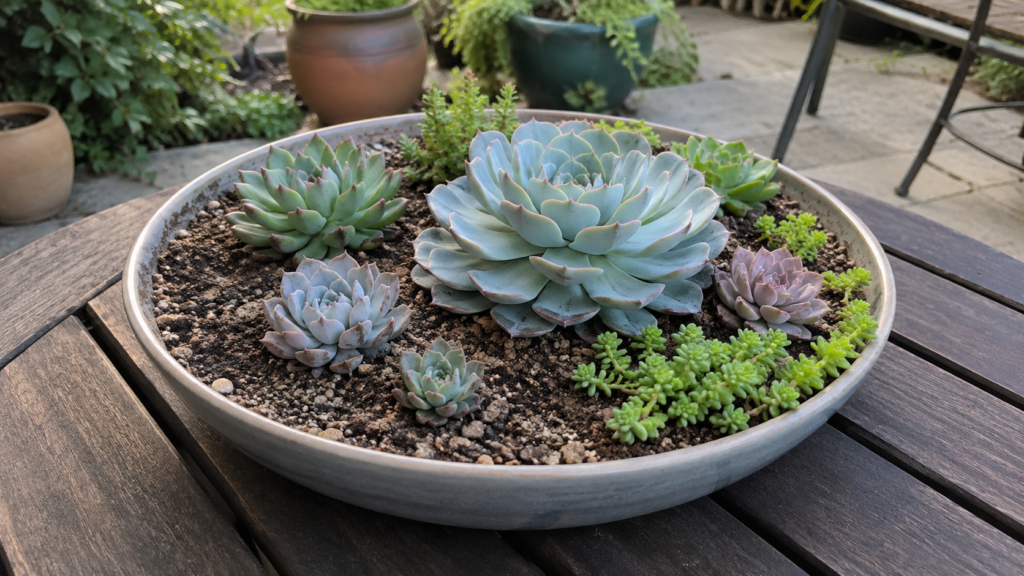
A shallow bowl works well on patio tables, shelves, low walls, and balconies. Start with one prominent rosette slightly off center, add smaller compatible plants around it, and use low growers near selected edges. Leave some growing room instead of packing the bowl tightly.
Best for: patio tables and compact spaces.
2. Group Succulents in Terracotta Pots
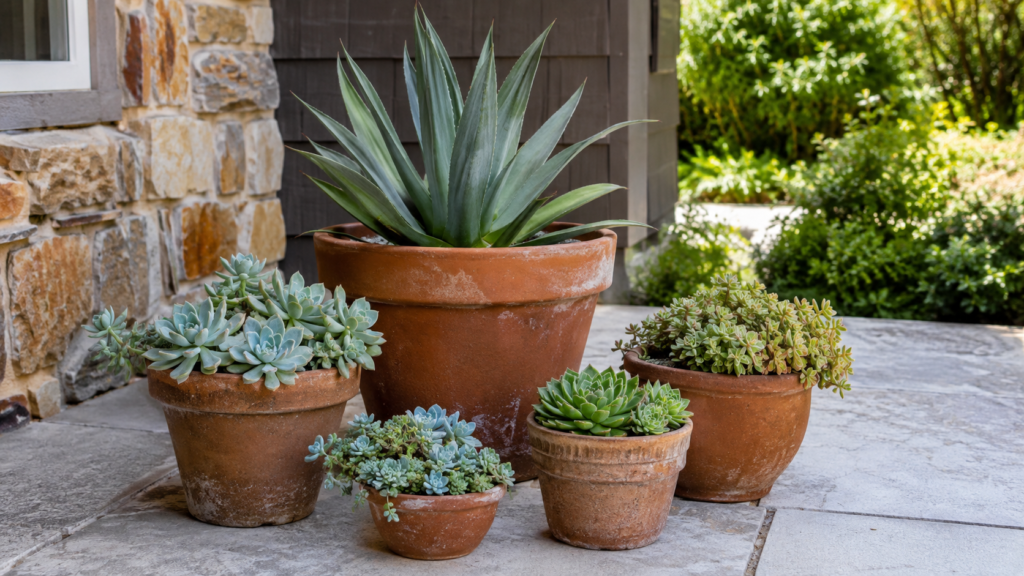
Several terracotta pots often provide more flexibility than one large mixed planter. Arrange different heights together, placing larger pots toward the back. Separate containers also make it easier to move individual plants into shade, shelter them from rain, or protect them during cold weather.
Best for: steps, patios, and courtyards.
3. Use a Large Succulent as a Statement Plant
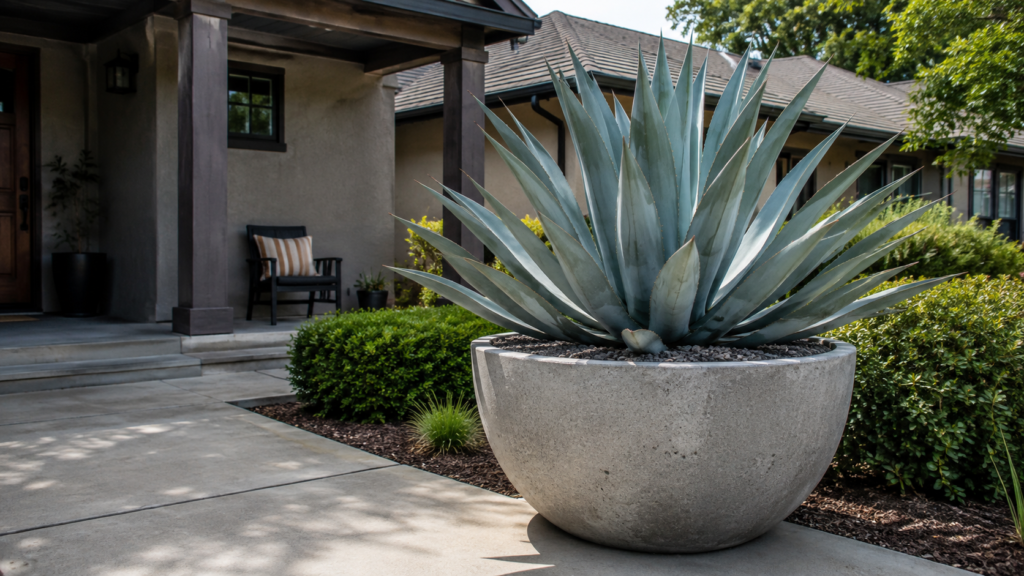
One architectural succulent such as an appropriate Agave or Aloe can create a strong focal point beside an entrance, patio wall, or seating area. Choose a stable container sized for mature growth. Keep sharp, rigid foliage away from narrow paths, stairs, and seating edges.
Best for: entrances and larger patios.
4. Fill a Concrete Trough With Succulents
A long concrete trough suits modern patios, low walls, and linear spaces. Repeat two or three plant forms—such as rosettes, small upright accents, and low growers—rather than lining up identical plants. Vary height slightly so the arrangement does not look flat.
Best for: modern and contemporary spaces.
5. Build a Thriller-Filler-Spiller Succulent Planter
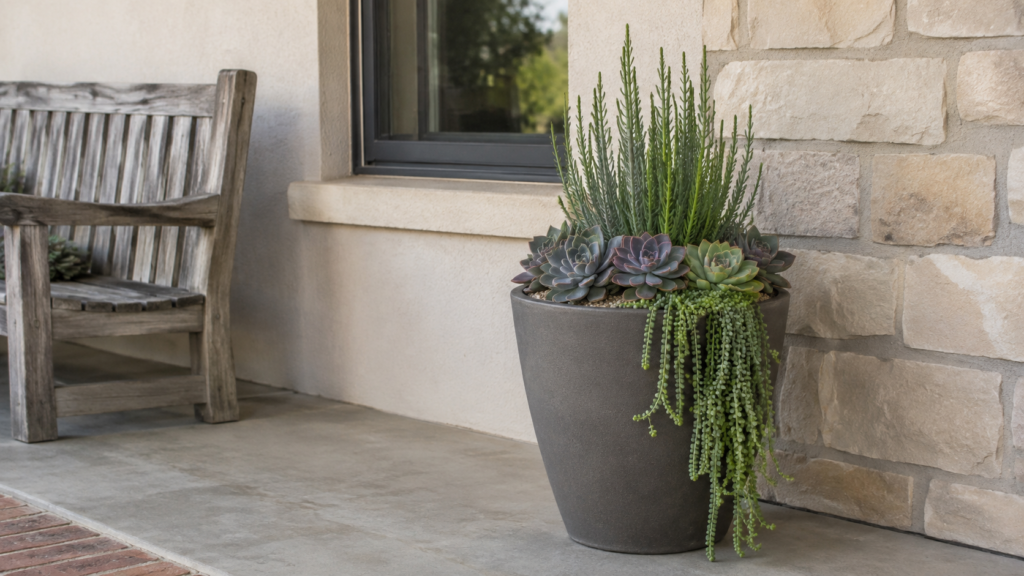
Use one taller or architectural succulent as the thriller, compact rosettes as fillers, and a compatible trailing plant as the spiller. This formula works especially well in taller containers, but all plants should share similar light, moisture, and temperature needs.
Best for: porch corners and statement pots.
6. Let Trailing Succulents Spill From a Tall Pot
Tall pots give trailing succulents room to cascade naturally. Place the trailing plant near the rim and use upright or rosette-forming plants behind it. Avoid using a very deep pot for a tiny root system unless the container and growing medium still drain efficiently.
Best for: entrances and raised patios.
7. Create a Succulent Planter Box
Rectangular planter boxes work well on decks, along fences, and in narrow spaces. Stagger plants instead of placing them in a straight row. Use larger specimens at intervals, rosettes between them, and low growers toward the front.
Best for: decks and rustic gardens.
8. Make a Vertical Succulent Wall Planter
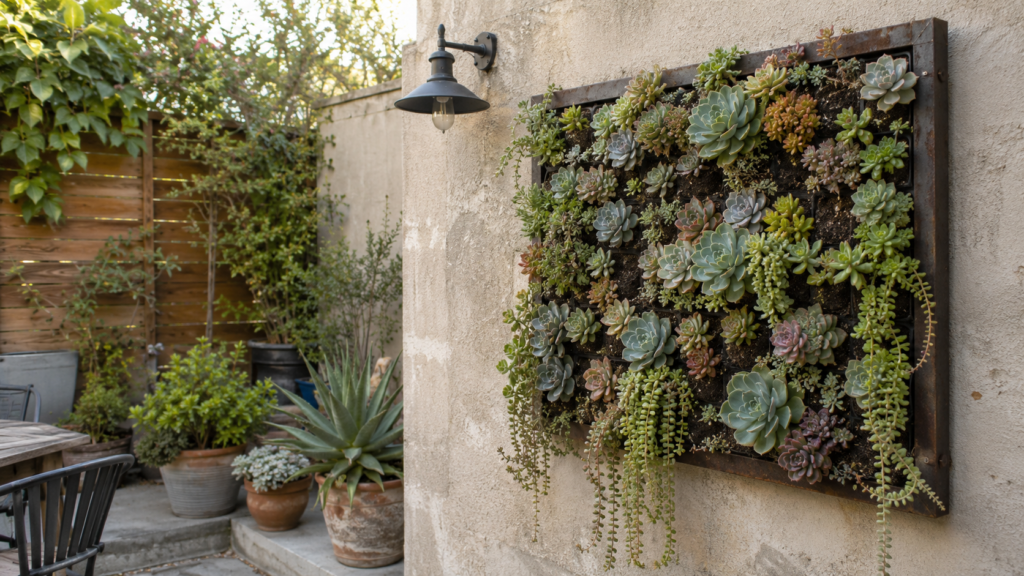
Vertical planters save floor space and work well with compact rosettes and smaller succulents. Check different sections separately because upper pockets may dry faster than lower ones. Make sure the wall or fence can support the filled planter.
Best for: balconies, courtyards, and small patios.
9. Turn an Old Birdbath Into a Succulent Planter
A birdbath can become an attractive raised display in cottage or informal gardens. Drainage is essential because birdbaths are designed to hold water. If safe drainage cannot be added, place a removable draining planter inside the basin.
Best for: cottage gardens and focal points.
10. Create a Rustic Driftwood Succulent Planter
Weathered driftwood suits gravel gardens and naturalistic spaces. Use cavities large enough for a modest amount of growing medium and leave much of the wood visible. Small soil volumes dry quickly, so this type of planter needs more observation than a standard pot.
Best for: rustic and dry-style gardens.
11. Plant Succulents in an Outdoor Urn
An urn gives succulents a more formal appearance. Use one upright focal plant, compact supporting plants, and restrained trailing growth around part of the rim. Confirm that the urn has functional drainage before planting.
Best for: porches and formal entrances.
12. Use One Succulent Per Pot
Planting one succulent in each pot creates a clean display and simplifies individual care. Repeat the pot material, shape, or color so the grouping feels coordinated while the plant forms vary.
Best for: minimalist patios and collectors.
13. Make a Tiered Succulent Planter
Tiered planters create several planting levels without using much floor space. Put larger plants where the soil volume is greatest and smaller succulents in narrower sections. Check whether upper tiers drain into lower ones because this can create uneven moisture.
Best for: compact courtyards and patio corners.
14. Create a Hanging Succulent Planter
Hanging containers are ideal for trailing succulents and small spaces. Because they experience more wind and air movement, they may dry faster than ground-level pots. Secure the hanger for the full wet weight of the planted container.
Best for: covered patios and balconies.
15. Use a Strawberry Pot for Succulents
The side pockets of a strawberry planter create a compact vertical display. Use smaller plants in the pockets and reserve the top for one focal plant or a compatible group. Repeating two or three varieties keeps the arrangement cohesive.
Best for: courtyards and patios.
16. Fill a Hypertufa Trough With Hardy Succulents
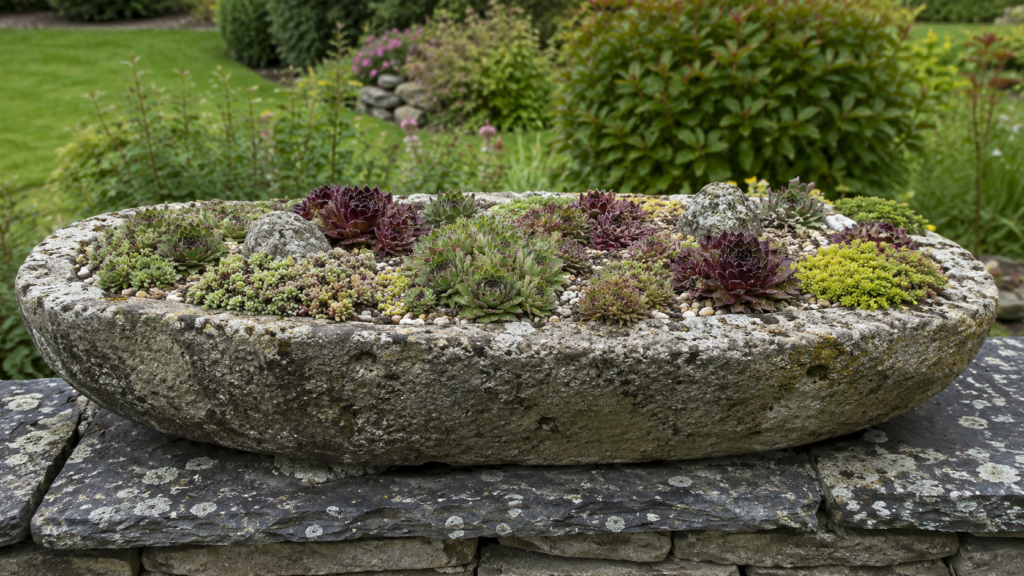
Hypertufa troughs have a weathered stone-like appearance that pairs naturally with hardy low growers. Sempervivum and suitable cold-hardy Sedum can create a compact alpine-style display. Leave some exposed grit between plants for definition.
Best for: low walls and colder outdoor areas.
17. Make a Color-Themed Succulent Arrangement
Build a planter around blue-green, silver-gray, burgundy, or warm green foliage. Color works best when combined with contrasting leaf shapes and growth habits. Always choose plants for compatibility before choosing them for color alone.
Best for: decorative patio focal points.
18. Create a Rock-and-Succulent Container
Use gravel or grit as surface top dressing to connect the planter visually with a dry-style landscape. A few larger stones can add structure, but do not use a thick gravel layer under the soil as a substitute for proper drainage.
Best for: modern and gravel gardens.
19. Use Succulents in a Modern Black Planter
Black containers create strong contrast with pale green, silver, blue-green, and burgundy foliage. Keep the plant palette simple. In intense sun, dark pots can become hotter than lighter containers, especially near reflective walls or paving.
Best for: contemporary patios.
20. Create a Small Succulent Tabletop Garden
A compact tabletop planter works well on balconies, outdoor dining tables, and small decks. Keep it low enough to preserve sight lines. Because small pots contain less growing medium, check moisture more often during hot weather.
Best for: small patios and balconies.
21. Group Large and Small Succulent Planters
On a larger patio, combine several containers into one layered display instead of scattering pots randomly. Start with one large anchor, add medium pots at different heights, and place smaller ones toward the front. Repeat a foliage tone or container material for continuity.
Best for: large patios and seating areas.
Which Succulents Work Best in Outdoor Planters?
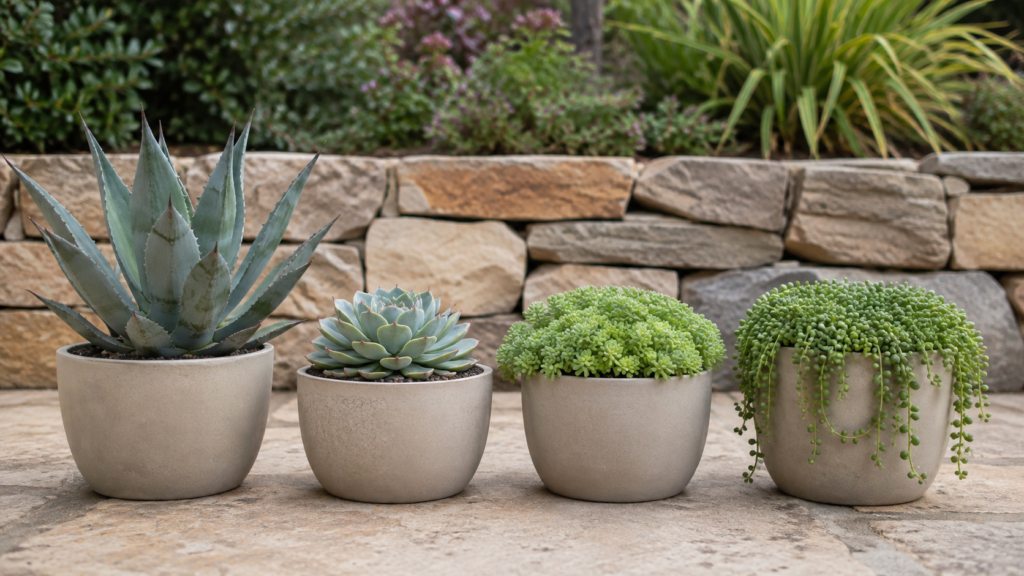
The best choices are plants suited to your sunlight, rainfall, temperatures, container size, and neighboring plants. Choose by function as well as appearance:
- Architectural plants: Agave, Aloe, and similar forms add height.
- Rosette-forming plants: Echeveria and Sempervivum add structure.
- Low growers: suitable Sedum species fill gaps and soften edges.
- Trailing plants: work best in tall, hanging, or raised containers.
- Cold-hardy plants: are better for permanent containers in colder regions.
Do not assume plants with similar shapes have the same hardiness. Echeveria and Sempervivum may both form rosettes, but their winter tolerance can differ significantly.
When combining species, also compare growth speed. A fast-spreading plant can crowd a slower rosette even when their watering needs are compatible. In small bowls, compact growers are usually easier to keep balanced; in large troughs, repeating a few dependable species often gives a cleaner result than using many unrelated varieties.
Useful combinations include a mild-climate bowl with Echeveria, compatible smaller rosettes, and low-growing Sedum; a cold-hardy trough with Sempervivum and hardy Sedum; or a statement planter containing one appropriately sized architectural succulent. Match growing requirements first, then design with shape and color.
How Should You Arrange Succulents in a Planter?
Start with one focal plant, add compatible supporting plants, consider the edges, and leave enough room for mature growth. A planter against a wall can place taller plants toward the rear, while a table bowl should look balanced from several directions.
Use this sequence:
- Anchor: choose the focal plant.
- Fill: add compatible supporting plants.
- Edge: use low or trailing plants selectively.
- Space: allow for growth.
- Adjust: check important viewing angles.
- Top dress: finish with grit or decorative stone if desired.
Avoid overcrowding young plants just to hide every patch of soil. Succulents expand, offset, and trail as they mature.
What Type of Planter Is Best for Outdoor Succulents?
There is no single best material. Focus on drainage, size, stability, durability, and mobility.
- Terracotta: porous and classic but dries faster.
- Concrete: stable and heavy but difficult to move.
- Ceramic: decorative; check drainage carefully.
- Wood: natural-looking but can deteriorate with repeated moisture.
- Metal: modern but can experience strong temperature changes.
- Plastic or resin: lightweight and easy to relocate.
- Hypertufa: useful for low trough-style displays.
Terracotta is practical for grouped pots, concrete suits permanent statement containers, and lightweight resin is useful where winter relocation may be necessary. Choose the material that fits your climate and location.
What Soil Should You Use for Outdoor Succulent Planters?
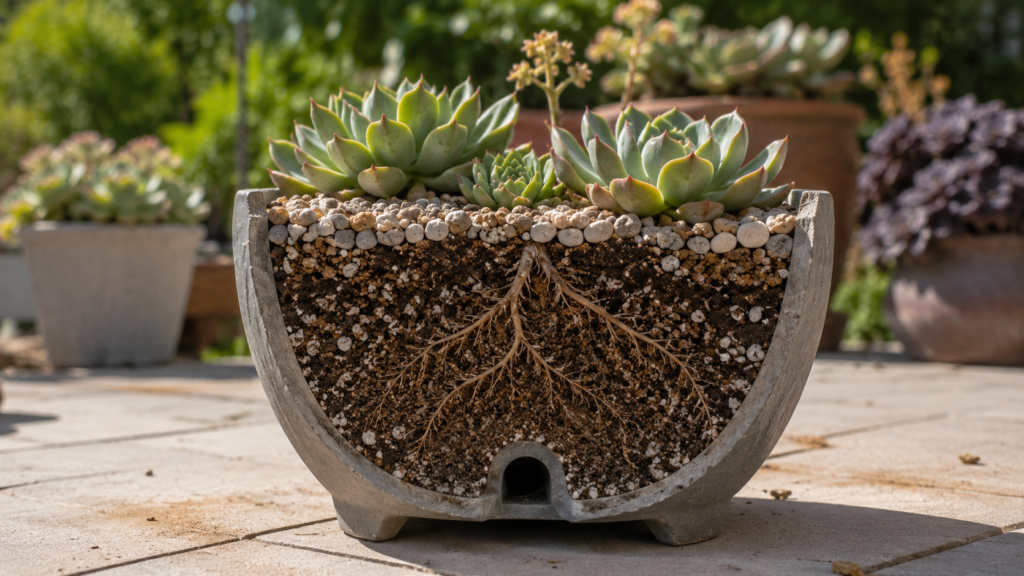
Use a fast-draining cactus or succulent container mix rather than heavy garden soil. Outdoor pots receive both watering and rainfall, so moisture must move through the root zone and escape efficiently.
Keep drainage holes unobstructed, match soil volume to plant size, and check moisture beneath decorative top dressing. If a pot stays wet too long, investigate the growing medium, drainage openings, container size, and rainfall exposure.
Do not rely on a gravel layer under the soil to improve drainage. Decorative gravel is better used on the surface.
For large planters, avoid filling unnecessary depth with dense soil just to reach the rim. Use a container and soil volume appropriate to the root system. This reduces excess moisture around small plants and also keeps the finished planter lighter and easier to manage. Choose the smallest practical container that still supports healthy mature growth.
How Much Sun Do Outdoor Succulents Need?
Succulents do not all need the same amount of direct sun. Species, temperature, season, and light intensity matter as much as total hours.
Morning sun is generally gentler than hot late-afternoon exposure. West-facing planters beside walls or paving may experience stronger heat. Some plants tolerate intense sun, while others benefit from afternoon protection.
Introduce nursery-grown plants gradually to stronger outdoor light and watch for stretching from too little light or scorching after sudden exposure. Choose plants for the microclimate you actually have rather than applying one full-sun rule to every succulent.
How Often Should Outdoor Succulent Planters Be Watered?
Water according to actual moisture conditions rather than a fixed calendar. Rainfall, temperature, wind, pot material, soil volume, plant size, and season all affect drying time.
A small terracotta pot in a windy location may dry much faster than a large glazed container in partial shade. When watering is needed, moisten the root zone and allow excess water to escape through the drainage holes.
During prolonged rain, move portable pots under protection when appropriate, keep drainage openings clear, and avoid watering simply because it is your usual watering day. The practical rule is observe first, water second.
Why Do Outdoor Succulent Planters Fail?
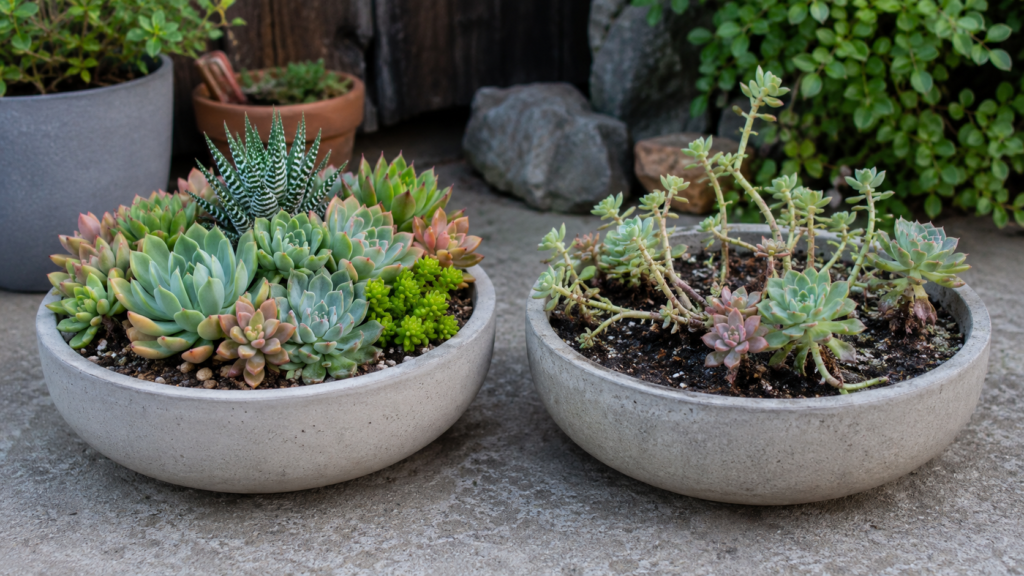
Most problems begin when water, light, space, or weather no longer match the plant’s needs.
Common warning signs include:
- Soft or collapsing growth: investigate excess moisture.
- Soil staying wet for days: check drainage, pot size, and growing medium.
- Long stretched growth: investigate insufficient light.
- Bleached patches: consider sudden intense sun.
- One plant dominating: reassess mature size.
- Repeated decline after rain: improve drainage or protection.
- An unstable planter: check weight, wind, and proportions.
Do not diagnose from one symptom alone. Start with moisture → drainage → light → temperature → spacing, then change care.
Can Succulent Planters Stay Outside All Year?
Some can, but year-round survival depends on the species, winter temperatures, rainfall, frost duration, drainage, and exposure.
Think of the container as:
- Permanent: plants must tolerate local conditions.
- Movable: can be protected during extreme weather.
- Seasonal: intended mainly for the growing season.
- Covered: receives less rain.
- Fully exposed: receives rain, wind, heat, and cold directly.
Sempervivum and suitable cold-hardy Sedum can be useful in colder climates, while tender succulents may need protection. Wet winters deserve special attention because cold, saturated growing medium can be difficult for many succulents.
If a planter cannot be moved, choose climate-suitable plants from the beginning.
Container material matters in winter too. A plant may be hardy enough to remain outside while the pot itself is vulnerable to freeze-thaw damage. Check both plant hardiness and container durability before treating a planter as permanent.
Which Succulent Planter Should You Choose for Your Space?
Match the planter to the location:
- Small patio: shallow bowl.
- Balcony: lightweight pots or wall planter.
- Front porch: tall statement container.
- Large entrance: architectural specimen.
- Modern backyard: concrete trough.
- Rustic garden: terracotta, wood, or hypertufa.
- Dining table: low bowl.
- Windy site: broad, heavy container.
- Cold climate: movable pots or hardy trough.
- Large patio: layered planter grouping.
If plants need different sunlight, watering, or winter protection, separate containers are often easier to manage than one permanent mixed arrangement.
What Should You Check Before Planting an Outdoor Succulent Container?
Before planting, confirm that:
- The container has functional drainage holes.
- Water can escape from underneath the pot.
- The pot suits the plants’ mature size.
- Plants have compatible requirements.
- The growing medium drains well.
- The site provides appropriate sunlight.
- Sharp plants are away from busy paths.
- The finished weight suits the surface.
- Tender plants have a winter plan.
- Rainfall exposure has been considered.
- The arrangement has room to mature.
If you are unsure about sunlight, watering, or winter needs, start with several separate pots. They are easier to adjust than one permanent mixed planter.
What Are the Most Important Outdoor Succulent Planter Tips?
Prioritize drainage before decoration, match plants by light and moisture needs, check mature size, leave growing room, and water according to actual conditions. Keep sharp plants away from paths, distinguish morning sun from intense afternoon heat, and plan for winter before choosing an immovable container.
A good final test is simple: if the planter still makes sense after considering mature size, drainage, sunlight, rainfall, winter conditions, and maintenance, it is likely a practical design.
FAQs
What are the best succulents for outdoor planters?
Good options include Agave, Aloe, Echeveria, Sempervivum, and suitable Sedum species. Match the plant to your climate, light, and winter conditions.
Do outdoor succulent planters need drainage holes?
Yes. Drainage holes allow excess water to leave the root zone and reduce prolonged waterlogging.
What type of planter is best for outdoor succulents?
Terracotta, concrete, ceramic, resin, wood, and hypertufa can all work if the container drains well and suits the climate.
Can succulents stay outside in pots all year?
Some can. Cold-hardy species are better for permanent outdoor pots, while tender succulents may need winter protection.
How much sun do outdoor succulent planters need?
Many prefer bright conditions, but some need protection from intense afternoon sun. Match each species to the actual site.
How often should outdoor succulent planters be watered?
Water according to moisture in the growing medium rather than a fixed weekly schedule.
What soil is best for outdoor succulent planters?
Use a fast-draining cactus or succulent container mix instead of heavy garden soil.
Should you put rocks in the bottom of a succulent planter?
No. Use functional drainage holes and fast-draining potting mix instead.
Can different succulents be planted together?
Yes, if they have similar light, moisture, temperature, and space requirements.
Why are my outdoor succulents rotting?
Excess moisture is a common cause. Check drainage, growing medium, rainfall exposure, and watering frequency.
Myra is the founder and lead writer of Backyard Planter Ideas, where she shares practical, well-researched guidance on planter design, plant selection, and outdoor styling. Her goal is to help homeowners create attractive, functional garden spaces with clear, reliable, and easy-to-apply advice.