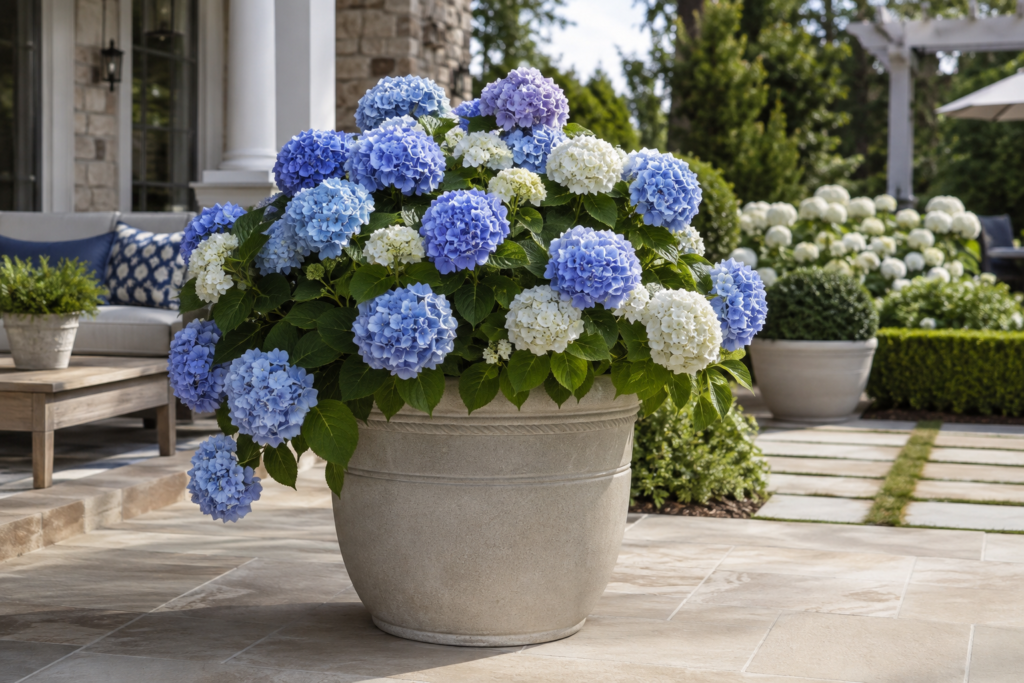
The best hydrangea planter ideas combine a container-friendly hydrangea with enough root space, reliable drainage, suitable light, and a planter that fits the surrounding patio, porch, deck, or entrance. Matching containers can frame a doorway, one large hydrangea can become a patio focal point, and compact varieties can bring impressive flowers to small outdoor spaces.
A simple rule makes choosing easier: Plant → Pot → Place. Choose the hydrangea according to mature size and growing conditions, match it with a suitable container, then position the finished planter where the plant can thrive.
Best Hydrangea Planter Ideas for Your Space
The right hydrangea planter depends on your available space, sunlight, climate, and whether the container needs to move. A heavy ceramic planter can work beautifully beside a permanent front entrance but may be inconvenient on a rental deck or in a climate where the plant needs winter protection.
Before choosing a design, consider the mature width of the hydrangea, afternoon heat, watering access, container weight, and whether you want one strong focal point or several grouped pots.
| Your Goal | Best Choice |
|---|---|
| Formal entrance | Matching hydrangea planters |
| Large patio focal point | Oversized container |
| Small patio | Compact hydrangea |
| Modern design | White hydrangea + dark planter |
| Cottage style | Terracotta planter |
| Morning-sun porch | Compact bigleaf hydrangea |
| Sunny patio | Dwarf panicle hydrangea |
| Easy movement | Lightweight pot + caddy |
| Layered display | Three grouped containers |
| Foliage contrast | Hydrangea + ferns |
For small spaces, prioritize compact cultivars and lightweight planters. For permanent displays, larger ceramic, wood, or stone-look containers can provide more visual weight and soil volume.
What Makes a Good Hydrangea Planter?
A good hydrangea planter has enough room for developing roots, working drainage holes, a stable base, and enough growing mix to hold moisture without remaining waterlogged. The pot should also look proportional once the hydrangea reaches its mature size.
The most important factors are:
- Mature size: Compact varieties are easier to manage in containers.
- Root space: More soil volume gives roots room and helps reduce rapid drying.
- Drainage: Excess water must be able to leave the container.
- Light: Match the location to the hydrangea type.
- Stability: Large flowering shrubs can become top-heavy.
- Mobility: Consider whether the pot will need to move seasonally.
Many bigleaf hydrangeas perform well with morning sun and some afternoon protection, while panicle hydrangeas generally tolerate brighter conditions.
Container plants also dry faster than shrubs planted in the ground, especially on sunny, windy, or paved patios. A generous planter usually creates a more stable growing environment than a small decorative pot.
21 Hydrangea Planter Ideas
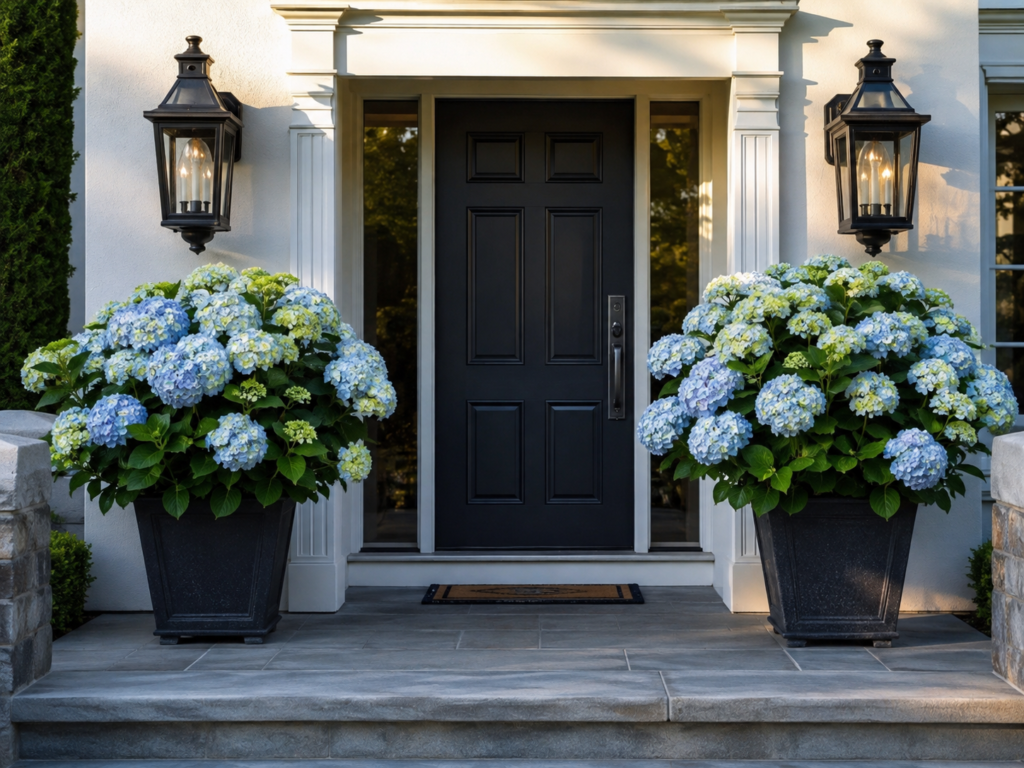
1. Frame the Front Door With Matching Hydrangeas
Place one hydrangea planter on each side of the entrance to create symmetry. Matching ceramic, stone-look, or tapered containers work especially well around traditional homes.
Use the same cultivar where possible and make sure both sides receive similar light.
2. Create One Oversized Patio Focal Point
One large hydrangea can make more impact than several small pots.
Place it beside outdoor seating, near patio steps, or in an empty corner. Large containers also hold more growing mix, which can reduce rapid drying.
Choose the location before filling a heavy planter.
3. Pair Blue Hydrangeas With White Pots
Blue flowers and white containers create a clean, high-contrast combination.
This look works well with gray siding, white trim, dark doors, and coastal-style patios. Keep surrounding colors restrained so the hydrangea remains the focal point.
4. Use Terracotta for Cottage Style
Terracotta pairs naturally with blue, pink, white, and purple hydrangeas.
It works particularly well with brick, stone, wood, and informal gardens. Because unglazed terracotta may dry faster, use a generous pot and monitor moisture during hot weather.
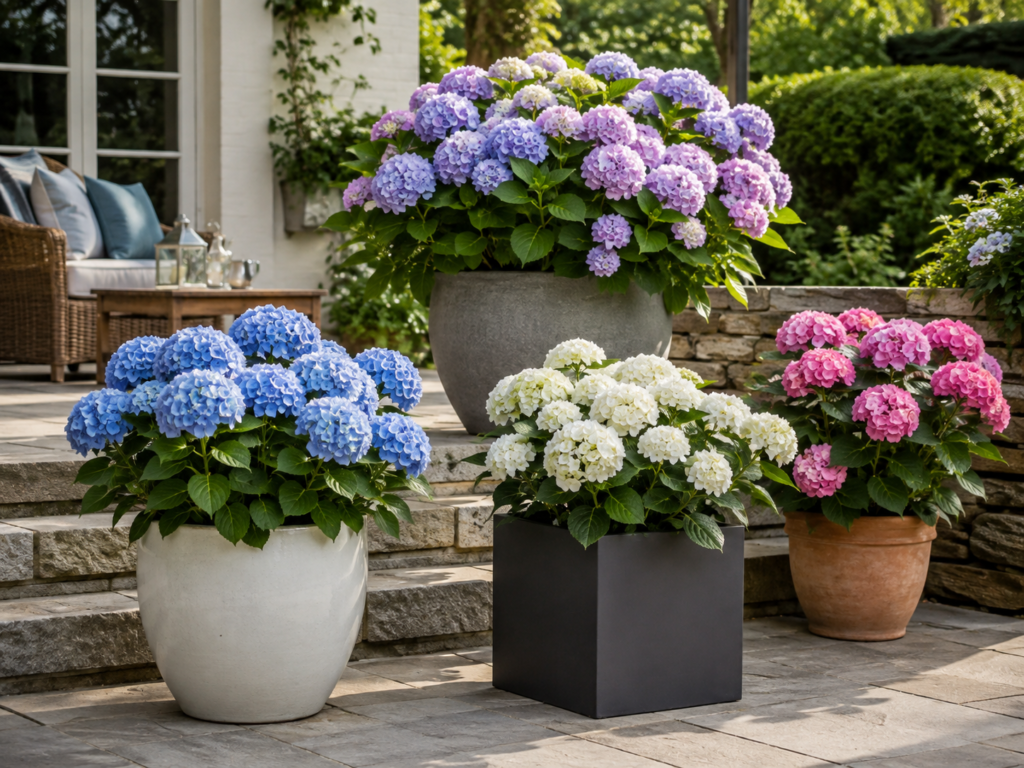
5. Pair White Hydrangeas With Dark Planters
White flowers in charcoal, black, or deep gray containers create a simple contemporary look.
Choose clean planter shapes and avoid overcrowding the container with companions.
In very hot locations, watch for heat buildup around dark pots and paved surfaces.
6. Grow a Dwarf Panicle Hydrangea on a Sunny Patio
Compact panicle hydrangeas are useful for brighter outdoor spaces.
Choose a named dwarf cultivar because some panicle hydrangeas become large shrubs. Even sun-tolerant hydrangeas need reliable moisture when grown in containers.
7. Use Bigleaf Hydrangeas in Morning Sun
Bigleaf hydrangeas can perform well on patios and porches that receive gentle morning sun followed by afternoon protection.
A bright east-facing location often works better than intense late-day heat.
Avoid placing them in very deep shade where flowering may decline.
8. Put the Planter on a Rolling Caddy
A rolling caddy makes a large container easier to reposition for cleaning, weather protection, or seasonal changes in sunlight.
Put the empty planter on the caddy before filling it and choose wheels rated for the finished weight.
9. Group Three Hydrangea Pots
Use a large + medium + small container arrangement to create layers without overcrowding one root zone.
Repeat the same pot color, material, or shape so the group feels intentional.
10. Pair Hydrangeas With Ferns
Ferns provide fine foliage that contrasts well with hydrangea leaves and flower heads.
This combination works especially well in part shade. Separate pots are often easier than growing both plants permanently in one container.
11. Add Heuchera for Foliage Color
Heuchera adds burgundy, bronze, green, caramel, or purple foliage near the base of a hydrangea display.
Use a very large shared planter or keep heuchera in separate smaller pots to protect root space.
12. Create a Green-and-White Container
Pair a white hydrangea with green foliage for a calm, elegant arrangement.
Ferns, trailing greenery, or small evergreen containers can complete the look without adding too many flower colors.
13. Build a Pink Hydrangea Porch Display
Pink hydrangeas work well with white, cream, gray, brick, and natural wood.
Use a neutral planter and repeat pink only in small accessories or nearby seasonal flowers.
14. Create a Blue-and-White Entrance
Use blue hydrangeas in pale containers and repeat the color palette through smaller pots or outdoor accessories.
Limit extra colors to keep the entrance polished rather than busy.
15. Use Hydrangeas in a Small Courtyard
One compact hydrangea can provide more impact than many small pots.
Place it against a wall, beside a bench, or at the end of a sightline. Watch for reflected heat from masonry, paving, and glass.
16. Add One Hydrangea to a Minimalist Patio
Use one strong hydrangea in one simple container instead of filling the space with many plants.
A clean geometric pot allows the flowers and foliage to provide most of the decoration.
17. Place Hydrangeas Beside Outdoor Seating
Use a hydrangea to soften the edge of a sofa, bench, or outdoor dining area.
Leave enough room for mature foliage and make sure drainage water will not create slippery surfaces.
18. Repeat Pots Along a Patio Edge
Several similar hydrangea planters can create rhythm along a terrace, walkway, or patio edge.
Leave enough space for mature width and air movement. Three well-spaced containers often look better than many crowded pots.
19. Combine Hydrangeas With Evergreens
Place a hydrangea container beside an evergreen pot to combine seasonal flowers with year-round structure.
Growing them separately usually makes watering, root management, and long-term maintenance easier.
20. Use a Lightweight Planter
Resin, composite, and fiberglass pots work well on decks, balconies, and rental patios.
Choose a stable base and working drainage holes. Tall lightweight containers may need extra stability in windy locations.
21. Build a Winter-Ready Container
For long-term growing, choose a cultivar suited to your climate and a planter that can tolerate local winter conditions.
Good drainage, enough soil volume, and the ability to protect or move the pot can make winter management easier.
Best Pot Size for Hydrangeas
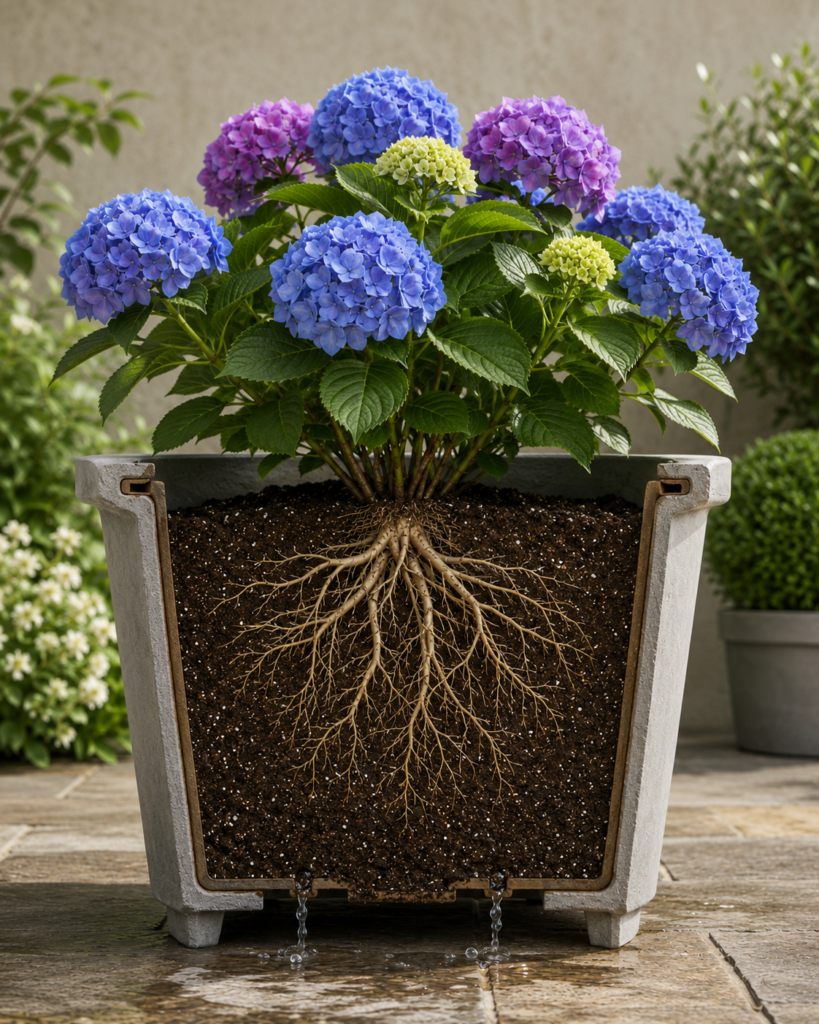
A planter roughly 16–24 inches wide and deep can be a useful starting range for many compact hydrangeas, but there is no universal pot size. Mature cultivar size, climate, and how long the plant will remain container-grown should guide the final choice.
Use more generous containers when:
- the hydrangea will stay in the pot for several years;
- the location is hot or windy;
- the cultivar matures around three feet or more;
- rapid summer drying is a concern.
Smaller compact cultivars may need less space, while a full-size hydrangea may eventually become impractical in an ordinary patio pot.
Do not choose the final container based only on the small plastic nursery pot. Check expected mature height and width first.
Weight matters too. Once a container holds wet potting mix and a mature shrub, it can become difficult to move. Use lightweight materials or a properly rated rolling caddy when mobility matters.
How to Plant Hydrangeas in Pots
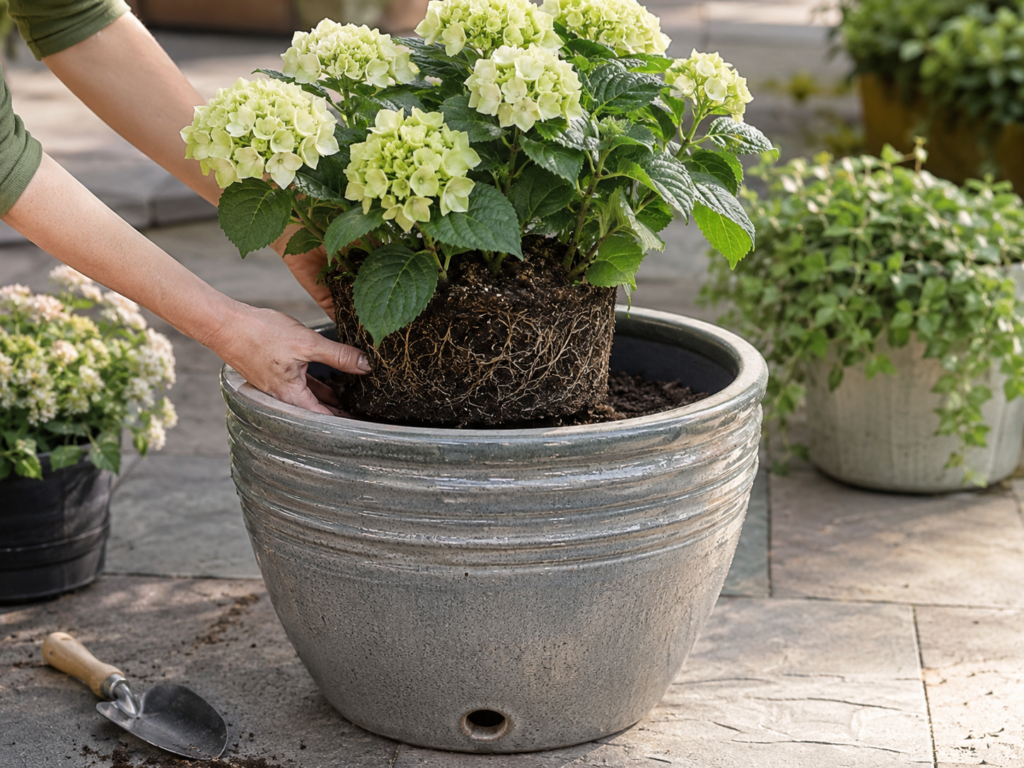
Use a container with working drainage holes and a quality potting mix designed for container plants. Avoid filling large planters entirely with dense garden soil because container roots need a balance of moisture retention, drainage, and air.
Plant in 7 Steps
- Choose a stable planter with enough root room.
- Position heavy pots first or place them on a caddy.
- Add container potting mix to the correct starting depth.
- Remove the nursery pot carefully.
- Set the root ball near its previous growing level.
- Backfill around the roots without heavily compacting the mix.
- Water thoroughly and allow excess water to drain.
Leave a little space below the rim so the container can be watered deeply without overflowing.
Check moisture closely during the first few weeks because the original root ball and surrounding new potting mix may dry at different rates.
Best Hydrangeas for Planters
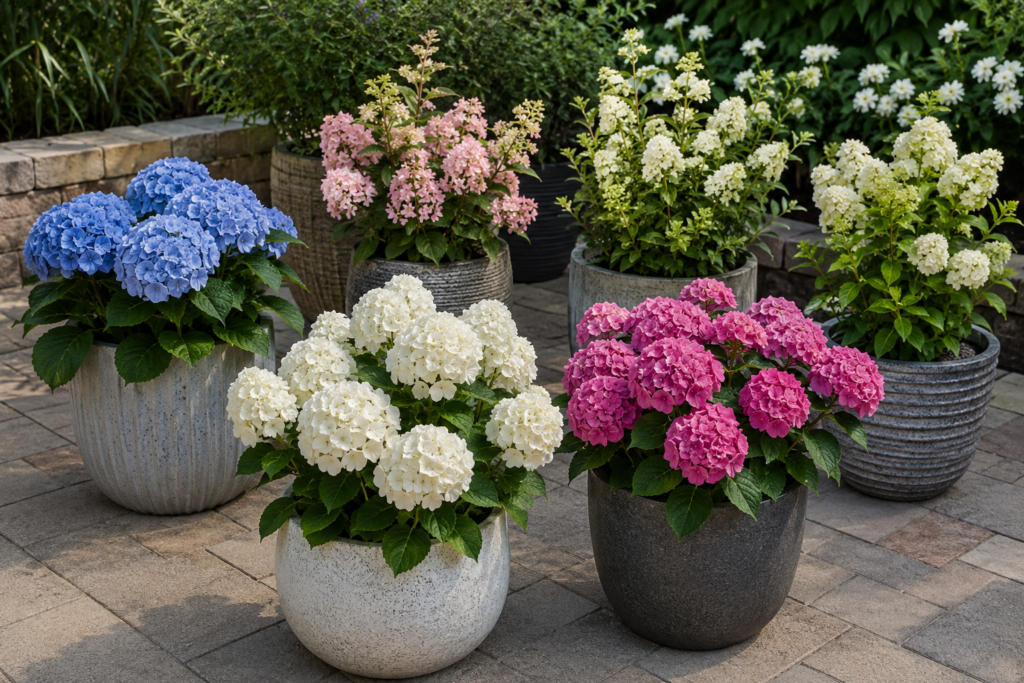
Compact hydrangeas are generally the easiest choices because their mature size stays better balanced with a container.
Useful groups include:
- compact bigleaf hydrangeas for morning-sun or part-shade spaces;
- dwarf panicle hydrangeas for brighter patios;
- compact smooth hydrangeas for traditional displays;
- smaller oakleaf cultivars where foliage interest is important.
Examples of compact cultivars include:
| Hydrangea | Type | Approx. Mature Size |
|---|---|---|
| Pop Star | Bigleaf | 18–36 in. |
| Summer Crush | Bigleaf | 18–36 in. |
| Bobo | Panicle | About 2.5–3 ft. tall |
| Fire Light Tidbit | Panicle | About 2–3 ft. |
| Little Lime | Panicle | About 3–5 ft. |
The word dwarf does not automatically mean tiny. Always check mature height and width.
The best selection rule is simple:
Choose the hydrangea by mature size, not by its size at the garden center.
Best Planters for Hydrangeas
Several planter materials can work well.
| Material | Best Feature | Main Trade-Off |
|---|---|---|
| Ceramic | Attractive and substantial | Heavy |
| Terracotta | Natural cottage style | Dries faster |
| Resin | Lightweight | Quality varies |
| Fiberglass | Modern and movable | Often more expensive |
| Wood | Natural appearance | Durability varies |
| Concrete | Very stable | Extremely heavy |
Choose ceramic for formal entrances, terracotta for cottage patios, resin or fiberglass when mobility matters, wood for a natural backyard look, and concrete when the container will remain permanently in one place.
Whatever material you choose, drainage and adequate root volume matter more than appearance alone.
Hydrangea Companion Plants
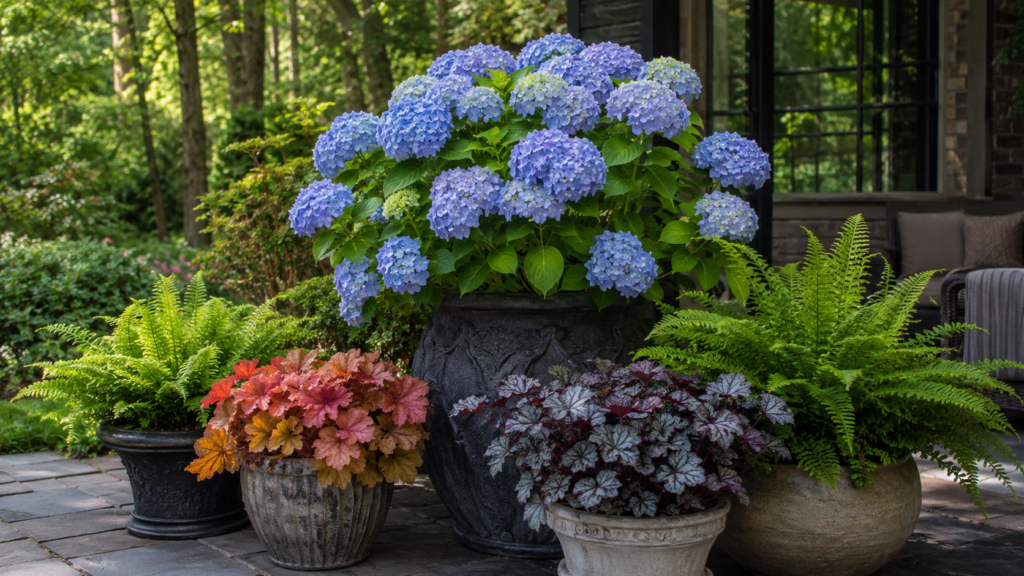
Companion plants should share similar light and moisture needs without taking too much root space from the hydrangea.
Good options include:
- ferns for fine foliage;
- heuchera for colorful leaves;
- seasonal flowers for temporary color;
- trailing foliage for softening planter edges.
For long-term displays, separate containers are often the better choice.
A large hydrangea pot grouped with a fern and a smaller seasonal container can create a layered garden look without forcing several permanent plants to compete inside one planter.
Where to Place Hydrangea Planters
Match the location to the hydrangea type rather than assuming every hydrangea prefers identical light.
Many bigleaf hydrangeas do well with morning sun and afternoon protection. Suitable panicle hydrangeas generally tolerate brighter conditions.
Also consider:
- reflected heat from walls and paving;
- wind on balconies and decks;
- drainage water near walkways;
- room for mature foliage;
- access for watering.
A covered porch can work if it still receives enough usable light. A deep, dark porch may reduce flowering.
Windy sites may require heavier or wider containers because the plant can become top-heavy as it matures.
Potted Hydrangea Care
Healthy container hydrangeas need consistent moisture, open drainage, enough root space, appropriate light, and care matched to the plant type.
Water According to Conditions
Water thoroughly when the root zone begins to dry.
Check containers more frequently during:
- hot weather;
- strong sun;
- wind;
- active flowering.
Do not rely on the same watering schedule throughout the season.
Watch for Root Crowding
A hydrangea may need a larger container when:
- the soil dries unusually fast;
- roots circle heavily;
- roots appear through drainage holes;
- growth slows;
- the plant becomes top-heavy.
Feed Carefully
Container nutrients can become depleted, but more fertilizer does not automatically create more flowers.
Check whether the potting mix already contains fertilizer and correct water, heat, or root problems before assuming the plant needs feeding.
Prune According to Type
Hydrangeas do not all form flower buds in the same way.
Panicle and smooth hydrangeas generally flower on new growth, while many traditional bigleaf and oakleaf types depend more on older stems. Some reblooming cultivars can flower on both.
Identify the plant before major pruning.
Changing Hydrangea Flower Color
Some bigleaf hydrangeas can change between blue and pink tones depending partly on soil chemistry and aluminum availability.
This does not apply equally to every cultivar, and white hydrangeas generally do not change color in the same way.
Before trying to change bloom color:
- identify the cultivar;
- confirm that it is color-responsive;
- understand its natural color range;
- make gradual changes;
- protect overall plant health.
Container growing can make the root-zone soil easier to manage because it is separate from surrounding garden soil, but avoid adding amendments without understanding current conditions.
Can Florist Hydrangeas Grow Outdoors?
Some florist or gift hydrangeas can grow outdoors, but do not assume every flowering plant sold in a small decorative pot is a naturally compact landscape cultivar.
Before planting one permanently, check:
- cultivar name;
- mature size;
- climate hardiness;
- landscape suitability;
- light requirements.
If this information is unavailable, enjoy the plant as a temporary flowering display first.
For long-term container growing, a named landscape cultivar is easier to plan around because mature size and hardiness are known.
Hydrangeas in Pots Over Winter
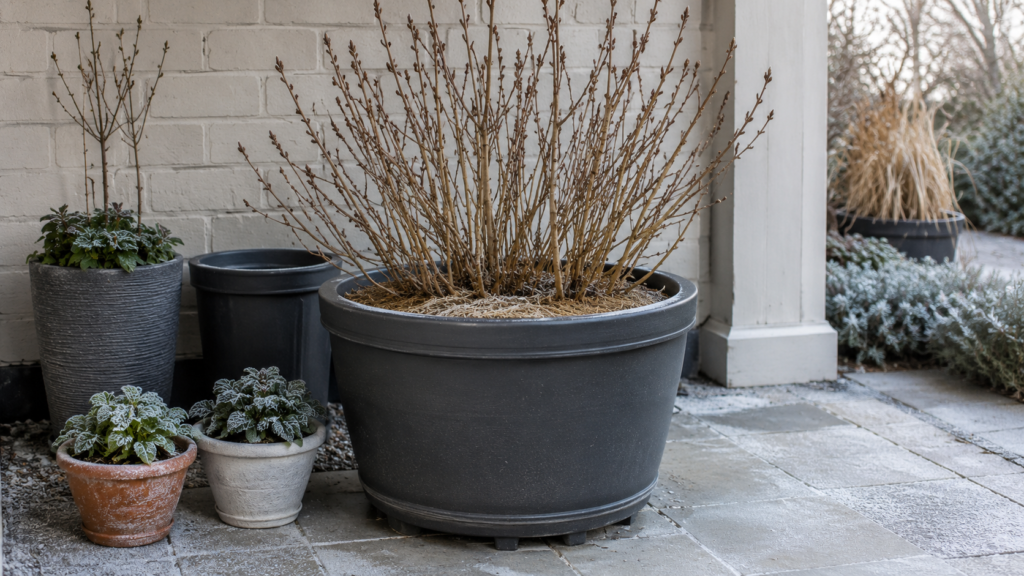
Potted hydrangeas can survive winter when the cultivar is suitable for the climate and the roots receive enough protection.
Container roots are more exposed to temperature swings than roots growing in the ground.
In cold climates, options may include:
- moving the pot to a sheltered location;
- insulating the container;
- grouping pots together;
- protecting plants from drying winter wind.
The planter itself should also tolerate local freezing and thawing.
Do not automatically move a dormant outdoor hydrangea into a warm living room. Depending on climate and cultivar, a protected unheated location may be more suitable.
7 Hydrangea Planter Mistakes
1. Choosing a Pot for Looks Alone
A beautiful planter still needs adequate size, drainage, durability, and stability.
2. Using a Pot That Is Too Small
Small containers dry quickly and restrict roots.
3. Ignoring Mature Size
A young hydrangea may become much wider than expected.
4. Blocking Drainage
Consistent moisture does not mean permanently saturated soil.
5. Using the Wrong Light
Do not place every hydrangea in intense afternoon sun.
6. Overcrowding Companion Plants
Several permanent plants can quickly compete for limited root space.
7. Pruning Without Identifying the Hydrangea
Incorrect pruning can remove flower buds.
Before planting, confirm the cultivar, pot size, drainage, light, watering access, container stability, and winter plan.
Hydrangea Planter FAQs
Can hydrangeas live permanently in pots?
Yes. Compact hydrangeas can live in containers for years with enough root space, good drainage, suitable light, and consistent moisture. They may eventually need repotting.
How big should a planter be for a hydrangea?
A container about 16–24 inches wide and deep is a useful starting range for many compact hydrangeas. Adjust according to mature cultivar size.
Do hydrangeas prefer sun or shade in pots?
It depends on the type. Bigleaf hydrangeas often prefer morning sun and afternoon protection, while panicle hydrangeas usually tolerate brighter conditions.
What is the best hydrangea for a planter?
Compact or dwarf cultivars are usually easiest. Choose according to mature size, climate, and available light.
Do hydrangeia pots need drainage holes?
Yes. Working drainage holes allow excess water to leave the root zone.
How often should I water a potted hydrangea?
Water when the root zone begins to dry. Check more frequently during hot, sunny, or windy weather.
Why is my potted hydrangea wilting?
Check soil moisture, afternoon heat, pot size, wind exposure, drainage, and root crowding first.
What soil is best for potted hydrangeas?
Use a quality container potting mix that holds useful moisture while still draining and remaining aerated.
Can potted hydrangeas survive winter?
Yes, when the cultivar is hardy enough and the container roots receive suitable protection.
Can hydrangeas grow on a covered porch?
Yes, if the porch receives enough usable light. Very deep shade may reduce flowering.
Can hydrangeas grow in full sun?
Some can. Panicle hydrangeas generally tolerate more direct sun, but containers need closer moisture monitoring in bright locations.
Should I prune a potted hydrangea every year?
Not automatically. Pruning depends on whether the hydrangea flowers on old wood, new growth, or both.
Can I plant other flowers with a hydrangea?
Yes, if there is enough root space and the plants have compatible growing needs. Separate pots are often easier long term.
How do I know when a hydrangea needs a bigger pot?
Consider repotting when the plant dries unusually fast, becomes top-heavy, or develops crowded roots.
Best Hydrangea Planter Ideas to Try
Successful hydrangea planter ideas start with the plant rather than the decorative pot. Choose a hydrangea whose mature size and light requirements suit your space, give it enough root room and drainage, then select a planter style that complements the surrounding patio or porch.
For a formal entrance, use matching containers. For a large patio, create one statement planter. For small spaces, choose a compact cultivar in a lightweight pot. Use terracotta for cottage style, dark geometric planters for modern spaces, and grouped containers when you want a layered display.
The best hydrangea planter is one that still fits the space, stays manageable, and supports a healthy plant several years after planting.
Myra is the founder and lead writer of Backyard Planter Ideas, where she shares practical, well-researched guidance on planter design, plant selection, and outdoor styling. Her goal is to help homeowners create attractive, functional garden spaces with clear, reliable, and easy-to-apply advice.