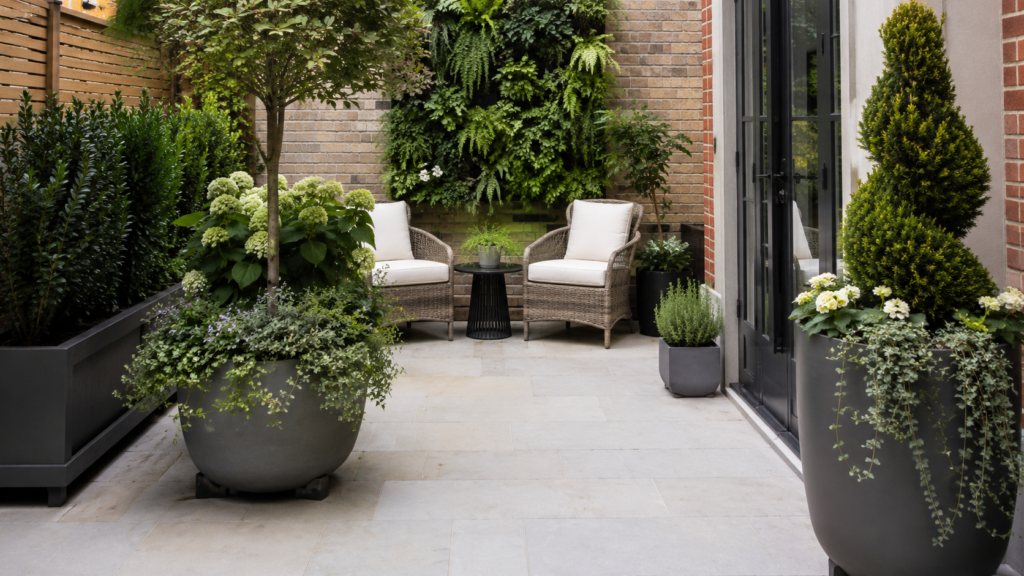
Courtyard planter ideas work best when every container has a clear purpose. A planter can frame an entrance, soften a wall, create privacy, define seating or provide herbs and seasonal color. Before buying pots or plants, assess the available space, sunlight, reflected heat, drainage and walking routes.
A small courtyard rarely needs dozens of containers. One focal planter, several supporting pots and a consistent choice of materials usually create a stronger result. Keep the center open, use vertical space and match each plant to the conditions where its container will sit.
Quick Courtyard Planter Decision Table
| Courtyard challenge | Best solution | Recommended shape | Planting direction | Avoid |
|---|---|---|---|---|
| Empty entrance | Matching planter pair | Tall round or square | Upright shrubs, grasses or flowers | Blocking the doorway |
| Bare wall | Trough or trellis planter | Long rectangular | Climbers or layered foliage | Random rows of small pots |
| Limited floor space | Wall or vertical planters | Slim modular units | Herbs, ferns or trailing plants | Narrowing the route |
| Lack of privacy | Tall screening planters | Deep troughs | Shrubs, grasses or climbers | Shallow, unstable pots |
| Shaded courtyard | Light-colored containers | Rounded or tapered | Shade-tolerant foliage | Sun-loving flowers |
| Hot paving | Large planters | Wide round or rectangular | Heat-tolerant plants | Small dark containers |
| Small square space | Perimeter layout | Coordinated shapes | One anchor with supporting pots | Filling the center |
| Dining courtyard | Edge planters | Narrow troughs | Herbs and compact foliage | Thorny plants beside chairs |
Choose a Layout in 60 Seconds
Use the Anchor–Screen–Soften–Serve framework to decide what each planter should do.
- Anchor: Creates the main focal point.
- Screen: Blocks a view or separates an area.
- Soften: Reduces the hard appearance of walls and paving.
- Serve: Provides herbs, food, fragrance or seasonal color.
Stand at the main entrance and identify the first area your eye notices. Place the anchor there. Next, check whether neighboring windows, doors or utility areas need screening. Use climbing, trailing or wall planters to soften empty boundaries, then place productive containers near the kitchen or dining area.
Keep doors, chairs, drains and main walking routes clear. Before purchasing a large container, mark its footprint with tape or cardboard. This simple check prevents a planter from becoming an expensive obstacle.
Map Your Courtyard Growing Zones
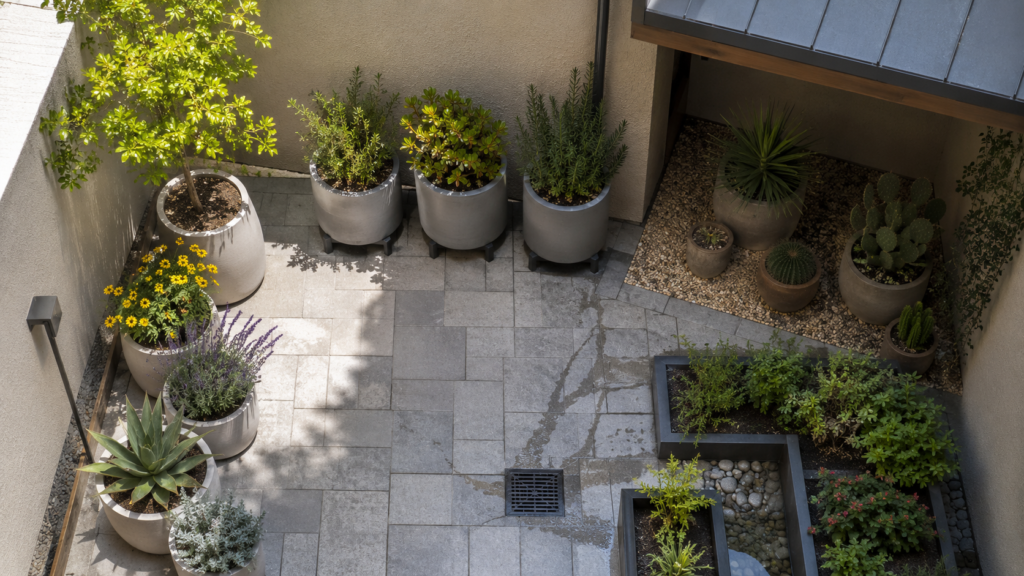
Walls, windows, balconies and paving create different growing conditions within the same courtyard. Four zones require particular attention.
| Zone | What happens | Best response |
|---|---|---|
| Sun pocket | Receives the longest direct sunlight | Use larger pots and sun-tolerant plants |
| Reflected-heat wall | Surfaces intensify heat | Use pale or insulated containers |
| Rain shadow | Roofs or walls block rainfall | Plan accessible irrigation |
| Drainage route | Water moves toward an outlet | Keep drains and runoff paths open |
Sun Pocket
The sunniest section may support flowering plants, herbs and fruiting crops, but small pots can dry quickly. Use larger containers, suitable potting mix and mulch where appropriate. Check moisture rather than relying on a fixed watering schedule.
Reflected-Heat Wall
Walls, windows and paving can expose plants to heat from several directions. Leave space between the container and the wall, choose heat-tolerant plants and avoid placing delicate foliage beside surfaces that remain hot after sunset.
Rain Shadow
Containers beneath overhangs or balconies may remain dry even after heavy rain. Check them separately and place them where they are easy to water.
Drainage Route
Do not place heavy planters over floor drains or natural runoff paths. Raise flat-bottomed pots where necessary and leave enough room for cleaning and inspection.
Courtyard Planter Layouts by Shape
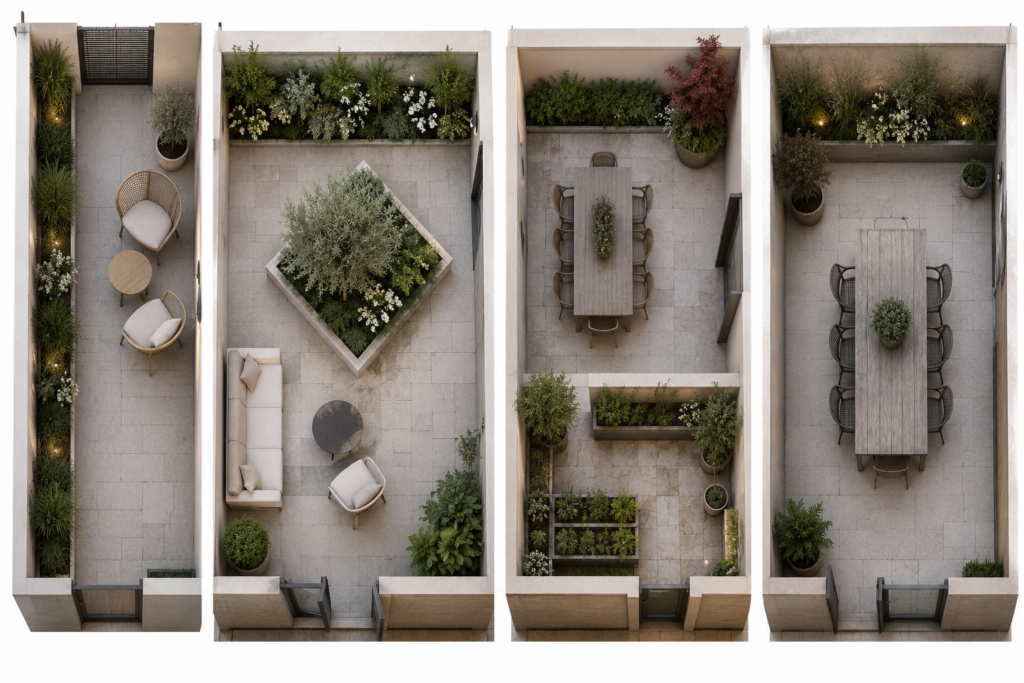
The courtyard’s shape should guide the arrangement.
Narrow Courtyard
Place slim troughs along one wall and keep the opposite side visually simple. Use climbers instead of wide shrubs and position one strong focal planter at the far end. This draws the eye through the space and protects the walking route.
Square Courtyard
Place the main planter diagonally opposite the entrance. Add two supporting containers near the seating area and leave the center open. Avoid giving all four walls equal visual weight.
L-Shaped Courtyard
Use each arm for a different function, such as dining in one section and herbs or privacy planting in the other. Repeat the same planter material in both areas to connect them.
Dining Courtyard
Position the furniture first and measure the space needed for occupied chairs. Place narrow planters behind seating, keep spreading plants away from plates and direct drainage away from the table.
How We Selected These Ideas
The following ideas were selected for long-term function as well as appearance. Each option had to support at least one practical need, such as saving space, improving privacy, managing difficult light or simplifying maintenance.
The main criteria were:
- Efficient use of walls, corners and floor space
- Safe movement around furniture and doors
- Compatibility with sunlight and shade
- Mature plant size
- Planter stability and filled weight
- Drainage over hard surfaces
- Maintenance requirements
- Adaptability across climates
- Visual balance and repetition
Large containers provide stronger structure and usually dry more slowly, but they are harder to move. Small pots are flexible but require more frequent care. The best layout balances these trade-offs according to how the courtyard is used.
Small Courtyard Planter Ideas
1. Frame the Entrance With Matching Tall Planters
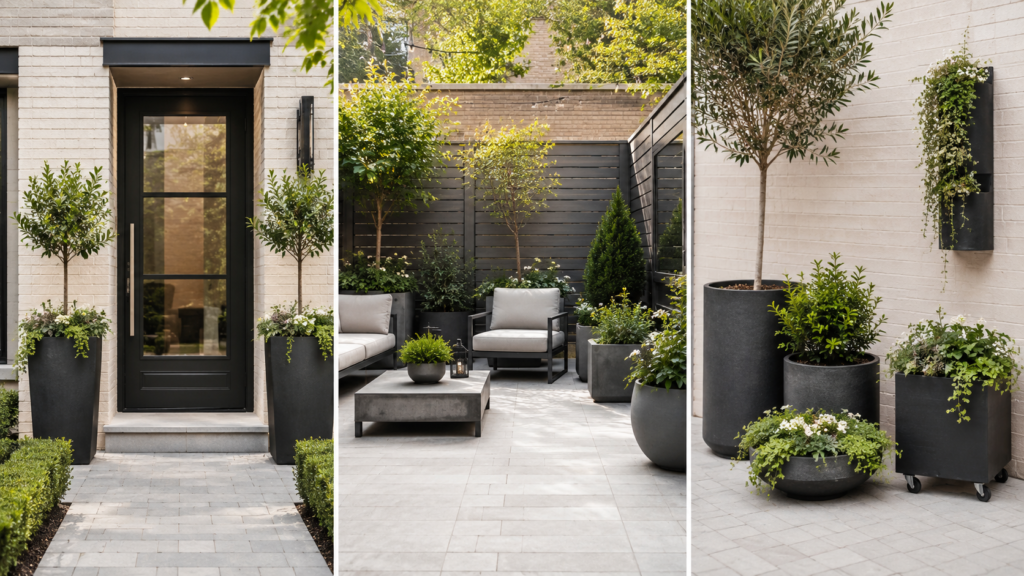
Matching planters beside a gate or doorway create immediate structure. Choose tall cylindrical, square or tapered containers that frame the entrance without restricting access.
Use upright grasses, compact evergreens or controlled flowering plants. Measure the fully opened door and allow extra clearance for handles, bags, wheelchairs and watering. Repeat the planter color elsewhere to connect the entrance with the wider design.
2. Keep the Center Open With Perimeter Pots
Place most containers around the edges so the center remains available for seating and movement. Use larger pots in corners, narrow troughs beside walls and one movable seasonal container.
Avoid lining every boundary with small pots. Deliberate gaps create breathing room, make cleaning easier and help the courtyard appear wider.
3. Build a Three-Height Corner Cluster
Combine one tall, one medium and one low planter in an unused corner. Place the tallest container at the back and the lowest at the front.
Use an upright plant, rounded foliage and a trailing plant to create layers. The containers can vary in shape, but they should share a color or material. Group only plants with similar light and water needs.
4. Use One Specimen Tree as the Anchor
A container-grown tree can provide height, shade and a strong focal point. Depending on the climate, suitable options may include compact citrus, olive, bay, Japanese maple or dwarf fruit trees.
Check mature height, canopy width, sunlight, wind exposure and winter tolerance. Position the planter before filling it because the final weight may make movement difficult.
5. Install Slim Wall-Mounted Planters
Wall planters add greenery without using floor space. Arrange them in a grid, vertical column or horizontal line rather than placing individual pots randomly.
Choose compact herbs, ferns, succulents or trailing foliage. Confirm that the wall fixings can support the container, wet potting mix and mature plants. Control drainage so water does not stain the wall.
6. Create a Vertical Living Wall
A vertical system can turn a blank boundary into the main garden feature. It may use modular pockets, stacked troughs or planted panels.
Plan irrigation, drainage, airflow and maintenance access before installation. Upper sections may dry more quickly than lower ones, so plants should be matched to their exact position. A trellis planter with climbers offers a simpler alternative.
7. Use Mobile Planters
Mobile planters allow the courtyard to change for entertaining, weather or seasonal protection. Lightweight fiberglass and resin containers are easier to reposition than concrete or ceramic pots.
Use load-rated platforms and locking casters. Mobile containers are useful for renters, temporary privacy, herbs and tender plants that need winter shelter.
Courtyard Planter Ideas for Privacy
8. Line a Boundary With Rectangular Troughs
Deep troughs create a continuous screen along a wall or exposed edge. They provide more unity than a line of unrelated containers.
Choose a broad, stable planter for upright grasses, compact shrubs or narrow screening plants. Leave a small maintenance gap behind the container for airflow, cleaning and irrigation access.
9. Add a Trellis Planter Screen
A trellis planter provides vertical privacy with a small footprint. Position it across the actual unwanted sightline rather than automatically placing it against the far boundary.
Choose climbers according to sunlight, mature weight, growth speed and pruning needs. The frame and planter must remain stable once the plant is fully grown.
10. Stagger Tall Planters
Two or three offset planters can block views without creating a solid wall. Position them so the foliage overlaps from the main seating area.
This arrangement preserves airflow and light. Check the screen from both seated and standing positions before deciding the final placement.
11. Divide Seating With Low Planter Boxes
Low planters can separate dining, lounging or cooking areas without making the courtyard feel enclosed.
Use compact shrubs, grasses, herbs or layered flowers. Avoid thorny plants beside chairs and keep the containers low enough to preserve conversation and visibility.
12. Soften Walls With Climbers
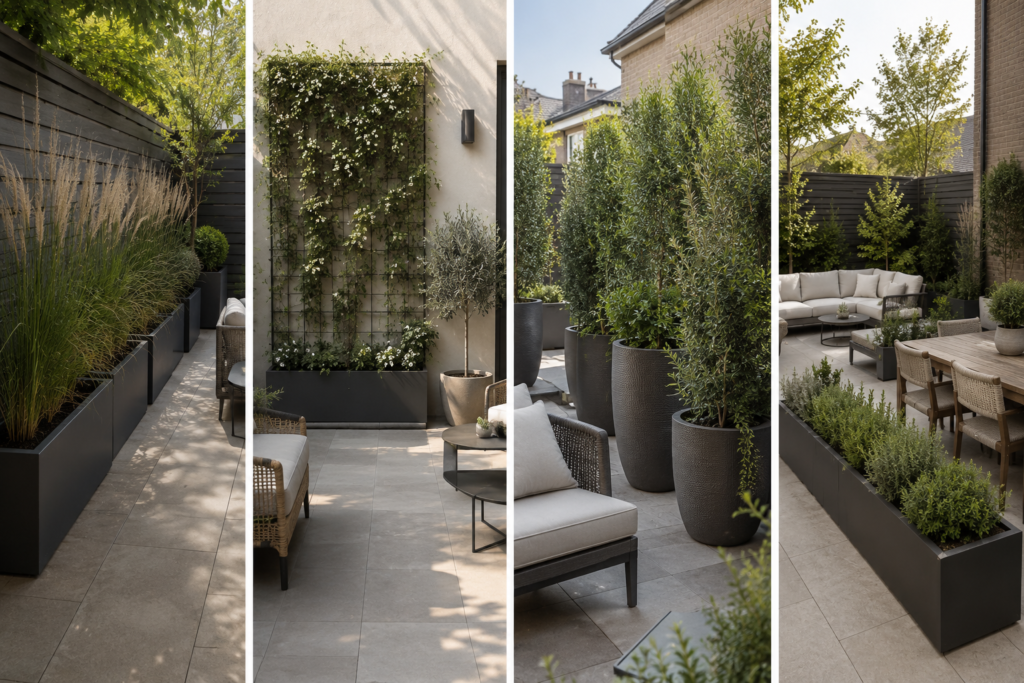
Climbers draw attention upward and make tall walls feel less dominant. Grow them from a large pot, trough or trellis planter.
Check whether the plant needs wires, lattice or freestanding support. Consider reflected heat, evergreen coverage, mature weight and access to windows, gutters and lights.
Courtyard Planter Ideas by Style
13. Mediterranean Terracotta Courtyard
Combine terracotta pots, urns and low bowls in a consistent clay color. Use herbs, silver foliage, grasses, compact citrus or drought-tolerant shrubs where the climate allows.
Terracotta creates warmth but may dry quickly and can crack in severe frost. Choose frost-resistant products where necessary.
14. Modern Charcoal Planters
Use charcoal, black or dark gray containers with clean geometric shapes. Pair them with clipped evergreens, upright grasses or architectural foliage.
Limit the number of pot shapes and repeat one finish. Dark containers can become hot in intense sun, so larger soil volumes or insulated materials may be needed.
15. Cottage-Style Pot Collection
Combine flowers, herbs and soft foliage in aged terracotta, painted wood or galvanized-look containers. Keep one dominant pot family so the arrangement feels abundant rather than random.
Layer tall flowers, rounded foliage and trailing plants while leaving enough space for healthy growth and airflow.
16. Tropical Foliage Courtyard
Use bold leaves, layered heights and large neutral planters. Sheltered courtyards often suit tropical-style planting because walls reduce wind.
Choose plants that can survive the local winter. In colder areas, use hardy plants with tropical-looking foliage or move tender containers under protection.
17. Minimal Zen Planters
Use a small number of simple containers, open paving and controlled plant shapes. One specimen plant, one low pot and one narrow screen may be enough.
Choose matte ceramic, stone or concrete-look finishes. Minimal layouts require consistent cleaning and pruning because neglected details are more visible.
18. Formal Evergreen Pairs
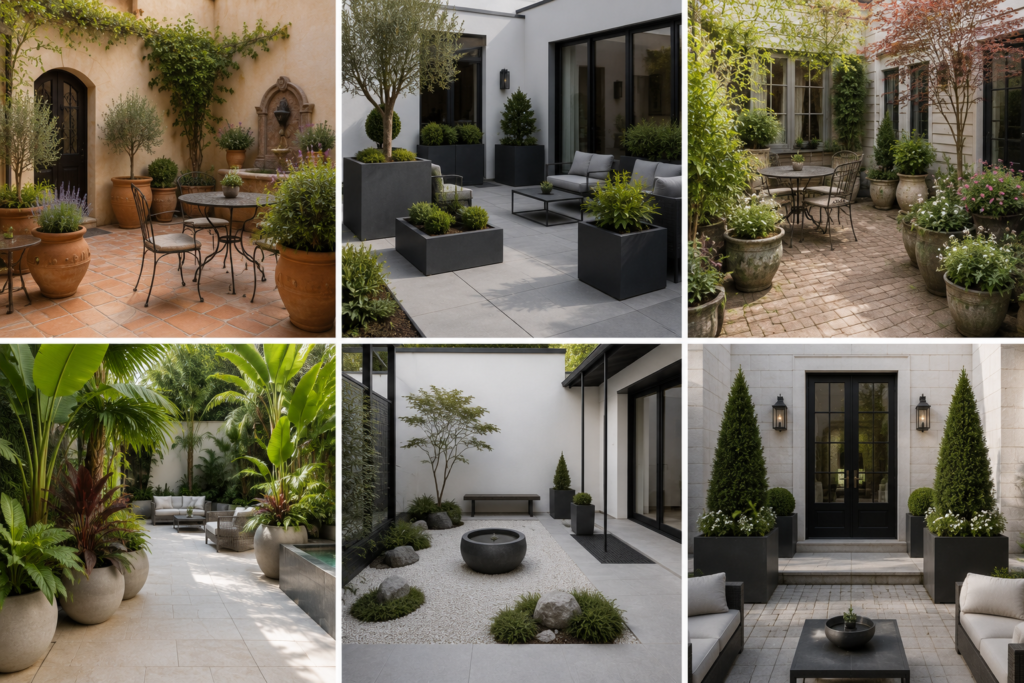
Matching evergreen planters can frame doors, windows or steps. Use geometric containers and the same plant variety on both sides.
Regular pruning and equal spacing are essential. Add seasonal flowers in separate pots so the permanent structure remains balanced.
Low-Maintenance and Productive Ideas
19. Create a Kitchen Herb Courtyard
Place frequently used herbs close to the kitchen. Separate plants with different watering needs, such as drought-tolerant rosemary and moisture-loving herbs.
Use wall planters, tiered stands or narrow troughs to save space. Labels can help identify young plants.
20. Grow a Salad Planter Group
Wide containers can support lettuce, rocket, spinach, radishes, spring onions, strawberries and compact vegetables.
Stagger planting times so everything does not mature at once. Leafy crops may need protection from intense afternoon heat, while tomatoes and peppers generally need stronger sunlight.
21. Use Self-Watering Planters
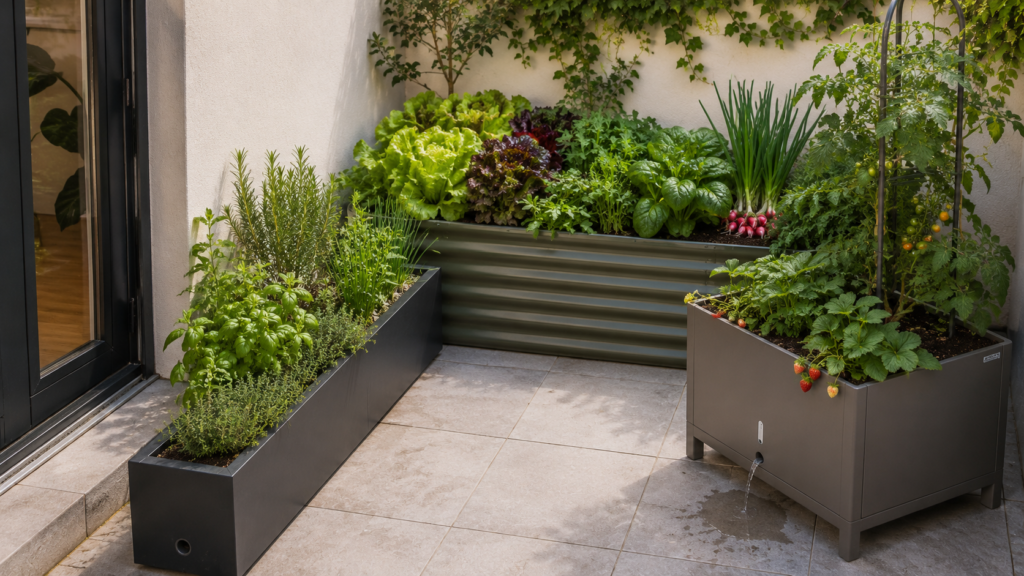
Self-watering containers can reduce watering frequency and provide more consistent moisture. They are useful for herbs, vegetables and thirsty flowers.
Check reservoir capacity, refill access, overflow outlets and drainage during heavy rain. Avoid using permanently moist systems for plants that prefer dry conditions.
Match Planters to Sun and Shade
Observe the courtyard before choosing plants. Record direct sunlight during the morning, midday and afternoon, and note reflected heat from walls and paving.
| Condition | Planting approach |
|---|---|
| Full sun | Use larger containers and heat-tolerant plants |
| Morning sun | Suitable for many herbs, flowers and leafy crops |
| Afternoon sun | Choose durable plants and heat-resistant materials |
| Bright shade | Focus on foliage and shade-tolerant flowers |
| Deep shade | Prioritize texture, form and low-light plants |
| Reflected heat | Increase root protection and soil volume |
| Wind exposure | Use broad, heavy pots and compact plants |
Possible full-sun plants include lavender, rosemary, sedum and suitable grasses. Bright-shade options may include ferns, heuchera, carex and begonias. Deep-shade planting may rely on selected ferns, aspidistra and liriope.
Plant suitability varies by climate. Check winter temperatures, mature size and local invasive-species rules before purchasing.
Plants sharing one container should have compatible needs for sunlight, moisture, drainage, feeding and root space.
Choose the Right Planter Size
Choose the plant before selecting the container. A pot that is suitable for seasonal flowers may be too small for a shrub, trellis or tree.
| Purpose | Main requirement |
|---|---|
| Flowers | Enough surface area for the intended display |
| Herbs | Suitable depth and good drainage |
| Salad crops | Wide growing surface |
| Shrubs | Space for staged root growth |
| Privacy plants | Deep, broad and stable container |
| Small trees | Adequate root volume and final weight |
| Trellis planters | Stable base for the frame and climber |
| Mobile pots | Manageable wet weight |
| Wall planters | Safe support for wet soil and plants |
Use larger planters for permanent shrubs, tall plants, hot locations and areas where frequent watering is difficult. Use smaller containers for temporary displays and easily movable arrangements.
Remember that the final weight includes the pot, wet soil, water, roots and mature growth. Seek structural advice before placing large containers on balconies, rooftops or suspended decks.
Best Courtyard Planter Materials
| Material | Strength | Limitation |
|---|---|---|
| Terracotta | Natural and breathable | Dries quickly and may crack |
| Glazed ceramic | Decorative and moisture-retaining | Heavy and breakable |
| Fiberglass | Lightweight and available in large sizes | Quality varies |
| Resin | Affordable and movable | May fade |
| Wood | Warm and customizable | Requires moisture protection |
| Metal | Clean and modern | Can heat in direct sun |
| Corten steel | Strong architectural finish | Heavy and may stain |
| Concrete | Stable and durable | Difficult to move |
Choose according to climate, mobility, maintenance and filled weight. One dominant material usually creates a stronger design than many unrelated finishes.
Plan Courtyard Drainage
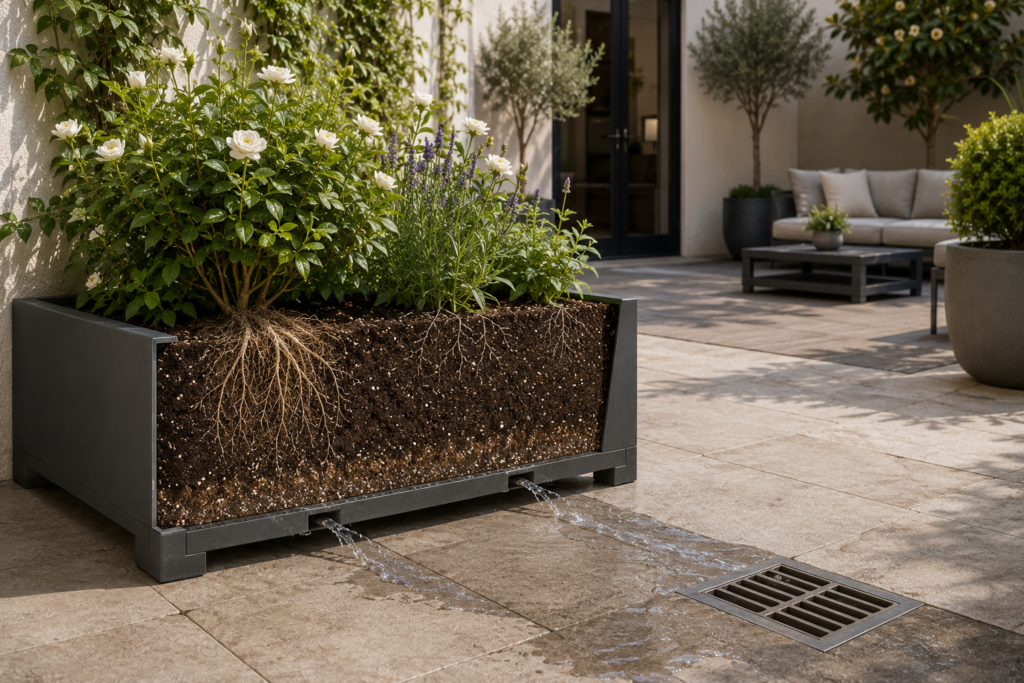
Every outdoor planter needs clear drainage outlets. Water should move through the potting mix, exit the container and reach a safe drain or evaporation area.
Check for:
- Water collecting beside doors
- Blocked floor drains
- Stains beneath pots
- Runoff under furniture
- Moisture trapped against walls
- Saucers holding standing water
Raise flat-bottomed planters on feet or risers where necessary. Leave a small gap behind large containers for cleaning and inspection.
Do not use a thick gravel layer as a replacement for drainage holes. It reduces root space and does not reliably prevent waterlogging. Use suitable container potting mix and keep the outlets clear.
Make a Courtyard Look Bigger
Use fewer, larger containers and keep the center open. Position most planting around boundaries and place one focal planter at the far end of a narrow courtyard.
Other useful techniques include:
- Repeating one planter color
- Selecting upright plants
- Using walls for vertical planting
- Leaving visible gaps
- Matching containers to the boundary
- Avoiding a pot in every empty space
Light-colored containers can brighten shade, while pots matching the wall may visually recede. Mirrors can add depth but should not reflect intense heat or create hazards for birds.
Courtyard Planter Buying Checklist
Before buying, check:
- Available floor space
- Door and chair clearance
- Internal planting dimensions
- Empty and filled weight
- Number of drainage holes
- UV and frost resistance
- Corrosion resistance
- Reservoir capacity
- Replacement parts
- Delivery access
- Mature plant size
Choose tall decorative containers for entrances, deep troughs for privacy and lightweight materials for flexible layouts. Heavy containers suit permanent positions and exposed spaces.
Judge the planter by how it will perform when filled, not only by how it looks when empty.
Seasonal Courtyard Planter Care
Spring
Check drainage, remove damaged growth, refresh the upper potting mix and repot congested plants. Test irrigation systems and adjust containers for changing sunlight.
Summer
Monitor moisture frequently, refill reservoirs and move vulnerable plants away from reflected heat. Deadhead flowers and maintain airflow.
Autumn
Remove declining annuals, clear leaves from drains and inspect trellises and tall planters for stability. Move tender plants toward shelter.
Winter
Raise vulnerable pots from wet paving, reduce watering and protect frost-sensitive plants and materials. Check containers after storms and freezing weather.
Courtyard Planter Mistakes
Avoid these common errors:
- Buying plants before measuring light
- Blocking doors and paths
- Using too many small pots
- Ignoring filled weight
- Combining incompatible plants
- Choosing unstable containers
- Allowing runoff to collect
- Forgetting maintenance access
- Ignoring mature growth
- Selecting materials unsuited to the climate
The most expensive mistakes usually come from planning for how a container looks when new rather than how it will function after several seasons.
Courtyard Planter FAQs
How should I arrange planters in a small courtyard?
Place most pots around the perimeter and keep the central route open. Use one focal planter, several supporting containers and vertical planting where floor space is limited.
How many planters should a small courtyard have?
Three to seven coordinated planters are often enough. The final number depends on furniture, access and the size of the containers.
Are large or small pots better?
A few large pots usually provide better structure and dry more slowly. Small pots work for herbs and seasonal displays but may create clutter.
What plants grow in a shaded courtyard?
Ferns, heuchera, carex, liriope and aspidistra may work, depending on the climate and depth of shade.
Can planters create privacy?
Yes. Use deep troughs, staggered tall pots or trellis planters across the actual unwanted sightline.
Can planters sit directly on paving?
They can when drainage holes remain open. Flat-bottomed containers may need feet or risers.
How can I prevent paving stains?
Raise the pots, keep drainage clear and direct runoff toward a suitable outlet. Clean beneath containers regularly.
Should I add gravel to the bottom?
A thick gravel layer is not necessary. Use clear drainage holes and suitable container-growing mix.
How can planters make a courtyard look bigger?
Keep the center open, use fewer large containers and place one focal planter at the far end.
Do all courtyard planters need to match?
No, but they should share a material, color or general shape to create visual unity.
How often should planters be watered?
Water according to soil moisture, plant needs and weather. Small sunny pots dry faster than large shaded containers.
Can I grow a tree in a courtyard planter?
Yes, if the tree has a manageable mature size and the container provides sufficient root space, drainage and stability.
Do self-watering planters work?
Yes. They can reduce watering frequency, but the reservoir, overflow outlet and soil still require regular checks.
Plan Your Courtyard Layout
Begin with the space rather than the plants. Measure entrances, mark walking routes, observe sunlight and identify privacy and drainage problems.
Use this order:
- Measure the courtyard.
- Record sunlight and reflected heat.
- Mark the main route.
- Choose the focal point.
- Identify privacy sightlines.
- Select the plants.
- Choose suitable planter sizes.
- Confirm materials and weight.
- Plan drainage.
- Position large containers before filling.
Choose one dominant material or color, keep the central area open and use height where floor space is limited. The strongest design is not the one with the most containers. It is the one that remains attractive, healthy and easy to use after the plants mature.
Sources and Editorial Process
This guide combines practical courtyard planning with established container-gardening principles. Recommendations were organized around limited space, uneven light, reflected heat, privacy, drainage, stability and seasonal care.
The article uses two planning tools:
- Anchor–Screen–Soften–Serve
- The four-zone courtyard map
Plant and container guidance should be checked against reliable resources such as the Royal Horticultural Society, university extension services, local botanical gardens, regional invasive-species databases and verified manufacturer specifications.
Plant suitability varies by country and climate. Verify winter temperatures, mature size, toxicity, invasive-species restrictions and structural weight limits before purchasing or installing large containers.
Myra is the founder and lead writer of Backyard Planter Ideas, where she shares practical, well-researched guidance on planter design, plant selection, and outdoor styling. Her goal is to help homeowners create attractive, functional garden spaces with clear, reliable, and easy-to-apply advice.