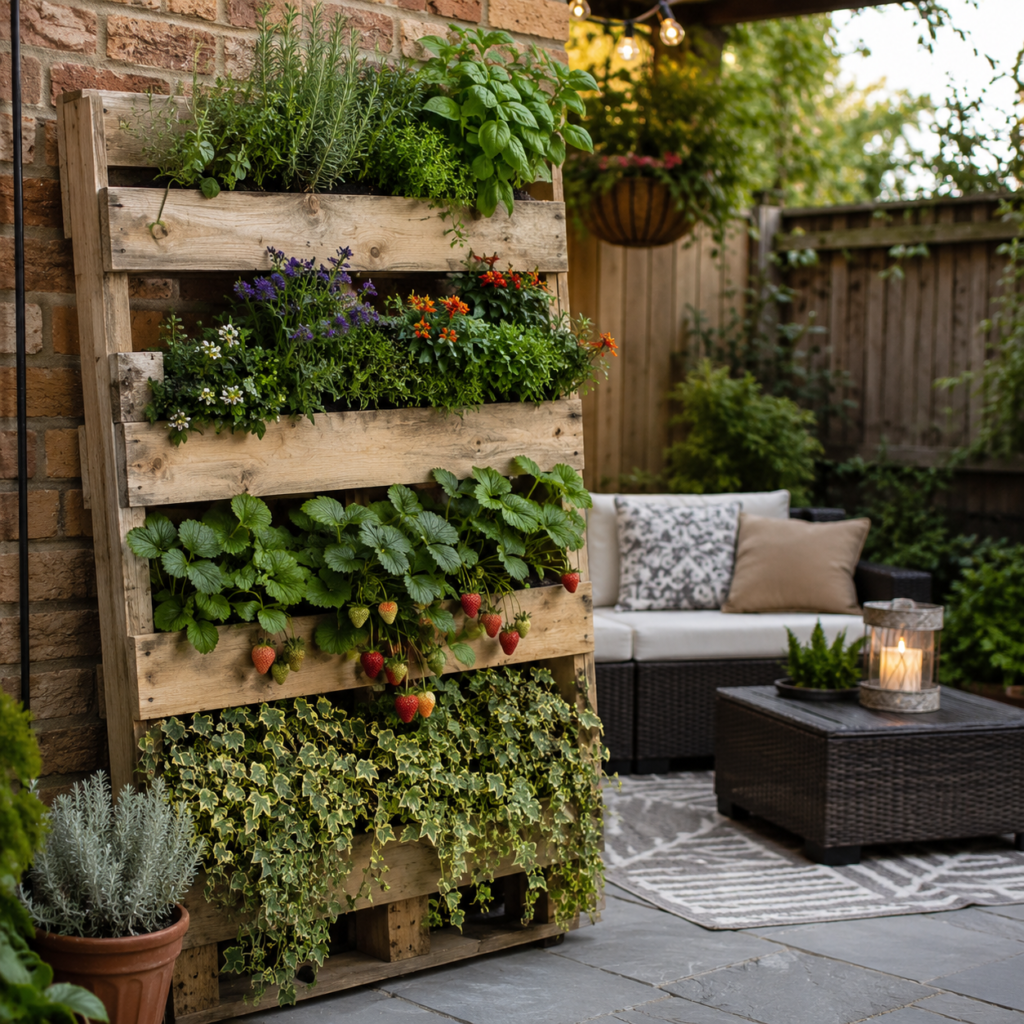
DIY pallet planter ideas are a smart way to turn clean recycled wood into vertical gardens, herb walls, raised planter boxes, flower displays, strawberry planters, and backyard privacy screens. The best pallet planters are safe, well-drained, stable, and matched to the right plants for the available soil depth.
A pallet planter should not be built only because the wood is free. It should be built because it solves a real backyard problem: limited space, plain fences, low budget, poor layout, or the need for a simple growing area near the patio. Choose clean heat-treated pallet wood, avoid suspicious stains or chemical smells, use container potting mix, and add drainage before planting.
Quick Answer
The best DIY pallet planter idea for beginners is a leaning vertical pallet planter filled with herbs, flowers, strawberries, or small trailing plants. Use a clean HT-marked pallet, add landscape fabric behind the planting pockets, fill the spaces with lightweight potting mix, add drainage where water can collect, and anchor the pallet before it becomes heavy with wet soil.
Which Pallets Are Safe?
The safest pallets for DIY planters are clean, dry pallets marked HT, which means heat treated. These are preferred for garden use because they were treated with heat instead of chemical fumigation. Avoid pallets marked MB, pallets with oil stains, chemical smells, mold, unknown paint, or any sign that they carried industrial materials. This matters even more if you plan to grow herbs, lettuce, strawberries, or vegetables.
Use this safety checklist before building:
- Look for an HT stamp on the pallet.
- Avoid any pallet marked MB.
- Reject pallets with oil, paint, mold, or chemical smells.
- Avoid soft, rotten, cracked, or crumbling boards.
- Use gloves when handling rough pallet wood.
- Remove old nails, staples, and sharp splinters.
- Use a liner if planting edibles.
- Choose new untreated wood if safety is uncertain.
What Do Pallet Stamps Mean?
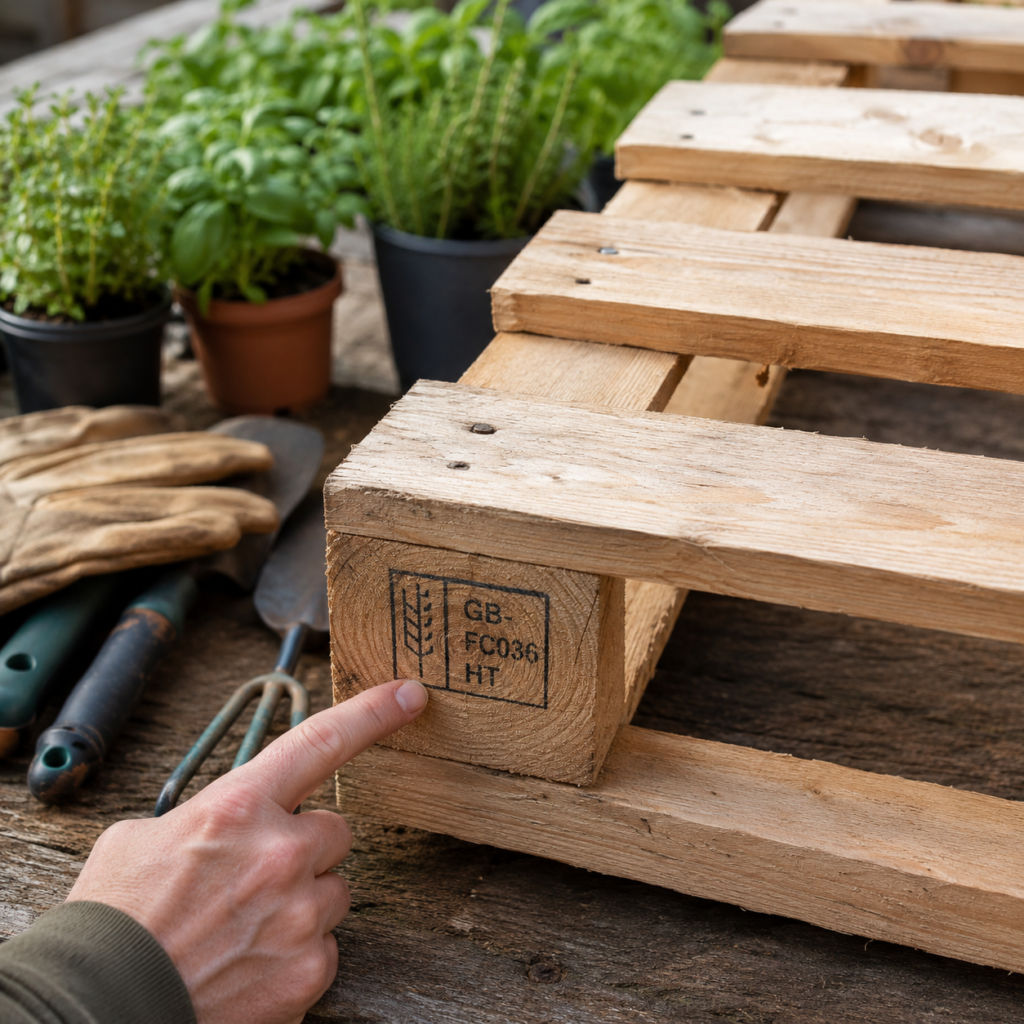
The marking to avoid is MB, which means methyl bromide. Do not use MB-marked pallets for planters, especially for herbs, vegetables, strawberries, or any edible crop. Also remember that a clean stamp does not fix a dirty history. If a pallet has oil stains, mold, chemical smells, unknown paint, or soft rotten boards, reject it even if part of the marking looks acceptable.
| Pallet Marking | Meaning | Use for Planters? |
| HT | Heat treated | Best option for garden projects |
| MB | Methyl bromide fumigation | Avoid completely |
| DB | Debarked | Not a safety treatment by itself |
| KD | Kiln dried | Usually about moisture reduction; still inspect |
| No stamp | Unknown history | Use only for ornamentals if clean |
| Painted or stained | Unknown coating | Avoid for edible plants |
| Oily or smelly | Possible contamination | Do not use |
When Should You Avoid Pallets?
Avoid using pallets in the garden when the wood history is unknown and the project involves edible crops, children, indoor herbs, or long-term soil contact. A pallet may look clean, but it could have been exposed to chemicals, oil, warehouse spills, mold, or unsafe treatments before you found it.
Avoid unknown pallets for:
- Vegetable planters
- Strawberry planters
- Children’s garden projects
- Indoor herb planters
- Root crop containers
- Compost bins for edible gardens
- Long-term raised beds
- Planters near grills or food prep areas
Best fit: use pallets for flowers, herbs, succulents, and seasonal backyard decor only when the wood is clean and safe. For edible plants, choose a clean HT pallet with a liner or use new untreated wood if you are unsure.
What Tools Do You Need?
You need a clean pallet, gloves, drill, outdoor screws, staple gun, landscape fabric or planter liner, sandpaper, potting mix, and plants. For a simple vertical pallet planter, these basic materials are enough. For a stronger raised box or privacy planter, you may also need a pry bar, saw, corner brackets, caster wheels, pot feet, exterior wood sealer, or a trellis panel.
The right materials make the difference between a planter that looks good for one week and one that works through the season. Landscape fabric helps hold soil inside vertical pockets. Outdoor screws hold better than weak nails. Lightweight potting mix drains better than heavy garden soil. Brackets and anchors help tall pallet planters stay safe after they become heavy with wet soil.
Basic tools and materials include:
- Work gloves and safety glasses
- Clean heat-treated pallet
- Drill and outdoor screws
- Staple gun
- Landscape fabric or planter liner
- Sandpaper or sanding block
- Pry bar or hammer
- Hand saw or circular saw
- Measuring tape
- Lightweight potting mix
- Herbs, flowers, strawberries, or compact vegetables
How Deep Should it Be?
A pallet planter should be deep enough for the plants you want to grow. Most vertical pallet pockets are shallow, so they are better for herbs, flowers, strawberries, lettuce, and trailing annuals than for large vegetables. If you want peppers, dwarf tomatoes, compact cucumbers, or chard, build a raised pallet box with deeper soil instead.
Soil depth controls root growth, watering frequency, and plant strength. Shallow pockets dry quickly and limit root space, which can stress large plants in hot weather. Deeper boxes hold more potting mix, drain more evenly, and give vegetable roots more room to spread. This is why a vertical pallet wall and a raised pallet planter box should not be treated as the same project.
| Pallet Planter Type | Best Soil Depth | Best Plants |
| Vertical pallet pocket | 4–8 inches | Herbs, flowers, lettuce, strawberries |
| Deepened pallet pocket | 8–10 inches | Strawberries, parsley, leafy greens |
| Raised pallet box | 10–18 inches | Peppers, dwarf tomatoes, chard |
| Pallet box with trellis | 12–18 inches | Beans, peas, compact cucumbers |
| Half-pallet flower planter | 4–8 inches | Pansies, alyssum, petunias |
| Succulent pallet wall | 3–6 inches | Sedum, echeveria, trailing succulents |
How Do You Build DIY Pallet Planter Ideas?
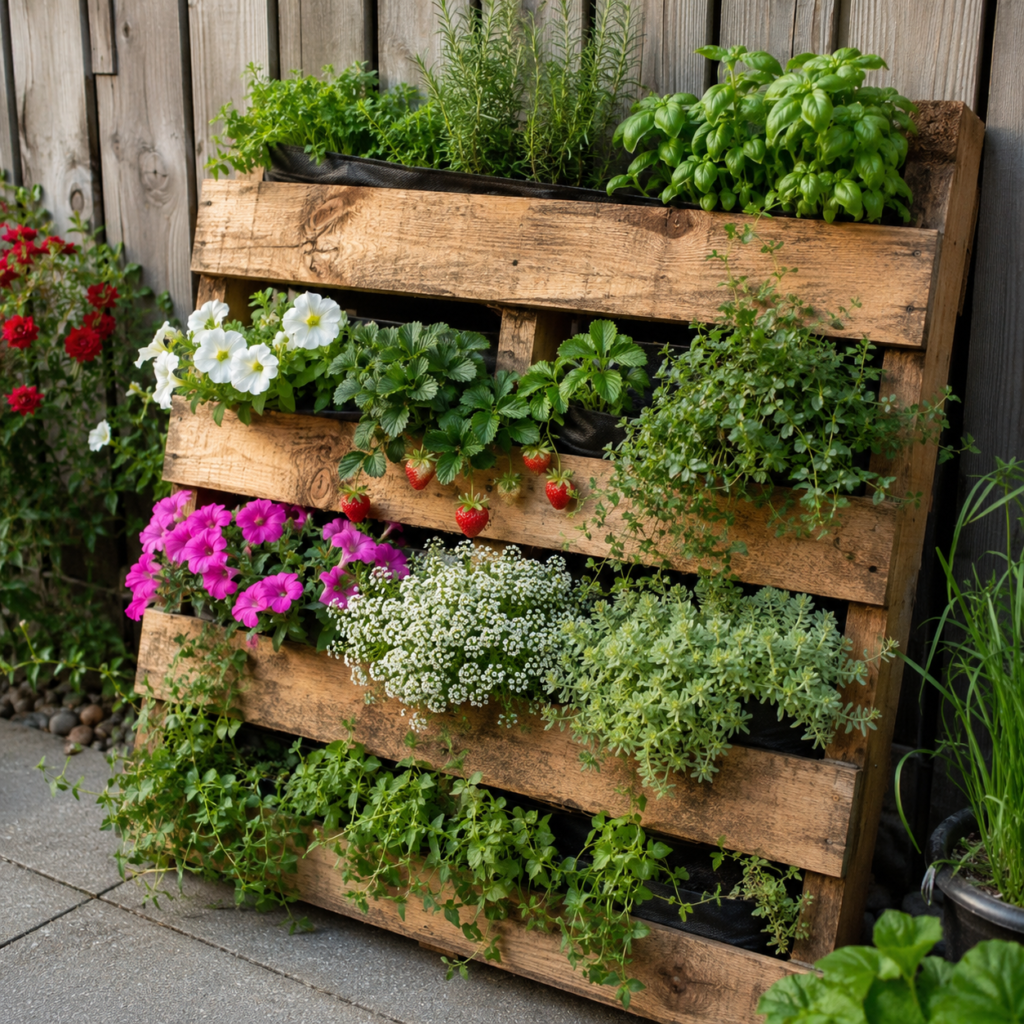
To make a simple vertical pallet planter, clean the pallet, remove loose nails, sand rough edges, staple landscape fabric across the back and lower pocket areas, fill the spaces with lightweight potting mix, plant shallow-rooted plants, water gently, and let the roots settle before standing it upright. This is the easiest pallet planter because the pallet already gives you the structure.
The most common mistake is standing the pallet upright too soon. Fresh soil can fall out before roots grip the mix. Keep the pallet flat or slightly angled for several days after planting, especially if you use flowers, herbs, or strawberries in shallow pockets. Once the plants settle, place the planter against a fence, wall, balcony rail, or patio corner and anchor it securely.
Simple build steps:
- Choose a clean HT-marked pallet.
- Brush off dirt and debris.
- Remove loose nails and staples.
- Sand splintered edges.
- Staple landscape fabric to the back.
- Create firm soil pockets between slats.
- Fill pockets with container potting mix.
- Plant shallow-rooted herbs or flowers.
- Water gently with a soft stream.
- Let roots settle before standing upright.
- Anchor the pallet so it cannot tip.
Best plants for this design include herbs, strawberries, lettuce, petunias, pansies, alyssum, sedum, and trailing lobelia.
How to Build an Herb Planter?
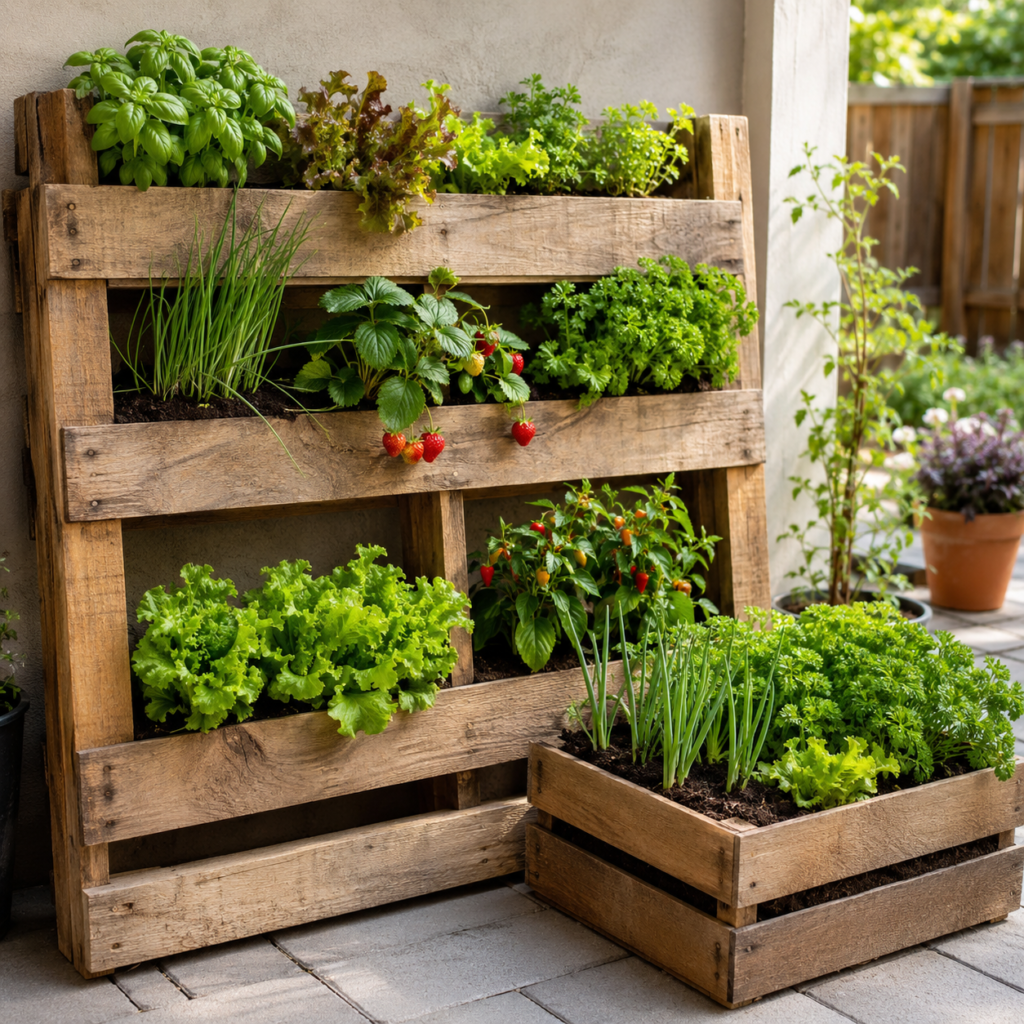
You can build a pallet herb planter by turning the pallet pockets into small growing spaces for compact herbs and placing each herb according to its sun and moisture needs. Sun-loving herbs such as thyme, oregano, sage, and rosemary-like conditions should sit higher where drainage is better. Softer herbs like parsley, basil, cilantro, and chives usually do better in middle or lower pockets where moisture lasts longer.
A pallet herb planter is one of the most practical DIY pallet projects because herbs are used often and do not always need deep soil. Place it near the kitchen door, grill, outdoor dining area, or patio so harvesting feels easy. If you have to walk too far to pick herbs, you will use them less. A good herb planter should be close, labeled, and simple to water.
Best herbs for pallet planters include:
- Thyme for upper dry pockets
- Oregano for sunny upper or middle rows
- Parsley for steady moisture
- Chives for easy beginner growth
- Basil for warm sunny sections
- Cilantro for cooler partial-sun pockets
- Sage for drier areas
- Mint in a separate pot insert
Can You Grow Vegetables?
You can grow vegetables in a DIY pallet planter if the planter is safe, deep enough, well-drained, and filled with fresh container potting mix. Shallow vertical pallet pockets are best for lettuce, spinach, arugula, green onions, radishes, baby kale, and small herbs. Deeper pallet planter boxes are better for peppers, dwarf tomatoes, bush beans, compact cucumbers, strawberries, and Swiss chard.
The decision depends on root depth. A vertical pallet pocket is not the same as a raised bed. Many pallet pockets hold only a small amount of soil, which dries quickly and limits root growth. This is fine for fast leafy crops but not enough for large vegetables that need deep root zones, steady moisture, and regular feeding. For vegetables, structure and soil volume matter more than the rustic look.
Best vegetables for shallow pallet pockets:
- Lettuce
- Spinach
- Arugula
- Green onions
- Radishes
- Baby kale
- Microgreens
- Small herbs
Better vegetables for deeper pallet boxes:
- Peppers
- Bush beans
- Dwarf tomatoes
- Swiss chard
- Strawberries
- Compact cucumbers
- Patio eggplants
What Flowers Work Best?
The best flowers for pallet planters are compact, trailing, and colorful plants that can handle container-style growing. Petunias, pansies, violas, alyssum, calibrachoa, lobelia, nasturtiums, marigolds, begonias, impatiens, and trailing verbena are strong choices. These flowers soften the rough wood and create a full garden-wall effect that looks beautiful against fences, patios, and blank backyard walls.
Flowers are also the safest choice when the pallet is clean but not ideal for edible crops. They give quick visual impact without the same food-safety concern. A flower pallet works well as a seasonal display, especially when you repeat colors instead of planting every pocket with a different random plant. Repetition makes a low-cost DIY planter look designed and intentional.
Best sunny flower choices:
- Petunias
- Calibrachoa
- Marigolds
- Nasturtiums
- Verbena
- Alyssum
- Portulaca
- Compact zinnias in deeper pockets
Best part-shade flower choices:
- Pansies
- Violas
- Begonias
- Impatiens
- Lobelia
- Torenia
How To Build a Raised Box?
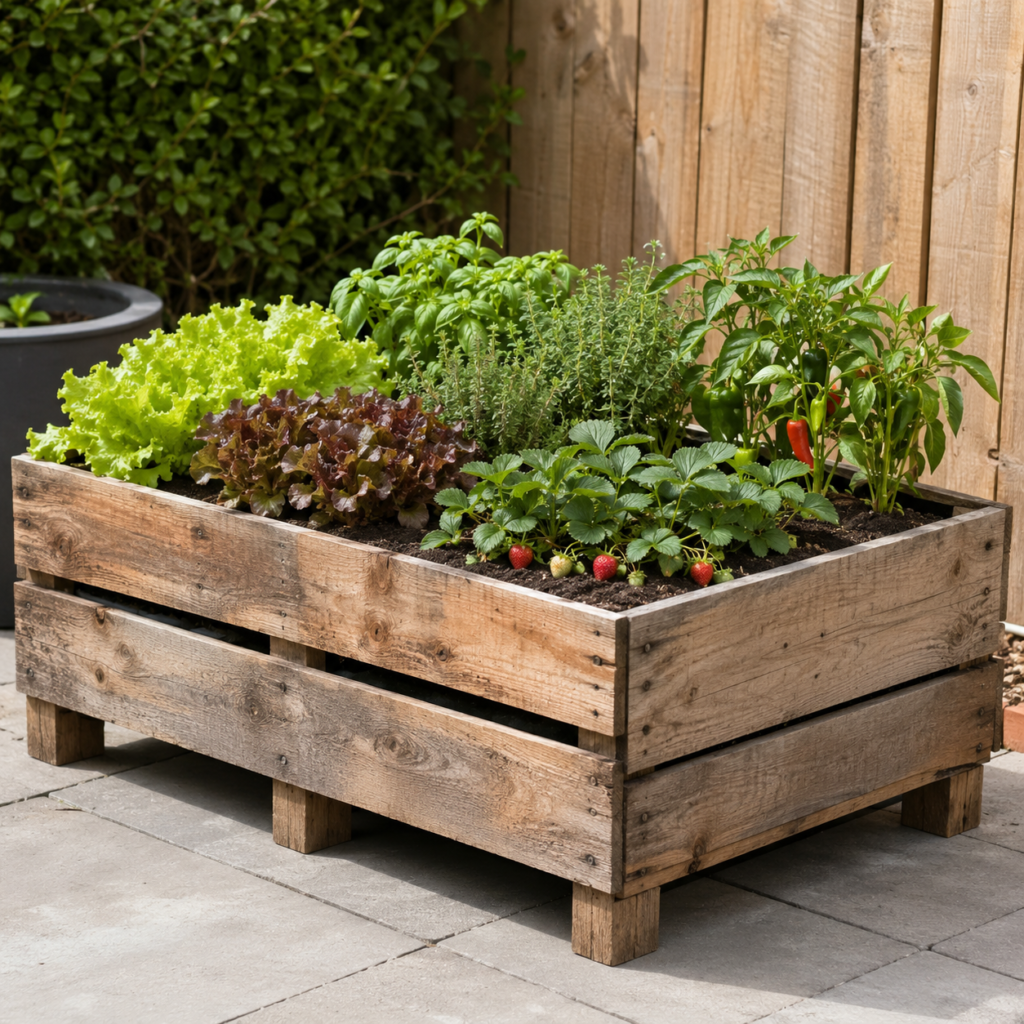
To make a raised pallet planter box, dismantle the pallet, remove nails, cut the boards to size, build a rectangular frame, add corner supports, create a bottom with drainage gaps, line the inside if needed, fill it with container potting mix, and plant according to root depth. This design takes more effort than a vertical pallet but gives you more soil volume and better growing control.
A raised pallet planter box is the better choice for vegetables, strawberries, larger herbs, and mixed planting. It is easier to water evenly than vertical pockets and easier to refresh at the end of the season. It also works well on patios, along fences, beside outdoor seating, or near a kitchen door. If you add legs, the planter becomes easier to access without bending.
Basic build steps:
- Choose a clean HT pallet.
- Remove boards carefully with a pry bar.
- Pull out nails and staples.
- Sort straight boards from damaged boards.
- Cut boards to the desired length.
- Build a rectangular frame.
- Add corner posts for strength.
- Attach bottom boards with drainage gaps.
- Drill extra drainage holes if needed.
- Sand rough edges.
- Add liner for edible planting.
- Fill with container mix.
- Plant according to root depth.
Can Pallets Add Privacy?
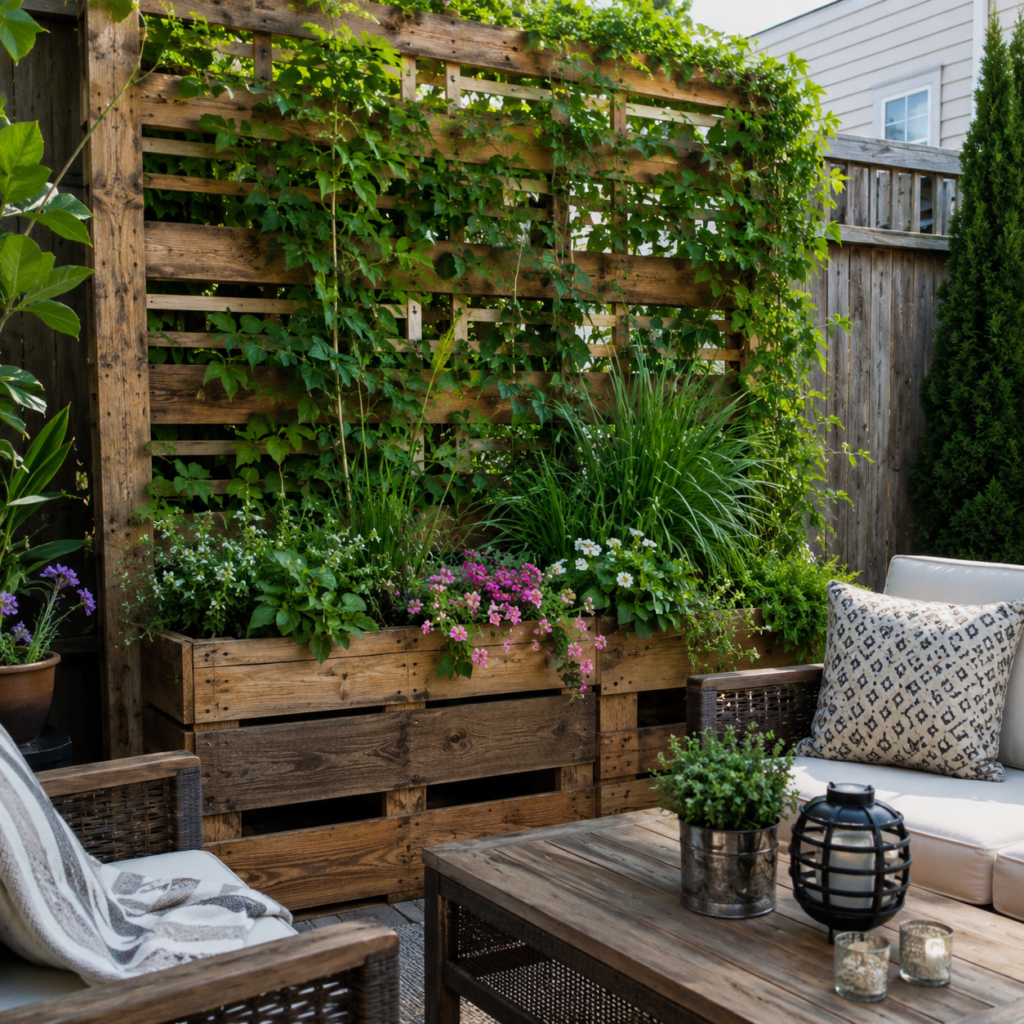
A pallet planter can create backyard privacy when it is built as a tall vertical screen, a planter box with a trellis, a fence-backed garden, or a rolling privacy wall. It will not block views like a solid fence, but it can soften sightlines around patios, decks, balconies, and seating areas. This makes the backyard feel more comfortable without building a permanent wall.
The best privacy pallet planters combine structure and plant density. A plain pallet alone may look thin, but a pallet with vines, trailing flowers, ornamental grasses, or climbing plants can create a green screen. In real backyards, this works well behind a bench, beside a bistro table, near a deck railing, or in front of a plain fence that needs softness.
Best pallet privacy ideas include:
- Tall vertical pallet with trailing plants
- Pallet planter box with attached trellis
- Two pallets connected as a screen
- Rolling pallet planter behind patio chairs
- Fence-backed pallet planter with vines
- Deep pallet box with ornamental grasses
- Pallet screen with hanging pots
How Do You Prevent Rot?
You stop a pallet planter from rotting by keeping the wood off wet ground, adding drainage, using breathable liners, sealing exterior surfaces when appropriate, avoiding trapped moisture, and leaving airflow behind vertical planters. Rot usually happens when water sits inside the planter or the wood stays in constant contact with damp soil, grass, concrete, or patio surfaces.
Pallet wood is usually not premium outdoor lumber, so moisture control decides how long the planter lasts. A pallet planter sitting directly on wet grass may last only one season. The same planter raised on feet, drained properly, and protected from trapped water can last much longer. Paint or sealer can help, but it cannot fix bad drainage.
Rot prevention checklist:
- Keep the planter raised on feet or blocks.
- Drill drainage holes where water collects.
- Leave small gaps between bottom boards.
- Use lightweight potting mix.
- Avoid heavy compacted garden soil.
- Seal exterior wood only when dry.
- Leave airflow behind wall planters.
- Avoid constant contact with damp ground.
- Replace damaged boards early.
- Refresh soil each season.
How Often Should You Water?
A pallet planter usually needs more frequent moisture checks than a normal raised bed because shallow pockets hold less soil. In hot, dry, or windy weather, vertical pallet gardens can dry quickly, especially when filled with herbs, flowers, strawberries, or leafy greens. Check the soil with your finger instead of following a fixed watering schedule.
Watering should be slow and gentle. A strong hose blast can wash potting mix out of the pockets and expose roots. Use a watering can, soft shower nozzle, or drip line if the pallet is large. If the top pockets dry much faster than the bottom pockets, plant drought-tolerant herbs near the top and moisture-loving plants lower down.
Use this practical watering rule:
- Check shallow pockets daily in hot weather.
- Water when the top inch feels dry.
- Use a soft watering can or shower nozzle.
- Avoid blasting soil out of vertical pockets.
- Add drip irrigation for large pallet walls.
- Move heat-stressed planters into afternoon shade.
- Mulch deeper boxes lightly to reduce drying.
- Group plants with similar water needs together.
What Mistakes Should You Avoid?
The biggest pallet planter mistakes are using unsafe pallets, skipping drainage, planting deep-rooted crops in shallow pockets, placing the planter in the wrong light, failing to anchor vertical structures, using heavy garden soil, and letting wet wood sit directly on the ground. These mistakes usually appear after the planter looks good on day one but fails later.
Most pallet planter problems come from ignoring water, weight, and root depth. Soil gets heavy after watering. Shallow pockets dry fast. Wood rots when moisture is trapped. Tall planters can tip in wind. Plants fail when their root systems do not match the container depth. A good pallet planter is not just decorative; it is built around how plants and materials behave outdoors.
Avoid these common mistakes:
- Using MB-marked or stained pallets
- Growing food in unknown pallet wood
- Forgetting drainage holes
- Filling pockets with heavy garden soil
- Planting tomatoes in shallow pockets
- Leaning a heavy pallet without anchoring
- Placing sun plants in deep shade
- Placing shade plants in harsh sun
- Letting wood sit on wet grass
- Ignoring splinters and loose nails
What Is the Final Checklist?
Before building a pallet planter, check the pallet marking, wood condition, drainage plan, soil depth, liner choice, plant selection, placement, and support. A pallet planter should be safe before it becomes beautiful. This final check prevents the most common problems: contaminated wood, falling planters, rotting boards, soggy roots, and plants that outgrow shallow pockets.
Think of this checklist as your go/no-go decision. If the pallet fails the safety check, do not use it. If the structure feels weak, repair or reject it. If the planter has no drainage plan, fix that before adding soil. If the plants need more root depth than the pallet provides, choose different plants or build a deeper box.
Final checklist:
- Is the pallet clean, dry, and safe?
- Is it free from MB markings, stains, mold, and chemical smells?
- Are loose nails removed and rough edges sanded?
- Will every pocket or box drain properly?
- Are you using lightweight potting mix?
- Are plants matched to the available soil depth?
- Is the vertical structure anchored?
- Is the planter raised off wet ground?
- Can you water it easily without damaging nearby surfaces?
FAQs About DIY Pallet Planter Ideas
What is the best DIY pallet planter idea for beginners?
The best beginner idea is a leaning vertical pallet planter for herbs, flowers, or strawberries. It needs minimal cutting and works well in small backyards, patios, and fence areas.
Are pallet planters safe for vegetables?
Pallet planters can be safe for vegetables if the pallet is clean, dry, and marked HT. Avoid MB-marked, oily, moldy, painted, stained, or chemical-smelling pallets.
What does HT mean on a pallet planter?
HT means heat treated. It is preferred for garden projects because the wood was treated with heat instead of methyl bromide fumigation.
What pallet markings should I avoid for planters?
Avoid pallets marked MB because they were treated with methyl bromide. Also avoid pallets with oil marks, mold, unknown paint, chemical smells, or rotten boards.
Do pallet planters need drainage holes?
Yes, pallet planters need drainage holes or drainage gaps. Without drainage, roots can sit in wet soil and the wood can rot faster.
What soil should I use in a pallet planter?
Use lightweight container potting mix instead of heavy garden soil. Potting mix drains better, gives roots air, and works better in shallow pallet pockets.
How deep should a pallet planter be?
Vertical pallet pockets should be about 4–8 inches deep for herbs, flowers, lettuce, and strawberries. Larger vegetables need raised pallet boxes with 10–18 inches of soil.
What plants grow best in pallet planters?
Herbs, strawberries, lettuce, spinach, green onions, succulents, pansies, petunias, alyssum, and trailing flowers grow well. Large vegetables need deeper containers.
Myra is the founder and lead writer of Backyard Planter Ideas, where she shares practical, well-researched guidance on planter design, plant selection, and outdoor styling. Her goal is to help homeowners create attractive, functional garden spaces with clear, reliable, and easy-to-apply advice.