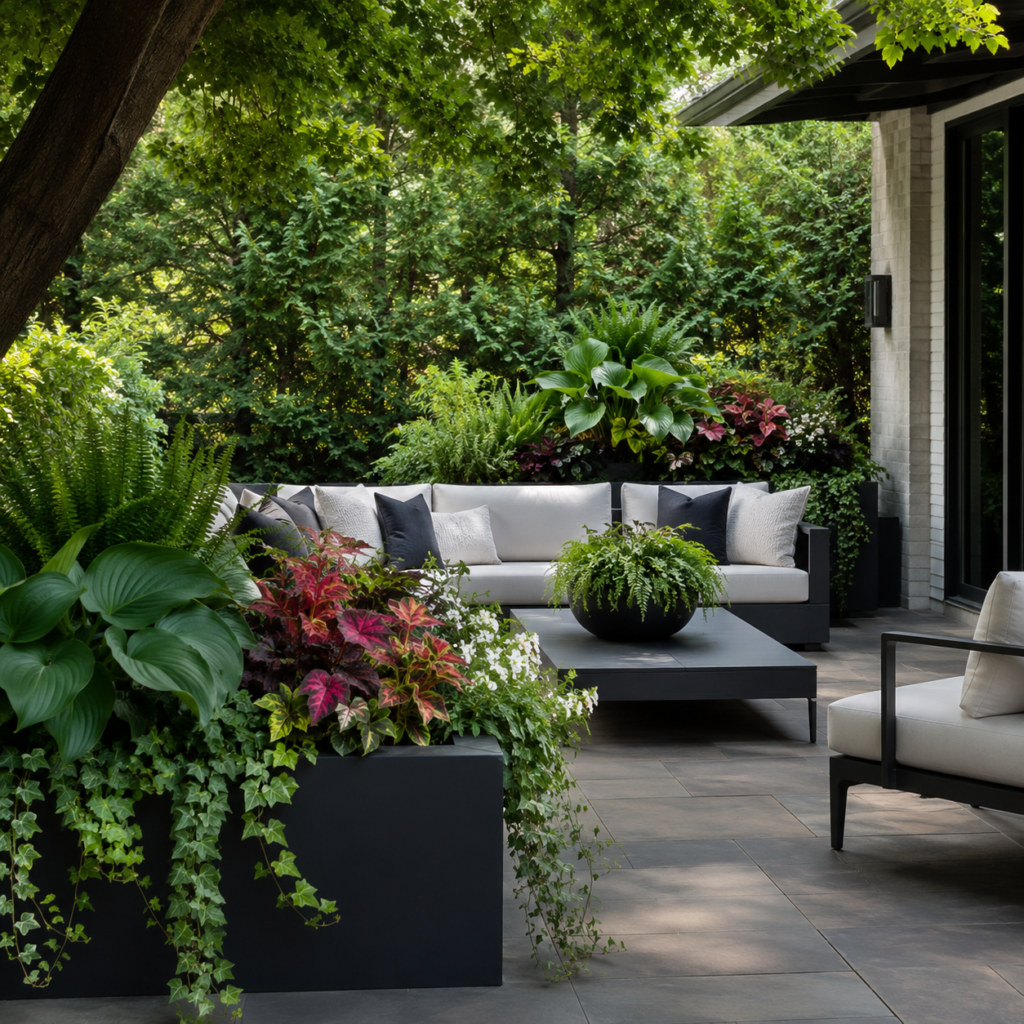
Backyard planter ideas for shade help you turn dark patios, fence lines, side yards, covered decks, and tree-covered corners into beautiful outdoor spaces. The best shade planters use foliage, flowers, drainage, planter depth, moisture control, and color contrast to make low-light backyard areas feel fresh, full, and intentional.
Shady backyards are often treated like problem areas, but they can become some of the most relaxing parts of a garden. Instead of fighting the shade, the smarter approach is to design around it. Ferns, hostas, heuchera, begonias, impatiens, caladiums, coleus, ivy, sedges, and Japanese forest grass can bring texture, color, movement, and softness where full-sun plants struggle.
Quick Best Shade Planter Picks
The best shade planter for most backyards is a medium or large container filled with plants that handle soft light, steady moisture, and limited direct sun. Ferns, heuchera, hostas, begonias, coleus, caladiums, and trailing ivy are some of the easiest choices because they create color and fullness without needing strong sunlight. If your shaded space feels dark, use white flowers, silver foliage, lime-green leaves, or a light-colored planter to make the area feel brighter.
This quick-pick section helps you choose faster before reading the full guide. A beginner may need a simple low-risk planter, while a small backyard may need a narrow trough, and a covered patio may need a hanging basket or self-watering container. The right choice depends on the space, not just the plant list. Match the planter to your shade type, moisture level, and design goal.
Best quick picks:
- Best beginner shade planter: Fern + heuchera + ivy
- Best colorful shade planter: Coleus + caladium + white begonia
- Best low-maintenance shade planter: Hosta + fern + heuchera
- Best small backyard shade planter: Narrow trough planter with ferns and trailing foliage
- Best modern shade planter: Black or concrete planter with lime coleus and white begonias
- Best dry shade planter: Large cedar planter with sedges, ivy, heuchera, and mulch
- Best covered patio planter: Hanging fern basket or ceramic pot with begonias
- Best dark corner planter: Tall light-colored container with fern, caladium, and trailing ivy
How Much Shade Does Your Space Get?
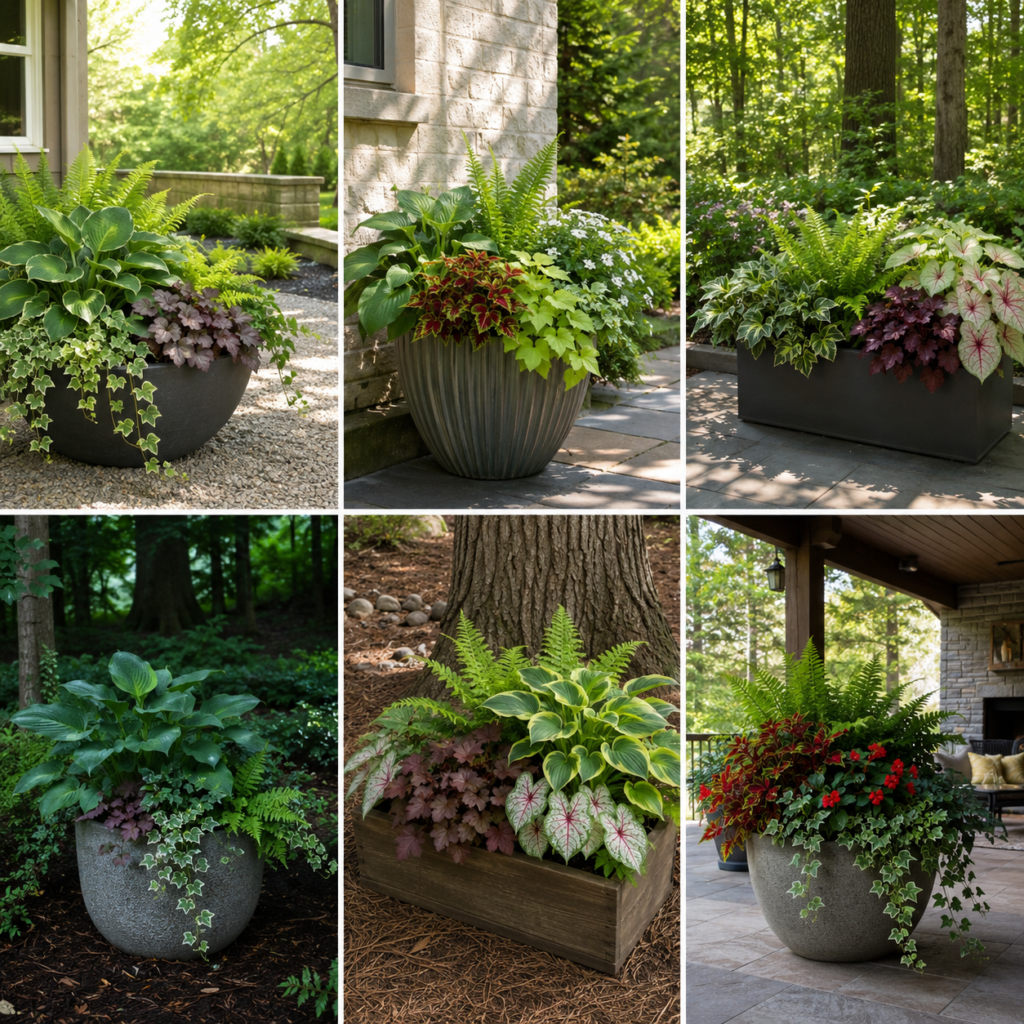
Your backyard shade planter area should be judged by the amount of direct sun it receives, the time of day it receives that sun, and how bright the surrounding area feels. A planter with two hours of morning sun is very different from one placed beside a dark north-facing wall with no direct light at all. This matters because the same plant can thrive in bright shade but struggle in deep shade. Shade is not one condition; it is a group of different light situations.
Many shade planter failures happen because people use the word “shade” too generally. Some shaded areas still receive open-sky brightness, while others are blocked by fences, trees, buildings, or roof overhangs. Some shade is moist and cool, but other shade is dry because tree roots or patio covers prevent water from reaching the soil. Before buying plants, watch the area in the morning, midday, and late afternoon. This one step prevents weak growth, poor flowering, and wasted money.
Use this quick shade audit:
- Bright shade: no strong direct sun, but the area still feels open and bright
- Part shade: about 2–4 hours of direct sun, usually best with morning light
- Dappled shade: filtered light moving through tree branches
- Deep shade: very little direct light, often beside walls or dense fences
- Dry shade: shaded area where soil or pots dry quickly because of trees or roofs
- Covered shade: patio, balcony, or pergola shade where rain may not reach pots
Best Plants by Shade Level
| Shade Level | Best Plants | Best Planter Style |
| Bright shade | Begonia, coleus, caladium, fern, heuchera | Decorative patio pots and mixed containers |
| Part shade | Impatiens, hosta, parsley, lettuce, astilbe | Mixed flower, herb, or foliage planters |
| Dappled shade | Fern, hosta, lamium, Japanese forest grass | Woodland-style planter boxes |
| Deep shade | Fern, ivy, hosta, heuchera, lamium | Light-colored pots with foliage contrast |
| Dry shade | Sedges, tough ferns, ivy, heuchera | Large containers with mulch and careful watering |
| Covered shade | Begonia, fern, ivy, caladium | Hanging baskets and easy-to-water pots |
Dry Shade or Moist Shade?
Dry shade and moist shade need different planter strategies. Dry shade often happens under trees, roof overhangs, balconies, pergolas, and covered patios where rainfall does not reach the soil. Moist shade usually appears in cool corners, low backyard areas, narrow side yards, or spaces that stay damp after rain. Both are shade, but they create very different growing conditions for planter plants.
If your backyard has dry shade, the biggest problem is not lack of light only. It is uneven moisture. Small pots dry out fast, especially under trees where roots compete for water. If your backyard has moist shade, the problem is usually the opposite: soil stays wet too long, drainage slows down, and roots become stressed. This is why moisture level should be checked before choosing plants, planter size, or watering routine.
Use this guide:
- Dry shade: Use larger planters, mulch, sedges, ivy, heuchera, and tough ferns.
- Moist shade: Use drainage holes, pot feet, ferns, astilbe, hostas, and airflow.
- Covered shade: Water manually because rain may not reach the container.
- Tree shade: Use containers instead of planting directly into root-filled soil.
- Damp patio shade: Lift pots on risers so water can drain underneath.
- Windy dry shade: Choose deeper containers that hold moisture longer.
The deeper insight is that shade does not always mean wet soil. A dark side yard may stay damp for days, while a tree-covered corner may become dry within hours. The best decision is to test the soil with your finger before watering. If the top inch is dry, water. If it stays wet for days, improve drainage before adding more plants.
Best Plants for Shade Planters
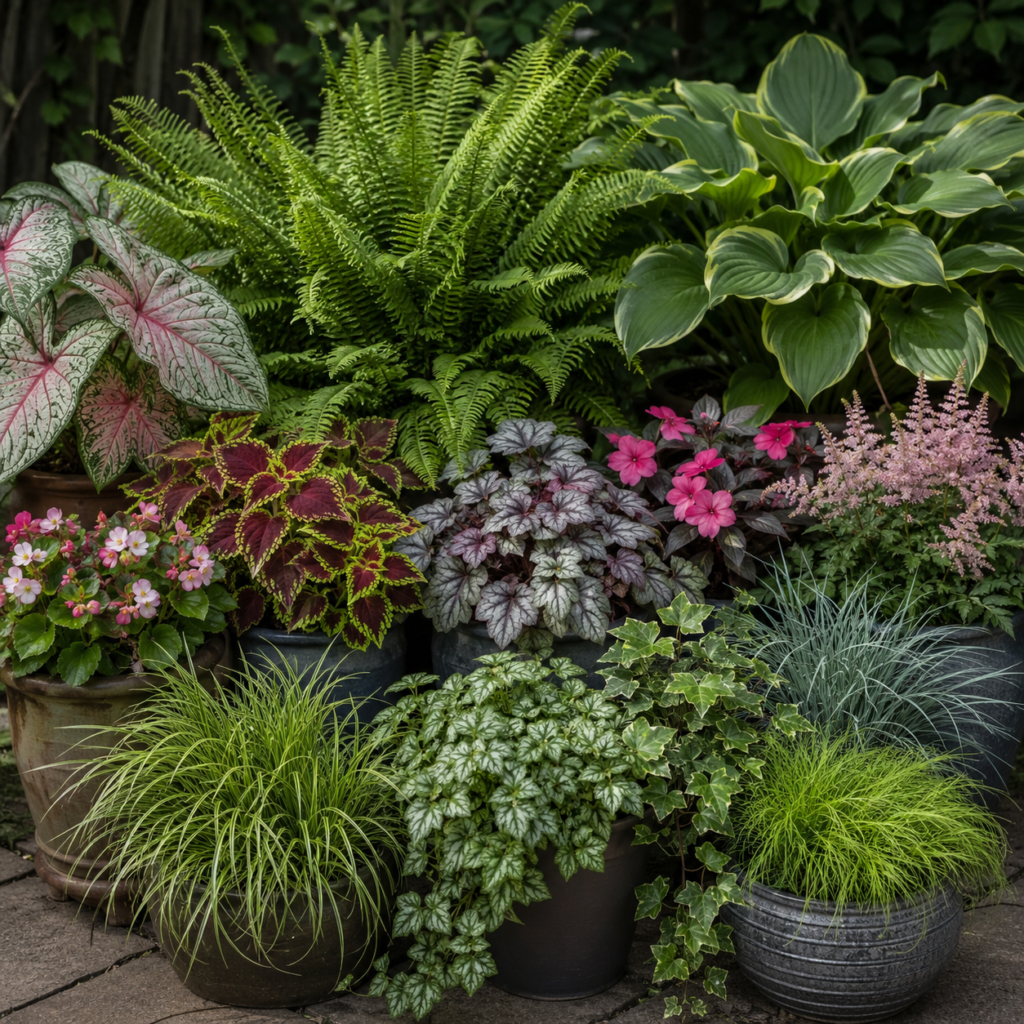
The best plants for backyard planters in shade include ferns, hostas, heuchera, coleus, caladiums, begonias, impatiens, astilbe, lamium, ivy, Japanese forest grass, sedges, and shade-tolerant herbs. The strongest planter designs combine upright plants, mounding plants, trailing plants, colorful foliage, and seasonal flowers. This creates a complete container instead of a random group of shade plants.
Shade plants should be chosen for both beauty and behavior. Ferns bring fine texture and movement. Hostas create large bold leaves and make the planter feel established. Heuchera adds color through foliage, which is valuable because it does not depend on blooms. Coleus and caladiums bring strong leaf patterns and can brighten dark corners. Begonias and impatiens add flowers in bright shade or part shade. Ivy, lamium, or trailing plants soften the container edge.
Use plants by role:
- Height: ferns, astilbe, caladiums, upright coleus
- Fullness: hostas, heuchera, begonias, sedges
- Trailing edge: ivy, lamium, creeping jenny, vinca vine
- Flower color: begonias, impatiens, astilbe
- Foliage color: coleus, caladiums, heuchera
- Texture: ferns, Japanese forest grass, sedges
- Beginner choice: fern + heuchera + ivy
- Colorful choice: coleus + caladium + white begonia
- Woodland choice: hosta + fern + astilbe + lamium
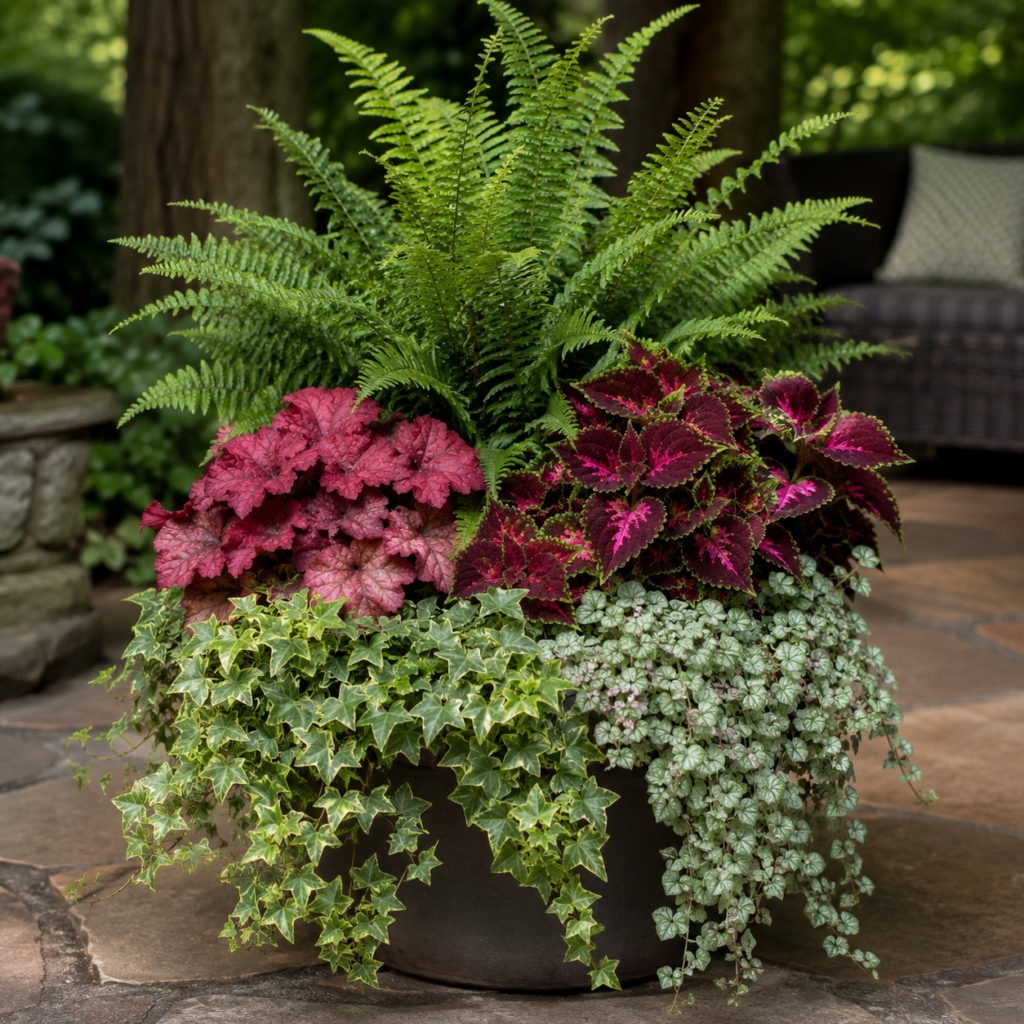
The 3-Layer Shade Planter Formula
The easiest way to design a shade planter is to use one structure plant, one color plant, and one trailing plant. This keeps the container balanced even when flowers are not blooming because shade planters depend more on foliage, texture, and shape than constant flowers.
Use this simple formula:
- Structure plant: Fern, hosta, astilbe, caladium, or Japanese forest grass
- Color plant: Heuchera, coleus, caladium, begonia, or impatiens
- Trailing plant: Ivy, lamium, creeping jenny, or vinca vine
If the planter looks flat, add height. If it looks dull, add color. If it looks stiff, add a trailing plant.
Add Color to Shade Planters
You can make shade planters look colorful by using foliage color, white flowers, silver leaves, lime-green accents, burgundy contrast, patterned foliage, and light-colored containers. In shade, the smartest color strategy is to use leaves as the main color source and flowers as a bonus. This works better than forcing full-sun flowers into low-light spaces where they become weak, stretched, or bloom poorly.
Full-sun planters often depend on flowers for impact, but shade planters need a different system. Many shade-friendly plants are valuable because of their leaves. Heuchera can add burgundy, purple, caramel, bronze, lime, or silver tones. Coleus can create bold red, green, yellow, or pink patterns. Caladiums can brighten dark areas with pale, pink, white, or green leaves. White begonias and impatiens reflect light and make shaded corners feel cleaner and brighter.
Color combinations that work well:
- White begonia + fern + silver lamium for a bright clean look
- Lime coleus + burgundy heuchera + black planter for modern contrast
- Pink caladium + ivy + pale begonia for a soft cottage style
- Hosta + fern + astilbe + lamium for woodland texture
- Caladium + coleus + trailing foliage for a tropical shade look
- Fern + white ceramic pot + Japanese forest grass for a calm patio style
- White impatiens + lime coleus + cedar planter for a shaded fence
How Deep Should Shade Planters Be?
Most backyard shade planters should be 8–18 inches deep, depending on the plant type. Small annuals can grow in shallower containers, while hostas, ferns, astilbe, mixed perennial planters, and small shrubs need deeper soil for stronger roots and better moisture stability. Depth affects root growth, water storage, plant size, and how often you need to water.
Planter depth matters even in shade. Many people assume shaded pots stay moist, but dry shade under trees or covered patios can dry out faster than expected because rain may not reach the container. A deeper planter gives roots more space and creates a more stable moisture zone. This is especially helpful for ferns, hostas, heuchera, astilbe, and mixed shade containers that need consistent but not soggy soil.
Use this depth guide:
- Small begonias or impatiens: 8–10 inches
- Coleus: 10–12 inches
- Caladiums: 10–12 inches
- Ferns: 10–14 inches
- Heuchera: 10–14 inches
- Hostas: 12–18 inches
- Astilbe: 12–18 inches
- Japanese forest grass: 12–16 inches
- Mixed shade planter box: 12–18 inches
- Small shrubs or privacy plants: 18–24+ inches
How to Arrange Shade Planters
Arrange shade planters by using height at the back, fullness in the middle, and trailing plants near the edges. Around patios, group containers in odd numbers. Along fences, repeat long planters. In dark corners, use tall foliage to create structure and remove emptiness. A good layout makes shade planters look intentional instead of scattered.
A shaded patio can look unfinished when planters are placed randomly. Use one larger anchor pot, one or two medium containers, and one smaller trailing pot. This creates depth without blocking movement around chairs or tables. Along fences, repetition works better than random single pots. Three matching cedar or black rectangular planters can make a shaded fence look cleaner, softer, and more expensive.
Use these layout rules:
- Patio seating area: group three containers beside furniture
- Shaded fence: use repeated rectangular planter boxes
- Backyard corner: place the tallest plant at the back
- Side yard: use narrow trough planters in a line
- Under tree: use one large woodland-style container
- Covered deck: use lightweight pots near railings
- Wall area: use vertical planters or tall slim pots
- Small patio: repeat one planter color for a cleaner design
Can Edibles Grow in Shade Planters?
Yes, you can grow some edibles in backyard shade planters, especially leafy greens and herbs in part shade. Lettuce, spinach, kale, arugula, parsley, mint, cilantro, chives, and some leafy herbs are better choices than tomatoes, peppers, cucumbers, or eggplants. The key is to understand whether you are growing leaves or fruits.
Best edible shade planter choices:
- Lettuce: good for part shade and cooler conditions
- Spinach: works best in mild weather and soft light
- Kale: more tolerant than many fruiting crops
- Arugula: fast-growing leafy green for part shade
- Parsley: strong container herb for part shade
- Mint: grows well in part shade but should stay contained
- Cilantro: may last longer away from hot afternoon sun
- Chives: compact, easy, and useful in containers
Prevent Soggy Soil in Shade Planters
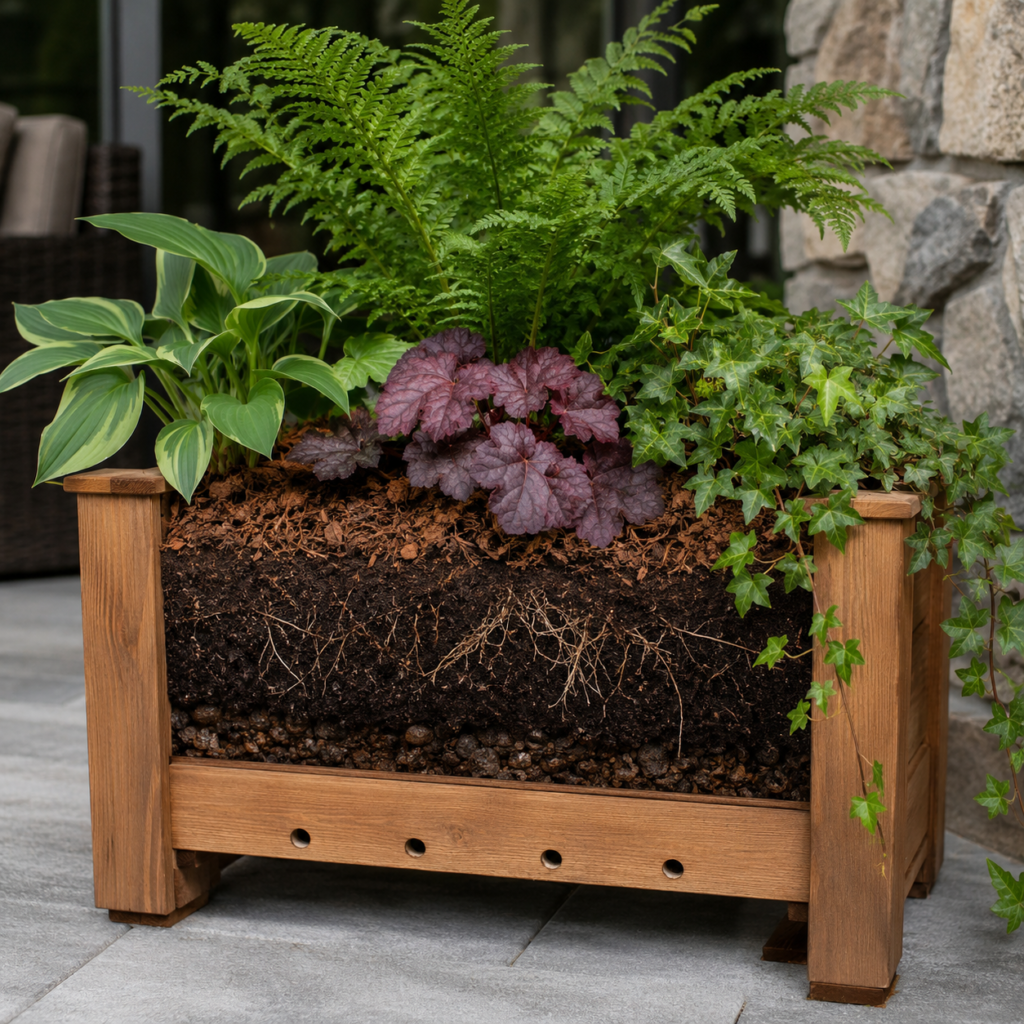
Prevent soggy soil in shade planters by using drainage holes, quality potting mix, raised planter feet, careful watering, and the right plant spacing. Shade containers often dry more slowly than sunny containers, so poor drainage can quickly lead to weak roots, yellow leaves, fungus problems, and plant decline. Moist soil is helpful for many shade plants, but constantly wet soil is not.
Every outdoor shade planter should have drainage holes. If a decorative container has no holes, use it as a cachepot and place a nursery pot inside it. After watering or rainfall, remove extra water so the roots do not sit in standing water. This is especially important on covered patios, damp fence lines, and shaded corners where evaporation is slower.
Use this drainage checklist:
- Use containers with drainage holes
- Add planter feet or risers under pots
- Use potting mix instead of heavy garden soil
- Water when the top inch feels dry
- Empty saucers after rain or watering
- Remove dead leaves from the soil surface
Best Shade Planter Combinations
The best shade planter combination depends on whether you want color, low maintenance, privacy, edible plants, or a small-space design. A dark patio corner needs a different planter than a shaded fence, side yard, covered deck, or tree-covered area. This section helps readers move from inspiration to an actual decision they can use in their own backyard.
A good shade planter combination should solve one main problem. If the space feels dark, use bright foliage and pale flowers. If the planter is hard to maintain, use hardy foliage plants instead of bloom-heavy flowers. If the space is narrow, use compact plants and a slim trough. If the area is dry, use a larger planter with more soil volume. Matching the combination to the goal makes the design more useful and longer-lasting.
| Goal | Best Combination | Why It Works |
| Beginner-friendly | Fern + heuchera + ivy | Easy mix with height, color, and trailing texture |
| More color | Coleus + caladium + white begonia | Uses leaf color and pale flowers to brighten shade |
| Low maintenance | Hosta + fern + sedge | Strong foliage with fewer bloom-care needs |
| Small patio | Compact fern + begonia + trailing lamium | Softens edges without taking much space |
| Dry shade | Sedge + ivy + heuchera in a large planter | Handles lower moisture better than delicate flowers |
| Modern look | Lime coleus + burgundy heuchera + black planter | Creates strong contrast in a clean container style |
| Woodland style | Hosta + fern + astilbe + lamium | Natural layered look for tree shade |
| Dark corner | Tall fern + caladium + trailing ivy | Adds height, brightness, and softness |
Shade Planter Mistakes to Avoid
Avoid planting full-sun plants in deep shade, using pots without drainage, overwatering, choosing tiny containers, crowding plants, ignoring dry shade, and expecting shade flowers to bloom like full-sun annuals. Shade planter success comes from realistic plant matching and smart container setup, not from forcing bright-sun garden ideas into low-light spaces.
The biggest mistake is buying plants only because they look good at the garden center. Many plants are displayed in bloom, but that does not mean they will keep blooming in your shaded backyard. Another common mistake is assuming all shade is moist. Under trees, roots can pull water quickly. Under patio covers, rain may not reach the pot. A shaded area can still be dry, especially in summer or windy conditions.
Avoid these common shade planter mistakes:
- Using lavender, zinnias, tomatoes, or peppers in deep shade
- Forgetting drainage holes
- Letting saucers stay full of water
- Using heavy garden soil in containers
- Buying plants before checking light levels
- Choosing only dark green plants for dark corners
- Using small pots under trees
- Overcrowding plants for instant fullness
- Ignoring local climate and winter hardiness
- Expecting constant flowers in deep shade
Choose the Right Shade Planter
Choose the right shade planter by checking size, drainage, weight, material, depth, and where the container will sit. A patio planter can be decorative and heavier, but a deck planter should usually be lighter. A planter under trees should be larger because dry shade can stress small containers quickly. A shaded fence may need long rectangular planters, while a dark corner may need a tall container that adds height.
The safest buying decision is to choose a planter with drainage holes, enough depth for the plants you want, and a material that fits your backyard surface. For most shade planters, a 12–18 inch deep container works well. For hostas, ferns, mixed perennials, or small shrubs, choose a wider and deeper container. If the planter will sit on a deck or balcony, avoid extremely heavy concrete or oversized ceramic pots unless the surface can support the weight.
Use this buying guide:
- For patios: ceramic, fiberglass, cedar, or resin planters
- For decks: lightweight fiberglass or resin planters
- For fences: long cedar or rectangular planters
- For side yards: narrow trough planters
- For dark corners: tall light-colored containers
- For dry shade: larger planters with more soil volume
- For damp shade: containers with drainage holes and pot feet
- For modern style: concrete-look, black, gray, or fiberglass planters
- For natural style: cedar boxes, terracotta, or warm neutral pots
Shade Planter Care Checklist
Before finishing your shade planter, check the basics that affect long-term plant health. A beautiful container will only stay attractive if the light, drainage, soil, plant spacing, and watering routine work together. Shade planters often fail slowly, so the goal is to prevent problems before yellow leaves, soggy soil, pests, or weak growth appear.
Use this shade planter checklist:
- Check whether the area is bright shade, part shade, dappled shade, deep shade, or dry shade.
- Use a planter with drainage holes.
- Choose potting mix instead of heavy garden soil.
- Lift pots slightly on feet or risers in damp areas.
- Use larger containers under trees or roof overhangs.
- Water only when the top inch of soil starts to dry.
- Remove dead leaves to reduce pests and slugs.
- Use foliage color if flowers are limited.
- Give plants enough spacing for airflow.
- Avoid letting saucers stay full of water.
- Add light-colored flowers or foliage in dark corners.
- Move weak flowering plants to brighter shade if needed.
The best decision is to treat the first month as a testing period. Watch how quickly the soil dries, how the plants respond, and whether the planter gets enough light. Small adjustments early can save the whole container later.
FAQs
What are the best backyard planter ideas for shade?
The best shade planter ideas use ferns, hostas, heuchera, coleus, caladiums, begonias, and trailing plants. Use layered containers with height, texture, color, and good drainage.
What plants grow best in shaded backyard planters?
Ferns, hostas, heuchera, coleus, caladiums, begonias, impatiens, astilbe, lamium, ivy, sedges, and Japanese forest grass grow well in shade planters.
What can I put in a planter that gets no direct sun?
Use foliage plants such as ferns, hostas, ivy, heuchera, lamium, and shade-tolerant grasses. In deep shade, focus on leaf texture and contrast instead of flowers.
Can flowers grow in backyard planters for shade?
Yes, begonias, impatiens, astilbe, and some shade-friendly annuals can grow in shade planters. They perform best in bright shade or part shade, not deep shade.
How do I make a shady backyard planter look colorful?
Use white flowers, silver foliage, lime-green leaves, burgundy heuchera, patterned coleus, and pale caladiums. Light-colored pots also help brighten dark corners.
What is the easiest shade planter for beginners?
The easiest beginner shade planter is fern + heuchera + ivy. Ferns add height, heuchera adds color, and ivy softens the planter edge.
What is the best planter combination for shade?
Use one structure plant, one color plant, and one trailing plant. A strong example is fern + heuchera + ivy or coleus + caladium + trailing lamium.
What is the best planter for dry shade?
The best dry shade planter is a large container with drainage, more soil volume, light mulch, and tough foliage plants. Sedges, ivy, heuchera, and hardy ferns work well.
What is the difference between dry shade and moist shade?
Dry shade has low moisture, often under trees, balconies, or roof overhangs. Moist shade stays damp longer and needs better drainage, airflow, and careful watering.
Do shade planters need drainage holes?
Yes, shade planters need drainage holes because shaded containers dry slowly. Without drainage, roots can sit in wet soil and develop stress or rot.
How deep should a backyard shade planter be?
Most shade planters should be 8–18 inches deep. Small flowers need less depth, while hostas, ferns, astilbe, mixed perennials, and shrubs need deeper containers.
How often should I water backyard shade planters?
Water shade planters when the top inch of potting mix feels dry. Dry shade under trees or covered patios may need more frequent checking.
Why are my shade planter plants turning yellow?
Yellow leaves usually come from overwatering, poor drainage, compacted soil, too little light, or root stress. Check soil moisture before adding fertilizer.
Are ferns good for shaded backyard planters?
Yes, ferns are excellent for shaded backyard planters. They add soft texture, movement, and a woodland look in bright shade, dappled shade, or moist shade.
Are hostas good for backyard shade planters?
Yes, hostas work well in shade planters because their large leaves add fullness and structure. Use deeper containers and watch for slug damage.
What planter color is best for shade?
White, cream, pale gray, cedar, and terracotta planters help brighten shaded spaces. Black planters also work when paired with lime, silver, white, or burgundy foliage.
Can vegetables grow in shade planters?
Some leafy vegetables and herbs grow in part shade, including lettuce, spinach, kale, parsley, mint, cilantro, and chives. Tomatoes, peppers, and cucumbers need more direct sun.
What can I plant in a north-facing backyard planter?
Use ferns, hostas, heuchera, ivy, begonias, coleus, caladiums, and lamium. Add pale flowers or light-colored pots if the north-facing area feels too dark.
Myra is the founder and lead writer of Backyard Planter Ideas, where she shares practical, well-researched guidance on planter design, plant selection, and outdoor styling. Her goal is to help homeowners create attractive, functional garden spaces with clear, reliable, and easy-to-apply advice.