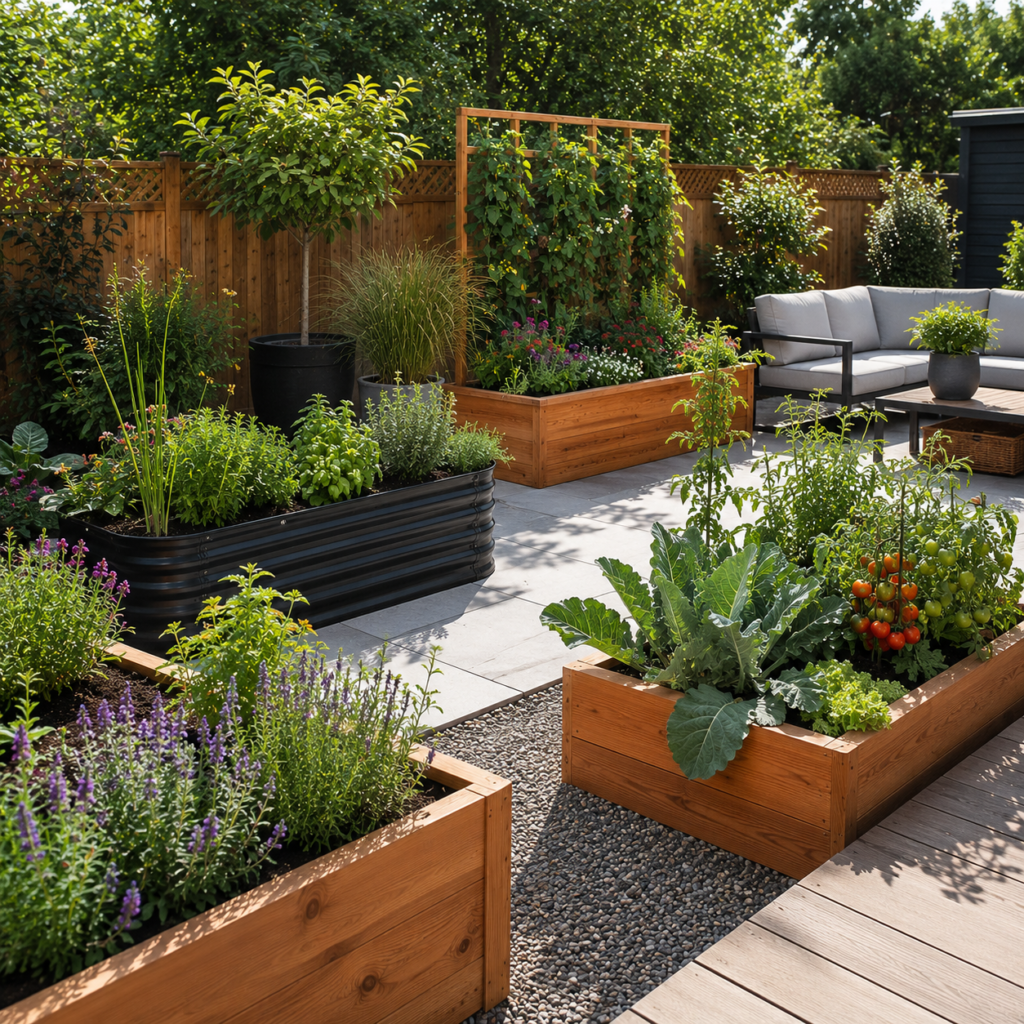
Backyard planter boxes are one of the easiest ways to grow flowers, herbs, vegetables, and privacy plants while improving outdoor design. The best backyard planter box ideas combine durable materials, proper drainage, suitable depth, smart plant choices, and a layout that matches your patio, deck, lawn, or garden space.
A good planter box can be decorative, productive, or both. You can use one long cedar box for vegetables, black modern boxes for ornamental grasses, raised planter boxes for easier gardening, or trellis planter boxes for privacy. The right choice depends on your space, budget, maintenance level, and what you want to grow.
Practical Backyard Setup Example
For most homeowners, one of the easiest starter setups is a 4-foot-long cedar planter box that is approximately 18 inches deep. Fill it with quality raised-bed soil and grow a combination of basil, parsley, lettuce, marigolds, and one compact tomato plant. This setup provides edible crops, seasonal color, companion planting benefits, and a manageable maintenance routine without overwhelming beginner gardeners.
Why Choose Planter Boxes?
Backyard planter boxes are better than traditional garden beds when you want cleaner design, easier soil control, better drainage, and more flexible placement. In many backyards, the ground soil is not ideal for planting because it may be compacted, rocky, full of weeds, too sandy, or too heavy with clay. A planter box gives you a defined growing area where you can add quality soil, improve root health, and grow plants without rebuilding the entire yard. This is why planter boxes are especially helpful for beginners, renters, small patios, decks, and homes where the backyard soil does not drain well after rain.
They also improve the look of the backyard because they create structure. Instead of plants spreading randomly through the yard, planter boxes group flowers, herbs, vegetables, or shrubs into clean zones. This makes the space easier to design around outdoor furniture, fences, walkways, and patios. In real-world use, one long box along a fence can soften a plain wall, while two matching boxes beside a patio entrance can make the area feel finished.
Key benefits include:
- Better control over soil quality
- Cleaner separation between plants and lawn
- Easier watering and feeding
- Fewer weeds than open beds
- Better drainage when designed correctly
- Flexible placement around patios, decks, and fences
- Improved backyard structure and visual order
Best Planter Box Materials
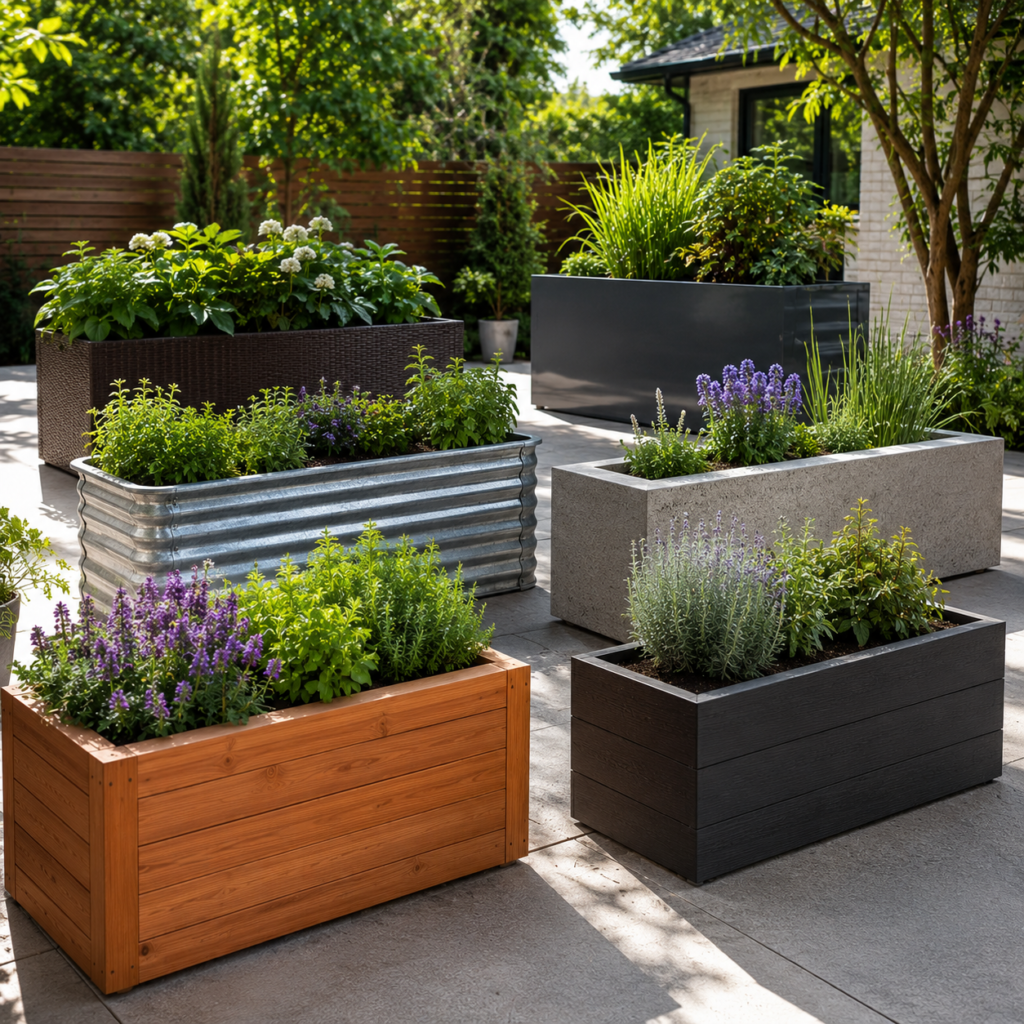
The best materials for backyard planter boxes are cedar, redwood, composite, metal, plastic, and concrete. Each material has a different lifespan, appearance, weight, price range, and maintenance level. Cedar and redwood are excellent for natural backyard gardens because they look warm and resist rot better than many common woods. Composite is better for homeowners who want a low-maintenance planter box that does not need staining or sealing as often. Metal gives a clean modern look, while concrete feels permanent, architectural, and premium. Plastic is the most affordable and easiest to move, but it may not always look as high-end as wood, metal, or concrete.
The material choice should match your backyard conditions. In a wet climate, cheap untreated wood may rot quickly, so cedar, redwood, composite, or metal is safer. In a very hot sunny backyard, metal boxes can heat up, so they need enough soil volume, mulch, and heat-tolerant plants. On a deck, concrete may be too heavy, while composite or plastic may be more practical.
| Material | Typical Lifespan | Maintenance | Best Use |
| Cedar | 7–15 years | Moderate | Vegetables, flowers, natural gardens |
| Redwood | 10–20 years | Moderate | Premium wooden planter boxes |
| Composite | 10–25 years | Low | Low-maintenance patios and decks |
| Metal | 8–20 years | Low to moderate | Modern gardens and raised beds |
| Plastic | 3–10 years | Low | Budget and rental setups |
| Concrete | 20+ years | Low | Luxury and permanent designs |
Best Planter Box Sizes
The best planter box size depends on what you want to grow, where the box will sit, and how much soil volume the plants need. Small herbs, lettuce, and annual flowers can grow in shallow boxes, but tomatoes, peppers, root vegetables, shrubs, ornamental grasses, and privacy plants need deeper soil. A beautiful shallow box can still fail if the roots do not have enough room to grow, hold moisture, and access nutrients.
A good beginner planter box size is around 3 to 4 feet long, 18 to 24 inches wide, and 12 to 18 inches deep. This size works for many flowers, herbs, leafy greens, and compact vegetables. Larger boxes are better for backyards that get hot because they hold more soil and dry out more slowly. Very small boxes dry out quickly and need more frequent watering. For patios and decks, also think about weight. Wet soil is heavy, especially in large wooden, metal, or concrete boxes. If your planter box will sit on a raised deck, choose a lightweight material and avoid oversized concrete containers unless the structure can support them.
| Plant Type | Recommended Depth | Best Planter Box Style |
| Small herbs | 6–12 inches | Window-style or tabletop box |
| Lettuce and greens | 6–8 inches | Shallow raised box |
| Annual flowers | 8–12 inches | Rectangular flower box |
| Peppers | 12–18 inches | Medium vegetable box |
| Tomatoes | 18–24 inches | Deep raised planter box |
| Carrots and root crops | 12–18 inches | Deep vegetable planter |
| Ornamental grasses | 18–24 inches | Large modern planter box |
| Small shrubs | 18–36 inches | Large square or trough box |
| Privacy plants | 24–36 inches | Long deep privacy planter |
Best Flower Planter Box Ideas
The best backyard planter box ideas for flowers use a mix of height, color, season, and plant shape. A strong flower box usually includes upright plants, filler flowers, and trailing plants so the arrangement looks full from the front, sides, and top. This is often called the thriller, filler, and spiller method. The thriller creates height, the filler adds body, and the spiller softens the edges.
For sunny backyard planter boxes, good flower choices include petunias, marigolds, zinnias, geraniums, lantana, calibrachoa, verbena, salvia, lavender, and ornamental grasses. These plants handle sunlight well and bring strong color to patios, fences, and seating areas. For shaded backyard spaces, choose begonias, impatiens, coleus, ferns, hostas, heuchera, and torenia.
Flower planter box ideas:
- Cedar flower boxes along a backyard fence
- Black rectangular boxes with white and purple flowers
- Rustic wooden boxes filled with zinnias and marigolds
- Tall planter boxes beside patio steps
- Long trough boxes with lavender and trailing flowers
- Pollinator boxes with salvia, verbena, zinnias, and lantana
- Shade planter boxes with coleus, begonias, and ferns
Best flower box formula:
- Thriller: salvia, geranium, ornamental grass
- Filler: zinnias, begonias, marigolds
- Spiller: trailing petunias, ivy, sweet potato vine
Best Vegetable Planter Box Ideas
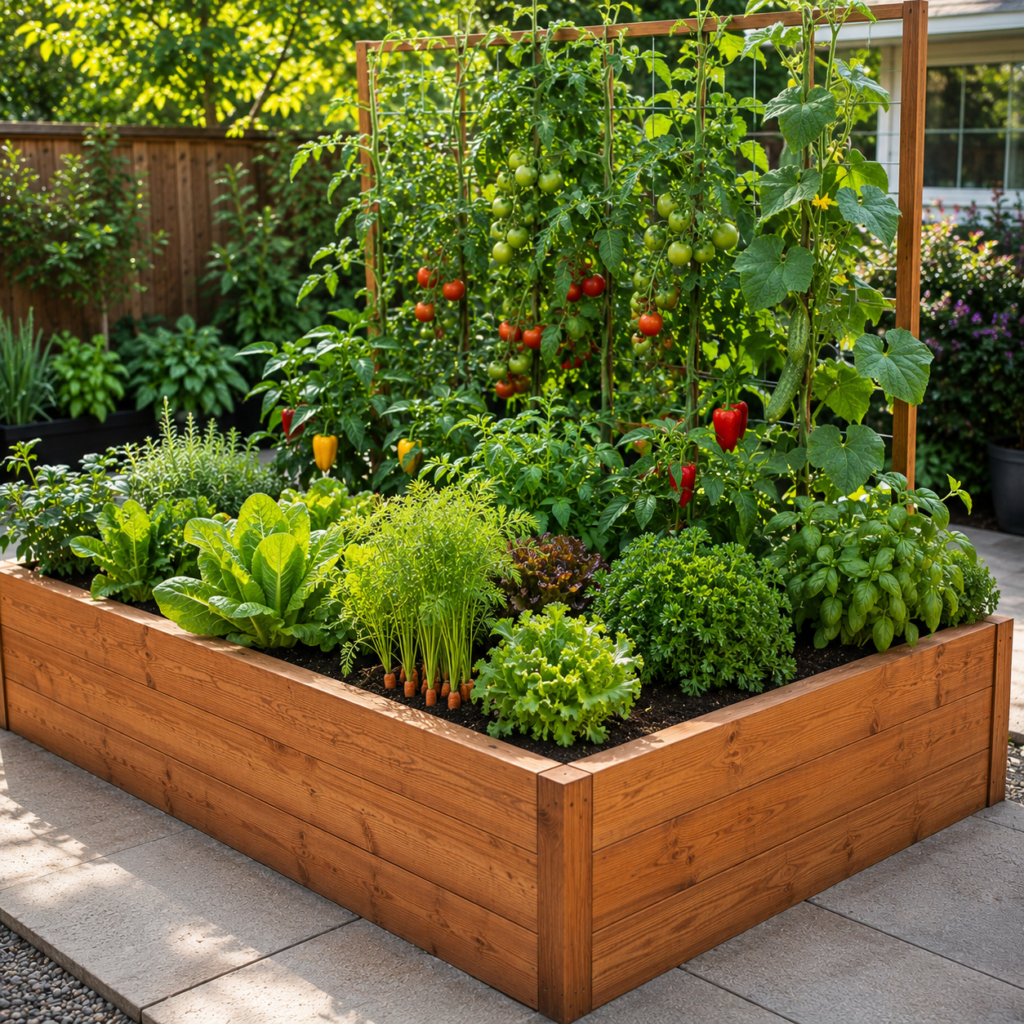
The best backyard planter box ideas for vegetables use deep boxes, rich soil, strong drainage, and enough sunlight. Most vegetables need at least 6 hours of direct sun, while tomatoes, peppers, cucumbers, and beans usually perform better with 8 or more hours. A vegetable planter box gives you control over the growing medium, which is very helpful if your backyard soil is compacted, full of weeds, or low in nutrients. Instead of digging a large garden bed, you can create a productive growing zone in one raised cedar box or a few long rectangular planter boxes.
Vegetable planter boxes are also easier to manage because the crops stay organized. You can place herbs near the kitchen, lettuce in a shallow raised box, tomatoes in a deeper box with supports, and cucumbers in a trellis planter box.
Best vegetable planter box ideas:
- Deep cedar planter box for tomatoes and basil
- Long raised box for lettuce, spinach, and herbs
- Trellis planter box for cucumbers or beans
- Small patio box for peppers and parsley
- Tiered planter box for strawberries and greens
- Raised vegetable box near the kitchen door
- Companion planting box with tomatoes, basil, and marigolds
Best Soil for Planter Boxes
The success of a backyard planter box depends heavily on the soil inside it. Even the best planter box design cannot compensate for poor soil structure. Plants need a growing medium that balances moisture retention, drainage, nutrient availability, and root oxygen. Dense backyard soil often becomes compacted inside planter boxes, making it harder for roots to expand and increasing the risk of drainage problems. For this reason, most successful planter boxes use raised-bed soil blends or high-quality container mixes.
The ideal soil mix depends on whether the planter box is open-bottom or closed-bottom. Open-bottom raised planter boxes can use raised-bed mixes that contain compost, topsoil, and organic matter. Closed-bottom planter boxes typically perform better with container or potting mixes that drain more efficiently. In real-world gardening, good soil reduces watering problems, improves root health, and helps plants establish faster.
Recommended soil ingredients:
- Compost
- Quality topsoil
- Coconut coir
- Aged bark fines
- Perlite
- Vermiculite
- Organic matter
Avoid:
- Heavy clay soil
- Pure garden soil
- Compacted soil blends
- Soil containing construction debris
Why Use Raised Planter Boxes?
Raised planter boxes make gardening easier by lifting the growing area higher, improving drainage, reducing weeds, and making planting, watering, and harvesting more comfortable. They are especially helpful for beginners, older gardeners, and anyone who wants a cleaner backyard setup. A raised planter box creates a controlled bed above the ground, so you do not have to fight compact soil, lawn grass, tree roots, or poor drainage.
There are two common types of raised planter boxes. Some sit directly on the ground and create a raised growing bed. Others stand on legs and bring the plants closer to waist height. Ground-level raised boxes are better for deep-rooted vegetables, shrubs, and larger plants because they can hold more soil. Elevated boxes on legs are better for herbs, lettuce, flowers, and shallow-rooted plants. In real-world use, a waist-height planter is very convenient near a patio because you can harvest herbs or greens without bending. However, it may not be deep enough for tomatoes unless designed with enough soil volume.
Main advantages include:
- Easier access for planting and harvesting
- Better drainage than low ground beds
- Less weed pressure
- Cleaner backyard appearance
- Better soil control
- More comfortable gardening height
- Useful for patios and paved spaces
Modern Planter Box Ideas
Modern backyard planter boxes look most luxurious when they use clean lines, repeated shapes, large scale, restrained colors, and structured plants. Black, concrete, metal, and smooth composite boxes often create the strongest modern look because they feel intentional and architectural. The design should look controlled instead of crowded. A few large matching planter boxes usually look more expensive than many small mismatched pots placed around the patio.
Plant choice is just as important as the box itself. Modern designs work best with plants that have strong form, texture, or repetition. Ornamental grasses, boxwood, lavender, rosemary, dwarf evergreens, agave, yucca, and clipped shrubs all work well. These plants create structure and keep the backyard looking organized. For example, three large black planter boxes filled with lavender and grasses can look more premium than a bright mix of many unrelated flowers.
Modern backyard planter box ideas:
- Matte black planter boxes with ornamental grasses
- Concrete trough planters along a patio edge
- Tall square boxes with clipped boxwood
- White composite planter boxes with lavender
- Metal raised boxes with herbs and vegetables
- Long rectangular planters beside outdoor seating
- Symmetrical planter boxes on both sides of steps
- Minimalist boxes with one plant type repeated
Privacy Planter Box Ideas
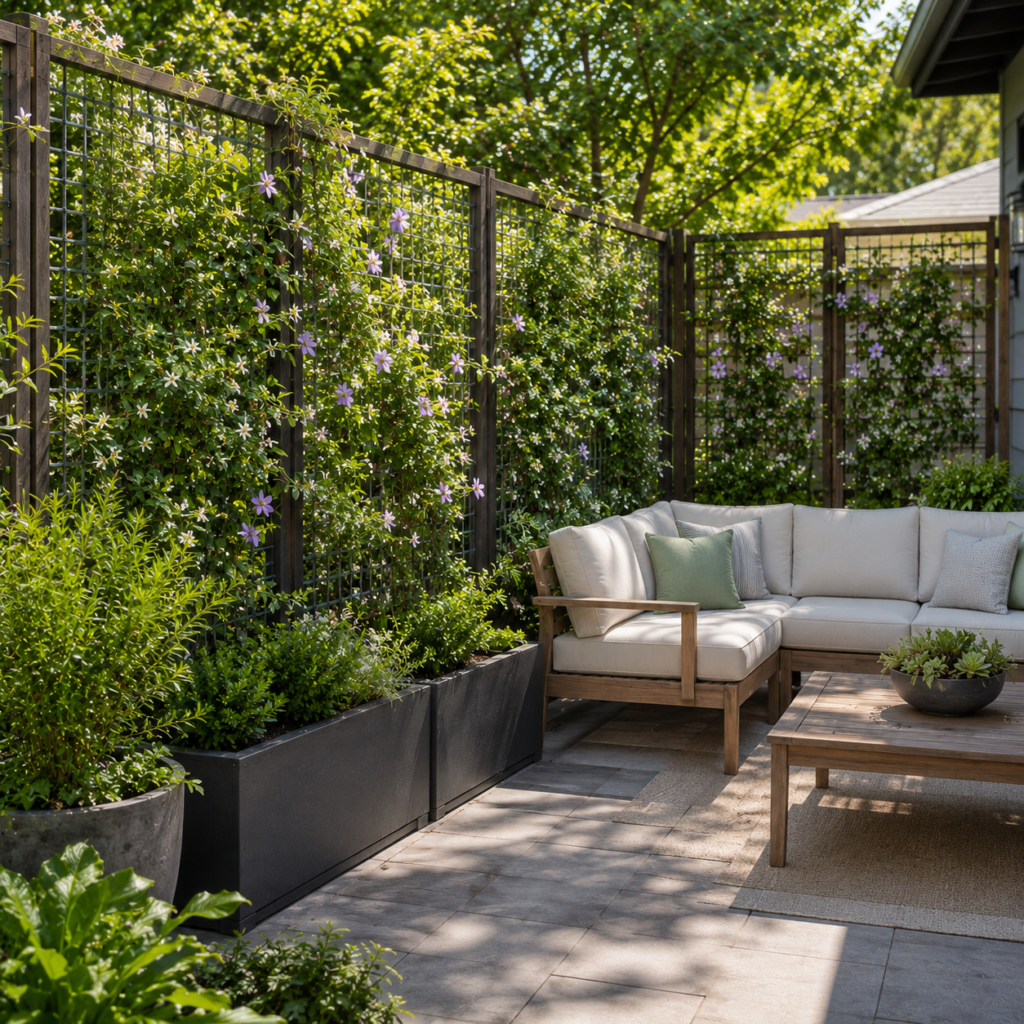
Planter boxes can create backyard privacy when they are deep enough to support tall plants, shrubs, ornamental grasses, bamboo, or climbing vines. They are useful along fences, patios, decks, pool areas, and outdoor seating zones where you want a softer screen without building a full wall.
The key is depth and stability. A shallow flower box cannot support tall privacy plants for long because the roots need room and the box must resist wind. A privacy planter should usually be at least 18 to 24 inches deep, while larger shrubs may need 24 to 36 inches of soil depth. Trellis planter boxes are excellent for small spaces because they add vertical height without taking up much floor area. Climbing jasmine, clematis, roses, or vines can grow upward and create a green privacy panel. For year-round privacy, evergreen shrubs or bamboo in contained planter boxes are more reliable.
Good plants for privacy planter boxes:
- Bamboo in contained boxes
- Arborvitae in large deep planters
- Boxwood for formal screening
- Ornamental grasses for soft movement
- Holly or dwarf evergreens for year-round structure
- Jasmine or clematis on trellis planter boxes
- Climbing roses for decorative privacy
- Tall lavender or rosemary for low screening
Low-Maintenance Planter Box Setup
A low-maintenance planter box setup uses durable materials, drought-tolerant plants, mulch, proper drainage, and simple watering systems. The goal is to reduce daily care while keeping the boxes healthy and attractive. Start with the material because maintenance often begins with the box itself. Composite, metal, concrete, and high-quality cedar are better choices than cheap untreated wood. If you use wood, keep it slightly raised from hard surfaces so moisture does not stay trapped underneath.
Plant selection makes the biggest difference. Low-maintenance sunny planter boxes can include lavender, rosemary, thyme, sedum, lantana, salvia, ornamental grasses, and dwarf evergreens. These plants handle heat better than thirsty flowers and usually need less frequent watering once established. For shade, use hosta, ferns, heuchera, ivy, and shade-tolerant begonias. The practical rule is simple: group plants with similar water and light needs. If one plant needs daily moisture and another prefers dry soil, the planter box becomes harder to manage.
A low-maintenance setup should include:
- Drainage holes or open-bottom design
- Quality container or raised bed soil
- Mulch to reduce evaporation
- Plants with similar water needs
- Fewer plant varieties
- Larger boxes that dry out more slowly
- Drip irrigation or self-watering inserts
- Durable material that does not need frequent repainting
Best low-care combinations:
- Lavender, rosemary, and gravel mulch
- Ornamental grass, sedum, and thyme
- Boxwood with seasonal flowers
- Ferns, hosta, and heuchera for shade
- Herbs in a self-watering planter box
Common Planter Box Mistakes
The most common planter box mistakes are poor drainage, shallow depth, wrong material, overcrowding, weak soil, and mixing plants with different care needs. These mistakes often cause root rot, weak growth, pest problems, and a messy backyard appearance. Poor drainage is the most damaging mistake. A planter box without drainage holes can hold water after rain or overwatering. Roots need oxygen, and constantly wet soil can suffocate them. Always use drainage holes, raised feet, or an open-bottom design where suitable.
Another major mistake is choosing a box that is too small. Small boxes may look attractive at first, but they dry out quickly, restrict root growth, and make plants harder to maintain in hot weather. Tomatoes, shrubs, grasses, and privacy plants need deeper boxes than many beginners expect. Overcrowding is also common, especially in flower planter boxes. Plants need room for air circulation and mature growth. A box that looks full on planting day may become stressed a few weeks later if too many plants are competing for water, nutrients, and space.
Avoid these mistakes:
- Using outdoor boxes without drainage
- Filling boxes with heavy clay garden soil
- Planting tomatoes in shallow boxes
- Mixing full-sun and shade plants together
- Overcrowding flowers for instant fullness
- Placing heavy concrete boxes on weak decks
- Using cheap wood that rots quickly
- Letting planter boxes sit in standing water
- Ignoring mature plant size
Best Planter Box for Your Space
The right backyard planter box design depends on your available space, sunlight, weight limits, style, and gardening goal. A small patio needs a different setup than a large lawn, vegetable garden, privacy screen, or modern outdoor seating area. Before buying or building, decide what the box must do. Is it for flowers, vegetables, privacy, herbs, decoration, or low-maintenance greenery?
For small spaces, choose vertical, narrow, or tall planter boxes because they add planting space without taking over the patio. For large backyards, long rectangular boxes can define zones, frame seating areas, or create productive vegetable sections. For decks, weight matters because wet soil is heavy. Lightweight composite or plastic boxes are safer than oversized concrete planters unless the deck is built for heavy loads. For ground-level patios, heavier materials like concrete, metal, and large cedar boxes can work well because stability is less of a problem.
| Situation | Best Planter Box Choice | Why It Works |
| Small patio | Tall narrow planter box | Saves floor space |
| Deck | Lightweight composite box | Reduces weight concerns |
| Vegetable garden | Deep cedar raised box | Good soil depth and natural look |
| Modern backyard | Black or concrete planter box | Clean architectural style |
| Privacy need | Trellis planter box | Adds vertical screening |
| Rental home | Portable plastic or composite box | Easy to move |
| Low-maintenance garden | Large self-watering box | Reduces watering frequency |
| Flower display | Long rectangular flower box | Creates strong color impact |
| Herb garden | Raised box near kitchen | Easy harvesting |
| Luxury design | Matching oversized boxes | Creates visual consistency |
FAQs
How deep should a backyard planter box be?
Most backyard planter boxes should be 8–24 inches deep. Herbs and lettuce need less depth, while tomatoes, root vegetables, shrubs, and privacy plants need deeper soil.
Do planter boxes need drainage holes?
Yes, planter boxes need drainage holes unless they have an open bottom on soil. Drainage prevents standing water, root rot, and weak plant growth.
Can I grow vegetables in planter boxes?
Yes, vegetables grow very well in planter boxes with enough sun, depth, drainage, and quality soil. Tomatoes, peppers, lettuce, herbs, carrots, and cucumbers are good choices.
What wood lasts longest for planter boxes?
Cedar and redwood are the best long-lasting woods for planter boxes. Cedar is usually the better value, while redwood can last longer but costs more.
What is the best low-maintenance planter box?
Composite planter boxes are the best low-maintenance choice because they resist rot and weather damage. Cedar with mulch and drought-tolerant plants is also a strong option.
What size planter box is best for tomatoes?
Tomatoes need a planter box at least 18–24 inches deep. Larger boxes are better because they hold moisture and give roots more room.
What is the best soil for backyard planter boxes?
Use raised bed mix for open-bottom boxes and container mix for closed-bottom boxes. Avoid heavy garden soil because it compacts and drains poorly.
Can planter boxes create privacy?
Yes, deep planter boxes can create privacy with bamboo, shrubs, ornamental grasses, or trellis vines. They work well near patios, decks, pools, and seating areas.
Can planter boxes sit directly on a deck?
Yes, but use lightweight boxes and protect drainage areas. Avoid oversized concrete boxes unless the deck can support the weight.
Myra is the founder and lead writer of Backyard Planter Ideas, where she shares practical, well-researched guidance on planter design, plant selection, and outdoor styling. Her goal is to help homeowners create attractive, functional garden spaces with clear, reliable, and easy-to-apply advice.