
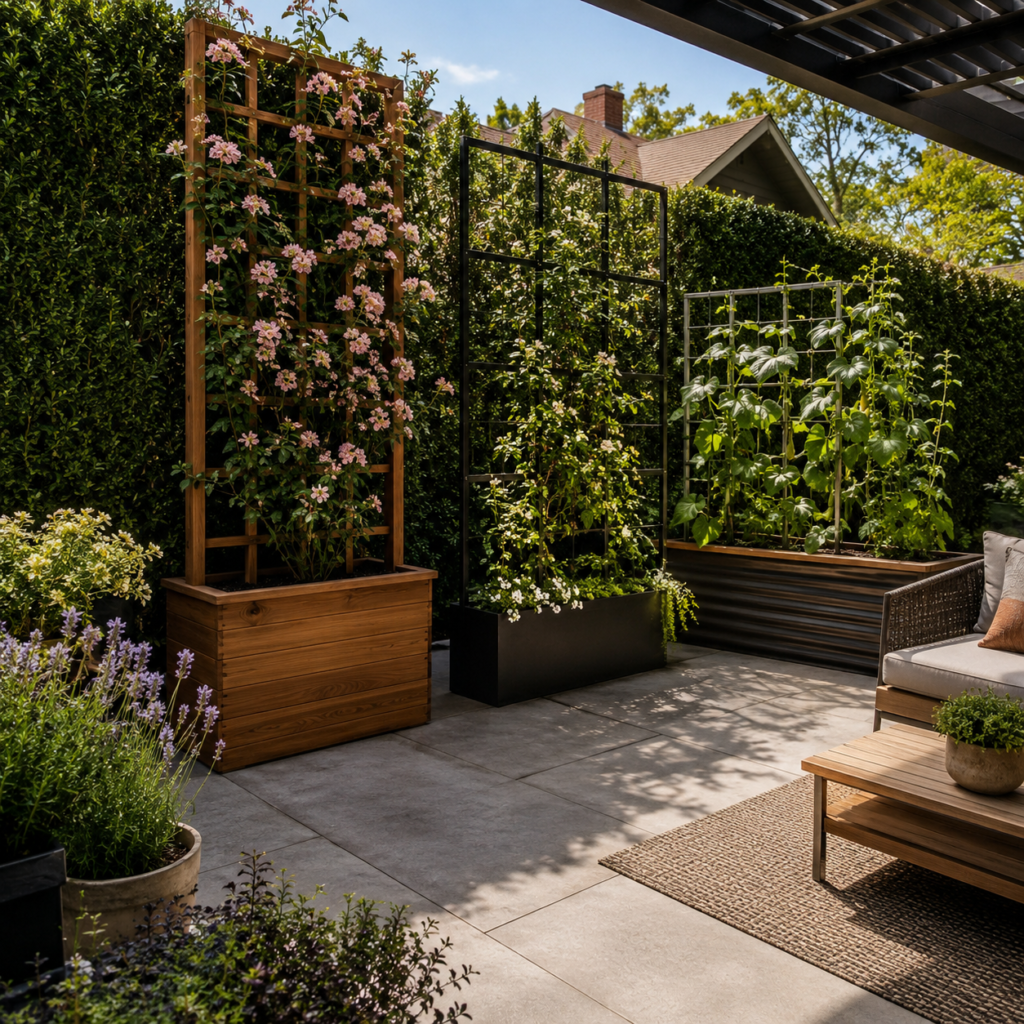
Backyard planter ideas with trellis work best when you want one outdoor feature to solve several problems at once. A good trellis planter can support climbing flowers, grow vegetables, create privacy, soften a plain fence, divide a patio, and make a small backyard feel more complete without building a permanent structure.
Unlike a plain container, a trellis planter uses vertical space. That makes it especially helpful for patios, decks, narrow side yards, balcony-style spaces, and compact gardens where every inch matters. The best design depends on planter depth, trellis height, material, plant choice, drainage, wind exposure, and how much privacy or greenery you want.
What Are Trellis Planters?
Backyard planters with trellis are outdoor containers that include a vertical support frame for climbing plants. They combine the soil-holding function of a planter box with the upward-growing support of a trellis, making them useful for privacy, flowers, vegetables, vines, and small-space garden design. Instead of using a separate pot and a separate support structure, this design joins both into one compact backyard feature.
Common backyard planter ideas with trellis include:
- Raised planter boxes with attached trellis panels
- Long trough planters with privacy screens
- Wooden lattice planter boxes for flowers
- Black metal grid planters for modern patios
- Rolling planters with vertical screens for renters
- Corner trellis planters for small gardens
- DIY planter boxes with bamboo, wire mesh, or wood lattice
Why Use Trellis Planters?
Trellis planters are good for backyards because they save space, support climbing plants, improve privacy, and add vertical structure. They are especially useful when your backyard feels flat, exposed, small, or unfinished. A normal planter adds greenery at ground level, but a trellis planter adds height, shape, and function.
Trellis planters are useful for:
- Creating privacy around seating areas
- Growing climbing vegetables in small spaces
- Hiding plain fences, walls, or garage sides
- Adding height to flat backyard layouts
- Separating outdoor dining and lounge zones
- Growing flowers without large garden beds
- Making patios feel softer, greener, and more finished
Best Trellis Planter Ideas
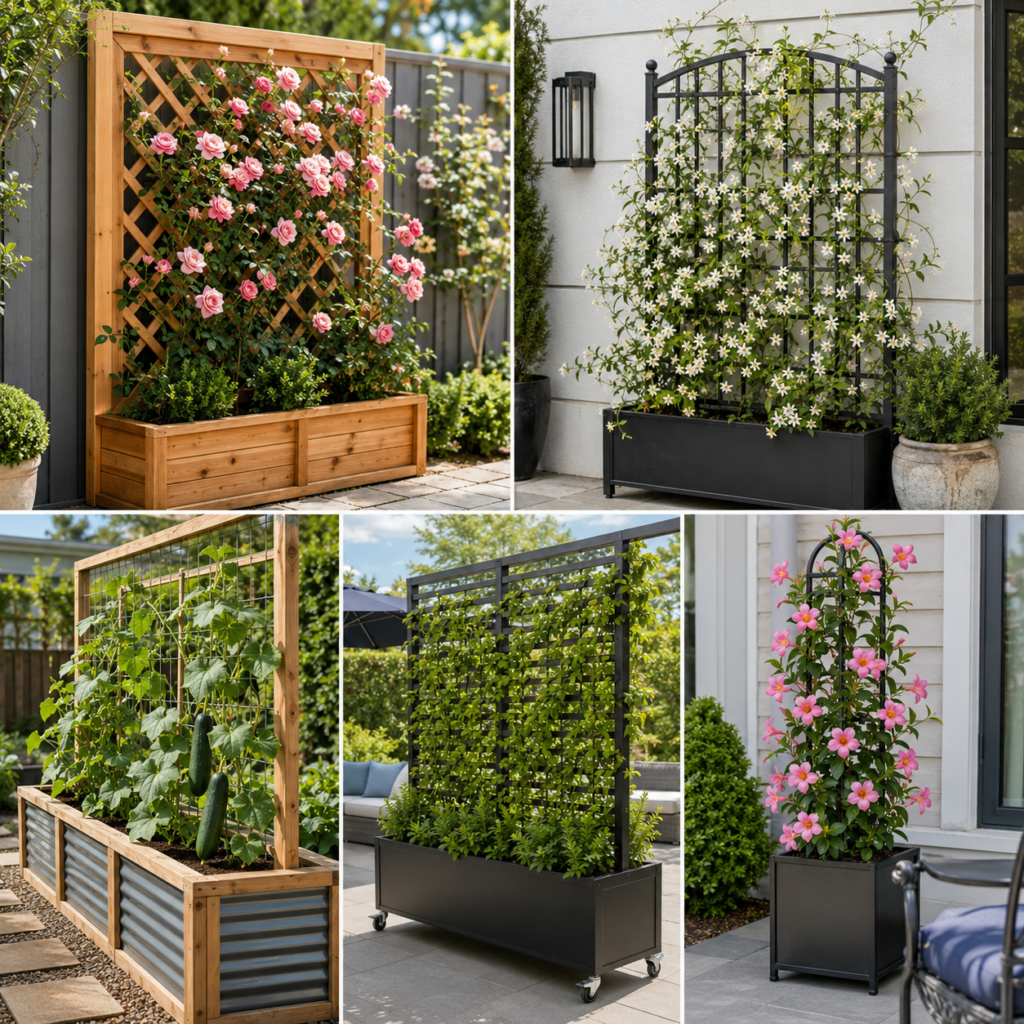
The best backyard planter ideas with trellis are the ones that solve a clear outdoor problem. Some backyards need privacy, some need climbing vegetables, some need flowers, and some only need vertical structure to make the space feel finished.
For example, a cedar planter with white lattice works well for climbing roses, while a black metal trellis planter suits a modern patio. A deep raised planter with wire mesh is better for cucumbers and beans, while a rolling trellis planter works well for renters.
Best backyard planter ideas with trellis include:
- Cedar planter box with white lattice for climbing roses
- Black metal trellis planter for modern patio privacy
- Raised vegetable planter with cucumber trellis
- Rolling trellis planter for renters
- Long trough planter with jasmine privacy screen
- Corner planter with clematis trellis
- DIY wood planter with wire mesh trellis
- Small patio planter with mandevilla
Best Places for Trellis Planters
Trellis planters work best in backyard spaces where you need height, privacy, plant support, or visual separation. The most effective locations include patios, decks, fence lines, side yards, balcony edges, garden paths, and seating corners. These are areas where a normal low planter may look decorative but does not solve the bigger problem of exposure, empty vertical space, or lack of structure.
A patio is one of the strongest places to use a planter with trellis. Patios often need both comfort and privacy because they are used for sitting, eating, relaxing, or entertaining. A rectangular planter with a tall trellis can sit behind outdoor chairs, beside a dining table, or along the edge of paving. Fence lines are another smart location because a trellis planter can break up a hard surface and add flowers, vines, or vegetables without planting directly in poor soil.
Best placement ideas include:
- Behind a backyard bench for a green backdrop
- Along a fence to soften hard boundaries
- Beside a grill area to separate cooking and seating
- Near a deck railing for privacy
- In a narrow side yard for vertical greenery
Types of Trellis Planters
The best planter with trellis depends on your goal. Raised planter boxes are best for vegetables, privacy screen planters are best for patios, lattice planters are best for flowers, and metal grid planters are best for modern outdoor spaces. Each type has a different purpose, so choosing by appearance alone can lead to poor results later.
Main types to consider:
- Raised planter with trellis: best for vegetables and herbs
- Privacy screen planter: best for patios and decks
- Lattice planter: best for flowers and soft garden style
- Metal trellis planter: best for modern yards
- Wood trellis planter: best for natural or cottage gardens
- Rolling trellis planter: best for renters and flexible spaces
- Trough planter with trellis: best for fences and narrow areas
Best Plants for Trellis Planters
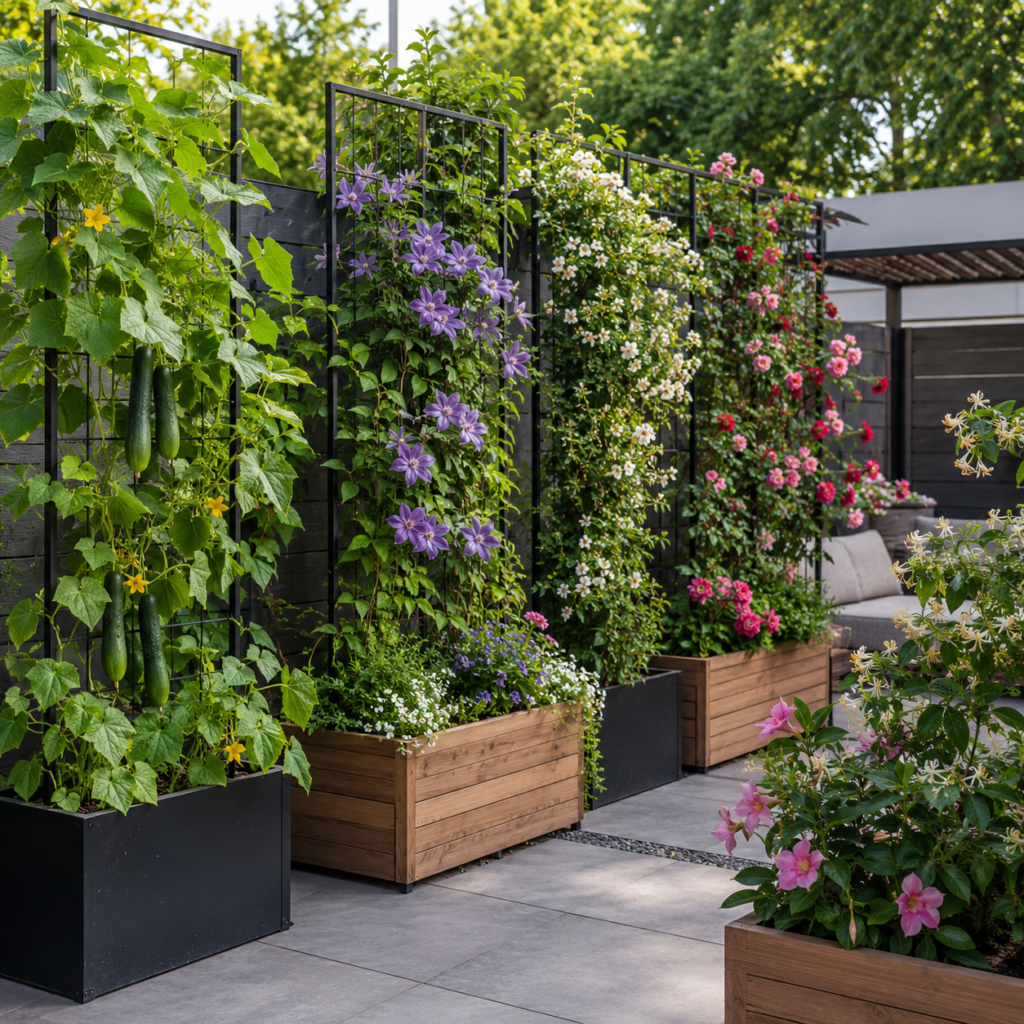
The best plants for trellis planters are climbing or vining plants that can grow upward without needing a large ground bed. Strong choices include cucumbers, peas, beans, clematis, jasmine, climbing roses, sweet peas, mandevilla, honeysuckle, and black-eyed Susan vine. The right plant depends on climate, sunlight, planter depth, and trellis strength.
Always match climbing plants to your local climate, sunlight, and winter conditions because vines behave differently in different regions.
Best plant groups:
- Vegetables: cucumbers, pole beans, peas, compact tomatoes
- Flowers: clematis, sweet peas, mandevilla, climbing roses
- Privacy vines: jasmine, ivy, honeysuckle, passionflower
- Beginner plants: peas, beans, nasturtiums, morning glory
- Decorative annuals: black-eyed Susan vine, canary creeper, cup-and-saucer vine
Vegetables and flowering vines usually need full sun, while ivy, some clematis, honeysuckle, and certain jasmine varieties can tolerate partial shade.
How Deep Should It Be?
Most backyard planters with trellis should be at least 12 inches deep for annual flowers, peas, beans, and smaller vegetables. Larger vines, tomatoes, cucumbers, roses, and long-term privacy plants usually need deeper and heavier containers. Planter depth affects root growth, moisture storage, plant stability, and how often you need to water.
| Planter Depth | Best For |
| 8–10 inches | Small flowers, herbs, light annual vines |
| 12 inches | Peas, beans, compact flowers, small cucumbers |
| 14–18 inches | Tomatoes, cucumbers, clematis, jasmine |
| 18+ inches | Roses, woody vines, long-term privacy planting |
Use a light container mix instead of heavy garden soil, and make sure the planter has drainage holes. This protects roots from waterlogging and keeps the planter from becoming too heavy after rain.
How Tall Should It Be?
A backyard trellis planter should usually be 4 to 6 feet tall for privacy, climbing vegetables, and most flowering vines. Smaller decorative plants may only need 2 to 4 feet of support, while strong permanent vines may need taller structures. The correct height depends on the plant’s growth habit and the purpose of the planter.
If the goal is privacy, 5 to 6 feet is usually the most useful height. It blocks seated views, creates a green backdrop, and makes patios feel more enclosed without looking like a full wall. If the goal is vegetable growing, 4 to 6 feet gives cucumbers, beans, and peas enough room to climb while keeping harvesting manageable.
Simple height guide:
- 2–3 feet: small flowers, herbs, decorative support
- 3–4 feet: sweet peas, compact vines, small patios
- 4–5 feet: peas, beans, cucumbers, light privacy
- 5–6 feet: patio privacy, jasmine, clematis, vegetables
- 6+ feet: strong structures, roses, larger vines
Are Trellis Planters Good for Privacy?
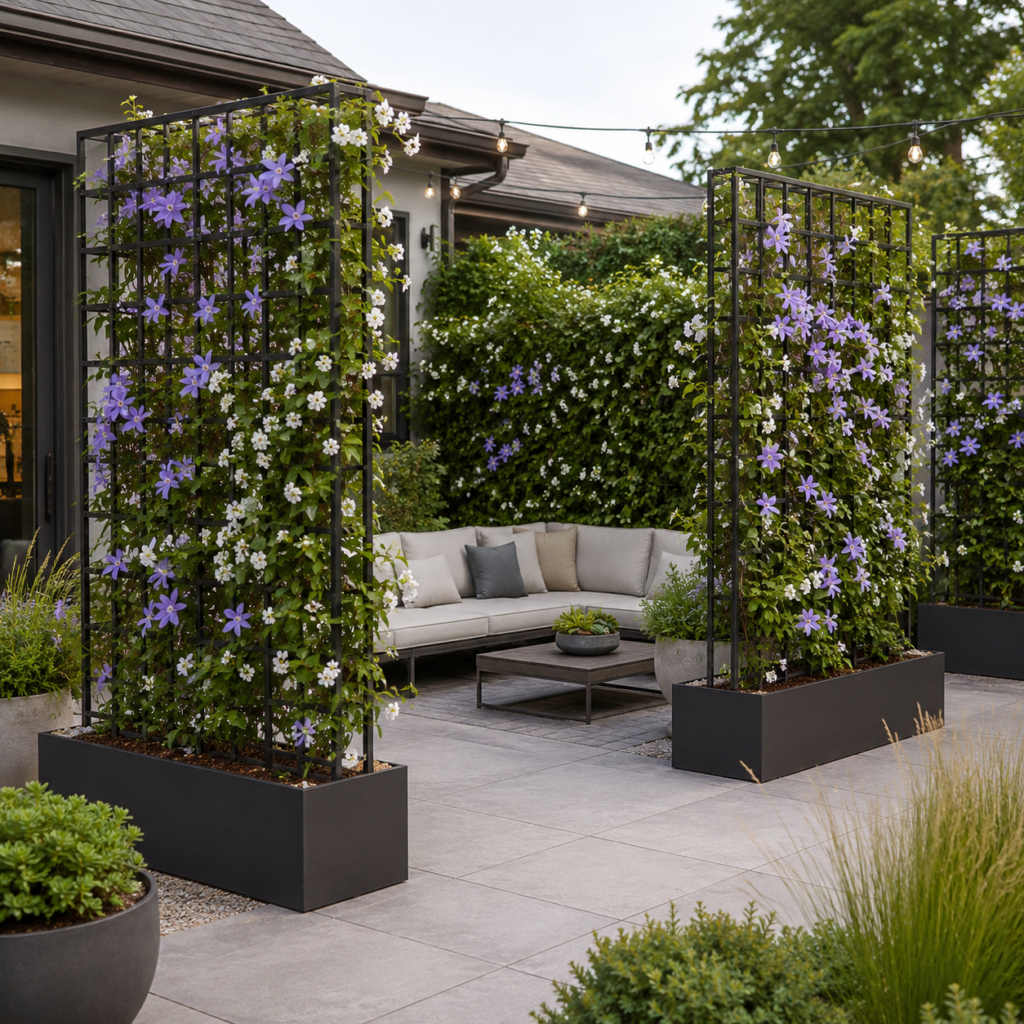
Yes, trellis planters are very good for backyard privacy when you use the right size planter, a tall enough screen, and dense climbing plants. They are especially useful around patios, decks, seating areas, hot tubs, balconies, and narrow side yards. They create privacy in a softer way than a fence because they filter views instead of completely closing off the space.
A trellis planter does not always give instant privacy unless it already has a solid screen or mature plants. Its strength is that it becomes more private over time as vines fill in. For quick seasonal privacy, annual vines like morning glory, black-eyed Susan vine, sweet peas, and climbing nasturtiums can work well. For long-term privacy, choose perennial climbers such as jasmine, clematis, honeysuckle, ivy, or climbing roses.
Good privacy planter ideas include:
- Tall rectangular planter behind a patio sofa
- Matching trellis planters along a deck edge
- Cedar privacy planter beside a hot tub
- Black metal trellis planter near outdoor dining
- Long trough planter with jasmine along a fence
- Rolling trellis screen for renters
- Corner trellis planter to block a direct view
Best Trellis Planter Materials
The best material for a trellis planter depends on style, durability, weight, and maintenance. Wood looks natural, metal feels modern, composite is low-maintenance, plastic is budget-friendly, and concrete or heavy bases work best in windy spaces. The material should match both the design style and the plant weight.
Wood is one of the most popular choices because it fits many backyard styles. Cedar, redwood, and outdoor-treated wood can look warm and natural. Wood planter boxes with lattice trellises are ideal for cottage gardens, vegetable gardens, and relaxed backyard designs. Metal trellis planters suit modern patios and structured spaces, but metal containers can heat up in direct sun.
| Material | Best For | Pros | Watch Out For |
| Cedar wood | Natural gardens | Warm look, outdoor-friendly | Needs care over time |
| Metal | Modern patios | Strong, slim, clean | Can heat in sun |
| Composite | Low-maintenance spaces | Durable and polished | Higher cost |
| Plastic/resin | Budget patios | Lightweight and affordable | Can tip or crack |
| Concrete base | Windy areas | Very stable | Heavy to move |
How Much Do They Cost?
Backyard planters with trellis range from budget to premium depending on material, size, depth, and trellis strength. Small resin planters are usually the cheapest, while cedar, composite, metal, and large privacy screen planters cost more because they offer better stability and durability.
Do not choose by price alone. A cheap shallow planter may work for sweet peas, but it may not support cucumbers, jasmine, or climbing roses. Spend more on structure if the planter will hold heavy vines, vegetables, or privacy plants.
| Type | Cost Level | Best For |
|---|---|---|
| Plastic trellis planter | Budget | Temporary patio use |
| DIY wood planter | Budget to mid-range | Custom size |
| Cedar planter | Mid-range | Natural garden style |
| Metal planter | Mid to premium | Modern patios |
| Composite planter | Mid to premium | Low maintenance |
| Large privacy planter | Premium | Screening and structure |
Are DIY Trellis Planters Worth It?
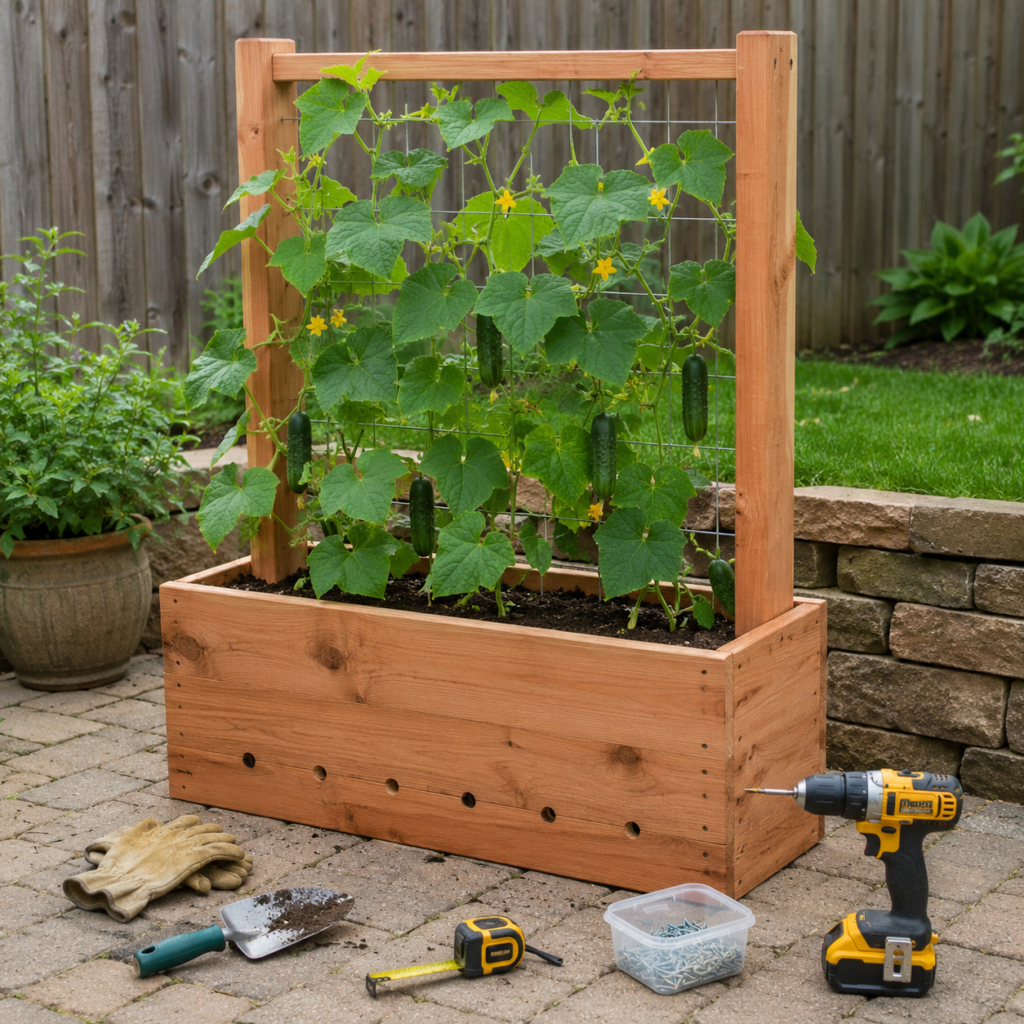
DIY trellis planters are worth building when you need custom size, deeper soil, stronger support, or a lower-cost design. They are especially useful for vegetables, fence-line privacy, and odd backyard spaces where ready-made planters do not fit well.
Buy ready-made for speed and a polished finish; build DIY when performance, sizing, and long-term support matter more.
A simple DIY version can use cedar boards, outdoor screws, drainage holes, and a lattice, bamboo, wire mesh, or cattle panel trellis.
A good DIY trellis planter should include:
- Weather-resistant material
- 12–18 inches of soil depth
- Drainage holes
- Strong trellis attachment points
- A stable base
- Optional liner for wood
- Enough width for roots and moisture
Best Modern Trellis Planters
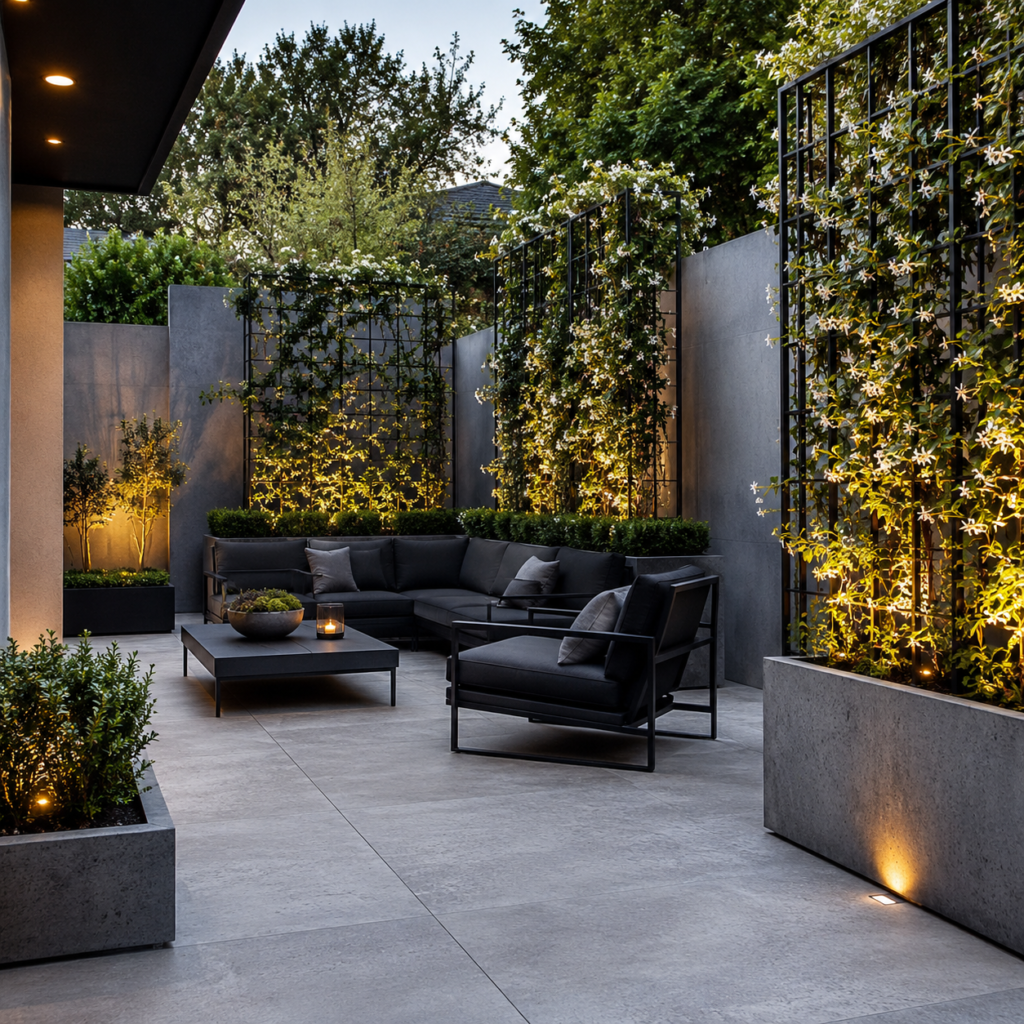
Modern trellis planter ideas look best with clean lines, rectangular shapes, neutral colors, black metal frames, simple grids, and controlled planting. The goal is structure, privacy, and greenery without visual clutter.
Use matte black, charcoal, cedar, white, or concrete gray finishes. A black metal trellis planter with star jasmine works well beside a patio sofa, while a concrete-look trough with a grid trellis suits fence lines and minimalist gardens.
Modern styling ideas:
- Black metal grid planter with jasmine
- Concrete-look trough with star jasmine
- Cedar planter with black hardware
- Matching rectangular planters behind seating
- Slim privacy planter between patio zones
- White planter with one clean flowering vine
- Warm outdoor lighting near the base
Keep the plant palette simple. One climbing plant and one filler plant often look better than too many mixed vines.
Trellis Planter Mistakes to Avoid
The biggest mistakes with trellis planters are choosing a shallow planter, using a weak trellis, forgetting drainage, growing heavy vines in lightweight containers, and placing tall planters in exposed wind. These mistakes often happen because people buy based on appearance instead of structure and plant needs.
A planter may look beautiful when empty, but once soil is wet and the vine matures, the structure has to handle real weight. If the trellis is weak, it may bend or detach. If the planter is too shallow, the plant may dry out quickly or fail to develop strong roots. If the base is too narrow, the planter may become unstable.
Avoid these mistakes:
- Buying a planter too shallow for the plant
- Using decorative lattice for heavy vegetables
- Forgetting drainage holes
- Choosing aggressive or invasive vines
- Putting tall planters in strong wind
- Overplanting too many vines in one box
The deeper decision point is long-term growth. A climbing rose, jasmine, or honeysuckle can become much heavier over time. A cheap temporary planter may work for annual vines, but it may fail with woody plants.
How to Maintain a Trellis Planter
Maintaining a trellis planter is simple, but it must be consistent because climbing plants grow upward, dry out faster in containers, and can become heavy over time. The main tasks are watering, pruning, tying vines, checking drainage, feeding the soil, and making sure the trellis stays stable.
Container plants depend completely on the planter for water and nutrients. A vine growing in the ground can spread its roots wider, but a trellis planter has limited soil volume. This means it may dry out faster in summer, especially on patios, decks, and windy fence lines. As the plant climbs, you also need to guide the stems so they do not tangle, lean, or pull the trellis out of shape.
Basic maintenance checklist:
- Water deeply when the top soil feels dry
- Check drainage holes after heavy rain
- Tie young vines with soft plant ties
- Prune overgrowth before it becomes tangled
- Feed container plants during active growth
- Check screws, brackets, and trellis joints
Real-world maintenance depends on the plant. Beans and peas are easy because they grow for one season and naturally climb. Cucumbers need more water because fruits are heavy and thirsty. Jasmine, clematis, roses, and honeysuckle need more pruning because they can become woody and dense.
How to Style Trellis Planters
Style a backyard planter with trellis by matching the planter material, plant type, and trellis shape to your outdoor design. The best styling makes the planter look like part of the backyard, not a random container placed against a wall. Think of it as both a garden feature and a design element.
For a cottage-style backyard, use a wooden planter with white lattice and flowering vines such as sweet peas, clematis, or climbing roses. Add soft companion plants near the base, such as lavender, alyssum, or trailing flowers. For a modern backyard, use a black metal or charcoal planter with a straight grid trellis. For a productive edible garden, choose a deep cedar raised planter with a wire trellis and grow cucumbers, peas, beans, or compact tomatoes.
Styling combinations:
- White lattice + climbing roses for cottage charm
- Black metal + jasmine for modern privacy
- Cedar box + cucumbers for edible gardening
- Concrete trough + star jasmine for luxury patios
- Rolling planter + annual vines for rental spaces
Trellis Planter Decision Guide
Use this quick matrix to match your trellis planter design with your main backyard goal.
| Goal | Best Planter Type | Best Trellis Type | Best Plants |
| Privacy | Long raised planter | Lattice or slatted panel | Jasmine, ivy, clematis |
| Vegetables | Deep raised box | Grid or net trellis | Cucumbers, peas, beans |
| Modern decor | Rectangular metal planter | Black grid trellis | Star jasmine, mandevilla |
| Cottage style | Wood planter | White lattice | Roses, sweet peas |
| Small patio | Narrow trough planter | Slim vertical screen | Herbs, peas, flowering vines |
| Rental space | Rolling planter | Lightweight panel | Annual vines, beans |
Are Trellis Planters Worth It?
Backyard planters with trellis are worth it when you need privacy, vertical growing space, climbing plant support, or decorative structure in one compact feature. They are especially valuable for small backyards, patios, decks, and narrow garden areas where ground space is limited.
A normal planter adds greenery, but a trellis planter adds height and function. It can create a privacy screen, support vegetables, frame an outdoor seating area, or make a plain fence look intentional. That makes it one of the most useful planter ideas for homeowners who want beauty and practicality together.
Choose a trellis planter if you want to:
- Grow climbing vegetables
- Add privacy to a patio
- Cover a plain fence or wall
- Make a small backyard feel greener
- Create a vertical garden feature
- Divide outdoor spaces naturally
- Add flowers without a full garden bed
- Improve a rental patio without permanent work
They may not be worth it if your space is extremely windy, your plants do not need support, or you prefer very low-maintenance landscaping. Climbing plants usually need tying, pruning, watering, and seasonal care.
Final Thoughts
Backyard planter ideas with trellis are powerful because they combine planting, structure, privacy, and vertical design in one feature. They can make a small patio feel more private, help vegetables grow upward, turn a plain fence into a garden wall, and add height to a flat backyard. Few backyard planter ideas offer this much function in such a compact footprint.
Before buying or building, ask:
- Do I need privacy, food, flowers, or decoration?
- How much sunlight does this spot receive?
- Is the planter deep enough for the plant?
- Is the trellis strong enough for mature growth?
- Will wind make the planter unstable?
- Can I water and prune it easily?
FAQs
What is a backyard planter with trellis?
A backyard planter with trellis is a planter box with a vertical support frame. It helps vines, flowers, vegetables, and privacy plants grow upward.
What are the best backyard planter ideas with trellis?
The best ideas include cedar lattice planters, black metal trellis planters, raised vegetable planters, rolling privacy planters, and trough planters with jasmine or clematis.
What plants grow best in trellis planters?
Cucumbers, peas, beans, clematis, jasmine, roses, sweet peas, mandevilla, and honeysuckle grow well. Match the plant to your climate and trellis strength.
How deep should a planter with trellis be?
Most trellis planters should be at least 12 inches deep. Larger vines, cucumbers, tomatoes, jasmine, and roses usually need 14 to 18 inches.
How tall should a trellis planter be?
Most trellis planters should be 4 to 6 feet tall for privacy and climbing vegetables. Small decorative vines may only need 2 to 4 feet.
Are trellis planters good for privacy?
Yes, trellis planters create soft privacy with climbing plants. They work well beside patios, decks, fences, and seating areas.
Do trellis planters need drainage holes?
Yes, drainage holes are necessary. They prevent waterlogged soil, root rot, and excess weight after rain or watering.
Can I put a trellis planter on a deck?
Yes, but use a stable size and wide base. Soil, water, and mature plants get heavy, so protect the deck and secure tall trellises.
Should I buy or build a trellis planter?
Buy ready-made for speed and a polished look. Build DIY when you need custom size, deeper soil, or stronger support.
Are backyard planters with trellis worth it?
Yes, they are worth it for privacy, vertical growing, climbing plant support, and outdoor decoration. They are especially useful in small backyards and patios.

Myra is the founder and lead writer of Backyard Planter Ideas, where she shares practical, well-researched guidance on planter design, plant selection, and outdoor styling. Her goal is to help homeowners create attractive, functional garden spaces with clear, reliable, and easy-to-apply advice.