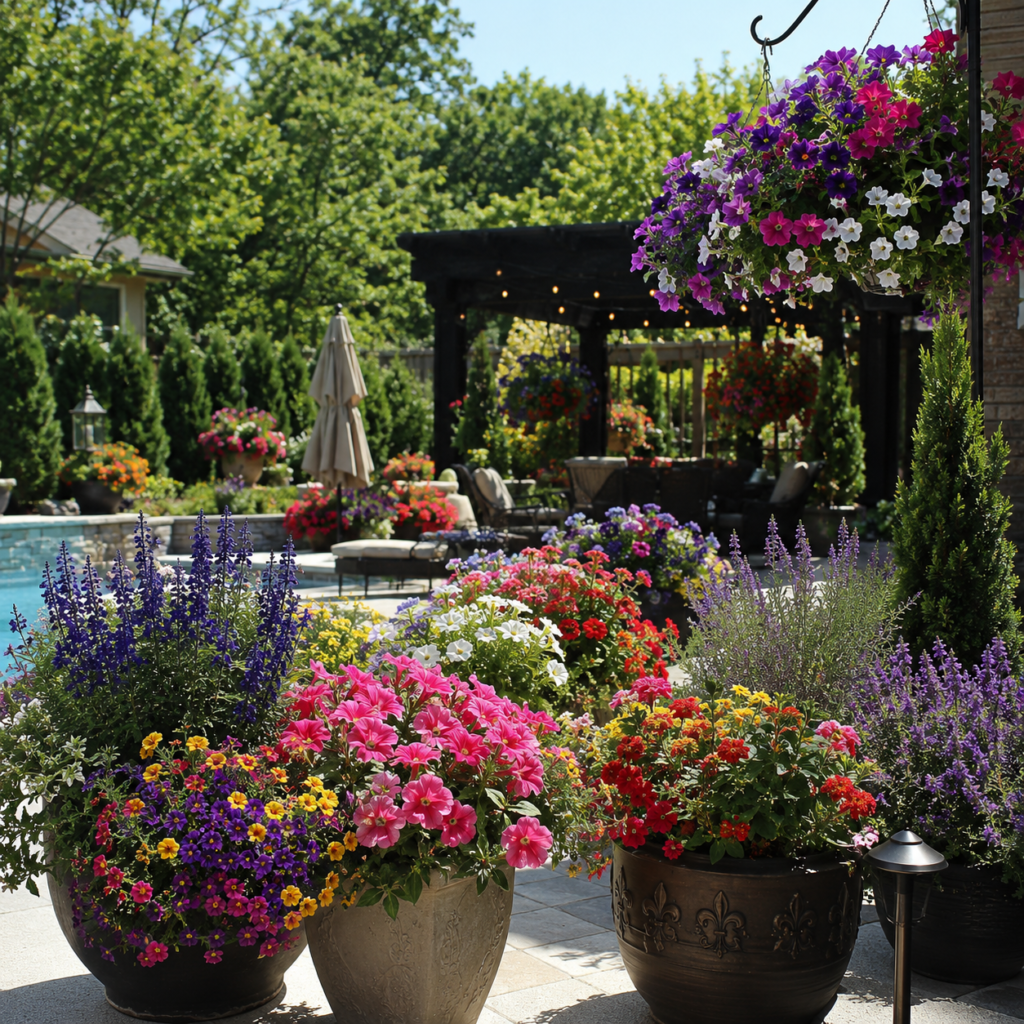
Sunny backyard planters can transform ordinary outdoor spaces into vibrant focal points filled with color, texture, and seasonal interest. However, not all flowers perform equally well in containers exposed to direct sunlight. The best flowers for sunny backyard planters are those that tolerate heat, bloom continuously, and maintain strong visual appeal even during the hottest weeks of summer.
Choosing the right flowers is one of the most important decisions when designing backyard planters. Some flowers thrive in six or more hours of daily sun and reward gardeners with months of blooms, while others quickly decline when exposed to intense heat. Understanding which flowers naturally perform best in sunny conditions helps create healthier containers that require less maintenance and provide more consistent color.
Whether you’re creating a colorful patio display, enhancing curb appeal, attracting pollinators, or designing luxury outdoor living spaces, selecting the right flowers can make a significant difference. From long-blooming annuals to dependable perennials, many excellent options provide beautiful results throughout the growing season.
Best Flowers for Sunny Backyard Planters
If you want the short answer, the best flowers for sunny backyard planters are petunias, calibrachoa, lantana, verbena, salvia, lavender, coneflowers, zinnias, and portulaca. These flowers tolerate full sun, bloom for long periods, attract pollinators, and perform exceptionally well in containers throughout the growing season.
Best Flowers for Sunny Planters
Not every flower performs well in a container exposed to direct sunlight all day. Backyard planters create growing conditions that are often more demanding than traditional garden beds because the soil volume is limited and temperatures around the roots can rise significantly during summer. Flowers that thrive in sunny planters must be capable of handling heat, drying winds, and occasional moisture fluctuations while continuing to produce attractive blooms. This is why some flowers that perform well in landscape beds may struggle in containers, especially during long periods of hot weather.
Key characteristics of ideal sunny planter flowers include:
- Tolerance for six or more hours of direct sun
- Strong heat resistance
- Drought tolerance
- Long bloom periods
- Disease resistance
- Pollinator value
- Consistent growth habits
Another important factor is plant form. Upright flowers provide height, mounding flowers create fullness, and trailing flowers soften planter edges. Combining all three creates more balanced and professional-looking arrangements.
Long-Blooming Flowers for Full Sun
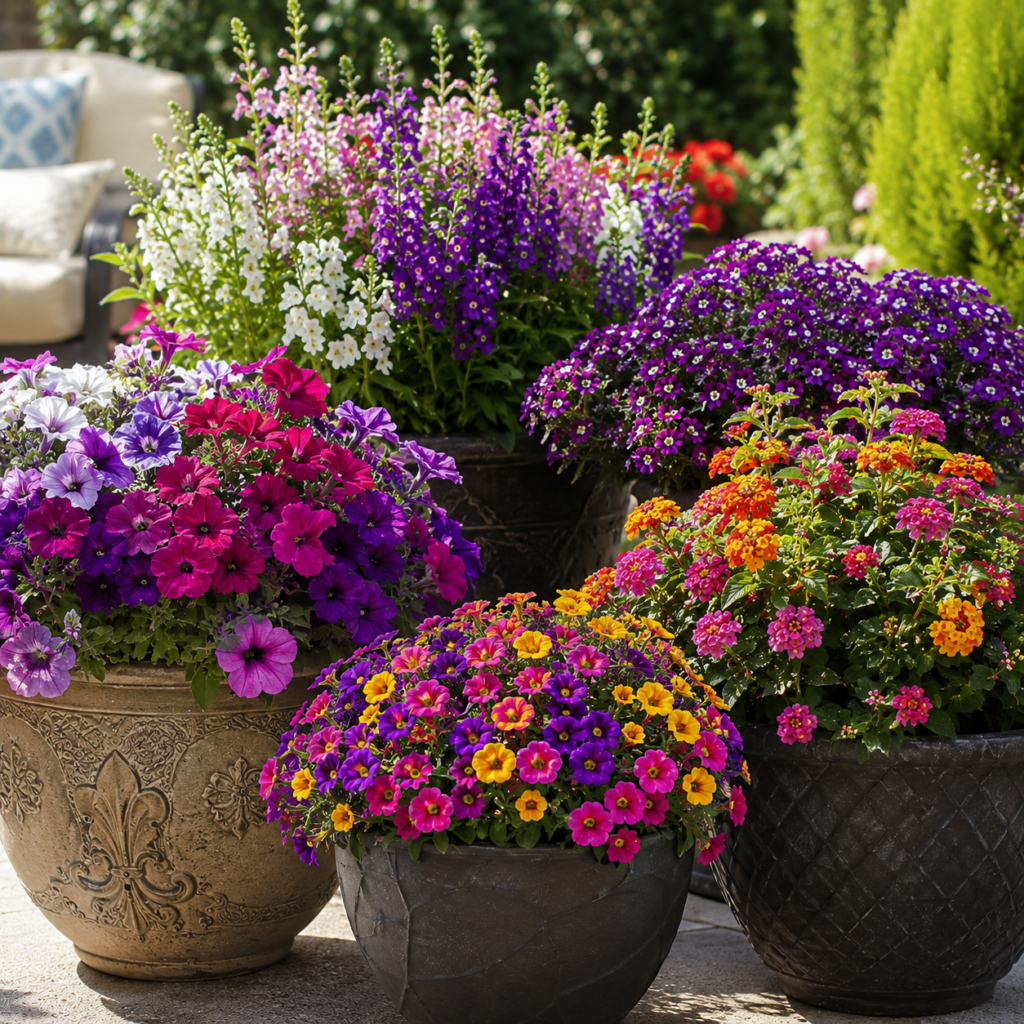
Several flower varieties have earned reputations for exceptional bloom performance. Petunias remain one of the most popular options because modern cultivars can flower continuously for months when properly fertilized. Calibrachoa offers similar performance with hundreds of smaller blooms that naturally spill over container edges. Verbena, lantana, and angelonia are also widely recognized for their ability to produce flowers throughout extended periods of hot weather. These plants continue flowering long after many traditional garden flowers have slowed down.
Among the best long-blooming flowers are:
- Petunias
- Calibrachoa
- Verbena
- Lantana
- Angelonia
- Zinnias
Which Flowers Bloom the Longest in Full Sun
| Flower | Bloom Season | Heat Tolerance | Pollinator Value | Maintenance |
| Petunia | Spring–Frost | High | Medium | Medium |
| Calibrachoa | Spring–Frost | High | Medium | Low |
| Verbena | Spring–Frost | Very High | High | Low |
| Lantana | Spring–Frost | Excellent | Excellent | Very Low |
| Angelonia | Summer–Frost | Excellent | Medium | Low |
A practical strategy is combining several long-blooming flowers in the same planter. This creates overlapping bloom cycles and ensures consistent color throughout the season. For example, lantana may peak during the hottest part of summer while petunias dominate earlier in the season. Together they provide a display that remains attractive for months. Choosing flowers based on bloom duration rather than appearance alone often results in more successful and satisfying backyard planter designs.
Best Annual Flowers for Sunny Planters
Annual flowers continue to dominate container gardening because they provide some of the brightest colors and longest flowering periods available. Unlike perennials, annuals devote most of their energy to producing flowers during a single growing season. This results in continuous blooms that can transform backyard planters into vibrant focal points from spring through fall. Homeowners seeking maximum seasonal color often rely heavily on annual flowers because few other plants can match their visual impact.
Top annual flowers for sunny backyard planters include:
- Petunias
- Calibrachoa
- Marigolds
- Zinnias
- Portulaca
- Angelonia
Each flower offers unique advantages. Marigolds provide bold warm colors and excellent heat tolerance. Zinnias attract butterflies while producing large colorful blooms. Portulaca thrives in hot, dry conditions where many flowers struggle. Petunias and calibrachoa offer unmatched bloom production and versatility. By combining several annual flowers with complementary growth habits, homeowners can create full, layered planter displays that provide continuous color and strong curb appeal throughout the growing season.
Best Perennial Flowers for Planters
Perennial flowers offer a different type of value than annuals. While they may not always provide the nonstop bloom production that annual flowers are known for, they return year after year and create long-term structure within backyard planters. For homeowners who want to reduce yearly planting costs while maintaining attractive outdoor displays, perennials can be an excellent investment. Many modern planter designs use perennials as the foundation and then add seasonal annuals for extra color and variety.
Some of the best perennial flowers for sunny backyard planters include:
- Coneflowers
- Lavender
- Salvia
- Dianthus
- Black-Eyed Susan
- Coreopsis
- Gaillardia
Coneflowers are especially popular because they tolerate heat, drought, and poor soil while attracting bees and butterflies. Lavender provides fragrance and elegant silver foliage that complements both traditional and modern planter designs. Salvia adds vertical interest through colorful flower spikes and offers excellent pollinator value throughout the growing season.
Many experienced gardeners find that combining perennials with annual flowers produces the best results. Perennials provide reliability and long-term structure, while annuals contribute continuous seasonal color. This balanced approach creates attractive containers that evolve naturally throughout the year while keeping maintenance and replacement costs under control.
Best Heat-Tolerant Flowers
Summer is often the most challenging season for flower planters. Containers exposed to direct sunlight can become significantly warmer than surrounding garden soil, placing additional stress on plant roots. Flowers that look beautiful during spring may begin to decline once temperatures rise, especially in regions that experience extended periods of hot weather. Choosing heat-tolerant flowers helps ensure that backyard planters remain colorful and healthy when many other plants begin to struggle.
Some of the best heat-tolerant flowers include:
- Lantana
- Gazania
- Portulaca
- Verbena
- Angelonia
- Salvia
- Zinnias
Lantana is frequently considered one of the top flowers for hot climates because it thrives in intense sunlight and continues blooming throughout summer. Portulaca excels in dry conditions and often performs beautifully with minimal watering. Gazania produces vibrant daisy-like flowers that actually prefer bright sunlight and warm temperatures.
A practical strategy is selecting flowers based on the hottest conditions your backyard experiences rather than average conditions. If flowers can perform during the peak of summer, they will usually thrive during spring and fall as well. This approach helps create backyard planters that maintain strong color and healthy growth throughout the entire growing season.
Flowers by Climate Zone
Choose flowers suited to your climate zone for better performance and lower maintenance.
Best Flowers for Hot Zones (8–11)
- Lantana
- Angelonia
- Portulaca
- Salvia
- Verbena
Best Flowers for Moderate Zones (6–8)
- Petunias
- Marigolds
- Coneflowers
- Calibrachoa
- Zinnias
Best Flowers for Cooler Zones (3–5)
- Dianthus
- Black-Eyed Susan
- Salvia
- Zinnias
- Lavender
Low-Maintenance Flowers
The easiest flowers to maintain are those naturally adapted to heat, drought, and changing weather conditions. These plants recover quickly from temporary neglect and generally resist many common garden problems. In addition to reducing maintenance requirements, durable flowers often lower long-term costs because they require fewer replacements and less intensive care throughout the growing season.
Excellent low-maintenance flowers include:
- Lantana
- Portulaca
- Salvia
- Coneflowers
- Lavender
- Verbena
- Gaillardia
Lantana remains one of the most dependable options because it tolerates heat, drought, and poor soil while producing continuous blooms. Portulaca is another standout performer, thriving in hot, sunny conditions with minimal watering. Lavender and coneflowers provide long-lasting beauty while supporting pollinators and requiring relatively little attention once established.
A simple maintenance routine for these flowers usually includes:
- Watering when soil becomes dry
- Occasional deadheading
- Fertilizing every few weeks
- Seasonal pruning if needed
Many homeowners discover that choosing the right flowers from the beginning eliminates most maintenance challenges. Rather than constantly managing struggling plants, gardeners can focus on enjoying colorful backyard displays. Selecting naturally resilient flowers is often the easiest path to attractive planters that remain healthy and vibrant throughout the season.
Best Pollinator Flowers
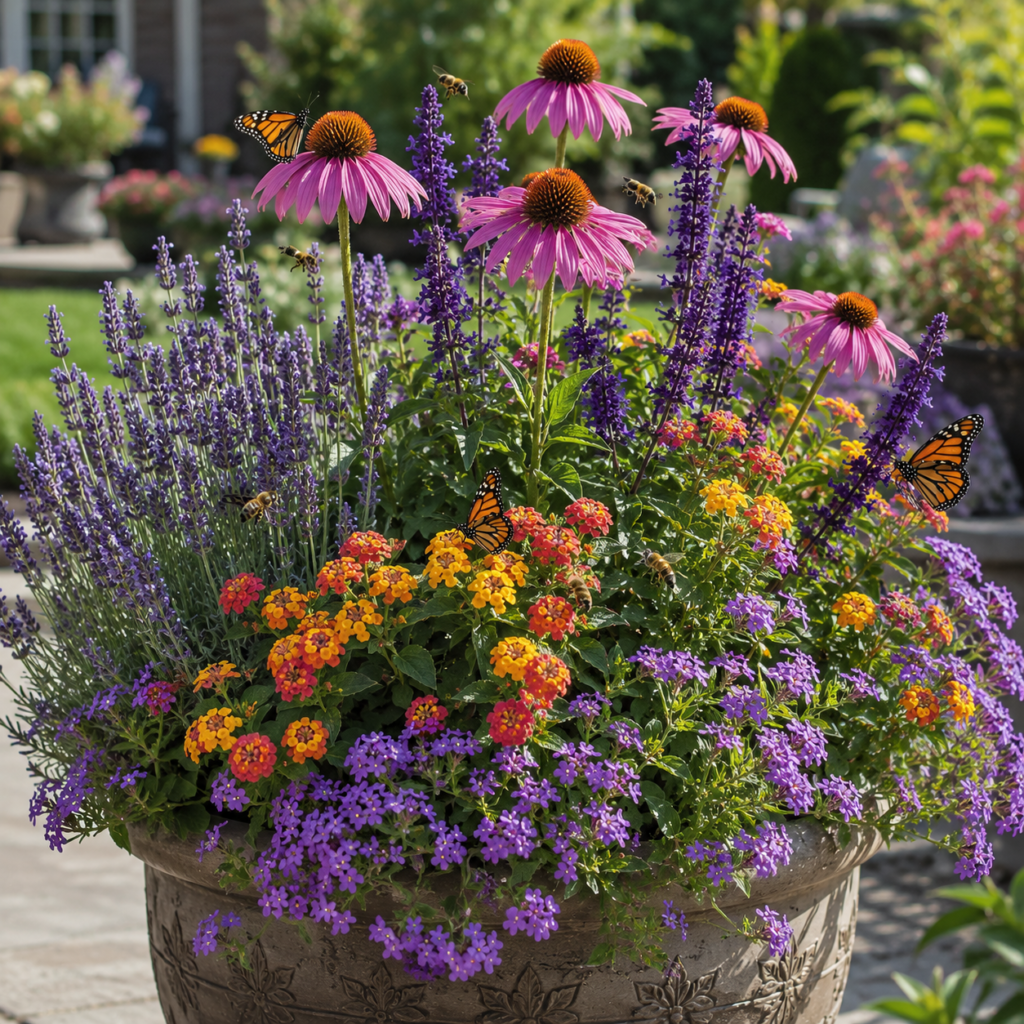
Pollinator-friendly flower planters have become increasingly popular because they combine visual beauty with environmental benefits.
Some of the best flowers for attracting butterflies and bees include:
- Coneflowers
- Salvia
- Verbena
- Lantana
- Lavender
- Zinnias
- Bee Balm
Coneflowers are especially valuable because they attract numerous pollinator species while tolerating heat and drought. Salvia produces nectar-rich flower spikes that hummingbirds and bees visit frequently. Lantana is widely recognized for attracting butterflies and often becomes one of the most active plants in a pollinator garden.
To create a more effective pollinator planter:
- Use multiple flower species
- Choose different bloom periods
- Avoid pesticides
- Include annuals and perennials
Best Flower Color Combinations
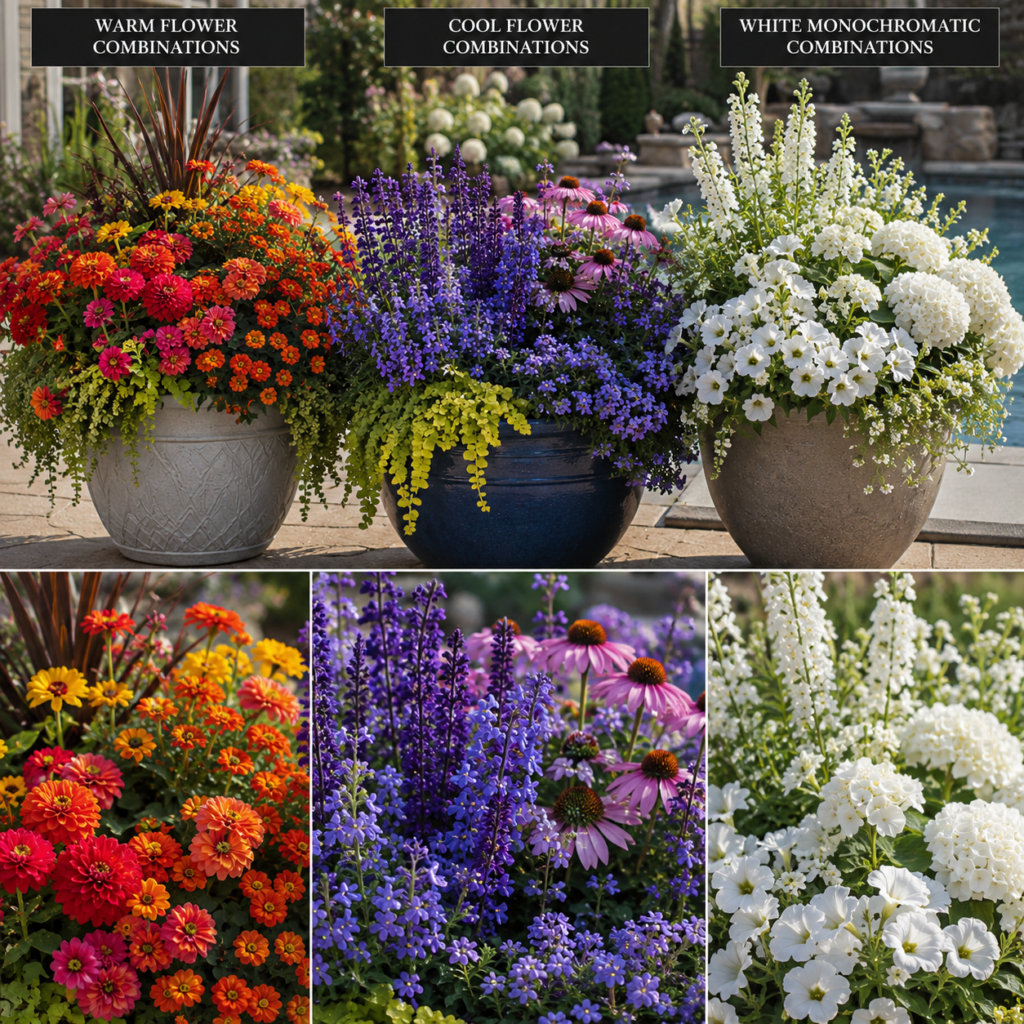
Warm color combinations are often chosen when homeowners want flowers to stand out and create strong focal points. Red, orange, and yellow flowers naturally attract attention and add energy to outdoor spaces. These combinations work particularly well near entrances, patios, and entertaining areas where vibrant colors help create a welcoming atmosphere.
Warm Colors
- Red petunias
- Orange lantana
- Yellow marigolds
- Orange zinnias
Cool Colors
- Purple salvia
- Lavender
- White petunias
- White verbena
- Blue lobelia
Monochromatic
- White petunias
- White calibrachoa
- White verbena
Luxury Flowers for Planters
One of the most common characteristics of luxury flower planters is simplicity. Rather than using numerous flower colors, designers often focus on one or two dominant shades and repeat them throughout the landscape. White flowers are especially popular because they create a clean, timeless appearance that pairs well with modern architecture and premium materials.
Flowers frequently used in luxury planter designs include:
- White Petunias
- White Calibrachoa
- White Verbena
- Lavender
- Hydrangeas
- Roses
- White Geraniums
Luxury flower planters often incorporate:
- Oversized containers
- Monochromatic color schemes
- Symmetrical arrangements
- Architectural foliage plants
- Coordinated outdoor décor
Lavender combined with white flowers remains one of the most popular luxury combinations because it provides both color contrast and fragrance. Large matte black, concrete, or fiberglass planters further enhance the upscale appearance.
Arranging Flowers in Large Planters
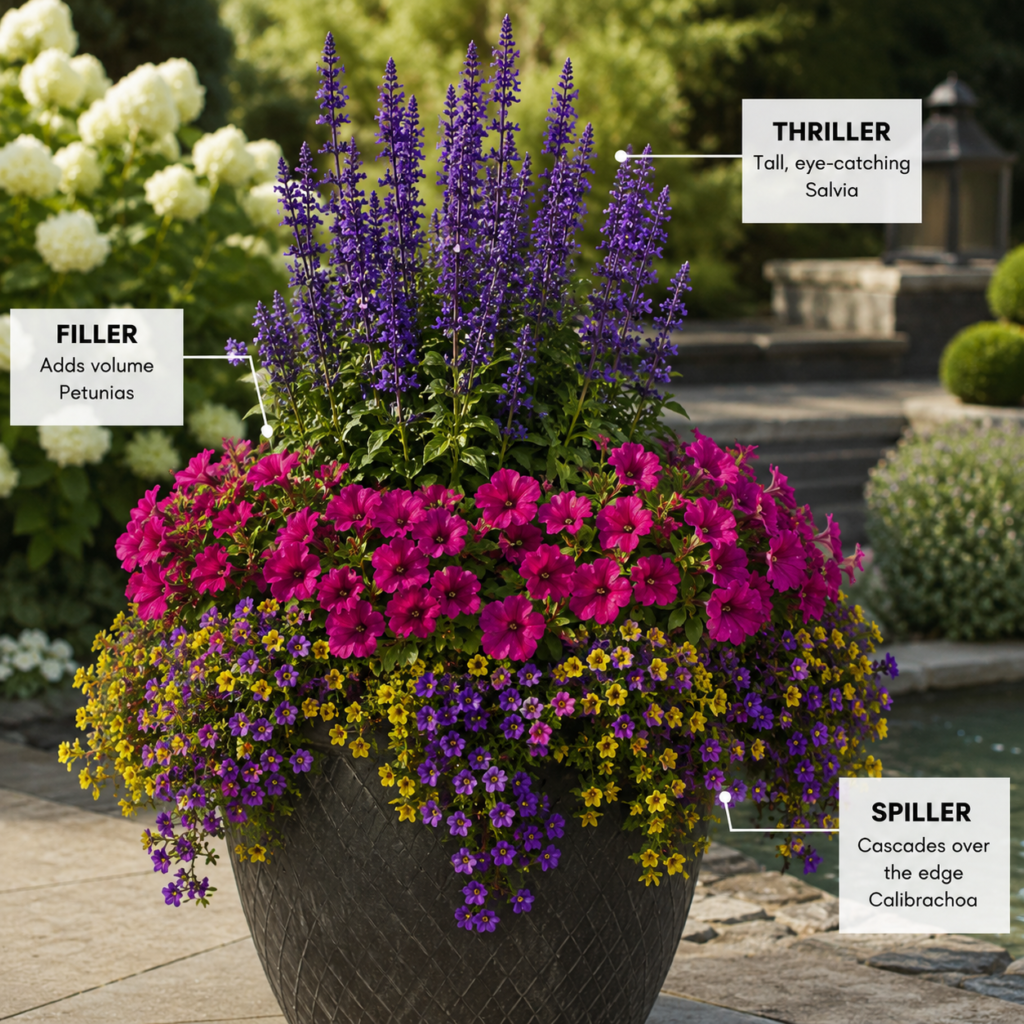
One of the most effective methods is the Thriller-Filler-Spiller approach. This planting strategy organizes flowers according to their growth habits and helps create balanced container designs. By combining upright, mounding, and trailing plants, homeowners can create arrangements that appear fuller, more natural, and more visually dynamic.
Thriller Plants
These provide height and become the focal point of the planter.
Examples include:
- Salvia
- Lavender
- Angelonia
- Ornamental grasses
A 24-inch planter filled with purple salvia, white petunias, and trailing calibrachoa typically reaches peak fullness within 6–8 weeks and often remains attractive until frost with regular watering and fertilization.
Filler Plants
These create fullness around the center of the planter.
Examples include:
- Petunias
- Geraniums
- Zinnias
- Marigolds
Spiller Plants
These soften planter edges by trailing downward.
Examples include:
- Calibrachoa
- Verbena
- Trailing petunias
- Sweet potato vine
A simple example planter recipe might include:
- 1 purple salvia (thriller)
- 3 white petunias (filler)
- 2 calibrachoa plants (spiller)
Large planters should also account for mature plant size rather than appearance at planting time. Flowers often grow significantly during the season, and overcrowding can quickly reduce performance. Allowing adequate spacing improves airflow, reduces disease pressure, and helps plants reach their full potential.
Homeowners who follow a structured arrangement strategy typically achieve more balanced, attractive, and longer-lasting flower displays. Proper plant placement often makes the difference between a planter that looks amateur and one that resembles a professionally designed landscape feature.
Common Flower Planter Mistakes
Many flower planter problems are not caused by poor plant choices but by simple gardening mistakes that gradually weaken plant health. Even the best flowers for sunny backyard planters can struggle when growing conditions are unfavorable. Understanding the most common causes of planter failure helps homeowners avoid frustration, save money, and maintain attractive flower displays throughout the growing season.
One of the biggest mistakes is overwatering. Many gardeners assume flowers need water every day, especially during summer, but constantly saturated soil can be more damaging than temporary dryness. Excess moisture reduces oxygen around plant roots and often leads to root rot, yellow foliage, and weak flowering. Container plants should be watered according to soil moisture levels rather than a fixed schedule. Larger planters may retain moisture for several days, while smaller containers dry out much faster.
Other common mistakes include:
- Poor drainage
- Overcrowding plants
- Under-fertilizing
- Choosing shade flowers for sunny locations
- Using containers that are too small
- Ignoring mature plant size
Poor drainage is particularly harmful because container plants depend entirely on the planter environment created by the gardener. Every flower planter should include adequate drainage holes to allow excess water to escape. Without proper drainage, even drought-tolerant flowers may decline quickly.
Overcrowding is another frequent issue. Newly planted flowers often appear small, tempting gardeners to add extra plants. However, as flowers mature they compete for sunlight, nutrients, and moisture. This competition can reduce bloom production and overall plant health.
Why Flowers Stop Blooming
One of the most common causes of poor bloom production is excessive nitrogen fertilizer. Nitrogen encourages leafy growth, but too much can reduce flower production. Similarly, flowers growing in insufficient sunlight often develop healthy foliage while producing few blooms. Most flowering plants require at least six hours of direct sunlight each day to reach their full blooming potential.
Common reasons flowers fail to bloom include:
- Too much nitrogen fertilizer
- Insufficient sunlight
- Overwatering
- Underwatering
- Root crowding
- Lack of fertilizer
- Heat stress
- Failure to deadhead spent blooms
Root crowding can also reduce flowering performance. As plants outgrow containers, roots compete for limited space, water, and nutrients. Dividing plants or upgrading to larger containers often improves bloom production significantly.
To encourage more flowers:
- Increase sunlight exposure
- Use balanced flowering fertilizer
- Remove spent blooms regularly
- Maintain consistent watering
- Repot overcrowded plants
Keep Flowers Blooming All Season
Choosing excellent flowers is only the first step toward maintaining beautiful backyard planters. Long-lasting blooms require consistent care and attention throughout the growing season. Fortunately, keeping flowers blooming is usually less complicated than many homeowners expect. A few simple maintenance practices can dramatically improve flowering performance and extend color from spring until frost.
One of the most important factors is proper watering. Flowers growing in containers rely entirely on the moisture available within the planter, and sunny locations accelerate water loss. While watering frequency varies depending on weather and container size, maintaining consistent soil moisture helps prevent plant stress and encourages continuous flowering. Deep watering is generally more effective than frequent shallow watering because it promotes stronger root development.
- Deadhead spent flowers
- Apply fertilizer regularly
- Remove damaged foliage
- Prune leggy growth
- Monitor for pests and disease
Deadheading is especially beneficial for flowers such as petunias, marigolds, and zinnias. Removing old blooms encourages plants to redirect energy toward producing new flowers instead of forming seeds. This simple habit can noticeably increase flowering throughout the season.
Regular fertilization is equally important because nutrients gradually wash out of containers through watering. Most flowering plants benefit from balanced fertilizer applications every two to four weeks during active growth. Consistent feeding helps sustain vigorous growth and abundant bloom production.
Best Flower Planter Combinations
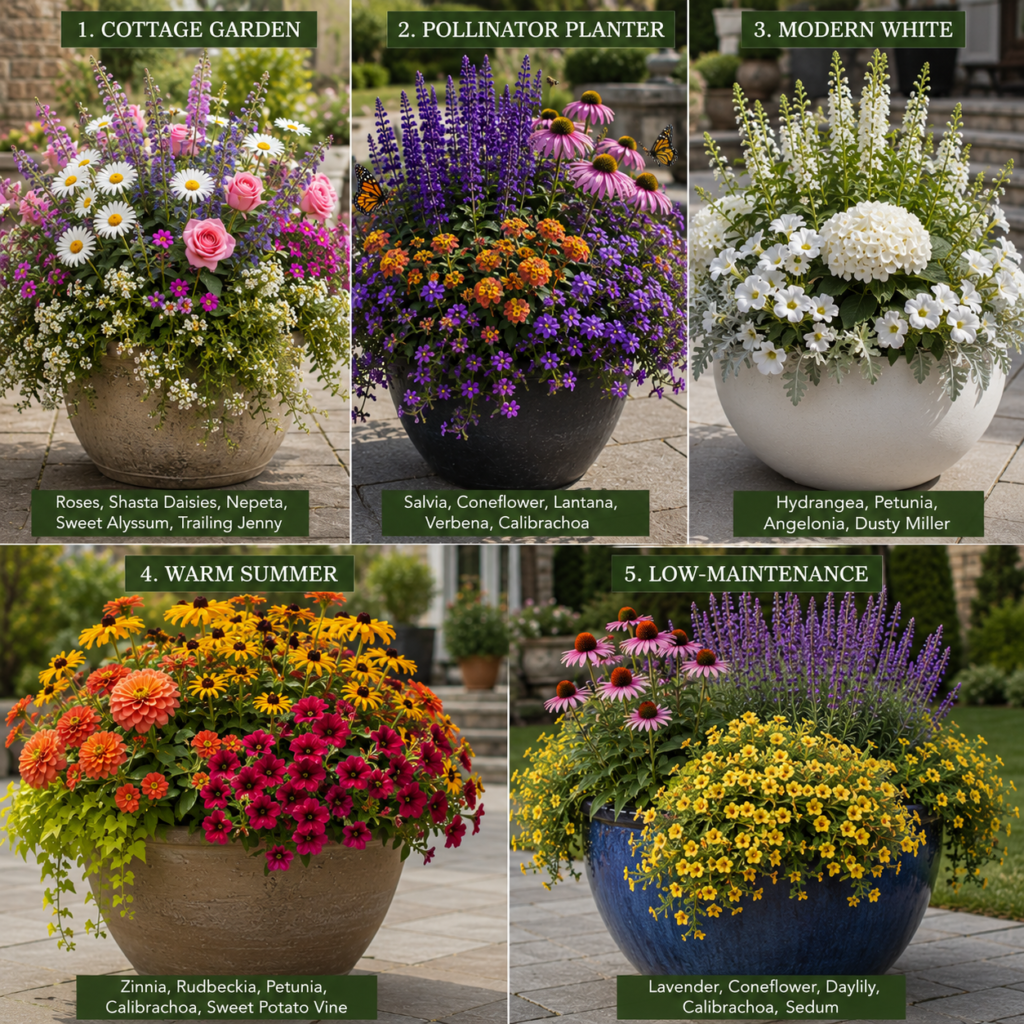
One of the easiest ways to build attractive combinations is selecting flowers with similar sunlight and watering requirements. This ensures all plants thrive under the same growing conditions. Mixing flowers that have dramatically different needs often results in one plant performing well while another struggles. Compatibility is just as important as appearance when designing flower planters.
Cottage Garden Combination
- Purple salvia
- Pink petunias
- White verbena
- Lavender
Pollinator Combination
- Coneflowers
- Salvia
- Lantana
- Verbena
Modern White Combination
- White petunias
- White calibrachoa
- White verbena
- Silver foliage plants
Warm Summer Combination
- Orange lantana
- Yellow marigolds
- Red petunias
- Orange zinnias
Low-Maintenance Combination
- Lantana
- Salvia
- Portulaca
- Verbena
Conclusion
The best flowers for sunny backyard planters include petunias, calibrachoa, lantana, verbena, salvia, lavender, and coneflowers. These flowers provide long-lasting color, tolerate full sun, and perform well in containers. Selecting flowers suited to local conditions helps create healthier, more attractive backyard planters throughout the growing season.
FAQs
What are the best flowers for backyard planters in full sun?
Petunias, calibrachoa, lantana, verbena, salvia, lavender, and coneflowers are among the best choices. They tolerate direct sunlight, bloom for long periods, and perform well in containers.
Which flowers bloom the longest in sunny planters?
Petunias, calibrachoa, lantana, verbena, and angelonia can bloom from spring until frost. Regular watering and feeding help extend flowering.
What flowers can survive extreme summer heat in containers?
Lantana, portulaca, gazania, salvia, and verbena thrive in hot conditions. These flowers continue blooming even during intense summer weather.
What are the easiest flowers for beginner gardeners?
Lantana, marigolds, zinnias, salvia, and portulaca are excellent beginner flowers. They are durable, easy to grow, and require minimal maintenance.
What flowers attract butterflies and bees to backyard planters?
Coneflowers, lantana, verbena, salvia, lavender, and zinnias are popular pollinator plants. Their nectar-rich blooms attract butterflies and beneficial insects.
How often should flower planters be watered in full sun?
Water when the top inch of soil feels dry. Small containers may need daily watering in summer, while larger planters usually stay moist longer.
Why are my planter flowers producing leaves but no blooms?
Too much nitrogen, insufficient sunlight, overcrowded roots, or inconsistent watering are common causes. Most flowering plants need at least six hours of direct sun.
Should I choose annual or perennial flowers for backyard planters?
Annuals provide continuous seasonal color, while perennials return year after year. Many successful planters combine both for the best results.
What flower color combinations look best in backyard planters?
Warm colors like red, orange, and yellow create bold displays, while purple, blue, and white offer a softer appearance. White monochromatic combinations create a luxury look.
What size planter is best for flowering plants?
Containers at least 12–18 inches wide work well for most flower combinations. Larger planters generally support healthier growth and longer-lasting blooms.
Which flowers require the least maintenance?
Lantana, lavender, coneflowers, portulaca, and salvia are among the easiest flowers to grow. They tolerate heat, drought, and occasional neglect.
Are self-watering planters worth using for flowers?
Yes, self-watering planters help maintain consistent soil moisture and reduce watering frequency. They are especially useful in hot, sunny locations.
Myra is the founder and lead writer of Backyard Planter Ideas, where she shares practical, well-researched guidance on planter design, plant selection, and outdoor styling. Her goal is to help homeowners create attractive, functional garden spaces with clear, reliable, and easy-to-apply advice.