
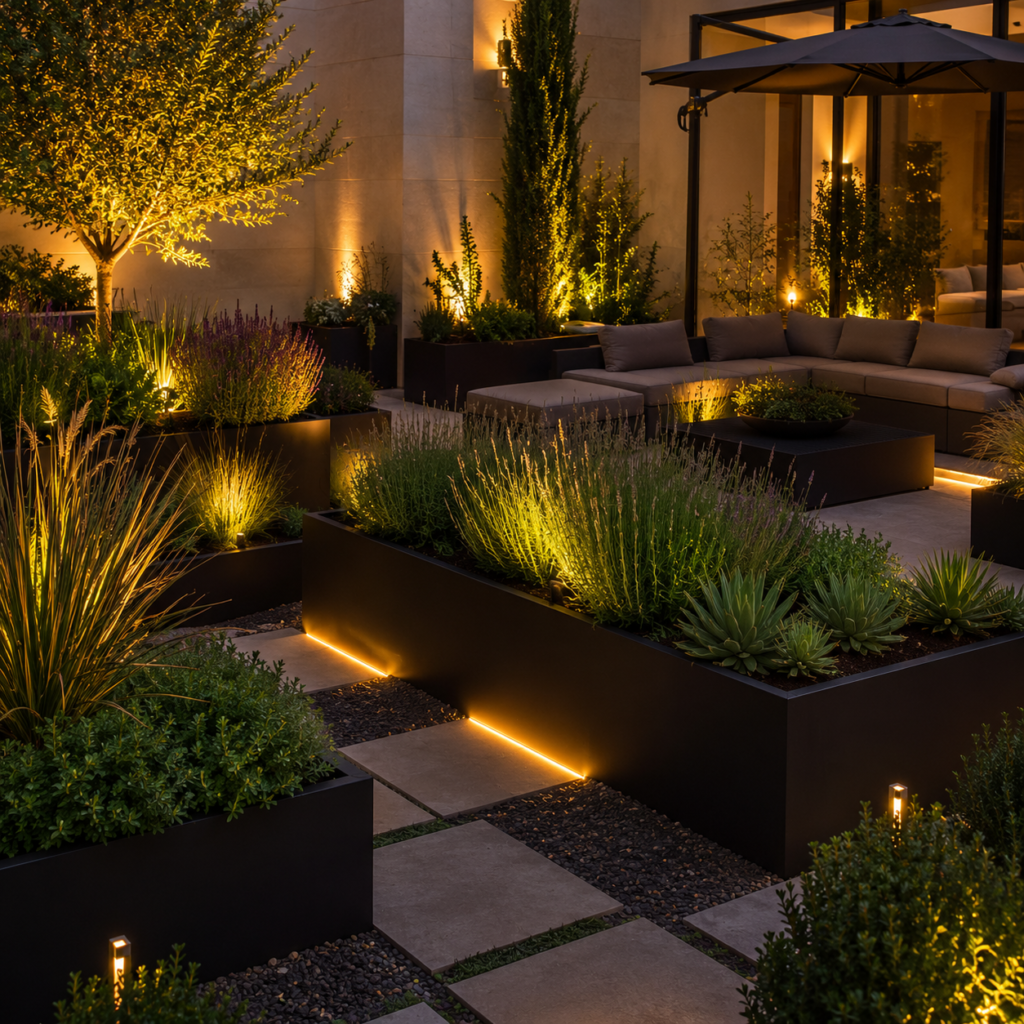
Modern backyard planter ideas combine clean lines, simple layouts, and carefully chosen plants to create organized, low-maintenance outdoor spaces. Using materials such as concrete, steel, or natural wood, modern planters add structure and visual balance without overwhelming the backyard.
Unlike traditional gardens filled with decorative elements, contemporary designs focus on quality, consistency, and functionality. Whether used in large landscapes or small patios, modern planters help create a stylish and sophisticated outdoor environment.
What Makes A Planter Look Modern?
Modern backyard planter design is often misunderstood as simply using black containers or minimalist furniture. In reality, a truly modern planter design is built around intentional choices that create visual order and harmony throughout the outdoor space. The goal is not to remove personality from the garden but to eliminate unnecessary distractions that compete for attention. Modern landscapes use structure, repetition, and clean forms to create an environment that feels calm, organized, and sophisticated.
One of the biggest differences between modern and traditional planter design is the focus on architecture. Modern planters often act as design elements themselves rather than merely containers for plants. Rectangular troughs, cube planters, and geometric raised beds help establish strong visual lines that complement patios, pathways, fences, and outdoor living areas. This creates a seamless connection between the home and the landscape, making the entire backyard feel intentionally designed rather than randomly assembled.
Characteristics commonly found in modern planter designs include:
- Clean architectural lines
- Geometric planter shapes
- Limited color palettes
- Repetition of materials
- Structured plant groupings
- Consistent planter styles
- Open negative space
- Functional layouts
Best Materials for Modern Planters
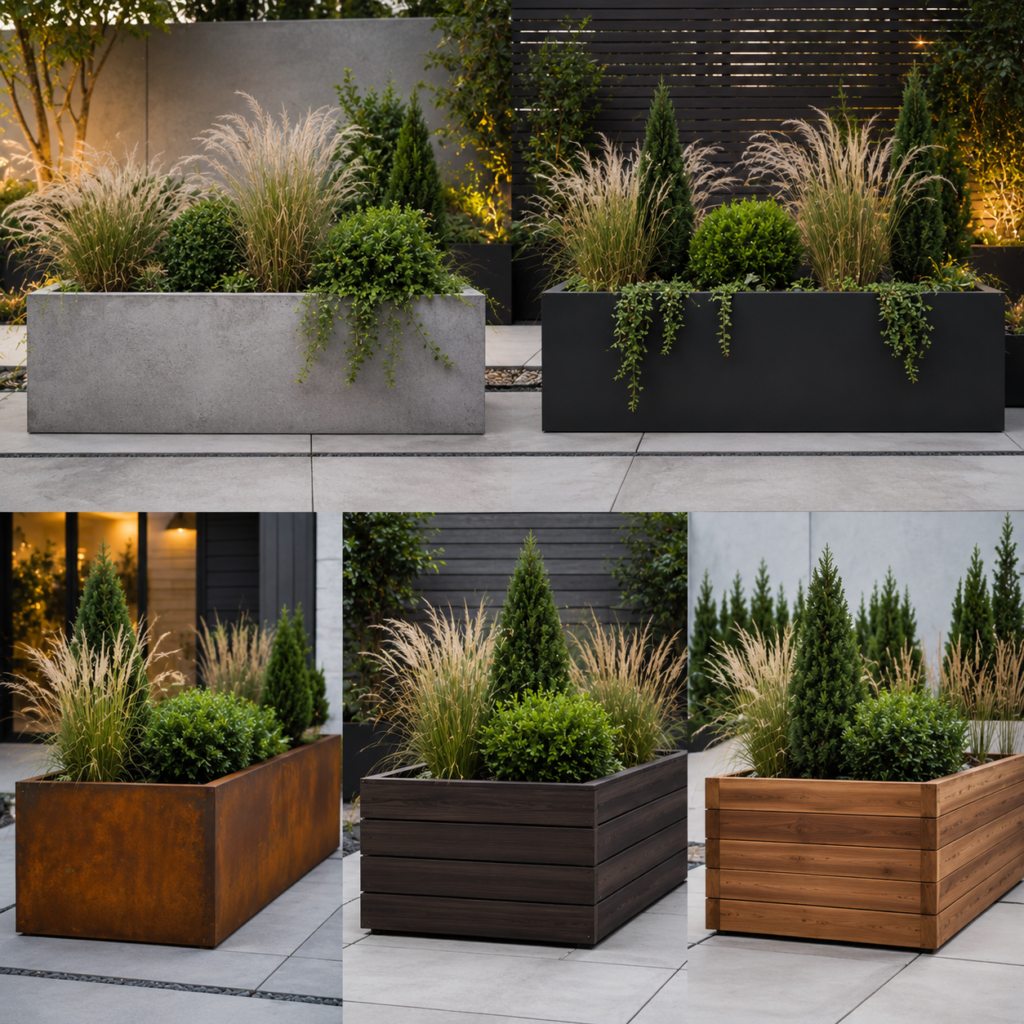
The material you choose for your backyard planters has a major influence on the overall appearance of the landscape. Even well-designed gardens can lose their contemporary appeal when outdated, mismatched, or low-quality containers are introduced into the space. Modern landscaping favors materials that provide clean textures, durability, and visual simplicity while complementing the architecture of the home. The best planter materials create a strong foundation for plants without becoming overly decorative or distracting.
Among all modern planter materials, concrete remains one of the most popular choices. Concrete planters provide a timeless architectural appearance that works exceptionally well in minimalist landscapes. Their neutral gray tones blend naturally with patios, retaining walls, pathways, and outdoor furniture. Concrete also offers excellent durability, making it suitable for homeowners who want a long-term investment rather than a temporary design solution. Although concrete containers are heavier and more expensive than some alternatives, their premium appearance often justifies the cost.
Powder-coated steel has also become a favorite in contemporary backyard design because of its sharp edges and sleek finish. Black and charcoal steel planters create dramatic contrast against greenery and help establish strong visual structure. Many luxury residential landscapes use powder-coated steel because it delivers a clean, professional appearance while requiring relatively little maintenance. Corten steel offers a slightly warmer alternative, developing a natural rust-colored patina that introduces character without sacrificing modern appeal.
Popular modern planter materials include:
- Concrete
- Powder-coated steel
- Corten steel
- Fiberstone
- Composite materials
- Cedar with clean finishes
- Aluminum
- Stone-look composites
| Factor | Concrete | Metal |
| Appearance | Soft Architectural | Sharp Contemporary |
| Weight | Very Heavy | Moderate |
| Mobility | Limited | Easier |
| Durability | Excellent | Excellent |
| Cost | Higher | Moderate |
| Modern Appeal | High | High |
Which Colors Work Best In Modern Backyard Planter Designs?
Color selection plays a surprisingly important role in modern backyard planter design. While plants naturally provide texture, movement, and seasonal interest, planter colors establish the visual framework that holds the entire landscape together. One of the defining characteristics of contemporary outdoor spaces is the use of restrained color palettes. Rather than introducing numerous bright colors and decorative finishes, modern landscapes rely on neutral tones that create balance and allow plants to remain the primary focal point.
Common modern planter color choices include:
- Matte black
- Charcoal gray
- Light concrete gray
- Crisp white
- Dark bronze
- Natural cedar tones
- Soft stone finishes
One of the most effective design strategies is limiting the entire backyard to one or two dominant planter colors. This repetition creates visual consistency and prevents the landscape from feeling fragmented. For example, using black planters throughout a patio, seating area, and garden border establishes a cohesive appearance that feels professionally designed.
Homeowners often make the mistake of purchasing planters based on individual appeal rather than overall compatibility. A planter may look attractive on its own but disrupt the landscape when combined with unrelated colors and finishes. Modern design prioritizes harmony over variety. When colors work together consistently, the backyard feels larger, cleaner, and significantly more luxurious regardless of its size.
Modern Planters and Home Design
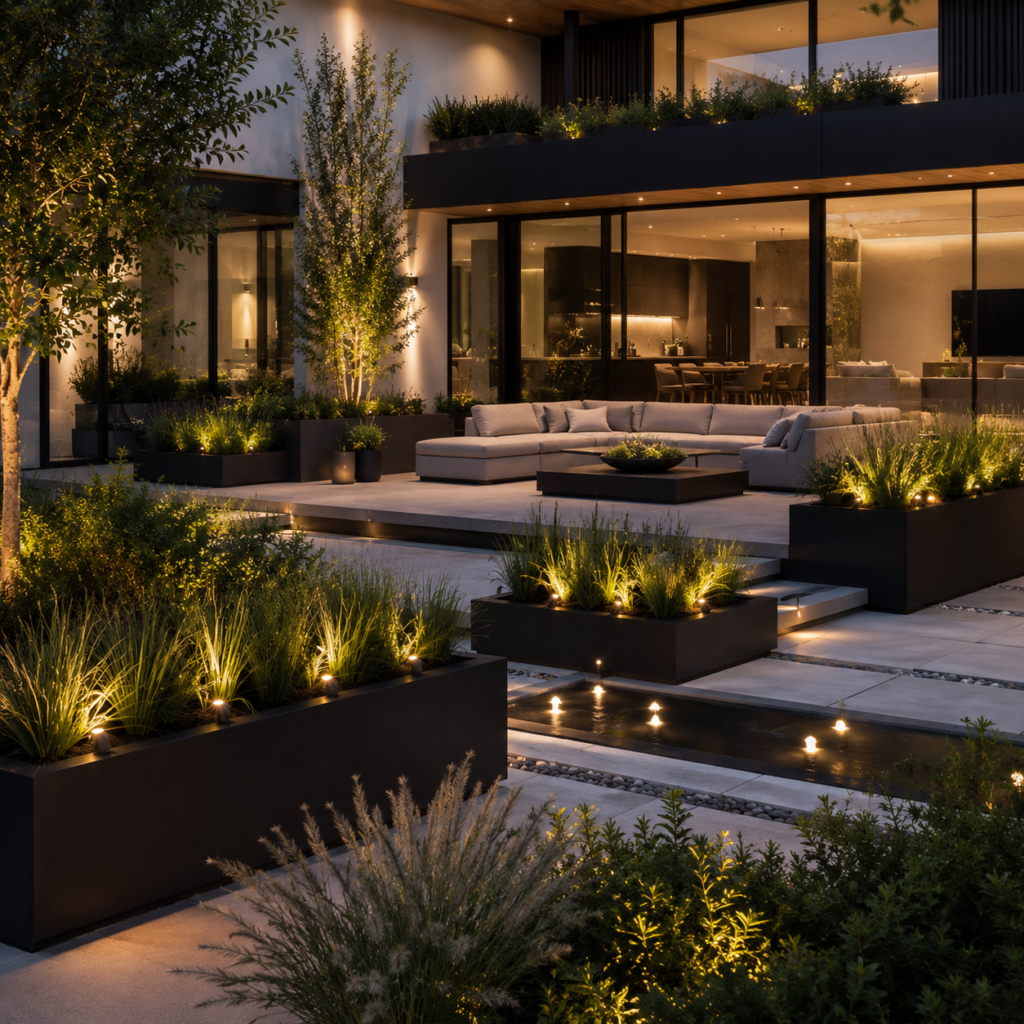
One reason modern backyard planters continue to grow in popularity is their ability to strengthen the relationship between a home and its outdoor environment. Contemporary architecture often emphasizes clean lines, simple materials, and open spaces. Modern planters naturally extend these design principles into the landscape, creating visual continuity between indoor and outdoor living areas. Rather than feeling like separate spaces, the backyard becomes a seamless extension of the home’s architecture.
Best Plants for Modern Planters
Choosing the right plants is just as important as selecting the right planters. Modern backyard design is not simply about containers; it is about creating a relationship between architecture, materials, and plant forms. The best plants for minimalist planters provide structure, texture, and visual consistency while avoiding excessive clutter. Rather than filling every container with different flowers and foliage, contemporary landscapes often rely on carefully selected plant varieties repeated throughout the backyard.
Plants commonly used in modern backyard planters include:
- Ornamental grasses
- Boxwood shrubs
- Plant list
A key principle of modern planting design is repetition. Instead of incorporating twenty different plant varieties, many successful landscapes rely on only three to five species used throughout the backyard. This repetition creates rhythm and visual continuity, making the space feel intentional rather than random.
Most modern landscapes use only three to five plant varieties repeated throughout the backyard to create visual consistency.
Can Modern Planters Create Privacy?
Privacy is one of the most overlooked benefits of modern backyard planters. While many homeowners initially focus on aesthetics, strategically placed planters can also help screen neighboring properties, soften fence lines, and create a greater sense of enclosure. Unlike permanent structures, planter-based privacy solutions offer flexibility and can be adjusted as needs change over time.
Large modern planters are particularly effective because they can support taller plant species without requiring major landscape construction. Ornamental grasses, bamboo, evergreen shrubs, and columnar plants can all create attractive privacy screens while maintaining the clean appearance associated with contemporary design.
Plants commonly used for privacy include:
- Clumping bamboo
- Feather reed grass
- Boxwood
- Arborvitae
- Sky Pencil holly
- Evergreen shrubs
- Tall ornamental grasses
Many modern landscapes use rows of matching rectangular planters to establish privacy without creating the heavy appearance of walls or fencing. This approach preserves openness while still improving comfort and usability.
Making Small Backyards Feel Larger
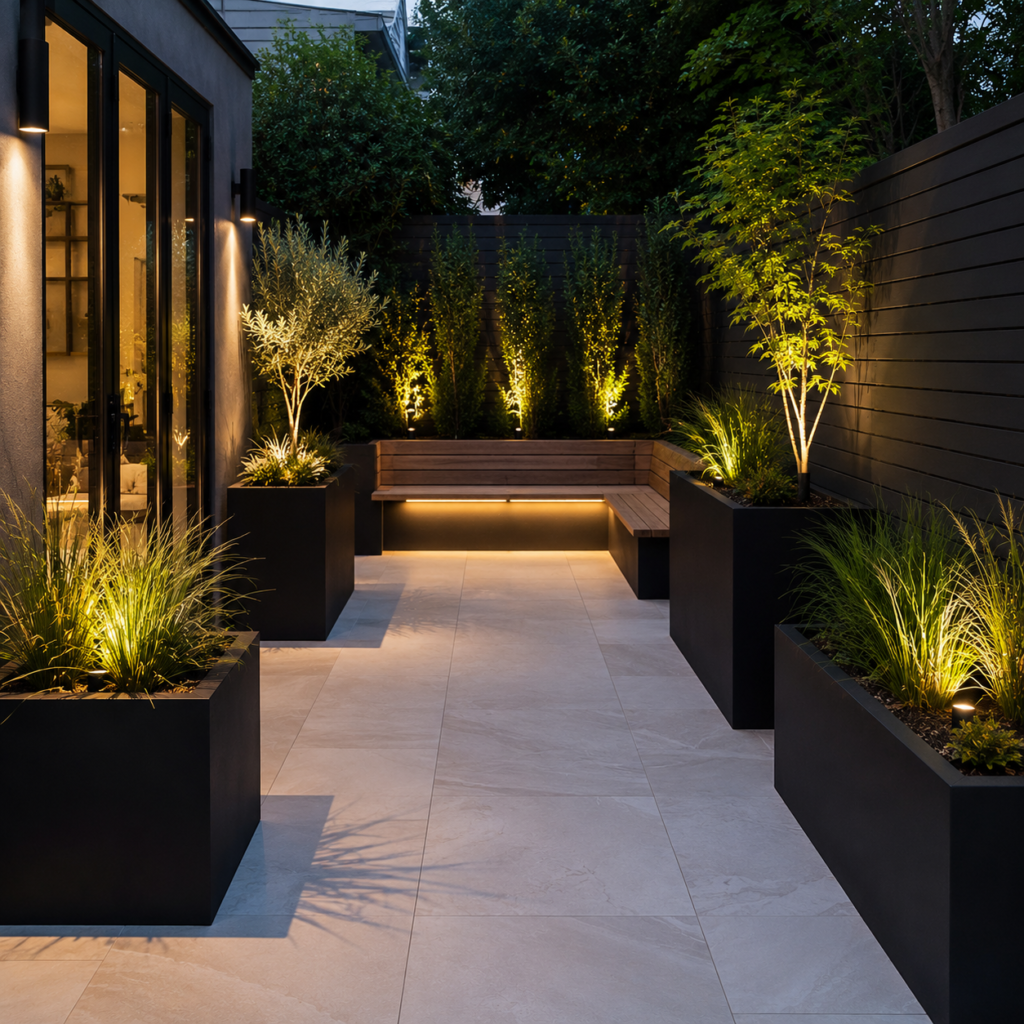
Many homeowners assume that a small backyard requires fewer design elements to avoid feeling crowded. While there is some truth to this, the reality is that strategically placed modern planters can actually make compact outdoor spaces appear significantly larger. Contemporary landscaping focuses on visual flow, organization, and balance, all of which contribute to the perception of space. When planters are selected and positioned correctly, they help define areas, guide movement, and reduce visual clutter that often makes small yards feel cramped.
One of the most effective strategies is replacing numerous small containers with a few larger statement planters. Multiple mismatched pots scattered throughout a backyard tend to break up sightlines and create a chaotic appearance. Large rectangular or geometric planters establish stronger visual anchors while simplifying the overall design. Because the eye encounters fewer competing objects, the backyard feels more open and organized.
Ways modern planters help small backyards feel larger include:
- Reducing visual clutter
- Establishing clear zones
- Improving sightlines
- Drawing attention vertically
- Creating visual rhythm
- Simplifying plant selections
- Maintaining color consistency
- Defining outdoor rooms
Modern Raised Planter Ideas
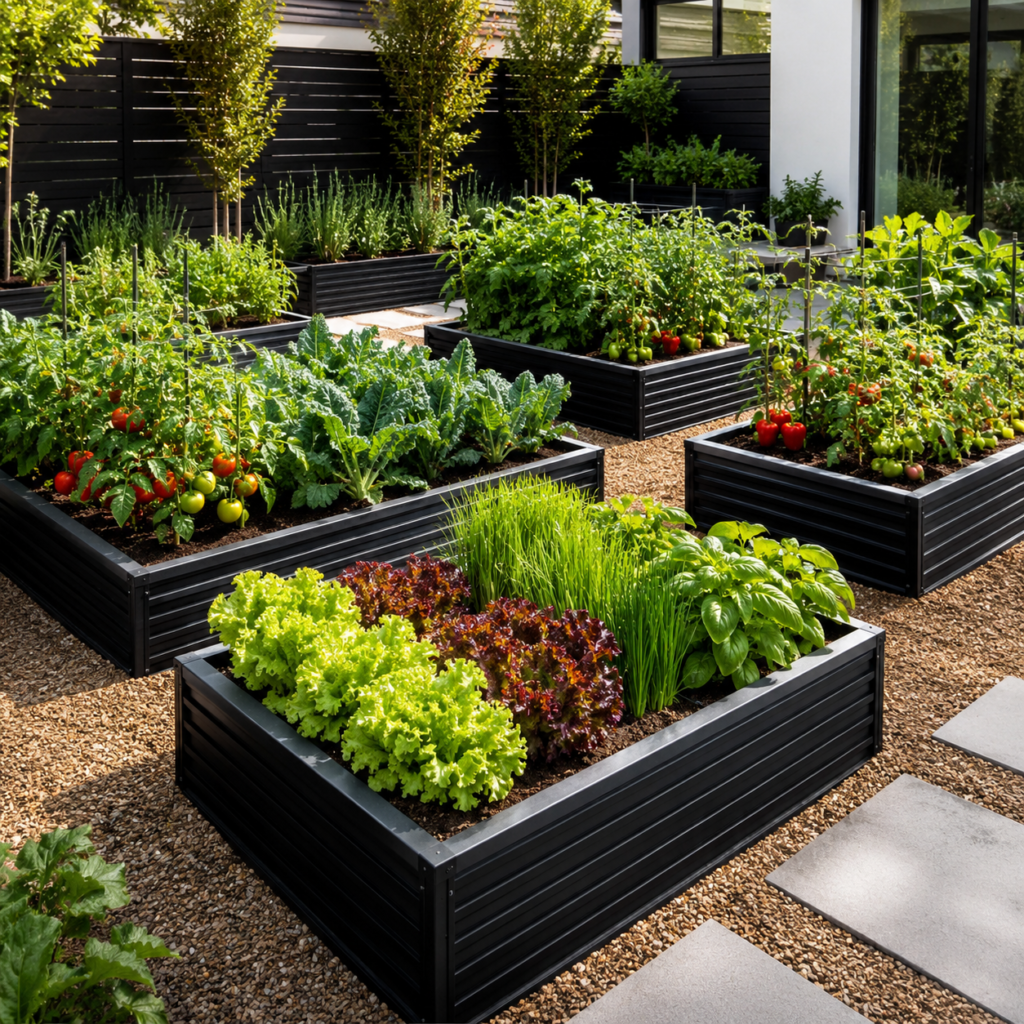
Raised planters have evolved far beyond their traditional role as simple gardening structures. Today, they are among the most important features in contemporary landscape design because they combine functionality with strong architectural appeal. Modern raised planters create clean lines, organized planting zones, and visual structure that naturally align with minimalist backyard aesthetics. When designed properly, raised beds can become focal points that enhance both the beauty and usability of outdoor spaces.
One of the primary reasons raised planters work so well in modern landscapes is their geometric appearance. Rectangular beds made from steel, concrete, composite materials, or clean-finished cedar provide the sharp edges and defined forms that contemporary design favors. Unlike decorative garden borders that often appear busy or outdated, modern raised beds emphasize simplicity and order.
Benefits of modern raised planters include:
- Improved drainage
- Easier maintenance
- Better soil control
- Strong architectural structure
- Defined planting zones
- Improved accessibility
- Cleaner overall appearance
- Flexible design options
Many luxury backyard designs integrate raised planters directly into outdoor living spaces. Planters may double as seating walls, privacy screens, or patio borders, creating a seamless connection between landscape and architecture. This multifunctional approach maximizes space while reinforcing the minimalist aesthetic.
Benefits of Modular Planters
Modular planter systems have become increasingly popular because they provide the flexibility that modern homeowners want without sacrificing design consistency. Unlike fixed landscape installations that can be difficult to modify, modular systems consist of coordinated planters that can be rearranged, expanded, or adapted as needs change. This flexibility makes them particularly valuable for contemporary outdoor spaces where functionality and long-term usability are priorities.
The foundation of a modular system is repetition. Matching planters share the same materials, dimensions, colors, and proportions, creating a unified appearance across the backyard. Whether arranged in a straight line, grouped into clusters, or used to define separate outdoor rooms, these planters work together as a cohesive design element.
Modular systems are also ideal for homeowners who plan to upgrade their outdoor spaces gradually. Instead of investing in an entire landscape renovation at once, additional planters can be added over time while maintaining the same design language. This allows the backyard to evolve without appearing unfinished or mismatched.
Advantages of modular planter systems include:
- Flexible layouts
- Easy expansion
- Consistent appearance
- Better space management
- Simplified maintenance
- Improved symmetry
- Adaptability to changing needs
- Cost-effective long-term growth
Another benefit is the ability to create distinct zones within the landscape. Modular planters can separate dining areas from lounge spaces, frame patios, or establish privacy without requiring permanent structures. Because the planters are movable, homeowners can adjust layouts to accommodate seasonal activities, furniture changes, or new planting ideas.
Which Backyard Layouts Work Best With Modern Planters?
Even the most attractive planters can fail to create impact if they are placed without a clear layout strategy. Modern backyard design relies heavily on organization, visual flow, and purposeful placement. Rather than scattering containers throughout the landscape, contemporary layouts use planters to strengthen architectural lines, define functional spaces, and create a sense of balance. A well-planned arrangement often contributes more to the overall appearance than the specific planter style itself.
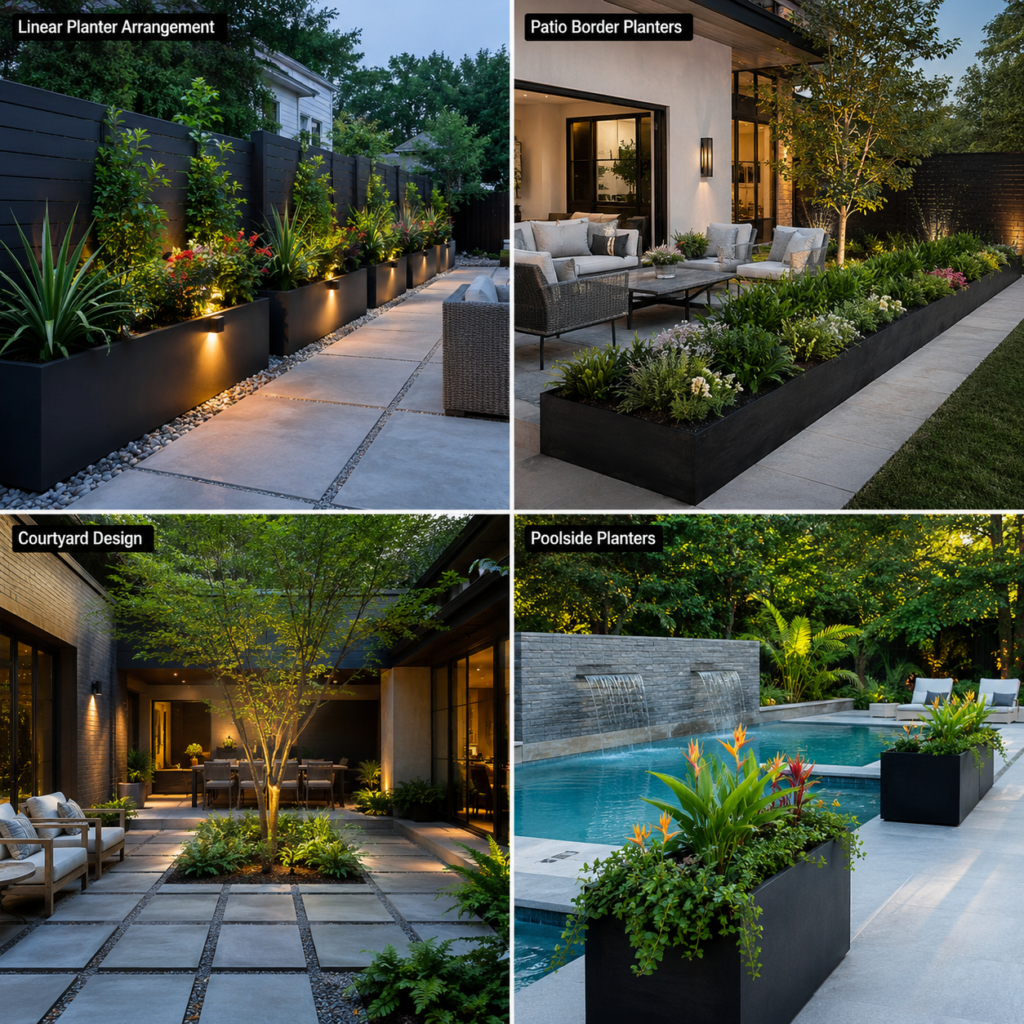
Linear planter layouts along fences, patios, and walkways create structure while maximizing usable space.
Another successful strategy involves creating outdoor rooms. Modern landscapes frequently divide backyards into distinct zones such as dining areas, lounge spaces, cooking zones, and relaxation corners. Planters act as subtle boundaries that define these spaces while maintaining an open and connected environment. Unlike solid walls or fences, planters preserve sightlines and keep the landscape feeling spacious.
Popular modern planter layouts include:
- Linear border layouts
- Courtyard arrangements
- Patio perimeter designs
- Poolside planter zones
- Outdoor room divisions
- Symmetrical focal point layouts
- Entryway framing designs
- Layered terrace arrangements
Before finalizing a layout, homeowners should evaluate traffic flow, sun exposure, maintenance access, and long-term plant growth. A design that looks impressive initially may become overcrowded if mature plant sizes are not considered. The best modern layouts anticipate future growth while maintaining clean visual structure.
Consider traffic flow, sun exposure, maintenance access, and mature plant size to ensure the layout remains functional and visually balanced over time.
Common Modern Planter Mistakes
Modern backyard design thrives on simplicity, yet many landscapes lose their contemporary appeal because of avoidable design mistakes. Homeowners often begin with a clear minimalist vision but gradually introduce additional colors, materials, planters, and accessories until the backyard feels disorganized. Understanding these common mistakes can help preserve the clean, sophisticated appearance that defines modern outdoor living.
One of the most frequent issues is mixing too many planter styles. A landscape that combines concrete, ceramic, plastic, wood, and metal containers often lacks visual consistency. Even when individual planters are attractive, the combination can create a fragmented appearance that feels accidental rather than intentional. Modern design works best when one or two materials dominate the entire backyard. Repetition creates harmony and helps every element feel connected to the overall design.
Another major mistake is overcrowding plants. Many homeowners believe a fuller planter automatically looks better, but contemporary landscapes typically favor structure over abundance. When plants spill excessively over container edges or multiple species compete for attention within a single planter, the clean lines of the design begin to disappear. Giving plants room to breathe often produces a more refined and expensive-looking result.
Common clutter-causing mistakes include:
- Using too many planter styles
- Mixing unrelated materials
- Excessive color variation
- Overcrowded planting
- Random placement
- Too many decorative accessories
- Ignoring scale and proportion
- Eliminating all negative space
Modern Planters for Vegetables
Many people associate modern planter designs with ornamental landscaping, but contemporary planters can be just as effective for growing vegetables, herbs, and edible crops. In fact, modern vegetable gardens have become increasingly popular because they combine productivity with aesthetics. Rather than hiding food gardens behind the house, homeowners are integrating edible plants into highly visible outdoor spaces that complement contemporary architecture and outdoor living areas.
Rectangular raised planters are particularly effective because they establish clear boundaries and make maintenance easier. Crops can be grouped by height, growth habit, or harvest schedule, creating a neat appearance that aligns with minimalist design principles. Matching planters also contribute to visual consistency while making the garden feel like an integrated part of the overall landscape.
Vegetables commonly grown in modern planters include:
- Lettuce
- Kale
- Spinach
- Tomatoes
- Peppers
- Cucumbers
- Green onions
- Strawberries
Modern Planter Lighting Ideas
Uplighting highlights plant texture and creates depth after dark.
Integrated planter lighting has also become increasingly popular in luxury landscapes. Some modern planter systems include built-in LED strips or concealed fixtures that provide illumination without visible hardware. This preserves the minimalist aesthetic while adding depth and visual interest to the backyard after dark. Because the lighting is hidden, attention remains focused on the plants and architectural features rather than the fixtures themselves.
Popular lighting methods include:
- Uplighting
- Integrated planter lighting
- Path lighting
- Recessed deck lighting
- Accent spotlights
- Wall washing
- Step lighting
- Warm LED strip lighting
Are Modern Planters Worth It?
Durable materials often last for years with minimal maintenance.
Benefits of investing in modern planters include:
- Long lifespan
- Durable construction
- Lower maintenance requirements
- Improved organization
- Strong visual appeal
- Better drainage performance
- Increased design flexibility
- Timeless contemporary style
Durable materials provide the best long-term value.
Modern Planter Ideas by Budget
Creating a modern backyard does not require an unlimited budget. Contemporary design is often more dependent on consistency and thoughtful planning than on expensive materials. Homeowners can achieve a clean, minimalist appearance at almost any price point by selecting appropriate materials and focusing on quality placement rather than quantity.
Budget-friendly landscapes often rely on composite planters, simple raised beds, and carefully selected plant palettes. Matching containers and neutral colors can create a sophisticated appearance even when working with modest resources. The key is avoiding unnecessary variation and maintaining a consistent design language throughout the space.
Budget-Friendly Option
Best choices:
- Composite planters
- Cedar planter boxes
- DIY raised beds
- Ornamental grasses
Mid-Range Option
Best choices:
- Powder-coated steel
- Modular planter systems
- Mixed evergreen plantings
- Integrated seating features
Luxury Option
Best choices:
- Concrete planters
- Corten steel systems
- Architecture specimen plants
- Professional landscape lighting
Choosing the Right Modern Planter Style
Modern backyard planter ideas continue to grow in popularity because they offer a rare combination of beauty, functionality, and simplicity. Unlike heavily decorated landscapes that can quickly feel dated, contemporary planter designs focus on timeless principles such as clean lines, balanced layouts, durable materials, and intentional plant selection. These qualities allow modern gardens to remain attractive for years while requiring less maintenance than many traditional landscaping styles.
The best planter style ultimately depends on the size of your backyard, your maintenance preferences, and how you use the space. Small backyards often benefit from large rectangular planters, vertical elements, and limited plant palettes that create visual order without consuming valuable square footage. Medium-sized spaces typically perform well with modular systems that define outdoor living zones while maintaining flexibility. Larger properties have the opportunity to incorporate raised planters, geometric layouts, and multiple planting areas that create structure across a broader landscape.
When choosing a modern planter strategy, consider:
- Available backyard space
- Desired maintenance level
- Preferred materials
- Existing architecture
- Outdoor living needs
- Long-term durability
- Budget expectations
- Future expansion plans
Ultimately, modern backyard planter design is not about following trends. It is about creating an outdoor environment that feels organized, functional, and enjoyable to use every day. By focusing on simplicity, structure, and intentional choices, homeowners can build a backyard that remains stylish, practical, and welcoming for many years to come.
FAQs
What makes a backyard planter design look modern?
Modern planter designs use clean shapes, neutral colors, and simple materials. They focus on structure, visual balance, and consistency rather than decorative details.
Which planter material is best for a modern backyard?
Concrete and powder-coated steel are the most popular choices for contemporary landscapes. Composite planters are a budget-friendly alternative with a similar appearance.
What plants work best in modern backyard planters?
Ornamental grasses, boxwoods, lavender, succulents, agave, and evergreen shrubs are popular because they provide structure and require relatively little maintenance.
Can modern backyard planters create privacy?
Yes. Large planters filled with bamboo, evergreen shrubs, or ornamental grasses can provide privacy while maintaining a minimalist appearance.
Are raised planters considered modern?
Absolutely. Raised beds with clean lines and simple materials such as steel, concrete, or composite boards fit perfectly into modern landscape design.
Are modern backyard planters worth the investment?
For many homeowners, yes. They provide long-term durability, improved aesthetics, and a more organized outdoor space.

Myra is the founder and lead writer of Backyard Planter Ideas, where she shares practical, well-researched guidance on planter design, plant selection, and outdoor styling. Her goal is to help homeowners create attractive, functional garden spaces with clear, reliable, and easy-to-apply advice.