
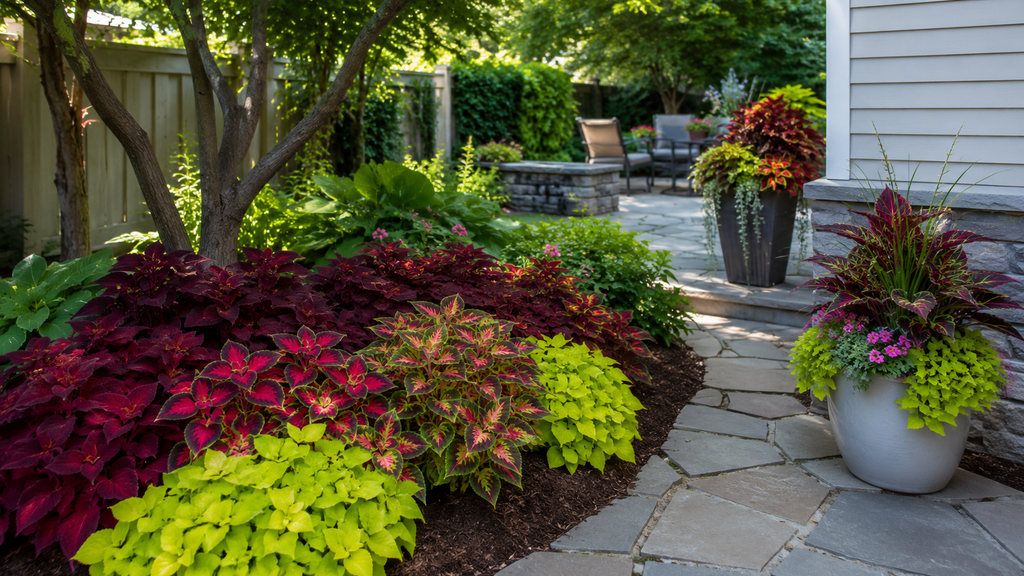
Backyard planting ideas with coleus work best when the plant matches the site before color choices are made. Coleus can brighten shaded beds, define paths, strengthen patio containers, soften fences, add tropical character, and provide reliable foliage color when flowers are not blooming. The best results come from matching each cultivar to the backyard’s light, moisture, drainage, mature space, and maintenance conditions.
Why Coleus Works in Backyards
Coleus is especially useful in backyard planting because its foliage provides most of its ornamental value. Burgundy, lime, pink, cream, bronze, red, green, and multicolored cultivars can create contrast, brighten shade, connect separate garden zones, or function as strong focal plants. Unlike many flowering plants, coleus does not depend on a short bloom period to contribute color.
The accepted botanical name is Coleus scutellarioides. Cultivars vary widely in mature size, leaf shape, color, and sun tolerance. Some stay compact enough for containers and path edges, while larger selections can approach about 3 feet in height and spread. This variation makes mature size just as important as foliage color when choosing a plant.
Coleus is particularly useful for:
- Shaded or partly shaded beds
- Patio and deck containers
- Pathway edging
- Backyard entrances
- Tropical-style planting
- Seasonal displays
- Small-space color
- Large repeated foliage groups
- Connecting separate garden areas
Decision tip: choose coleus because the backyard needs a specific function such as brightness, contrast, structure, or repetition, not simply because one plant looks attractive by itself.
Where to Plant Coleus
The best place for coleus is a location where light, moisture, drainage, mature size, and maintenance requirements all match the cultivar. A position that appears shaded in the morning may receive strong afternoon sun, while a planter beside paving can experience more heat than an open bed receiving similar sunlight.
Modern coleus cultivars can range from shade-adapted to sun-tolerant, so there is no single light rule for every plant. Observe the site throughout the day before planting.
Check:
- Morning sunlight
- Midday exposure
- Afternoon heat
- Reflected heat from paving or walls
- Wind
- Soil drainage
- Moisture retention
- Tree-root competition
- Mature plant width
- Access for watering and pruning
Decision tip: judge the exact planting position instead of relying only on broad labels such as “sun” or “shade.”
Map Your Backyard Microclimates
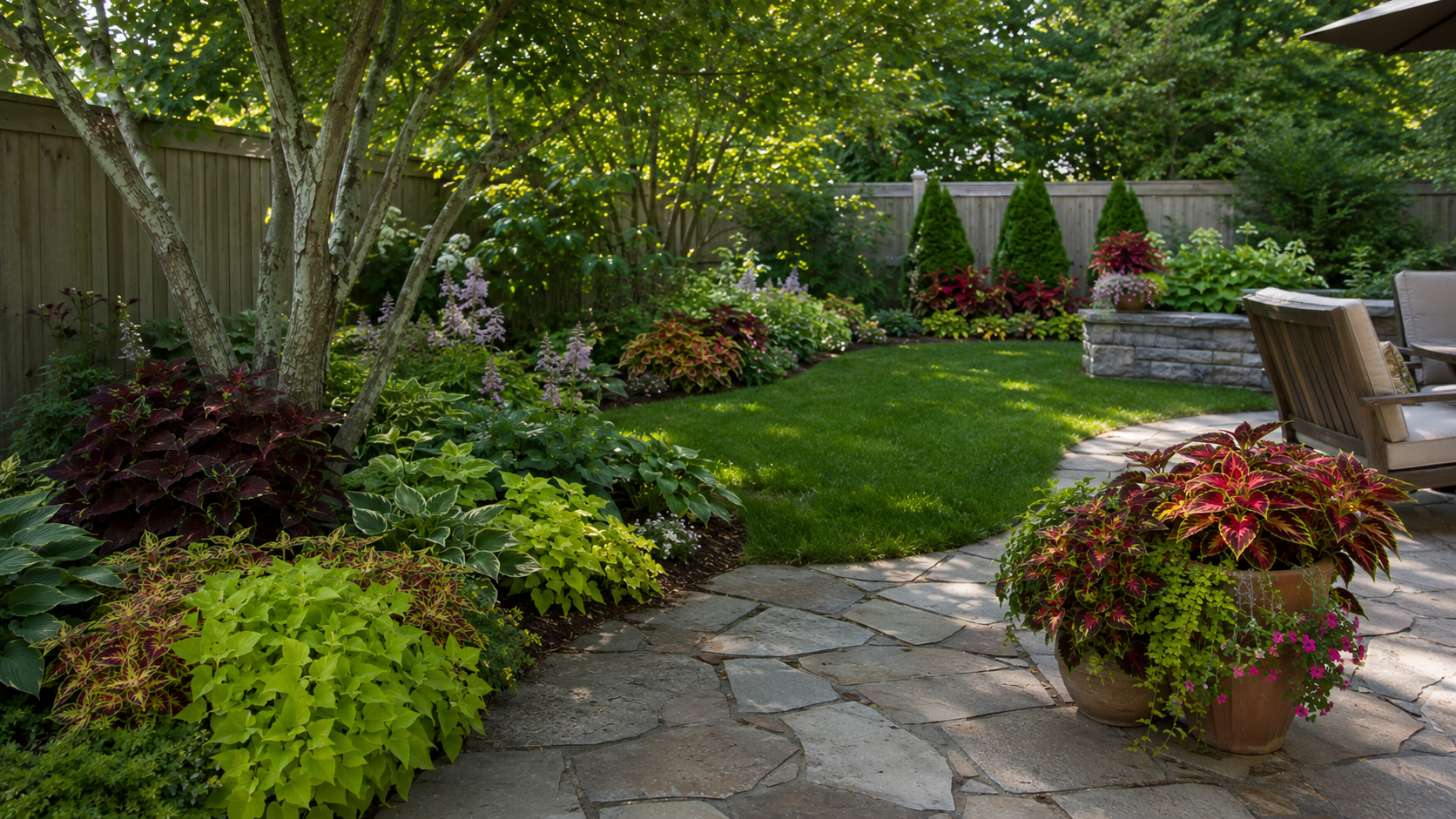
Most backyards contain several microclimates. A container beside a west-facing wall may become hot and dry, while a bed beneath filtered tree cover only a few steps away may stay cooler and hold moisture longer. Both might receive a similar number of sunlight hours but behave very differently.
Walk through the backyard in the morning, midday, and afternoon. Note where heat builds, where wind increases drying, where tree canopies reduce rainfall, and where hard surfaces reflect or store heat.
Map:
- Direct sunlight periods
- Reflected heat
- Wind corridors
- Fast-drying areas
- Moist areas
- Deep shade
- Tree canopy changes
- Irrigation reach
- Difficult-to-access areas
A patio container receiving four hours of late-afternoon sun may need very different management from a bed receiving four hours of morning sun.
Decision tip: evaluate light, heat, moisture, airflow, and roots together. When a location is uncertain, test coleus in a movable container first.
Check Your Coleus Site Fit
Use this simple Backyard Coleus Site-Fit Score before planting. Score each category from 0 to 2.
| Factor | 0 | 1 | 2 |
| Light | Poor match | Adjustable | Good match |
| Moisture | Extreme | Needs management | Stable |
| Drainage | Problematic | Correctable | Suitable |
| Mature space | Crowded | Manageable | Fits well |
| Maintenance | Difficult | Moderate | Easy |
| Score guide: |
- 9-10: strong site
- 7-8: workable with minor changes
- 5-6: reconsider the cultivar or location
- 0-4: solve the site problem first
A lime coleus may look perfect against a dark wall, but the planting can still fail if that wall creates extreme afternoon heat and the soil dries too quickly.
Decision tip: never let foliage color override basic site suitability.
Choose a Coleus Design Role
Give each coleus one clear visual job.
- Anchor: large, dark, or dominant foliage that creates visual weight
- Brightener: lime, chartreuse, cream, or vivid foliage that lifts a dark area
- Bridge: multicolored foliage that connects colors from two garden zones
- Edge: compact coleus used along paths, containers, or borders
This prevents every plant from competing for attention. If the backyard already contains many flowers, patterned leaves, and decorative elements, a simpler coleus may work better than another complex focal plant.
Before buying, complete this sentence:
“This coleus belongs here because the space needs ______.”
If the answer is unclear, the plant may not have a useful role.
Coleus Ideas for Shady Backyards
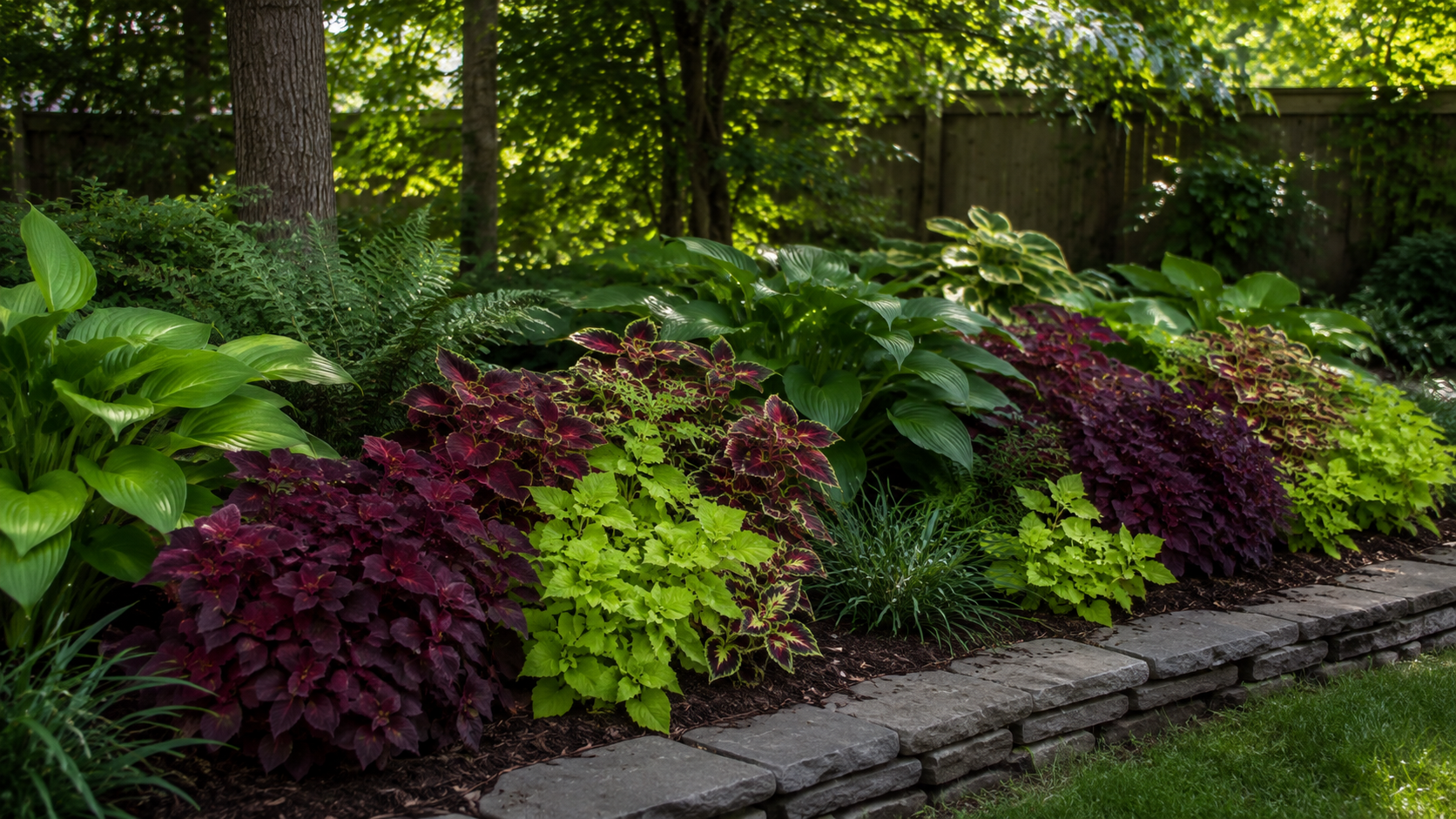
1. Create a Layered Shade Border
Use coleus as the middle layer between taller structural plants and lower foreground foliage. Burgundy varieties can add depth, while lime selections can brighten areas dominated by dark green.
A stronger border usually repeats one or two cultivars rather than mixing many unrelated colors.
Use:
- Taller plants at the back
- Medium coleus through the middle
- Lower plants at the front
- Contrasting leaf shapes
- Repeated colors for continuity
2. Brighten a Dark Corner
Lime and chartreuse coleus can visually lift areas beside dark fencing, shaded walls, dense shrubs, or covered patios.
Strong combinations include:
- Lime + deep green
- Lime + burgundy
- Lime + charcoal containers
Do not confuse visual darkness with suitable plant-growing light. If stems become long and sparse, the location may be too dark.
3. Grow Coleus Beneath Trees
Coleus can work beneath an open tree canopy where filtered light is sufficient. The challenge is often root competition and dry soil rather than shade alone.
Where roots are dense, use freestanding containers instead of digging heavily.
Check:
- Canopy density
- Surface roots
- Moisture availability
- Rain reaching the soil
- Access for watering
Coleus Ideas for Beds and Borders
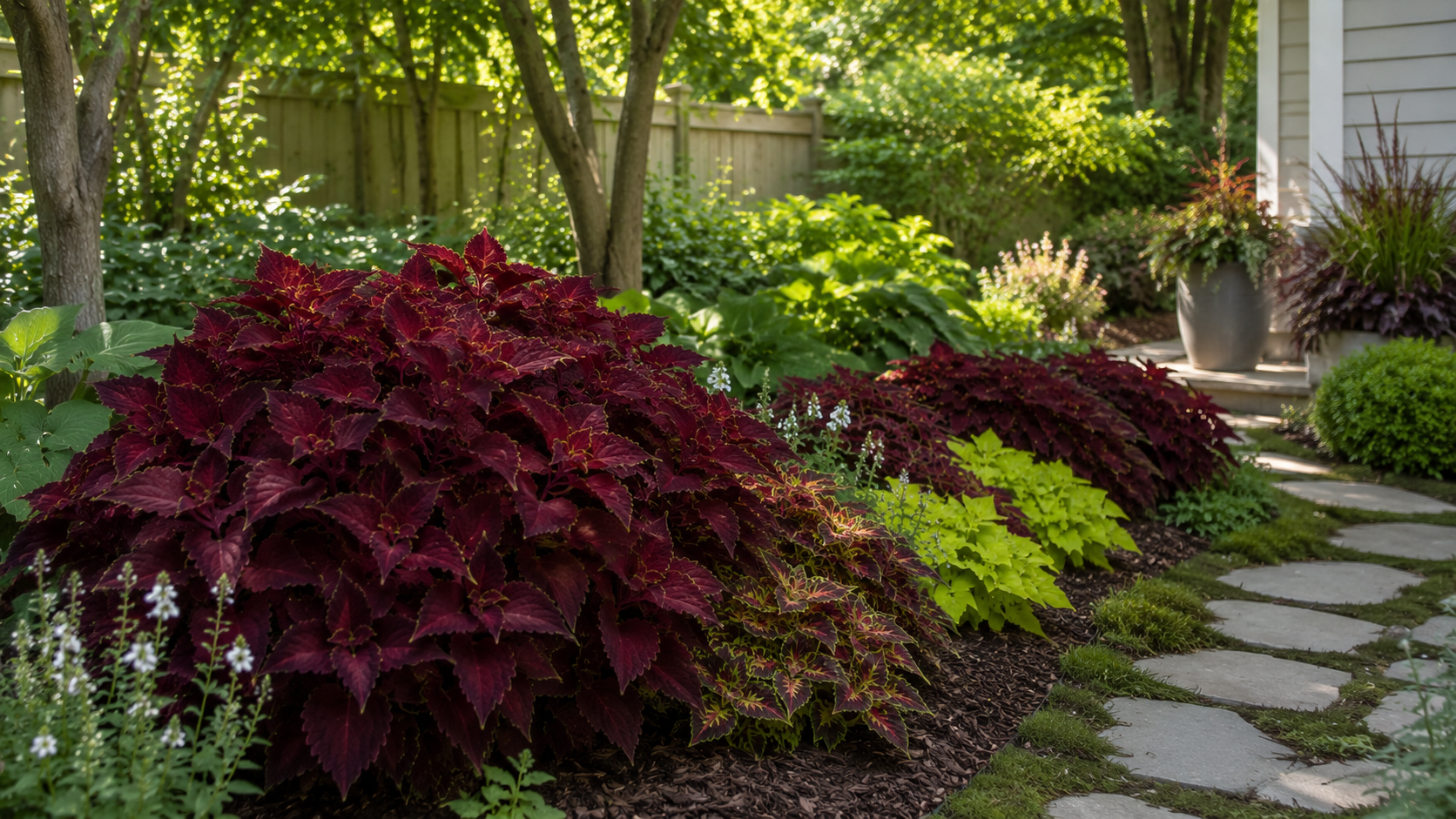
4. Use One Large Coleus as a Focal Plant
A single large cultivar can anchor a bed, patio corner, or path destination. Position it where it can be seen from an important viewpoint such as a window, patio chair, or entrance.
Surround it with simpler foliage so the coleus remains visually dominant.
5. Pair Burgundy Coleus With Pale Flowers
Dark burgundy foliage creates strong contrast behind white, cream, pale pink, lavender, and soft yellow flowers.
Useful combinations include:
- Burgundy + white
- Burgundy + blush pink
- Burgundy + cream
- Burgundy + pale yellow
The coleus continues providing structure even when neighboring flowers are between bloom periods.
6. Build a Tropical Foliage Corner
Create a lush look with different leaf forms rather than excessive color. Combine broad foliage, patterned coleus, fine-textured leaves, and a lower-growing layer.
The aim is visual richness through shape and texture instead of several competing colors.
7. Mass One Coleus Variety
In medium or large beds, several plants of one cultivar create a stronger color block than many individual varieties.
Mass burgundy adds depth, while mass lime can brighten a shaded area. From a distance, repeated color is more readable than intricate leaf patterns.
Coleus Ideas for Paths and Entrances
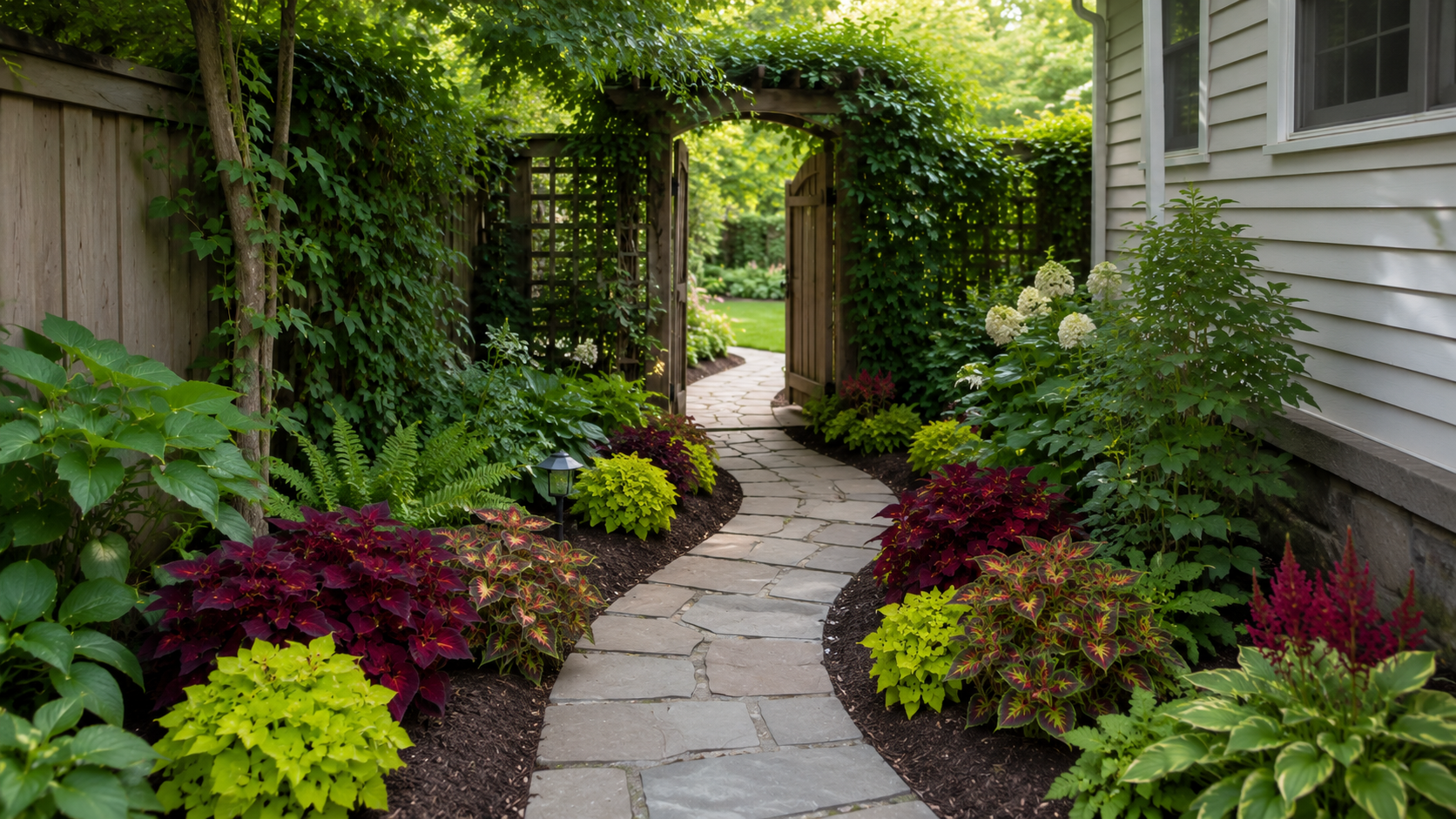
8. Repeat Coleus Along a Path
Compact coleus can create rhythm and guide the eye through the backyard.
Burgundy contrasts well with pale paving, while lime works strongly beside dark mulch or green planting.
Allow for mature width so plants do not crowd the walking surface.
9. Frame a Patio Entrance
Two matching coleus containers can define steps, doorways, or the transition from patio to garden.
Check:
- Door clearance
- Walking space
- Reflected heat
- Mature spread
- Watering access
10. Create a Color Echo
Repeat one coleus color somewhere else in the backyard. Burgundy foliage can echo dark furniture, while lime can repeat chartreuse shrubs.
Use only a few repetitions. Too much repetition can make the garden feel mechanical.
11. Bridge Two Garden Zones
A multicolored coleus can connect two visually different areas. A green-and-burgundy cultivar, for example, can link a green border with a darker patio.
Use this technique at transitions rather than randomly throughout the backyard.
Coleus Ideas for Patios and Pots
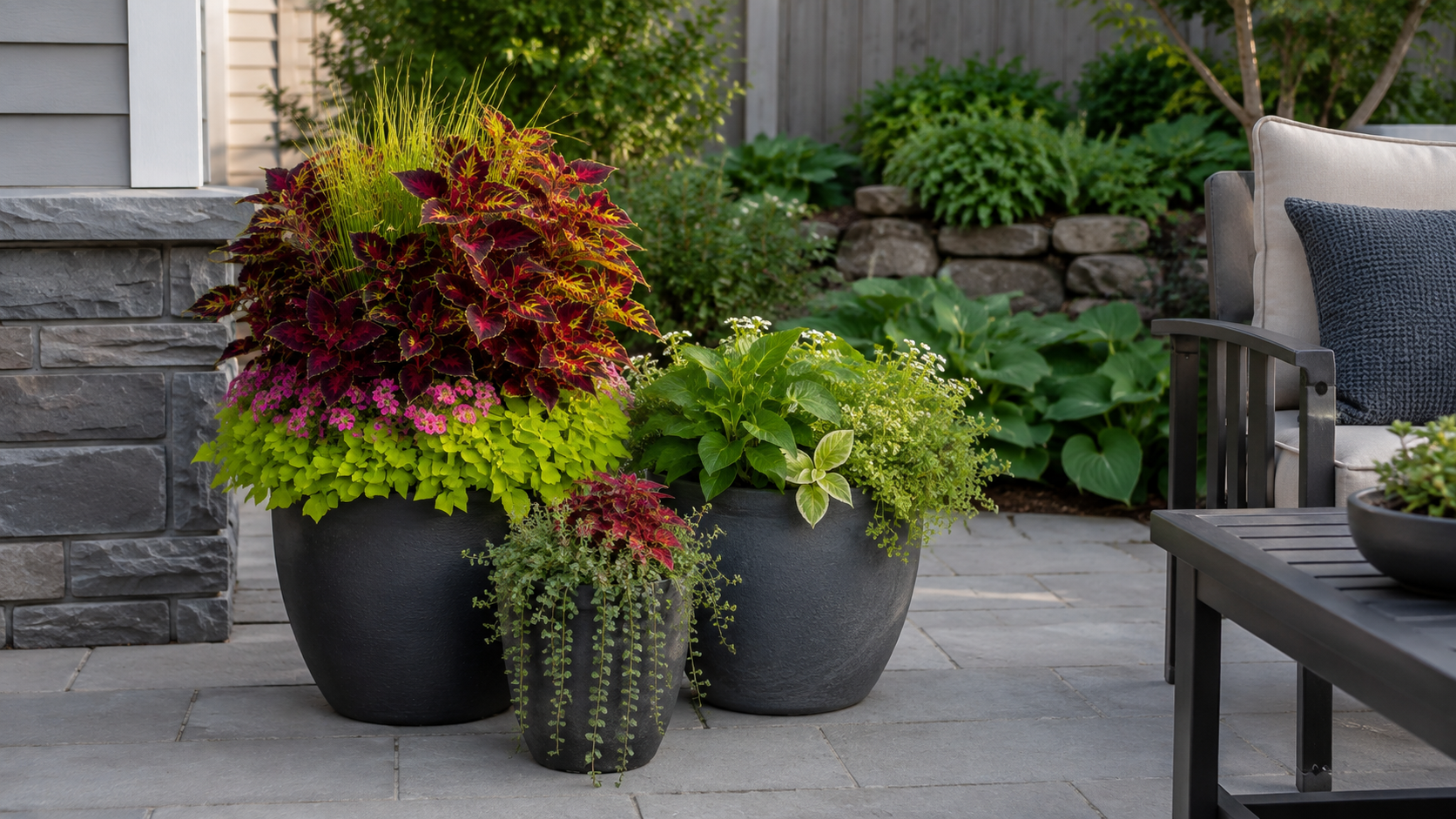
12. Build a Three-Pot Patio Group
Use one large anchor container, one medium supporting pot, and one smaller accent.
A practical arrangement might include:
- Large pot: dominant coleus
- Medium pot: quieter foliage
- Small pot: trailing plant
Varying container height creates more depth than three identical pots placed in a row.
13. Combine Upright and Trailing Plants
Coleus works naturally as the upright or mounded element in a container.
Use:
- Upright coleus
- Lower supporting foliage
- Trailing plant
Only combine plants that share similar light and moisture needs. If their requirements differ, use separate coordinated pots.
Coleus Ideas for Small Backyards
14. Repeat Compact Coleus
Small backyards benefit from repetition rather than excessive variety. One compact cultivar repeated in two or three locations can make the entire space feel more connected.
Protect:
- Paths
- Seating
- Gates
- Storage
- Utility access
- Existing shrubs
15. Use Coleus as Seasonal Color
In climates with cold winters, coleus can provide seasonal foliage and still be preserved through cuttings.
Save cultivars that:
- Grow well in your backyard
- Fit the available space
- Maintain strong foliage
- Require manageable care
Decision tip: repeat proven cultivars rather than starting with completely different varieties every season.
Plan Coleus From the Viewpoint
Design the planting from where people actually see it. A border may be viewed from a kitchen window, a patio chair, or across a lawn rather than from directly beside the bed.
Viewing distance should influence plant choice:
- Close view: detailed leaf patterns and texture
- Mid-range: plant shape and contrast
- Long view: larger cultivars and repeated color blocks
A highly patterned coleus may look impressive at close range but become visually unclear across a large backyard. A simpler burgundy or lime cultivar repeated several times may produce a stronger distant effect.
Ask:
- Where is the main viewing point?
- What sits behind the plant?
- Will the coleus be partly hidden?
- Does its color remain visible from that distance?
Decision tip: choose foliage detail according to the distance from which the planting is normally viewed.
Best Coleus Color Combinations
Coleus color combinations work best when contrast is controlled.
Burgundy + Lime
Strong contrast for neutral backgrounds.
Burgundy + White
Useful for pale flowers and containers.
Lime + Deep Green
Effective in shaded planting.
Pink + Green
Creates a softer garden palette.
Red + Bronze
Works well with brick, terracotta, and warm wood.
When coleus already contains several colors, keep nearby plants simpler.
Use this rule:
- Complex coleus foliage = simple companions
- Simple coleus foliage = more freedom nearby
Best Companion Plants for Coleus
Good companion plants should share similar growing conditions while providing a different leaf shape, height, or texture.
Useful relationships include:
- Broad coleus + fine foliage
- Dark coleus + pale foliage
- Upright coleus + trailing plant
- Patterned coleus + simple green foliage
Depending on the climate and site, compatible companions may include ferns, hostas, heuchera, seasonal flowers, trailing plants, and fine-textured foliage.
If two plants need very different light or moisture levels, use separate neighboring containers instead of forcing them into the same pot.
How Much Sun Does Coleus Need?
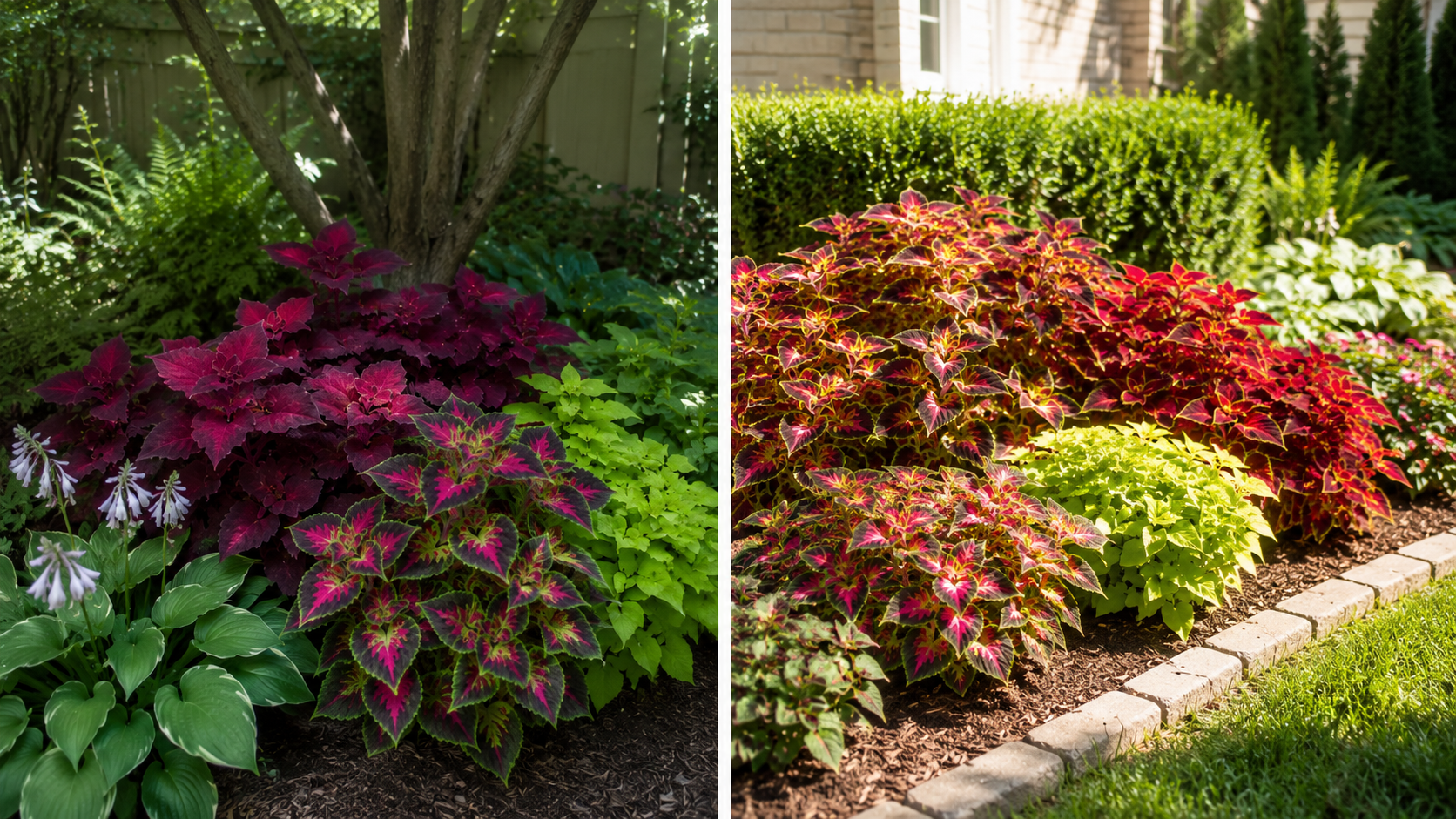
Coleus light requirements vary by cultivar.
Full Sun
Use a cultivar specifically described as sun tolerant. Monitor heat and moisture carefully.
Partial Shade
Morning sun with afternoon protection works well for many cultivars.
Deep Shade
Coleus can tolerate substantial shade, but very low light may cause stretched growth.
Watch for:
- Long spaces between leaves
- Leaning stems
- Weak branching
- Sparse foliage
Decision tip: if growth remains weak after pruning, reassess light before adding fertilizer.
How Far Apart to Plant Coleus
About 12 inches or 30 cm can be a useful starting reference, but mature cultivar width should determine final spacing.
Check:
- Mature spread
- Growth habit
- Path clearance
- Whether regular pinching is planned
- Whether the goal is a mass or separate plants
Do not crowd young plants simply to make a new bed look instantly full.
Best Soil for Coleus
Coleus performs best in soil that retains useful moisture while still draining excess water.
In beds, check:
- Drainage
- Compaction
- Organic matter
- Drying speed
In containers, use an appropriate potting medium and functional drainage holes.
If garden soil stays saturated for long periods, a container may be a better planting system.
How Often to Water Coleus
There is no universal watering schedule. Water demand changes with temperature, sun, wind, container size, rainfall, soil, and plant size.
Factors that increase drying include:
- Strong sun
- Heat
- Wind
- Small pots
- Large mature plants
Check the root zone before watering. Wilting does not always mean the soil is dry.
How to Keep Coleus Bushy
Pinching encourages branching and helps create a fuller plant.
Pinch young growing tips to encourage:
- More side shoots
- Denser foliage
- Better container shape
- Fuller borders
Flower spikes can also be removed when foliage is the main design goal.
If the plant repeatedly becomes leggy after pinching, the problem may be insufficient light rather than pruning.
Compare Coleus Maintenance Needs
Different layouts create different levels of maintenance.
| Layout | Relative maintenance |
| One in-ground plant | Moderate |
| Repeated bed planting | Moderate |
| Path edging | Moderate |
| Large patio pot | Moderate-high |
| Several small pots | High |
| Under-tree containers | Moderate-high |
| Maintenance usually increases when the design contains many small containers, difficult-to-reach locations, or plants exposed to heat and wind. | |
| Decision tip: choose a design you can maintain consistently throughout the season. |
Coleus in Pots vs. Garden Beds
Containers are useful when flexibility matters. Garden beds are better for broader permanent displays.
Choose containers when:
- Soil is difficult
- Tree roots limit digging
- The patio is the main planting area
- Seasonal light changes
- Plants may need moving
Choose beds when:
- You want a large repeated planting
- Soil drains well
- The border is permanent
- More root space is beneficial
Containers provide greater control but usually require closer moisture monitoring.
Coleus for Different Backyard Conditions
For a global audience, backyard conditions are more useful than country labels.
| Condition | Main concern | Response |
| Hot + dry | Rapid moisture loss | Stable moisture and suitable exposure |
| Hot + humid | Slow drying | Drainage and airflow |
| Cool + frost-prone | Short season | Grow seasonally or preserve cuttings |
| Mild + damp | Wet roots | Prioritize drainage |
| Under trees | Root competition | Consider containers |
| Hardscape-heavy patio | Stored heat | Use movable pots |
| Windy area | Fast drying | Increase protection or soil volume |
| Deep shade | Weak growth | Watch plant form |
| Decision tip: select coleus according to the pressures of the actual backyard rather than broad climate assumptions. |
Diagnose Coleus Problems
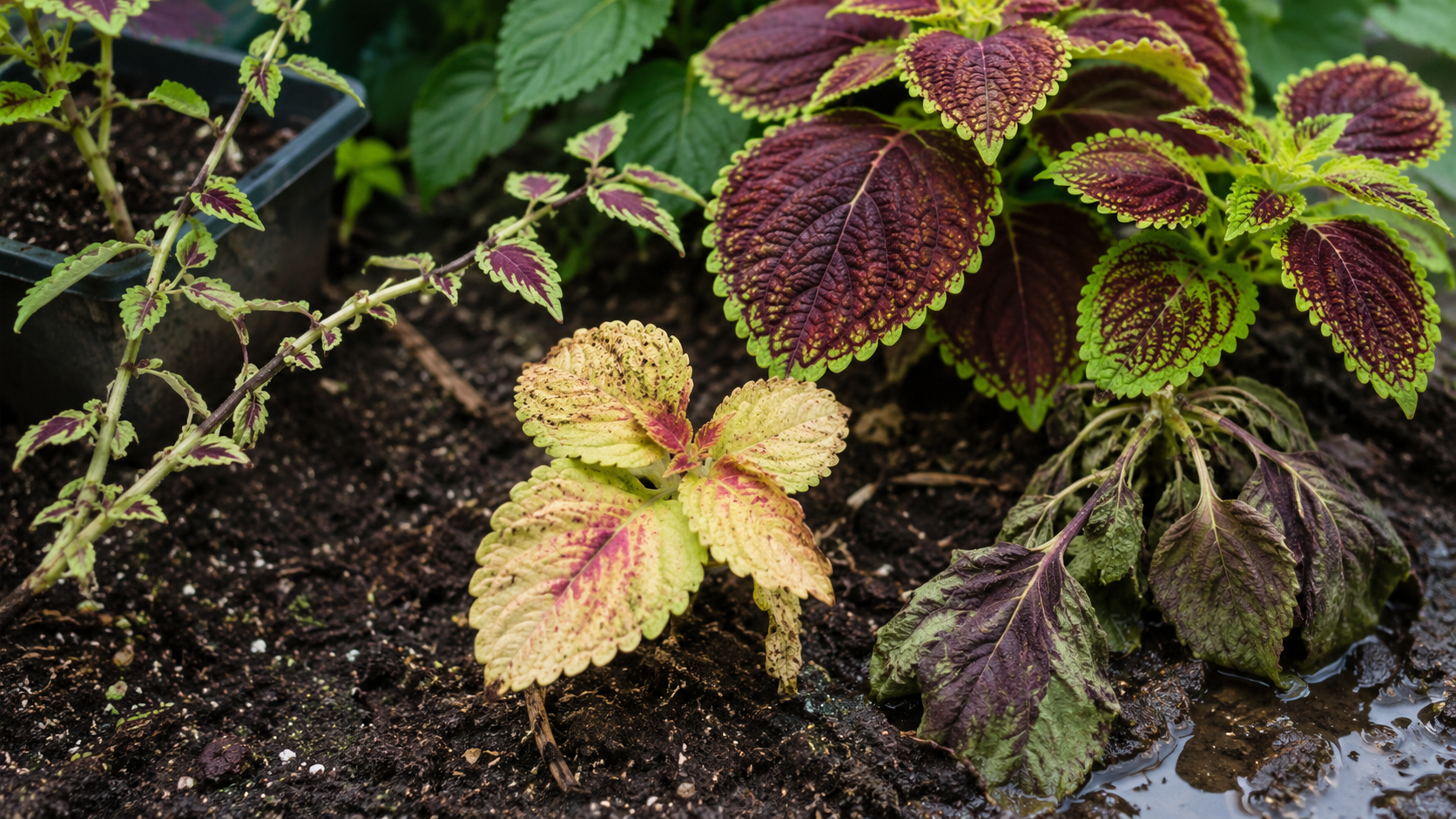
Start with the environment before adding more water, fertilizer, or treatment.
| Symptom | Check first | Possible issue |
| Wilting + dry soil | Root moisture | Water shortage |
| Wilting + wet soil | Drainage | Root stress |
| Bleached leaves | Sun and heat | Exposure stress |
| Long sparse stems | Light | Too little usable light |
| Yellowing + stunting | Roots and moisture | Root or site problem |
| Irregular holes | Damage pattern | Slugs or browsing |
| Ask: |
- Is the soil wet or dry?
- Did light or temperature change?
- Does the damage look environmental, disease-related, or physical?
Decision tip: diagnose the cause before treating the symptom.
Coleus Mistakes to Avoid
Avoid:
- Assuming every coleus needs deep shade
- Choosing only by leaf color
- Using too many patterns
- Ignoring mature size
- Overcrowding containers
- Watering on a fixed calendar
- Assuming every wilted plant needs water
- Digging heavily around tree roots
- Making every plant a focal point
- Using coleus without connecting it to the wider backyard design
The strongest backyard planting often comes from reducing visual competition rather than adding more plants.
How to Propagate Coleus
Coleus can be propagated from stem cuttings, which makes it practical to preserve a cultivar that performs well in your backyard.
Basic method:
- Select a healthy stem.
- Take a cutting about 4-6 inches long.
- Remove the lower leaves.
- Place the lower nodes in a suitable rooting environment.
- Allow roots to develop.
- Transfer the rooted cutting into growing medium.
- Establish it before harsher outdoor exposure.
Propagate cultivars that have already proved reliable in your backyard.
Is Coleus Annual or Perennial?
Coleus can behave as a tender perennial in warm conditions but is commonly grown seasonally where winters are cold.
In frost-prone climates:
- Take cuttings before cold weather
- Protect selected plants where practical
- Plan for seasonal replacement
In warmer conditions:
- Monitor drainage
- Heat
- Humidity
- Pest pressure
Decision tip: use local winter conditions rather than a generic annual or perennial label.
Test Coleus in Your Backyard
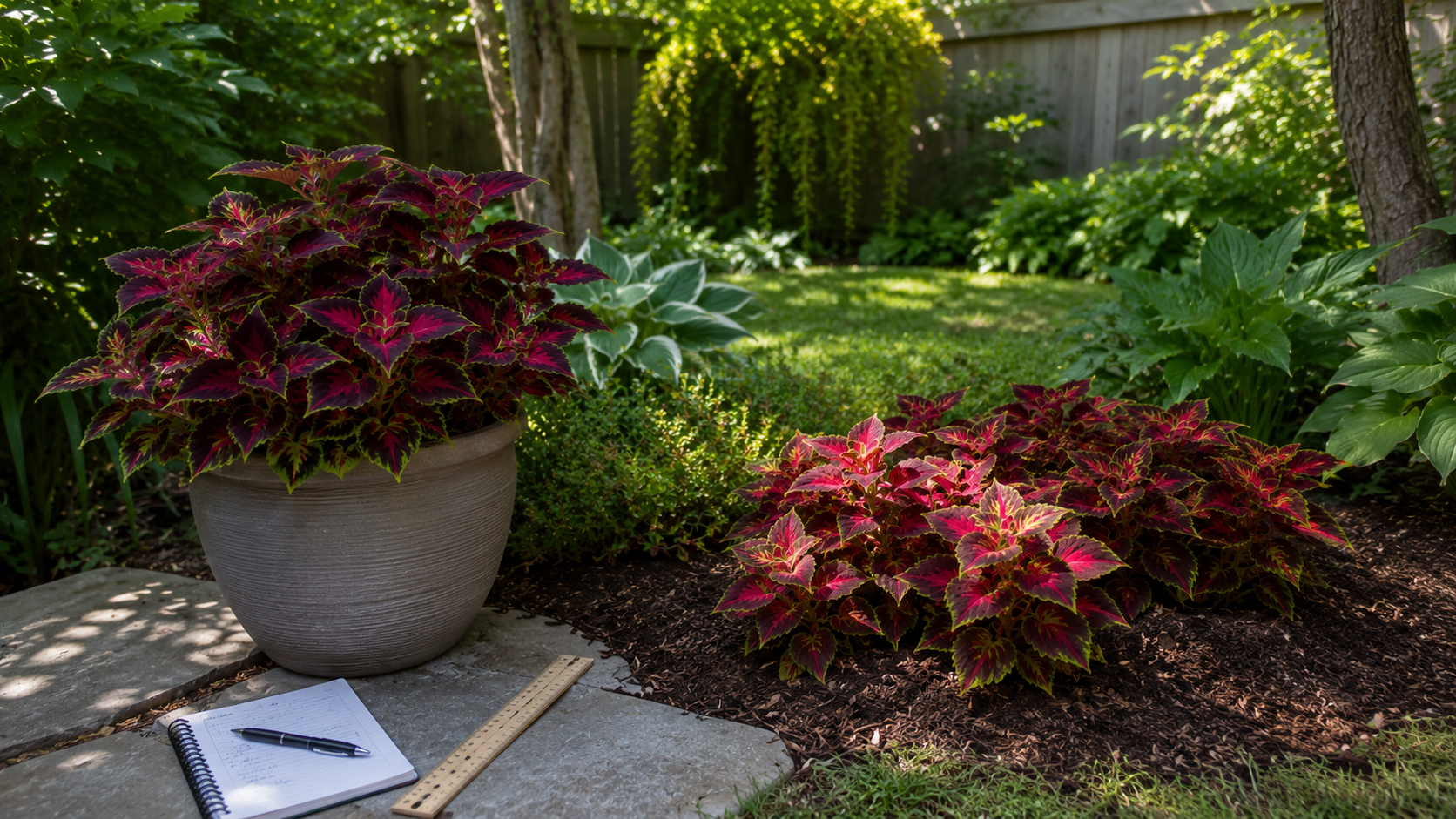
Create a simple performance record for one or two plants.
Check them at:
- Planting
- Around week 2
- Around week 4
- Around week 6
Record:
- Location
- Light
- Bed or container
- Approximate size
- Watering demand
- Foliage condition
- Pruning
- Weather stress
- Overall visual result
Then classify the planting:
- Repeat
- Repeat with changes
- Relocate
- Replace
This gives you site-specific information that generic planting advice cannot provide.
Backyard Planting Ideas With Coleus: Design Formula
Use this five-step process before planting.
Step 1: Identify the Problem
Does the area need brightness, structure, a focal point, an edge, or visual connection?
Step 2: Assess the Site
Check light, moisture, drainage, heat, space, and viewing direction.
Step 3: Choose the Role
Select Anchor, Brightener, Bridge, or Edge.
Step 4: Choose the Cultivar
Match mature size, light tolerance, growth habit, and foliage color.
Step 5: Repeat One Element
Repeat a color, material, plant form, or container style elsewhere.
Decision tip: solve the backyard problem first. The right coleus becomes easier to choose afterward.
FAQs About Backyard Planting With Coleus
Where should I put coleus if I do not know the cultivar name?
Start it in bright light with some protection from intense afternoon sun. A movable container makes it easier to adjust the location according to plant response.
Can coleus handle hot afternoon sun?
Some cultivars can, but paving and walls can intensify heat. Check the cultivar and monitor moisture carefully.
Why does coleus grow well in one backyard area but not another?
Different locations can have different microclimates. Light timing, wind, drainage, heat, and root competition can all change performance.
How can I tell if coleus needs more light?
Look for stretched stems, long gaps between leaves, leaning growth, and weak branching.
Why is coleus wilting in wet soil?
Persistent wetness combined with wilting can indicate drainage or root problems rather than a lack of water.
Can coleus grow beneath mature trees?
Yes, when filtered light is sufficient. Containers are often easier where roots make digging difficult.
How many coleus varieties should I use in a small backyard?
Usually one or two repeated cultivars are enough to create strong visual unity without clutter.
Should I move potted coleus when sunlight changes?
Move it when changing light or heat begins affecting growth, foliage, or moisture demand.
What is the lowest-maintenance way to grow coleus?
A few well-placed in-ground plants or larger containers are usually easier than many small pots.
Can the same coleus grow in sun and shade?
Some cultivars can, but growth, foliage quality, and water demand may differ between locations.
Will coleus return next year?
It may persist in warm climates. In frost-prone regions, it is commonly grown seasonally or preserved through cuttings.
Can coleus irritate skin?
Repeated foliage contact may irritate sensitive skin in some people. Gloves are sensible during frequent pruning or propagation.
Coleus Handling and Safety
Gardeners who frequently pinch, prune, or propagate coleus may prefer to wear gloves, particularly if they have sensitive skin.
Useful precautions include:
- Wash hands after extended handling
- Avoid touching eyes while pruning
- Wear gloves if irritation occurs easily
- Verify safety information using the botanical name Coleus scutellarioides
Using the botanical name helps avoid confusion with other plants that may also be called coleus.
Final Backyard Planting Ideas With Coleus
The best backyard planting ideas with coleus begin with the site rather than the plant catalog. Evaluate light, heat, moisture, drainage, mature space, maintenance, and viewing direction first. Then choose a cultivar that fits those conditions.
Use coleus deliberately:
- Burgundy as an anchor
- Lime as a brightener
- Multicolored foliage as a bridge
- Compact cultivars as edges
- Larger varieties for distant visual impact
- Containers where flexibility matters
- Repetition where the backyard needs unity
Before planting, ask:
- What problem does this coleus solve?
- Does the site fit the cultivar?
- Will the mature plant fit?
- Does its color relate to the rest of the backyard?
- Can the layout be maintained realistically?
- Will it work from the main viewing point?
When these decisions are made first, coleus becomes more than colorful foliage. It becomes a practical design tool for creating contrast, defining movement, connecting garden zones, improving shaded areas, and giving the backyard dependable structure throughout the growing season.

Myra is the founder and lead writer of Backyard Planter Ideas, where she shares practical, well-researched guidance on planter design, plant selection, and outdoor styling. Her goal is to help homeowners create attractive, functional garden spaces with clear, reliable, and easy-to-apply advice.