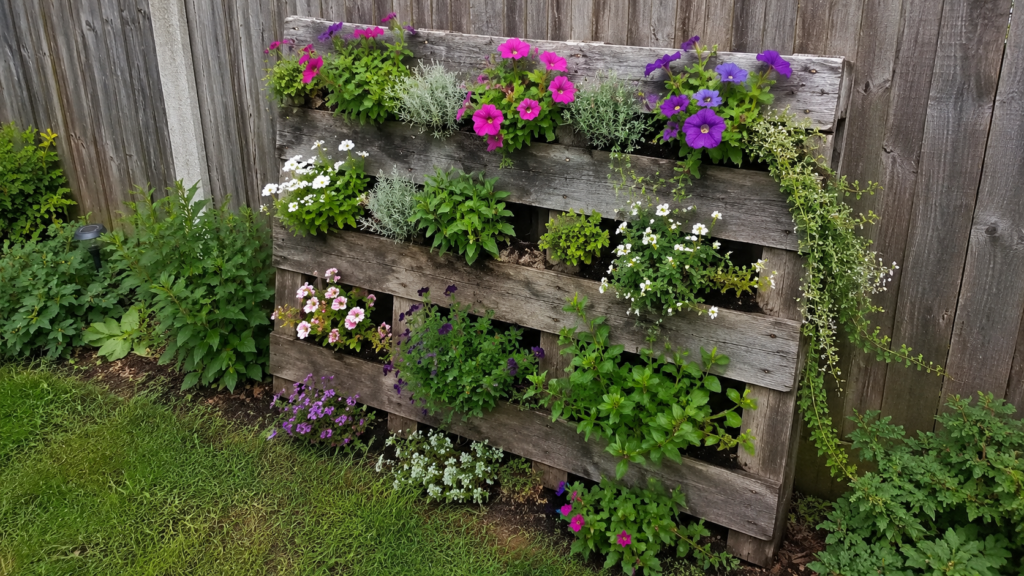
Backyard pallet planter ideas can turn suitable reclaimed wood into vertical flower gardens, herb walls, strawberry planters, vegetable boxes, trellises, and compact displays. The best design depends on pallet condition, root depth, drainage, sunlight, structural support, and whether plants grow directly in the pallet or inside removable pots.
Wooden pallets are useful because their boards and gaps can become planting pockets, pot supports, shelves, trellises, or construction material for deeper boxes. They work especially well where backyard floor space is limited.
A successful pallet planter should answer five questions before planting:
- Is the pallet suitable for garden use?
- Is there enough root space?
- Can excess water drain?
- Can the structure safely carry wet soil and plants?
- Do the plants match the available light?
This guide from backyardplanterideas.online covers 21 practical backyard pallet planter ideas along with the most important safety, planting, drainage, and maintenance decisions.
Which Backyard Pallet Planter Idea Is Best?
Choose the planter according to what you want to grow and how much space you have. Vertical pallets suit small backyards, removable pots are easiest for beginners, deep boxes provide better root space for vegetables, and pallet trellises work well for climbers.
Use this quick guide:
- Small backyard: vertical pallet planter.
- Beginner: pallet with removable pots.
- Flowers: vertical flower pallet.
- Herbs: pallet herb garden near the kitchen.
- Strawberries: medium-depth pallet pockets or boxes.
- Vegetables: deep pallet planter box.
- Succulents: shallow, fast-draining pallet.
- Privacy: securely anchored vertical pallet.
- Climbers: pallet trellis with a separate container.
- Movable planting: wheeled pallet planter.
Choose the planting system before focusing on decorative details. A beautiful shallow pallet will still perform poorly if the selected plants require deeper roots.
Are Pallets Safe for Planters?
Not every pallet is suitable for gardening. Check treatment markings, previous use, stains, odors, structural damage, rot, mold, and exposed fasteners before using reclaimed pallet wood.
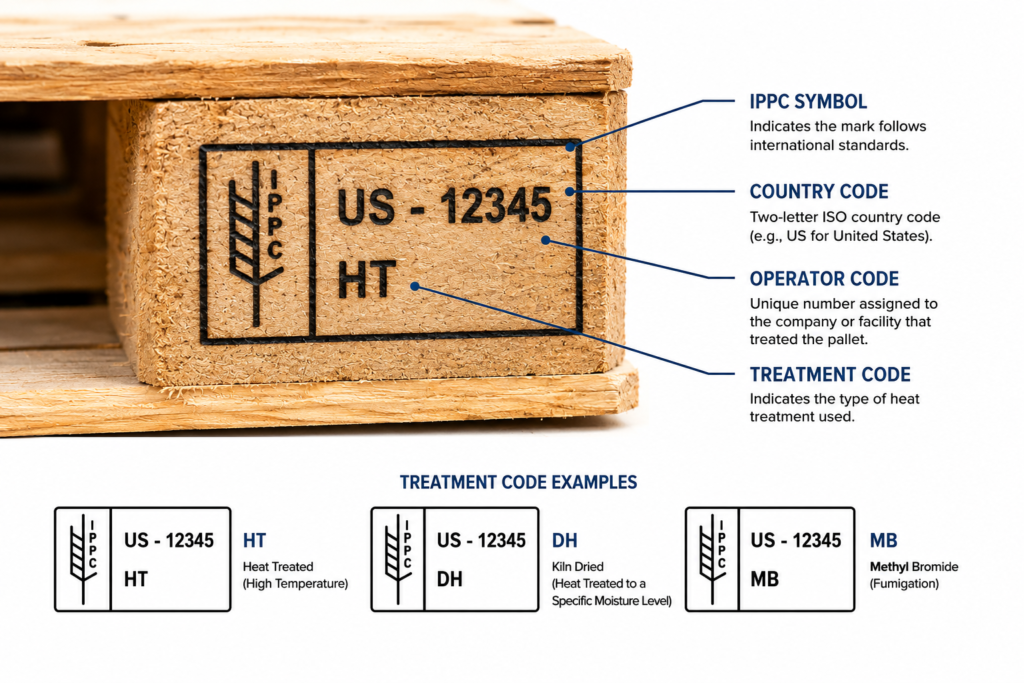
Common international treatment codes include:
- HT: heat treated.
- DH: dielectric heating.
- MB: methyl bromide treatment.
For garden projects, especially edible planting, avoid MB-marked pallets and reject wood with unexplained stains, chemical odors, oily residue, severe mold, soft rot, or obvious contamination.
An HT mark tells you how the wood was treated for phytosanitary purposes, but it does not reveal everything the pallet may have transported later.
Before using a pallet:
- Check its treatment stamp.
- Prefer a known source.
- Inspect boards and joints.
- Remove protruding nails.
- Replace weak boards.
- Sand rough areas you will touch.
For vegetables, strawberries, or herbs, a clean pallet with known history is the better option. If the pallet’s past use is uncertain, use it only as a frame and keep edible plants inside separate pots.
21 Best Backyard Pallet Planter Ideas
1. Vertical Flower Pallet
A vertical flower pallet adds color without using much ground space. Use compact flowers in lined pockets or attached boxes and combine upright, mounding, and trailing plants.
Leave some room between young plants so they can expand naturally instead of becoming overcrowded within a few weeks.
2. Pallet Herb Garden
Place an herb pallet near the kitchen, patio, or outdoor cooking area so frequently used plants remain easy to harvest.
Use separate pots for herbs with different moisture needs. Thyme and rosemary, for example, should not automatically share the same small wet pocket with plants that prefer more consistent moisture.
3. Pallet With Removable Pots
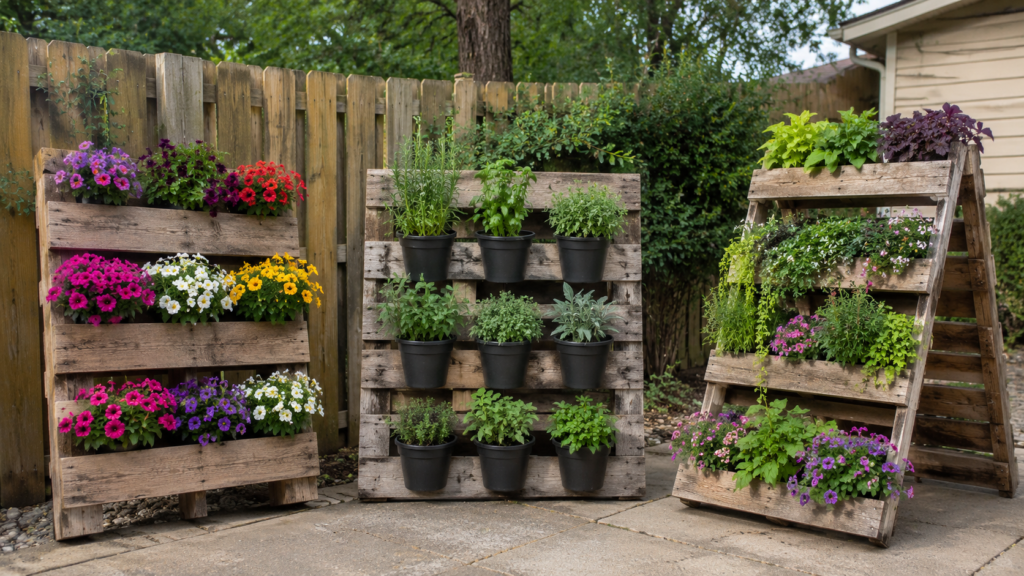
A pallet holding individual pots is one of the easiest designs to maintain.
Attach shelves, brackets, or pot holders and let each plant keep its own container. This makes watering, soil selection, replacement, seasonal movement, and troubleshooting much easier.
4. Strawberry Pallet Planter
Strawberries suit multi-level pallet planting because leaves and fruit can hang over the edges.
Provide enough soil depth and good drainage. Upper pockets may dry faster than lower ones, so check moisture at different levels instead of watering every section identically.
5. Succulent Pallet Garden
Succulents can work well in shallow pallet displays when the species suit your climate.
Use a mixture of rosette, upright, compact, and trailing forms. Drainage is essential because a tightly lined pallet can hold too much moisture for drought-adapted plants.
6. A-Frame Pallet Planter
Join two pallets at the top to create a freestanding A-frame.
This provides planting space on both sides and avoids mounting the planter to a fence. Use the brighter side for sun-loving plants and the more protected side for plants that tolerate less direct light.
7. Pallet Privacy Planter
A tall pallet planter can partially screen a patio, seating area, or utility space.
Use dense foliage, flowers, and compact climbers, but make stability the priority. A planted pallet becomes much heavier than an empty one and can also catch wind.
8. Pallet Planter Boxes
Attach separate wooden boxes across the front of a pallet.
This creates clear planting compartments and makes soil depth and drainage easier to control. Use shallow boxes for compact plants and deeper lower boxes for larger flowers or herbs.
9. Freestanding Flower Tower
Use an upright pallet structure to introduce height into a flat garden.
Choose one stronger focal plant, several mounding plants, and a few trailing varieties. This gives the planter better structure than filling every opening with the same flower.
10. Cottage-Style Pallet Planter
Weathered pallet wood works naturally in informal gardens.
Use a restrained mix of pink, purple, white, and green plants and allow some foliage to spill over the edges. Leave part of the aged wood visible instead of covering every board.
11. Deep Pallet Planter Box
Dismantle pallet boards and rebuild them into a deeper rectangular container.
This is more suitable for larger annuals, herbs, leafy greens, and vegetables because the roots receive more growing volume. Reinforce long boxes so wet soil does not push the sides outward.
12. Tiered Pallet Planter
Arrange planter boxes at several heights to create a stepped display.
Place taller plants toward the back or upper levels and trailing plants near outer edges. Tiered designs work well on patios where you want height without building a large garden bed.
13. Pallet Vegetable Planter
Vegetables can grow in pallet-based containers when the planter provides enough root depth.
Compact greens may tolerate smaller containers, while larger vegetables usually perform better in deeper boxes. Match the crop to soil volume rather than forcing it into the pallet’s existing gaps.
14. Pallet Trellis
Use the pallet as vertical support instead of the soil container.
Place a deep pot or planter at the base and train climbing plants through the slats. This gives roots proper growing space while the pallet provides the climbing structure.
15. Pollinator Pallet Planter
Fill a pallet with locally suitable flowering plants that bloom at different times.
Choose non-invasive plants adapted to your climate and vary flower shapes and heights. For an international audience, local plant selection is more useful than one universal pollinator list.
16. Shade Pallet Planter
A pallet can work in bright shade or filtered light when the plants match the conditions.
Ferns, decorative foliage, and suitable shade flowers can create a strong display without forcing sun-loving plants into an unsuitable location.
17. Narrow Side-Yard Pallet
Vertical pallet planters work well in narrow passages because they use wall or fence height instead of valuable pathway space.
Choose compact plants and avoid trailing growth that blocks the walkway.
18. Wheeled Pallet Planter
Build a pallet box on exterior-rated locking casters.
A movable planter can be repositioned for cleaning, changing sunlight, entertaining, or seasonal protection. Select casters for the fully loaded planter rather than the empty box.
19. Cascading Flower Pallet
Plant trailing flowers near selected upper or outer edges.
Combine them with upright and mounding plants so the planter keeps its shape instead of becoming one large hanging mass.
20. Pallet Kitchen Garden
Place herbs and compact greens near the kitchen or outdoor cooking area.
Convenient placement makes the planter more useful because plants that are easy to reach are more likely to be harvested regularly.
21. Pallet Potting Station
Use a pallet as both a planting feature and a small gardening workstation.
Add lightweight pots, hooks, and a working shelf. Keep heavier tools and containers low so the structure remains stable.
Pallet Planter: Pots or Direct Planting?
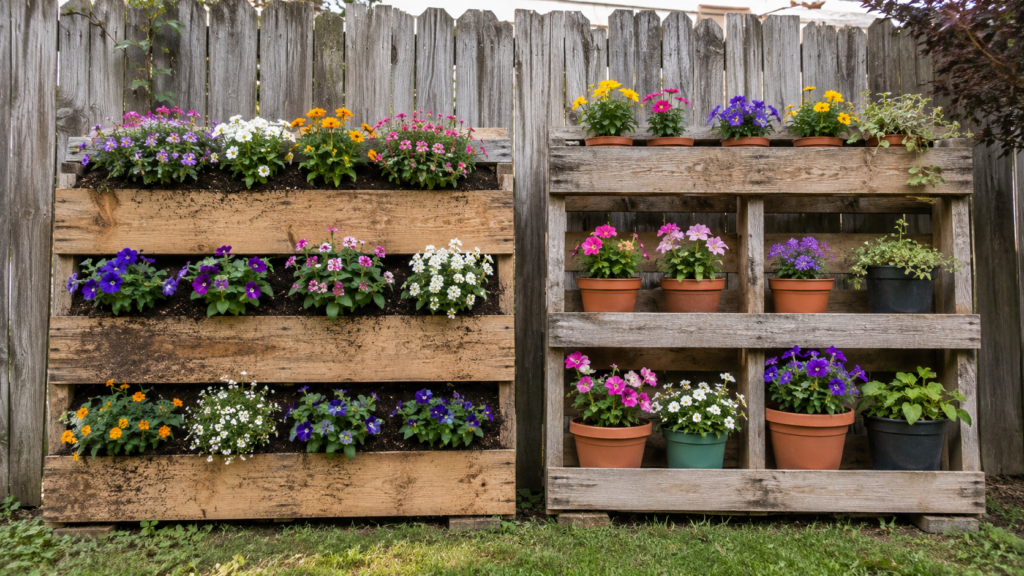
Removable pots are easier to maintain, while direct planting creates a fuller living-wall appearance.
Choose direct planting when:
- The pallet is suitable.
- Planting pockets are deep enough.
- Drainage is reliable.
- Plants have similar water needs.
- You want a permanent display.
Choose pots when:
- You are a beginner.
- Plants need different soils.
- Seasonal movement matters.
- You want easy replacement.
- Pallet history is uncertain.
A hybrid system can combine both methods, such as a deep flower box at the bottom and removable herb pots above.
When uncertain, start with pots.
How Do You Make a Pallet Planter?
Prepare the pallet before adding soil or plants. It is much easier to improve drainage, repair boards, or change the location while the structure is still empty.
Step 1: Inspect the pallet
Check its treatment marking, condition, previous use, stains, rot, and fasteners.
Step 2: Remove hazards
Pull exposed nails, tighten loose screws, and smooth sharp edges.
Step 3: Choose the planting system
Decide between lined pockets, attached boxes, removable pots, a deep box, or a trellis.
Step 4: Create drainage
Every soil-filled section needs a route for excess water to escape.
Step 5: Reinforce the structure
Strengthen weak boards, long boxes, legs, and mounting points.
Step 6: Position the planter
Check sunlight, walking space, wind, watering access, and runoff before filling.
Step 7: Add container potting mix
Use a suitable container growing medium rather than dense garden soil.
Step 8: Arrange plants
Place nursery pots in position first so you can judge spacing and mature size.
Step 9: Plant
Leave enough room for roots and foliage to develop.
Step 10: Water and inspect
Watch where excess water leaves and correct any drainage or soil-retention problems immediately.
What Plants Grow Best in Pallet Planters?
Compact flowers, herbs, strawberries, selected succulents, greens, and foliage plants are usually easiest when their root depth, sunlight, and moisture requirements match the planter.
For sunny locations, consider climate-appropriate:
- Petunias.
- Alyssum.
- Thyme.
- Oregano.
- Strawberries.
- Suitable succulents.
For partial shade:
- Parsley.
- Leafy greens.
- Begonias where appropriate.
- Compact foliage plants.
For shade:
- Ferns.
- Decorative foliage.
- Shade-tolerant ornamentals.
Larger vegetables and vigorous herbs generally need deeper boxes.
The most useful rule is:
plant choice → mature root requirement → soil depth → pallet design
Do not choose plants according to the size of their nursery pot.
How Deep Should a Pallet Planter Be?
There is no single ideal depth. Planting depth should match the root system of the plant.
Shallow pockets work best for compact ornamentals and selected succulents.
Medium-depth pockets are more suitable for many herbs, strawberries, seasonal flowers, and small foliage plants.
Deep pallet boxes are the better option for vegetables, larger annuals, and vigorous herbs.
Deeper soil holds more moisture and offers more root space, but it also increases the planter’s weight.
If the correct root depth does not fit the pallet, change the planter design rather than choosing an undersized container.
How Should a Pallet Planter Drain?
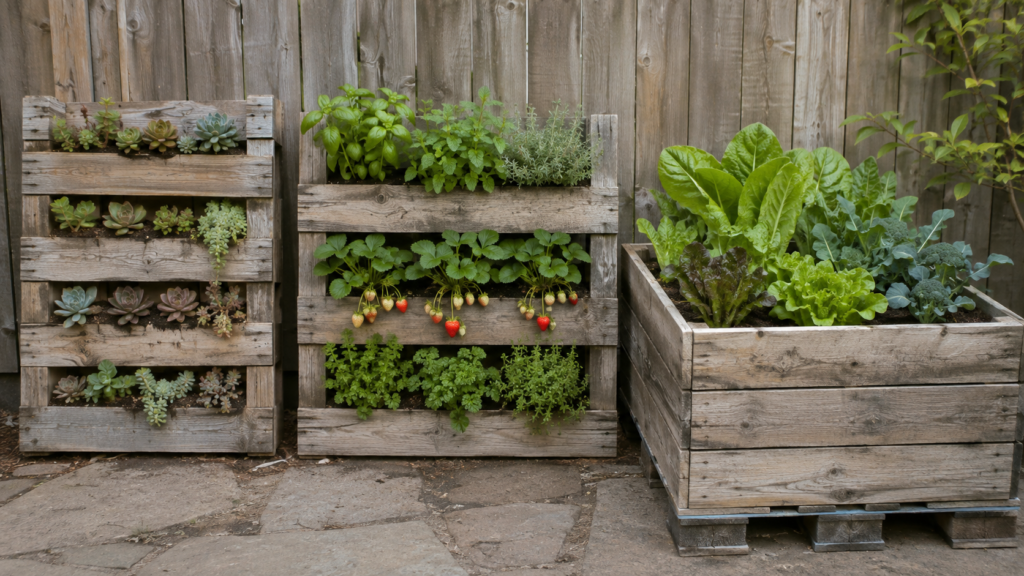
Every soil-filled pocket, pot, or box needs free drainage. A liner should keep growing medium in place without trapping excess water around the roots.
Landscape fabric, purpose-made planting pockets, attached boxes, or individual pots can be used to hold soil.
Check:
- Where water exits.
- Whether lower pockets remain too wet.
- Whether upper pockets dry quickly.
- Whether soil washes out.
- Whether runoff reaches a wall or fence.
- Whether wood remains constantly damp.
Vertical pallet planters often develop different moisture levels from top to bottom. Water according to the actual root zone rather than treating the whole pallet as one container.
Can Pallet Planters Damage a Fence?
Yes. A filled pallet can become heavy, trap moisture, stain a fence, or overload weak boards and posts.
Before mounting, consider:
- Fence condition.
- Structural fixings.
- Wet soil weight.
- Wind exposure.
- Drainage direction.
- Airflow behind the pallet.
A lightweight or aging fence may be better suited to a freestanding planter.
The same rule applies to wheeled or raised pallet planters: consider the weight of the fully watered structure, not the empty pallet.
How Do You Prevent Pallet Planter Rot?
Keep the wood from staying continuously wet. Good drainage, airflow, and regular inspections are more important than simply applying a surface finish.
Check:
- Lower boards.
- Corners.
- Underside.
- Fasteners.
- Mounting points.
- Areas touching walls or wet ground.
Replace structural boards that become soft or badly split.
Sealing or treating the wood is optional. If you apply an exterior finish, use one appropriate for the intended garden use and follow the manufacturer’s instructions.
A coating should never be used to hide contaminated or rotten wood.
Are Pallet Planters Safe for Vegetables?
They can be when the wood is appropriate and the planter provides adequate root space, drainage, sunlight, and suitable growing medium.
For edible growing:
- Prefer pallets with known history.
- Avoid questionable or contaminated wood.
- Avoid MB-marked pallets.
- Use clean container growing medium.
- Provide enough root depth.
- Maintain free drainage.
If reclaimed wood history is uncertain, keep edible plants inside separate containers instead of allowing their growing medium to contact the pallet directly.
What Are Common Pallet Planter Mistakes?
Most pallet planter problems come from poor material selection, shallow root space, blocked drainage, excessive weight, weak mounting, or overcrowding.
Avoid:
- Using the first free pallet available.
- Ignoring stains or odors.
- Blocking drainage with liner.
- Filling containers with dense garden soil.
- Underestimating wet soil weight.
- Using weak mounting hardware.
- Planting too densely.
- Mixing plants with very different moisture needs.
- Making upper pockets impossible to reach.
- Allowing runoff to soak a fence.
- Ignoring structural deterioration.
A pallet planter should remain practical after the plants mature, not just look good on planting day.
How Much Does a Pallet Planter Cost?
The pallet may be inexpensive or free, but the finished project can still require spending on pots, liner, growing medium, plants, fixings, reinforcement, and casters.
Common costs include:
- Pallet or replacement boards.
- Exterior screws.
- Pots or planter boxes.
- Landscape fabric.
- Potting mix.
- Plants.
- Structural brackets.
- Wall fixings.
- Casters.
- Optional exterior finish.
The lowest-cost option is often an intact pallet holding containers you already own.
For stronger first-hand evidence, backyardplanterideas.online should document the actual cost of a completed pallet project rather than publishing a generic international price estimate.
What Should You Check After 30 Days?
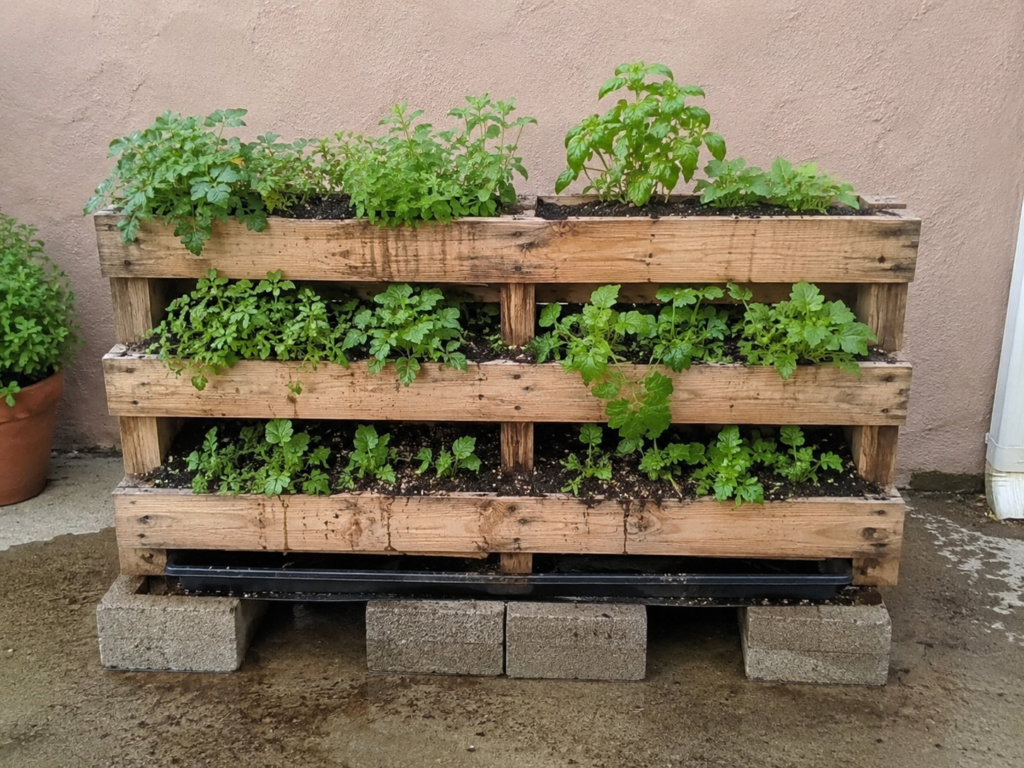
Inspect the planter after about a month to see whether watering, drainage, plant spacing, and structural support are working as intended.
Check:
- Upper and lower pocket moisture.
- Potting-mix settlement.
- Plant crowding.
- Drainage.
- Liner movement.
- Structural stability.
- Loose fasteners.
- Permanently wet wood.
- Exposed roots.
- Failed plants.
A genuine 30-day test should record pallet dimensions, plant varieties, growing-medium quantity, sunlight, watering frequency, drainage performance, repairs, and Day 1 versus Day 30 photographs.
If a plant fails or one pocket stays too wet, report it. Real problems provide more useful experience than a staged claim that everything performed perfectly.
Backyard Pallet Planter FAQs
Can you use any wooden pallet as a planter?
No. Use clean, structurally sound pallets without suspicious stains, chemical odors, rot, or contamination.
What does HT mean on a pallet?
HT means the wood received heat treatment for phytosanitary purposes.
What does MB mean on a pallet?
MB refers to methyl bromide treatment. Choose another pallet for garden projects, especially edible planting.
Do you have to dismantle a pallet?
No. Intact pallets can hold pots, planter boxes, flowers, herbs, or climbing plants.
Should you line a pallet planter?
Use a liner when soil would otherwise escape from planting pockets. Separate pots usually do not require one.
Do pallet planters need drainage?
Yes. Every soil-filled section needs a reliable route for excess water to escape.
What soil should you use?
Use suitable container potting mix instead of dense garden soil.
Can herbs grow in pallet planters?
Yes. Herbs work particularly well in removable pots or separate planting compartments.
Can vegetables grow in pallet planters?
Yes, but larger vegetables usually need deeper pallet boxes rather than shallow pockets.
Can strawberries grow in pallet planters?
Yes. Provide sufficient root depth, drainage, sunlight, and consistent moisture.
How often should you water a pallet planter?
Water according to soil moisture. Upper pockets often dry faster than lower ones.
Are pots or direct planting better?
Pots are easier to maintain, while direct planting creates a fuller integrated display.
Can you mount a pallet planter on a fence?
Yes, if the fence and fixings can safely support the fully planted and watered structure.
Should you seal pallet wood?
Sealing is optional. Good drainage, airflow, and structurally sound wood are more important.
Can pallet planters stay outside in winter?
Often yes, but the plants, pots, and structure must tolerate local winter conditions.
Are pallet planters good for small backyards?
Yes. Vertical pallet planters create growing space while using very little ground area.
Pallet Planter Checklist
Before planting:
- Check pallet source and condition.
- Check treatment markings.
- Remove sharp fasteners.
- Decide between pots and direct planting.
- Match root depth to the planter.
- Observe sunlight.
- Plan drainage.
- Use container growing medium.
- Consider fully loaded weight.
- Confirm structural support.
- Allow mature plant spacing.
- Plan a 30-day inspection.
Final Thoughts on Backyard Pallet Planter Ideas
The best backyard pallet planter ideas are the ones that match the pallet structure to the needs of the plants.
Use vertical pallets where floor space is limited, removable pots when easy maintenance matters, deep boxes when vegetables need more root room, and trellises when climbing plants need support.
Before building, confirm four essentials:
Suitable wood. Enough root space. Reliable drainage. Safe structural support.
Once those are right, plant selection and styling become much easier.
For more ways to use containers, fences, patios, recycled materials, and compact garden spaces, explore the wider backyard planter ideas collection from backyardplanterideas.online.
Myra is the founder and lead writer of Backyard Planter Ideas, where she shares practical, well-researched guidance on planter design, plant selection, and outdoor styling. Her goal is to help homeowners create attractive, functional garden spaces with clear, reliable, and easy-to-apply advice.