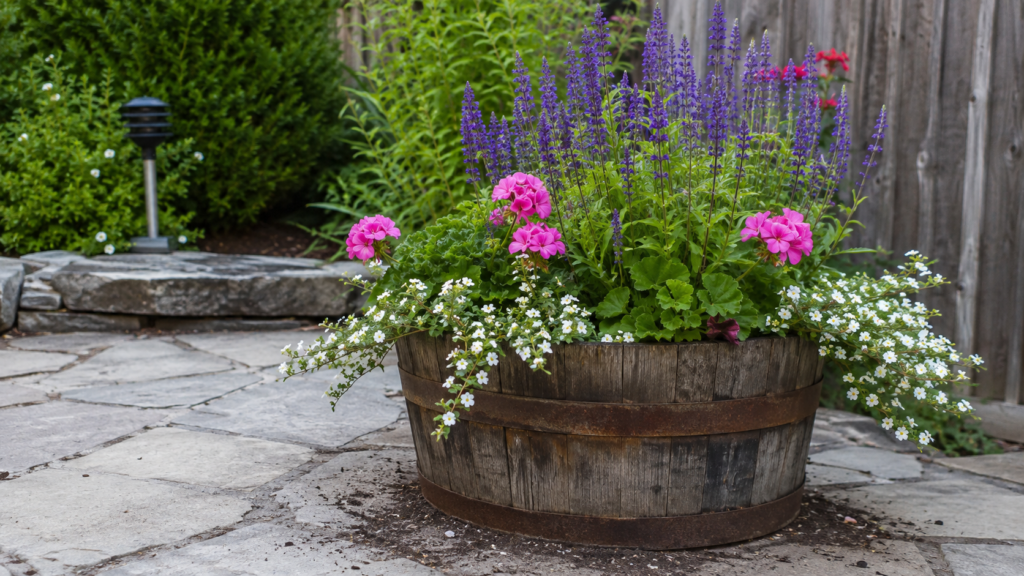
Whiskey barrel planter ideas work best when the barrel is treated as a large growing container first and rustic garden décor second. A successful barrel needs reliable drainage, suitable potting mix, enough root space, and plants that share similar sunlight and moisture requirements. Once those basics are right, the aged wood, dark metal hoops, and generous planting area become strong design features.
A half whiskey barrel can hold far more than seasonal flowers. It can become an herb garden, vegetable planter, strawberry bed, blueberry container, pollinator garden, shaded foliage display, succulent planter, compact shrub container, trellis planter, or even a small water garden.
The most important question is not simply what looks attractive. It is what will grow well in the barrel, in its actual location, with the maintenance you can realistically provide.
Whiskey Barrel Planter Ideas at a Glance
| Question | Quick Answer |
|---|---|
| Do whiskey barrel planters need drainage? | Yes |
| Can you use garden soil alone? | No |
| Typical half-barrel capacity | Roughly 20–30 gallons |
| Best beginner design | Thriller-filler-spiller |
| Can vegetables grow in one? | Yes |
| Can shrubs grow in one? | Yes, with adequate root space |
| Can it stay outside in winter? | Usually, but plants may need protection |
| Should you move it after filling? | Preferably not |
| Best first decision | Sunlight + intended use |
Before planting, check the amount of sunlight, wind exposure, access to water, winter conditions, mature plant size, and whether the barrel will be viewed from one side or all directions.
Those factors should determine the plants—not the other way around.
Which Whiskey Barrel Planter Ideas Are Best?
The best whiskey barrel planter idea depends on what you want the container to accomplish. A patio may benefit from seasonal color, an outdoor kitchen from herbs, and a garden entrance from a compact evergreen or ornamental grass. The barrel has enough planting volume to support many styles, but the plants still need compatible conditions.
Think about mature size rather than nursery size. A container that looks slightly open in spring may be perfectly filled by midsummer. Overcrowding on planting day usually leads to greater competition for water, nutrients, light, and airflow later.
Choose according to your priority:
- Color: mixed seasonal flowers
- Shade: hosta, fern, coleus, begonias
- Food: vegetables, herbs, strawberries
- Pollinators: long-flowering regional plants
- Low maintenance: drought-tolerant herbs and perennials
- Structure: compact shrubs or grasses
- Vertical interest: climbing plants on a trellis
- Year-round effect: suitable evergreen plants
- Small-space gardening: tiered or edible designs
For a barrel viewed from all sides, place the tallest plant near the center. Against a wall or fence, move height toward the back and shorter plants toward the visible edge.
The strongest design is not necessarily the one with the most plants. It is the one where light, moisture, soil, mature size, and maintenance requirements work together.
How Do You Prepare a Whiskey Barrel Planter?
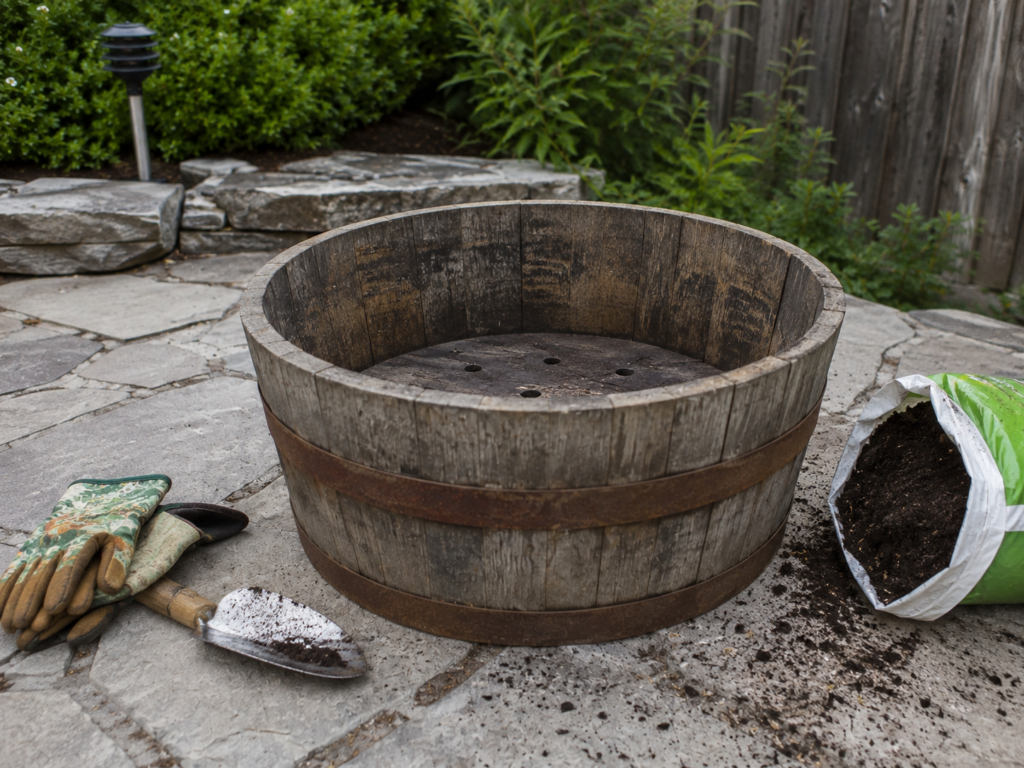
Prepare the barrel before adding potting mix. Once filled with moist growing medium and mature plants, a large half barrel becomes extremely difficult to move.
Inspect:
- The wooden base
- Metal hoops
- Structural cracks
- Signs of serious rot
- Existing drainage holes
- Previous use if growing food
Place the empty barrel in its permanent location and make sure it is stable. Consider sunlight, reflected heat, wind, drainage beneath the container, and how easily you can reach it with a hose or watering can.
Drainage is essential for ordinary soil-filled barrels. Water must be able to move through the growing medium and escape from the base instead of collecting around the roots.
Raise the barrel slightly if the drainage openings would otherwise sit tightly against paving or soil.
Do not fill potting mix to the very top. Leave a small space below the rim so water can soak into the soil rather than washing over the edge.
Practical Rule Before Planting
Check these six things before filling the barrel:
- Final position
- Drainage
- Sun exposure
- Mature plant size
- Soil requirements
- Access to water
Correcting those details when the barrel is empty takes minutes. Correcting them after it is planted can become a major job.
What Are the Best Whiskey Barrel Planter Ideas?
Whiskey barrels work particularly well when their width and natural texture are used intentionally. These 17 ideas cover decorative, edible, permanent, and low-maintenance options.
1. Thriller-Filler-Spiller Flower Barrel
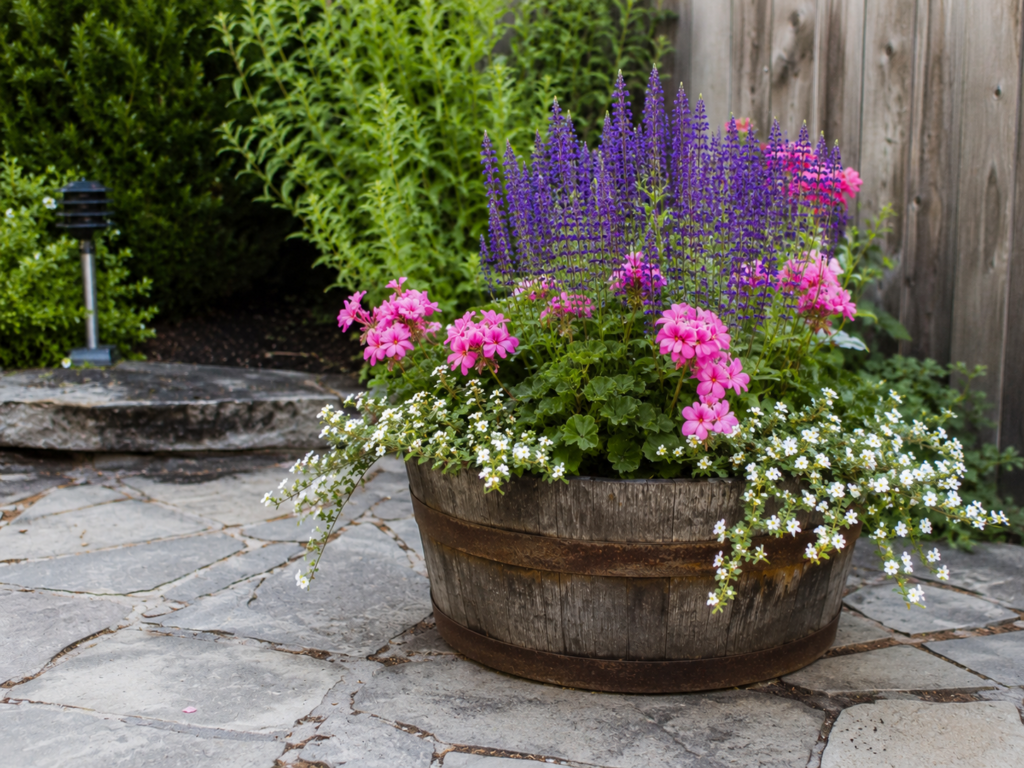
Use one tall plant for height, rounded plants for body, and trailing plants around the edge.
For example:
- Salvia or canna as the thriller
- Geraniums as fillers
- Bacopa or calibrachoa as spillers
Keep the combination simple enough that every plant receives adequate root space.
2. Cottage-Style Whiskey Barrel
A weathered barrel naturally suits informal cottage planting.
Combine plants such as:
- Salvia
- Geranium
- Verbena
- Heuchera
- Bacopa
Use two or three dominant colors rather than every flower color available. Slight irregularity makes the arrangement feel more natural.
3. Shade-Loving Whiskey Barrel
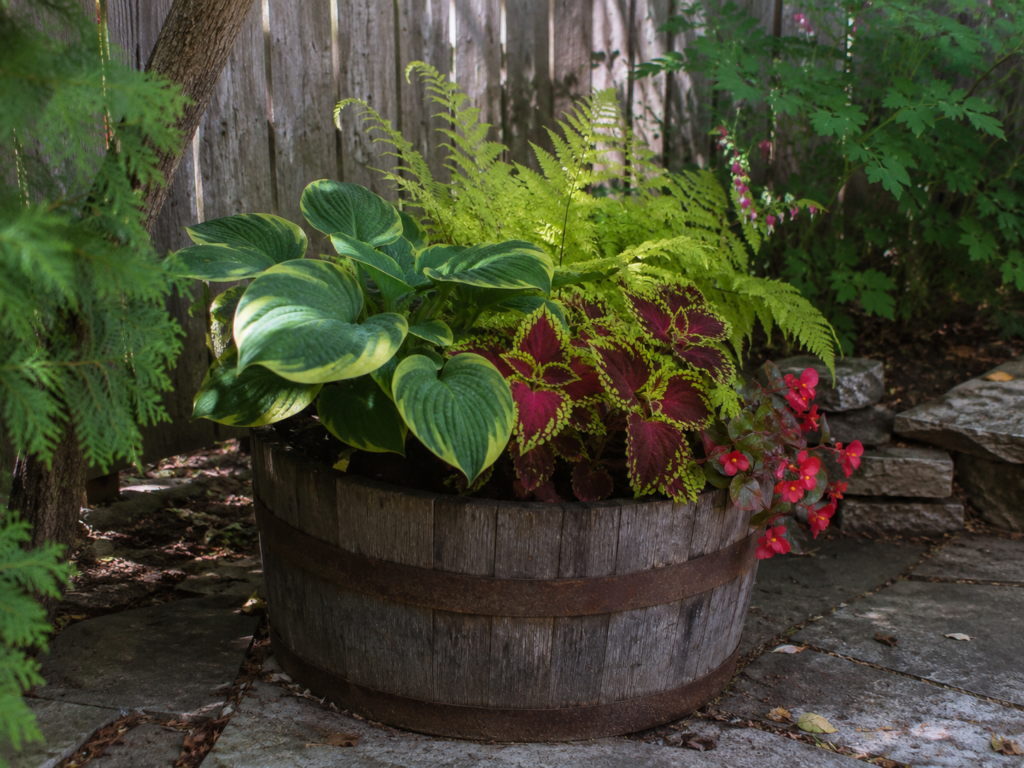
Shaded barrels can rely on foliage for impact.
Try:
- Hosta
- Fern
- Coleus
- Begonia
- Heuchera
Combine different leaf shapes and colors. Broad hosta leaves beside fine fern foliage create stronger contrast than plants with similar textures.
4. Whiskey Barrel Herb Garden
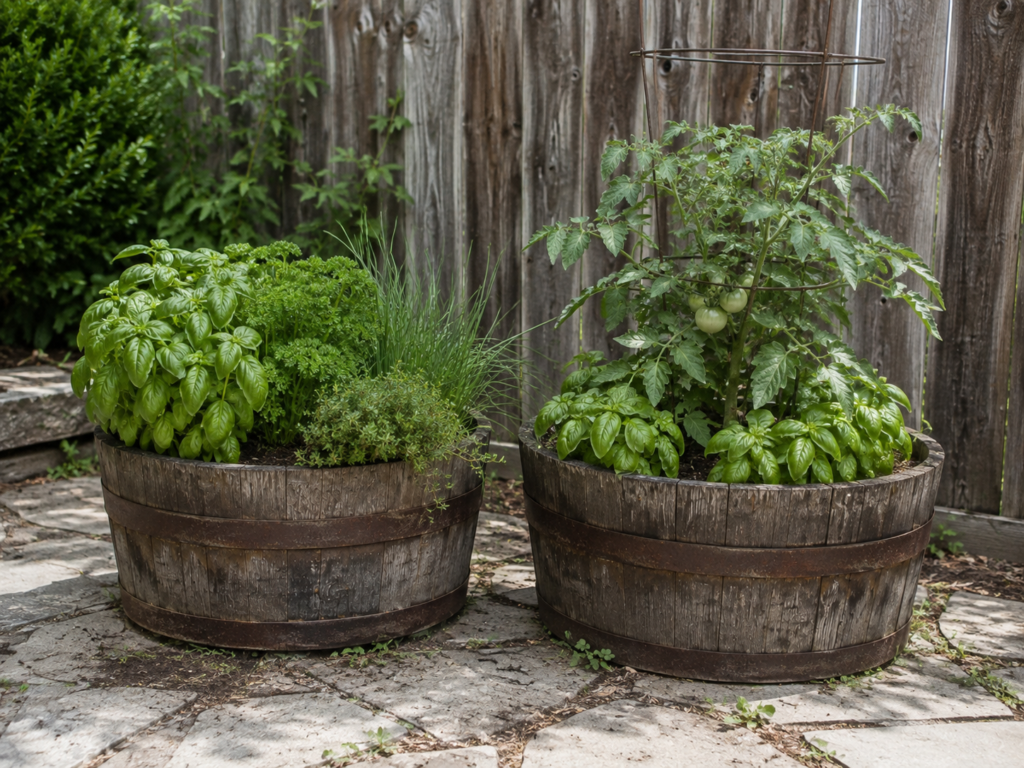
Place an herb barrel close to the kitchen, patio, or grill.
Useful herbs include:
- Basil
- Parsley
- Chives
- Thyme
- Oregano
- Sage
Group herbs according to moisture requirements. Keep aggressive mint contained separately.
5. Salad Garden Barrel
A half barrel can produce frequent harvests of shallow-rooted crops.
Grow:
- Lettuce
- Arugula
- Spinach
- Radishes
- Scallions
- Parsley
Plant smaller batches at intervals so everything does not mature at once.
6. Tomato and Herb Barrel
One healthy container tomato can make better use of a barrel than several overcrowded plants.
Add:
- One tomato
- Strong support
- A restrained amount of basil or another compatible herb
Install the stake or cage early before the roots fill the container.
7. Strawberry Whiskey Barrel
Plant strawberries around the perimeter so leaves and fruit can extend naturally over the rim.
This makes harvesting easier and helps keep fruit away from wet ground. Avoid burying strawberry crowns too deeply.
8. Blueberry Whiskey Barrel
Blueberries can work well in barrels when their soil requirements are respected.
Use an acidic or ericaceous growing medium and choose a container-suitable cultivar. A blueberry barrel can provide spring flowers, summer fruit, and attractive seasonal foliage.
9. Pollinator Whiskey Barrel
Choose flowers with overlapping blooming periods rather than relying on one short-flowering species.
Depending on location, possible options include:
- Salvia
- Verbena
- Coneflower
- Coreopsis
- Regionally suitable native flowers
For pollinator planting, local native and climate-adapted species should take priority.
10. Drought-Tolerant Barrel
A sunny barrel can contain plants that prefer relatively dry conditions.
Consider:
- Lavender
- Thyme
- Sedum
- Salvia
Good drainage is particularly important. Do not combine these with moisture-loving plants simply because the colors match.
11. Ornamental Grass Barrel
One compact ornamental grass can provide enough movement and height to create a strong focal point.
Use it near:
- Deck stairs
- Pathways
- Patio corners
- Garden gates
Check mature size carefully because large grasses can quickly overwhelm the container.
12. Compact Evergreen or Shrub
A permanent shrub or compact evergreen gives the barrel year-round structure.
This works well beside entrances, patios, or garden paths. Permanent plants need more attention to root congestion, feeding, drainage, and winter exposure than short-lived annuals.
13. Small Water Garden
A barrel can also become a miniature pond with aquatic plants and possibly a small fountain.
This requires the opposite setup from a normal planter:
Soil planter = water must drain.
Water garden = water must remain contained.
Use a watertight barrel or suitable liner.
14. Trellis Whiskey Barrel
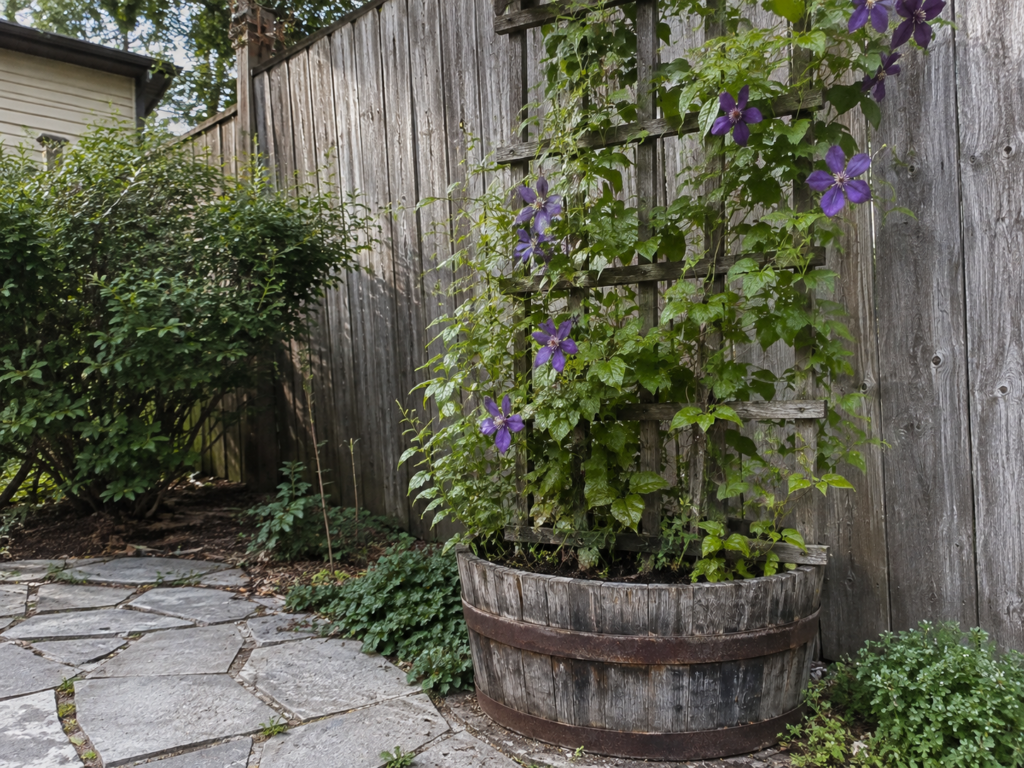
Add a sturdy trellis for climbing plants such as suitable beans, sweet peas, compact clematis, or annual vines.
Install the support before plants become established. Consider mature plant weight and wind exposure, especially in open patios or along fences.
15. Tiered Whiskey Barrel
A tiered design creates more visible planting levels.
It works particularly well for:
- Strawberries
- Herbs
- Succulents
- Compact flowers
Keep drainage between levels effective and avoid using tiering for large shrubs or vegetables that need uninterrupted root depth.
16. Succulent Whiskey Barrel
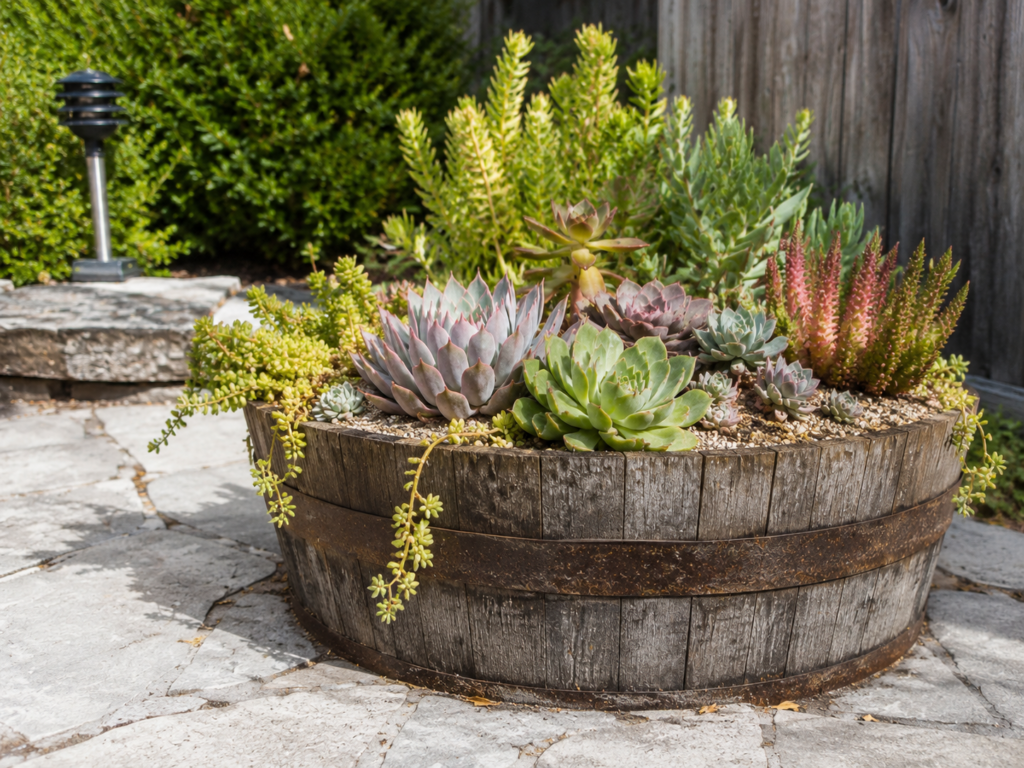
Use rosette, upright, spreading, and trailing succulents to create texture rather than heavy flower color.
Choose a fast-draining growing medium and plants suited to your climate. Succulents that survive outdoors in dry warm regions may need protection in cold or wet climates.
17. Matching Entrance Barrels
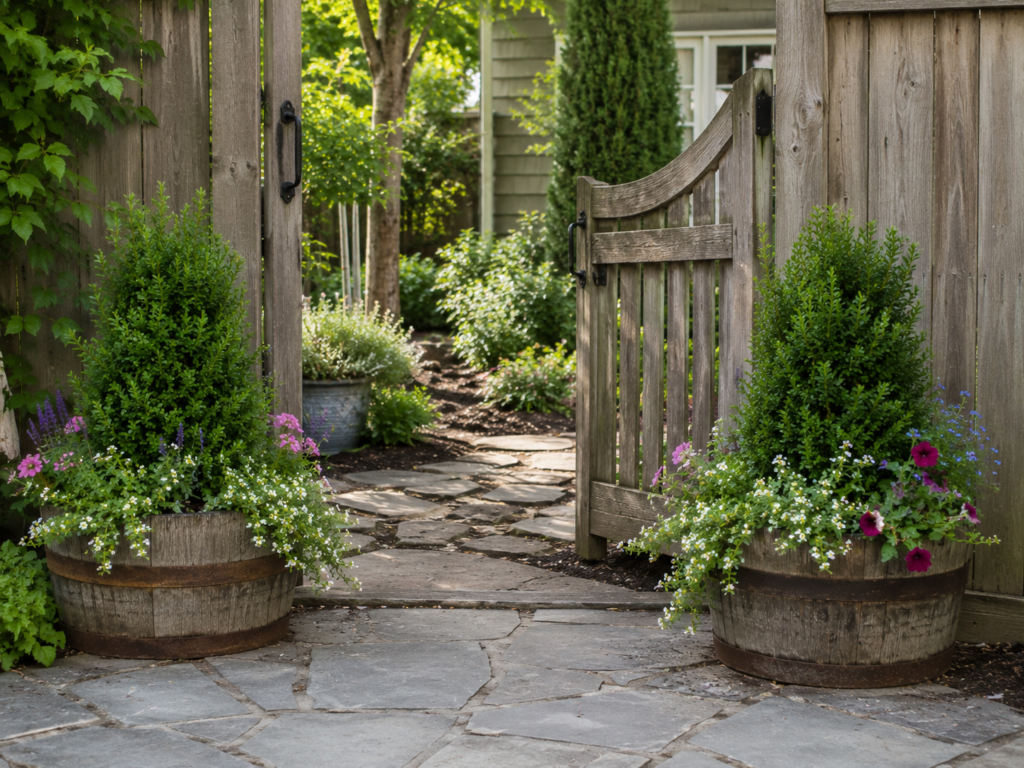
Two barrels can frame a garden gate, pergola, patio opening, or deck steps.
Repeat the same focal plant or color palette in each container.
Measure walking clearance before positioning them. Large barrels can visually and physically narrow an entrance more than expected.
What Soil Is Best for Whiskey Barrel Planters?
Use a container-growing medium rather than filling the barrel entirely with dense backyard soil. Ground soil can compact when confined in a container, reducing drainage and oxygen around roots.
A good mix should provide:
- Moisture retention
- Drainage
- Air space
- Root support
- Suitable pH
- Nutrient availability
Choose the medium according to the plants.
For example:
- Seasonal flowers → general container mix
- Vegetables → quality vegetable/container mix
- Blueberries → acidic or ericaceous mix
- Succulents → freer-draining mix
- Long-term shrubs → stable long-term container medium
How Much Potting Mix Do You Need?
Many half barrels hold roughly 20–30 gallons, although reclaimed barrels vary.
A 25-gallon planter is roughly 3.3 cubic feet before allowing for rootballs and space below the rim.
| Capacity | Approx. Volume | Suitable Use |
|---|---|---|
| 20 gal | ~2.7 cu ft | Flowers, herbs, strawberries |
| 25 gal | ~3.3 cu ft | Tomato, blueberry, mixed planting |
| 27–30 gal | ~3.6–4.0 cu ft | Shrubs and larger displays |
Should You Use Filler?
Lightweight filler can reduce soil use when growing shallow-rooted annuals.
Do not reduce root volume unnecessarily for:
- Tomatoes
- Shrubs
- Trees
- Large perennials
- Permanent plants
Do not add a thick layer of rocks or gravel to improve drainage. Functional drainage holes and suitable growing medium matter more.
Can You Grow Vegetables in a Whiskey Barrel?
Yes. A half whiskey barrel can provide useful growing volume for many vegetables when it is properly drained and safe for edible planting.
Suitable options include:
- Tomatoes
- Peppers
- Lettuce
- Radishes
- Potatoes
- Chard
- Herbs
- Salad greens
Large vegetables require more space than greens. One productive tomato may be better than several crowded plants competing for water and nutrients.
If the barrel is reclaimed, know its previous use before growing food.
Avoid edible crops when the container may have held:
- Industrial chemicals
- Toxic materials
- Unknown substances
When barrel history is uncertain, use it for ornamental plants instead.
How Often Should You Water a Whiskey Barrel Planter?
Water according to actual moisture in the root zone, not a rigid schedule.
Drying speed changes with:
- Temperature
- Wind
- Sunlight
- Plant type
- Root density
- Potting-mix volume
Check below the soil surface before watering. The top may look dry while deeper soil remains moist.
Water slowly around the roots so moisture penetrates the growing medium rather than running down the sides.
Avoid two extremes:
Constant saturation can reduce oxygen around roots.
Repeated severe drying can reduce growth, flowering, and fruit production.
A tomato barrel may need much more frequent watering during summer than one planted with lavender and thyme.
The easiest rule to remember is:
Check first, water second.
What About Fertilizer?
Container plants have access to a limited nutrient supply, so some may benefit from feeding during active growth.
Heavy feeders include:
- Tomatoes
- Fruiting peppers
- Long-flowering annuals
Before fertilizing, check that the real problem is not poor drainage, insufficient sunlight, incorrect watering, or root congestion.
Fertilizer cannot correct unsuitable growing conditions.
How Do You Make a Whiskey Barrel Last Longer?
Wood naturally changes outdoors, so some weathering is expected. The goal is to prevent unnecessary deterioration rather than keeping the barrel looking new forever.
To extend useful life:
- Keep drainage holes open.
- Avoid permanent standing water beneath the base.
- Raise the barrel slightly where necessary.
- Inspect wood and hoops each season.
- Avoid repeatedly moving a filled barrel.
Watch particularly for:
- Soft wood in the base
- Loose metal hoops
- Separating staves
- Structural cracks
Gray wood, light surface rust, and minor weathering are usually cosmetic.
Replace the barrel when deterioration affects its ability to safely hold the growing medium.
What Are Common Whiskey Barrel Planter Mistakes?
The most common problems come from setup and plant selection rather than the barrel itself.
Avoid:
- No drainage
- Using dense backyard soil
- Combining plants with conflicting needs
- Overcrowding
- Moving the barrel after filling
- Ignoring mature plant size
- Watering by calendar
- Using an unknown barrel for edible crops
- Ignoring winter exposure
- Choosing plants only by appearance
When plants struggle, diagnose the problem before adding fertilizer or more water.
| Symptom | Likely Issue | Check First |
|---|---|---|
| Wilting in wet soil | Poor drainage | Drainage holes |
| Soil stays wet | Dense mix/blockage | Base and mix |
| Water runs through quickly | Dry/root-bound mix | Root zone |
| Yellow leaves | Moisture/nutrition | Soil moisture |
| Weak growth | Light/root congestion | Sun and roots |
| Tall plants collapse | Poor support | Stake or trellis |
The barrel’s microclimate matters too. A container beside a reflective wall may experience much more heat than the rest of the garden, while one under a roof overhang may receive almost no rainfall.
Where Should You Place Whiskey Barrel Planters?
Use the barrel where its size and texture solve a real design problem.
Beside a Patio
Flowers, herbs, or compact vegetables can soften hard paving.
At an Entrance
One barrel creates a focal point; two provide symmetry.
Along a Path
Use barrels to mark corners, transitions, or gateways.
Beside a Shed
The aged wood naturally complements timber structures.
In a Backyard Corner
A taller planting can give an unused corner vertical interest.
Near an Outdoor Kitchen
Herbs become decorative and practical.
On Gravel
The contrast between oak, metal, greenery, and stone creates strong texture.
Near a Fence
Use the fence as a backdrop and place taller plants toward the back.
Always leave enough access for walking, maintenance, and watering.
What Should You Check Before Buying a Whiskey Barrel?
Check function before appearance.
Look at:
- Base condition
- Metal hoops
- Wood stability
- Diameter
- Planting depth
- Drainage
- Previous use
- Final weight
- Intended plants
Genuine Reclaimed Barrel
Advantages
- Authentic appearance
- Heavy and stable
- Natural weathered texture
Disadvantages
- Heavy
- Condition varies
- Wood naturally deteriorates
Barrel-Style Planter
Advantages
- Often lighter
- Easier to move
- More consistent sizing
Disadvantages
- Less authentic
- Quality varies by material
Measure your available space before buying. Half barrels often appear smaller in photographs than they feel beside a walkway or patio.
Are Whiskey Barrel Planters Worth It?
Whiskey barrel planters are worth considering when you want substantial planting volume, a strong focal point, and the appearance of natural aged wood.
They work particularly well for:
- Mixed flowers
- Vegetables
- Herbs
- Fruit
- Shrubs
- Permanent patio displays
Their main drawbacks are weight, natural wood deterioration, and difficulty moving once filled.
A smaller pot is usually better when portability matters.
Ask one question:
Does a large, heavy, rustic container solve the planting problem I actually have?
If the answer is yes, a whiskey barrel can be an excellent choice.
What Is the Best Whiskey Barrel Planter Design?
For most backyards, the easiest design is one taller focal plant, a restrained middle layer, and trailing growth around the rim.
Examples include:
Sunny: salvia + geranium + bacopa
Shade: hosta + fern + coleus
Edible: tomato + basil
Low maintenance: lavender + thyme + sedum
Before planting, check:
- Enough root volume?
- Functional drainage?
- Compatible sunlight?
- Similar moisture needs?
- Suitable growing medium?
- Realistic maintenance?
If all six conditions are met, the design has a much better chance of remaining attractive beyond the first few weeks.
What Are the Best Tips for Whiskey Barrel Planter Ideas?
Start with function before decoration.
Before planting:
- Choose the permanent location.
- Check drainage.
- Match plants to sunlight.
- Group plants with similar water needs.
- Use suitable container soil.
- Allow room for mature growth.
- Install stakes or trellises early.
During the season:
- Check moisture regularly.
- Adjust watering for weather.
- Feed only when needed.
- Keep drainage open.
- Remove or divide plants that become overcrowded.
For long-term barrels:
- Check hoops and wood.
- Watch root congestion.
- Refresh depleted growing medium.
- Protect sensitive plants in winter.
The best whiskey barrel planter ideas succeed because the barrel, plants, soil, climate, and maintenance requirements work together as one container garden.
Whiskey Barrel Planter Ideas FAQs
Do Whiskey Barrel Planters Need Drainage Holes?
Yes. Drainage holes allow excess water to escape and help prevent waterlogged roots. Keep them clear and avoid blocking the base.
What Goes in the Bottom of a Whiskey Barrel Planter?
Use suitable potting mix above working drainage holes. Lightweight filler is optional only when shallow-rooted plants do not need the full depth.
Should You Put Rocks in the Bottom?
No. Rocks do not improve container drainage and reduce usable root volume. Open drainage holes and suitable potting mix matter more.
Should You Line a Whiskey Barrel Planter?
Lining is optional. Any liner used in a soil planter should allow water to reach the drainage holes.
How Many Plants Fit in a Whiskey Barrel?
There is no fixed number. Mature size, root space, airflow, and water needs matter more than the number of nursery plants.
Can You Grow Tomatoes in a Whiskey Barrel?
Yes. One container tomato can grow well with adequate sunlight, drainage, soil volume, watering, and sturdy support.
Can Whiskey Barrel Planters Stay Outside in Winter?
Usually, but permanent plants may require protection because container roots experience colder temperatures than roots in the ground.
How Long Does a Whiskey Barrel Planter Last?
There is no fixed lifespan. Durability depends on barrel condition, climate, drainage, moisture exposure, and maintenance.
Can You Grow a Tree in a Whiskey Barrel?
Some compact or dwarf trees can grow in large barrels when root volume, watering, climate, and long-term care are suitable.
Do Whiskey Barrel Planters Need Full Sun?
No. They can work in sun, partial shade, or shade. Choose plants according to the actual light conditions.
What Sources Support These Whiskey Barrel Planter Tips?
The recommendations in this guide follow established container-gardening principles: adequate drainage, suitable growing media, realistic root volume, compatible plant combinations, moisture monitoring, and climate-appropriate plant selection.
For plant-specific or regional decisions, use guidance from:
- Royal Horticultural Society container-gardening resources
- University Extension container-gardening programs
- University Extension vegetable-growing guides
- Regional horticultural organizations
- Botanical institutions
- Local native-plant resources
Use local sources especially when deciding on pollinator plants, winter protection, succulents, shrubs, and drought-tolerant species.
The strongest decision order is:
container requirements → local plant requirements → design preferences
That produces whiskey barrel planters that are attractive, practical, and capable of staying healthy throughout the growing season.
Myra is the founder and lead writer of Backyard Planter Ideas, where she shares practical, well-researched guidance on planter design, plant selection, and outdoor styling. Her goal is to help homeowners create attractive, functional garden spaces with clear, reliable, and easy-to-apply advice.