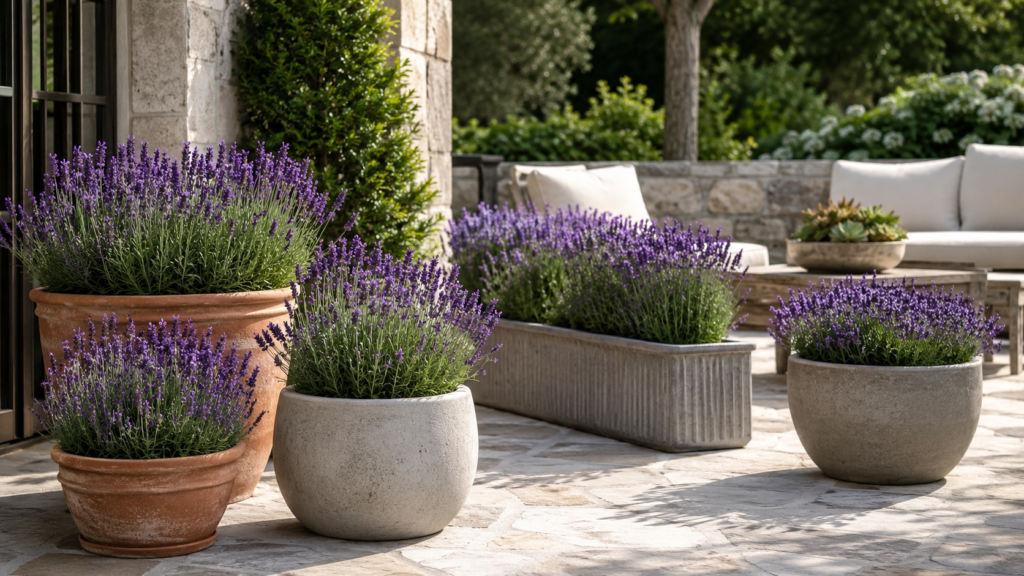
Lavender planter ideas work best when the container looks attractive and gives the plant the conditions it needs to thrive. Terracotta pots, long troughs, window boxes, matching entrance planters, modern concrete containers, and mixed herb displays can all work well. The key is simple: give lavender plenty of direct sun, reliable drainage, a free-draining growing mix, and enough room to reach its mature size.
Containers also make lavender easier to use in real outdoor spaces. You can add fragrance beside a seating area, frame a sunny entrance, grow lavender on a balcony, soften a paved patio, or move the plant when seasonal conditions change. The best planter is therefore not simply the prettiest pot. It is the one that fits both the lavender and the space around it.
Lavender Planter Quick Guide
| Your Space or Goal | Best Lavender Planter Idea |
|---|---|
| Small balcony | Slim trough or railing planter |
| Sunny front door | Matching lavender planters |
| Large patio | Cluster of three pots |
| Narrow walkway | Long lavender trough |
| Cottage garden | Terracotta or stone-look pot |
| Modern patio | Concrete-style planter |
| Herb garden | Lavender and thyme planter |
| Flexible space | Movable lavender planter |
| Strong focal point | Oversized statement pot |
| Sunny window | Lavender window box |
Start with your biggest limitation. If floor space is tight, use a railing planter, window box, or slim trough. If the goal is visual impact, use repeated pots or one larger focal container. If mobility matters, avoid very heavy stone or concrete pots.
Whatever style you prefer, do not sacrifice sunlight or drainage for appearance. A simple lavender planter placed in the right position will usually perform better than an expensive decorative pot in the wrong conditions.
How to Choose a Lavender Planter
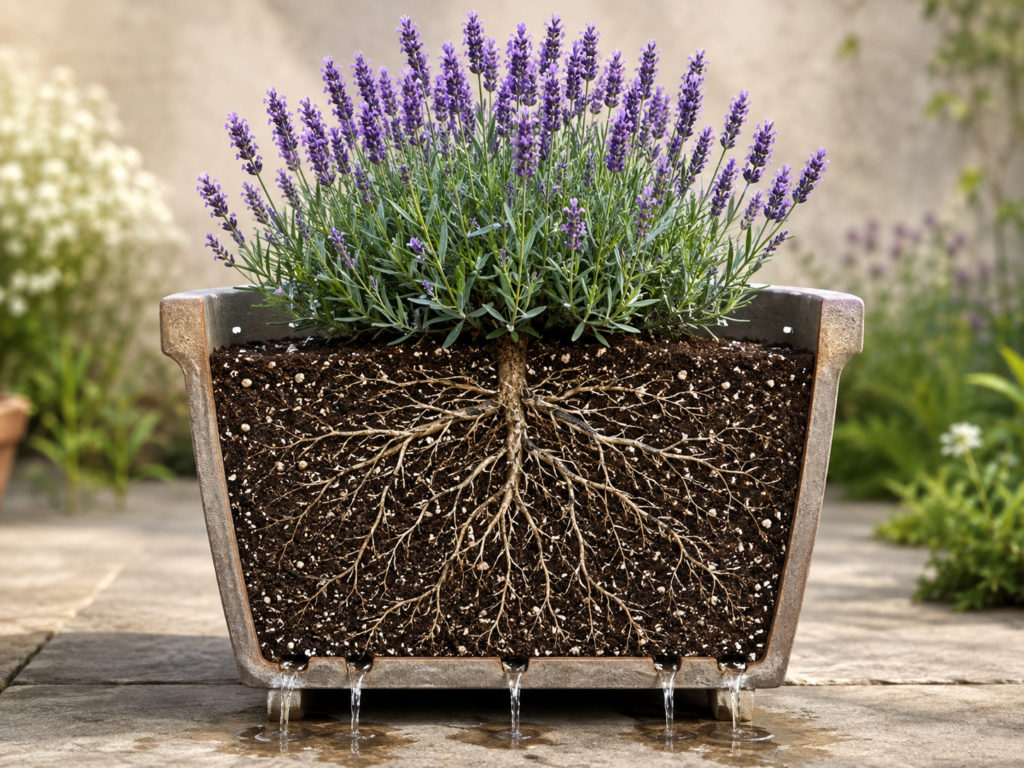
Choosing a lavender planter starts with practical growing conditions. Drainage comes first, followed by sunlight, mature plant size, available space, and container weight. Pot material and color should come after those decisions.
Lavender grown in containers can react quickly to poor drainage or changing weather because its roots are restricted to a limited amount of growing medium. A terracotta pot on a hot, windy balcony may dry quickly, while a glazed planter on a sheltered porch may remain wet much longer.
Before choosing a planter, check:
- Drainage holes
- Direct sunlight
- Mature lavender size
- Container depth and width
- Exposure to wind and rain
- Finished planter weight
- Access for watering and pruning
- Companion plant compatibility
Prioritize Drainage
Lavender performs best when excess water can leave the root zone freely. Choose a planter with working drainage holes and make sure they are not blocked by compacted mix or pressed flat against paving.
Do not rely on gravel at the bottom of the container to improve drainage. The better solution is to use a suitable growing medium throughout the pot and allow excess water to leave through open drainage holes.
Use a Free-Draining Potting Mix
A practical starting point is a quality peat-free container compost with coarse horticultural grit added where extra drainage is needed. RHS guidance notes that grit can make up roughly 25% of the mix by volume for container lavender.
Keep the mix loose enough to drain well and leave a little space below the rim for watering. Avoid using dense garden soil alone in a container.
Match Pot Size to the Lavender
A container around 30–40 cm (12–16 inches) across is a useful starting point for many lavender plants, but the final size should depend on the cultivar.
Always check mature height and spread rather than judging the plant by its nursery pot. Compact lavender can suit smaller containers, while larger types need more root room and space around their foliage.
Choose the Sunniest Position
Lavender needs strong direct sunlight. A porch may appear bright while receiving very little direct sun, and nearby walls, trees, or buildings can reduce light considerably.
Choose the sunny location first, then build the planter arrangement around that spot.
The 4-Factor Lavender Test
Use this simple check before planting:
Sun: Will the planter receive strong direct light?
Drainage: Can excess water escape freely?
Space: Will the lavender still fit at maturity?
Mobility: Will the container need to move?
If a setup fails Sun or Drainage, change the position or planter. If it passes those two but has a space or mobility problem, choose a different container style.
Best Lavender for Planters
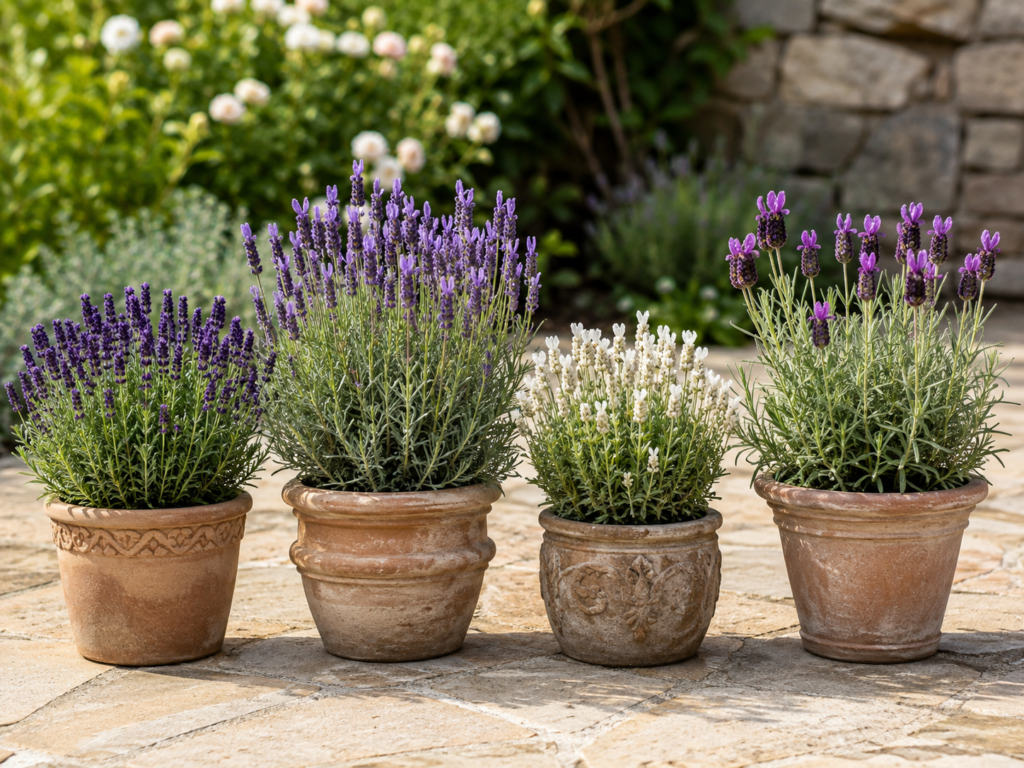
Compact lavender varieties are often the easiest choice for patios, balconies, grouped pots, and small spaces because they stay in better proportion with the container.
Do not choose lavender only by flower color or current nursery size. Different cultivars can reach very different mature dimensions.
| Lavender | Growth Character | Best Use |
|---|---|---|
| ‘Hidcote’ | Compact, bushy English lavender | Patio pots and terracotta planters |
| ‘Munstead’ | Compact English lavender | Medium containers |
| ‘Nana Alba’ | Dwarf, white-flowered lavender | Small-space pots |
| French or Spanish lavender | Distinctive flower heads | Statement containers in suitable climates |
Compact types are useful where:
- Space is limited
- Pots sit near paths
- Several containers are grouped
- You want a balanced plant-to-pot proportion
Larger lavender makes more sense when the container is intended as a strong focal point and there is enough room around the mature plant.
Always check the exact cultivar’s mature size and local hardiness before buying.
Lavender Planter Ideas for Patios
Patios and porches allow lavender to become part of the overall outdoor design. The strongest displays usually repeat one material, color, or plant variety instead of using many unrelated pots.
1. Classic Terracotta Lavender Pot
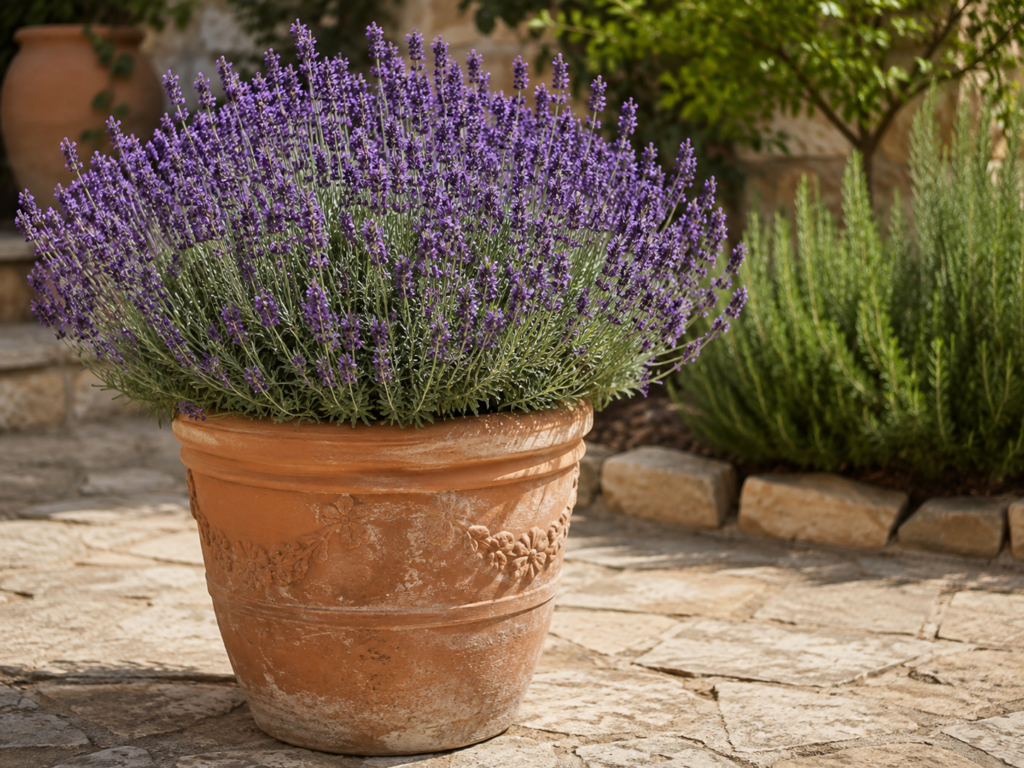
A terracotta pot is one of the easiest and most timeless lavender planter ideas. Warm clay tones naturally complement lavender’s silvery foliage and purple flowers.
Terracotta is porous, so it can dry more quickly than some glazed or non-porous containers. That can suit lavender well, but pots may need checking more often during very hot or windy weather.
Best for: Cottage, Mediterranean, and sunny patio designs.
2. Matching Front-Door Lavender Planters
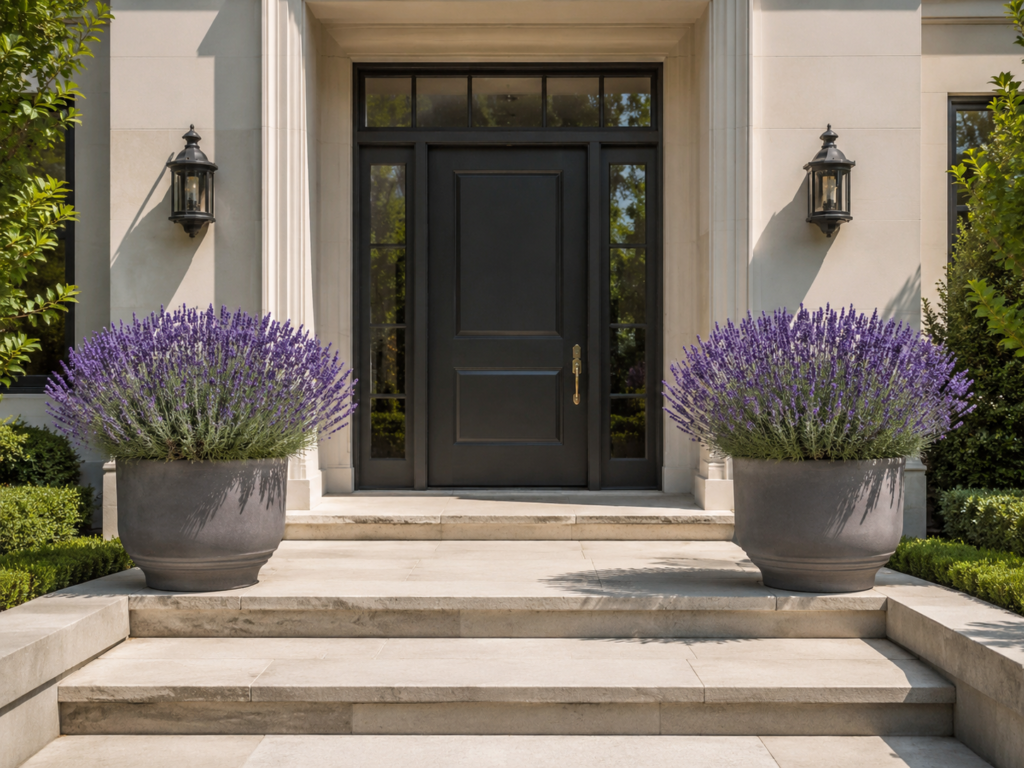
Place one matching lavender planter on each side of a sunny entrance to create simple symmetry.
Use the same lavender variety in both containers so the height, shape, and flowering pattern remain visually balanced. Check that both sides of the doorway receive similar light before committing to the design.
Best for: Front steps, sunny entrances, and formal curb appeal.
3. Cluster Three Lavender Pots
Group three separate containers instead of planting several lavender plants in one oversized pot.
Use three different heights while repeating the same material or color. Place the tallest pot at the back and the smallest toward the front.
This arrangement creates a fuller display while giving every lavender its own root space and making future repotting easier.
4. Long Lavender Trough
A long rectangular trough works well along a sunny wall, patio edge, or outdoor dining area.
Use several lavender plants at suitable spacing to create a repeated line of flowers. Avoid filling the trough too tightly just to make it look full immediately.
The main advantage is strong visual impact without using several separate round pots.
5. Stone or Hypertufa Lavender Trough
A stone or stone-look container works naturally with lavender’s grey-green foliage and creates an established, slightly rustic appearance.
Choose a wide planter with proper drainage. Let the texture of the container and lavender provide most of the visual interest rather than adding excessive ornaments.
This style works particularly well in cottage, gravel, and Mediterranean-inspired gardens.
6. Wooden Lavender Planter Box
Wood adds warmth to patios dominated by concrete, brick, or paving.
Use a rectangular box with enough depth and reliable drainage. A liner can protect the timber, but it should not block water from escaping.
Space plants according to their mature spread rather than how small they look when first planted.
Lavender Planter Ideas for Small Spaces
Small patios and balconies benefit from planters that use space efficiently. The goal is not to use the smallest possible pot, but to reduce wasted floor area while still giving lavender enough root space and sunlight.
7. Sunny Lavender Window Box
A window box can bring lavender close to the house without taking up floor space.
Choose a compact cultivar and a box with enough depth and drainage. Avoid crowding the lavender with too many companion plants.
Make sure the container is securely supported and consider where drained water will go.
8. Balcony Railing Lavender Planter
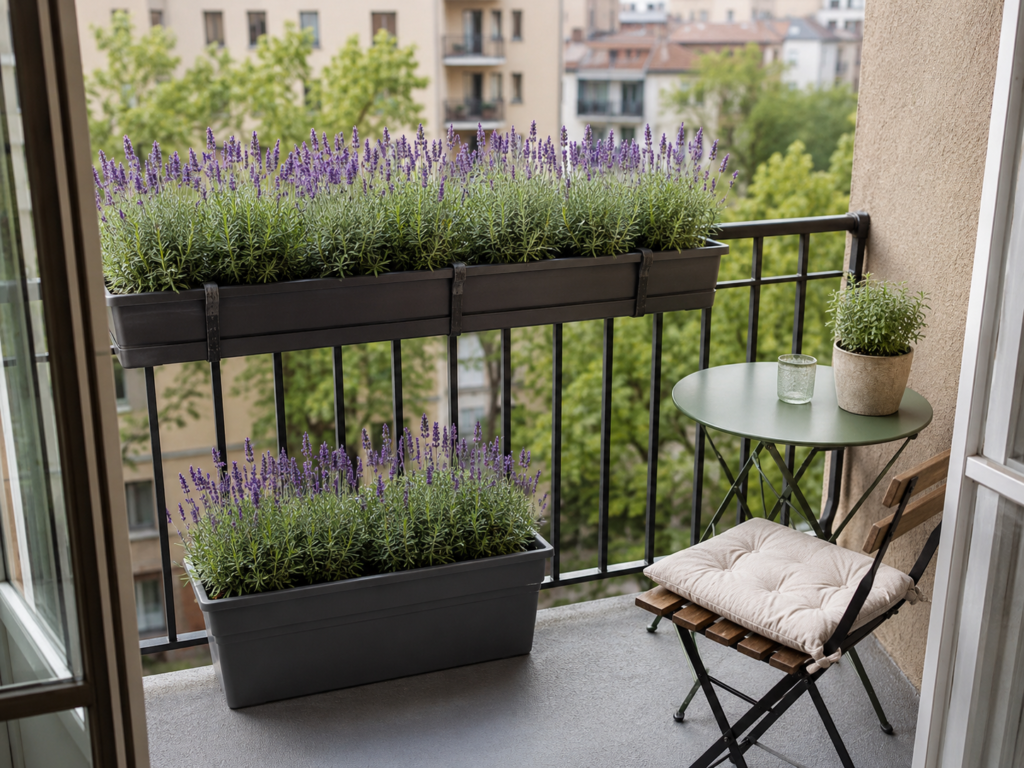
A secure railing planter can turn an unused balcony edge into a productive growing space.
Use a container designed specifically for railing installation and account for the weight of the pot, wet growing mix, and mature plant.
Wind can also dry containers quickly, so moisture may need checking more often in exposed locations.
9. Slim Lavender Trough
A slim trough works well beside a wall or along a narrow walkway where round pots would block movement.
Choose a planter that is narrow in footprint but still deep enough for the lavender’s roots.
This layout works best with compact varieties and repeated planting rather than one large, spreading lavender.
10. Lavender Pots on a Plant Stand
A strong outdoor stand allows you to create a vertical display when floor space is limited.
Place heavier pots on the lower level and smaller containers higher up. Make sure upper plants do not shade lavender below.
This setup works particularly well when lavender is combined visually with separate pots of other sun-loving herbs.
11. Movable Lavender Planter
Place a lavender container on a strong wheeled plant caddy if it may need seasonal or practical movement.
This is useful for renters, flexible patios, cleaning, severe weather, or winter protection.
Choose locking wheels rated for the full wet weight of the container.
Lavender Planter Combinations
Mixed lavender planters work best when all plants prefer similar sunlight and drainage. Plants sharing one container also share much of the same root environment, so pairing lavender with moisture-loving plants often creates conflicting watering needs.
Thyme, rosemary, and sage are more logical companions because they generally prefer sunny, well-drained conditions.
Use Separate Pots When Needed
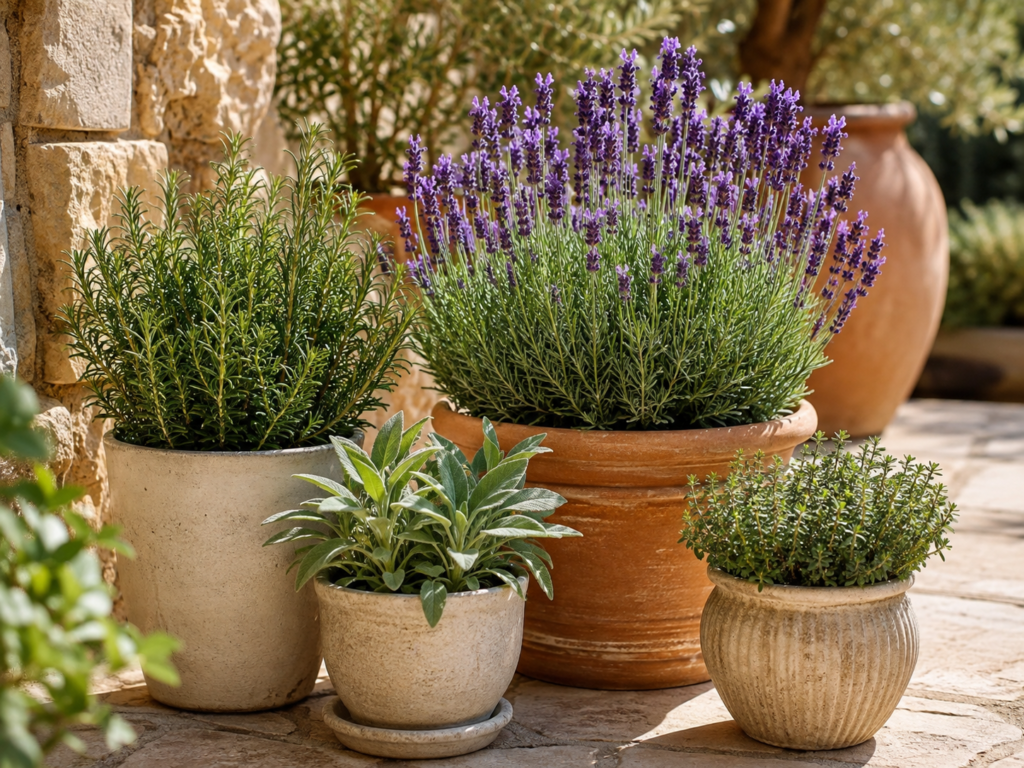
A mixed display does not require every plant to share the same container.
Lavender, rosemary, sage, and thyme can be grown in separate coordinating pots and grouped together visually. This gives you the appearance of one Mediterranean-style planting while reducing root competition.
Separate pots also make it easier to:
- Control watering
- Repot individual plants
- Replace damaged plants
- Manage winter conditions
- Handle different mature sizes
12. Lavender and Thyme Planter
Lavender and thyme are one of the easiest mixed-container combinations because both enjoy sunny, free-draining conditions.
Use lavender as the taller plant and place low-growing thyme around the outer edge.
Leave enough space for both plants to mature rather than filling every gap immediately.
13. Lavender and Rosemary Planter
Lavender and rosemary create a strong Mediterranean look, but rosemary can eventually become much larger.
For long-term flexibility, separate matching containers are often better than one shared pot.
If both plants are placed together, use a genuinely generous planter and choose compact varieties.
14. Lavender, Sage and Thyme Pot
This combination creates attractive layers of foliage.
Use lavender as the tallest plant, compact sage for middle structure, and thyme toward the edge.
If mature plant sizes are likely to create crowding, use separate pots placed close together instead.
Modern Lavender Planter Ideas
Lavender can look just as effective in modern settings as it does in cottage gardens. Its soft foliage and upright flower spikes contrast beautifully with clean, geometric containers.
15. Simple Concrete Lavender Pot
Place one healthy lavender plant in a simple concrete or concrete-look planter.
Cylinders, cubes, and tapered pots work particularly well. Keep the styling minimal so the plant remains the focal point.
Real concrete can become very heavy, so lightweight concrete-look containers may be more practical on balconies and decks.
16. Repeat Planters in One Color
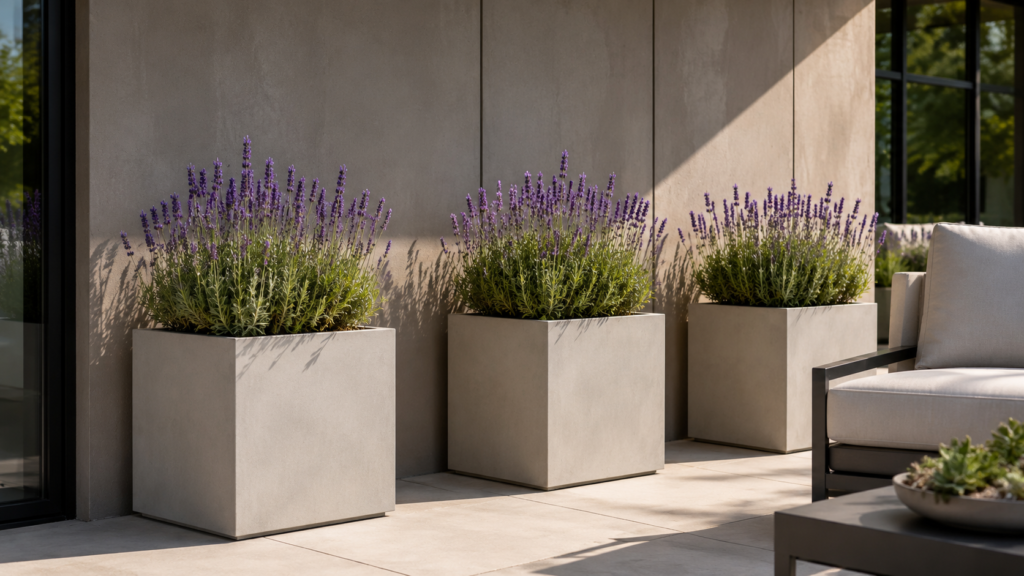
Use three or more matching lavender containers along a wall, fence, or entrance.
Repeating one planter color creates rhythm and makes the display look planned without becoming busy.
Use the same lavender cultivar in each pot for the strongest effect.
17. Oversized Lavender Focal Pot
One oversized planter can create more impact than several unrelated small pots.
Place it beside a seating area, at the end of a path, or in a patio corner. Match the container size to the expected mature size of the lavender.
If the goal is visual impact, one properly scaled planter can be stronger than a crowded collection.
Which Lavender Planter Is Best?
The best choice depends on your sunlight, available space, climate, maintenance needs, and preferred style.
Use this order:
- Confirm strong sunlight.
- Confirm drainage.
- Check mature lavender size.
- Measure the available space.
- Decide whether the pot needs to move.
- Select a practical material.
- Choose color and style.
- Add compatible companions if desired.
| Situation | Best Starting Idea |
|---|---|
| Tiny balcony | Railing planter |
| Small patio | Terracotta pot |
| Large patio | Three-pot cluster |
| Front entrance | Matching pair |
| Narrow area | Long trough |
| Modern home | Concrete planter |
| Cottage garden | Terracotta or stone |
| Herb garden | Lavender and thyme |
| Flexible space | Wheeled planter |
| Strong focal point | Oversized pot |
The best planter does not need to score highly in every area. Choose the design that solves the most important problem in your space.
Lavender Planter Care
Lavender care in containers should stay simple once the planter, position, and growing mix are right.
Give Lavender Strong Light
Place lavender where it receives plenty of direct sunlight. A weak plant in deep shade will not be fixed by adding more fertilizer.
Keep the Root Zone Free-Draining
Make sure drainage holes remain open and avoid leaving the container standing in water.
Water According to Conditions
Do not water simply because a certain number of days have passed. Wind, heat, pot material, and season all affect how quickly a container dries.
Check the growing medium and respond to actual conditions.
Leave Room for Airflow
Do not pack lavender tightly among other plants. Leave room for mature foliage, light, and easy access for watering.
Plan for Winter
Lavender varieties differ in cold tolerance. Container roots can also be more exposed than roots in the ground.
Check the exact cultivar and follow suitable regional winter guidance where necessary.
Lavender Planter Mistakes
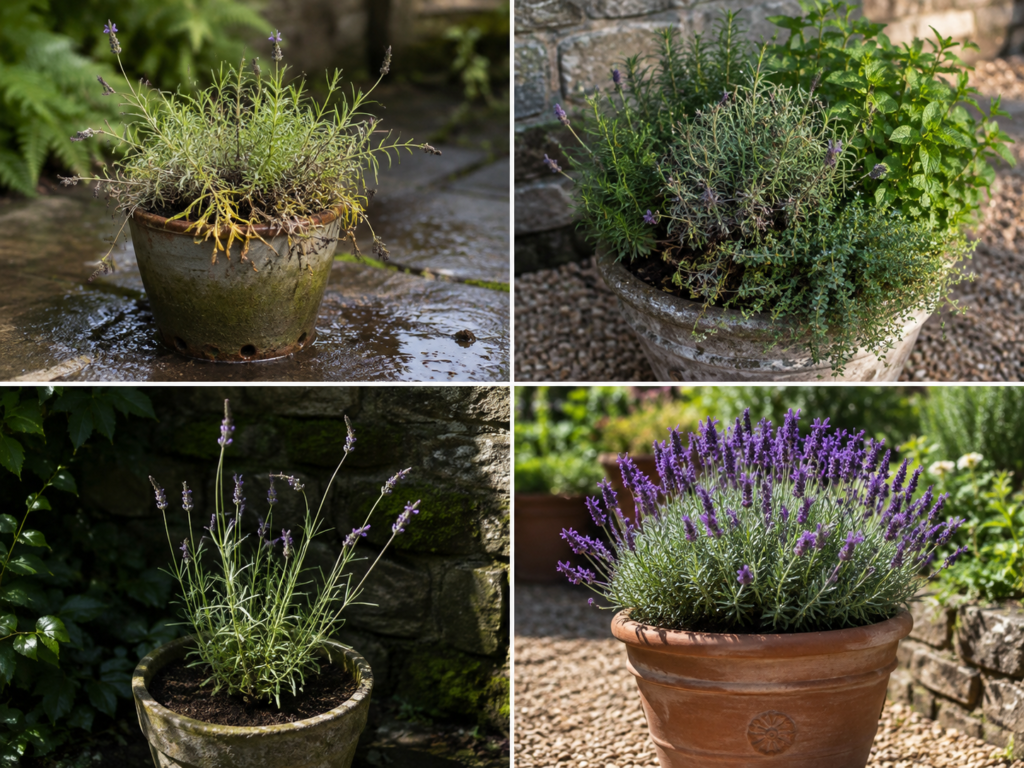
Most problems begin with the setup rather than later care.
Using a Pot Without Drainage
A decorative container without working drainage holes can leave roots wet for too long.
Choose drainage first and decoration second.
Adding Gravel to Improve Drainage
A gravel layer does not replace proper drainage holes or a free-draining growing mix.
Placing Lavender in Deep Shade
Lavender needs strong sunlight. Move the planter toward better light rather than trying to compensate with fertilizer.
Overcrowding the Container
Nursery plants are small. Lavender, rosemary, and sage can all become much larger.
Plan for mature size rather than instant fullness.
Using Incompatible Companion Plants
Choose plants that prefer similar sun and drainage. Avoid mixing lavender with plants that need constantly moist soil.
Ignoring Mature Size
A compact nursery plant may eventually become much wider than expected. Check the mature spread before choosing a window box, trough, or mixed planter.
Never Watering Because Lavender Is Drought-Tolerant
Lavender handles dry conditions well, but container plants still depend on gardeners for water.
The goal is not constant moisture or complete neglect. It is appropriate watering combined with reliable drainage.
Lavender Planter FAQs
What is the best type of planter for lavender?
Choose a planter with good drainage and enough room for the roots. Terracotta, ceramic, wood, stone, and concrete-style pots can all work.
Does lavender grow well in pots?
Yes. Lavender grows well in containers when it receives plenty of sunlight and a free-draining growing mix.
How big should a pot be for lavender?
A pot around 30–40 cm (12–16 inches) wide is a useful starting point. Adjust the size to the mature lavender variety.
Is terracotta better for lavender?
Terracotta is a good choice because it is porous and dries relatively easily. However, any properly drained container can work.
Can lavender grow in a window box?
Yes, especially compact varieties. Use a sunny, sufficiently deep window box with reliable drainage.
What plants grow well with lavender in pots?
Thyme, sage, and rosemary can work because they prefer similar sunny, well-drained conditions.
Can lavender stay outside in pots over winter?
Sometimes. It depends on the lavender variety, winter temperatures, rainfall, and exposure.
Why is my potted lavender dying?
Poor drainage, too much moisture, low sunlight, overcrowding, or winter damage are common causes. Check drainage and light first.
Should I put gravel in the bottom of a lavender pot?
No. Gravel does not improve container drainage. Use drainage holes and a free-draining growing mix instead.
Best Lavender Planter for Your Space
The best lavender planter is the one that fits the plant’s needs before it fits your decorating style. Start with sunlight and drainage, then consider mature size, available space, mobility, and the visual effect you want.
For an easy starting point, use one compact lavender in a properly drained terracotta pot. For a larger patio, group three containers. Use matching pots at a sunny entrance, a slim trough in a narrow area, or a secure railing planter where floor space is limited.
If you want companion plants, choose herbs with similar growing needs and use separate coordinating pots when mature plants may compete for space.
Keep the final decision simple:
- Choose strong sunlight.
- Confirm drainage.
- Check mature plant size.
- Match the planter to the space.
- Consider whether it needs to move.
- Add only compatible companions.
- Leave enough room for the lavender to mature.
A successful lavender planter does not need to be complicated. Start with what lavender needs, then turn those requirements into a planter that looks as good as it grows.
Sources & References
Horticultural guidance in this article is based on established lavender and container-growing recommendations from sources including:
- Royal Horticultural Society — lavender growing and container guidance
- RHS cultivar profiles for ‘Hidcote’, ‘Munstead’, and ‘Nana Alba’
- University of California Master Gardeners — container drainage guidance
- Oregon State University Extension — container gardening principles
The planter layouts, comparison logic, and 4-Factor Lavender Test are editorial recommendations from Backyard Planter Ideas.
Myra is the founder and lead writer of Backyard Planter Ideas, where she shares practical, well-researched guidance on planter design, plant selection, and outdoor styling. Her goal is to help homeowners create attractive, functional garden spaces with clear, reliable, and easy-to-apply advice.