Backyard planter ideas help transform unused outdoor areas into productive and organized spaces for vegetables, herbs, flowers, and modern landscaping. Raised beds, vertical planters, compact container gardens, and DIY planter systems maximize growing space while improving backyard organization, drainage, accessibility, and gardening efficiency.
Modern backyard planter ideas are especially popular in small and contemporary outdoor spaces because they combine practical gardening with organized landscape design. Whether the goal is growing vegetables, creating a decorative patio garden, or building a low-budget DIY setup, backyard planters offer a flexible and space-efficient solution for modern outdoor living.
What Are Backyard Planter Ideas?
Backyard planter ideas refer to structured gardening systems that use raised beds, containers, vertical planters, decorative boxes, or modular planting setups instead of traditional in-ground gardens. Modern homeowners prefer planter systems because they combine functionality, organization, and easier maintenance.
Why backyard planters are dominating modern gardening:
- Easier maintenance than ground gardens
- Better drainage and root health
- Cleaner backyard organization
- Improved accessibility for beginners
- Compatibility with small backyards
- Better integration with patios and decks
- Flexible landscaping layouts
- Easier seasonal garden management
Best Planters for Small Spaces
Small backyards require smarter gardening strategies. The best backyard planter ideas for compact spaces focus on maximizing planting capacity without overcrowding the yard. Raised rectangular beds, vertical wall planters, narrow pathway containers, hanging baskets, and corner planter systems work especially well.
Edge-focused planter layouts improve movement flow and make small backyards feel larger. Instead of spreading containers throughout the center of the yard, successful layouts place planters along fences, patios, or walls. This keeps the backyard open while supporting vegetables, herbs, and flowers.
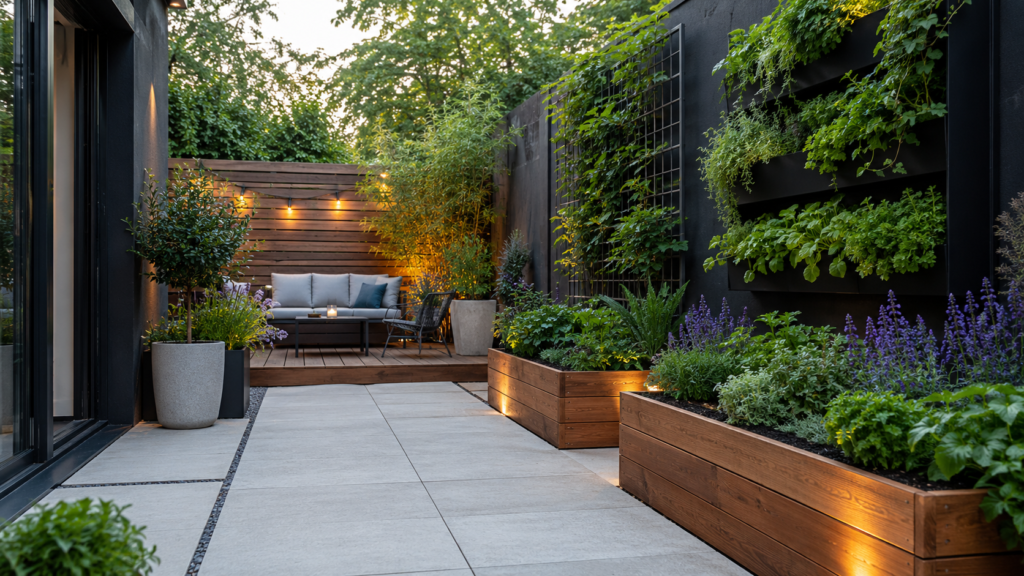
Small-space gardening works best when planter layouts improve movement flow without overcrowding the backyard. These small backyard planter ideas show how compact raised beds, vertical systems, and edge-focused layouts maximize planting space efficiently.
Best planter styles for small backyards:
- Vertical herb gardens
- Raised rectangular planter beds
- Fence-mounted planter boxes
- Hanging planters
- Tiered ladder shelves
- Slim corner containers
- Modular stacking planters
Common small-space mistakes:
- Oversized circular pots
- Blocking pathways
- Excessive decorative clutter
- Too many mismatched planter styles
- Overcrowded plant spacing
Decision clarity: The best small backyard planter systems prioritize organization and movement flow over sheer plant quantity.
Choose Planters by Backyard Size
Choosing the right backyard planter depends on backyard size, movement flow, drainage, and maintenance requirements.
Small patios and compact urban backyards usually perform best with vertical systems, hanging planters, and narrow rectangular beds. Medium-sized yards can support mixed planter layouts that combine raised vegetable beds with decorative flower containers. Larger backyards work well with zoned planter systems where vegetables, herbs, decorative plants, and seating areas are organized into separate functional sections.
Recommended planter setups by backyard size:
| Backyard Size | Recommended Planter Setup |
| Tiny patio | Vertical wall planters + hanging baskets |
| Small backyard | Raised rectangular beds |
| Medium backyard | Mixed raised + decorative planters |
| Large backyard | Zoned gardening systems |
Important planning factors:
- Walking pathways
- Water access
- Drainage conditions
- Maintenance workload
- Seating integration
- Plant height layering
Many modern backyard planter ideas combine raised beds, vertical gardening, and minimalist layouts to improve organization, drainage, and outdoor aesthetics.
Best Modern Planter Designs
Modern backyard planter designs focus heavily on clean structure, balanced layouts, minimalist aesthetics, and material consistency. Rectangular cedar boxes, matte black steel planters, geometric concrete containers, and sleek vertical systems dominate contemporary backyard landscaping because they blend naturally with patios, decks, pergolas, and outdoor furniture.
Modern backyard designs prioritize visual consistency, matching materials, and open spacing. Successful layouts often repeat the same planter shapes, materials, and color palettes throughout the space. Instead of filling every area with plants, designers intentionally leave portions of the backyard visually clean.
Most popular modern planter materials:
- Cedar wood
- Matte black metal
- Fiberstone
- Concrete
- Composite wood
- Galvanized steel
Plants commonly used in modern layouts:
- Ornamental grasses
- Lavender
- Olive trees
- Succulents
- Bamboo
- Boxwood shrubs
- White flowering plants
Common design mistakes:
- Too many planter styles
- Excessive decorative accessories
- Bright mismatched colors
- Overcrowded planting
- Inconsistent materials
Decision clarity: Modern backyard planter designs work best when simplicity drives the layout. Fewer, larger, and visually consistent planters almost always create a cleaner and more upscale outdoor appearance.
Many modern backyard planter ideas focus on clean layouts, matching materials, and balanced plant spacing instead of overcrowded decorative designs.
Raised Planters vs Ground Gardens
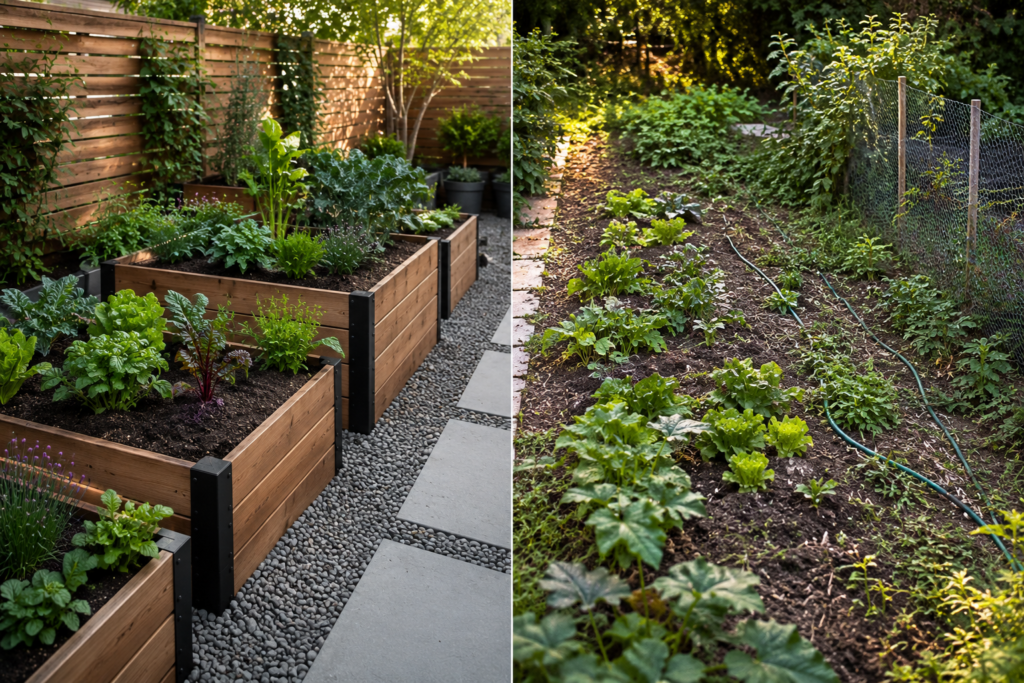
Raised backyard planters improve drainage, soil control, accessibility, and maintenance efficiency compared to in-ground gardens.
Many homeowners prefer elevated gardening systems because raised beds improve drainage control and simplify maintenance in modern outdoor spaces. These raised backyard planter ideas show how elevated planters improve accessibility, organization, and long-term vegetable gardening efficiency.
Another major advantage of raised planters is maintenance simplicity. Elevated beds reduce bending, simplify harvesting.
Benefits of raised backyard planters:
- Better drainage
- Improved root oxygen flow
- Easier weed management
- Cleaner backyard organization
- Easier harvesting
- Better soil customization
- Reduced lawn intrusion
- Improved accessibility
Why Raised Beds Dry Faster Than Ground Gardens
Faster drying is not always a disadvantage because improved drainage helps prevent root rot and compacted soil problems. However, raised beds usually require more consistent watering routines than traditional gardens.
Decision clarity: Raised beds usually need more frequent watering than ground gardens.
Common raised bed mistakes:
- Using untreated weak wood
- Insufficient planter depth
- Poor drainage design
- Beds too wide to reach
- Incorrect sunlight placement
Real-world insight:
Many beginner gardeners fail with traditional gardening because native backyard soil often contains drainage problems or nutrient deficiencies.
Recommended raised bed dimensions:
- Width: 3–4 feet
- Depth: 12–24 inches
- Length: Flexible based on space
Decision clarity: Raised backyard planters cost more initially than ground gardens, but they often save significant time and maintenance effort while improving plant health and overall gardening efficiency long term.
Best Planter Type by Goal
The best backyard planter type depends on the primary goal of the outdoor space because different planter systems solve different problems.
Raised beds remain one of the best options for growing vegetables because they improve soil control, drainage, and root development. Vertical systems are ideal for compact backyards where floor space is limited. Concrete and metal planters work especially well in modern minimalist landscaping. DIY cedar planter boxes provide strong balance between affordability and long-term durability. Renters often benefit most from portable grow bags or lightweight modular containers.
Best planter systems by backyard goal:
| Goal | Best Planter Type |
| Grow vegetables | Raised beds |
| Save space | Vertical planters |
| Modern landscaping | Concrete or metal |
| Low budget | DIY cedar planters |
| Renters | Grow bags |
| Low maintenance | Composite raised beds |
- Irrigation needs
- Mobility requirements
- Climate conditions
Common decision mistakes:
- Choosing aesthetics over functionality
- Overspending on decorative containers
- Ignoring maintenance requirements
- Selecting oversized planters for small spaces
Best Plants for Backyard Planters
Vegetables, herbs, flowers, and ornamental grasses perform well in backyard planters with proper drainage and soil depth.
Vegetables perform especially well in raised beds and containers because of improved drainage and soil control. Herbs are also ideal for planters. Successful planter gardening depends heavily on choosing plants that match the container dimensions.
Best Vegetables for Backyard Planters:
- Tomatoes
- Peppers
- Lettuce
- Spinach
- Kale
- Cucumbers
- Green onions
Vegetable container gardening becomes much easier when planter depth, sunlight exposure, and spacing are properly planned. These vegetable backyard planter ideas explain productive layouts, crop selection, and raised bed strategies for modern backyard gardens.
Best herbs for planter gardens:
- Basil
- Rosemary
- Mint
- Thyme
Best flowers for outdoor planters:
- Petunias
- Lavender
- Marigolds
Common planting mistakes:
- Overcrowding containers
- Using shallow planters for deep-rooted crops
- Ignoring sunlight requirements
- Mixing incompatible watering needs
Vegetables Not to Plant Together
Some vegetables compete for nutrients, spread disease, or attract similar pests when planted together in backyard planters. Poor combinations can weaken growth and increase fungal problems in raised beds and containers.
Tomatoes and potatoes are often separated because both are vulnerable to similar soil diseases. Onions can slow bean growth, while fennel disrupts nearby vegetables through root competition.
Vegetables commonly separated in backyard planters:
- Tomatoes and potatoes
- Beans and onions
- Fennel and most vegetables
- Cucumbers and aromatic herbs
Companion planting helps reduce pest pressure and disease spread in raised beds and containers.
How Climate Affects Planters
Backyard planters react differently depending on environmental conditions. Containers in hot dry climates lose moisture rapidly, while heavy rainfall regions create drainage challenges.
Hot climates usually benefit from lighter-colored containers. In rainy climates, raised beds and elevated planters help prevent waterlogging and root rot. Cold climates require insulated planters or frost-resistant materials because freezing temperatures can crack weak containers and damage root systems. Humid environments benefit from elevated airflow systems that improve ventilation around plants and reduce fungal disease pressure.
Recommended planter types by climate:
| Climate Type | Best Planter Choice |
| Hot & dry | Light-colored containers |
| Rainy | Raised beds |
| Cold | Insulated planters |
| Humid | Elevated airflow systems |
Climate-related gardening considerations:
- Soil drying speed
- Heat retention
- Frost protection
- Material expansion and contraction
- Irrigation frequency
- Wind exposure
- Rainwater drainage
Real-world insight: Metal containers become extremely hot in direct sunlight during summer.
Common climate-related mistakes:
- Dark planters in extreme heat
- Poor drainage in rainy climates
- Thin plastic containers in freezing temperatures
- Overwatering in humid conditions
Best Soil Mix for Planters
The best soil mix for backyard planters balances drainage, moisture retention, airflow, and nutrient availability. Containers require lightweight, well-aerated soil because compacted soil restricts root growth and increases root rot risk. Most planter systems perform best with potting soil, compost, and drainage materials like perlite or coarse sand.
Vegetables and herbs usually prefer nutrient-rich compost blends with strong drainage, while succulents require faster-draining soil with lower moisture retention. Heavy backyard soil should generally be avoided in containers because it compacts quickly and reduces root oxygen.
Best ingredients for backyard planter soil mixes:
- Potting soil
- Organic compost
- Perlite or pumice
- Coarse sand
- Coconut coir
- Worm castings
Common soil mix mistakes:
- Dense backyard soil in containers
- Poor drainage
- Excessive moisture retention
- Low organic matter
- Ignoring plant-specific soil needs
Organic compost improves moisture retention and long-term soil fertility.
Cheap DIY Backyard Planters
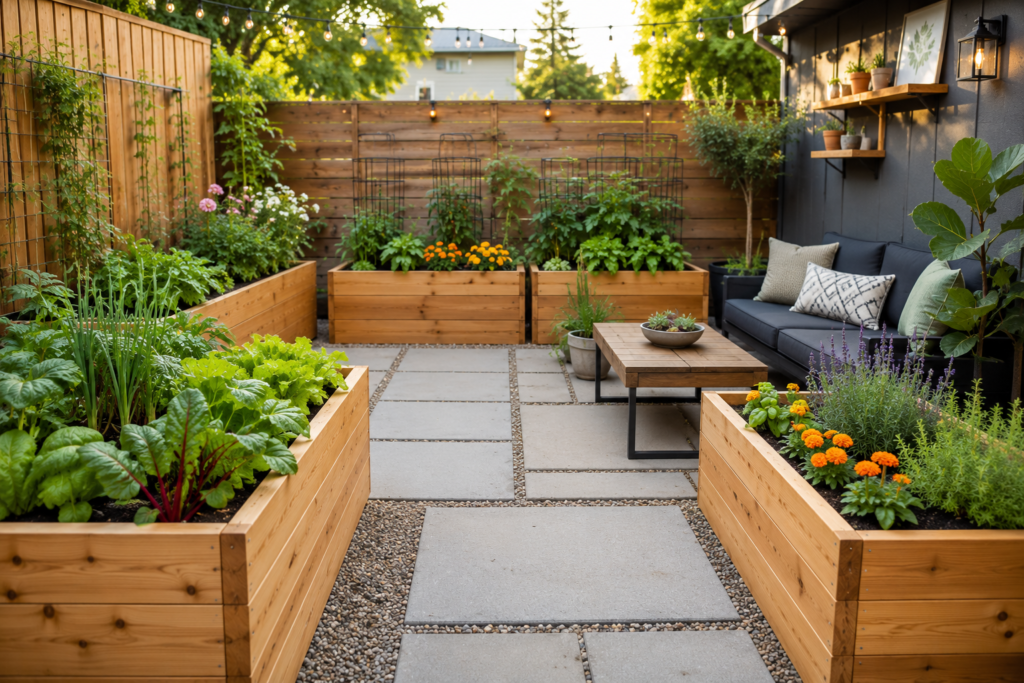
Cedar remains one of the best materials for DIY planter projects because it naturally resists moisture and insects. Pallet gardens, grow bags, stock tanks, and concrete block planters are also highly popular budget solutions.
DIY planter systems remain popular because they allow homeowners to customize dimensions, materials, drainage, and layout organization based on backyard size and gardening goals. These DIY raised planter box ideas provide beginner-friendly layouts, material comparisons, and construction strategies for modern backyard gardens.
Best budget-friendly planter materials:
- Cedar fence boards
- Reclaimed pallets
- Grow bags
- Stock tanks
- Concrete blocks
- Recycled containers
Budget-friendly gardening does not require expensive materials or luxury landscaping systems. These cheap backyard planter ideas explore low-cost planter materials, recycled container systems, and affordable DIY layouts for productive backyard gardening.
Essential DIY planter construction tips:
- Drill drainage holes
- Elevate planters slightly
- Reinforce corners properly
- Use weather-resistant screws
- Add landscape fabric
- Seal exposed wood surfaces
Make DIY Planters Last Longer
DIY backyard planters last much longer outdoors when moisture control, drainage, and material protection are handled properly during construction. Many DIY planters fail early because untreated wood traps moisture and rots quickly.
Sealing exterior wood surfaces, using weather-resistant screws, and elevating planters slightly above ground level all help improve durability.
Best ways to extend planter lifespan:
- Seal exposed wood surfaces
- Add proper drainage holes
- Elevate planters off the ground
- Use weather-resistant screws
- Improve airflow underneath
- Protect against standing water
- Use thicker wood boards
Common durability mistakes:
- No drainage system
- Untreated weak wood
- Direct soil-to-wood contact
- Poor corner reinforcement
- Thin plastic materials
Common DIY mistakes:
- Weak structural support
- No drainage system
- Cheap untreated wood
- Overly shallow planter depth
- Poor layout planning
Common Backyard Planter Mistakes
Many backyard planter gardens fail not because of poor plant selection, but because of avoidable structural and layout mistakes. Drainage problems, overcrowding, weak materials, shallow planter depth.
One of the most common mistakes is choosing decorative planters without considering drainage performance. Overcrowding is another major issue. Using shallow containers for deep-rooted crops usually results in weak growth and lower yields.
Most common backyard planter mistakes:
- Poor drainage systems
- Overcrowded plant spacing
- Cheap untreated wood
- Incorrect planter depth
- Blocking movement pathways
- Ignoring sunlight requirements
- Excessive decorative clutter
- Inconsistent watering habits
Why drainage matters so much:
Containers dry and absorb water differently than ground soil. Without proper drainage:
Proper drainage management plays a major role in preventing root rot, soil compaction, and fungal disease in container gardens.
- Roots suffocate
- Soil compacts faster
- Mold and fungus develop
- Plant stress increases rapidly
Real-world strategy: Professional landscape designers often simplify planter layouts intentionally because organized spacing improvesplant health and maintenance efficiency.
Decision clarity: Effective backyard planter systems prioritize drainage, spacing, and maintenance simplicity.
Are Vertical Planters Worth It?
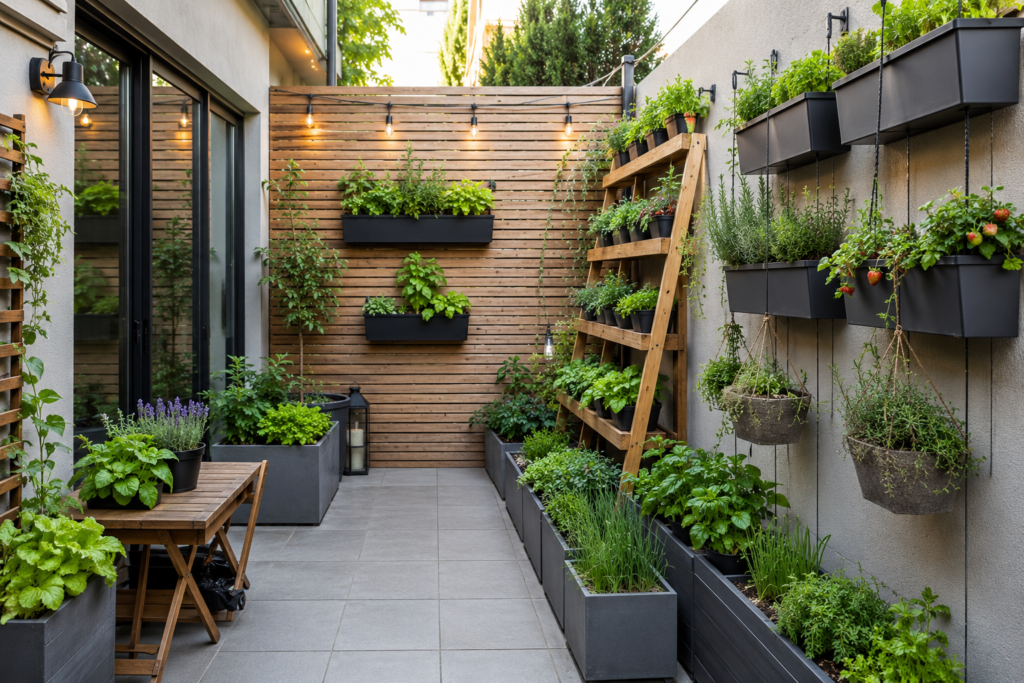
Vertical backyard planters maximize planting space in compact backyards, patios, and urban gardens.
Vertical gardening systems are especially useful in compact outdoor spaces where traditional raised beds take up too much floor area. These vertical backyard planter ideas demonstrate how wall planters, tower gardens, and hanging systems improve space efficiency while maintaining modern backyard aesthetics.
One of the strongest benefits of vertical gardening is spatial efficiency. Instead of relying only on ground-level planters, homeowners can use fences, walls, or narrow vertical frames to dramatically increase planting area.
Best plants for vertical planters:
- Herbs
- Strawberries
- Lettuce
- Decorative vines
Advantages of vertical backyard planters:
- Saves floor space
- Improves organization
- Adds visual height
- Creates privacy
- Improves airflow
- Enhances modern aesthetics
Common vertical gardening problems:
- Fast soil drying
- Overcrowding
- Weak wall support
- Uneven watering
- Limited root depth
Irrigation for Vertical Gardens
Irrigation systems improve vertical gardens because elevated planters dry faster than raised beds due to increased airflow and sun exposure. Drip irrigation and self-watering systems help maintain stable soil moisture.
Gravity causes upper containers to dry faster, making irrigation planning important in wall gardens and fence-mounted planter systems.
Best irrigation options for vertical gardens:
- Drip irrigation systems
- Self-watering wall planters
- Soaker hoses
- Gravity-fed watering systems
- Automated timer irrigation
Common watering problems:
- Dry upper containers
- Overwatered bottom planters
- Uneven moisture distribution
- Fast summer evaporation
Layouts That Make Yards Look Bigger
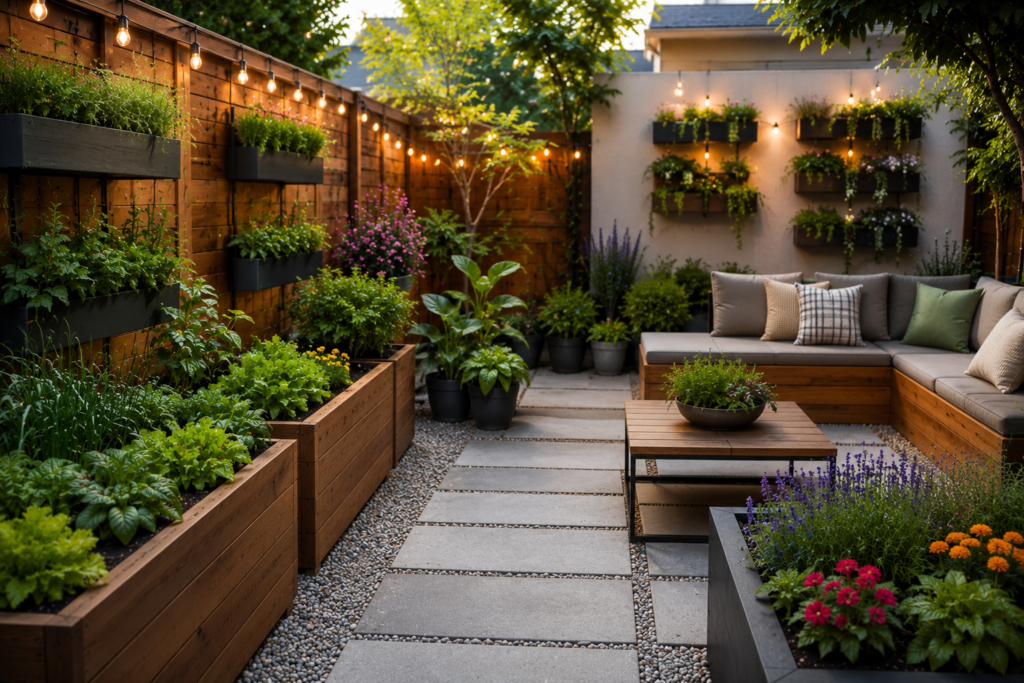
The best backyard planter layouts improve openness, spacing, and movement flow.
One of the most effective layout strategies is concentrating planters along backyard edges instead of scattering containers throughout the center. This creates larger uninterrupted walking areas. Repeating planter shapes and materials also helps unify the space visually.
Best layout techniques for small backyards:
- Keep center areas open
- Place tall plants near fences
- Use matching planter styles
- Layer heights gradually
- Limit excessive colors
- Group planters intentionally
Common layout mistakes:
- Random pot placement
- Blocking pathways
- Too many small containers
- Excessive decorative clutter
- Overcrowded planting
Seasonal Planter Changes
Backyard planter systems should adapt throughout the year. Summer increases heat stress and soil drying in backyard planters, while winter increases root freezing and moisture problems. Mulching, deeper watering, and partial shade management become extremely important during hot weather. Winter introduces different challenges such as root freezing, material cracking, and excessive soil moisture retention. Spring is typically the best time for soil refreshing, fertilization, and crop rotation planning. Fall cleanup helps prevent pests, fungal disease, and long-term planter deterioration before colder weather arrives.
Seasonal backyard planter priorities:
| Season | Main Focus |
| Spring | Soil preparation and fertilization |
| Summer | Heat protection and irrigation |
| Fall | Cleanup and crop rotation |
| Winter | Root insulation and moisture control |
Important seasonal maintenance tasks:
- Replace depleted soil nutrients
- Inspect drainage systems
- Protect roots from frost
- Adjust watering schedules
- Remove dead plant material
- Rotate seasonal crops
- Check planter structural integrity
Common seasonal mistakes:
- Overwatering during winter
- Ignoring summer root overheating
- Skipping seasonal soil renewal
- Leaving dead roots inside containers
Expert Tips for Lasting Planters
Long-lasting backyard planter systems depend on smart planning, proper drainage, sunlight exposure, airflow, planter depth, and seasonal maintenance. Many planter gardens fail because decorative layouts ignore root health, moisture control, and structural durability. A durable backyard planter layout should balance functionality, accessibility, drainage performance, and organized outdoor design from the beginning.
Raised cedar beds, galvanized steel planters, and reinforced vertical systems support healthier root development, stable drainage, and lower maintenance requirements. Consistent materials, open spacing, and controlled irrigation also improve long-term backyard appearance and gardening efficiency throughout changing seasons.
Best expert strategies for long-lasting backyard planter systems:
- Use durable materials like cedar, composite wood, or galvanized steel
- Include proper drainage holes and airflow underneath containers
- Match planter depth to root requirements
- Install drip irrigation or self-watering systems for stable moisture control
- Keep central walking areas open for better backyard flow
- Group plants with similar watering and sunlight requirements
- Use mulch layers to improve moisture retention and reduce soil overheating
- Inspect planters seasonally for cracking, rot, drainage blockage, and structural weakness
Common design mistakes professionals avoid:
- Using shallow planters for vegetables and deep-rooted crops
- Overcrowding compact backyard spaces
- Ignoring drainage performance in decorative planters
- Using mismatched planter styles that create visual clutter
- Placing heat-sensitive plants inside dark metal containers in direct sunlight
- Skipping seasonal soil renewal and compost management
Decision clarity: The best backyard planter systems prioritize drainage, durability, and root health.
Modern backyard planter ideas often combine raised beds, vertical gardening, and weather-resistant materials to improve organization, accessibility, and outdoor aesthetics.
Best Backyard Planter Types
| Planter Type | Best For | Cost Level | Maintenance | Durability | Space Efficiency |
| Raised Beds | Vegetables & herbs | Medium | Medium | High | High |
| Vertical Planters | Small backyards | Medium | Medium | Medium | Very High |
| Grow Bags | Budget gardening | Low | Medium | Medium | High |
| Cedar Planters | Modern backyard design | Medium | Low | High | High |
| Concrete Planters | Luxury modern spaces | High | Low | Very High | Medium |
| Metal Planters | Contemporary landscapes | High | Low | Very High | Medium |
| Hanging Planters | Flowers & herbs | Low | High | Medium | High |
| Plastic Containers | Beginner gardening | Low | Low | Medium | Medium |
| Composite Raised Beds | Low-maintenance gardens | High | Very Low | Very High | High |
| Pallet Planters | DIY projects | Low | Medium | Medium | Medium |
Final Decision Clarity
The best backyard planter ideas combine drainage efficiency, organized layouts, healthy soil systems, and practical outdoor functionality for long-term gardening success. The most successful backyard gardens prioritize drainage, sunlight exposure, organization, and manageable maintenance. Successful backyard planter ideas also prioritize airflow, root health, irrigation efficiency, and long-term maintenance simplicity.
The most effective backyard planter strategy includes:
- Raised vegetable beds
- Vertical growing systems
- Compact herb containers
- Durable weather-resistant materials
- Consistent spacing and airflow
- Simple irrigation solutions
Decision clarity: Focus first on layout efficiency, drainage quality, and realistic maintenance capacity.
The best backyard planter ideas balance plant health, drainage, organization, accessibility, and long-term outdoor functionality instead of focusing only on decoration.
FAQs
What are the best backyard planter ideas for very small spaces?
Vertical planters, hanging baskets, and narrow raised beds work best because they save space while keeping the backyard organized.
Are raised backyard planters better than traditional ground gardens?
Yes. Raised planters improve drainage, soil quality, and maintenance compared to traditional gardens.
Which planter material lasts the longest outdoors?
Cedar, galvanized steel, concrete, and composite materials are among the most durable outdoor planter options.
What plants grow best in backyard planters?
Tomatoes, herbs, lettuce, peppers, strawberries, and flowers grow very well in backyard planters.
What is the cheapest way to build backyard planters?
Pallet wood, grow bags, recycled containers, and DIY cedar boxes are among the cheapest options.
What mistakes commonly ruin backyard planter gardens?
Poor drainage, overcrowding, shallow containers, and inconsistent watering are common problems.
Which backyard planter style looks the most modern?
Rectangular cedar, concrete, and black metal planters create the most modern backyard look.
What backyard planter layout makes spaces look bigger?
Edge-focused backyard planter layouts usually make outdoor spaces look larger because they keep central walking areas open and visually uncluttered. Matching rectangular planters, layered plant heights, vertical gardens, and consistent materials also help create cleaner sightlines and better backyard balance in small modern spaces.
Are self-watering backyard planters worth it?
Yes. Self-watering backyard planters help maintain consistent soil moisture while reducing watering frequency and plant stress during hot weather. They are especially useful for vegetables, herbs, vertical gardens, and busy homeowners who want lower-maintenance container gardening systems.
Myra is the founder and lead writer of Backyard Planter Ideas, where she shares practical, well-researched guidance on planter design, plant selection, and outdoor styling. Her goal is to help homeowners create attractive, functional garden spaces with clear, reliable, and easy-to-apply advice.