Tall raised planter ideas are becoming increasingly popular because they solve multiple gardening problems at once while improving comfort, organization, drainage, and backyard aesthetics. Many homeowners now prefer elevated gardening systems because traditional ground gardens often create muddy pathways, compacted soil, heavy weed growth, and constant bending during maintenance. Tall raised planters create a cleaner and more controlled growing environment that feels easier to manage throughout the entire season.
Tall raised planters also improve growing consistency because the soil environment becomes easier to control. Native ground soil may contain clay, rocks, construction debris, poor drainage zones, or inconsistent fertility. Raised systems allow gardeners to build optimized soil blends with compost, aeration materials, and moisture-retaining organic matter. This often improves root health, plant growth, and harvest quality over time.
Best Tall Raised Planter Ideas
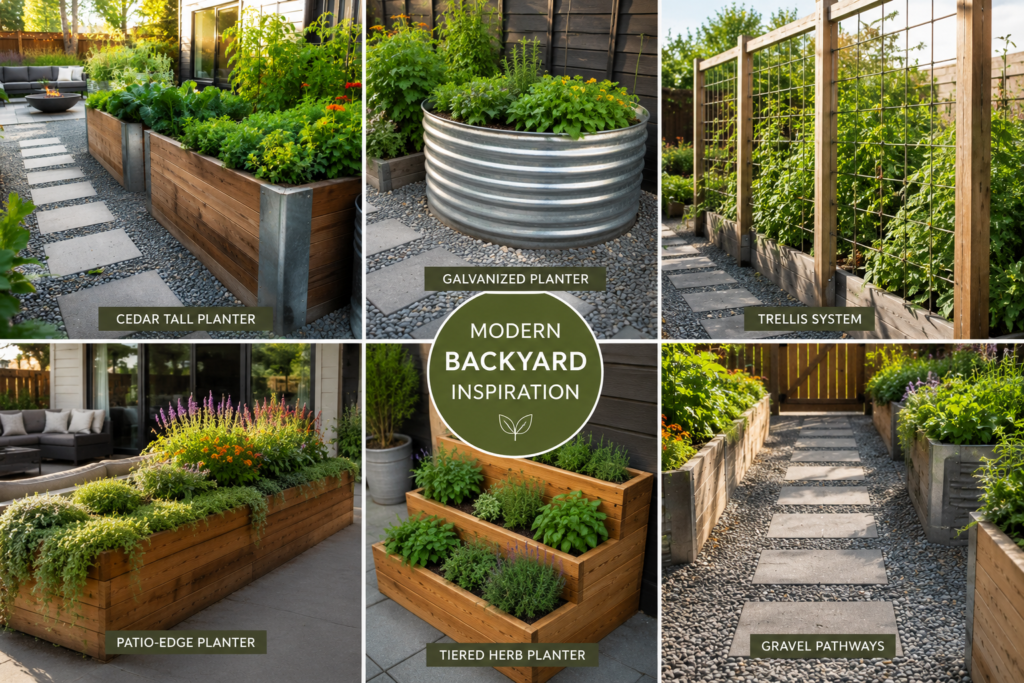
Waist-height cedar planters remain one of the most versatile options because they support vegetables, herbs, flowers, and companion planting while reducing bending and kneeling. Galvanized steel beds work extremely well in modern backyard layouts because they provide cleaner geometric structure and longer lifespan with less maintenance. Tiered planters are ideal for herbs and compact patios, while narrow fence-line planters maximize production in small backyards without consuming valuable walking space.
The best layouts usually prioritize:
- sunlight exposure
- irrigation access
- reach comfort
- drainage efficiency
- crop spacing
- long-term maintenance simplicity
Popular tall raised planter ideas include:
- Waist-height cedar vegetable planters
- Galvanized steel raised beds
- Tall planters with integrated trellises
- U-shaped accessible garden layouts
- Tiered herb planter systems
- Patio-edge elevated planters
- Rolling planter boxes
- Narrow side-yard raised beds
- Self-watering elevated planters
- Mixed-material modern garden layouts
Real-world example:
A homeowner using two cedar waist-height beds with gravel pathways and drip irrigation may harvest vegetables more efficiently while spending less time managing weeds, muddy soil, and uneven watering compared to a traditional in-ground garden.
Tall Planters vs Standard Beds
Tall raised planters differ from standard raised beds because they are designed around accessibility, deeper soil systems, stronger structural support, and long-term ergonomic gardening. While standard raised beds improve drainage slightly, they usually remain low enough that gardeners still spend significant time bending and kneeling. Tall raised planters shift the entire gardening workflow higher, allowing most tasks to happen closer to waist height.
Structural engineering becomes more important as planter height increases. Tall beds hold tremendous soil pressure, especially after heavy watering or rainfall. Weak framing, thin wood panels, or poor corner reinforcement often cause elevated beds to bow outward over time. Strong hardware, thicker lumber, and cross-support systems are critical for long-term durability.
Major differences include:
| Feature | Standard Raised Bed | Tall Raised Planter |
| Height | 6–12 inches | 24–36 inches |
| Accessibility | Moderate | Excellent |
| Soil Depth | Lower | Deeper |
| Ergonomic Gardening | Limited | Strong |
| Drainage Control | Moderate | Better |
| Structural Demands | Moderate | High |
| Patio Integration | Limited | Excellent |
Are Tall Planters Easier?
Tall raised planters are often much better for easy gardening because they simplify maintenance while reducing physical strain and improving environmental control. Traditional gardening requires constant kneeling, bending, and movement across muddy or uneven ground. Elevated systems reduce these problems by bringing plants closer to a comfortable working height and organizing the garden into cleaner, more manageable zones.
Easy-gardening advantages include:
- Reduced bending and kneeling
- Faster pest detection
- Better weed control
- Cleaner irrigation routing
- Reduced soil compaction
- Improved accessibility for seniors
- Easier crop rotation management
Best Planters for Seniors
Tall raised planters are often ideal for seniors because they reduce physical strain while making gardening more accessible, organized, and comfortable throughout the growing season. Traditional gardening frequently requires repeated kneeling, crouching, twisting, and bending, which can place heavy stress on the knees, hips, shoulders, and lower back. Elevated systems reduce this strain significantly by bringing plants closer to waist height.
The best tall raised planter for seniors usually balances comfortable height, easy reach access, stable construction, and low-maintenance irrigation. Planters between 28 and 34 inches high are commonly the most comfortable because they allow harvesting, pruning, watering, and planting while standing naturally. Narrower planter widths are also important because excessively wide beds can force awkward reaching positions that still create shoulder and back strain.
Best features for senior-friendly tall raised planters include:
- Waist-height access
- Narrow reach distances
- Stable reinforced framing
- Drip irrigation systems
- Deep mulch protection
- Easy pathway access
- Lightweight gardening tools
- Trellis-supported vegetables
Real-world insight:
Many older gardeners who switch to elevated raised planters continue gardening years longer because physical fatigue and joint stress decrease substantially during daily maintenance tasks.
Best Materials for Tall Planters
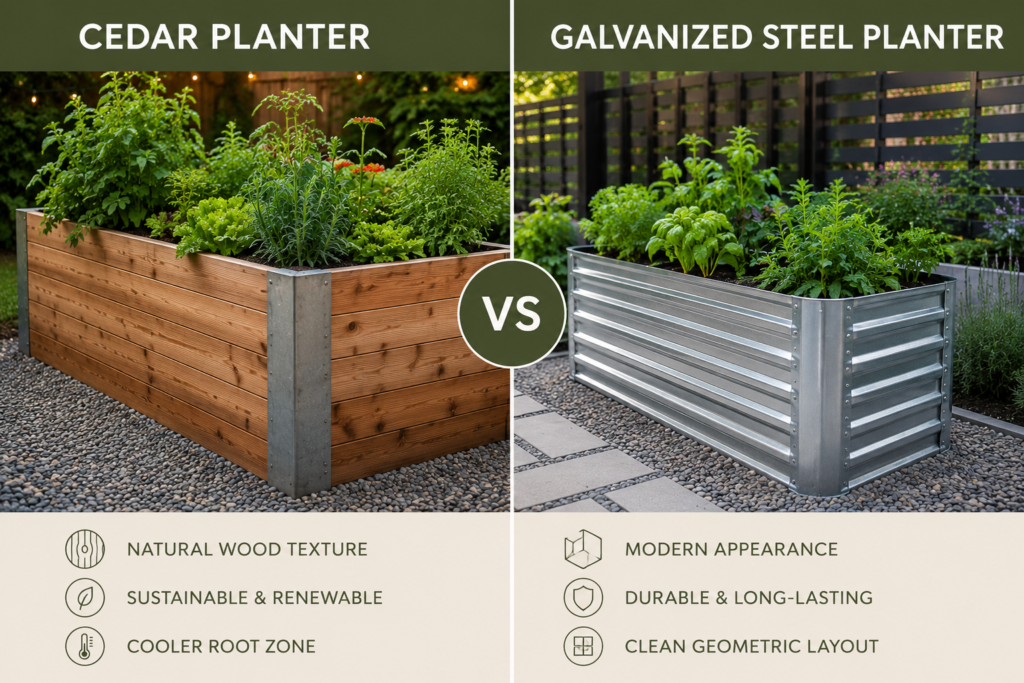
The best materials for tall raised planters depend on climate, durability expectations, aesthetics, maintenance requirements, and long-term gardening goals. Material selection affects not only planter lifespan but also root-zone temperatures, structural stability, visual appearance, and overall maintenance costs over many years of use.
Cedar remains one of the most trusted materials because it naturally resists moisture damage, fungal decay, and insects without requiring chemical treatment. Cedar typically stays cooler than metal under intense sunlight, which helps protect shallow root zones during hot summer conditions.
Steel systems resist cracking, warping, and rot much better than lower-quality wood products. They also maintain clean geometric shapes over time, making them popular for contemporary backyard designs. However, metal can heat rapidly under direct sunlight, especially in hotter climates where shallow-rooted plants may experience root stress if irrigation is poor.
Material comparison:
| Material | Advantages | Limitations |
| Cedar | Natural rot resistance | Higher cost |
| Galvanized Steel | Very durable | Heats quickly |
| Redwood | Premium appearance | Expensive |
| Composite | Low maintenance | Less natural look |
| Pine | Affordable | Shorter lifespan |
Structural thickness matters heavily. Thin inexpensive boards often bow outward once heavy wet soil pressure builds inside tall planters. Reinforcement brackets, corner braces, and cross supports dramatically improve durability.
Real-world insight:
A cheaply built untreated pine planter may deteriorate within a few seasons, while a reinforced cedar or galvanized steel system can remain structurally stable for well over a decade.
Tall Raised Planter Comparison
| Planter Type | Best For | Avoid If |
| Cedar tall planter | Natural backyard layouts | You want the absolute lowest cost |
| Galvanized steel planter | Long-term durability | Your climate has extreme root-zone heat |
| Elevated planter on legs | Patios and balconies | You need deep-root vegetables |
| U-shaped raised bed | Accessible gardening | Your space is extremely narrow |
| Tiered planter system | Herbs and flowers | You want large tomato production |
| Narrow fence-line planter | Small backyards | You need wide crop spacing |
| Self-watering planter | Hot climates | You prefer simple low-tech systems |
| Rolling planter box | Flexible patio gardening | You need maximum soil depth |
Best Height for Tall Planters
Most tall raised planters work best between 24 and 36 inches high because this range balances accessibility, soil depth, reach comfort, and long-term gardening practicality.
A 24-inch raised planter reduces knee and back strain substantially while still supporting deep-rooted vegetables effectively. A 30-inch planter is often considered the ideal height for waist-level gardening because it allows comfortable planting, watering, pruning, and harvesting without crouching repeatedly. Taller beds above 36 inches may work well for accessibility-specific applications but usually require stronger structural framing and significantly more soil volume.
Reach distance is just as important as planter height. Extremely wide beds can become difficult to manage even if they are elevated properly. Most gardeners perform best with planter widths between 2 and 4 feet so they can comfortably access the center from either side without stepping into the soil area.
Best Vegetables for Tall Planters
Many vegetables grow exceptionally well in tall raised planters because elevated systems improve drainage, soil aeration, root development, and environmental control. Healthy root systems depend on balanced oxygen, moisture, and nutrient availability, and raised beds often maintain these conditions more consistently than compacted ground soil.
Tomatoes are among the best crops for elevated planters because deep soil supports extensive root systems while improved airflow around foliage helps reduce fungal disease pressure. Tall raised beds also make tomato pruning, staking, and harvesting much easier throughout the season. Peppers thrive in raised systems because warmer soil temperatures accelerate root activity and fruit production during summer months.
Herbs like basil, parsley, cilantro, thyme, and oregano also benefit from improved drainage and organized spacing. Root vegetables like carrots and radishes often grow straighter and healthier in loose raised soil that resists compaction.
Best vegetables for tall raised planters include:
- Tomatoes
- Peppers
- Cucumbers
- Lettuce
- Spinach
- Kale
- Beans
- Carrots
- Radishes
- Herbs
- Strawberries
- Green onions
Crop spacing remains extremely important. Fertile raised-bed soil encourages aggressive growth, and overcrowding can reduce airflow while increasing fungal disease and nutrient competition.
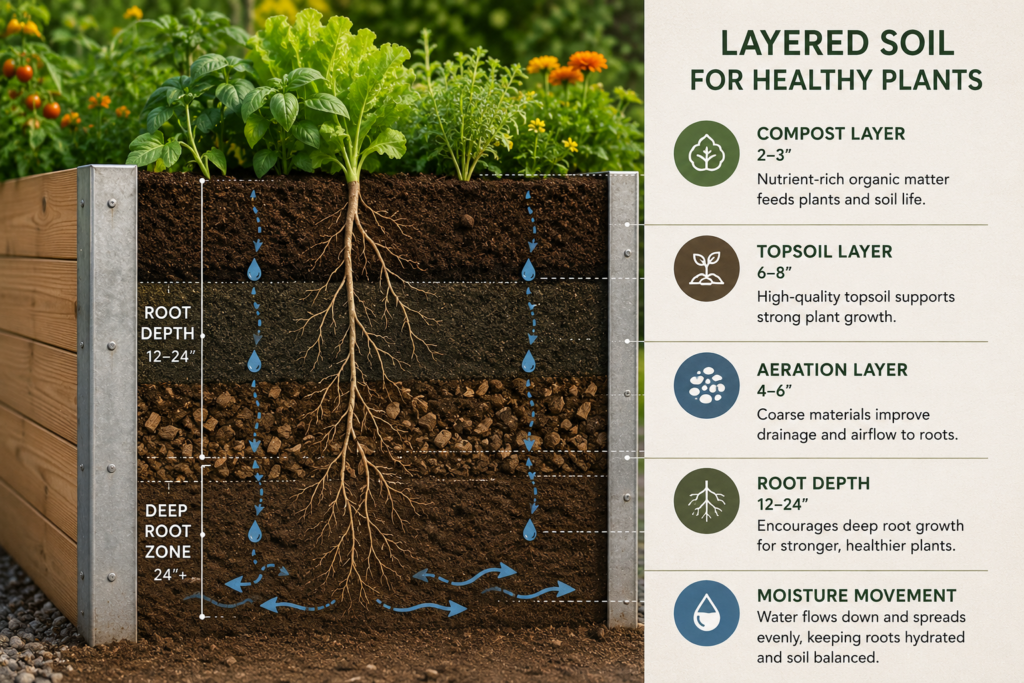
How Deep Should Tall Planters Be?
Tall raised planters generally need between 12 and 24 inches of functional soil depth depending on plant type, root structure, moisture retention needs, and long-term crop goals.
Leafy greens and herbs often grow successfully in shallower beds because their root systems remain relatively compact. However, vegetables like tomatoes, peppers, cucumbers, carrots, and beans perform far better in deeper soil profiles that support extensive root expansion. Deeper soil also stabilizes moisture levels more effectively during heat waves because roots can access cooler lower layers.
One major mistake many beginners make is filling extremely tall planters completely with premium soil. Large elevated beds require enormous soil volumes, which can become expensive quickly. Many experienced gardeners partially fill lower planter sections with coarse woody debris, branches, logs, or lightweight organic fillers before adding quality growing soil near the root zone. This reduces cost while still supporting healthy plant growth.
General soil depth recommendations include:
| Plant Type | Recommended Depth |
| Herbs | 8–12 inches |
| Lettuce | 6–10 inches |
| Spinach | 6–10 inches |
| Peppers | 12–18 inches |
| Tomatoes | 18–24 inches |
| Cucumbers | 16–20 inches |
| Carrots | 12–18 inches |
Tomatoes grown in shallow compacted soil frequently become stressed during hot weather, while deep aerated raised-bed soil supports stronger root systems and more stable fruit production.
Tall Raised Planter Cost
Tall raised planter costs vary heavily depending on material quality, planter size, structural reinforcement, irrigation systems, and whether the planter is DIY-built or professionally manufactured. Budget systems may appear attractive initially, but poorly built planters often fail quickly due to soil pressure, moisture damage, weak framing, or poor drainage engineering.
Soil is another major expense many beginners underestimate. Large elevated planters require substantial soil volume, especially deep vegetable beds designed for tomatoes, cucumbers, peppers, or root vegetables. Many gardeners reduce costs by partially filling lower sections with logs, branches, or lightweight organic material before adding premium soil near the root zone.
Typical tall raised planter cost ranges include:
| Type | Estimated Cost |
| Basic DIY pine planter | Low |
| Cedar raised planter | Moderate |
| Galvanized steel planter | Moderate to high |
| Self-watering planter | Higher |
| Custom modern planter systems | Premium |
Additional cost factors include:
- Soil volume
- Irrigation systems
- Trellis installation
- Hardware quality
- Liners
Real-world example:
A reinforced cedar planter with drip irrigation and quality soil may cost more initially but often lasts far longer and requires fewer repairs than cheap untreated wood systems.
Are Tall Planters Good for Small Backyards?
Tall raised planters are often extremely valuable for small backyards because they maximize growing efficiency while improving organization, accessibility, and overall visual structure. Small outdoor spaces become cluttered quickly when gardens spread horizontally across lawns and walkways. Elevated systems concentrate production into cleaner zones that preserve usable patio and seating space.
Vertical gardening integration is one of the biggest advantages. Trellises attached to elevated planters allow cucumbers, peas, tomatoes, and beans to grow upward instead of outward. This dramatically increases productivity in compact backyard layouts while reducing overcrowding around pathways and patios.
Do Tall Planters Improve Drainage?
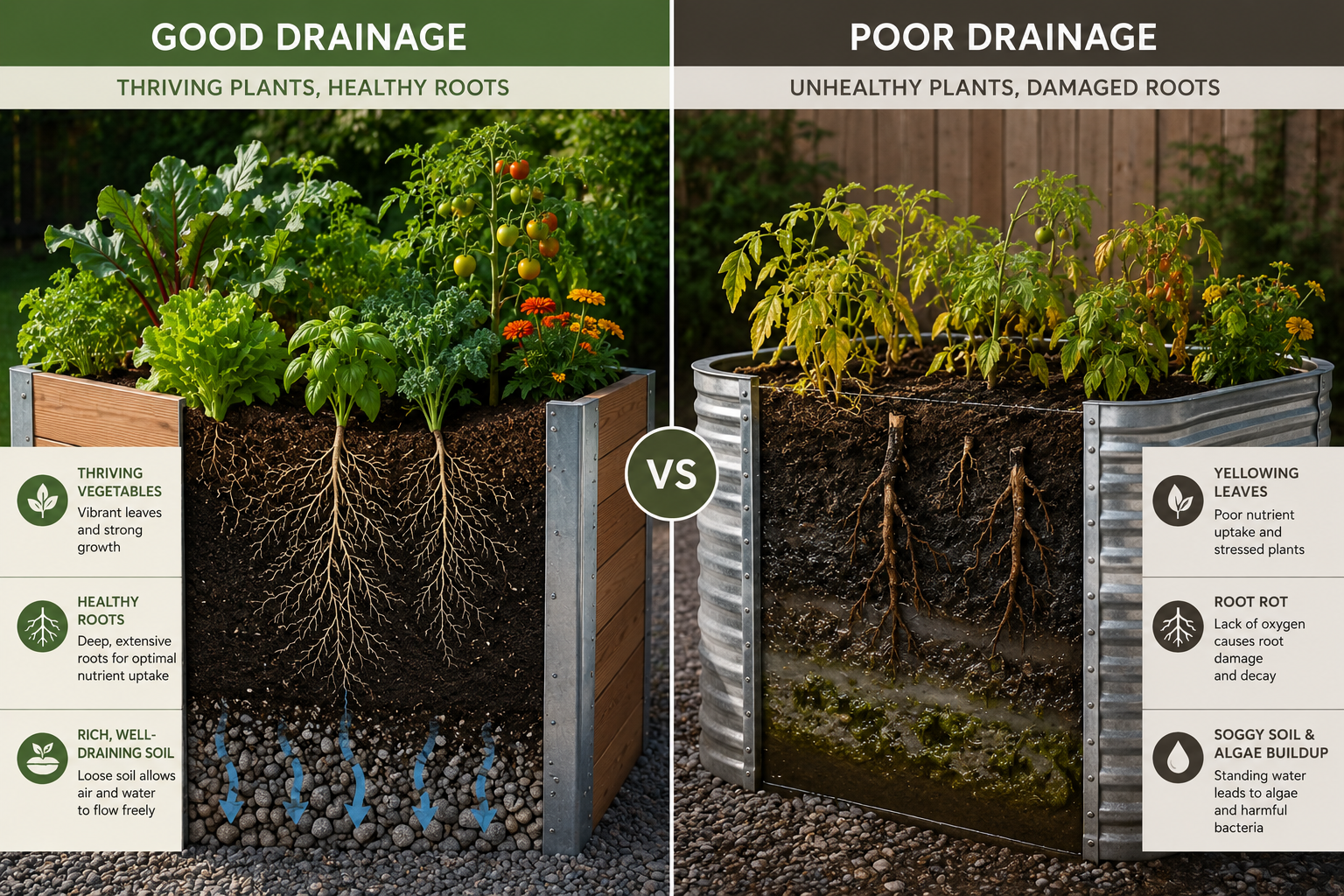
Tall raised planters usually improve drainage dramatically because they separate plant roots from compacted native soil while allowing gardeners to engineer healthier soil systems. Clay-heavy soil, construction compaction, and water pooling frequently suffocate roots and encourage fungal disease.
Healthy drainage systems usually include:
- drainage holes
- aerated soil
- compost balance
- mulch layers
- controlled irrigation
- gravel pathways
- moisture monitoring
Signs of poor drainage include:
- Yellow leaves
- Mushy stems
- Wet compacted soil
- Root rot
- Algae buildup
- Fungus growth
- Wilting despite wet soil
- Slow plant growth
Drip irrigation systems work especially well with elevated planters because they deliver moisture more evenly while reducing fungal disease caused by wet foliage.
Best Modern Tall Planter Layouts
The best tall raised planter layouts combine accessibility, sunlight optimization, visual organization, irrigation efficiency, and practical movement flow. Modern backyard gardens increasingly prioritize both productivity and aesthetics, which is why organized elevated systems have become central features in contemporary outdoor landscaping.
U-shaped layouts work extremely well for accessible gardening because gardeners can reach plants from multiple sides without stepping into the soil area. This layout improves harvesting efficiency while protecting soil structure from compaction. Narrow perimeter planters along fences or patios are also highly effective in smaller spaces because they convert unused edges into productive growing zones.
These systems blend naturally with patios, pergolas, outdoor seating areas, and contemporary architecture while maintaining strong geometric structure.
Popular modern layout ideas include:
- Parallel rectangular planter rows
- U-shaped garden layouts
- Fence-line elevated planters
- Patio-edge planter systems
- Tiered herb planters
- Pergola-integrated beds
- Trellis-supported vegetable rows
- Geometric modern layouts
Sunlight planning should always come before aesthetics. Most vegetables still require 6–8 hours of direct sunlight daily regardless of how attractive the layout appears.
Cucumber trellises often feels cleaner, more spacious, and easier to maintain than a traditional scattered ground garden.
Buy or Build a Tall Planter?
Choosing between buying or building a tall raised planter depends on budget, customization goals, available tools, construction skill, and long-term durability expectations.
Buying a ready-made planter is usually faster and easier. Many modern kits include pre-cut panels, hardware, drainage systems, and clean professional finishes that simplify installation. Galvanized steel systems are especially popular because they assemble quickly while providing strong structural durability. Prebuilt planters also help beginners avoid construction mistakes involving soil pressure, poor drainage, or weak framing.
DIY advantages include:
- Lower potential cost
- Full size customization
- Flexible layouts
- Easier future modifications
- Personalized material selection
Common Tall Planter Mistakes
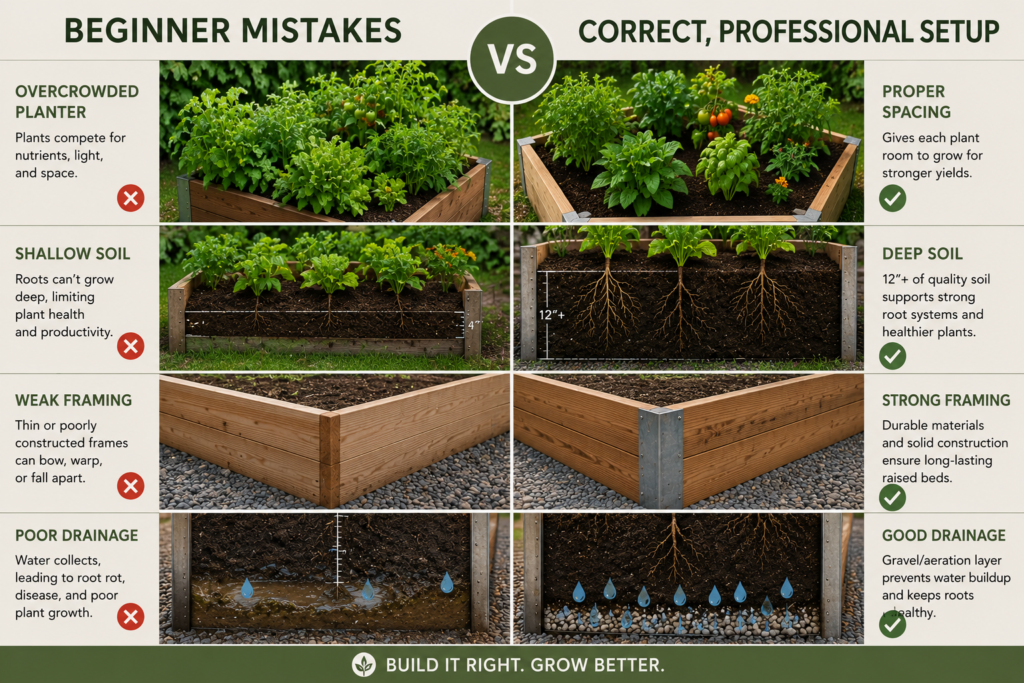
Several common mistakes reduce planter lifespan, weaken plant growth, and create long-term maintenance problems that often become expensive or difficult to fix later.
Poor drainage is one of the biggest problems. Elevated planters still require balanced aeration and functional water movement. Dense compacted soil, blocked drainage holes, and excessive watering frequently create root rot conditions despite the planter being elevated above ground level. Waterlogged roots weaken plant growth quickly and encourage fungal disease.
Weak structural framing is another major failure point. Tall planters hold enormous weight once filled with wet soil. Thin inexpensive wood panels often bow outward or split under pressure after repeated watering cycles. Proper reinforcement brackets, thicker lumber, and cross-support systems are critical for long-term stability.
Fertile raised-bed soil encourages rapid plant expansion, and many beginners place seedlings too close together. Poor spacing reduces airflow, traps moisture, increases fungal disease pressure, and weakens overall productivity.
Common mistakes include:
- Poor drainage systems
- Weak framing
- Shallow soil depth
- Overcrowded planting
- Poor sunlight placement
- Incorrect irrigation
- Cheap materials
- No mulch protection
- Ignoring crop rotation
- Overwatering during heat
Real-world insight:
Many beginner raised beds fail within a few seasons because attractive appearance was prioritized over drainage engineering, structural reinforcement, and realistic long-term maintenance planning.
Who Should Choose Tall Raised Planters?
Elevated beds also simplify irrigation planning while reducing weed pressure and muddy pathways. Small-space gardeners frequently use narrow raised systems beside fences, patios, or walkways to maximize productivity without overwhelming limited outdoor space.
However, tall raised planters are not ideal for every situation. Large-scale crop production may become expensive because elevated systems require substantial soil volume and stronger structural support. Gardeners using weak decks or elevated patios must also consider total weight loads carefully before installation.
Tall raised planters are ideal for:
- Seniors
- Beginners
- Patio gardeners
- Small backyard owners
- Vegetable gardeners
- Herb gardeners
- Homeowners with poor native soil
- Accessible gardening layouts
- Modern backyard landscaping
Tall raised planters may be less ideal for:
- Extremely low-budget projects
- Massive crop production
- Weak deck structures
- Very large farming layouts
- Gardeners unwilling to monitor irrigation regularly
A homeowner with compact clay-heavy backyard soil may achieve healthier vegetables and easier maintenance using two elevated cedar beds rather than repeatedly trying to improve poor ground conditions.
FAQs
What Is the Best Height for a Tall Raised Planter?
Most tall raised planters work best between 24 and 36 inches high. Around 30 inches is often ideal for comfortable waist-height gardening.
Which Vegetables Grow Best in Tall Raised Planters?
Tomatoes, peppers, cucumbers, lettuce, spinach, herbs, beans, and carrots grow especially well in tall raised planters with deep aerated soil.
Do Tall Raised Planters Need Drainage Holes?
Yes. Drainage holes are essential to prevent waterlogged soil, root rot, fungal disease, and poor root oxygen circulation.
What Material Lasts Longest for Tall Raised Planters?
Galvanized steel usually lasts the longest with minimal maintenance. Cedar is one of the best natural wood options because it resists rot and insects well.
How Deep Should Soil Be in a Tall Raised Planter?
Most vegetables grow best with 12–24 inches of soil depth. Tomatoes and root vegetables usually need deeper soil than herbs or lettuce.
Do Tall Raised Planters Dry Out Faster?
Yes. Elevated airflow increases evaporation, especially during hot weather. Mulch and drip irrigation help maintain stable moisture levels.
Are Galvanized Raised Planters Safe for Vegetables?
Modern galvanized raised planters are generally considered safe for growing vegetables when combined with quality soil and proper drainage.
What Is the Best Width for a Tall Raised Planter?
Most raised planters work best between 2 and 4 feet wide so gardeners can comfortably reach the center without stepping into the soil.
Can Tall Raised Planters Work on Patios or Decks?
Yes, but weight matters. Large soil-filled planters can become extremely heavy, especially after watering.
What Should You Put at the Bottom of a Tall Raised Planter?
Many gardeners use logs, branches, leaves, or coarse organic material at the bottom to reduce soil costs and improve decomposition.
How Long Do Cedar Raised Planters Last?
High-quality cedar raised planters commonly last 10–20 years depending on climate, drainage, and moisture exposure.
What Are the Biggest Mistakes With Tall Raised Planters?
Common mistakes include poor drainage, overcrowded planting, shallow soil, weak framing, overwatering, and poor sunlight placement.
Should You Buy or Build a Tall Raised Planter?
Buying is usually faster and easier, while DIY building allows more customization for size, layout, and materials.
What Is the Best Soil Mix for Tall Raised Planters?
The best soil mix usually combines compost, topsoil, organic matter, and aeration materials for balanced drainage and moisture retention.
Why Do Plants Grow Faster in Raised Planters?
Plants often grow faster because raised beds improve drainage, root aeration, soil warmth, and nutrient control.
Can You Grow Tomatoes in Tall Raised Planters?
Yes. Tomatoes thrive in deep raised planters because loose aerated soil supports stronger roots and easier maintenance.
Are Self-Watering Tall Planters Worth It?
Self-watering planters help stabilize moisture levels and reduce watering frequency, especially in hot climates.
Myra is the founder and lead writer of Backyard Planter Ideas, where she shares practical, well-researched guidance on planter design, plant selection, and outdoor styling. Her goal is to help homeowners create attractive, functional garden spaces with clear, reliable, and easy-to-apply advice.