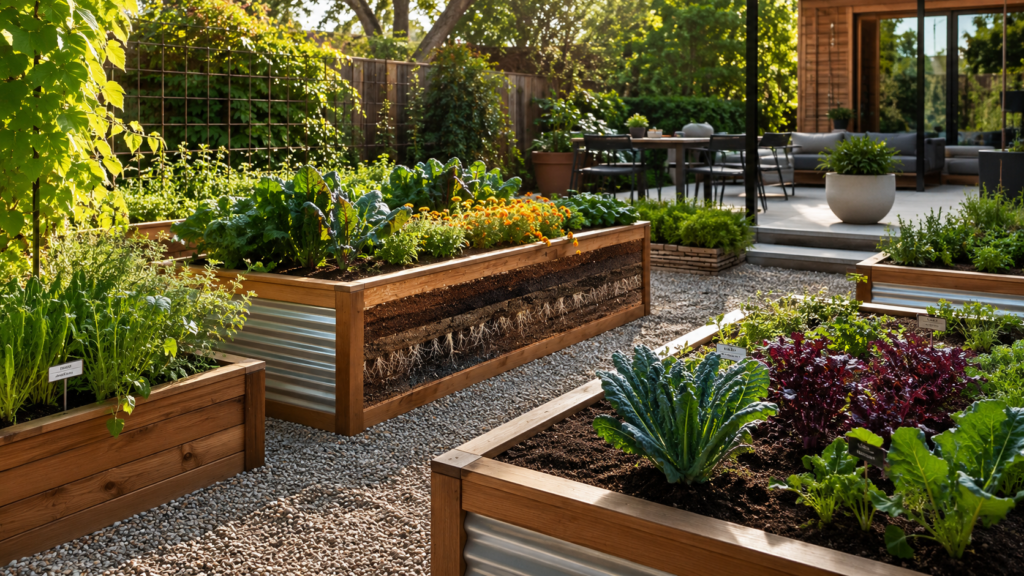
Raised planter boxes have evolved far beyond simple backyard gardening containers. Modern homeowners use raised planter boxes to improve vegetable production, simplify maintenance, and create organized backyard layouts. A properly designed raised planter system improves drainage, protects soil quality, reduces weed pressure, and helps gardeners control growing conditions much more effectively than traditional in-ground gardening.
Best DIY Raised Planter Materials
Many beginners focus only on appearance, but long-term gardening success often depends heavily on choosing materials appropriate for the local climate and intended garden style. A planter that looks attractive initially may fail quickly if the wrong materials are exposed to moisture, heat, or constant soil pressure.
Cedar remains one of the most recommended choices because it naturally resists rot, insects, and fungal damage without chemical treatment. It also fits modern backyard aesthetics extremely well due to its warm natural color and clean grain pattern. Galvanized steel is popular in modern landscaping because it is durable and visually minimalist.
The most reliable raised planter materials include:
- Cedar
- Redwood
- Galvanized steel
- Composite boards
- Concrete block systems
Material choice should also consider climate conditions. For example, metal planters may absorb excessive heat in extremely hot regions, while untreated softwoods can rot quickly in wet climates.
Best Materials by Climate
Choosing the right raised planter material depends heavily on climate conditions, not just appearance or price. Many DIY gardeners select materials based only on aesthetics, then later discover that heat buildup, moisture exposure, or freeze cycles shorten planter lifespan or stress plant roots. Climate-responsive planning dramatically improves long-term durability and gardening performance.
Cedar performs especially well in hot climates because it insulates roots better than metal and stays cooler under direct sunlight. Galvanized steel often performs better in wet climates because it resists constant moisture exposure and fungal decay. In colder regions, deeper raised beds help stabilize root temperatures while reinforced structures reduce freeze-thaw damage.
Best materials by climate:
- Hot climates → Cedar or composite
- Wet climates → Galvanized steel
- Cold climates → Deep cedar beds
- Humid climates → Rot-resistant materials
- Dry climates → Mulched wood systems
If long-term vegetable gardening is the goal, cedar usually provides the best balance between temperature control, appearance, and root protection. Metal works extremely well for modern landscapes and high-rainfall regions, but irrigation and mulching become more important in hot environments.
How Deep Should Planter Boxes Be?
Planter depth directly affects root expansion, moisture retention, nutrient stability, and long-term plant health. One of the most common DIY gardening mistakes is building planter boxes that are too shallow because shallow beds initially appear easier and cheaper to construct.
Different crops require different rooting depths, but most productive vegetable gardens perform best with deeper soil profiles. Tomatoes, peppers, cucumbers, carrots, and potatoes all benefit from substantial root zones that allow better nutrient uptake and stronger moisture regulation.
Recommended planter depths include:
- Herbs: 8–12 inches
- Lettuce: 6–8 inches
- Peppers: 12–18 inches
- Tomatoes: 18–24 inches
- Root vegetables: 12–18 inches
In real-world backyard gardening, many experienced growers eventually rebuild shallow beds into deeper systems after noticing inconsistent growth or reduced yields.
Best Width and Layout
Raised planter layout affects accessibility, airflow, maintenance efficiency, and overall backyard organization. Beds that are too wide force gardeners to step into the soil, causing compaction that reduces root oxygen and drainage efficiency over time.
Most experienced gardeners recommend keeping raised beds between 3–4 feet wide. This allows comfortable access from both sides without compressing the growing area. Narrow pathways make harvesting and maintenance harder.
Recommended layout dimensions:
- Bed width: 3–4 feet
- Pathway width: minimum 24 inches
- Ideal height: 18–24 inches
- Elevated planter height: 30–36 inches
Best layout styles:
- Parallel garden rows
- U-shaped backyard layouts
- Narrow perimeter beds
- Patio-edge planter systems
- Gravel pathway layouts
Modern backyard gardens perform best when planter spacing feels intentional and easy to navigate. Function should guide layout decisions first, while decorative styling should support usability instead of interfering with maintenance access.
Best Soil Layers for Planter Boxes
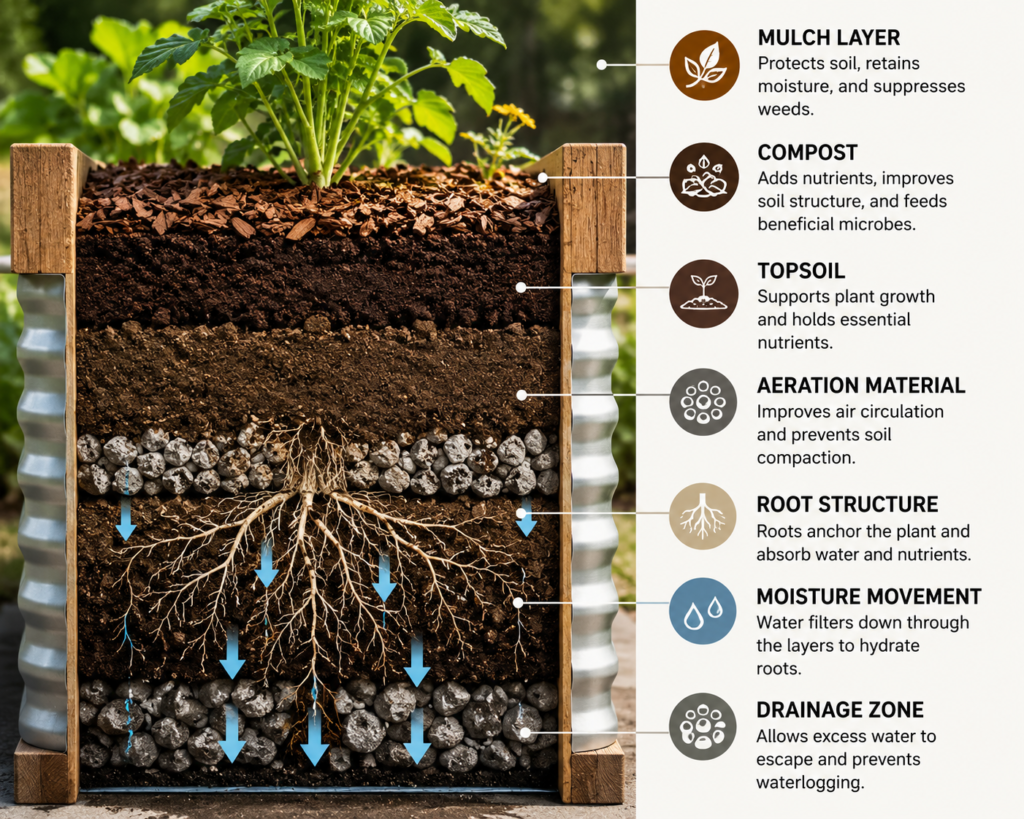
Soil quality determines whether raised planter boxes become highly productive garden systems or disappointing containers with weak plant growth. Many beginners underestimate how important soil layering and composition are for long-term drainage, nutrient retention, microbial activity, and root oxygenation. Poor soil choices often create more gardening problems than poor construction itself.
The most productive raised beds use layered soil systems designed to balance drainage with moisture retention. Compost-rich soil helps maintain biological activity while aeration materials prevent compaction and improve oxygen flow to roots.
An ideal raised bed soil system typically includes:
- Compost for nutrients
- Quality topsoil for structure
- Aeration materials for drainage
- Mulch for moisture control
- Organic matter for microbial activity
Gardeners who invest in quality soil systems early usually spend less time troubleshooting nutrient deficiencies, drainage failures, and root stress later in the growing season.
Why Drainage Matters
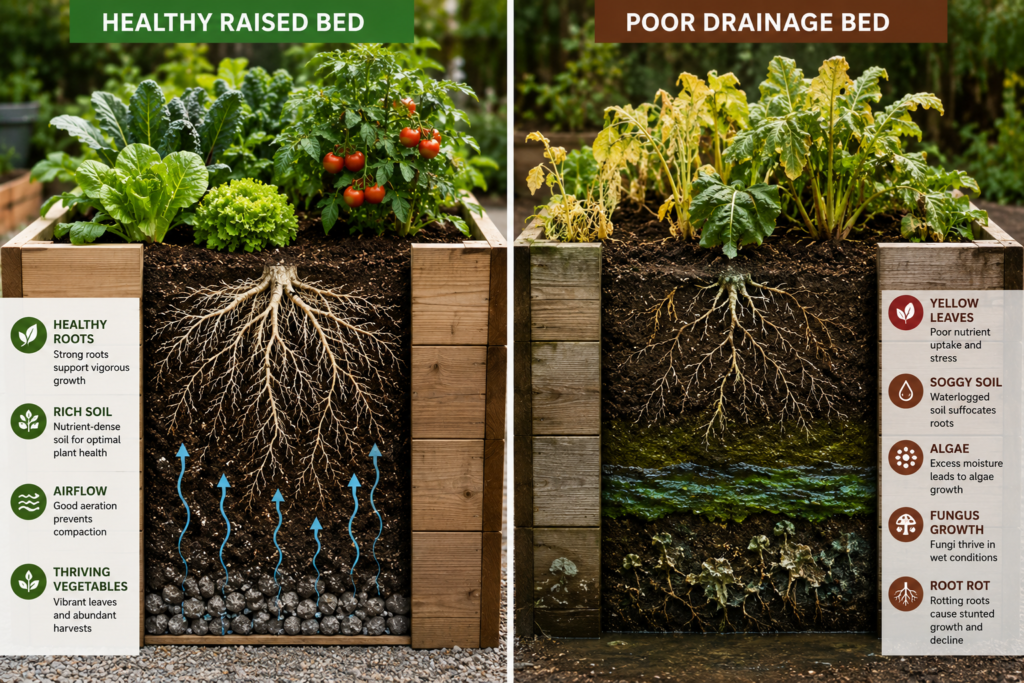
Drainage is one of the most important but misunderstood parts of raised bed gardening. Many gardeners assume raised beds automatically solve drainage problems, but poor soil structure, blocked drainage holes, or excessive watering can still create waterlogged root zones. When soil remains saturated too long, oxygen levels drop and root systems begin to weaken rapidly.
Poor drainage commonly causes yellowing leaves, fungal growth, stunted development, root rot, and persistent plant stress. Raised beds still require proper soil structure and watering practices.
Common drainage failure symptoms include:
- Yellow leaves
- Mushy stems
- Wilting in wet soil
- Fungus gnats
- Sour soil odor
- Algae or moss growth
Recommended Drainage Specifications
- ½-inch drainage holes every 6–8 inches
- 2–3 inches mulch depth
- Slight planter elevation on patios
- Minimum 20% aeration material in soil
In many situations, gravel alone does not improve drainage significantly and may even create perched water tables that trap moisture higher in the soil profile. Real-world success usually depends more on proper soil aeration and balanced watering practices than on excessive gravel use.
Best DIY Ideas for Small Backyards
Small backyards benefit tremendously from raised planter systems because they improve organization while maximizing growing efficiency in limited spaces. Modern raised planter designs solve this problem by using vertical layering, geometric layouts, and multi-functional structures that create cleaner outdoor flow.
Vertical planters are especially effective for herbs, strawberries, lettuce, and decorative plants because they increase growing space without requiring large footprints. Tiered planters create visual depth while improving accessibility and harvest convenience. Narrow raised beds along fences or walkways are also popular because they transform underused spaces into productive garden zones without overwhelming patios or outdoor seating areas.
Effective small-space raised planter ideas include:
- Vertical herb gardens
- Tiered planter systems
- Corner raised beds
- Narrow fence planters
- Rolling planter boxes
- Bench-integrated planters
Common Beginner DIY Mistakes
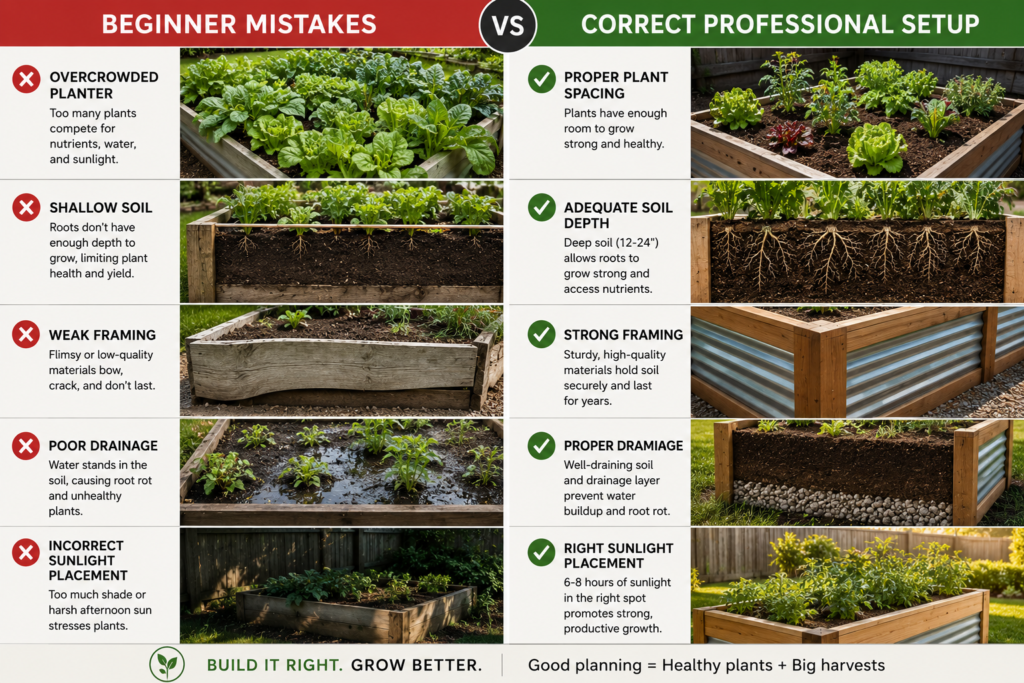
First-time DIY planter builders often focus heavily on appearance while overlooking structural strength, drainage planning, and long-term usability. Many mistakes seem minor during construction but create serious gardening problems after one or two growing seasons. Poor planning commonly leads to warped frames, root stress, overcrowded plants, unstable watering patterns, or uncomfortable garden layouts that become difficult to maintain consistently.
One of the biggest beginner mistakes is building planter boxes too wide. Beds wider than four feet make harvesting, pruning, and maintenance much harder because gardeners cannot comfortably reach the center without stepping into the soil. Another frequent issue is placing beds in visually attractive areas that receive inadequate sunlight. Vegetable gardens usually require six to eight hours of direct light for strong productivity.
Common beginner mistakes:
- Beds wider than 4 feet
- Poor sun positioning
- Weak corner bracing
- Shallow soil depth
- Overcrowded vegetables
- Cheap untreated wood
- No drainage planning
Real-world failure examples:
- Many beginners overcrowd tomatoes, reducing airflow and increasing fungal disease.
- Weak pine beds often begin bowing outward after heavy rainfall seasons.
- Shallow herb beds dry extremely fast during summer heat.
The best beginner strategy is usually building fewer, deeper, better-constructed beds instead of many cheap shallow planters. Simple durable layouts almost always outperform complicated designs that sacrifice practicality for appearance alone.
Are Elevated Boxes More Accessible?
Elevated planter boxes make gardening easier for seniors, people with mobility limitations, and homeowners seeking less physical strain. Traditional in-ground gardening often requires constant kneeling, bending, crouching, and lifting, which can become physically exhausting over time. Elevated systems reduce strain dramatically while allowing gardeners to continue growing vegetables and herbs comfortably for many years.
Elevated planters create ergonomic working heights that make planting, pruning, watering, and harvesting significantly easier.
Benefits of elevated planter systems include:
- Reduced back strain
- Easier harvesting
- Better wheelchair access
- Improved gardening comfort
- Cleaner maintenance
- Better visibility of plants
However, structural support becomes critically important because wet soil is extremely heavy. Many beginner DIY builds underestimate the weight load created by saturated soil and mature plants. Real-world experience shows that reinforced frames and strong corner bracing dramatically improve long-term stability and prevent dangerous structural failures later.
Cedar vs Metal Planter Boxes
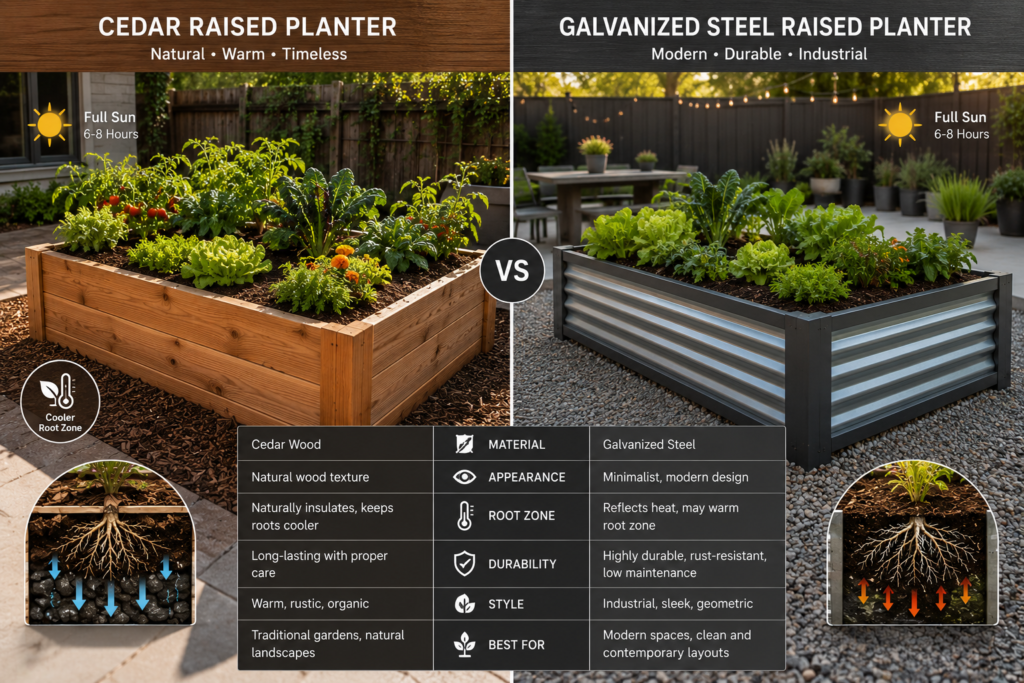
Cedar and galvanized steel dominate modern raised planter design because both materials provide excellent durability and strong visual appeal. However, they behave differently in terms of heat management, maintenance requirements, cost, and long-term aesthetics.
Cedar creates a warm natural appearance that blends beautifully with organic landscapes, patios, and traditional-modern backyard styles. It stays relatively cool in direct sunlight and remains beginner-friendly for DIY construction. Metal beds create sharper contemporary lines and often last longer with less maintenance, making them extremely popular in minimalist outdoor designs and modern edible landscapes.
Key differences include:
- Cedar stays cooler
- Metal lasts longer
- Cedar looks more natural
- Metal requires less maintenance
- Cedar is easier for DIY projects
- Metal fits industrial-modern styles
Gardeners often reduce this issue using mulch, drip irrigation, and strategic shading. Real-world gardening decisions should prioritize long-term usability instead of short-term trends.
How Long Do Planter Boxes Last?
Raised planter lifespan depends primarily on material quality, climate exposure, moisture levels, and structural construction methods. Many low-cost DIY beds fail early because builders underestimate how much pressure wet soil places on wood and fasteners over time. A planter exposed to constant moisture, irrigation, and temperature swings functions more like outdoor infrastructure than temporary garden furniture.
Cedar and galvanized steel generally offer the best long-term durability for edible gardens. Untreated pine may last only a few years in wet environments, while properly built cedar beds often remain functional for well over a decade.
Average planter lifespans:
| Material | Average Lifespan |
| Untreated pine | 3–5 years |
| Cedar | 10–20 years Composi |
| Redwood | 10–20 years |
| Galvanized steel | 20+ years |
| Composite | 15–25 years |
Factors affecting lifespan:
- Rain exposure
- Soil moisture
- Sun intensity
- Drainage quality
- Structural reinforcement
- Wood sealing frequency
Real-world examples:
- Poorly braced large beds often bow outward after several rainy seasons.
- Cedar beds in dry climates may last significantly longer than in humid coastal regions.
- Metal beds generally outlast wood but may require temperature management in hot climates.
For long-term vegetable gardening, spending more upfront on durable materials usually saves money and labor over time. Strong structural framing matters just as much as the material itself.
How to Make Planter Boxes Modern
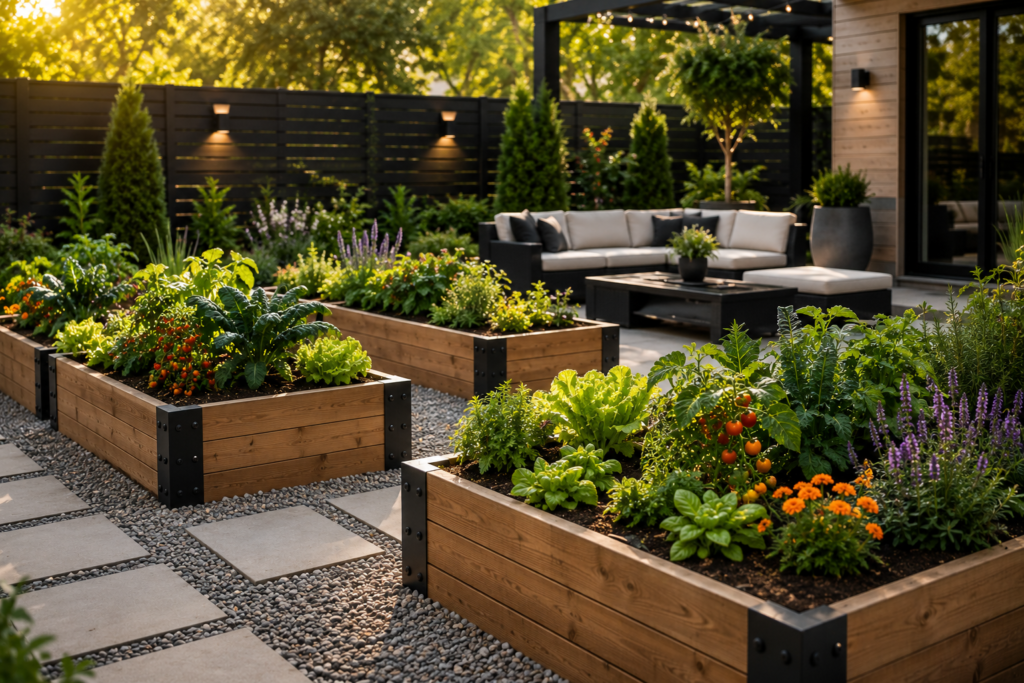
Many older garden layouts appear visually chaotic because beds are irregularly shaped or overcrowded with mismatched materials. Contemporary landscaping trends instead emphasize intentional geometry and organized outdoor flow. Raised planter boxes now function as both gardening systems and architectural design elements within the backyard.
Linear layouts, rectangular shapes, gravel pathways, and black hardware all contribute to cleaner modern aesthetics. Modern layouts balance greenery with functional open space.
Modern planter design ideas include:
- Horizontal cedar slats
- Black steel edging
- Gravel pathways
- Integrated lighting
- Mixed wood-and-metal materials
- Symmetrical planter spacing
Low-voltage lighting around planter boxes improves nighttime usability while adding architectural depth to patios and seating areas.
What Is the Best Raised Planter Setup by Backyard Type?
A setup that works beautifully in a large suburban vegetable garden may feel overwhelming in a compact urban patio space.
Small backyards benefit most from vertical systems, narrow perimeter beds, and integrated seating planters that maximize usable space without overcrowding the yard. Larger family gardens usually perform better with deeper rectangular cedar beds organized into efficient rows. Modern patios often favor galvanized steel planters with minimalist gravel pathways and clean architectural spacing.
| Backyard Type | Best Planter Style |
| Small urban yard | Vertical cedar beds |
| Modern patio | Steel rectangular planters |
| Family vegetable garden | Deep cedar beds |
| Senior-friendly garden | Elevated waist-height planters |
| Decorative backyard | Mixed wood-and-metal beds |
The best raised planter setup is not necessarily the most complex or expensive. Successful backyard designs balance usability, visual organization, climate conditions, and realistic long-term maintenance expectations.
Biggest DIY Planter Mistakes
Many DIY raised planter failures happen because beginners focus too heavily on appearance while ignoring long-term structural and horticultural performance. A raised bed may initially look attractive but still fail within a few seasons if drainage, soil quality, depth, or framing strength are poorly planned. Most long-term gardening problems begin with preventable foundational mistakes rather than plant selection itself.
Cheap untreated wood is one of the most common issues because it deteriorates rapidly when exposed to moisture and soil pressure. Poor drainage also causes widespread failures by suffocating roots and encouraging fungal diseases. Another major problem is overcrowding plants, which reduces airflow and increases competition for nutrients, water, and sunlight. Shallow beds often compound these issues because root systems become stressed more quickly during heat and drought.
Common raised bed mistakes include:
- No drainage planning
- Poor soil composition
- Cheap liner materials
Do Raised Beds Increase Yields?
Raised planter boxes often improve vegetable yields because they create more controlled growing conditions than traditional in-ground gardens. Better drainage, healthier soil biology, improved root oxygenation, and reduced compaction all contribute to stronger plant development.
One major advantage is soil customization. Gardeners can build nutrient-rich loose soil blends optimized specifically for vegetables instead of struggling with poor native soil conditions. Root systems generally grow faster in loose aerated soil, which improves nutrient uptake and moisture stability.
Why yields often improve:
- Better drainage
- Reduced compaction
- Improved root growth
- Easier weed management
- Healthier microbial activity
- Earlier seasonal warming
Raised beds improve growing consistency more than they magically increase productivity.
DIY Raised Planter Box Cost
DIY raised planter box costs vary dramatically depending on material quality, bed size, soil depth, and optional upgrades like irrigation systems or protective liners. Many beginners underestimate total project cost because online tutorials often mention lumber prices but ignore soil volume, hardware, drainage materials, and finishing details.
Smaller beginner beds made from pine may cost under $100, while premium cedar or galvanized steel systems can easily exceed several hundred dollars once soil and accessories are included. Cheap beds frequently require rebuilding after only a few seasons, especially in wet climates where moisture damage accelerates quickly.
| Raised Bed Type | Estimated Cost |
| Basic pine planter | $40–80 |
| Cedar raised bed | $120–300 |
| Galvanized steel bed | $150–400 |
| Elevated planter | $200–500 |
| Large modern setup | $500–1500+ |
Common hidden costs:
- Premium soil mixes
- Compost
- Mulch
- Irrigation tubing
- Screws and brackets
- Landscape gravel
- Protective wood sealers
Are DIY Planter Boxes Worth It?
Organized raised gardens often produce healthier plants, cleaner outdoor spaces, and more manageable maintenance routines compared to traditional in-ground gardening.
One major advantage is improved gardening consistency. Raised beds simplify weeding, watering, and harvesting while reducing mud and soil compaction problems. Better soil quality and drainage frequently improve yields as well, especially for vegetables like tomatoes, peppers, cucumbers, and herbs.
FAQs
What is the best material for DIY raised planter boxes?
Cedar is usually the best overall material because it naturally resists rot, insects, and moisture damage while remaining safe for edible gardening. Galvanized steel lasts longer and fits modern landscapes well, while untreated pine works mainly for temporary budget builds.
How deep should a raised planter box be for vegetables?
Most vegetable raised beds should be 18–24 inches deep for healthy root growth and moisture stability. Herbs and leafy greens can grow in shallower 8–12 inch beds.
Do raised beds actually increase vegetable yields?
Raised beds often improve yields because they create healthier soil conditions and better root development. Strong drainage and reduced compaction also help vegetables grow more consistently.
How long do cedar raised planter boxes last?
High-quality cedar raised planter boxes usually last 10–20 years depending on climate and maintenance. Dry climates and proper drainage can significantly extend lifespan.
Do galvanized metal raised beds get too hot?
Galvanized metal beds can warm faster in direct sunlight, especially in hot climates. Mulch, drip irrigation, and deeper soil layers usually help regulate root temperatures effectively.
What is the cheapest way to build raised planter boxes?
Basic pine lumber is usually the cheapest material for DIY raised beds. However, untreated pine generally deteriorates faster than cedar or galvanized steel.
Should raised planter boxes have bottoms?
Most backyard raised beds work best without bottoms because open soil improves drainage and root expansion. Bottoms are mainly useful for patios, decks, or elevated planters.
How wide should a raised planter box be?
Most raised planter boxes should stay between 3–4 feet wide for comfortable access from both sides. Wider beds become harder to maintain without stepping into the soil.
Do raised planter boxes need drainage holes?
Closed-bottom raised planters need drainage holes to prevent root rot and waterlogging. Open-bottom garden beds naturally drain into the ground below.
How often should raised bed soil be replaced?
Most raised bed soil does not require full replacement, but compost and organic matter should usually be refreshed yearly. Healthy soil improves gradually with proper maintenance.
What mistakes do beginners make with raised planter boxes?
Common beginner mistakes include shallow beds, poor drainage, overcrowded planting, and weak framing. Many first-time gardeners also underestimate soil volume and sunlight requirements.
Are elevated raised planter boxes worth it?
Elevated planter boxes are excellent for easier gardening access and reduced back strain. They work especially well for seniors, patios, and small-space gardens.
Is cedar or metal better for modern raised garden beds?
Cedar is better for natural warmth and cooler root temperatures, while galvanized steel fits minimalist modern landscaping and offers longer durability. Climate and design style usually determine the best choice.
Why do raised planter boxes fail?
Most raised planter failures happen because of poor drainage, weak construction, shallow soil depth, or low-quality materials. Proper planning usually prevents long-term structural and gardening problems.

Myra is the founder and lead writer of Backyard Planter Ideas, where she shares practical, well-researched guidance on planter design, plant selection, and outdoor styling. Her goal is to help homeowners create attractive, functional garden spaces with clear, reliable, and easy-to-apply advice.