They also make gardening easier by improving accessibility, reducing soil compaction, simplifying maintenance, and creating a more controlled growing environment for vegetables, herbs, flowers, and small fruits.
The best raised planter designs combine strong drainage performance with practical backyard usability. Open-bottom cedar beds, galvanized steel planters, elevated waist-high boxes, tiered herb planters, and narrow fence-line gardens are some of the most effective solutions for modern backyard gardening.
A properly designed raised planter can solve several of these issues at once while also improving backyard appearance and long-term garden organization.
Why Raised Planters Improve Drainage
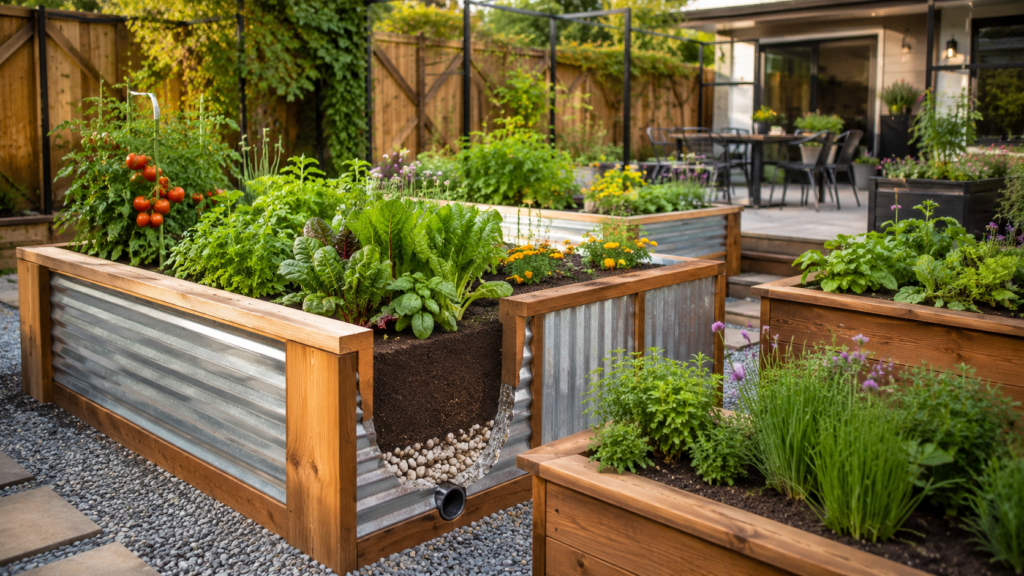
Raised backyard planters improve drainage because they create a separate growing zone above compacted or poorly draining ground. Water naturally moves downward through loose, aerated soil much faster than it moves through dense clay or heavily compacted backyard soil. This helps prevent roots from sitting in stagnant moisture for long periods, which is one of the most common causes of weak plant growth and root disease.
Compacted backyard soil often traps water near the surface, especially in clay-heavy or high-traffic areas. Raised beds improve drainage by creating a looser, more oxygen-rich growing zone above those conditions.
In real backyard conditions, drainage improvements become obvious after storms or heavy watering. Standard in-ground gardens may stay muddy for several days, while raised planters often become workable much faster.
Important drainage benefits include:
- Better oxygen flow around roots
- Reduced root rot risk
- Faster recovery after rain
- Less standing water
- Healthier microbial activity
- Improved nutrient uptake
- Easier spring planting conditions
Backyard soil can vary dramatically across even small spaces. One section may drain well while another stays constantly wet. Raised planters create a more controlled growing system, which improves consistency across the entire garden.
How Climate Affects Drainage
Climate has a major impact on how raised backyard planters drain, retain moisture, and support healthy root systems throughout the growing season.
Many beginners assume raised beds automatically solve all drainage problems, but environmental conditions still heavily influence moisture behavior. Heavy rainfall regions often need deeper aerated soil mixes and stronger airflow between plants, while hot climates require moisture retention strategies to prevent excessive drying.
Wet and Rainy Climates
- Raised beds dry faster after storms
- Better airflow reduces fungal pressure
- Deep open-bottom beds prevent root suffocation
- Mulch helps reduce soil erosion
Hot and Dry Climates
- Deep beds hold moisture longer
- Mulch becomes extremely important
- Metal planters may overheat in full sun
- Shallow beds dry rapidly during heatwaves
Cold Climates
- Raised beds warm earlier in spring
- Soil becomes workable faster
- Freeze-thaw cycles may shift lightweight structures
- Deep mulch protects winter soil structure
Tropical and Humid Regions
- Heavy rainfall requires excellent drainage
- Organic matter decomposes faster
- Dense overcrowded beds increase fungal disease risk
- Elevated planters often improve airflow significantly
Real-world backyard performance changes dramatically with climate. A gardener in a rainy coastal area may prioritize airflow and drainage speed, while a gardener in a dry inland region may focus more on moisture retention and deeper soil reservoirs. Climate-specific adjustments often determine whether a raised garden becomes highly productive or difficult to manage over time.
Best Raised Planter Ideas
The best raised backyard planter ideas improve drainage while also making gardening physically easier and more efficient. Elevated waist-high planters are another excellent option for gardeners who want easier access without kneeling or bending repeatedly throughout the season.
Some of the most effective raised planter ideas include:
- Open-bottom cedar raised beds
- Galvanized steel vegetable planters
- Elevated waist-high herb gardens
- Tiered backyard planter systems
- Fence-line raised vegetable beds
- Rolling patio planter boxes
- L-shaped corner raised gardens
Each planter style solves different backyard problems. For example, fence-line beds work especially well in narrow spaces, while elevated planters are ideal for patio gardening and accessibility-focused layouts. Tiered systems help separate herbs by water needs and improve harvesting visibility.
If you want broader backyard inspiration beyond elevated systems, these backyard planter ideas include layouts for vegetables, flowers, herbs, and decorative outdoor spaces.
The best decision depends on:
- Backyard size
- Soil condition
- Climate
- Physical mobility
- Plant type
- Watering habits
- Maintenance expectations
Choosing the correct planter design early prevents many long-term gardening frustrations later.
How Deep Should Raised Planters Be?
Raised backyard planter depth directly affects drainage performance, moisture stability, root expansion, and overall plant health. Shallow planters often dry out faster and restrict root growth, while deeper beds provide more stable growing conditions and better long-term moisture control.
Tomatoes, carrots, peppers, and shrubs often perform poorly in shallow containers because roots cannot access enough moisture or nutrients during hot weather. Small shallow beds may also experience rapid temperature swings, which increase plant stress during summer heat.
They retain moisture longer, allow stronger root development, and create more stable soil temperatures throughout the growing season. In very hot climates, deeper beds can dramatically reduce drought stress compared to shallow decorative planter boxes.
Recommended planter depths include:
- Herbs: 8–12 inches
- Lettuce and greens: 8–12 inches
- Strawberries: 10–12 inches
- Peppers: 12–18 inches
- Tomatoes: 18–24 inches
- Root vegetables: 12–18 inches
- Shrubs: 18–24+ inches
Shallow raised planters dry faster in hot, windy, or exposed backyard conditions and usually require more frequent watering.
Depth alone does not guarantee healthy drainage. Soil quality remains equally important. A deep planter filled with dense clay-heavy soil can still hold too much moisture. The best setup combines sufficient depth with a loose, compost-rich soil mix that allows both water movement and root oxygen exchange.
Gardeners planning long-term vegetable production usually benefit from deeper beds because they support stronger, more resilient plants over multiple seasons.
Best Raised Planter Materials
The best raised planter material depends on climate, budget, drainage goals, maintenance expectations, and visual style preferences. Different materials affect soil temperature, moisture retention, durability, and long-term structural performance.
Cedar, galvanized steel, and composite materials are especially popular in elevated builds because they combine durability with modern backyard aesthetics. See these raised backyard planter ideas for practical examples.
It also provides a softer, more natural appearance that blends well into backyard landscapes. Galvanized steel has become increasingly common because of its durability and modern design appeal, especially in contemporary outdoor spaces.
Backyard gardening does not always require raised systems. Traditional container layouts and mixed planter arrangements can also create highly productive outdoor spaces. Explore more backyard planter ideas here.
Common raised planter materials include:
- Cedar wood
- Galvanized steel
- Stone
- Brick
- Composite lumber
- Untreated pine
Each material has specific advantages:
Cedar
- Naturally rot-resistant
- Lightweight
- Attractive appearance
- Moderate lifespan
Galvanized Steel
- Extremely durable
- Rot-proof
- Modern aesthetic
- Long lifespan
Stone and Brick
- Permanent structure
- Excellent weather resistance
- Premium appearance
- High stability
Composite
- Low maintenance
- Resistant to moisture damage
- Long-lasting
Cheap untreated lumber may seem attractive initially but often needs replacement far sooner than cedar or metal systems. Long-term gardeners usually save money by investing in durable materials early instead of rebuilding frequently.
The best material choice should match both gardening goals and local climate conditions rather than trends alone.
Are Elevated Planters Better for Seniors?
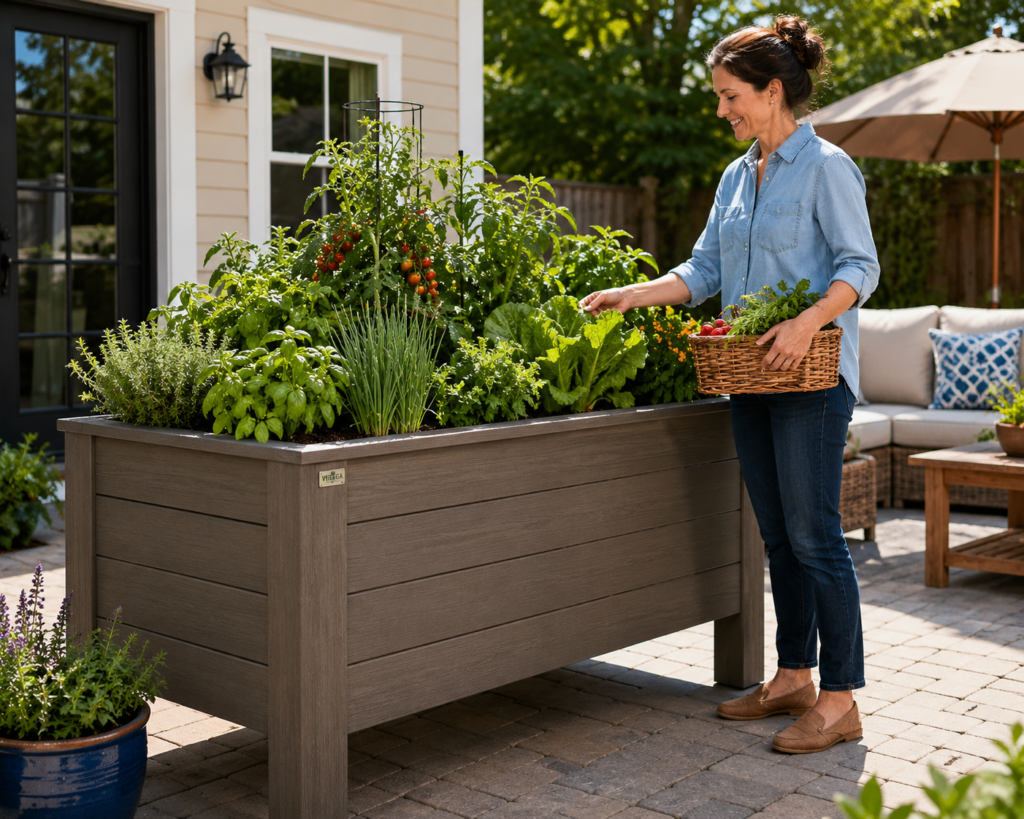
Yes. Elevated raised planters make gardening significantly easier for seniors, people with mobility limitations, and gardeners who want a more comfortable working height.
Activities like weeding, planting, pruning, and harvesting require constant bending and kneeling, especially in vegetable gardens where plants need regular attention. Elevated planters solve many of these problems while still allowing gardeners to grow herbs, flowers, strawberries, greens, and compact vegetables successfully.
Important benefits include:
- Reduced back strain
- Easier harvesting
- Better posture during gardening
- Cleaner access during rain
- Improved visibility of plants
- Easier pruning and maintenance
- Less knee pressure
Elevated beds also work especially well on patios, decks, and paved areas where traditional open-bottom raised beds are not possible. Some gardeners even install caster wheels for portability and seasonal sunlight adjustments.
Compact patios and narrow outdoor areas can benefit from many different planter styles beyond elevated beds. These backyard planter ideas showcase flexible solutions for small-space gardening.
However, elevated systems do require careful drainage planning. Since these beds function more like oversized containers, they need:
- Proper drainage holes
- Lightweight soil mixes
- More frequent watering during heat
- Strong structural support
For many gardeners, the long-term comfort improvement alone makes elevated raised planters worth the investment. Easier gardening often leads to better garden consistency, healthier plants, and greater long-term enjoyment of the backyard space.
Best Soil Mix for Raised Planters
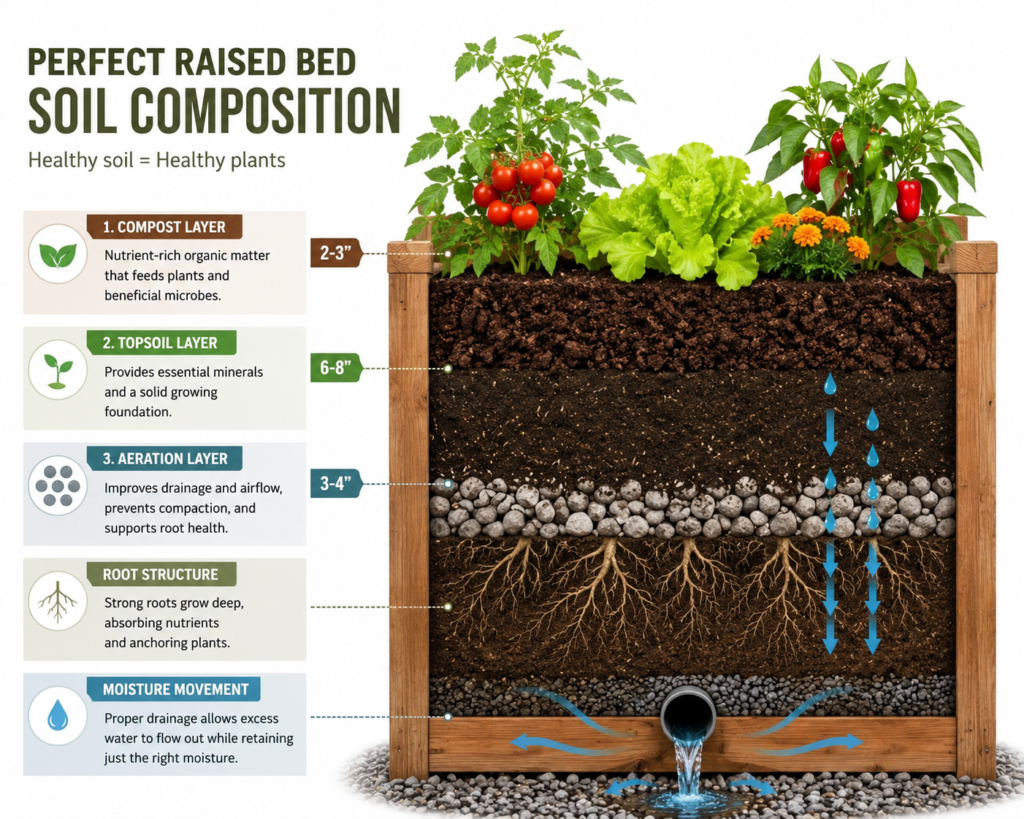
The best soil mix for raised backyard planters should balance drainage, moisture retention, root oxygen, and nutrient availability. It should allow water to move through efficiently while still holding enough moisture to support healthy plant growth between watering cycles.
Using heavy backyard dirt inside enclosed planter boxes often creates compaction problems that trap moisture around roots. This reduces airflow, slows root development, and increases the risk of fungal disease, especially during rainy periods or overwatering.
These spaces allow both oxygen and water movement, which supports stronger root systems and healthier microbial activity.
A reliable raised bed mix often includes:
- 40% screened topsoil
- 30% compost
- 20% organic matter
- 10% aeration material
Hot climates often need more moisture retention, while rainy regions benefit from faster-draining soil mixes.
Avoid common soil mistakes such as:
- Pure clay soil
- Dense garden dirt alone
- Excessive compost
- Poorly decomposed organic waste
Mulch also plays an important role in maintaining moisture balance. Organic mulch reduces evaporation, protects soil structure, and helps regulate temperature swings during hot weather.
A high-quality soil mix is one of the best long-term investments a gardener can make because healthy soil directly affects drainage, plant health, harvest quality, and maintenance difficulty throughout the growing season.
How Often to Water Raised Planters
Watering frequency depends mainly on planter depth, climate, mulch, soil mix, and airflow exposure. However, watering frequency depends heavily on planter depth, climate, material type, plant density, mulch coverage, and seasonal temperatures.
In reality, deeper soil layers may still contain adequate moisture. Constant overwatering can reduce root oxygen and create drainage problems even inside well-designed raised systems.
Several factors affect watering frequency:
- Bed depth
- Soil composition
- Climate
- Wind exposure
- Plant size
- Mulch thickness
- Planter material
General watering behavior:
Deep Raised Beds
- Retain moisture longer
- More drought-resistant
- Better temperature stability
Shallow Planters
- Dry rapidly during heat
- Require closer monitoring
- More sensitive to wind exposure
Elevated Planters
- Dry fastest because airflow surrounds the container
- Often need daily watering during extreme summer heat
Metal Raised Beds
- May warm quickly in direct sun
- Can increase evaporation in hot climates
Soil should feel moist but not muddy. Deep infrequent watering is usually healthier than shallow daily watering because it encourages stronger root growth.
Helpful watering strategies include:
- Apply mulch to reduce evaporation
- Water early in the morning
- Use drip irrigation for consistency
- Group plants by moisture needs
- Avoid watering foliage late at night
Raised planters respond differently depending on weather patterns, plant maturity, and seasonal temperature changes, so gardeners should adapt watering habits throughout the growing season.
Many beginners prefer elevated growing systems because they reduce bending, simplify maintenance, and organize backyard layouts more efficiently. These raised backyard planter ideas explain the advantages in detail.
Signs of Poor Drainage
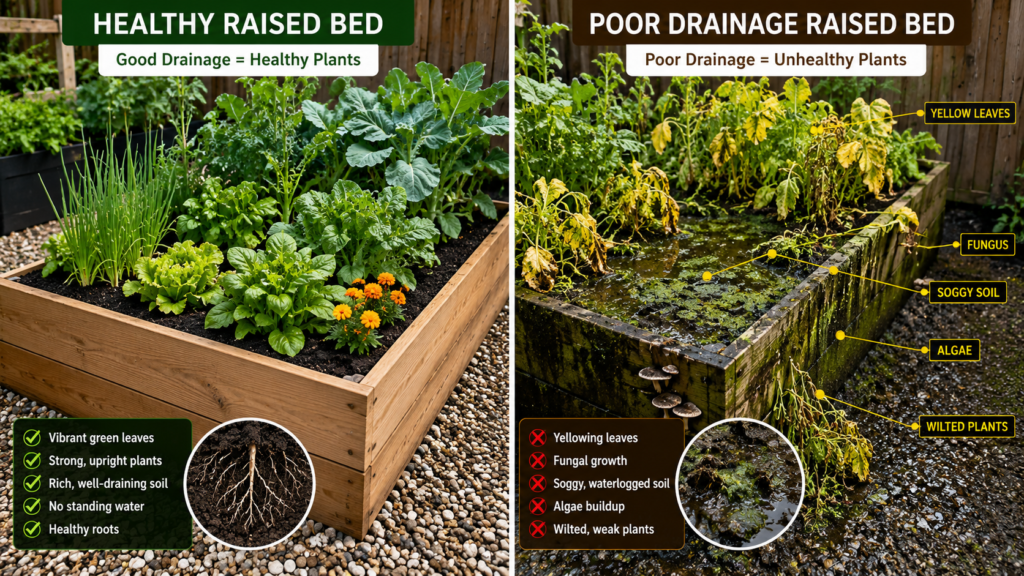
Poor drainage in raised backyard planters usually appears gradually through plant stress symptoms, slow growth, and consistently wet soil conditions. Many gardeners mistake these problems for fertilizer deficiencies or underwatering when the real issue is excess moisture trapping oxygen away from roots.
Raised systems often improve drainage and soil control compared to ground-level gardening setups. These raised backyard planter ideas show how elevated growing systems support healthier roots and easier long-term maintenance.
When raised beds stay constantly saturated, roots cannot breathe properly, which weakens plant growth and increases disease pressure. In severe cases, plants may collapse even when the soil still feels wet. Drainage problems are especially common in shallow decorative boxes, compacted soil mixes, and elevated planters with blocked drainage holes.
Common drainage failure symptoms include:
- Yellowing leaves
- Mushy stems
- Wilting despite wet soil
- Algae or moss growth
- Fungus gnats
- Slow growth
- Sour or rotten soil smell
- Standing water after watering
Several real-world problems commonly cause poor drainage:
Compacted Soil
Dense soil traps water and reduces oxygen movement.
Blocked Drainage Holes
Leaves, roots, and debris can prevent water escape.
Excessive Watering
Many beginners overwater raised beds because elevated soil appears dry on the surface faster than deeper layers actually are.
Improper Liners
Landscape fabric or plastic liners installed incorrectly may slow water movement instead of improving drainage.
Shallow Planters
Small shallow boxes often become oversaturated faster because they contain limited soil volume and poor airflow.
Gardeners should periodically inspect soil moisture below the surface instead of relying only on topsoil appearance. Catching drainage problems early often prevents expensive plant loss and major soil replacement later.
How to Maintain Raised Planters
Raised backyard planters require ongoing maintenance to preserve drainage quality, soil fertility, structural stability, and long-term plant health.
In reality, soil settles over time, organic matter decomposes, mulch breaks down, and drainage systems may gradually become less effective without periodic attention.
Important long-term maintenance tasks include:
- Refreshing compost annually
- Replacing depleted mulch
- Inspecting drainage holes
- Checking wood for rot
- Monitoring metal corrosion
- Loosening compacted soil
- Removing weeds regularly
Helpful maintenance practices include:
Spring
- Add compost
- Replenish mulch
- Inspect irrigation systems
- Repair damaged structures
Summer
- Monitor moisture carefully
- Prune overcrowded plants
- Watch for fungal pressure
Autumn
- Remove diseased plant debris
- Add organic matter
- Protect exposed soil
Winter
- Inspect structural damage
- Cover unused beds if needed
- Protect elevated planters from freeze damage
Real-world backyard gardens that remain productive for years usually receive consistent soil care rather than heavy fertilizer dependence. Healthy soil structure directly affects drainage, moisture balance, and plant resilience over time.
Long-term maintenance also protects the financial investment of raised gardening. Durable materials last much longer when regularly inspected and properly maintained instead of neglected between growing seasons.
Best Plants for Raised Planters
Raised backyard planters support a wide range of vegetables, herbs, flowers, and small fruits because they provide controlled soil conditions with improved drainage and root oxygen.
Tomatoes, peppers, lettuce, beans, carrots, and cucumbers are some of the most popular raised bed crops because they benefit from consistent moisture control and reduced soil compaction.
Mediterranean herbs like rosemary, thyme, oregano, and lavender especially benefit from improved drainage because constantly wet roots can damage these plants quickly.
Excellent raised planter crops include:
- Tomatoes
- Peppers
- Lettuce
- Spinach
- Strawberries
- Basil
- Rosemary
- Carrots
- Beans
- Cucumbers
Real-world plant performance also depends heavily on spacing. Overcrowded raised beds reduce airflow and increase competition for water and nutrients.
Grouping plants by similar watering needs improves maintenance efficiency and reduces plant stress. For example, drought-tolerant rosemary should not share the same constantly moist conditions preferred by lettuce or basil.
The best raised planter gardens balance plant selection, spacing, drainage, and sunlight instead of focusing only on maximizing the number of plants in one bed.
Best Raised Planter Layout
The easiest raised backyard planter layouts improve accessibility, simplify maintenance, and create logical movement throughout the garden space.
Elevated planters also help create cleaner visual structure in modern outdoor spaces. These raised backyard planter ideas show how tiered and elevated layouts improve both functionality and appearance.
A poorly organized backyard garden often becomes difficult to maintain after the excitement of spring planting fades. Beds that are too wide, pathways that are too narrow, or awkward watering access can turn routine maintenance into frustrating physical work. Well-designed layouts prevent many of these problems before planting even begins.
Frequently harvested crops such as herbs, lettuce, strawberries, and salad greens should remain close to patios, doors, or outdoor kitchens for convenient daily use. Taller crops should be placed carefully so they do not shade smaller plants during peak sunlight hours.
Good backyard planter layouts typically include:
- Clear walking paths
- Reachable bed widths
- Nearby water access
- Logical crop grouping
- Sunlight-aware positioning
- Comfortable harvesting space
Recommended pathway widths:
- 24 inches minimum
- 36 inches for wheelbarrows or easier movement
Important layout decisions include:
- Keeping beds narrow enough for easy reach
- Avoiding wasted corner spaces
- Using vertical supports efficiently
- Leaving room for future expansion
The easiest gardens to maintain are usually not the largest gardens. Smaller, organized, well-draining raised planter systems often outperform oversized backyard layouts that become physically difficult to manage consistently over time.
Biggest Raised Planter Mistakes
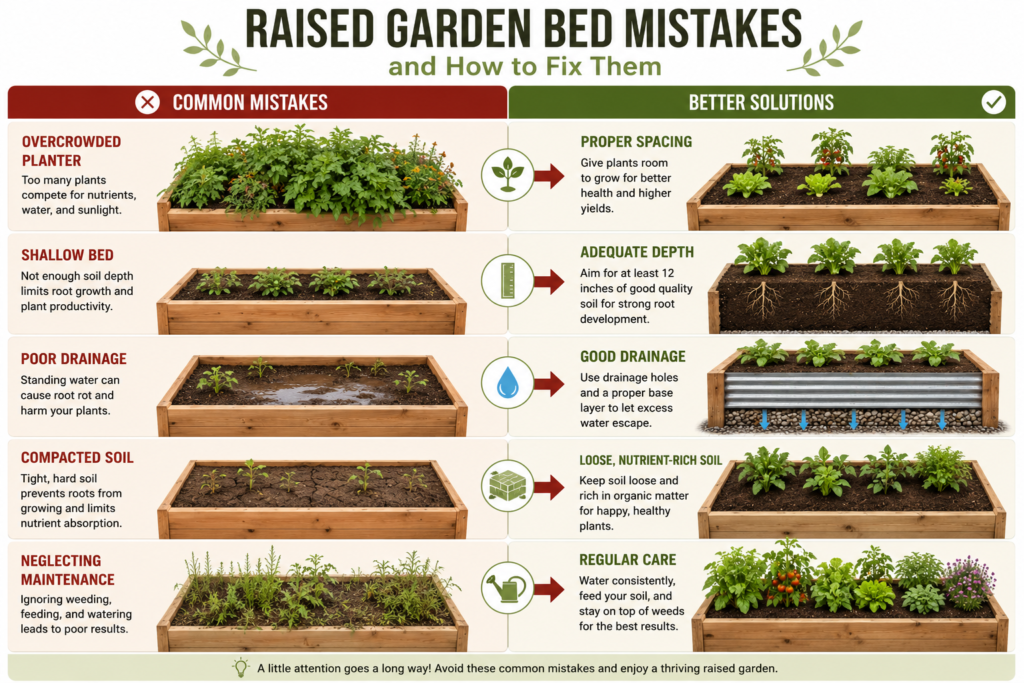
Many beginner gardeners accidentally create drainage, maintenance, and plant health problems by making avoidable raised planter mistakes during setup and planting. Poor soil, shallow beds, overcrowding, and drainage mistakes are some of the most common causes of raised planter failure.
Poor drainage, weak plant growth, and root disease can still occur if the planter lacks depth, proper soil structure, or adequate airflow. Decorative raised boxes without functional design often perform worse than simple practical beds.
Major beginner mistakes include:
- Using dense backyard dirt
- Ignoring drainage holes
- Building beds too shallow
- Overcrowding plants
- Poor sunlight placement
- Using cheap untreated lumber
- Overwatering
- Ignoring mature plant size
Real-world decision clarity is important:
- Beginners usually benefit more from simple rectangular cedar beds than highly complex decorative layouts.
- Deep open-bottom beds generally outperform shallow decorative containers for vegetables.
- Elevated planters work best for herbs, greens, and accessibility-focused gardening rather than large deep-rooted crops.
Are Raised Backyard Planters Worth It?
Yes. Raised backyard planters are often worth the investment because they improve drainage, simplify maintenance, increase accessibility, and create healthier growing conditions.
Raised beds are only one part of efficient outdoor gardening design. For more inspiration, explore additional backyard planter ideas covering multiple planter styles and layouts.
FAQ SECTION
Are raised backyard planters better for drainage than gardening directly in the ground?
Yes. Raised backyard planters usually drain better because the soil sits above compacted ground and allows excess water to move away from roots more efficiently. They are especially useful in clay-heavy or poorly draining yards.
Do raised planters need drainage holes?
Raised planters only need drainage holes if they have a solid enclosed bottom. Open-bottom raised beds placed directly over soil usually drain naturally into the ground below.
What should you put at the bottom of a raised backyard planter?
For open-bottom beds, loosen the soil underneath and optionally add cardboard or hardware cloth. Elevated planters should focus on proper drainage holes and lightweight aerated soil instead of thick gravel layers.
Which raised planter material lasts the longest outdoors?
Galvanized steel, stone, brick, and composite materials usually last the longest outdoors. Cedar is also highly popular because it naturally resists moisture and insect damage.
Are elevated raised planters better for seniors or gardeners with back pain?
Yes. Elevated raised planters reduce bending, kneeling, and crouching, making gardening easier for seniors and people with mobility limitations. They work especially well for herbs, greens, and patio gardening.
What soil works best in raised backyard planters?
The best raised planter soil is loose, compost-rich, and well-aerated. A balanced mix of topsoil, compost, and aeration materials helps improve drainage while still holding enough moisture for roots.
Why do raised planters sometimes dry out too quickly?
Raised planters dry faster because they have better drainage and more airflow than ground gardens. Shallow beds, hot climates, and elevated planters usually require more frequent watering.
What are signs a raised planter has poor drainage?
Common signs include yellow leaves, slow growth, foul-smelling soil, standing water, fungus gnats, and wilting despite wet soil. Poor drainage often comes from compacted soil or blocked drainage holes.
Which vegetables grow best in raised backyard planters?
Tomatoes, peppers, lettuce, carrots, cucumbers, beans, and herbs grow especially well in raised planters. Loose raised bed soil helps improve root growth and drainage for many vegetables.
What is the biggest mistake beginners make with raised planters?
One of the biggest mistakes is using dense backyard soil instead of a loose raised bed mix. Other common problems include overwatering, overcrowding plants, and using shallow beds for deep-rooted crops.
Myra is the founder and lead writer of Backyard Planter Ideas, where she shares practical, well-researched guidance on planter design, plant selection, and outdoor styling. Her goal is to help homeowners create attractive, functional garden spaces with clear, reliable, and easy-to-apply advice.