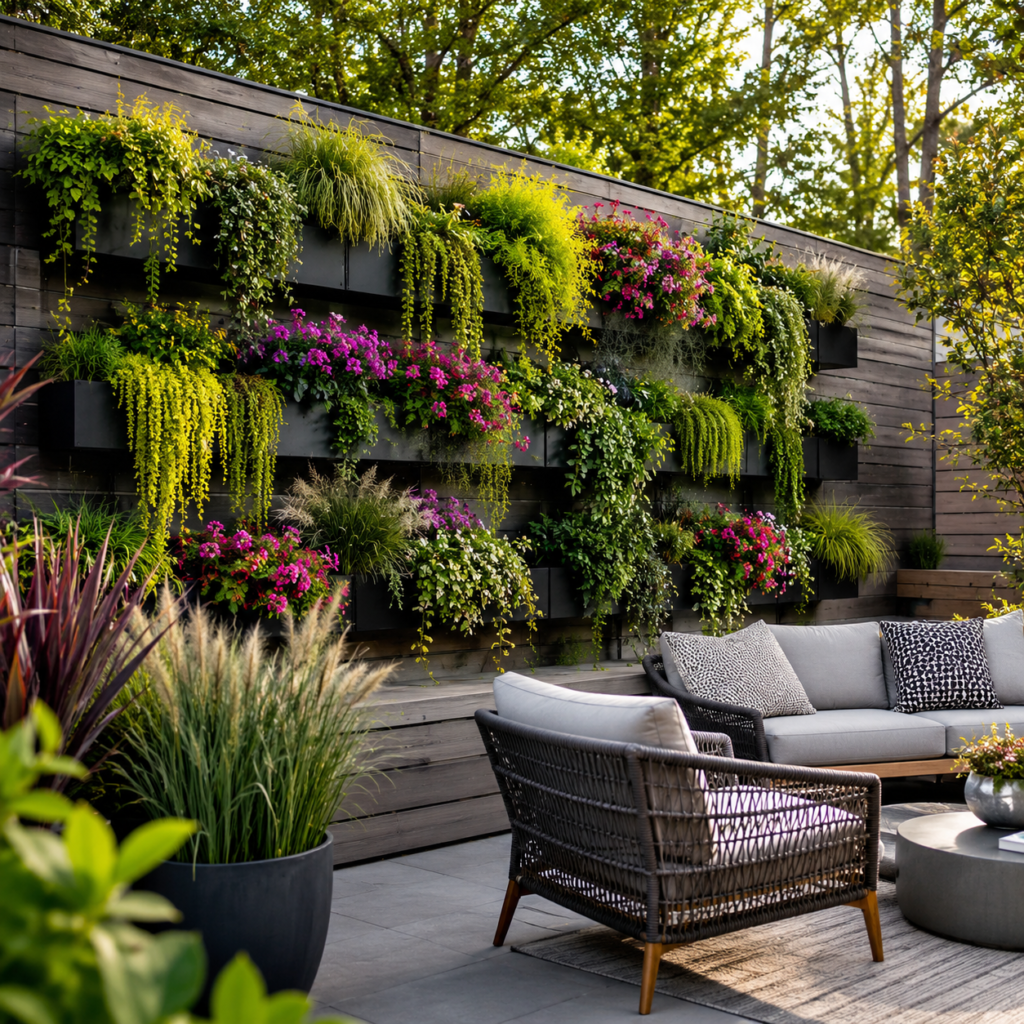
Wall planter ideas have become one of the most effective ways to add greenery, color, and functionality to outdoor spaces without sacrificing valuable ground area. Whether you have a compact patio, a narrow side yard, or a spacious backyard that needs more visual interest, wall planters can transform unused vertical surfaces into thriving garden features. Instead of relying entirely on traditional flower beds or large containers, homeowners can use fences, privacy screens, shed walls, and exterior walls to create productive growing spaces.
Modern outdoor design increasingly focuses on maximizing every square foot of available space. This is one reason wall planters continue to grow in popularity among homeowners, renters, and gardening enthusiasts. A well-designed wall planter system can support flowers, herbs, vegetables, trailing plants, and decorative foliage while helping a backyard feel larger, more organized, and more visually appealing. For homeowners exploring broader backyard planter ideas, wall planters provide one of the most versatile solutions for combining beauty and practicality.
Wall planter systems also offer exceptional flexibility. Some homeowners prefer simple mounted planter boxes filled with seasonal flowers, while others invest in sophisticated living wall systems that create dramatic vertical gardens. Regardless of budget or experience level, wall planters can be adapted to suit almost any outdoor space. Their ability to combine aesthetics, productivity, privacy, and space efficiency makes them one of the most valuable additions to modern backyard and patio gardens.
Why Are Wall Planters So Popular?
Wall planter ideas have gained significant popularity because they solve several common gardening challenges at the same time. Many homeowners want more plants in their outdoor spaces but do not have enough room for additional garden beds or large containers. Wall planters make it possible to grow a substantial number of plants without occupying valuable floor space. By moving plants upward instead of outward, gardeners can maximize their growing area while maintaining open walkways, seating zones, and entertainment spaces.
Another reason for their popularity is their ability to create instant visual impact. A plain fence or bare wall can look unfinished and uninviting, especially in modern outdoor spaces. Adding wall planters introduces color, texture, and depth that completely changes how the space feels. Even a simple arrangement of mounted planters can transform an ordinary backyard into a more attractive and welcoming environment. This makes wall planters one of the highest-impact upgrades relative to cost.
Benefits driving their popularity include:
- Better use of vertical space
- Increased planting capacity
- Improved backyard aesthetics
- Greater design flexibility
- Easier access for maintenance
- Enhanced patio ambiance
- Productive edible gardening opportunities
In real-world backyard renovations, wall planters often deliver a larger visual transformation than adding a few extra ground-level containers. This combination of practicality and beauty explains why they continue to be one of the fastest-growing trends in backyard landscaping.
Best Wall Planter Types
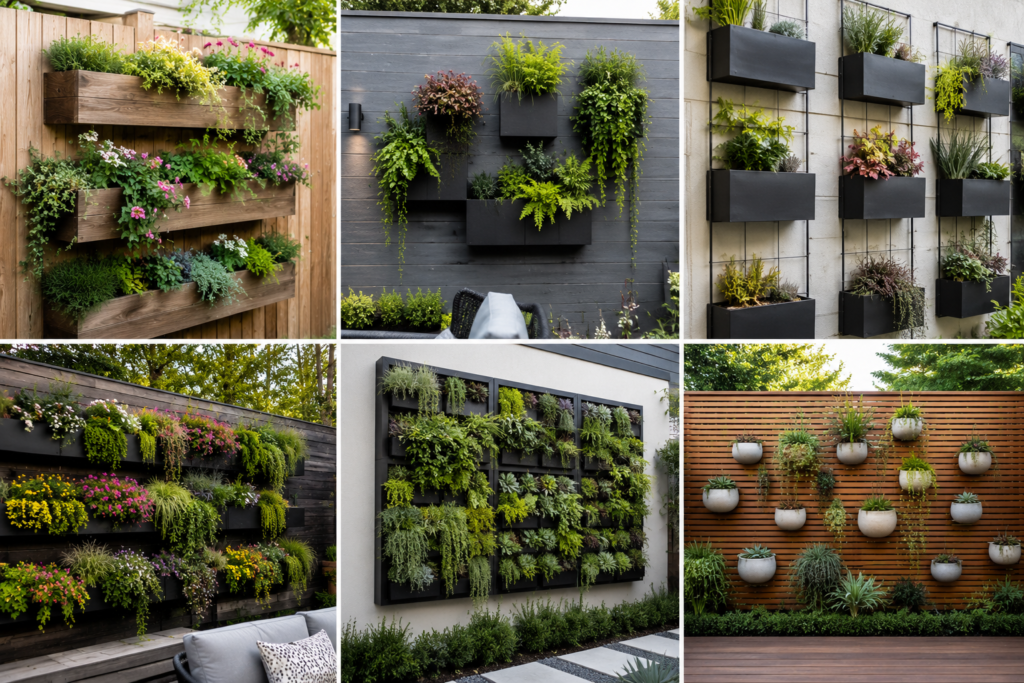
Outdoor wall planters come in a variety of styles, and each type offers unique advantages depending on the space, budget, and gardening goals. Choosing the right system involves more than simply selecting the most attractive design. Factors such as drainage, maintenance, durability, and future expansion should also influence the decision.
Pocket planters are among the most common choices because they are lightweight, affordable, and easy to install. These systems typically feature multiple planting pockets attached to a fabric or synthetic backing. They work particularly well for herbs, flowers, and smaller ornamental plants. However, they may require more frequent watering because the planting pockets contain limited soil volume.
Mounted planter boxes remain a popular option because they combine simplicity with versatility. These boxes can be attached directly to fences, walls, or trellises and are available in a wide range of materials. They accommodate a broader variety of plants and often provide better root space than pocket systems. For homeowners seeking a more professional appearance, modular wall systems offer excellent flexibility and scalability. These systems use interconnected planting cells that can be expanded over time as the garden grows.
Popular outdoor wall planter types include:
- Fabric pocket planters
- Mounted planter boxes
- Modular living wall systems
- Trellis planter combinations
- Floating planter shelves
- Vertical garden frames
- Hanging wall baskets
- Reclaimed pallet planters
When choosing a system, homeowners should compare:
- Drainage performance
- Weight capacity
- Weather resistance
- Maintenance requirements
- Ease of installation
- Expansion potential
The best wall planter is usually the one that balances appearance, durability, and long-term practicality. A beautiful system that becomes difficult to maintain often loses its appeal over time.
Best Plants for Wall Planters
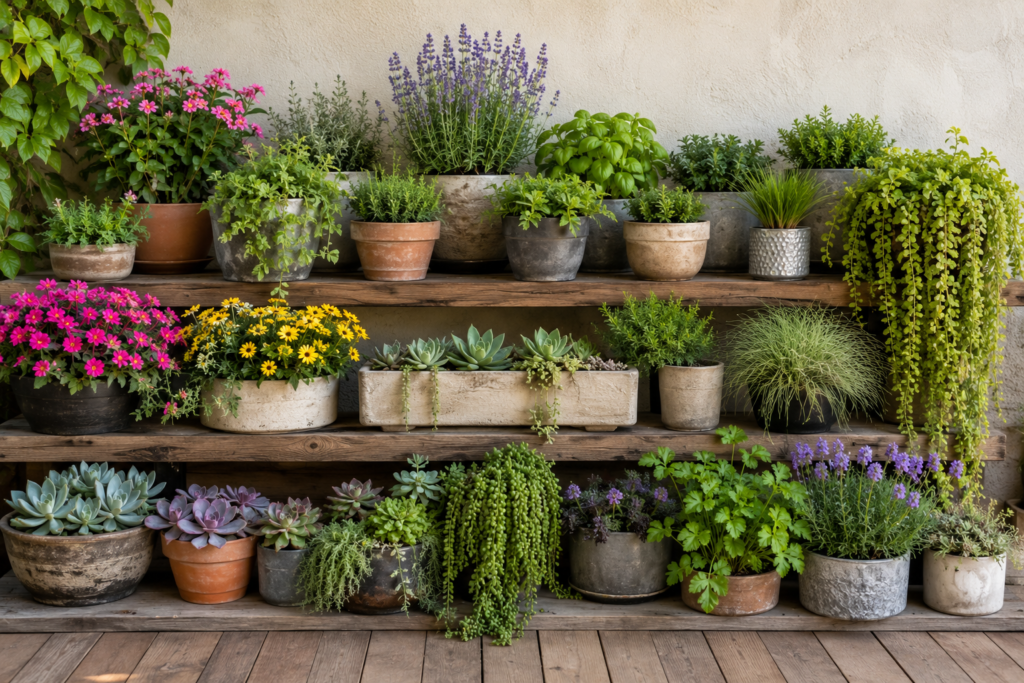
Plant selection plays a major role in the success of any wall planter system. Because wall planters generally provide less soil volume than traditional garden beds, plants must be chosen carefully. Species with shallow root systems tend to adapt more successfully to vertical growing environments and require less maintenance over time.
Herbs are among the most reliable choices for wall planters. Basil, parsley, oregano, thyme, rosemary, and mint thrive in containers and provide practical benefits for homeowners who enjoy outdoor cooking. Many gardeners position herb walls near patios or outdoor kitchens for convenient harvesting. In addition to herbs, many flowering annuals perform exceptionally well because they produce continuous color while remaining relatively compact.
Trailing plants are another excellent option because they soften hard vertical surfaces and create a fuller, more mature appearance. Plants such as ivy, creeping Jenny, and trailing petunias naturally spill over planter edges, adding movement and visual interest. Combining upright plants with trailing species often creates the most attractive display.
Excellent plants for wall planters include:
- Petunias
- Calibrachoa
- Lobelia
- Begonias
- Basil
- Mint
- Thyme
- Oregano
- Strawberries
- Lettuce
- Spinach
- Succulents
- Ivy
- Creeping Jenny
For the best results, gardeners should combine multiple plant categories:
- Flowering plants for seasonal color
- Evergreen foliage for structure
- Herbs for functionality
- Trailing plants for softness
- Seasonal annuals for variety
Making Small Yards Feel Bigger
One of the most overlooked advantages of wall planters is their ability to make compact outdoor spaces feel larger. Traditional gardening methods often require valuable ground space, which can make a small backyard feel crowded. Wall planters shift greenery upward, preserving floor space while still allowing homeowners to enjoy a substantial amount of planting.
Wall planters also help reduce visual clutter. Instead of scattering numerous containers throughout a patio or garden, plants can be consolidated into organized vertical displays. This cleaner layout improves flow and creates a more polished appearance. Homeowners who enjoy small backyard planter ideas often find that wall planters provide one of the highest returns on space efficiency.
Additional strategies such as repeating planter styles, keeping floor space open, and using trailing plants can further enhance the sense of space.
These techniques work together to create a backyard that feels larger, more organized, and more comfortable to use.
Improving Patio Design
Patios often contain large areas of stone, concrete, brick, or wood. While these materials provide durability and structure, they can sometimes make outdoor spaces feel cold or visually uninteresting. Wall planters introduce natural elements that soften these hard surfaces and create a stronger connection to nature.
A strategically placed wall garden can serve as a focal point that draws attention toward seating areas, outdoor dining spaces, or entertainment zones. Instead of relying solely on furniture or decorative accessories, homeowners can use living plants to create visual interest. This adds depth and personality while helping the patio feel more welcoming.
Key benefits include improved texture, stronger focal points, greater seasonal flexibility, and better integration of greenery throughout the patio.
Best Wall Planter Materials
The longevity of a wall planter depends heavily on the materials used in its construction. Outdoor environments expose planters to moisture, sunlight, wind, and temperature fluctuations, making durability an important consideration. Selecting the right material can significantly reduce maintenance and replacement costs over time.
Cedar remains one of the most popular choices because of its natural resistance to decay and insects. Properly maintained cedar planters can last many years while developing an attractive weathered appearance. Redwood offers similar benefits but often comes at a higher cost. Composite materials provide even greater durability because they resist rot, cracking, and moisture damage while requiring minimal maintenance.
Metal wall planters have become increasingly common in modern landscape design. Powder-coated steel and aluminum provide excellent structural strength while maintaining a sleek contemporary appearance. These materials are particularly suitable for homeowners seeking modern patio aesthetics. High-quality UV-resistant plastic also remains a practical option because it is lightweight, affordable, and resistant to moisture.
Common wall planter materials include:
- Cedar
- Redwood
- Composite lumber
- Powder-coated steel
- Aluminum
- UV-resistant plastic
- Terracotta
- Concrete
A material with a higher upfront cost may ultimately prove more economical if it significantly reduces maintenance and replacement expenses. Choosing the right material is one of the most important decisions homeowners can make when planning a long-lasting wall planter system.
Are DIY Wall Planter Ideas Worth Trying?
DIY wall planter projects remain one of the most popular ways to create a vertical garden because they combine creativity, affordability, and customization. Whether attached to a fence, mounted on a patio wall, or built into a privacy screen, DIY wall planters can be tailored to match both functional needs and design preferences.
Cost savings are another major advantage. Commercial living wall systems can become expensive, especially for large installations. DIY projects often use reclaimed wood, pallets, old shelving, metal containers, or leftover building materials to create attractive vertical gardens at a fraction of the cost. While affordability is appealing, long-term durability should never be ignored. A planter that looks impressive on installation day but deteriorates after one season often costs more in the long run.
Many homeowners exploring DIY backyard planter ideas on a budget discover that wall planters provide one of the best combinations of visual impact and affordability. A simple DIY installation can often transform a blank fence into a productive and decorative garden feature over a single weekend.
Fence Vertical Gardens
Fence walls are among the most valuable yet underutilized surfaces in many backyards. Rather than serving solely as property boundaries, fences can become productive vertical gardens that increase planting space while enhancing the overall appearance of the landscape. This is particularly useful for homeowners with limited yard space who want more room for flowers, herbs, or vegetables.
One of the simplest approaches involves attaching planter boxes directly to fence panels. This creates an organized planting system without reducing usable ground space. More advanced installations may include modular living wall systems, trellis structures, or layered combinations of mounted containers and climbing plants. These solutions can transform an ordinary fence into a lush garden feature that acts as both decoration and functional growing space.
Design techniques that improve visual appeal include:
- Staggered planting heights
- Repeating planter styles
- Mixing flowers and foliage
- Adding integrated lighting
- Combining edible and ornamental plants
For homeowners interested in vertical backyard planter ideas, fence walls often provide the ideal foundation for creating a productive and visually striking vertical garden.
Herbs and Vegetables in Wall Planters
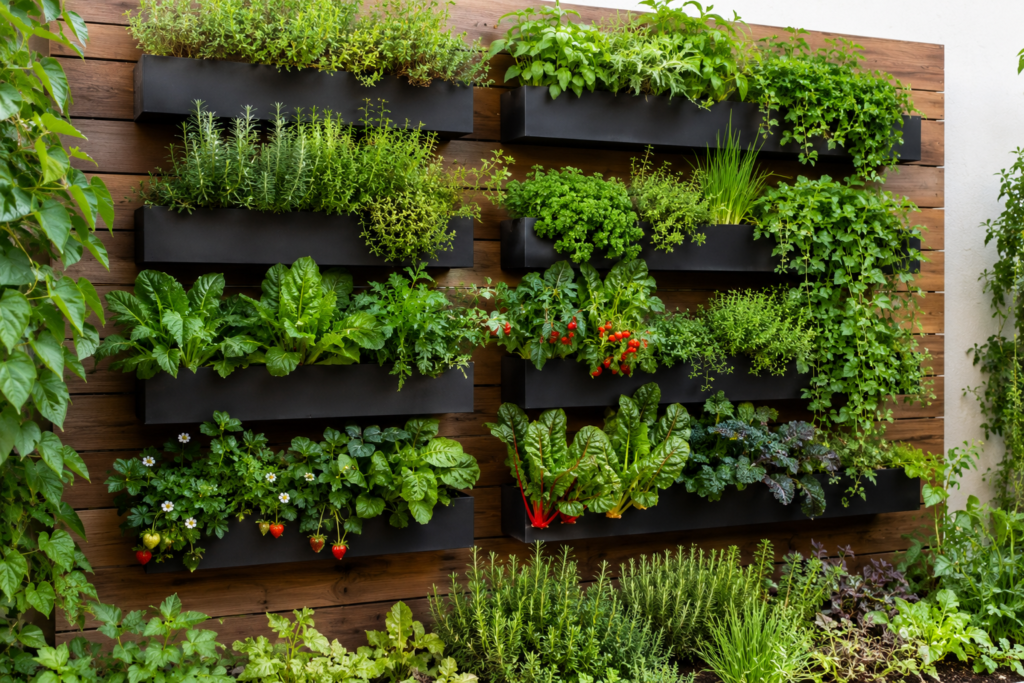
Wall planters are not limited to ornamental gardening. Many homeowners use them successfully to grow fresh herbs, leafy greens, strawberries, and compact vegetables. This approach allows edible gardening to fit into spaces where traditional vegetable beds would be impractical. A vertical edible garden can turn an ordinary wall into a productive food-growing area while maintaining a clean and organized appearance.
Herbs are particularly well suited to wall planters because most varieties have relatively shallow root systems and adapt well to container growing. Basil, parsley, thyme, mint, oregano, chives, and cilantro all perform exceptionally well when provided with adequate sunlight and moisture. Positioning an herb wall near a patio or outdoor kitchen also makes harvesting more convenient.
Certain vegetables thrive in wall planter systems as well. Compact lettuce varieties, spinach, kale, strawberries, and small peppers can produce surprisingly good yields when grown in appropriate containers. The key is selecting crops that do not require extensive root space. Large vegetables such as squash or full-sized tomatoes are generally less suitable for most wall-mounted systems.
Edible wall gardens provide easy harvesting, better space efficiency, attractive landscaping, and convenient access near patios or outdoor kitchens.
For homeowners who enjoy gardening and cooking, wall planters offer a practical way to combine food production with backyard design.
Common Wall Planter Mistakes
Many wall planter failures can be traced back to a few avoidable mistakes. While vertical gardening is relatively simple, wall planters operate under different conditions than traditional garden beds. Limited soil volume, increased exposure, and elevated placement create unique challenges that require proper planning and maintenance.
Poor drainage is one of the most common problems. Without adequate drainage, water becomes trapped within containers, leading to root rot, fungal disease, and declining plant health. Overwatering can be just as damaging as underwatering, particularly in systems with limited airflow. Another frequent mistake involves selecting plants that quickly outgrow the available root space. Large or aggressive species often become overcrowded and difficult to maintain.
The best way to avoid problems is through regular observation. Small issues are usually easy to correct when identified early but become more difficult once plants begin showing signs of stress.
Wall Planter Maintenance
Proper watering is one of the most important factors in maintaining healthy wall planters. Because these systems contain less soil than traditional garden beds, they tend to dry out more quickly. This is especially true during hot weather or when planters receive direct sunlight for much of the day.
Consistency is often more important than the actual volume of water provided. Plants generally perform best when moisture levels remain relatively stable rather than fluctuating between excessively wet and extremely dry conditions. Checking soil moisture regularly is far more effective than following a rigid watering schedule. Depending on climate conditions, some wall planters may require daily watering during summer months.
Many homeowners simplify maintenance by installing drip irrigation systems. Automated watering reduces labor while ensuring that plants receive moisture consistently. This approach becomes increasingly valuable as wall planter installations grow larger.
A practical maintenance checklist:
- Weekly moisture checks
- Monthly structural inspections
- Seasonal plant replacements
- Fertilizer applications as needed
- Annual hardware tightening
Consistent maintenance not only improves plant health but also extends the lifespan of the entire wall planter system.
Luxury Wall Planter Designs
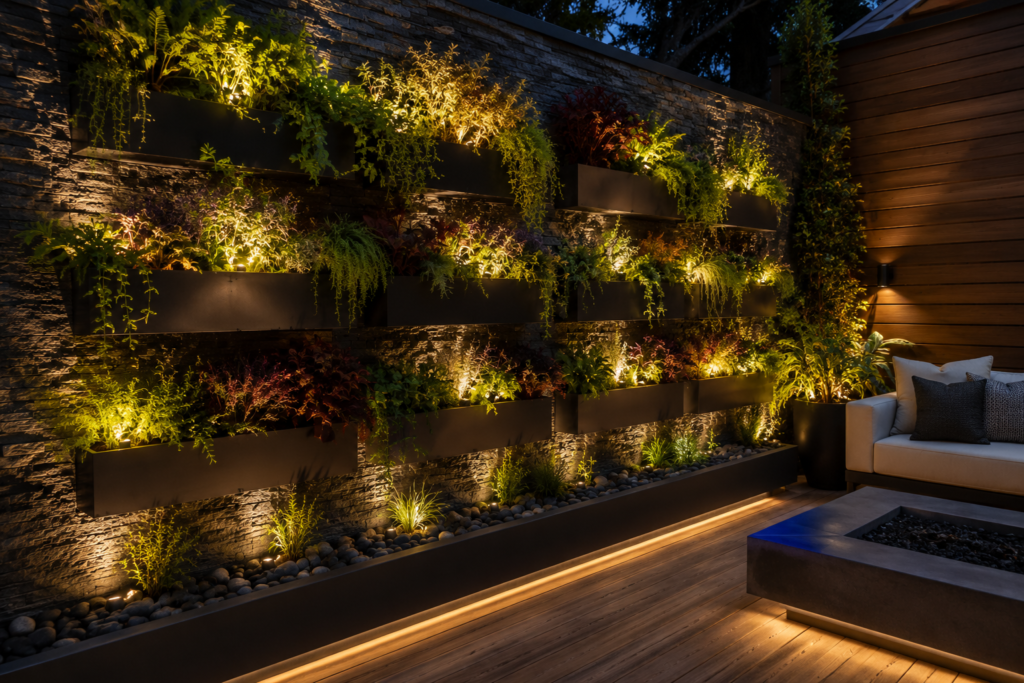
Luxury wall planter designs focus on creating a clean, intentional appearance rather than simply adding as many plants as possible. High-end outdoor spaces often use carefully selected materials, coordinated plant palettes, and structured layouts that complement modern architecture. Instead of appearing like a collection of individual containers, luxury wall gardens are designed to function as living artwork within the landscape.
Luxury wall planter characteristics include:
- Clean geometric layouts
- Repeating planter patterns
- Integrated irrigation systems
- Premium materials
- Architectural foliage
- Minimal visual clutter
- Coordinated color palettes
- Professional lighting integration
Popular luxury choices include boxwood, ferns, ornamental grasses, lavender, succulents, and evergreen shrubs.
The most successful luxury wall gardens combine simplicity with strong visual impact. Rather than relying on excessive variety, they focus on balance, repetition, and high-quality materials to create a polished outdoor environment.
Wall Planters for Privacy
Privacy is one of the most practical benefits of wall planter systems. In modern neighborhoods where homes are often built close together, outdoor spaces can sometimes feel exposed. Wall planters provide a natural way to create visual separation while maintaining an attractive landscape design.
Unlike solid barriers, living privacy walls soften the appearance of a backyard and introduce greenery at the same time. Dense foliage can help block sightlines without completely eliminating airflow or natural light. This creates a more comfortable outdoor environment for relaxing, entertaining, or dining.
Plants commonly used for privacy include:
- Ivy
- Jasmine
- Evergreen shrubs
- Ornamental grasses
- Creeping fig
- Ferns
- Star jasmine
Additional benefits include noise reduction, improved visual screening, greater enclosure, and enhanced landscape depth.
A mature privacy wall garden often becomes one of the most valuable features in an outdoor living space.
Final Verdict
Wall planter ideas offer one of the most versatile and space-efficient ways to improve modern backyard and patio gardens. By utilizing vertical surfaces, homeowners can dramatically increase planting capacity without sacrificing valuable ground space. Whether the goal is decorative landscaping, edible gardening, privacy enhancement, or simply adding more greenery, wall planters provide a practical solution.
Wall planters are particularly valuable for:
- Small backyards
- Modern patios
- Urban gardens
- Privacy improvements
- Edible landscaping
- Decorative focal points
- Space-saving garden designs
For homeowners seeking a landscaping upgrade that combines beauty, productivity, and efficient use of space, wall planters remain one of the smartest investments available. Their ability to transform unused surfaces into attractive and functional garden features makes them a worthwhile addition to almost any outdoor environment.
FAQ SECTION
What are wall planters and how do they work?
Wall planters are containers mounted on fences, walls, or trellises that allow plants to grow vertically. They help maximize planting space while keeping ground areas open.
Are wall planters good for small backyards?
Yes. Wall planters use vertical space instead of floor space, making small backyards feel larger while increasing planting capacity.
What plants grow best in outdoor wall planters?
Herbs, strawberries, lettuce, succulents, ivy, and flowering annuals are among the best choices. Shallow-rooted plants generally perform best.
How often should wall planters be watered?
Most wall planters need more frequent watering than garden beds because they contain less soil. Watering needs vary based on climate and sun exposure.
Can wall planters be attached to fences?
Yes. Most wall planters can be safely mounted on wooden, vinyl, metal, or composite fences using appropriate hardware.
Can vegetables grow successfully in wall planters?
Yes. Lettuce, spinach, herbs, strawberries, and compact peppers often grow very well in wall planter systems.

Myra is the founder and lead writer of Backyard Planter Ideas, where she shares practical, well-researched guidance on planter design, plant selection, and outdoor styling. Her goal is to help homeowners create attractive, functional garden spaces with clear, reliable, and easy-to-apply advice.