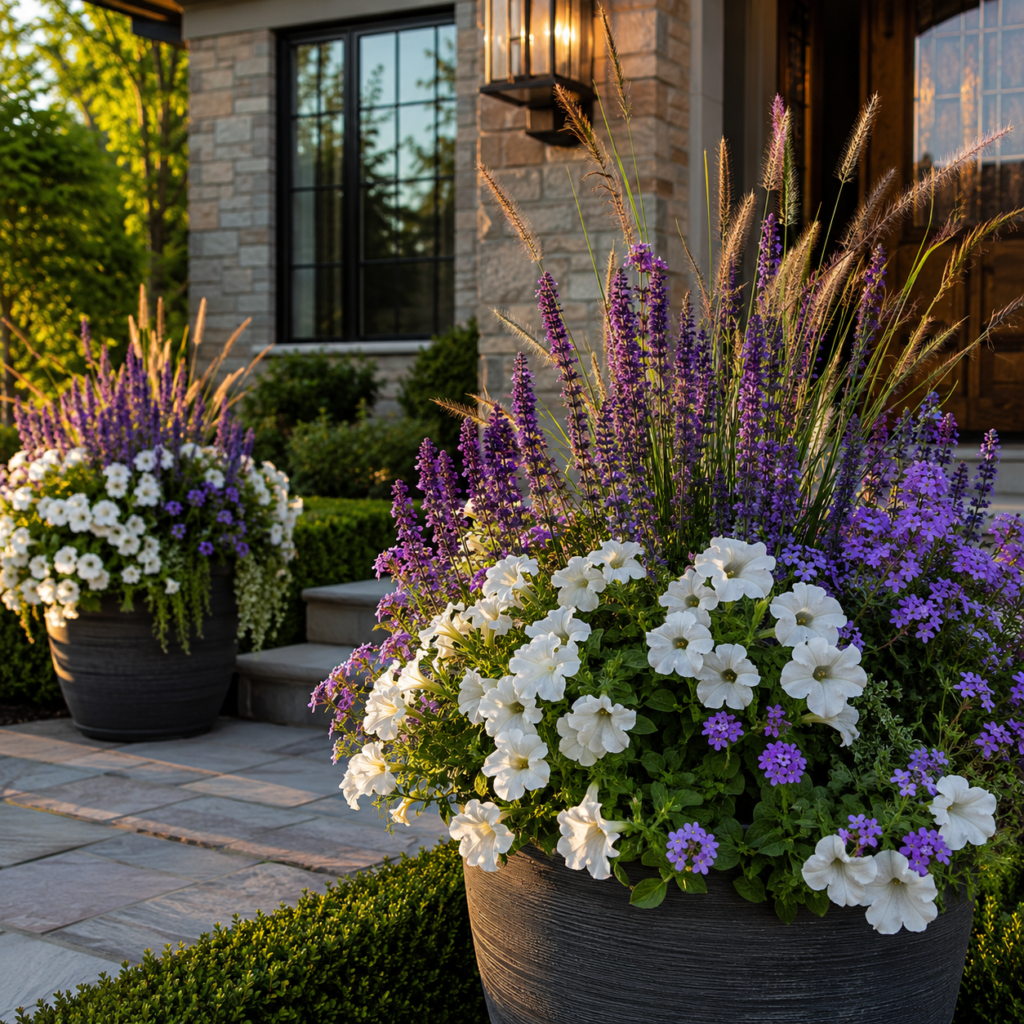
Front yard flower planter ideas are a simple and affordable way to boost curb appeal. Colorful flowers and attractive containers add visual interest to porches, walkways, driveways, and entrances while creating a welcoming first impression.
One of the biggest advantages of flower planters is their flexibility. Homeowners can easily update flowers seasonally, experiment with new color schemes, and refresh the look of their front yard without major landscaping work.
The best front yard flower planter ideas combine long-blooming flowers, attractive containers, and strategic placement. With the right design, even a small front yard can look more polished, inviting, and professionally landscaped.
Why Flower Planters Boost Curb Appeal
Front yard flower planters are one of the few landscaping upgrades that deliver immediate visual results without requiring a major renovation. Unlike trees, shrubs, or foundation plantings that may take years to mature, flower planters instantly add color, texture, and structure to a home’s exterior. They help define important areas such as entrances, porches, walkways, and driveways while creating a more welcoming appearance for visitors. Because flowers naturally attract attention, strategically placed planters can draw the eye toward attractive architectural features and away from less appealing areas of the property.
Another reason flower planters are so effective is their flexibility. Homeowners can completely change the appearance of their front yard by swapping seasonal flowers, updating container styles, or introducing new color schemes throughout the year. This adaptability allows the landscape to remain fresh and visually interesting without requiring permanent changes. Many professional landscapers use decorative flower containers because they provide instant curb appeal improvements while offering long-term design flexibility.
Benefits of front yard flower planters include:
- Immediate curb appeal enhancement
- Seasonal design flexibility
- Increased visual interest
- Better entrance definition
- Enhanced architectural balance
- Improved first impressions
- Easy customization for different home styles
Best Places for Flower Planters
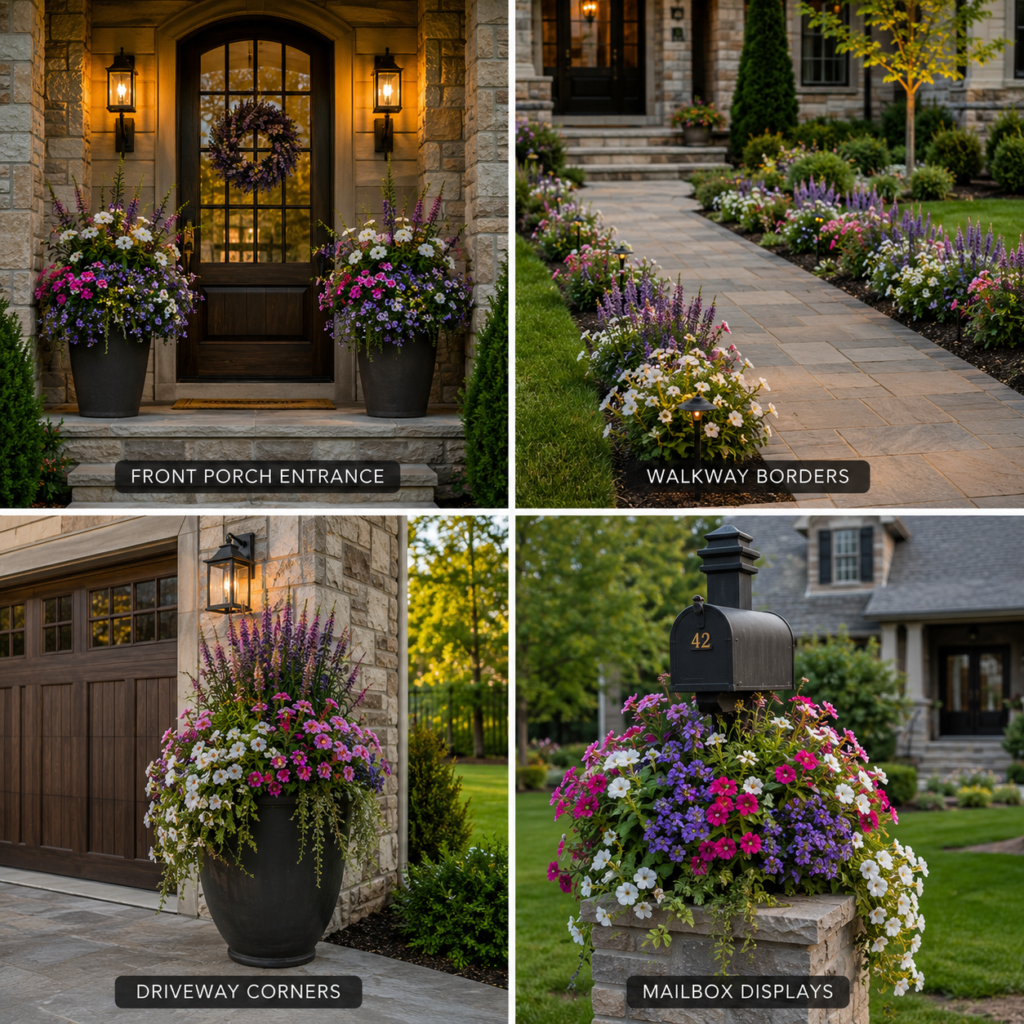
Proper placement is often more important than the flowers themselves. Even the most beautiful containers can lose their impact if positioned randomly throughout the yard. Successful front yard planter designs focus on guiding the eye toward important focal points while creating balance across the landscape. Rather than scattering containers everywhere, professional designers concentrate planters in areas where they can have the greatest visual influence.
Most front yards contain several natural focal zones that benefit from decorative flower planters. These include the front entrance, porch, walkway intersections, driveway corners, and mailbox areas. When planters are grouped around these locations, they help organize the landscape and create a more intentional design. Strategic placement also prevents visual clutter, allowing each planter to contribute meaningfully to the overall appearance of the property.
The best locations for front yard flower planters include:
- Front door entrances
- Porch corners and columns
- Walkway borders
- Driveway transitions
- Mailbox focal points
- Garage-adjacent landscaping
- Front steps and stair landings
Best Flowers for Front Yard Planters
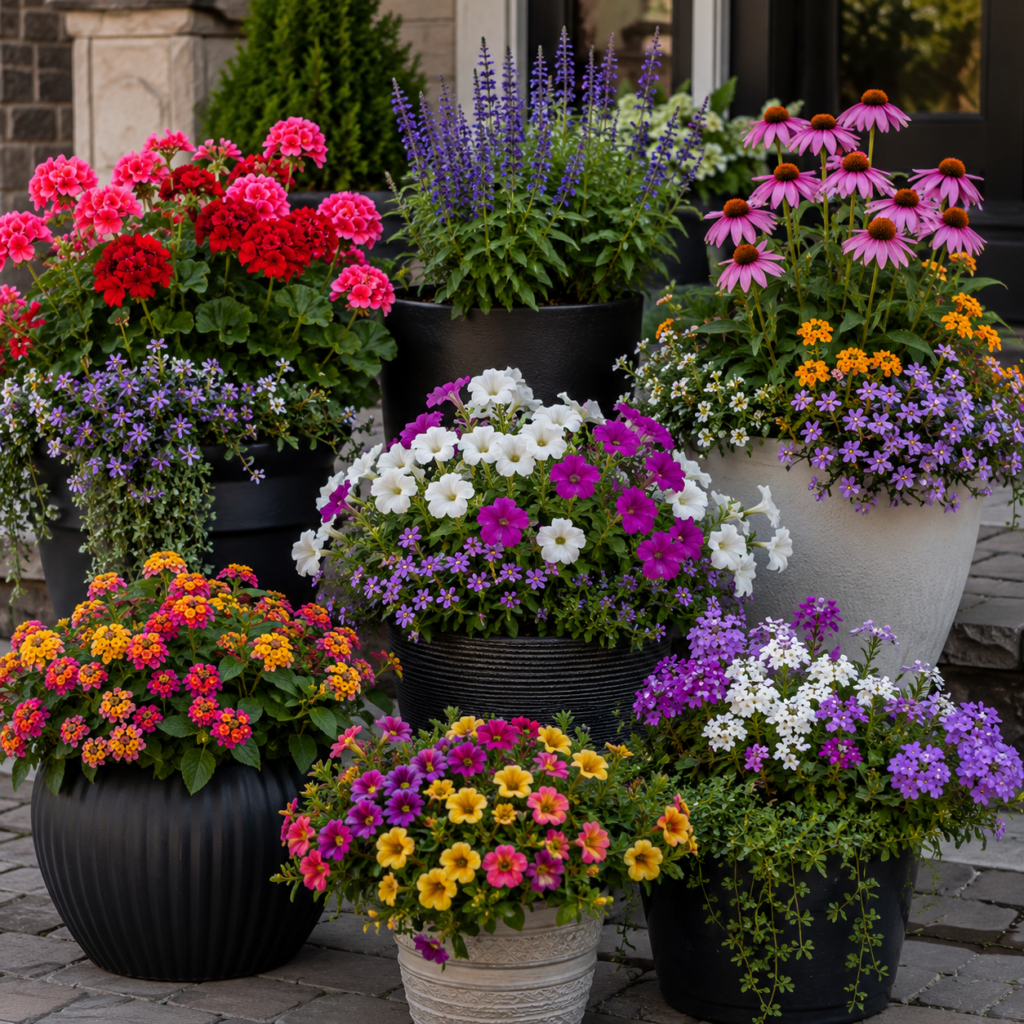
The best flowers for front yard planters combine long bloom periods, strong visual impact, weather resistance, and relatively low maintenance requirements. Since front yard containers are constantly visible from the street, flowers should remain attractive for as much of the growing season as possible. Choosing dependable performers helps ensure that curb appeal remains consistent rather than fading after only a few weeks.
Long-blooming flowers are particularly valuable because they continue providing color through spring, summer, and often into fall. Many homeowners focus exclusively on flower color when selecting plants, but durability and bloom duration are equally important. Flowers that tolerate heat, rain, and occasional watering mistakes typically deliver better long-term results than delicate varieties that require constant attention.
Top flowers for front yard planters include:
- Petunias
- Verbena
- Calibrachoa
- Lantana
- Salvia
- Geraniums
- Coneflowers
Best Flowers for Full Sun
Top flowers for sunny front yard planters include:
- Petunias
- Lantana
- Salvia
- Zinnias
- Verbena
- Marigolds
- Angelonia
- Coneflowers
Best Flowers for Shade
Popular flowers for shaded front yard planters include:
- Impatiens
- New Guinea impatiens
- Begonias
- Fuchsia
- Lobelia
- Torenia
- Coleus
Each flower offers unique advantages. Petunias provide nonstop color, verbena attracts pollinators, lantana excels in hot climates, and salvia introduces vertical structure. Combining multiple flower forms often creates a more visually appealing display than relying on a single variety. A successful planter may include upright flowers for height, mounding flowers for fullness, and trailing flowers that soften container edges.
Annuals vs Perennials
Annuals provide continuous blooms, vibrant color, and strong seasonal impact but must be replanted each year. Perennials return annually, offering lower long-term costs, pollinator benefits, and reliable landscape structure.
Annuals: Continuous blooms, bright colors, seasonal flexibility.
Perennials: Return yearly, lower costs, pollinator support.
Many successful front yard planters combine both. Perennials create a stable foundation, while annuals add seasonal color, producing attractive displays that balance beauty, performance, and long-term value.
Best Flower Colors for Curb Appeal
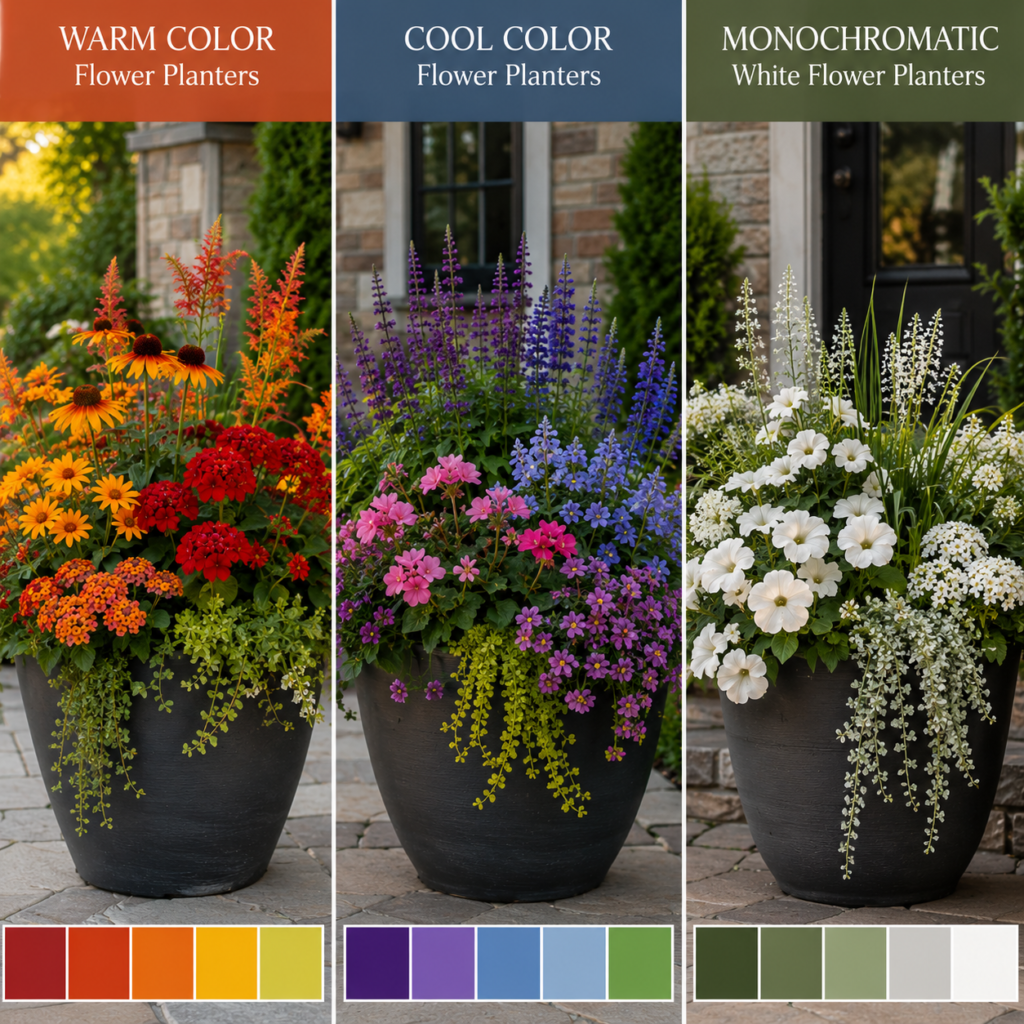
Flower color has a powerful influence on how a home is perceived from the street. Color is often the first thing people notice when viewing a landscaped property, which is why choosing the right flower combinations can dramatically affect curb appeal. The goal is not simply adding color but using it strategically to complement the home’s architecture and surrounding landscape.
Professional landscape designers often recommend selecting a limited color palette rather than mixing every available flower color. Too many competing colors can make a front yard feel busy and unorganized. A coordinated palette creates a cleaner, more intentional appearance that looks professionally designed.
Popular curb appeal color strategies include:
- Warm colors for energy and visibility
- Cool colors for elegance and sophistication
- Monochromatic schemes for luxury appeal
- White flowers for timeless curb appeal
- Purple and lavender combinations for refinement
- Pink and white displays for softness
- Red and yellow combinations for bold impact
Warm-colored flowers such as red geraniums, orange lantana, and yellow marigolds naturally attract attention and work well near entrances. Cool colors like lavender, blue salvia, and white petunias create a more relaxed and upscale atmosphere. Monochromatic designs, particularly all-white flower planters, are frequently used in luxury landscaping because they create a clean and sophisticated appearance. Ultimately, the best flower colors are those that complement the home’s exterior while maintaining consistency throughout the front yard. A focused color strategy almost always produces stronger curb appeal than excessive variety.
Best Planter Materials
The material of a flower planter affects its durability, appearance, weight, and maintenance requirements. Concrete, fiberglass, resin, ceramic, and metal planters each offer different benefits, making it important to choose a material that matches both your budget and the style of your home.
General Planter Size Guide
| Planter Size | Typical Diameter | Best Use |
| Small | 12–16 inches | Steps, small porches |
| Medium | 18–24 inches | Walkways, entrances |
| Large | 24–36 inches | Front doors, driveways |
| Oversized | 36+ inches | Luxury focal points |
Larger planters generally create stronger curb appeal because they are easier to see from the street and provide more room for healthy root growth. Most front entrances look best with containers at least 24 inches wide, while oversized planters work well as luxury focal points.
Luxury Modern Front Yard Flower Planter Ideas
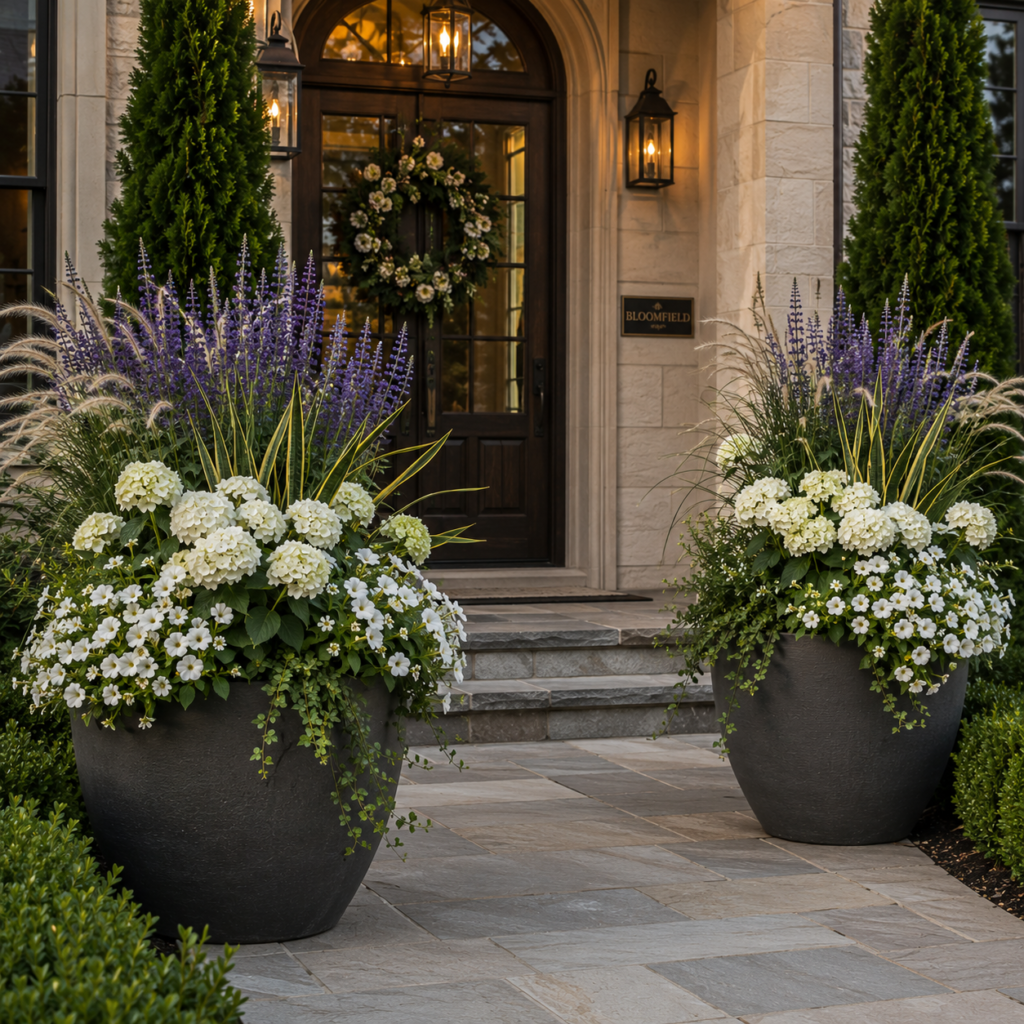
Luxury modern front yard flower planter ideas combine high-end landscaping principles with clean contemporary design. Rather than relying on large numbers of flowers, these designs focus on proportion, symmetry, repetition, and carefully selected plant combinations. The goal is to create a polished appearance that enhances the home’s architecture while maintaining a refined and uncluttered landscape. In many professionally designed front yards, simplicity creates a stronger visual impact than overly complex planting schemes.
One of the defining characteristics of luxury modern landscaping is restraint. Instead of mixing numerous flower varieties and colors, designers often choose a limited palette and repeat it throughout the landscape. Coordinated containers, architectural plants, and structured flower arrangements create visual consistency that feels intentional and sophisticated. This approach allows the home’s entrance, pathways, and architectural features to remain the focal points while flowers provide seasonal beauty and texture.
Characteristics of luxury modern flower planters include:
- Oversized decorative containers
- Geometric planter shapes
- Neutral-colored planters
- Limited color palettes
- Repeated flower combinations
- Architectural plant accents
- High-quality planter materials
- Strong visual symmetry
- Clean, uncluttered arrangements
- Structured planting designs
Popular luxury modern flower combinations include:
- White petunias and lavender
- White verbena and ornamental grasses
- Purple salvia and silver foliage
- White flowers with evergreen accents
- Lavender and boxwood combinations
- White blooms paired with ornamental grasses
Materials play an important role in achieving a luxury modern appearance. Concrete, fiberglass, matte ceramic, and powder-coated metal planters are commonly used because they complement contemporary architecture while providing long-term durability. Oversized containers are especially effective because they create a sense of permanence and importance while offering enough space for healthier root systems and fuller plant growth.
A common luxury front entrance design uses two oversized 28–36-inch concrete or fiberglass planters positioned on either side of the front door. Filling them with white petunias, lavender, ornamental grasses, and evergreen accents creates a timeless, high-end appearance that provides both seasonal color and year-round structure. For homeowners seeking a professional landscape look, simplicity, scale, consistency, and quality materials often matter far more than the number of flowers used.
Front Entrance and Walkway Flower Planter Ideas
The front entrance creates the first impression of a home, making it one of the most valuable areas for flower planters. Well-designed containers can instantly improve curb appeal, add seasonal color, and make visitors feel welcome before they even reach the front door. Whether placed on a porch, beside steps, or along a walkway, flower planters help soften hard architectural lines while creating a more inviting outdoor environment.
The most successful entrance landscapes use a coordinated approach rather than treating porch and walkway planters as separate features. Matching containers, repeated flower combinations, and consistent color schemes create visual flow from the property line to the front door. Professional-looking designs often rely on strategic placement, guiding visitors naturally through the landscape while maintaining a clean and organized appearance.
Popular front entrance and walkway planter ideas include:
- Matching containers beside the front door
- Tall planters near porch columns
- Layered container groupings
- Seasonal flower displays
- Mixed flower and foliage arrangements
- Planters framing stairways
- Symmetrical entrance designs
- Repeating matching planters along walkways
- Highlighting path intersections
- Framing pathway entrances
- Emphasizing turns and curves
- Creating visual rhythm through spacing
- Using coordinated flower colors
- Incorporating seasonal plant displays
Flowers commonly used in entrance and walkway planters include:
- Petunias
- Geraniums
- Calibrachoa
- Begonias
- Verbena
- Impatiens
- Salvia
- Lantana
- Coneflowers
One of the most effective landscaping techniques is combining visual layers with repetition. Mixing tall focal plants, medium-height flowering plants, trailing varieties, and ornamental grasses creates fuller, more dynamic displays. Larger containers generally perform better than small pots because they provide greater root space, retain moisture more effectively, and create stronger visual impact. When coordinated throughout the entrance area, these planters help transform an ordinary front yard into a polished, welcoming landscape that feels professionally designed.
Low-Maintenance Flower Planters Ideas
Many homeowners love the appearance of flower planters but worry about the ongoing maintenance they require. Low-maintenance planter designs focus on durable flowers, efficient watering practices, and smart plant selection that minimizes upkeep while maximizing curb appeal.
The foundation of any low-maintenance planter is choosing flowers that naturally perform well in local growing conditions. Plants that tolerate heat, drought, occasional neglect, and common weather fluctuations generally provide better long-term results than delicate varieties. Larger containers can also reduce maintenance because they hold more soil and moisture, helping plants stay healthy between waterings.
Best Low-Maintenance Flowers
- Lantana
- Verbena
- Salvia
- Calibrachoa
- Geraniums
- Coneflowers
- Black-eyed Susan
Ways to Reduce Planter Maintenance
- Use self-watering containers
- Install drip irrigation systems
- Apply mulch to retain moisture
- Choose drought-tolerant flowers
- Avoid overcrowding plants
- Select disease-resistant varieties
- Use high-quality potting mix
In real-world landscapes, simple flower combinations often outperform complicated arrangements because they are easier to maintain and remain visually consistent throughout the season. Professional landscapers frequently prioritize reliability over novelty for this reason.
Year-Round Flower Planter Ideas
One of the biggest advantages of flower planters is their ability to change with the seasons. Rather than looking attractive for only a few months each year, front yard containers can provide visual interest throughout spring, summer, fall, and even winter.
Seasonal Planter Ideas
Spring:
- Pansies
- Violas
- Tulips
- Daffodils
Summer:
- Petunias
- Lantana
- Verbena
- Salvia
Fall:
- Chrysanthemums
- Asters
- Ornamental kale
- Sedum
Winter:
- Evergreen branches
- Dwarf conifers
- Red twig dogwood stems
- Ornamental grasses
Benefits of seasonal rotation:
- Continuous curb appeal
- Greater landscape variety
- Improved holiday decorating opportunities
- Enhanced year-round interest
Professional landscapers often design container programs around seasonal transitions. Replacing flowers at key points throughout the year keeps front yards looking intentional and well-maintained. Homeowners who embrace seasonal rotation typically enjoy stronger curb appeal than those relying on a single planting scheme year-round.
Flower Planter Costs
The cost of front yard flower planters varies widely depending on container size, planter material, flower selection, and overall design complexity. Fortunately, homeowners can create attractive flower displays at almost any budget level.
In most cases, the planter itself represents the largest initial investment. High-quality containers often last for many years, making them a worthwhile purchase for homeowners focused on long-term curb appeal. Flowers, soil, fertilizer, and seasonal replacements contribute additional costs but are generally smaller expenses compared to premium planter materials.
| Planter Type | Estimated Cost |
| Small Flower Planter | $20–$75 |
| Medium Decorative Planter | $75–$200 |
| Large Decorative Planter | $200–$1,000+ |
| Luxury Front Yard Display | $1,000–$5,000+ |
- Planter material
- Container size
- Number of flowers
- Soil requirements
- Irrigation systems
- Decorative accents
- Seasonal replacements
Popular Planter Materials
| Material | Durability | Cost | Style |
| Concrete | High | $$$ | Luxury |
| Fiberglass | High | $$$ | Modern |
| Resin | Medium | $$ | Versatile |
| Ceramic | Medium | $$ | Traditional |
| Metal | High | $$$ | Contemporary |
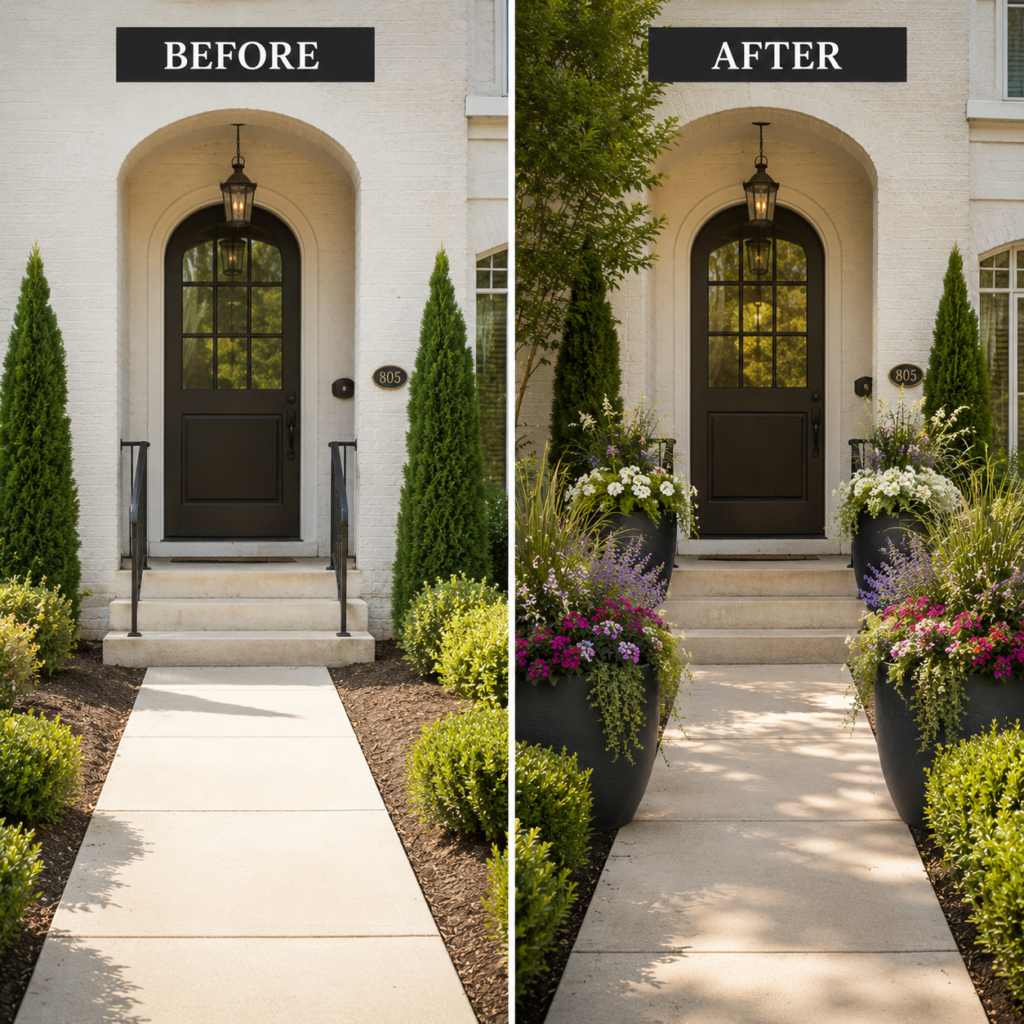
How Flower Planters Improve Home Value
Front yard flower planters do far more than add seasonal color. They play a significant role in shaping first impressions, influencing how visitors, neighbors, and potential buyers perceive a property. Because flower planters provide immediate visual enhancement, they are among the most effective tools for improving curb appeal and overall presentation.
First impressions are formed within seconds. When visitors approach a property, attractive flower planters communicate attention to detail, ongoing maintenance, and pride of ownership. Even simple planter arrangements can make a property feel more welcoming and better cared for than a comparable home without decorative landscaping.
Ways Flower Planters Improve First Impressions
- Highlighting entrances
- Creating visual warmth
- Adding seasonal interest
- Softening architectural features
- Improving landscape balance
- Demonstrating property care
Features of Luxury Curb Appeal
- Oversized decorative planters
- Coordinated flower colors
- Symmetrical layouts
- Healthy, well-maintained plants
- High-quality planter materials
While flower planters may not directly increase appraised value, they can improve buyer perception, strengthen curb appeal, and make a property feel more welcoming.
Common Flower Planter Mistakes
Even the most beautiful flowers can fail to improve curb appeal when basic design principles are ignored. Many front yard planter problems are not caused by poor flower choices but by mistakes in placement, sizing, maintenance, and overall design strategy.
One of the biggest mistakes is treating planters as decorations rather than landscape elements. Successful flower planters should work with the architecture of the home and the surrounding landscape, not compete against them. Randomly placing containers throughout the yard often creates visual clutter and weakens the overall design. Similarly, using containers that are too small can make flowers appear insignificant when viewed from the street, reducing their impact on curb appeal.
Common flower planter mistakes
- Using undersized containers
- Overcrowding flowers
- Mixing too many colors
- Choosing mismatched planters
- Ignoring mature plant size
- Poor drainage management
- Neglecting seasonal maintenance
Additional Flower Planter Mistakes
- Selecting flowers unsuitable for local conditions
- Ignoring sunlight requirements
- Allowing dead blooms to remain visible
- Using low-quality potting soil
- Forgetting seasonal updates
- Inconsistent design styles across the yard
A practical rule followed by many professional landscapers is that fewer, larger planters usually create a stronger visual statement than many small containers. Consistency is equally important. Repeating planter styles, flower colors, and plant combinations throughout the landscape creates a cohesive appearance that feels intentional and well-designed. Avoiding these common mistakes helps ensure that flower planters enhance curb appeal rather than becoming a distraction from the home’s best features.
Are Flower Planters Worth It?
For most homeowners, front yard flower planters are one of the best landscaping investments available. They provide immediate visual improvements, require relatively modest budgets compared to major landscaping projects, and offer flexibility that permanent plantings often cannot match. Whether the goal is boosting curb appeal, enhancing a front entrance, supporting pollinators, or simply adding seasonal beauty, flower planters consistently deliver strong value for the effort involved.
One of the greatest advantages of flower planters is their adaptability. Unlike permanent landscape installations, containers can be moved, redesigned, expanded, or completely transformed whenever desired. This flexibility allows homeowners to experiment with different flowers, color palettes, and design styles without making irreversible changes to the landscape. It also makes seasonal decorating significantly easier because flowers can be replaced as conditions change throughout the year.
Benefits of Front Yard Flower Planters
- Immediate curb appeal improvements
- Relatively affordable installation costs
- Flexible seasonal updates
- Easy customization
- Suitable for all property sizes
- Improved first impressions
- Enhanced entrance design
FAQs
What are the best flowers for front yard planters?
Petunias, verbena, calibrachoa, lantana, salvia, and geraniums are among the best choices. They provide long bloom periods, vibrant color, and reliable performance in containers.
What size flower planter creates the most curb appeal?
Large planters generally create the strongest visual impact. Containers 24 inches or larger are easier to see from the street and often look more luxurious.
What are the best flowers for sunny front yard planters?
Petunias, lantana, salvia, zinnias, and marigolds thrive in full sun. They tolerate heat well and continue blooming throughout summer.
What flowers grow best in shaded front yard planters?
Impatiens, begonias, fuchsia, lobelia, and coleus perform well in shade. They add color and texture to porches and tree-covered areas.
How much do front yard flower planters cost?
Small planters may cost $20–$75, while large decorative containers can exceed $200. Luxury planter displays often cost significantly more depending on materials.
Can flower planters increase home value?
Flower planters primarily improve curb appeal and first impressions. They can make a property appear more attractive and well-maintained to buyers.
Myra is the founder and lead writer of Backyard Planter Ideas, where she shares practical, well-researched guidance on planter design, plant selection, and outdoor styling. Her goal is to help homeowners create attractive, functional garden spaces with clear, reliable, and easy-to-apply advice.