
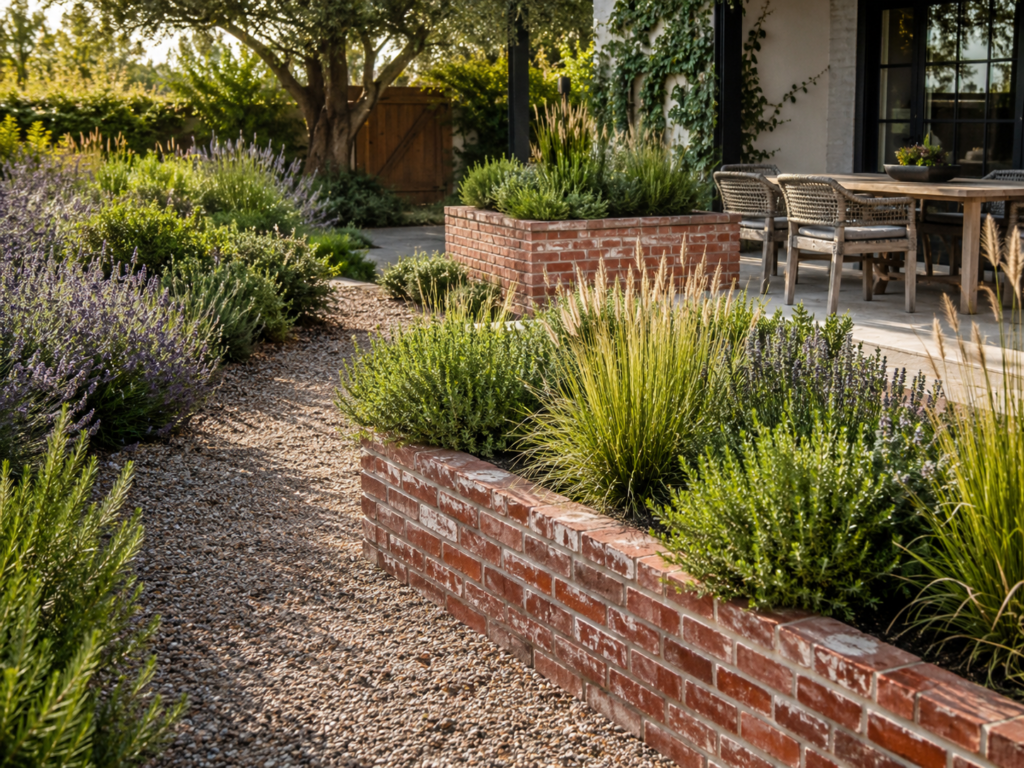
Backyard brick planters add structure, planting space, privacy, and long-term curb appeal. The best brick planter ideas are not only attractive; they also match the yard size, soil depth, drainage needs, plant choice, climate, and maintenance level.
A brick planter can define a patio, soften a fence, frame a lawn, raise herbs near the kitchen, screen a seating area, or turn an empty corner into a useful garden bed. Because brick is heavy and difficult to move once built, the layout should be planned carefully before construction.
What brick planter fits your yard?
The best brick planter idea depends on the problem you want to solve. A small backyard needs a space-saving planter. A patio needs a planter that softens paving. A privacy problem needs height and upright planting. A kitchen garden needs access, sun, and enough soil depth for herbs or vegetables.
| Backyard problem | Best brick planter idea | Why it works |
|---|---|---|
| Small backyard | Narrow fence-line brick planter | Adds planting without blocking movement |
| Plain patio | Patio-edge brick planter | Softens paving and defines seating |
| Exposed seating area | Raised planter with trellis | Adds height and privacy |
| Kitchen garden | Brick herb planter | Keeps herbs close and organized |
| Cottage-style yard | Curved reclaimed brick planter | Looks soft and established |
| Modern backyard | Long rectangular brick planter | Creates clean structure |
| Beginner DIY project | Low straight flower bed | Easier to level and drain |
| Vegetable growing | Raised brick garden bed | Provides better depth and access |
| Bare fence line | Brick planter along fence | Covers the base and adds height |
| Awkward corner | L-shaped brick planter | Turns wasted space into a feature |
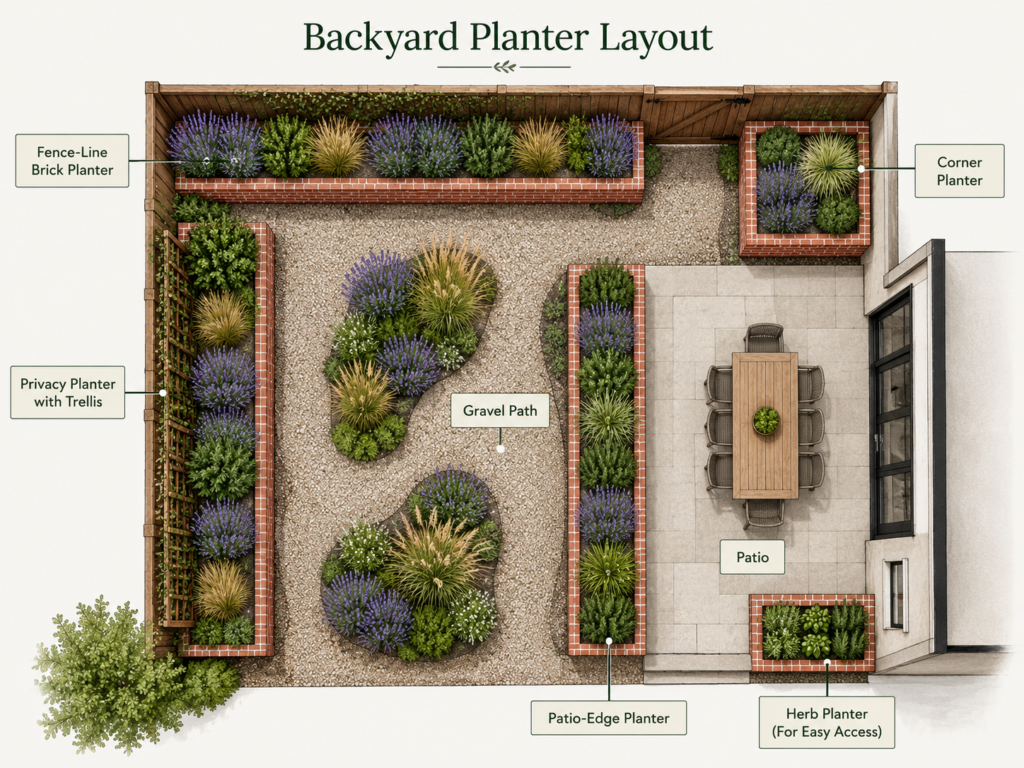
The smartest choice is not always the biggest one. It is the one that fits the yard, plants, climate, and maintenance level.
What are brick planters?
Backyard brick planters are built garden beds made from brick and designed to hold soil, flowers, herbs, vegetables, shrubs, or small ornamental trees. They can be low border planters, raised garden beds, patio planters, privacy planters, or built-in seating planters.
A brick planter is different from loose brick edging. Edging only separates lawn, paving, or soil. A true brick planter holds deeper soil and becomes part of the backyard structure. That means it needs proper planning around depth, drainage, access, weight, and long-term use.
Use brick planters when you want to:
- Create a permanent planting zone
- Add structure to a flat backyard
- Frame a patio, path, lawn, or seating area
- Grow herbs, flowers, vegetables, or compact shrubs
- Match existing brick walls, paving, or house materials
- Make a fence line, patio edge, or corner feel intentional
The main decision is whether the planter is decorative, productive, or architectural. A flower planter can stay shallow. A vegetable planter needs more soil and sun. A privacy planter needs enough depth and width for upright shrubs, grasses, or climbers.
Why choose brick planters?
Choose brick when you want a permanent, attractive, low-rot garden structure. Brick gives planting areas a clear edge and works well around patios, fences, paths, seating zones, and formal garden beds.
Wood can rot, thin metal can overheat, and plastic can fade or look temporary. Brick feels grounded. It can match a brick house, echo a brick patio, contrast with timber fencing, or bring warmth to concrete and gravel.
Brick is best if you want:
- A long-term planter instead of a movable container
- A stronger edge between lawn, paving, and planting
- A material that suits rustic, modern, cottage, or traditional gardens
- A raised bed that looks more architectural than timber
- A planter that supports herbs, flowers, shrubs, or privacy planting
Avoid brick if you rent, redesign often, need a temporary display, or are unsure about the location. Test the shape first with rope, chalk, cardboard, or temporary pots before building.
What are the best brick planter ideas?
The best backyard brick planter ideas include raised brick garden beds, low flower borders, curved brick planters, L-shaped corner planters, patio-edge planters, privacy planters, reclaimed brick herb beds, and brick planters with built-in seating.
A raised brick garden bed works well for herbs, vegetables, flowers, and mixed planting. A low brick flower bed is easier for beginners and fits paths, patios, and lawn edges. A curved brick planter softens hard lines, while an L-shaped planter turns an unused corner into a useful growing zone.
Strong ideas include:
- Raised brick garden bed for vegetables, herbs, and flowers
- Low brick flower bed for simple border planting
- Curved brick planter for lawns, patios, and cottage gardens
- L-shaped corner planter for compact yards
- Patio-edge planter for outdoor seating areas
- Brick privacy planter with shrubs, grasses, or trellis plants
- Reclaimed brick herb planter for rustic character
- Brick planter with built-in seating for entertaining areas
The best question is not “Which idea looks nicest?” It is “What job should this planter do?” For food, prioritize sun and depth. For patios, prioritize shape and drainage. For privacy, prioritize height, structure, and mature plant size.
What materials do you need?
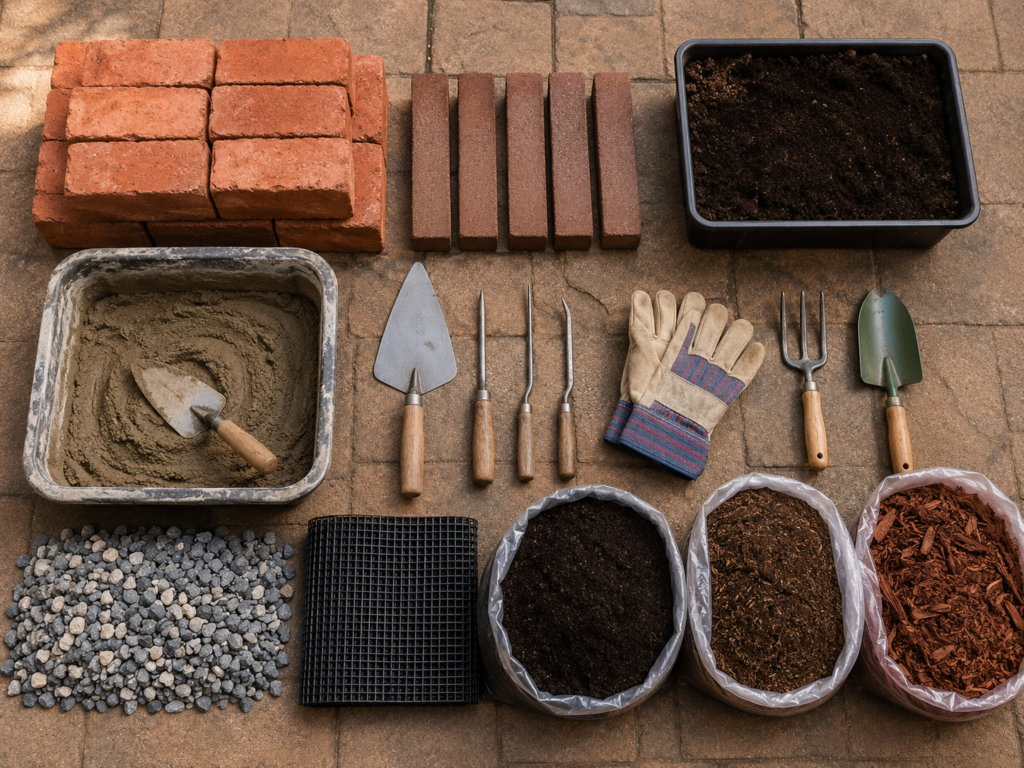
A backyard brick planter needs more than bricks. It needs suitable outdoor brick, a stable base, mortar or another secure building method, drainage material, soil, compost, mulch, and sometimes coping, mesh, irrigation, or trellis support.
Useful materials include:
- Outdoor-suitable bricks
- Mortar or approved dry-stack system
- Compactable base material or footing where needed
- Gravel or coarse drainage backfill
- Fine mesh for drainage gaps
- Raised-bed soil mix
- Compost and mulch
- Coping bricks, capstones, or soldier-course top bricks
- Optional trellis, drip irrigation, or soaker hose
- Optional geotextile layer where appropriate
Do not budget only for visible materials. Bricks create the outside layer, but hidden layers decide whether the planter works. Gravel helps drainage. Mesh keeps soil from clogging openings. Good soil supports roots. Mulch reduces drying. Cap bricks protect the top edge and make the planter look finished.
How deep and wide should it be?
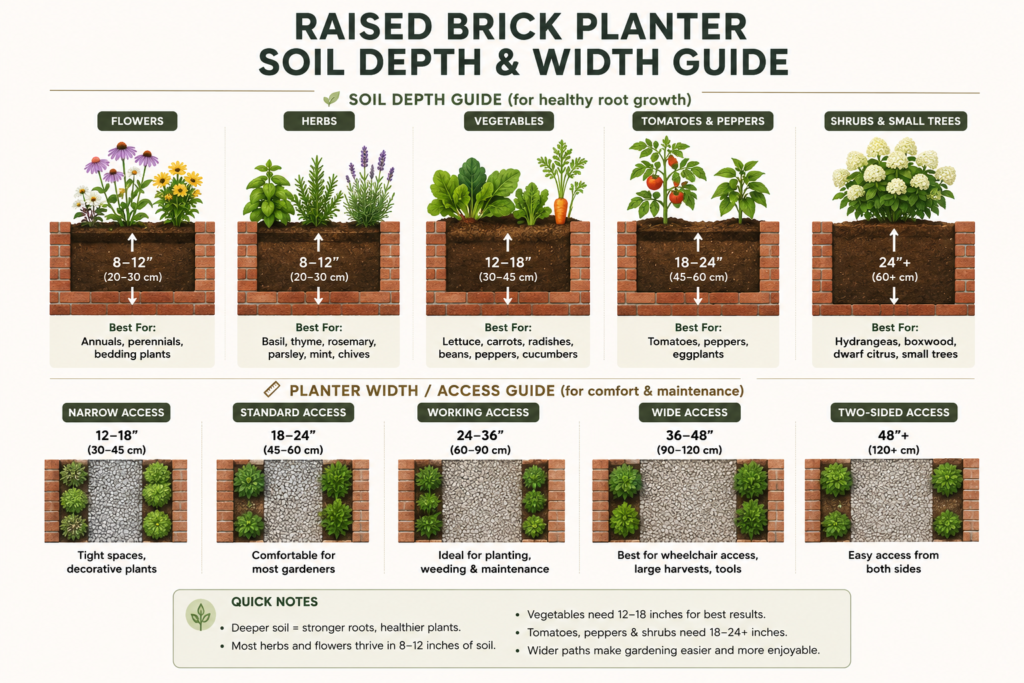
A brick planter should be deep enough for the plants you want to grow. Use 8 to 12 inches for shallow flowers and leafy greens, 12 to 18 inches for herbs and mixed planting, and 18 to 24 inches or more for tomatoes, shrubs, and deeper-rooted plants.
Use this depth guide:
- 6–8 inches: succulents and very shallow plants
- 8–12 inches: annual flowers, lettuce, leafy greens
- 10–14 inches: herbs, strawberries, compact flowers
- 12–18 inches: lavender, rosemary, peppers, mixed planting
- 18–24 inches: tomatoes, small shrubs, deeper vegetables
- 24+ inches: privacy shrubs and larger root systems
Width matters just as much. A planter should be wide enough for healthy planting but narrow enough to reach. Use 3 to 4 feet if accessible from both sides and 18 to 30 inches if placed against a fence, wall, or patio edge.
Use this width guide:
- 12–18 inches: narrow decorative border
- 18–24 inches: small fence planter
- 24–30 inches: herb or patio-edge planter
- 30–36 inches: mixed flowers and compact vegetables
- 36–48 inches: raised bed accessible from both sides
If the planter sits on concrete, pavers, or a patio, it must provide almost the entire root zone. Patio brick planters usually need more soil depth and more consistent watering than planters built over open ground.
Where should you place it?
Place a brick planter where it improves the layout, gets suitable sunlight, drains safely, and remains easy to water and maintain. Good locations include patio edges, fence lines, sunny corners, lawn borders, side yards, and outdoor seating areas.
Placement should come before style. A beautiful planter in the wrong spot can block movement, stay too shaded, dry out too quickly, or create drainage problems.
Before choosing the final location, check:
- Sun exposure during morning, midday, and afternoon
- Walking space around chairs, doors, paths, and gates
- Drainage direction after rain
- Distance from a hose, tap, or irrigation line
- Access for pruning, harvesting, and replanting
- Whether the planter blocks vents, weep holes, or utilities
- Whether mature plants will crowd the space
Test the shape with string, hose, chalk, cardboard, or temporary pots. Walk around it, move chairs, open gates, and check sunlight before committing.
Can it go on concrete?
Yes, you can build a brick planter on concrete or pavers, but treat it like a large permanent container. Because roots cannot grow into the ground below, the planter needs enough soil depth, drainage exits, and regular watering.
If building on concrete or pavers:
- Use deeper soil than you would on open ground
- Add lower drainage exits or weep gaps
- Make sure water drains away from the house
- Avoid blocking existing surface drains
- Expect more frequent watering in hot weather
- Use mulch to reduce fast drying
- Avoid very tall heavy planters unless the surface can support the load
- Do not use a sealed liner that traps water
This idea is best for flowers, herbs, compact shrubs, and patio screening. It is less suitable for large trees, aggressive roots, or tall wet soil loads unless designed professionally.
How should it drain?
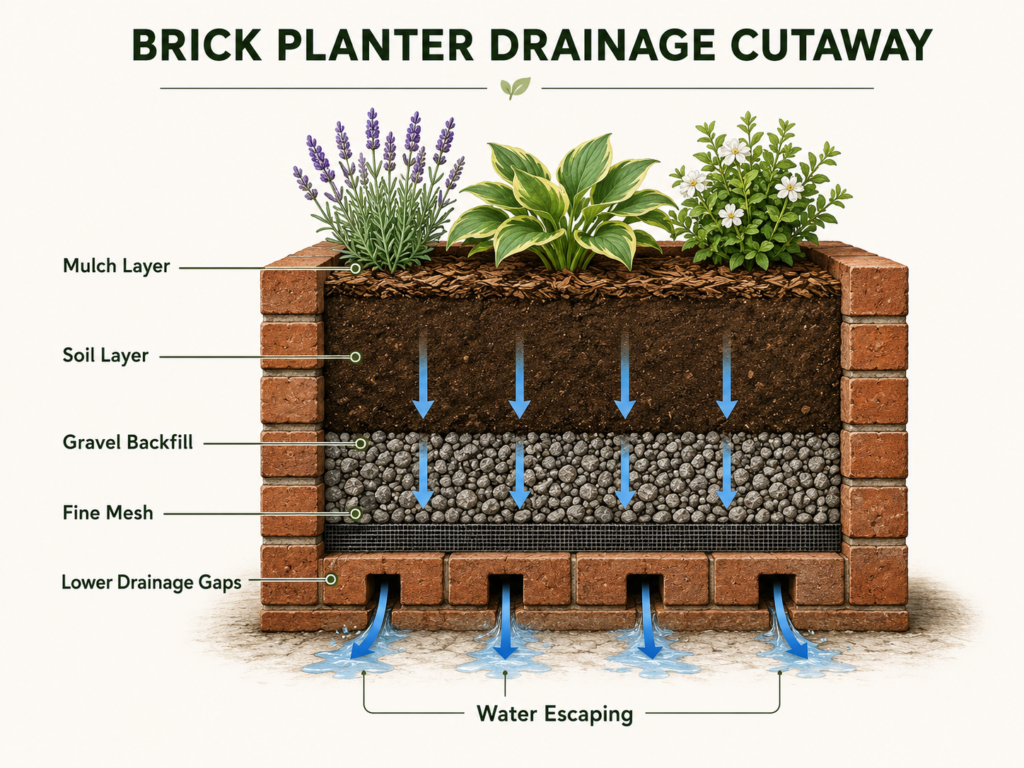
A brick planter should drain through lower wall gaps, free-draining backfill, mesh-protected openings, suitable soil mix, and a base that lets water escape. Without drainage, roots can rot, soil can become heavy, and pressure can build against the brickwork.
A good drainage setup includes:
- Drainage gaps or weep openings low in the brickwork
- Fine mesh behind the openings
- Gravel or coarse backfill against the mesh
- Free-draining soil rather than heavy compacted soil
- A safe exit path for water
- Mulch to reduce fast surface drying
Good drainage does not mean dry soil. It means excess water can escape while the soil still holds enough moisture for roots. Raised beds often drain well but may need more frequent irrigation, especially on patios, concrete, or other hard surfaces.
Suggested visual: Add a cutaway diagram showing brick wall, lower drainage gaps, mesh, gravel backfill, soil, mulch, and water-flow arrows.
Can it touch a house wall?
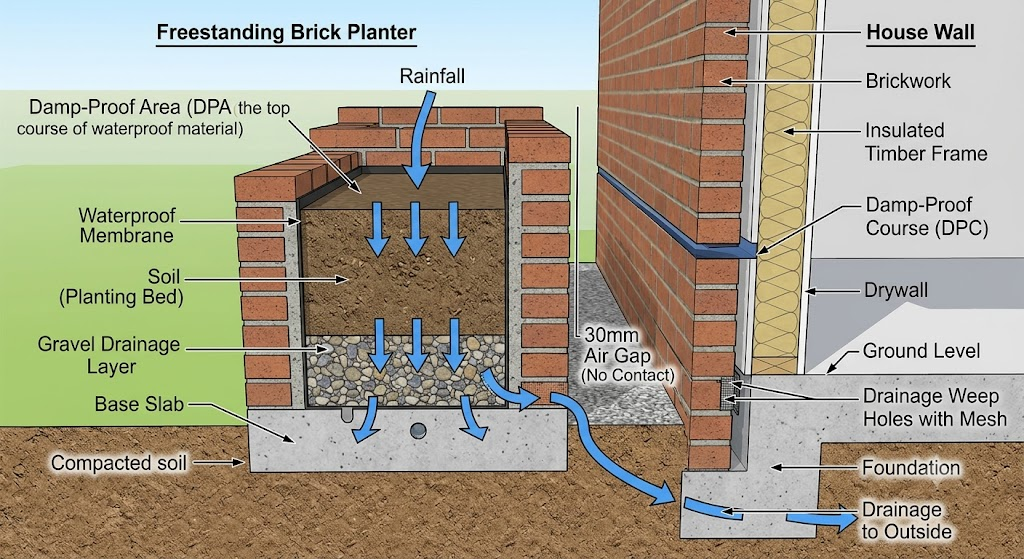
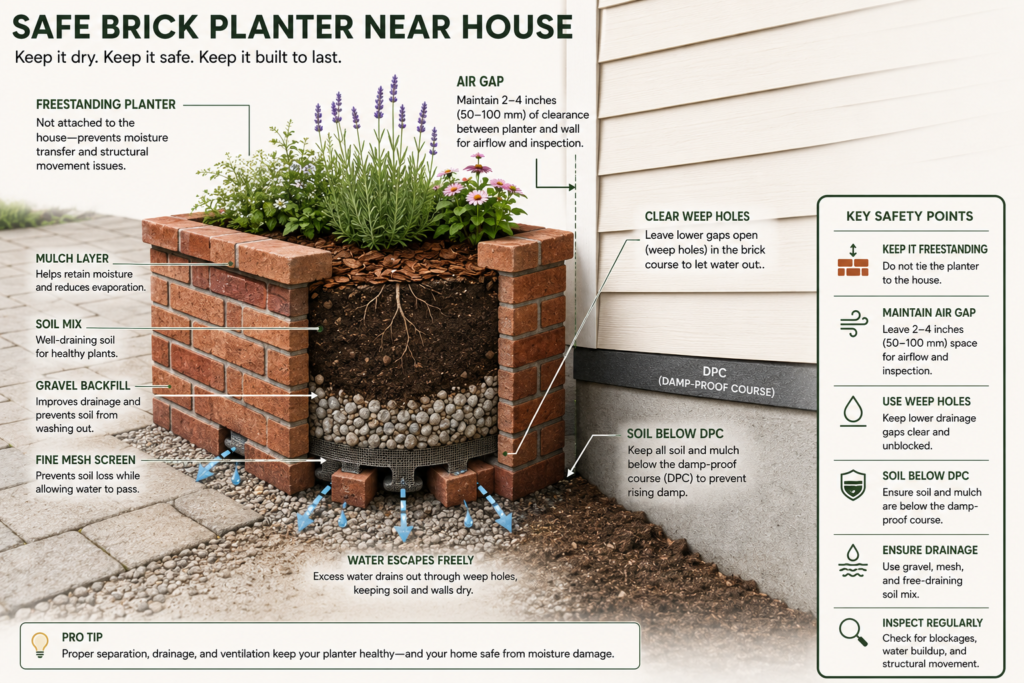
Avoid building a soil-filled brick planter directly against a house wall. House walls, brick veneer, foundations, damp-proof courses, vents, and weep holes need moisture protection. A safer option is a freestanding four-sided planter with a visible air gap between the planter and the house.
For a safer house-side planter:
- Build the planter as its own complete structure
- Leave an air gap between planter and house wall
- Keep soil below damp-proof course level
- Never block weep holes, vents, or air bricks
- Slope nearby paving or soil away from the house
- Use drainage gaps in the planter wall
- Ask a qualified builder if the house has damp or foundation concerns
A planter near the house can look excellent, but the house wall should not become the back wall of the planter.
What works in small yards?
Small backyards work best with narrow fence planters, corner brick planters, patio-edge planters, raised herb beds, vertical trellis planters, and low brick flower borders. The goal is to add planting without blocking movement.
Best small backyard brick planter ideas include:
- 18–24 inch wide planter along a fence
- L-shaped brick corner planter
- Low brick flower bed beside a path
- Raised brick herb bed near the kitchen door
- Patio planter with trellis or vertical support
- Slim brick planter behind an outdoor bench
- Brick edging planter around a tiny lawn
- Reclaimed brick planter for a courtyard garden
In a compact yard, place the planter along an edge rather than in the center. Leave enough space to pull out chairs, open gates, carry tools, and walk comfortably.
What styles, colors, and plants work best?
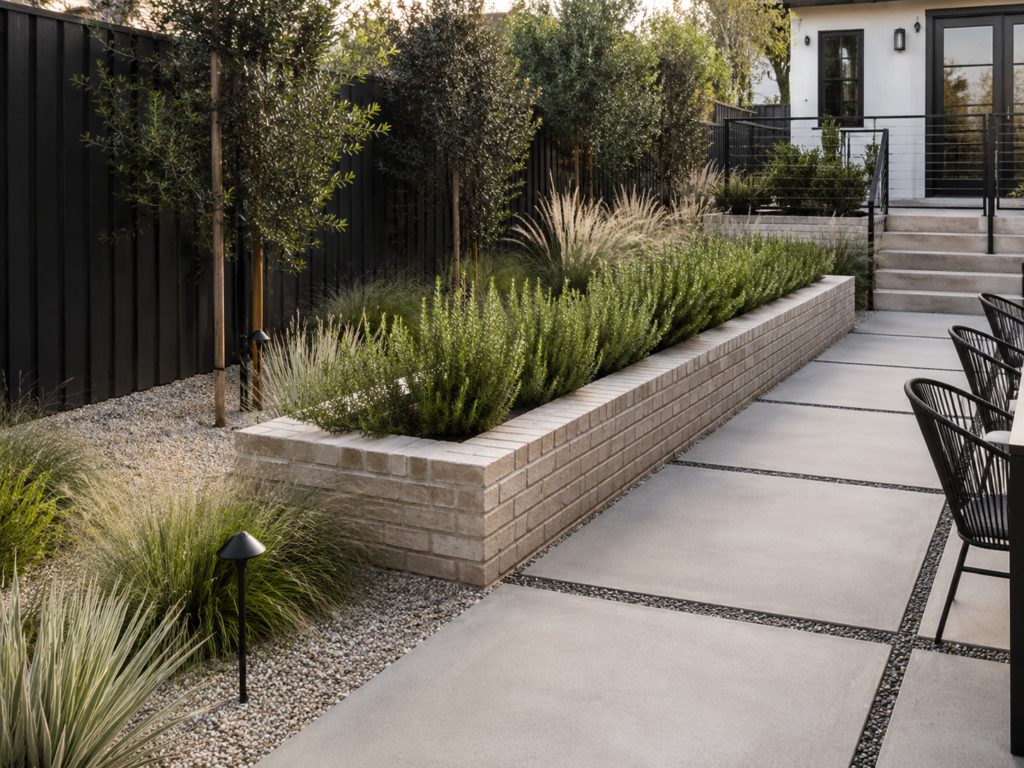
Modern brick planters look best with simple shapes, clean lines, flush caps, repeated planting, gravel mulch, and restrained color palettes. Use straight rectangular shapes, repeat 3–5 plant types, and pair brick with gravel, concrete, timber, or black metal.
Rustic and cottage brick planters work best with reclaimed brick, soft curves, mixed flowers, herbs, climbing plants, informal edges, and layered planting. Choose cottage style for softness and seasonal color. Choose reclaimed brick for aged character.
Good color and planting combinations include:
- Red brick + lavender + rosemary + white flowers
- Reclaimed brick + cottage flowers + creeping thyme
- Pale brick + gravel + olive tree + lavender
- Dark red brick + black metal + ornamental grasses
- Painted white brick + clipped evergreens + pale paving
- Brick planter + timber bench + trailing plants
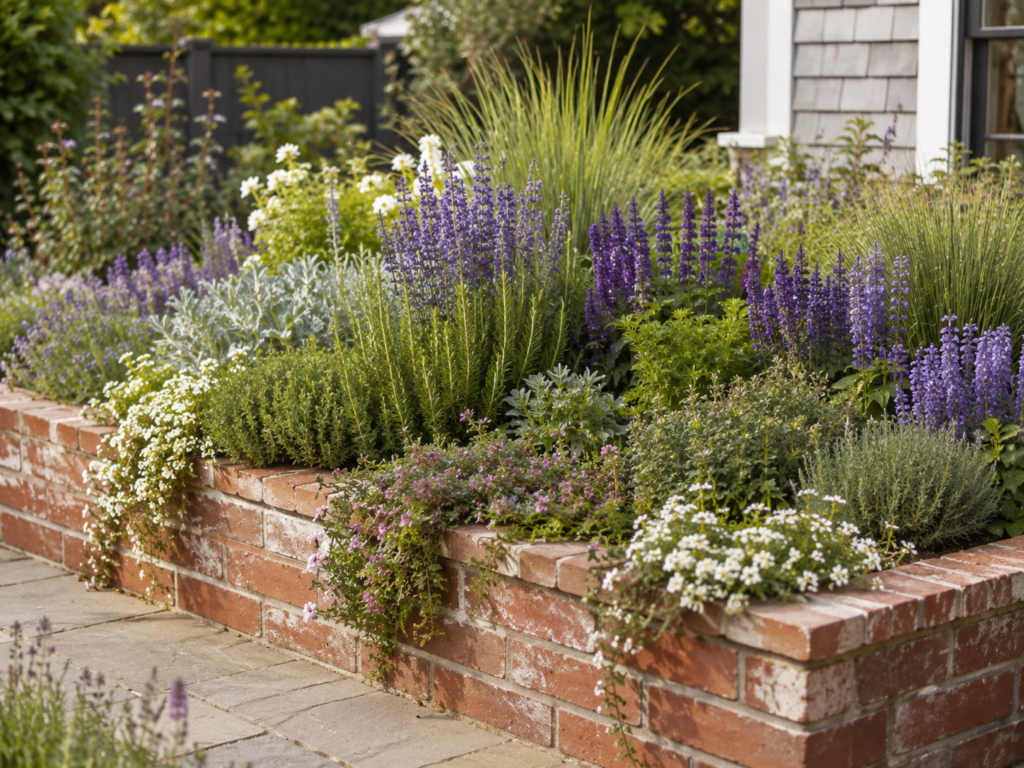
Strong plant choices include:
- Herbs: rosemary, thyme, oregano, sage, chives, parsley, basil
- Flowers: lavender, salvia, alyssum, dianthus, geraniums, marigolds
- Edibles: lettuce, spinach, peppers, tomatoes, strawberries, beans
- Structure: boxwood, bay, pittosporum, compact shrubs
- Texture: ornamental grasses, sedum, catmint, creeping thyme
- Climbers: jasmine, clematis, climbing roses, espalier fruit where suitable
Choose plants after confirming planter depth and sunlight. A shallow brick planter may suit herbs and annual flowers, but not tomatoes or shrubs. A hot sunny planter may suit Mediterranean herbs, while a shaded planter needs different plants.
How can it add privacy?
A brick planter can add privacy by raising the planting level and supporting upright plants, evergreen shrubs, grasses, or trellis climbers. The planter provides height at the bottom, while the plants create the screen.
Privacy brick planter ideas include:
- Long raised planter behind outdoor seating
- Brick planter with trellis along a fence
- L-shaped planter to hide bins or utilities
- Low brick divider between patio and lawn
- Tall grasses in a raised brick bed
- Evergreen shrubs for year-round screening
- Climbing plants on independent supports
For light screening, grasses and mixed shrubs may be enough. For stronger screening, combine a raised planter with evergreen planting and a trellis. For tall soil-retaining planters, get structural advice because wet soil creates pressure.
What is the easiest DIY idea?
The easiest DIY brick planter is a low, straight flower bed or herb planter. Keep it 8 to 12 inches high, use a simple rectangle, include drainage gaps, and choose shallow-rooted plants.
Beginner-friendly plan:
- Shape: simple rectangle
- Height: 8–12 inches
- Width: 2–3 feet
- Length: 4–8 feet
- Location: sunny fence line or patio edge
- Plants: herbs, flowers, lettuce, strawberries
- Drainage: lower gaps, mesh, gravel
- Finish: simple cap or neat top course
Build only what you can level, drain, and maintain. If the planter is tall, holding back a slope, supporting seating, or close to a house, the job moves beyond basic DIY.
Bottom, liner, and mortar decisions
The bottom of a brick planter should support drainage, root health, and safe water movement. For open-ground planters, prepare the soil below and add a suitable growing mix above. For concrete or patio planters, create drainage exits, use gravel near openings, and provide enough soil depth.
Do not fill most of the bottom with random rubble. Plants still need continuous soil for roots. Gravel can help near drainage gaps, especially with mesh, but the main planting zone should be good soil.
A brick planter does not always need a liner. The wrong liner can trap water and hide drainage problems. Use a liner only if it protects painted surfaces, separates soil from a specific wall, or stops fine soil from washing toward drainage openings without blocking water movement.
Some low brick planters can be built without mortar if they are short, stable, and used as dry-stacked garden edging or a temporary raised bed. Taller brick planters, privacy planters, seating planters, and retaining-style planters usually need stronger construction.
What mistakes should you avoid?
Avoid poor drainage, building directly against house walls, making beds too wide, using shallow soil for deep-rooted plants, ignoring irrigation, choosing the wrong plants, and building tall walls without structural planning.
Common mistakes include:
- No drainage gaps or weep openings
- Soil placed directly against house brickwork
- Planter too wide to reach comfortably
- Shallow soil used for tomatoes, shrubs, or privacy plants
- No watering plan for hot weather
- Tall brick walls built without structural planning
- Blocking vents, drains, paths, or gate swings
- Choosing plants before checking sunlight and depth
Good planning prevents expensive corrections. Confirm location, sunlight, walking space, depth, drainage, water access, and plant size before buying bricks.
How do you maintain it?
A backyard brick planter needs simple but regular maintenance. Keep drainage gaps clear, refresh mulch, top up compost, water during dry periods, prune plants before they crowd the wall, and check mortar or brick movement.
Use this maintenance schedule:
- Weekly in growing season: check watering needs
- Monthly: remove weeds and inspect plant crowding
- Every season: refresh mulch and trim overgrowth
- Twice a year: check drainage gaps or weep openings
- Yearly: top up compost or raised-bed soil
- After heavy rain: check for standing water
- After frost or heatwaves: check for cracking, dryness, or plant stress
A brick planter should look permanent, but it still needs seasonal care.
How much does it cost?
A backyard brick planter can range from a low-cost reclaimed brick flower bed to a more expensive custom masonry feature. Cost depends on size, brick type, wall height, base preparation, drainage, labor, soil volume, coping, and structural needs.
Main cost drivers include:
- New brick vs reclaimed brick
- Planter length, width, and height
- DIY labor vs professional masonry
- Base preparation and leveling
- Drainage gravel, mesh, and outlets
- Soil mix, compost, and mulch
- Coping stones, caps, or seat tops
- Trellis, lighting, irrigation, or built-in seating
Price the planter in three layers: structure, fill, and planting. Many people budget for bricks but forget soil, drainage, plants, mulch, and watering.
Are brick planters worth it?
Backyard brick planters are worth it if you want a permanent, built-in garden feature that improves structure and planting space. They are less suitable if you need something temporary, movable, or very low cost.
Brick planters are worth considering if you want to:
- Define a patio or outdoor room
- Add planting to a paved backyard
- Grow herbs or vegetables in a raised bed
- Improve privacy with elevated planting
- Match existing brickwork or paving
- Reduce the temporary look of scattered pots
They may not be worth it if you rent, change layouts often, have unresolved drainage issues, or are unsure about sunlight.
What is the best layout?
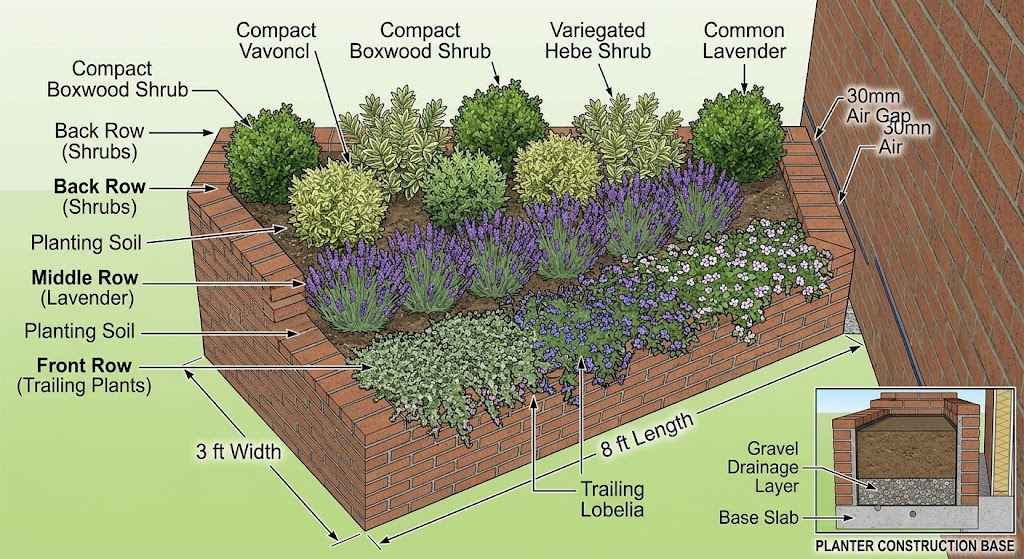
The best all-purpose backyard brick planter layout is a raised rectangular planter about 3 feet wide, 6 to 10 feet long, and 12 to 18 inches high, placed along a sunny patio edge or fence line with drainage gaps, gravel protection, and mixed planting.
A strong layout includes:
- Length: 6–10 feet
- Width: 2.5–3 feet
- Height: 12–18 inches
- Location: sunny fence line or patio edge
- Drainage: lower gaps, mesh, gravel
- Soil: free-draining raised-bed mix
- Access: 24–36 inches of nearby walking space
- Back row: rosemary, grasses, compact shrubs
- Middle row: lavender, salvia, peppers, dwarf flowers
- Front row: thyme, oregano, strawberries, alyssum, trailing plants
This layout works because it is deep enough to be useful, narrow enough to maintain, structured enough to look intentional, and simple enough for many homeowners to understand.
What should you check first?
Before building, confirm the planter’s job, size, location, depth, drainage, materials, plants, and maintenance needs.
Check:
- What job should the planter do?
- Is the location sunny, shaded, wet, windy, or hot?
- Can you reach the whole bed without stepping into it?
- Is there enough walking space nearby?
- Will water drain away safely?
- Are house walls, vents, weep holes, and drains clear?
- Is the planter deep enough for the chosen plants?
- Do you need mortar, footing, or professional help?
- Have you planned soil, compost, mulch, and irrigation?
- Will mature plants fit the space?
A smaller, well-planned brick planter will outperform a larger planter with poor drainage, wrong plants, or awkward access.
Need help choosing a layout?
Start with the planter’s job: privacy, herbs, flowers, vegetables, patio structure, small-space planting, or visual improvement. Once the purpose is clear, choose the shape, depth, drainage plan, brick style, and plants.
backyardplanterideas.online helps homeowners compare backyard planter styles before they build. A brick planter should fit the yard, climate, house, soil depth, and maintenance routine.
Brick Planter FAQs
What is the best brick planter idea for a backyard?
A raised rectangular brick planter along a sunny fence, patio edge, or lawn border is the best all-purpose idea. It adds structure, planting space, and a built-in garden look.
Are brick planters good for backyards?
Yes, brick planters are good when you want a permanent planting feature. They work well for flowers, herbs, vegetables, privacy plants, patios, and fence lines.
Can you build a brick planter on concrete?
Yes, but it needs enough soil depth, drainage exits, and regular watering. On concrete, a brick planter behaves like a large container.
How deep should a brick planter be?
Use 8–12 inches for flowers and greens, 12–18 inches for herbs and mixed planting, and 18–24 inches or more for tomatoes and shrubs.
Do brick planters need drainage holes?
Yes, brick planters need drainage holes, weep gaps, or lower openings. Without drainage, soil can stay wet and pressure can build against the wall.
Should a brick planter have a liner?
A brick planter does not always need a liner. If you use one, it should not block drainage or trap water.
Can brick planters be built without mortar?
Low brick planters can sometimes be dry-stacked. Taller, permanent, privacy, seating, or retaining-style planters usually need stronger construction.
What plants grow best in brick planters?
Lavender, rosemary, thyme, salvia, herbs, sedum, grasses, boxwood, strawberries, lettuce, peppers, and compact shrubs can grow well.
Can you grow vegetables in a brick planter?
Yes, if the planter has enough sun, soil depth, drainage, and water. Lettuce, spinach, peppers, tomatoes, beans, cucumbers, and herbs are good options.
Are backyard brick planters worth it?
Yes, brick planters are worth it if you want a permanent garden feature with strong structure and visual appeal.

Myra is the founder and lead writer of Backyard Planter Ideas, where she shares practical, well-researched guidance on planter design, plant selection, and outdoor styling. Her goal is to help homeowners create attractive, functional garden spaces with clear, reliable, and easy-to-apply advice.