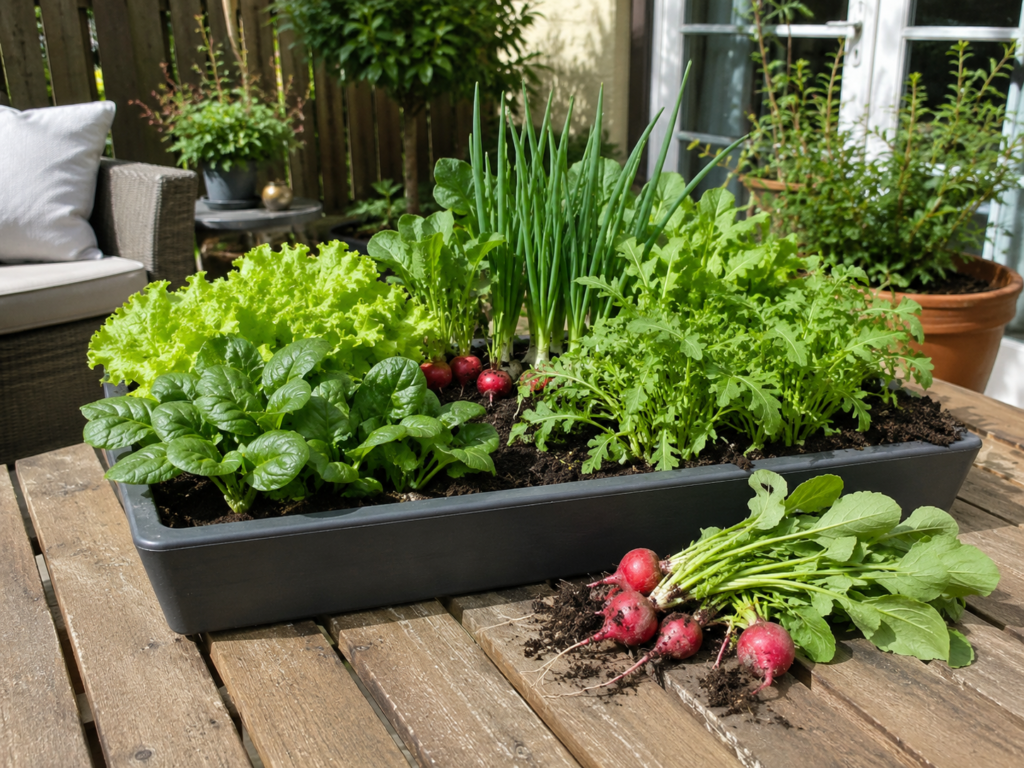
The best vegetables for shallow planters include leaf lettuce, spinach, radishes, green onions, arugula, mustard greens, microgreens, and other crops that can be harvested before they need a large root zone. Around 6 inches (15 cm) of usable soil can support many leafy and quick-growing vegetables, while 8–12 inches (20–30 cm) opens more options for baby beets, compact carrots, chard, and larger crops.
The key is to match the crop to the planter. Depth matters, but so do width, total soil volume, drainage, sunlight, moisture, cultivar, and harvest stage.
Quick Depth Finder
| Usable Soil Depth | Best Choices |
|---|---|
| 2–4 in / 5–10 cm | Microgreens and young shoots |
| Around 6 in / 15 cm | Lettuce, spinach, radishes, scallions, arugula, mustard greens |
| 8–10 in / 20–25 cm | Baby beets, larger leafy greens, compact crops |
| 10–12 in / 25–30 cm | Short carrots and more demanding vegetables |
| 12+ in / 30+ cm | Larger vegetables and deeper-rooted crops |
Use these as practical growing ranges, not exact biological root limits.
How Deep Should a Vegetable Planter Be?
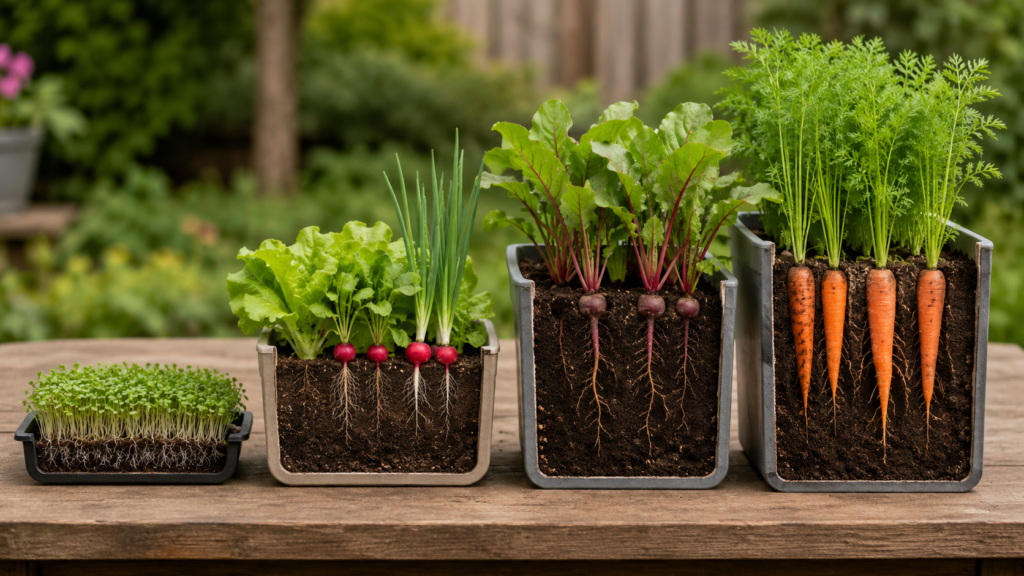
The right planter depth depends on what you want to grow and how mature you plan to let the crop become. Leafy vegetables generally need less room than fruiting plants or long root crops, which is why shallow containers work especially well for salad greens, radishes, scallions, shoots, and vegetables harvested young.
Always measure usable soil depth, not only the outside height of the planter. A container advertised as 8 inches deep may hold less soil once the base, drainage design, and space below the rim are considered. This difference matters most for root vegetables.
A practical rule is:
- 2–4 inches / 5–10 cm: microgreens and shoots
- Around 6 inches / 15 cm: lettuce, spinach, radishes, scallions, arugula
- 8–10 inches / 20–25 cm: baby beets and larger leafy vegetables
- 10–12 inches / 25–30 cm: compact carrots and moderately demanding crops
- 12+ inches / 30+ cm: larger or deeper-rooted vegetables
Backyard Planter Ideas’ 4-Factor Shallow Planter Test
Before planting, check four things:
- Depth: Is there enough vertical root room?
- Surface area: Is the planter wide enough to prevent crowding?
- Soil volume: Does it hold enough mix to buffer water and nutrients?
- Drainage: Can excess water escape freely?
This is an editorial decision framework, not an official horticultural standard. Its purpose is to evaluate the whole planter instead of judging success by depth alone.
Why Planter Depth Recommendations Differ
Container-depth recommendations vary because guides may describe different cultivars, climates, harvest stages, or management levels. One source may give a workable minimum, while another recommends a deeper container that is easier to water and gives roots more room.
Baby crops also need less space than mature plants. Baby kale is easier to manage than full-size kale, while garlic greens need less room than garlic grown for bulbs.
Recommendations can change with:
- Cultivar and root shape
- Harvest stage
- Planter width and total soil volume
- Climate and heat
- Potting mix
- Watering frequency
- Container material
Use the depths in this guide as practical starting points. When you have space, choose the deeper option. The goal is not the smallest container a crop can survive in, but a depth that can support a worthwhile harvest.
Best Vegetables for Shallow Planters
The best shallow-planter vegetables grow quickly, tolerate limited root space, or can be harvested before reaching full size.
| Vegetable | Practical Depth | Best Harvest | Verdict |
|---|---|---|---|
| Microgreens | 2–4 in / 5–10 cm | Whole seedlings | Excellent |
| Leaf lettuce | 6–8 in / 15–20 cm | Outer leaves | Excellent |
| Spinach | 4–6+ in / 10–15+ cm | Baby or outer leaves | Excellent |
| Radishes | 4–6+ in / 10–15+ cm | Whole root | Excellent |
| Green onions | Around 6 in / 15 cm | Tops or whole plant | Excellent |
| Arugula | Around 6 in / 15 cm | Outer leaves | Excellent |
| Mustard greens | Around 6 in / 15 cm | Young leaves | Excellent |
| Baby bok choy | Moderate depth | Young plants | Conditional |
| Baby beets | 8–10+ in / 20–25+ cm | Root and leaves | Very Good |
| Short carrots | 10–12 in / 25–30 cm | Whole root | Conditional |
| Swiss chard | 8–10+ in / 20–25+ cm | Outer leaves | Good |
| Baby kale | 6–8+ in / 15–20+ cm | Young leaves | Good |
| Endive | 6–8+ in / 15–20+ cm | Outer leaves | Good |
| Pea shoots | Around 6 in / 15 cm | Young shoots | Very Good |
| Garlic greens | Around 6 in / 15 cm | Green shoots | Very Good |
Best Vegetables by Goal
- Safest overall: Leaf lettuce
- Best shallow root crop: Round radish
- Best for very shallow trays: Microgreens
- Best repeated harvest: Lettuce or arugula
- Best narrow-planter crop: Green onions
- Best beginner mix: Lettuce, radishes, and scallions
- Best moderately shallow root crop: Baby beet
- Most depth-sensitive: Carrot
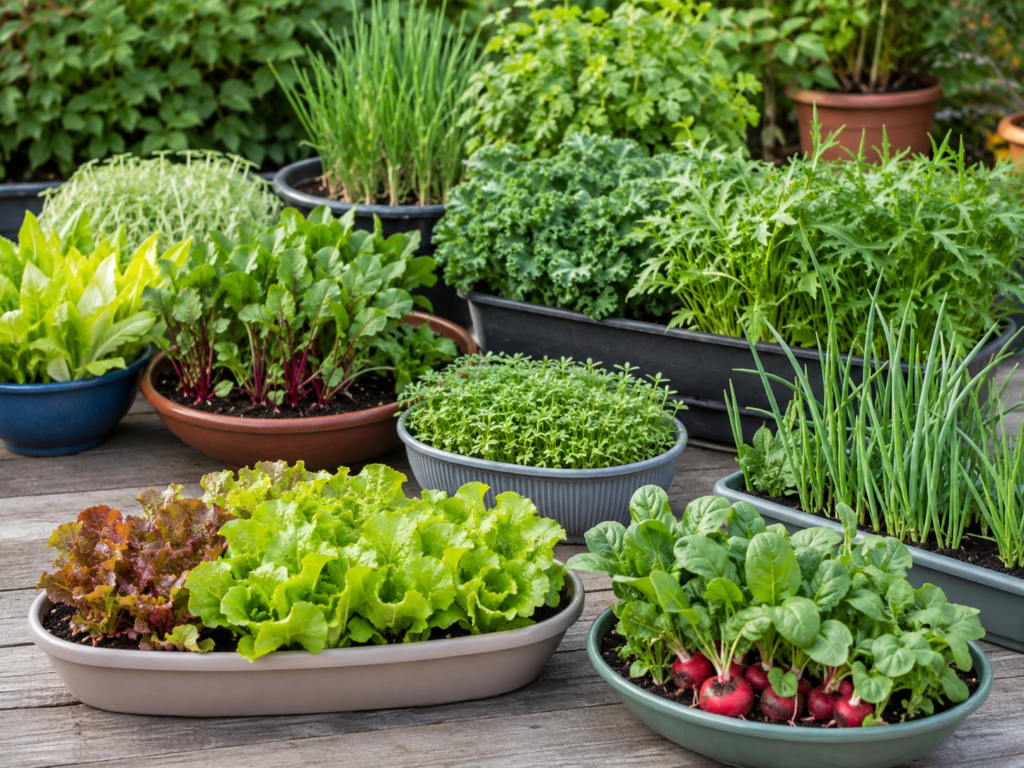
1. Leaf Lettuce
Leaf lettuce is one of the easiest vegetables for shallow planters. Loose-leaf types work especially well because you can harvest outer leaves while the center keeps growing. Use about 6–8 inches of soil, avoid overcrowding, and keep moisture steady.
2. Spinach
Spinach suits shallow containers because it can be harvested young or leaf by leaf. It performs best in cooler conditions, so in hot climates treat it mainly as a spring or autumn crop and protect it from severe afternoon heat.
3. Radishes
Round radishes are among the best shallow root crops. They mature quickly and need less depth than carrots or parsnips. Choose compact varieties, thin seedlings early, use loose potting mix, and sow in small batches for a steadier harvest.
4. Green Onions
Green onions or scallions are ideal for narrow, shallow planters because they grow upright and are harvested before forming large bulbs. They also combine well with lettuce and radishes without taking much canopy space.
5. Arugula
Arugula grows quickly and responds well to repeated harvesting. Pick the larger outer leaves and let the center continue growing. It is especially useful for spring and autumn planters and succession sowing.
6. Mustard Greens
Mustard greens fit shallow planters best when grown for young leaves. Thin crowded seedlings, maintain steady moisture, and harvest before plants become oversized.
7. Microgreens
Microgreens are the best option for containers only a few inches deep. Good choices include radish, broccoli, mustard, kale, pea shoots, and sunflower. Remember that microgreen depth does not apply when the same crop is grown to maturity.
8. Baby Bok Choy
Baby bok choy can work in moderately shallow planters, but it is less reliable than lettuce or radishes. Choose compact cultivars, give plants enough surface space, and harvest young. For a basic 6-inch planter, leafy greens are usually safer.
9. Baby Beets
Baby beets can perform well in about 8–10 inches or more of soil. Choose compact varieties, thin seedlings early, and keep the mix loose. Harvesting at baby size makes them better suited to restricted depth.
10. Short Carrots
Short, round, or stump-rooted carrots suit containers better than long varieties, but they remain depth-sensitive. Around 10–12 inches (25–30 cm) is a safer target. Use loose, stone-free mix and thin seedlings carefully.
11. Swiss Chard
Swiss chard can grow in moderately shallow containers when harvested regularly. Mature plants become large, so grow fewer plants or pick outer leaves while they are still relatively young.
12. Baby Kale
Baby kale is much easier to fit into shallow planters than mature kale. Harvest leaves young before the plant develops a large canopy and root system.
13. Endive
Endive can grow in moderately shallow containers with adequate spacing and moisture. It is better for repeated leaf harvests than for producing oversized mature heads.
14. Pea Shoots
Pea shoots are harvested before plants become mature vines, so they need less root space and no long-term trellis. A shallow, wide planter can produce a quick crop of tender shoots.
15. Garlic Greens
Garlic grown for green shoots is much easier to fit into shallow containers than garlic grown for mature bulbs. Plant cloves and harvest the greens young; use deeper soil if full bulbs are the goal.
What Can Grow in 6 Inches of Soil?
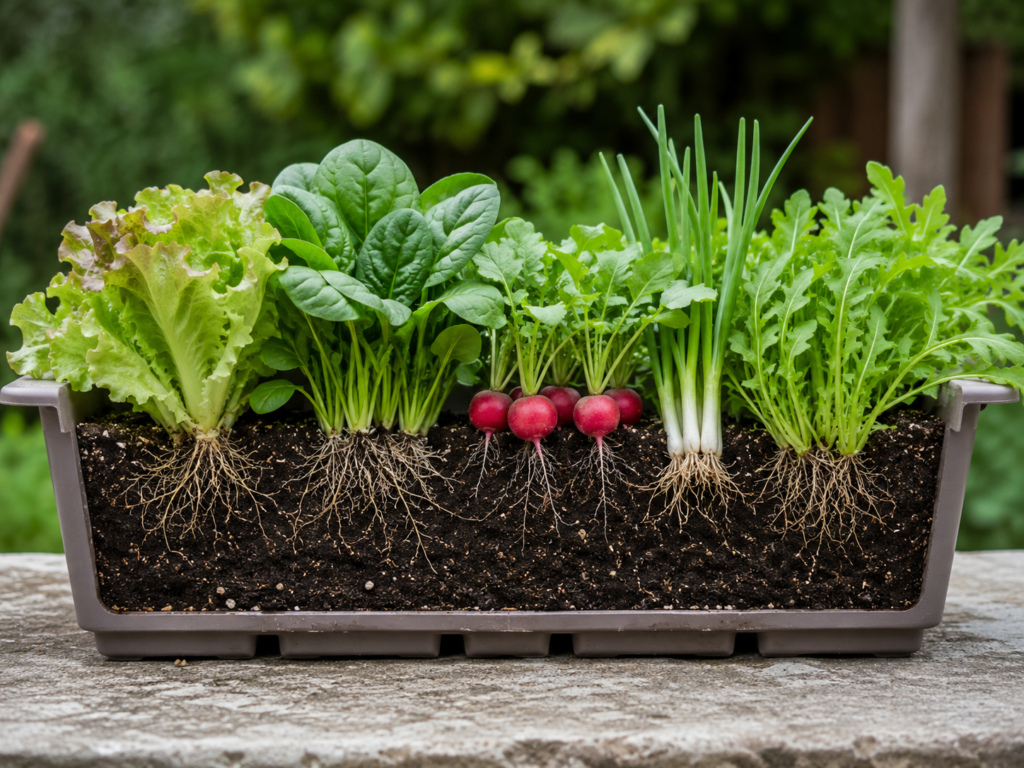
About 6 inches (15 cm) of usable soil can support several productive vegetables, especially leafy crops and plants harvested young.
Good choices include:
- Leaf lettuce
- Spinach
- Radishes
- Green onions
- Arugula
- Mustard greens
- Baby kale
- Pea shoots
- Garlic greens
- Microgreens
A 6-inch planter becomes much more useful when it is wide. A long trough holds more soil than a small round pot, improving moisture stability and giving roots more horizontal space.
The best strategy is to grow fast crops rather than vegetables that occupy the planter for months. Succession sowing works especially well: sow one section, plant another one or two weeks later, and replant harvested areas quickly.
The main decision is harvest stage. Six inches becomes much more useful when crops are harvested as baby leaves, shoots, scallions, or quick roots instead of being pushed toward maximum mature size.
Can Root Vegetables Grow in Shallow Planters?
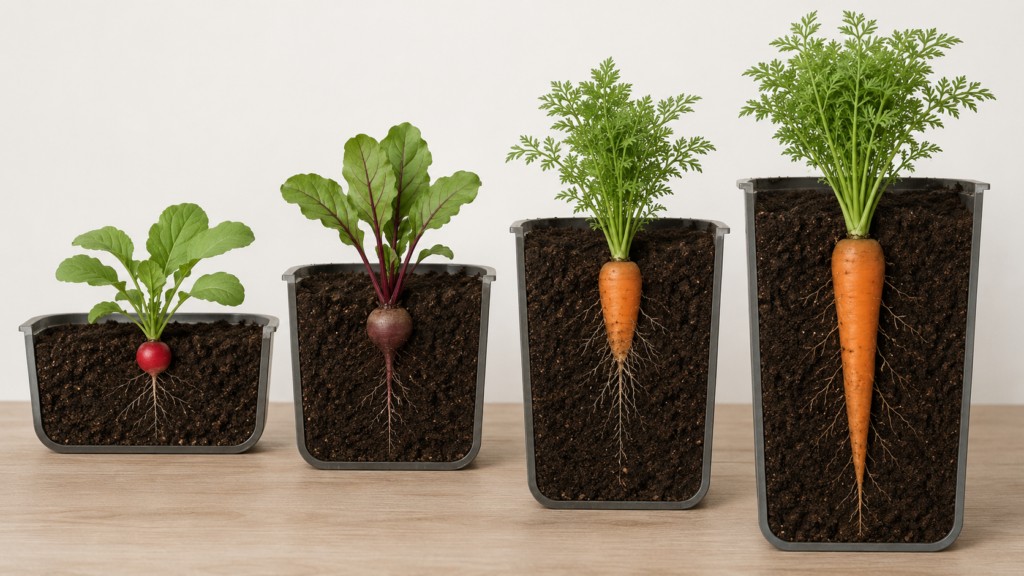
Yes, but root vegetables require more careful selection because the edible part develops underground.
| Root Crop | Practical Depth | Verdict |
|---|---|---|
| Round radish | 4–6+ in / 10–15+ cm | Excellent |
| Baby beet | 8–10+ in / 20–25+ cm | Very Good |
| Short carrot | 10–12 in / 25–30 cm | Conditional |
| Turnip | 10–12+ in / 25–30+ cm | Conditional |
| Standard carrot | 12+ in / 30+ cm | Poor for very shallow planters |
| Parsnip | 12–15+ in / 30–38+ cm | Poor |
Choose compact, round, or short cultivars whenever depth is limited. Look for seed descriptions such as baby, mini, round, globe, short, compact, or stump-rooted.
Root crops also need loose growing media. Dense soil can cause forked carrots, misshapen roots, and poor drainage. Thin seedlings early because crowding may produce healthy leaves but disappointing roots.
For the easiest decision:
- Around 6 inches → radishes
- Around 8–10 inches → baby beets
- Around 10–12 inches → compact carrots
- Deeper containers → more root-crop options
How to Plant Vegetables in a Shallow Planter
Shallow planters give roots less margin for error, so correct setup matters.
Measure the Soil Depth
Measure from the final soil surface to the inside bottom. Do not rely only on the planter’s exterior height.
Check Drainage
Make sure excess water can escape through proper drainage holes. Poor drainage reduces oxygen around roots and can quickly damage plants.
Use Potting Mix
Use a quality container mix that holds useful moisture, drains freely, allows air around roots, and resists compaction. Avoid dense garden soil by itself.
Match the Crop to the Container
- 3-inch tray → microgreens
- 6-inch planter → lettuce, radishes, scallions
- 8–10-inch planter → baby beets and larger greens
- 10–12-inch planter → compact carrots
- Deep large container → larger fruiting vegetables
Match Sunlight to the Crop
Leafy crops such as lettuce and spinach tolerate more partial shade than fruiting vegetables and may benefit from afternoon protection in hot weather. Also consider reflected heat from walls and paving because shallow soil warms quickly.
Space for the Harvest
Baby leaves can be grown closer together than mature plants. Decide whether you want baby leaves, heads, roots, or shoots before setting spacing.
Water Thoroughly
Water the full root zone and let excess water drain. Seeds and young seedlings need closer monitoring because the surface dries quickly.
How to Fertilize Vegetables in Shallow Planters
Shallow planters contain a limited nutrient reserve, and frequent watering can gradually remove soluble nutrients.
Start with quality potting mix and check whether fertilizer is already included. Some commercial mixes contain starter nutrients, while others need feeding later.
Use these principles:
- Follow fertilizer label rates.
- Avoid overfeeding seedlings.
- Monitor long-season or repeatedly harvested crops more closely.
- Refresh growing media between crop cycles when needed.
- Do not assume every yellow leaf means nutrient deficiency.
Before adding fertilizer, check water, drainage, light, spacing, and root room. Fertilizer cannot compensate for a crop that simply does not have enough space.
How to Keep Shallow Planters From Drying Out
Shallow containers dry faster because they hold less growing medium and store less water.
To reduce moisture stress:
- Choose the widest practical planter.
- Avoid overcrowding.
- Use quality moisture-retentive potting mix.
- Water the whole root zone.
- Check moisture more often in hot or windy weather.
- Use mulch around established plants where practical.
- Protect cool-season crops from extreme afternoon heat.
Planter Material Matters
Terracotta and other porous containers can lose moisture more quickly through their walls. Plastic, glazed ceramic, and composite planters generally retain moisture longer, while metal containers can become hot in direct sun.
A shallow container on a windy balcony may therefore need much closer monitoring than the same-sized planter in a sheltered garden. Judge moisture by the actual growing medium rather than by a fixed watering calendar.
Vegetables to Avoid in Shallow Planters
Some crops are container-friendly but still need more soil than a shallow planter provides.
| Crop | Main Problem | Better Option |
|---|---|---|
| Indeterminate tomato | Large root system | Deep large container |
| Potato | Needs tuber space | Grow bag or deep pot |
| Large eggplant | High root demand | Deep container |
| Pumpkin | Large plant and roots | Raised bed or ground |
| Winter squash | Large root and vine system | Large container or ground |
| Long carrot | Root restriction | Short carrot |
| Parsnip | Long root | Deep container |
| Mature cabbage | Large root zone | Deeper wide planter |
| Full-size kale | Large mature plant | Grow as baby kale |
| Large cucumber | Needs more soil volume | Bigger supported container |
The better question is not whether a crop can survive in shallow soil. Ask whether the planter can support a worthwhile harvest without constant stress.
Get More Food From a Shallow Planter
The best way to increase productivity is to maximize harvest cycles, not plant size.
Use Succession Sowing
Plant small batches rather than filling the whole container at once. Harvest one section and replant it while another section is still growing.
Use Cut-and-Come-Again Crops
Lettuce, spinach, arugula, mustard greens, and chard can provide repeated leaf harvests when you remove outer leaves and preserve the center.
Harvest Young
Baby kale, baby beets, pea shoots, garlic greens, and baby lettuce make better use of shallow soil than the same crops pushed to full maturity.
Combine Compatible Crops
Useful combinations include lettuce with scallions or radishes with young lettuce. Avoid mixing so many crops that roots become crowded.
The goal is to maximize useful harvest per square foot and per week of growing time.
Why Vegetables Fail in Shallow Planters
Most problems come from insufficient depth, low soil volume, crowding, rapid drying, poor drainage, unsuitable soil, or the wrong crop.
Wilting Every Afternoon
Check soil moisture, heat exposure, crowding, and planter volume. A wider planter or afternoon protection may help.
Radishes Make Leaves but Small Roots
Thin seedlings, use loose soil, and keep moisture steady. More fertilizer is not automatically the solution.
Carrots Are Bent or Forked
Compacted soil, unsuitable cultivars, or inadequate depth are common causes. Choose shorter varieties and loose potting mix.
Vegetables Stay Small or Leaves Turn Yellow
Check root room, light, spacing, moisture, drainage, and fertility before treating the plant. Limited root space cannot be fixed with fertilizer alone.
Lettuce Turns Bitter or Grows Tall
The plant may be bolting because of heat. Harvest earlier, grow during cooler weather, or provide afternoon protection.
Soil Dries Soon After Watering
The planter may hold too little soil. Try a wider container, fewer plants, mulch, afternoon shade, or a more moisture-stable mix.
When troubleshooting, return to the four basics: Depth + Surface Area + Soil Volume + Drainage.
FAQs About Vegetables for Shallow Planters
What vegetables grow best in shallow planters?
Leaf lettuce, spinach, radishes, green onions, arugula, mustard greens, and microgreens are among the best choices because they can produce useful harvests without a large root zone.
Can vegetables grow in 6 inches of soil?
Yes. About 6 inches (15 cm) can work for lettuce, spinach, radishes, scallions, arugula, and crops harvested as young leaves.
What vegetables grow in very shallow containers?
Containers only 2–4 inches (5–10 cm) deep are best for microgreens and young shoots. Most vegetables grown to maturity need more soil.
Can lettuce grow in a shallow planter?
Yes. Leaf lettuce is one of the easiest choices. Around 6–8 inches (15–20 cm) works well for many varieties.
Can radishes grow in shallow planters?
Yes. Round radishes are among the best shallow root crops and can work in roughly 4–6 inches (10–15 cm) of soil.
Can carrots grow in shallow containers?
Compact carrots can grow in containers, but they are depth-sensitive. Around 10–12 inches (25–30 cm) is a safer target.
Can tomatoes grow in shallow planters?
Tomatoes are poor choices for genuinely shallow containers. Even compact varieties perform better with greater soil volume.
Do shallow planters need more watering?
Usually, yes. Less soil means less stored moisture, especially in hot, sunny, or windy conditions.
What soil is best for shallow vegetable planters?
Use quality container potting mix that holds moisture while draining freely. Avoid dense garden soil alone.
What is the best root vegetable for a shallow planter?
Round radishes are usually the safest choice because they mature quickly and need less vertical room than carrots or parsnips.
Final Takeaway
The best vegetables for shallow planters are crops whose root needs and harvest stage match the available soil.
- 2–4 inches / 5–10 cm: microgreens and shoots
- Around 6 inches / 15 cm: lettuce, spinach, radishes, scallions, arugula, mustard greens
- 8–10 inches / 20–25 cm: baby beets and larger leafy crops
- 10–12+ inches / 25–30+ cm: compact carrots and more demanding vegetables
Then check width, soil volume, drainage, light, moisture, and spacing. Quick leafy crops, radishes, scallions, and succession-sown vegetables can make a shallow planter highly productive.
Match the vegetable to the planter instead of forcing the planter to accommodate the wrong crop.
How We Built This Shallow Planter Depth Guide
This guide uses a depth-first approach and considers container depth, root shape, cultivar size, harvest stage, soil volume, drainage, watering, and succession-growing potential.
The Backyard Planter Ideas 4-Factor Shallow Planter Test combines Depth + Surface Area + Soil Volume + Drainage. It is an editorial framework, not a scientific standard. Where horticultural recommendations differ, the guide favors practical ranges and more forgiving container sizes rather than one universal number.
Sources & References
The guidance in this article is informed by horticultural resources from North Carolina State Extension, UC Cooperative Extension and UC Master Gardeners, Oregon State University Extension, University of Minnesota Extension, Mississippi State University Extension, West Virginia University Extension, and the Royal Horticultural Society.
Use these general ranges alongside the instructions for your specific cultivar, since mature size and container needs vary.

Myra is the founder and lead writer of Backyard Planter Ideas, where she shares practical, well-researched guidance on planter design, plant selection, and outdoor styling. Her goal is to help homeowners create attractive, functional garden spaces with clear, reliable, and easy-to-apply advice.