
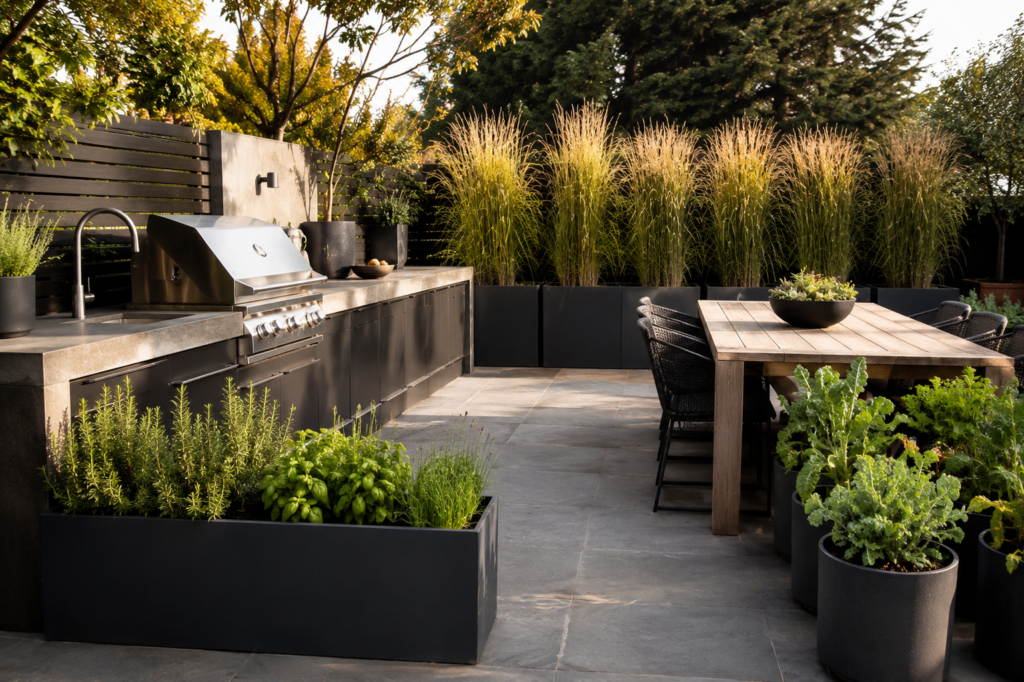
Outdoor kitchen planter ideas work best when they improve cooking, privacy, movement, and appearance at the same time. Keep frequently used herbs near the preparation counter, place taller screening plants around the dining perimeter, and keep dry or overhanging growth away from grills, burners, smokers, and pizza ovens. Every container should drain freely, suit the local climate, and remain easy to reach for watering, harvesting, cleaning, and pruning.
A practical layout divides the space into three zones: cooking, preparation, and dining. The cooking zone should stay open and accessible. The preparation zone should hold herbs and compact edible plants. The dining zone can support privacy troughs, grasses, flowers, and decorative containers. This approach creates a useful garden without turning the kitchen into a crowded collection of pots.
Five Non-Negotiable Outdoor Kitchen Planter Rules
Outdoor kitchen planters must support the kitchen before they decorate it. A planter becomes a problem when it blocks a grill lid, narrows a walkway, hides a utility control, or sends water beneath cabinets. Use five rules for every layout:
- Follow the appliance manufacturer’s clearance requirements.
- Preserve access to doors, lids, controls, seating, and walkways.
- Direct runoff away from cabinets, electrical fittings, gas lines, and paving.
- Match plants to sunlight, shade, reflected heat, wind, and rainfall.
- Plan for mature height, width, roots, litter, and pruning.
Outdoor Kitchen Planter Ideas at a Glance
The right planter depends on the main problem you need to solve. Choose a herb trough for frequent cooking, a wall planter for limited floor space, a trellis planter for vertical privacy, or a mobile container when the layout changes often. These outdoor kitchen planter ideas can be adapted to compact patios, permanent cooking stations, rental spaces, and large entertaining kitchens.
A balanced outdoor kitchen usually needs only three elements:
- One culinary planter
- One privacy or zoning feature
- One repeated decorative element
Fewer, well-positioned containers look intentional and are easier to maintain than many unrelated small pots.
Seven Outdoor Kitchen Planter Ideas for Cooking and Preparation Zones
1. Counter-Height Herb Trough
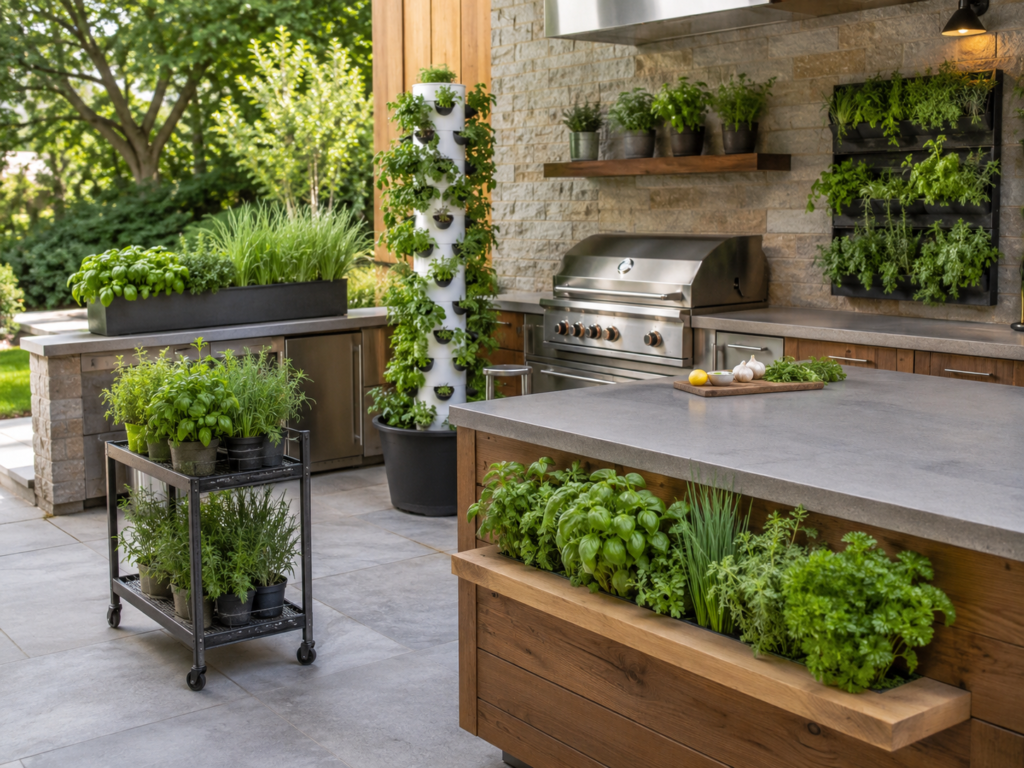
A long trough beside the worktop keeps basil, parsley, chives, and green onions within easy reach. Leave a small gap between the planter and the food-preparation surface so soil and irrigation splash remain controlled. Group herbs with similar moisture needs or divide the trough into sections.
2. Rolling Herb Cart
A rolling cart can move close during cooking and return to a corner afterward. It is useful when plants need protection from storms, cold, or severe afternoon heat. Use locking outdoor casters and confirm the frame can support wet soil and mature plants.
3. Individual Herb Pots
Separate pots suit herbs with different watering habits. Keep mint alone because it spreads quickly, and grow thyme or oregano in drier containers. Matching finishes maintain a coordinated appearance without forcing every herb into the same soil depth.
4. Self-Watering Planter
Self-watering containers help basil, parsley, lettuce, and other moisture-loving plants remain consistent. They still require reservoir checks, open overflow drainage, and the correct potting mix. They are less suitable for herbs that prefer a drier root zone.
5. Wall-Mounted Herb Garden
A wall planter saves floor space and keeps herbs visible. Confirm that the wall can hold the saturated weight, that the highest pockets are reachable, and that drainage cannot reach counters, outlets, or appliances.
6. Vertical Herb Tower
A vertical tower can hold herbs, strawberries, and leafy greens within a small footprint. Put larger plants on lower levels so they do not shade or destabilize the system. Position the tower where every level receives enough light.
7. Built-In Island-End Planter
A built-in planter creates a polished appearance at the end of a permanent island. Use tidy, low-growing plants and include waterproofing, controlled drainage, and repair access. Never place soil directly against outdoor cabinetry.
Eight Outdoor Kitchen Planter Ideas for Privacy and Dining Zones
8. Tall Privacy Trough
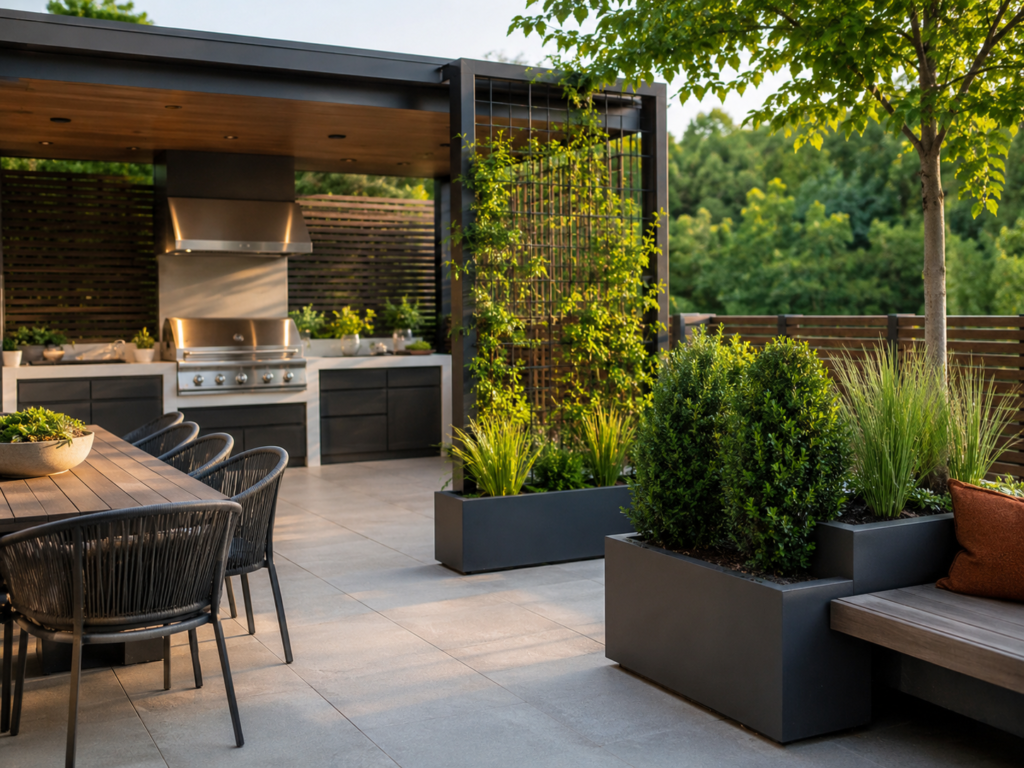
A long trough behind seating can screen a neighboring window or exposed boundary. Consider the combined height of the container and mature plant. A stable medium-height shrub may provide better long-term privacy than tall stems in a shallow pot.
9. Trellis Planter
A trellis planter adds vertical screening without using much floor space. Choose a locally suitable, non-invasive climber that can be kept within the available width. Avoid thorny or heavy-fruiting vines beside seats and walkways.
10. Repeated Square Planters
Matching square planters create rhythm and partial screening while leaving gaps for airflow. Repeat one plant type, or alternate two compatible plants, for a controlled formal look.
11. Ornamental-Grass Planter
Clumping grasses add movement and soft seasonal privacy. Choose non-invasive varieties, remove dry growth regularly, and keep the planter outside the immediate heat and flame zone.
12. Evergreen Screen
Compact evergreen shrubs provide year-round structure. Select naturally small plants rather than large hedge species that require constant pruning to remain suitable for containers.
13. Corner Planter Group
Combine one tall plant, one medium container, and one low pot in an unused corner. Keep the group outside the main carrying route and repeat related colors or materials so it feels intentional.
14. Mobile Privacy Planter
A tall planter on locking wheels can screen the dining area during gatherings and move aside when more open space is needed. Test stability after planting because wet soil adds considerable weight.
15. Integrated Planter Bench
A planter bench combines seating, greenery, and zoning. Use plants without thorns, sharp leaves, aggressive roots, toxic fruit, or heavy litter near guests.
Six Outdoor Kitchen Planter Ideas for Small Spaces and Design Style
16. Narrow Railing Planter
A secure railing planter can grow herbs and shallow-rooted greens without using floor space. Confirm the railing and attachment system can support the fully watered container.
17. Mediterranean Terracotta Group
Group terracotta pots containing thyme, oregano, and sage along a sunny dining edge. Repeat the same pot shape in different sizes to create variety without visual clutter.
18. Modern Concrete Trough
A rectangular concrete trough can echo the lines of cabinets and paving. Repeat one low-litter plant for a clean architectural effect. Test the location before filling it because concrete becomes difficult to move.
19. Rustic Wooden Raised Planter
A lined timber planter provides more soil for herbs, lettuce, peppers, or strawberries. Keep it away from direct heat and prevent water from collecting beneath the base.
20. Pollinator Planter
Place locally appropriate flowering plants along the garden-facing edge. This adds seasonal color and supports beneficial insects without concentrating petals or pollinators beside uncovered food.
21. Compact Vegetable Container
Use correctly sized containers for peppers, lettuce, radishes, green onions, strawberries, or patio tomatoes. Match the crop to the available sunlight and root volume rather than forcing large plants into decorative pots.
Plan the Planters Around Three Outdoor Kitchen Zones
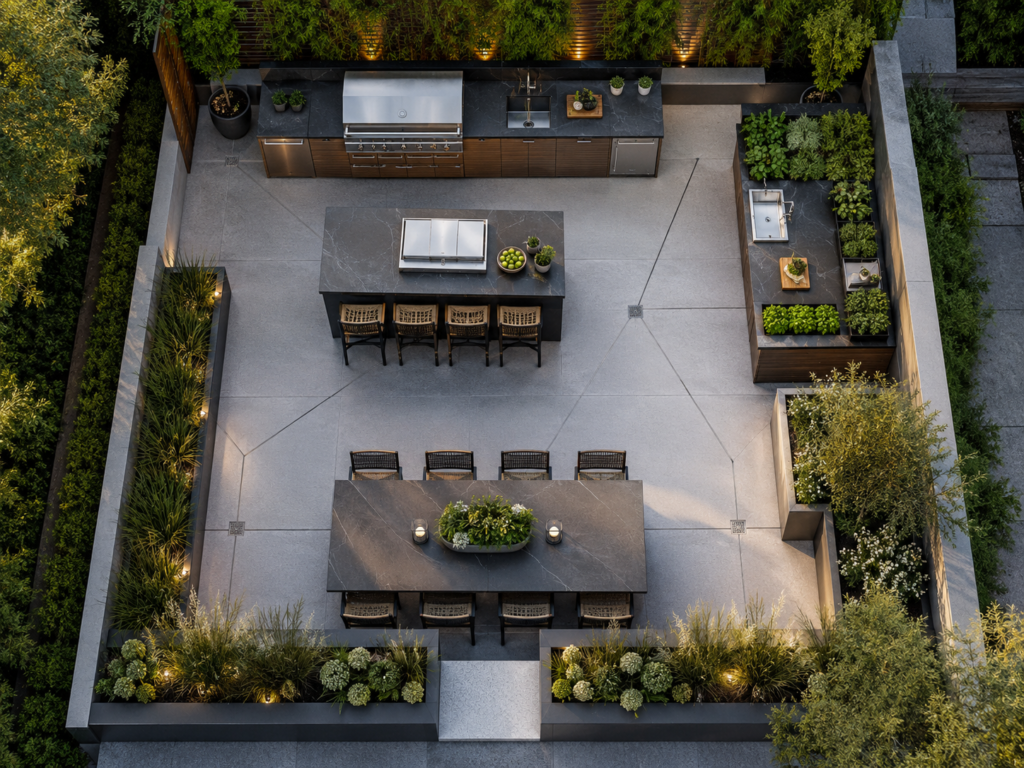
The cooking zone includes grills, burners, smokers, and ovens. Keep it open for ventilation, lid movement, cleaning, utility access, and safe carrying. No planter should enter an appliance clearance or allow foliage to grow toward heat or exhaust.
The preparation zone includes counters, sinks, storage, and the route from the house. This is the best location for culinary herbs because they remain useful without occupying dining space. Keep soil and irrigation water away from food surfaces.
The dining zone can support taller containers, trellises, grasses, shrubs, flowers, and integrated seating. Use planting to block specific sightlines rather than enclosing every side and reducing airflow. In limited spaces, the best outdoor kitchen planter ideas use walls, railings, corners, and movable containers before occupying the central walkway.
Three Sample Outdoor Kitchen Planter Layouts
Compact Layout
For a balcony or small grill station, use one wall herb planter, three individual herb pots, and one narrow railing planter. Keep the central floor open and avoid large shrubs.
Medium Layout
For a family patio, combine one counter-height herb trough, one slim privacy planter, and one movable vegetable container. Concentrate decorative plants around the dining edge.
Large Entertaining Layout
For a permanent kitchen, use a rolling herb cart, two privacy troughs behind seating, repeated ornamental planters along the perimeter, and separate irrigation zones.
These are planning examples, not universal clearance standards. Appliance instructions, actual measurements, structural limits, and local requirements always take priority.
Outdoor Kitchen Planter Fit Score
Choose a planter according to the feature you value most:
- Best for harvesting: counter-height herb trough
- Best for flexibility: rolling herb cart
- Best for limited floor space: wall planter
- Best for permanent privacy: tall trough
- Best for narrow screening: trellis planter
- Best for food production: compact vegetable container
- Best for integrated seating: planter bench
Consider long-term demands as well as immediate benefits. A herb trough needs regular harvesting but supports cooking. A privacy shrub may need less frequent attention but requires more soil, pruning, and water. Select the option whose benefits justify the space and maintenance it consumes.
Culinary Herb Planter Ideas Near the Preparation Area
Grow herbs you actually use. Basil, parsley, chives, thyme, oregano, sage, cilantro, mint, dill, and rosemary are practical, but they should not all share one container.
Group basil, parsley, chives, and cilantro where moisture remains more consistent. Grow thyme, oregano, sage, and rosemary in freer-draining conditions. Keep mint separate, and give dill or mature perennial herbs deeper containers.
Keep herb planters close enough for convenient harvesting but far enough from the worktop to prevent soil, insects, or irrigation splash from reaching food. A convenient planter is more likely to be harvested, inspected, and maintained regularly.
Privacy and Zoning Planters for Outdoor Kitchens
Use tall troughs and compact evergreens for permanent screening. Choose trellis planters where width is limited, mobile screens for flexible entertaining, and clumping grasses for softer seasonal privacy. Privacy-focused outdoor kitchen planter ideas should screen exposed views while preserving airflow, seating comfort, and clear movement around the cooking area.
The best privacy design blocks one uncomfortable sightline while preserving airflow and open movement. Dense planting on every side can trap smoke and make a small patio feel crowded.
For formal kitchens, repeat square containers and one plant type. For relaxed spaces, use a looser combination of grasses, shrubs, and flowers along the outer edge.
Best Plants for Outdoor Kitchen Planters
Choose plants according to function and location:
- Culinary herbs for the preparation zone
- Compact vegetables for sunny outer areas
- Evergreen shrubs for year-round privacy
- Ornamental grasses for soft screening
- Flowers for the garden-facing edge
- Vines for narrow vertical boundaries
Low-litter plants are usually better near counters and dining furniture. Keep thorny plants, sticky fruit, and heavy flower drop away from walkways and food surfaces.
Check local guidance before choosing shrubs, vines, fruit trees, coastal plants, tropical foliage, or drought-tolerant species. A plant that performs well in one region may fail or become invasive elsewhere.
Choose Planters That Handle Heat, Water and Outdoor Use
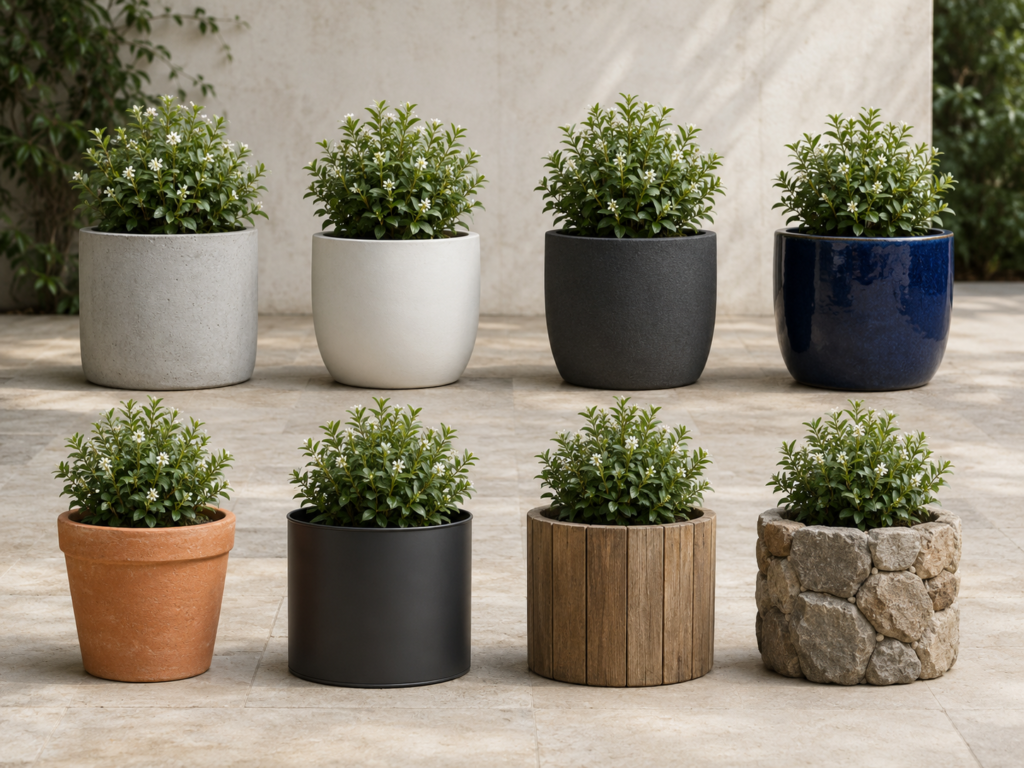
Concrete and stone are stable but heavy. Fiberglass and composite planters provide large sizes with less weight. Terracotta suits drier herbs but loses moisture quickly. Ceramic adds color but may crack in freezing weather. Metal looks modern but can heat rapidly. Timber suits rustic raised beds but needs lining and protection.
Choose according to the site:
- Permanent, windy area: concrete or stone
- Rooftop or movable layout: fiberglass
- Traditional herb display: terracotta
- Rental patio: composite or recycled plastic
- Rustic kitchen: lined timber
- Strong direct sun: insulated or light-colored containers
Always consider the completed wet weight, not the empty product weight. Dark metal or composite containers can absorb heat, so use liners or move sensitive roots away from strong reflected afternoon sun.
Built-In vs Freestanding Outdoor Kitchen Planters
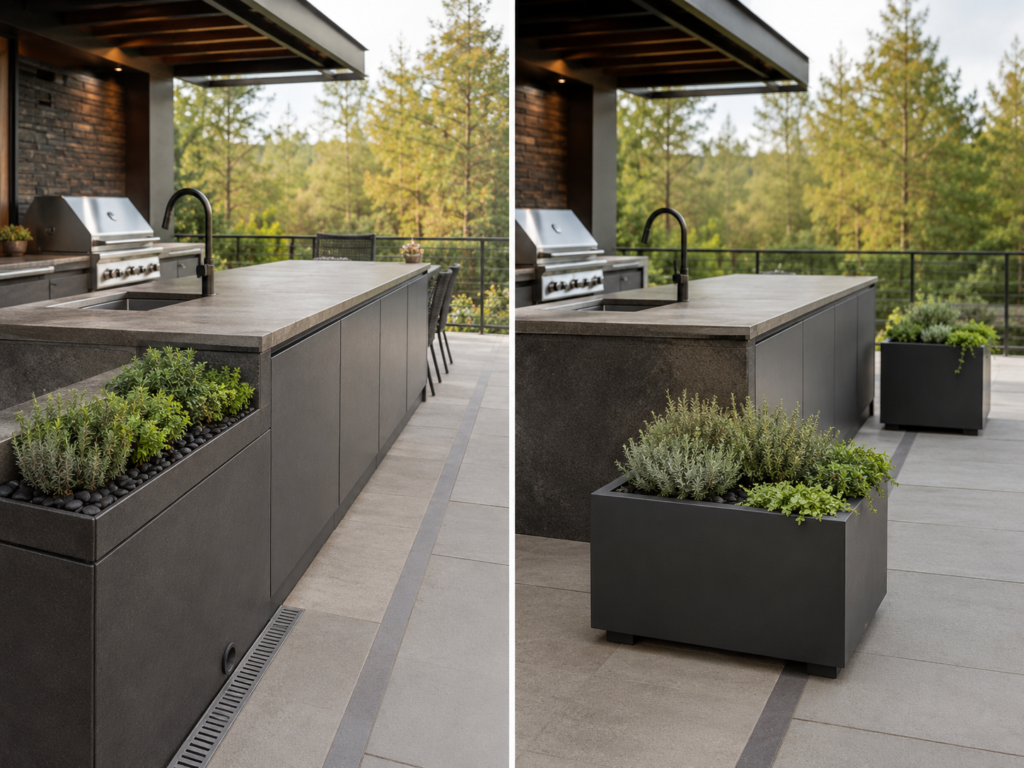
Built-in planters create a seamless architectural appearance but require professional waterproofing, controlled drainage, root containment, and repair access. They are best planned during construction.
Freestanding planters are easier to move, inspect, replace, and protect seasonally. They also allow plants with different soil and watering needs to remain separate.
Choose built-in planters for permanent, professionally designed kitchens. Choose freestanding planters for existing patios, rentals, changing layouts, and easier maintenance. For most homes, freestanding containers offer the better balance of flexibility, cost, and service access.
Small Outdoor Kitchen Planter Ideas
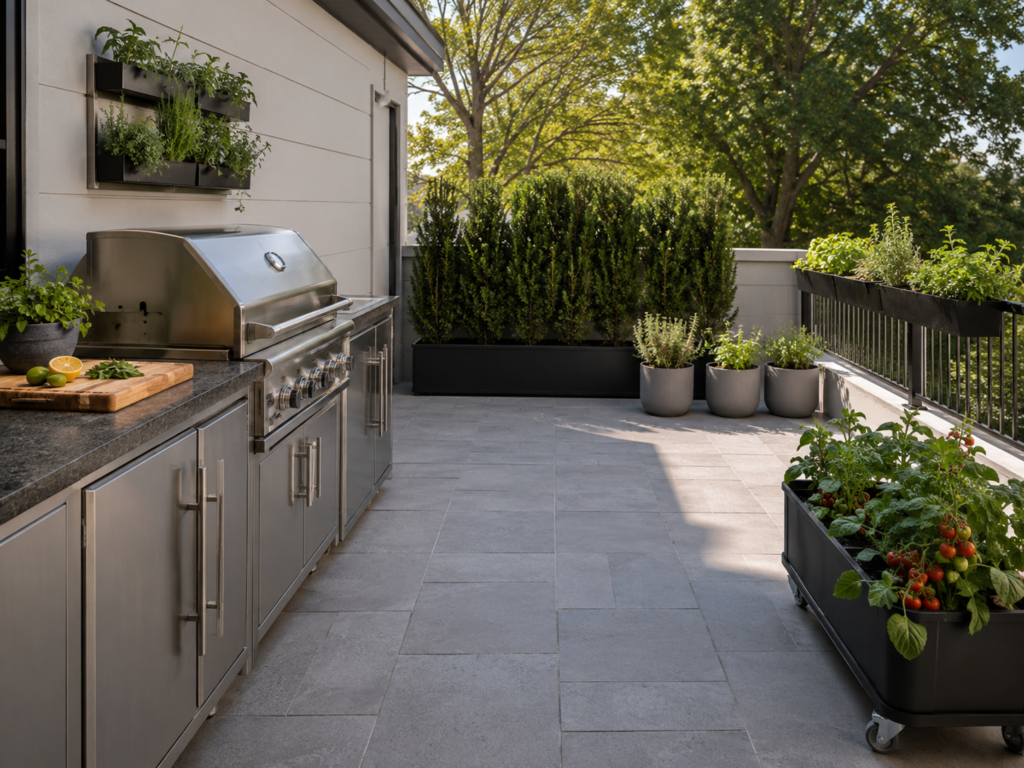
Small kitchens should use vertical surfaces, corners, railings, and mobile containers before central floor space. One narrow trough often works better than several small pots. In limited spaces, the best outdoor kitchen planter ideas use walls, railings, corners, and movable containers before occupying the central walkway.
A practical compact arrangement may include:
- One wall herb planter
- One narrow privacy container
- Three matching herb pots
- One rolling vegetable planter
Test the empty layout by opening every door, moving chairs, and walking through while carrying a tray. Remove any container that interrupts the main service route.
Outdoor Kitchen Planters by Design Style
Modern kitchens suit rectangular troughs, neutral finishes, repeated plants, and clean lines. Rustic kitchens work well with timber, stone, terracotta, herbs, and relaxed groupings.
Mediterranean designs can use terracotta, pale gravel, aromatic herbs, and climate-suitable citrus or olive-type plants. Tropical layouts benefit from broad foliage around the dining perimeter, away from cooking equipment.
Cottage kitchens can combine painted timber, herbs, edible flowers, and seasonal color. Luxury kitchens usually look strongest with fewer oversized planters, specimen plants, concealed irrigation, and coordinated lighting.
Drainage and Irrigation Without Staining the Patio
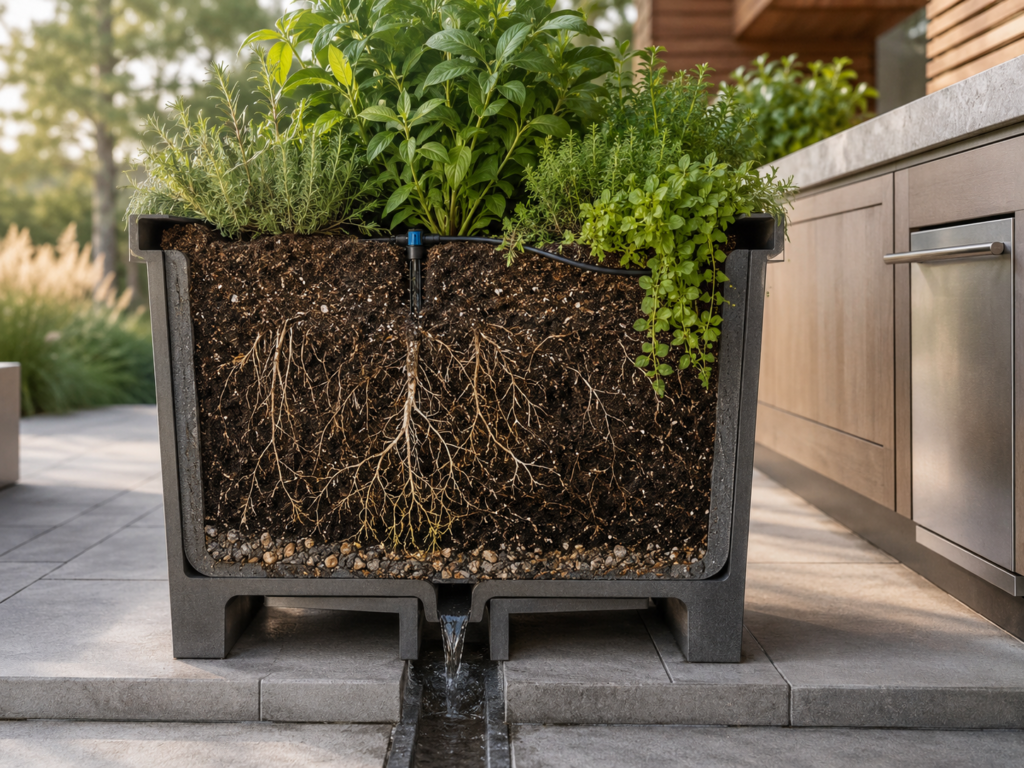
Every planted container needs open drainage. Use container potting mix rather than dense garden soil, and raise pots where airflow or cleaning access is needed.
Direct runoff away from cabinets, electrical fittings, gas lines, walls, walkways, pools, and neighboring property. Trays may protect paving, but they should not remain full of standing water.
Drip irrigation can reduce daily work, but different planters need different flow rates. Adjust watering according to heat, wind, rainfall, planter material, plant size, and sun exposure rather than following one fixed schedule.
What Not to Put Beside a Grill or Food-Preparation Area
Avoid:
- Dry or overhanging vegetation
- Planters inside appliance clearances
- Top-heavy containers
- Thorny plants beside walkways
- Fruit-dropping plants over counters
- High-litter plants near food
- Pots without drainage
- Plants requiring frequent spraying
- Cluttered groups of small containers
Keep the immediate cooking zone open, place useful herbs in the preparation zone, and reserve decorative or high-volume planting for the dining perimeter.
Build Your Outdoor Kitchen Planter Layout Step by Step
- Measure the patio, kitchen units, seating, and walkways.
- Mark appliance clearances and utility access.
- Observe sun, shade, wind, runoff, and reflected heat.
- Divide the area into cooking, preparation, and dining zones.
- Give every planter one primary purpose.
- Choose materials according to climate and mobility.
- Check mature plant height, width, and roots.
- Group plants with compatible needs.
- Plan drainage before adding soil.
- Test the empty layout.
- Install irrigation and lighting.
- Plant at the correct depth.
- Preserve a maintenance route.
Do not fill heavy containers until the layout has passed a real movement test.
Outdoor Kitchen Planter Ideas by Climate
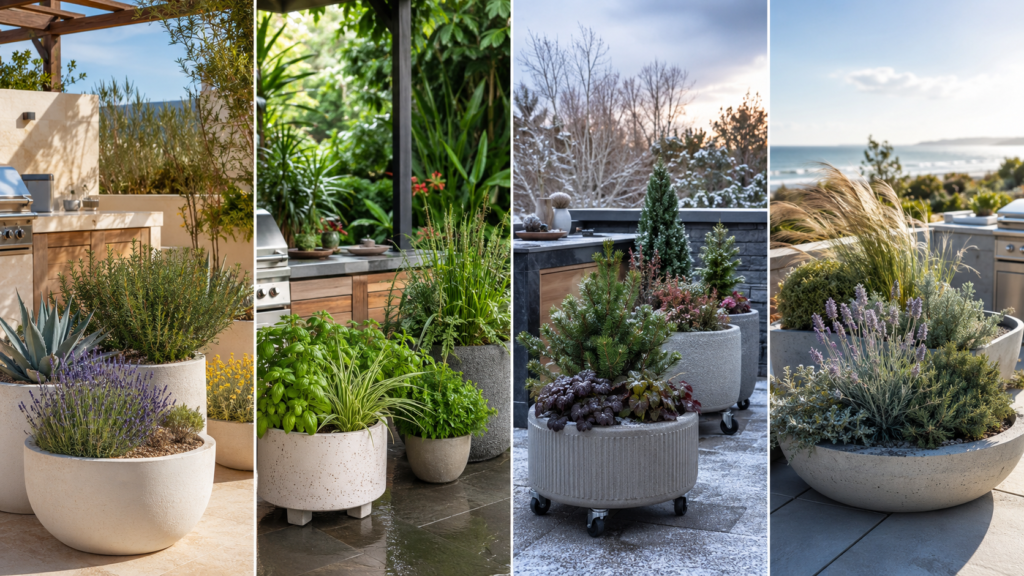
Hot, dry climates need larger soil volumes, efficient irrigation, and protection from severe afternoon heat. Hot, humid climates need excellent drainage, airflow, and wider plant spacing.
Temperate climates benefit from permanent structural plants combined with seasonal herbs and flowers. Cold-winter climates need frost-resistant or movable containers.
Coastal sites require stable planters, corrosion-resistant hardware, and salt-tolerant local plants. Shaded kitchens should use foliage plants and shade-tolerant herbs rather than sun-loving fruiting crops.
Rooftops and exposed decks require structural load checks, secure trellises, wind-stable containers, and controlled drainage. Decide whether plants will remain outside, move into shelter, or be replaced seasonally before choosing heavy containers or permanent irrigation.
Outdoor Kitchen Planter Maintenance Schedule
Every few days, check soil moisture, harvest herbs, inspect irrigation, remove debris, and empty standing water.
Weekly, remove dry foliage, clean beneath pots, check that plants are not entering walkways, inspect trellises, and wipe grease from nearby containers.
Monthly, test drainage, inspect wheels and brackets, rotate movable pots, check paving for stains, and review plant size.
Seasonally, adjust irrigation, replace tired annuals, protect frost-sensitive plants, inspect planter materials, remove dead growth, and confirm that appliance access remains clear.
FAQs
What are the best outdoor kitchen planter ideas?
Herb troughs, rolling carts, vertical planters, privacy troughs, trellis planters, and compact vegetable containers are strong choices. Select them according to cooking convenience, privacy, space, and maintenance.
What plants are best around an outdoor kitchen?
Use culinary herbs, compact vegetables, low-litter ornamentals, grasses, and compact evergreens. Match every plant to sunlight, heat, wind, climate, and container depth.
Can herb planters be placed next to a grill?
Yes, but keep them outside required clearances and away from direct heat, flame, grease, and exhaust. Place them in the preparation zone.
How far should a planter be from a grill?
Follow the appliance manufacturer’s instructions. Allow additional space for mature foliage, ventilation, lid movement, and cleaning.
Do outdoor kitchen planters need drainage holes?
Yes. Open drainage protects roots and prevents standing water. Direct runoff away from cabinets, wiring, and walking surfaces.
Are built-in or freestanding planters better?
Freestanding planters suit most patios because they are flexible and easy to maintain. Built-in planters need professional waterproofing and drainage.
What planters work best in small spaces?
Wall systems, vertical towers, narrow troughs, railing planters, and rolling containers preserve the most floor space.
Should all outdoor kitchen planters match?
They do not need to be identical, but repeating one material, color, finish, or shape creates a more intentional overall design.
Final Outdoor Kitchen Planter Checklist
Safety and Access
- Appliance clearances remain open.
- Lids, doors, and controls remain accessible.
- Walkways are unobstructed.
- No foliage enters the heat zone.
Plant and Container Suitability
- Plants suit the climate and exposure.
- Mature size has been considered.
- Water requirements are compatible.
- Containers are stable and weather suitable.
Drainage and Maintenance
- Every planter drains freely.
- Runoff avoids cabinets and walkways.
- Irrigation remains accessible.
- All plants can be reached for care.
Design and Use
- Every planter has a clear purpose.
- Privacy targets a real sightline.
- Materials and colors are coordinated.
- The empty layout has been tested.
Review the layout after several cooking sessions. Move any planter that collects grease, dries too quickly, blocks conversation, or requires awkward maintenance. Real use often reveals problems that are not obvious on an empty patio.
Conclusion
The best outdoor kitchen planter ideas improve cooking, privacy, and appearance without creating obstacles, drainage problems, or excessive maintenance. Keep the cooking zone open, place useful herbs near preparation, and use taller plants around the dining perimeter.
Choose climate-appropriate plants, durable containers, and controlled drainage. A small number of purposeful planters will usually create a safer, cleaner, and more attractive outdoor kitchen than a crowded collection of decorative pots.

Myra is the founder and lead writer of Backyard Planter Ideas, where she shares practical, well-researched guidance on planter design, plant selection, and outdoor styling. Her goal is to help homeowners create attractive, functional garden spaces with clear, reliable, and easy-to-apply advice.