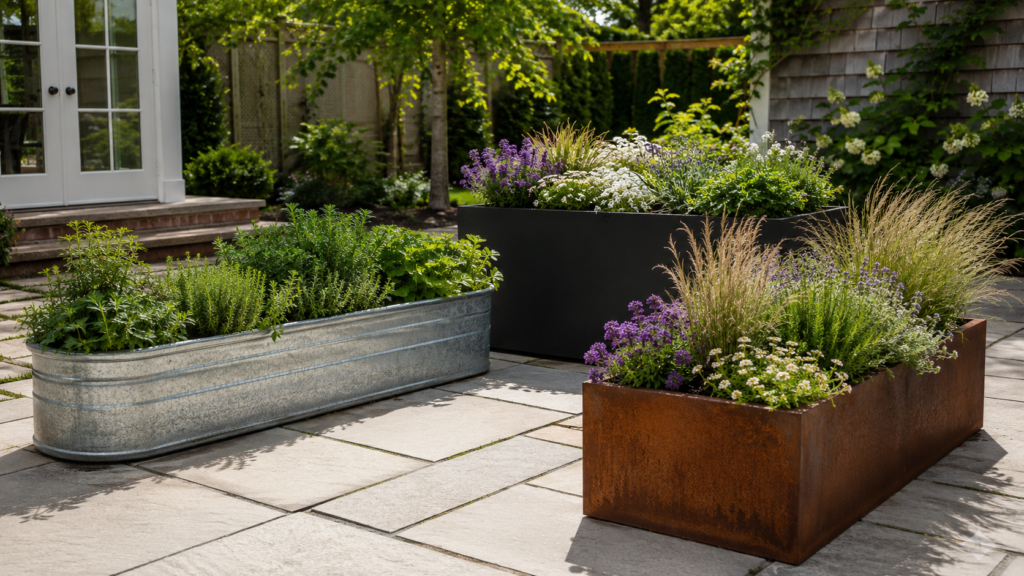
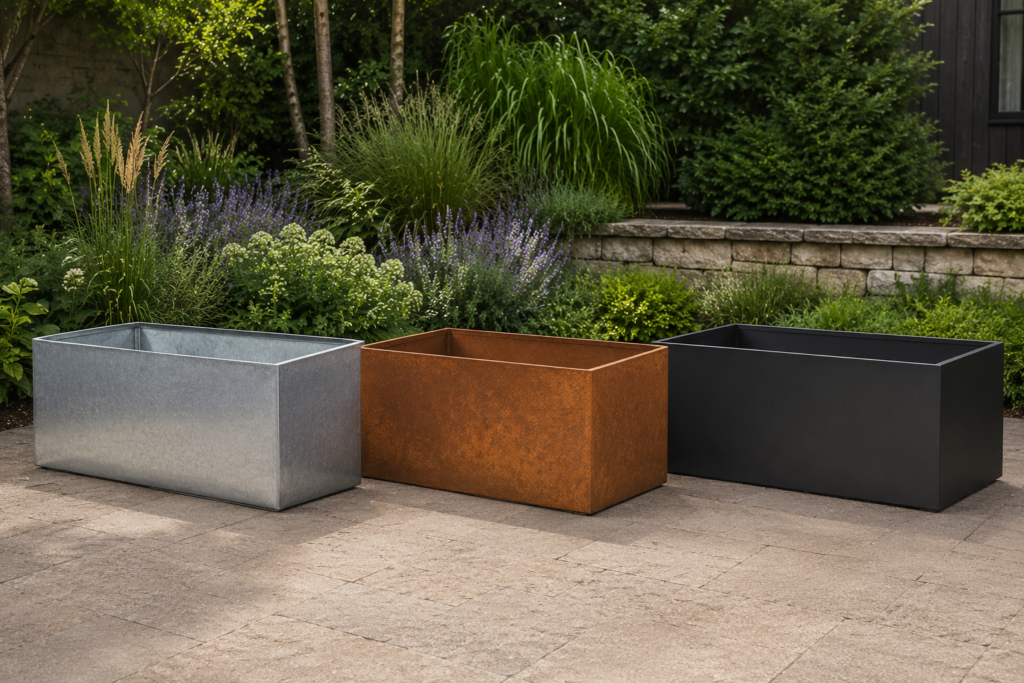
Metal planter box ideas can add flowers, vegetables, privacy and structure to patios and backyards without requiring permanent garden beds. The best design depends on available space, sunlight, plant depth, drainage and the supporting surface. Galvanized steel is practical for edible gardens, aluminum suits lightweight patio arrangements, powder-coated steel complements modern spaces, and Corten steel creates a strong permanent focal point.
Which Metal Planter Box Should You Choose?
Choose a planter according to its purpose before selecting its color or finish. A shallow box may suit annual flowers but fail with tomatoes or shrubs. A lightweight planter works on a flexible patio, while a permanent privacy screen needs greater soil volume and wind stability.
Use these starting recommendations:
- Small patio: Aluminum or a narrow galvanized trough
- Vegetable garden: Deep galvanized planter
- Modern seating area: Powder-coated steel
- Permanent focal point: Corten steel
- Rental property: Lightweight box with inserts or wheels
- Privacy screen: Deep rectangular planter
- Coastal garden: Outdoor-rated aluminum or stainless steel
Check internal dimensions, drainage-hole placement and empty weight. A false bottom may make a tall planter look deep while providing only a shallow root zone. These metal planter box ideas work best when the planter’s internal depth, drainage system and completed weight match its intended plants and location.
Metal Planter Fit Score
The best metal planter box ideas begin with a material that can handle the site’s heat, rainfall, salt exposure and maintenance conditions. Use this score as a quick comparison. A rating of 1 means the material needs more management, while 5 indicates a stronger general fit.
| Material | Hot sites | Wet sites | Coastal sites | Movability | Maintenance |
|---|---|---|---|---|---|
| Galvanized steel | 3 | 4 | 3 | 2 | 4 |
| Corten steel | 2 | 3 | 2 | 1 | 3 |
| Powder-coated steel | 3 | 4 | 2 | 2 | 3 |
| Aluminum | 4 | 5 | 4 | 5 | 5 |
| Stainless steel | 3 | 5 | 5 | 2 | 5 |
| Mild steel | 2 | 1 | 1 | 2 | 1 |
Galvanized steel offers the best general balance for raised beds and food gardens. Aluminum is easier to move and performs well in wet or coastal locations. Corten steel is best where weight and rust-colored runoff are acceptable.
Construction quality still matters. Wall thickness, fasteners, coating and drainage can make two planters made from the same metal perform very differently.
21 Metal Planter Box Ideas at a Glance
| Idea | Best location | Main use |
|---|---|---|
| Narrow herb trough | Patio wall | Culinary herbs |
| Matching tall planters | Entrance | Vertical structure |
| Metal cube trio | Small patio | Layered display |
| Rolling planter | Flexible patio | Movable zoning |
| Tiered boxes | Compact area | Herbs and strawberries |
| Corten focal box | Open yard | Architectural feature |
| Fence-line trough | Boundary | Screening |
| L-shaped planter | Corner | Space efficiency |
| Stock-tank island | Lawn or gravel | Large planting bed |
| Mixed-height cluster | Patio edge | Ornamentals |
| Trellis planter | Wall or fence | Climbers |
| Grass screen | Patio boundary | Privacy |
| Planter-backed bench | Seating zone | Enclosure |
| Walkway divider | Large patio | Zoning |
| Herb planter | Kitchen door | Food growing |
| Salad trough | Morning sun | Leafy crops |
| Tomato box | Sunny yard | Fruiting crops |
| Strawberry planter | Patio edge | Easy harvesting |
| Corrugated metal box | Backyard | DIY project |
| Converted stock tank | Yard or patio | Budget raised bed |
| Repurposed box | Covered area | Ornamentals |
Choose an idea that solves a clear need rather than adding another decorative object to the yard.
Three Ready-to-Use Metal Planter Layouts
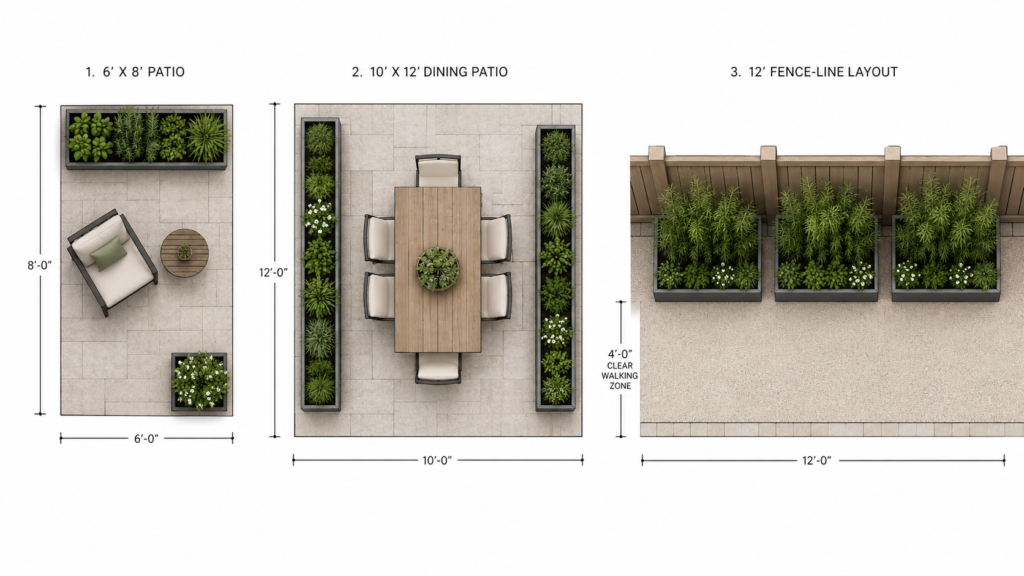
These measured metal planter box ideas show how planters can fit around seating, walking routes and backyard boundaries without overcrowding the space.
6 × 8 Foot Small Patio Layout
Place one 36 × 12-inch herb trough along the wall nearest the kitchen. Add two 16-inch square tall planters in the rear corners.
Keep the center open and maintain about 36 inches of walking space. Use upright plants in the corners and compact herbs in the trough.
10 × 12 Foot Dining Patio Layout
Place two 48 × 16-inch rectangular planters along the outer edges. Add a 30-inch rolling herb box near the cooking area.
Use low plants beside chairs and taller plants at the far corners. Allow approximately 42 inches around the table where possible.
12 Foot Fence-Line Privacy Layout
Use three 42 × 18 × 24-inch planters with 6-inch gaps between them. Fill them with grasses, compact shrubs or supported climbers.
Leave access behind the planters for fence maintenance and secure tall screens in windy areas.
Small Patio Metal Planter Ideas
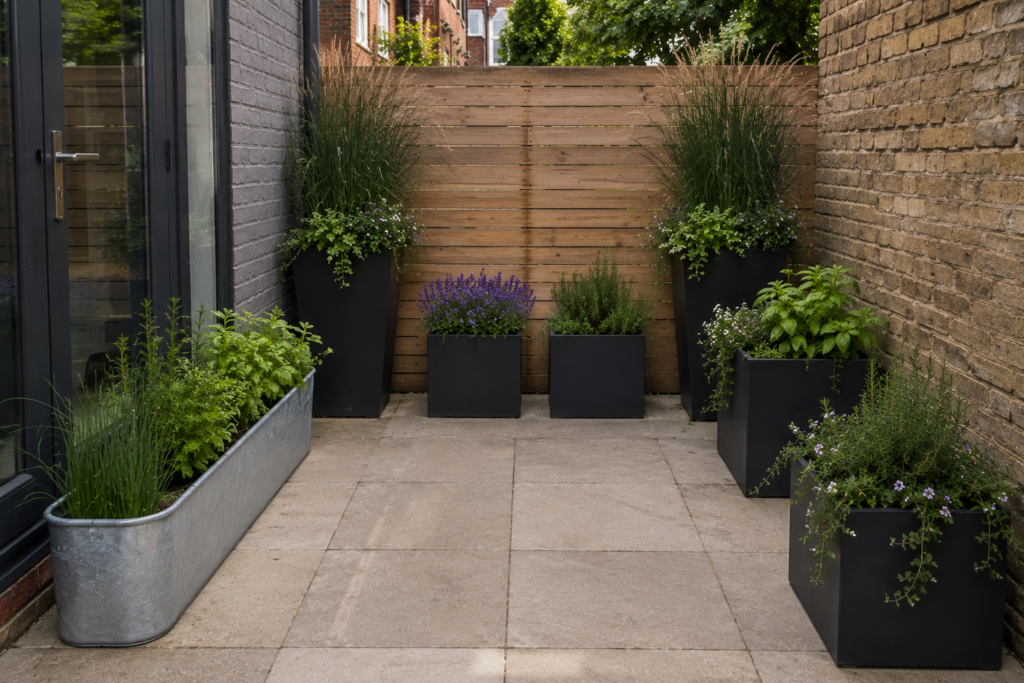
Small-patio metal planter box ideas should use walls, corners and vertical space while keeping the main walking area open.
1. Narrow Galvanized Herb Trough
A 24–36-inch trough can hold several herbs without taking up much floor space. Position it near the kitchen and group plants by watering needs.
Rosemary, thyme and oregano prefer drier conditions. Basil, parsley and chives need steadier moisture. Keep mint in its own insert.
2. Tall Matching Corner Planters
Matching tall planters can frame a doorway or outdoor dining area while drawing the eye upward.
Use grasses, compact shrubs or upright seasonal flowers. Avoid top-heavy trees unless the planter is wide and stable.
3. Three Metal Cube Planters
Arrange three cubes in a triangle rather than a straight row. Vary either the container height or plant height.
Place the tallest element at the back and leave visible paving between the boxes to prevent clutter.
4. Rolling Metal Planter Box
A rolling planter can divide seating areas or move with changing sunlight.
Use locking outdoor casters rated for the full wet weight. Keep tall trellises off mobile boxes unless the planter remains sheltered.
5. Tiered Metal Box Garden
Tiered boxes provide several planting levels in a small footprint. They suit herbs, strawberries, lettuce and trailing flowers.
Give each tier its own drainage route and keep all levels within comfortable reach.
Backyard Metal Planter Ideas
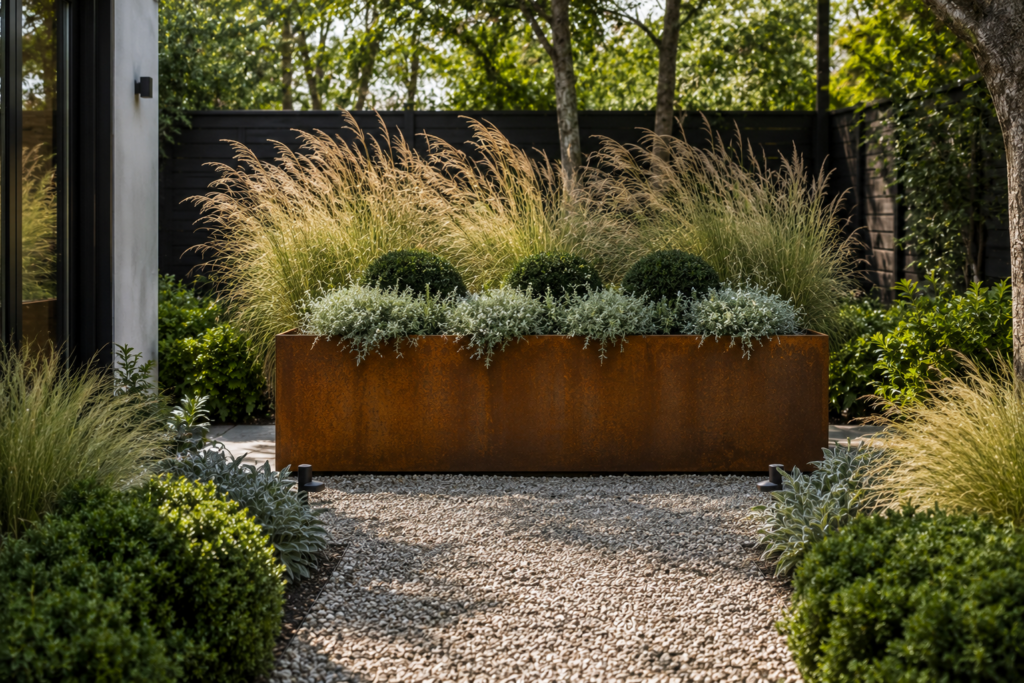
Backyard metal planter box ideas can support larger plants, deeper soil and more permanent landscape arrangements than compact patio boxes.
6. Corten Steel Focal-Point Box
A large Corten planter works as an architectural feature at the end of a path, beside a wall or within gravel.
Pair it with grasses, silver foliage or compact shrubs. Control runoff because the developing patina can stain pale surfaces.
7. Long Fence-Line Metal Trough
A long trough can soften a fence or create a raised border where digging is difficult.
Repeat a simple planting sequence instead of using many unrelated species. Leave enough room for fence repairs and airflow.
8. Modular L-Shaped Metal Planter
An L-shaped planter fits around corners, outdoor kitchens and seating areas.
Use modular sections for easier transport and leveling. Place the tallest plant at the inner corner and lower plants toward each end.
9. Galvanized Stock-Tank Island
A stock tank creates a large freestanding bed for vegetables or flowers.
Position and level it before filling. Check drainage, hose access and the route around the tank because it will become extremely heavy.
10. Mixed-Height Metal Planter Cluster
Combine three to five planters with one matching finish and different heights.
Use one dominant box, one or two supporting planters and one low accent. Repeat one foliage color to connect the group.
Metal Planters for Privacy and Zoning
11. Trellis Planter for Climbers
A deep planter with a secured trellis can support jasmine, clematis, beans or annual vines.
Install the support before filling and attach it to the frame. Tall screens may require anchoring in exposed locations.
12. Ornamental-Grass Privacy Screen
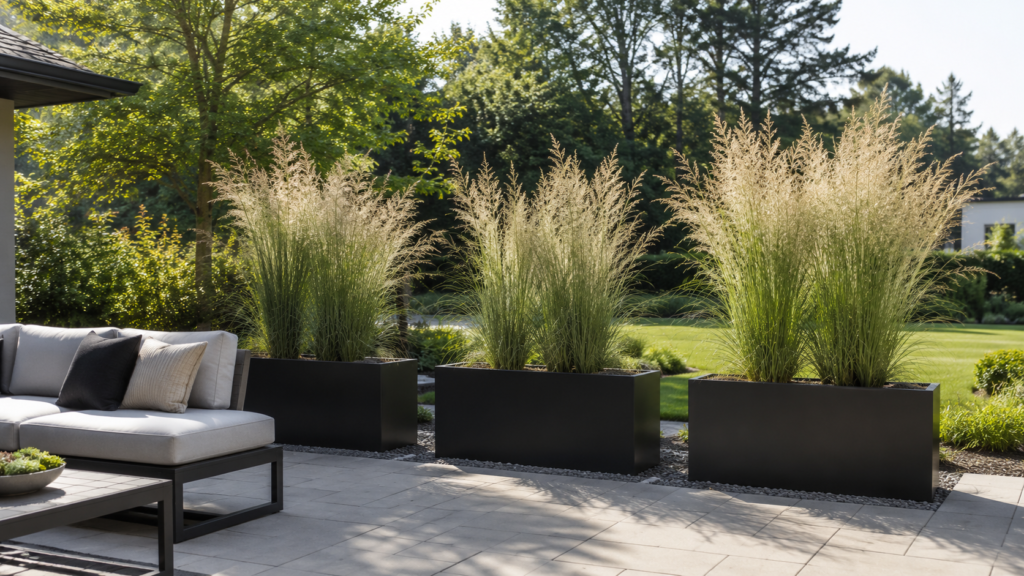
A repeated row of metal planters filled with clumping grasses creates filtered privacy.
Choose non-invasive grasses and space them according to mature width. Combine them with compact evergreens if year-round coverage is required.
13. Planter-Backed Garden Bench
Place a long planter behind seating to add enclosure, fragrance and movement.
Use soft grasses, herbs or flowering perennials. Allow enough space so mature foliage does not press against people using the bench.
14. Metal Planter Walkway Divider
Low planters can divide cooking, dining and relaxation zones without forming a solid wall.
Maintain at least 36 inches for a simple passage and more where people move chairs or carry food.
Edible Metal Planter Ideas
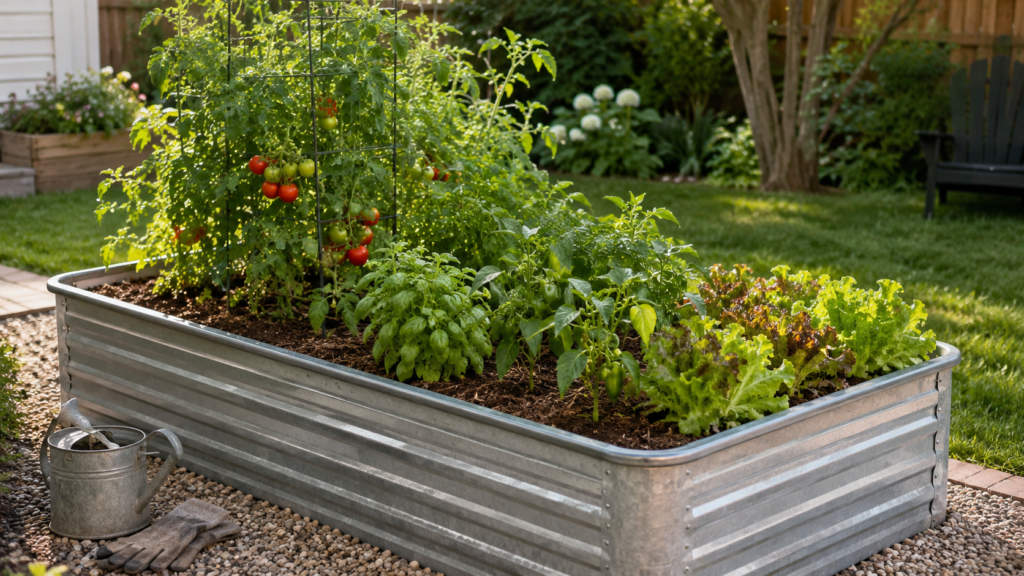
Edible metal planter box ideas need purpose-made materials, sufficient root depth and reliable drainage for herbs, vegetables and strawberries.
15. Back-Door Herb Planter
A raised herb box near the kitchen makes harvesting easier.
Group Mediterranean herbs in the drier section and moisture-loving herbs in another. Keep spreading mint contained.
16. Shallow Salad-Green Trough
A wide trough with about 12 inches of soil can support lettuce, spinach, rocket and radishes.
Provide afternoon shade in hot climates and sow small sections every few weeks for a longer harvest.
17. Tomato and Pepper Trellis Box
Use at least 15–18 inches of usable depth for compact tomatoes and peppers.
Install supports before planting, avoid overcrowding and mulch the surface to reduce moisture loss.
18. Metal Strawberry Planter
A raised trough allows strawberries to hang over the edge instead of resting on wet soil.
Provide 10–12 inches of growing depth, maintain consistent moisture and remove unwanted runners.
DIY and Budget Metal Planter Ideas
19. Timber-Framed Corrugated Metal Box
A timber frame provides structure while corrugated metal forms the sides.
Use exterior-rated timber, compatible fasteners and internal bracing. Fold or cover exposed metal edges.
20. Converted Stock-Tank Planter
A new or known-history stock tank can become an affordable raised bed.
Add adequate drainage holes before filling. A rock layer does not replace a functioning drainage outlet.
21. Repurposed Metal Flower Box
Toolboxes, tubs and drawers can hold ornamental flowers when their previous use is known.
Smooth sharp edges, add drainage and reserve containers with uncertain coatings for non-edible plants.
Galvanized, Corten or Aluminum: Which Metal Is Best?
Galvanized Steel
Galvanized steel is practical, widely available and suitable for many herb and vegetable beds.
Inspect scratches, cut edges and drilled holes. Choose purpose-made garden products for food growing.
Weathering Steel
Weathering steel develops a warm orange-brown patina that suits modern and rustic gardens.
Use it as a permanent feature and provide a stain-tolerant drainage area.
Powder-Coated Steel
Powder-coated steel offers controlled colors such as black, charcoal or white.
Avoid dragging it over abrasive surfaces and repair deep scratches before corrosion spreads beneath the finish.
Aluminum
Aluminum is light and naturally resistant to the type of rust seen on steel.
Choose reinforced boxes for large plantings because thin walls can bow under wet soil pressure.
Should a Metal Planter Have an Open or Closed Bottom?
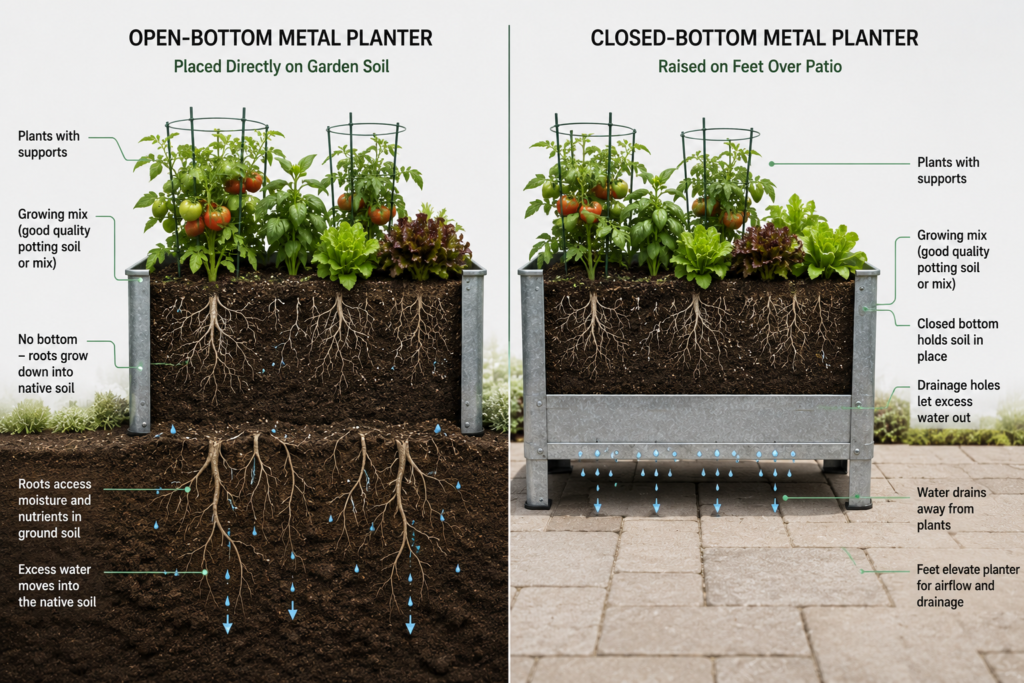
Use an open-bottom planter over healthy garden soil. It allows deeper rooting and direct drainage into the ground.
Use a closed-bottom planter with drainage holes on patios, decks and other hard surfaces.
| Location | Best base |
|---|---|
| Concrete patio | Closed with drainage |
| Deck | Closed lightweight design |
| Healthy soil | Open bottom |
| Unknown soil | Closed base |
| Permanent vegetable bed | Usually open |
| Rental property | Closed and movable |
A false bottom reduces soil volume but does not automatically create drainage. Always check the actual planting chamber.
Which Metal Planter Works Best in Your Climate?
Metal Planters for Hot and Dry Climates
Choose pale finishes, larger soil volumes and heat-tolerant plants. Shade the west-facing side and apply mulch.
Metal Planters for Wet and Humid Climates
Raise enclosed boxes above paving and keep every drainage hole clear. Inspect seams and fasteners regularly.
Metal Planters for Cold and Frosty Climates
Prevent water from collecting inside the base or structural sections. Empty saucers before freezing weather.
Metal Planters for Coastal Locations
Choose products rated for salt exposure. Check bolts, brackets and feet as carefully as the planter walls.
What Size and Depth Does a Metal Planter Need?
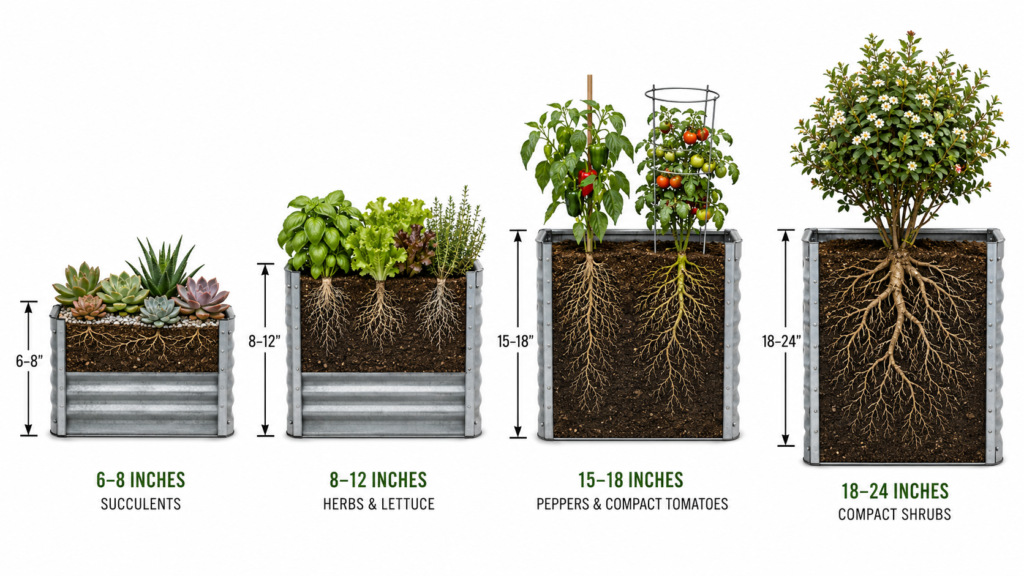
| Plant type | Suggested depth |
|---|---|
| Succulents and annuals | 6–8 inches |
| Herbs and lettuce | 8–12 inches |
| Strawberries | About 12 inches |
| Peppers | 12–18 inches |
| Compact tomatoes | 15–18 inches |
| Climbers | 18 inches or more |
| Shrubs | 18–24 inches or more |
These measurements are planning ranges. Plant variety, mature size and local climate should guide the final choice.
Width matters too. A deep but narrow planter may still dry quickly because it contains little total soil.
How Much Soil and Filled Weight Does a Metal Planter Hold?
Use internal dimensions in inches:
Cubic feet = length × width × usable depth ÷ 1,728
US gallons = length × width × usable depth ÷ 231
A 36 × 16 × 16-inch chamber holds about 5.3 cubic feet, or roughly 40 gallons.
Final weight also includes the planter, retained water, plants, mulch and supports. Check deck, stand and caster capacity before filling.
How Do You Protect a Patio Under a Metal Planter?
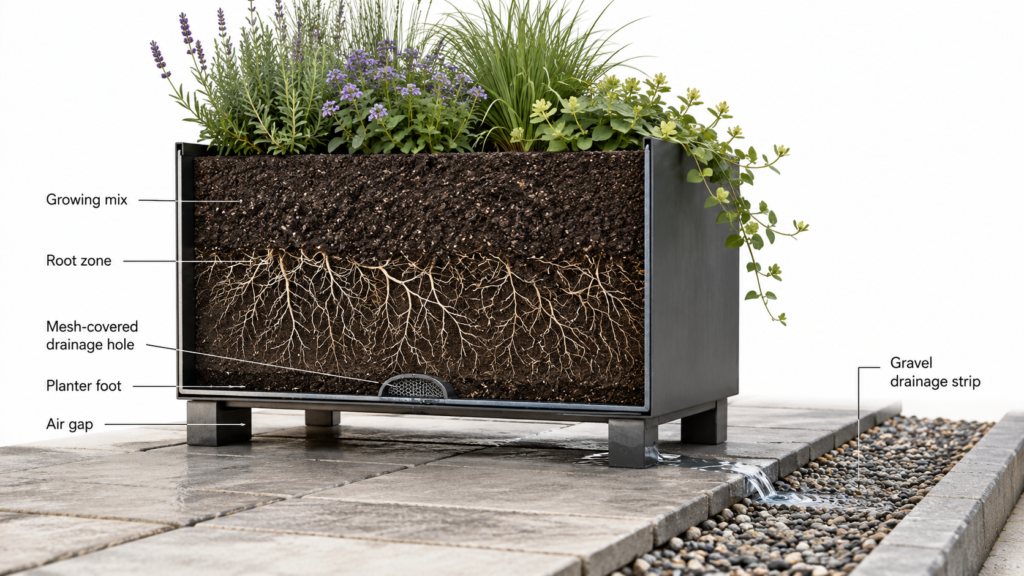
Create a complete drainage route:
Growing mix → drainage hole → mesh → air gap → runoff area
Raise enclosed planters on stable feet so the openings remain clear and the surface beneath can dry.
Direct water away from doors, walls, electrical outlets and walkways. Empty saucers regularly and use gravel beneath Corten steel where staining is a concern.
Do Metal Planter Boxes Get Too Hot?
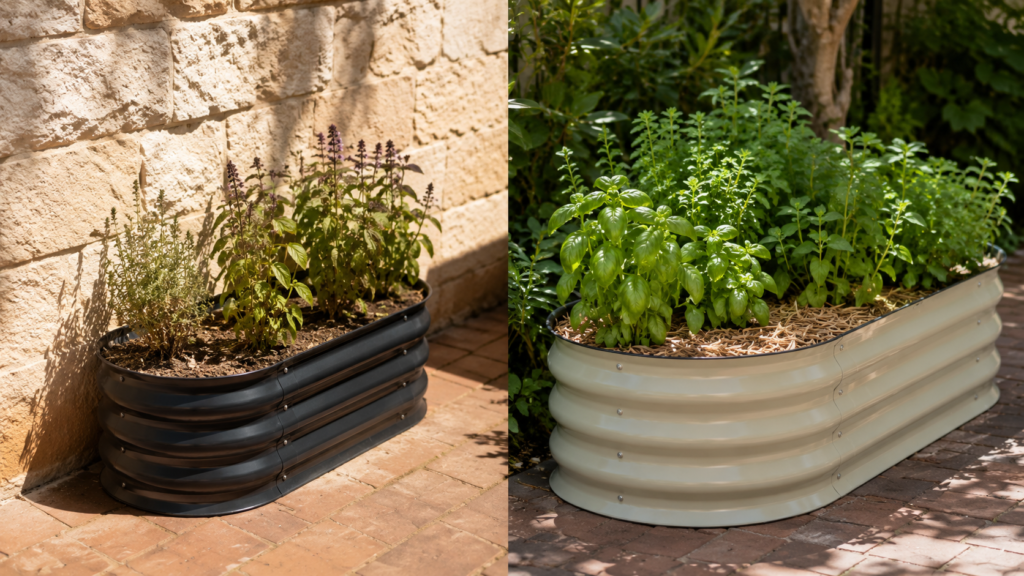
Metal boxes can become hot when they are small, dark and exposed to afternoon sun.
Reduce heat stress by:
- Choosing a pale finish
- Increasing soil volume
- Adding mulch
- Providing afternoon shade
- Using a removable inner pot
- Selecting heat-tolerant plants
Do not seal drainage holes to retain moisture. Better shade and watering practices are safer than waterlogged soil.
What Plants Grow Best in Metal Planter Boxes?
Plants for Hot, Sunny Metal Planters
Lavender, rosemary, thyme, sedum, pelargonium, grasses and suitable succulents tolerate warm conditions.
Plants for Part-Shade Patios
Ferns, heuchera, begonias, coleus, parsley and sedges work well with protection from intense afternoon sun.
Plants for Privacy Boxes
Use clumping grasses, compact evergreen shrubs, bay or supported climbers.
Plants for Edible Metal Planters
Lettuce, radishes, strawberries, herbs, compact peppers, patio tomatoes and dwarf beans are practical choices.
A Simple Planting Formula
For an ornamental box, combine:
- One structural plant
- Two or three medium fillers
- One trailing plant
Repeat the same formula along long troughs for a more unified result.
How Do You Fill and Install a Metal Planter?
1. Confirm the Final Position
Mark the footprint and test doors, pathways, furniture movement and sunlight.
2. Examine the Base
Check whether the planter has an open bottom, drainage holes, reservoir or false base.
3. Level and Raise the Planter
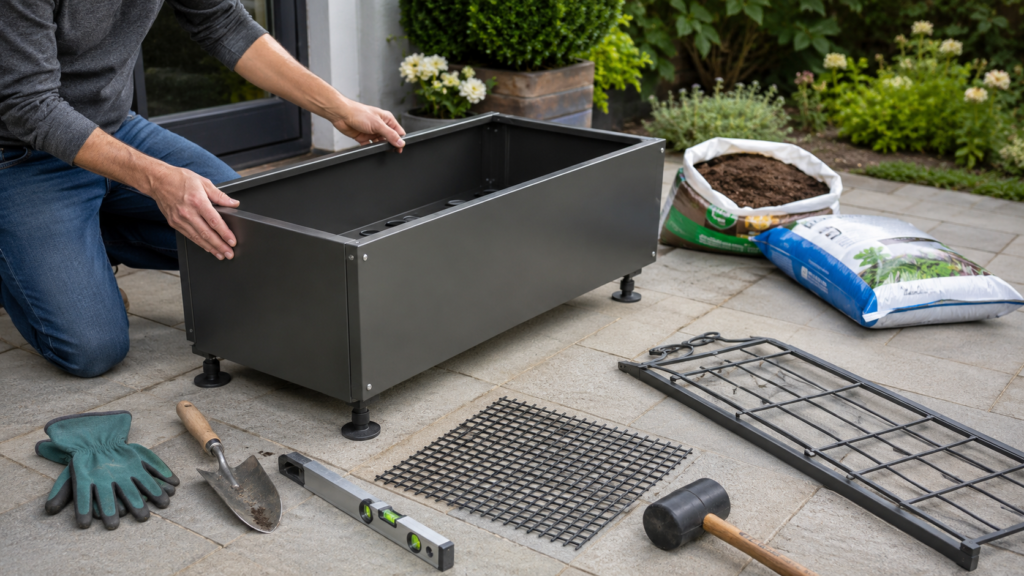
Use stable feet beneath enclosed boxes and correct any rocking before filling.
4. Protect Large Drainage Holes
Cover oversized holes with rigid mesh without blocking water.
5. Add a Liner Only When Needed
Use a liner for insulation or soil containment, not as a substitute for drainage.
6. Use Suitable Growing Mix
Use container or raised-bed mix instead of dense garden soil alone.
7. Fill in Stages
Add mix gradually and leave 1–2 inches below the rim.
8. Install Supports Early
Add cages, stakes and trellises before roots develop.
9. Plant at the Correct Depth
Keep crowns and root flares at their natural level.
10. Water and Inspect
Water thoroughly and correct blocked drainage, runoff or instability immediately.
How Do You Prevent Rust, Stains and Damage?
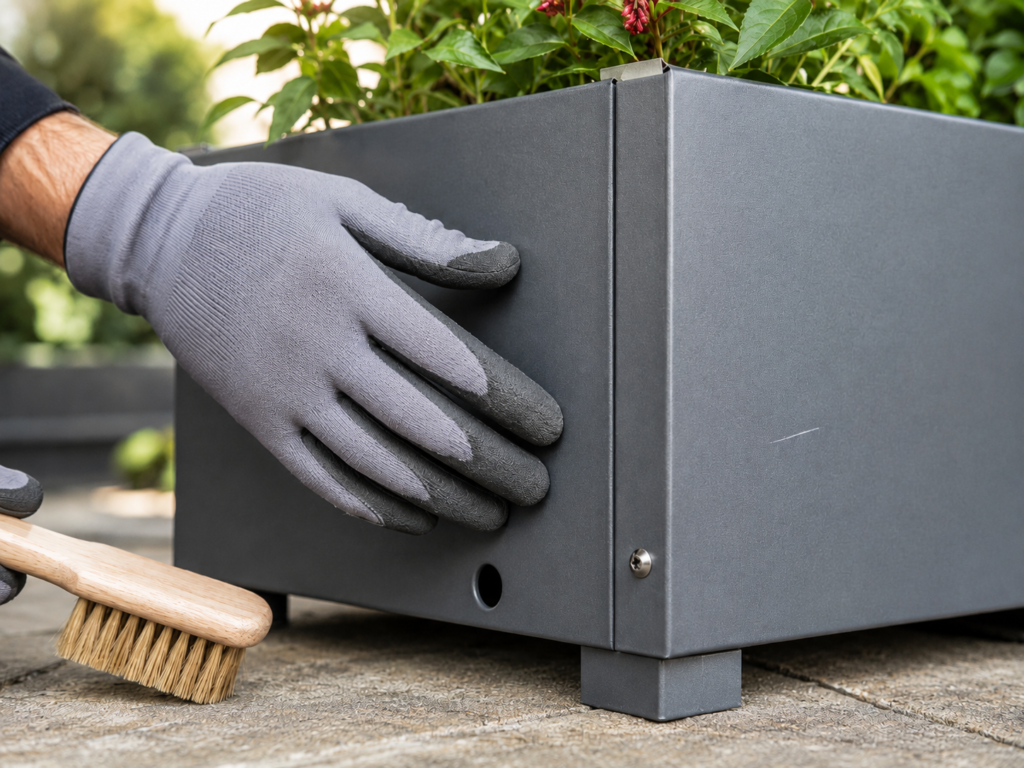
Inspect vulnerable areas twice a year:
- Drainage holes
- Seams and welds
- Fasteners
- Feet and supports
- Powder-coating scratches
- Cut galvanized edges
- Areas exposed to salt or constant moisture
Use gentle cleaning methods and repair damaged finishes according to the manufacturer’s guidance. Remove wet debris and keep irrigation directed toward the soil.
What Metal Planter Mistakes Should You Avoid?
Choosing Appearance Before Function
Check depth, drainage and weight before selecting the finish.
Blocking Drainage Holes
Raise enclosed planters so water can escape freely.
Filling With Garden Soil Alone
Dense soil compacts easily and adds unnecessary weight.
Filling Before Confirming Placement
Position the empty planter before adding growing mix.
Overcrowding Plants
Space plants according to mature width.
Ignoring Heat Exposure
Avoid small dark boxes for heat-sensitive plants in intense sun.
Installing an Unstable Trellis
Attach tall screens to structural components and plan for wind.
Allowing Corten Runoff Across Pale Paving
Use gravel or controlled drainage beneath weathering steel.
Using Unknown Containers for Food
Use new, purpose-made planters for edible crops.
Mixing Too Many Finishes
Repeat one main finish and create variety through planting.
Should You Buy, Build or Custom-Order a Metal Planter?
| Option | Best for | Limitation |
|---|---|---|
| Ready-made | Fast projects | Fixed sizes |
| Modular kit | Large beds | Visible joints |
| DIY box | Budget customization | Requires tools |
| Custom fabrication | Architectural spaces | Higher cost |
| Repurposed box | Ornamentals | Material uncertainty |
| Insert system | Rentals | Less soil volume |
Buy standard sizes when they fit. Build when customization justifies the labor. Choose custom fabrication for exact dimensions, integrated seating or structural screens.
Metal Planter Buying Checklist
Confirm:
- Internal dimensions
- Usable soil depth
- Base type
- Drainage-hole position
- Metal and coating
- Filled weight
- Edge treatment
- Climate rating
- Assembly requirements
- Staining risk
- Warranty
- Intended plants
- Delivery access
Separate must-have features from acceptable compromises before comparing products.
How We Selected These Metal Planter Ideas
These ideas were selected according to soil depth, drainage, heat exposure, wind stability, patio compatibility, maintenance access and plant suitability.
Each design had to solve a practical problem such as creating privacy, growing food, using an awkward corner or organizing an outdoor area. No individual product testing or unsupported performance rating is claimed.
FAQs
Are Metal Planter Boxes Good for Plants?
Yes. They work well when they provide adequate soil depth, drainage and moisture.
Do Metal Planter Boxes Need Liners?
Not always. A liner may add insulation, but it must not block drainage.
Do Metal Planter Boxes Rust?
Some do. The risk depends on the metal, finish and exposure.
Are Galvanized Planters Suitable for Vegetables?
Purpose-made galvanized garden planters are commonly used for food crops.
Can a Metal Planter Sit Directly on Concrete?
It is better to raise it so drainage holes remain clear.
How Deep Should a Metal Planter Box Be?
Use 8–12 inches for herbs and 15–18 inches or more for larger crops.
What Should Go in the Bottom of a Metal Planter?
Use suitable growing mix and cover oversized holes with mesh.
How Do You Stop a Metal Planter From Overheating?
Choose a pale finish, add mulch and provide afternoon shade.
Does Corten Steel Stain Patios?
It can. Control runoff or place it over gravel.
Should a Metal Planter Have an Open or Closed Bottom?
Use open bottoms over soil and closed draining bases on patios.
Can Metal Planter Boxes Remain Outside During Winter?
Most outdoor-rated boxes can remain outside if water drains freely.
How Heavy Is a Filled Metal Planter Box?
Weight includes wet soil, plants, mulch and the planter itself.
Sources and Further Reading
Useful reference sources include the Royal Horticultural Society, university extension services, the American Galvanizers Association, the Aluminum Association and manufacturer technical documents.
Check product-specific instructions for load capacity, food-growing suitability, coastal exposure and frost resistance.
Final Thoughts
The most successful metal planter box ideas balance visual style with plant depth, drainage, stability and realistic maintenance.
The best metal planter box ideas begin with function. Decide what the planter must achieve, measure the space, select suitable plants and calculate the required soil volume before choosing the finish.
A successful metal planter should:
- Fit the available space
- Provide enough root depth
- Drain without damaging nearby surfaces
- Remain stable when filled
- Suit the local climate
- Support realistic maintenance
When these requirements are met, metal planter boxes become durable landscape features rather than short-term decorative containers.

Myra is the founder and lead writer of Backyard Planter Ideas, where she shares practical, well-researched guidance on planter design, plant selection, and outdoor styling. Her goal is to help homeowners create attractive, functional garden spaces with clear, reliable, and easy-to-apply advice.