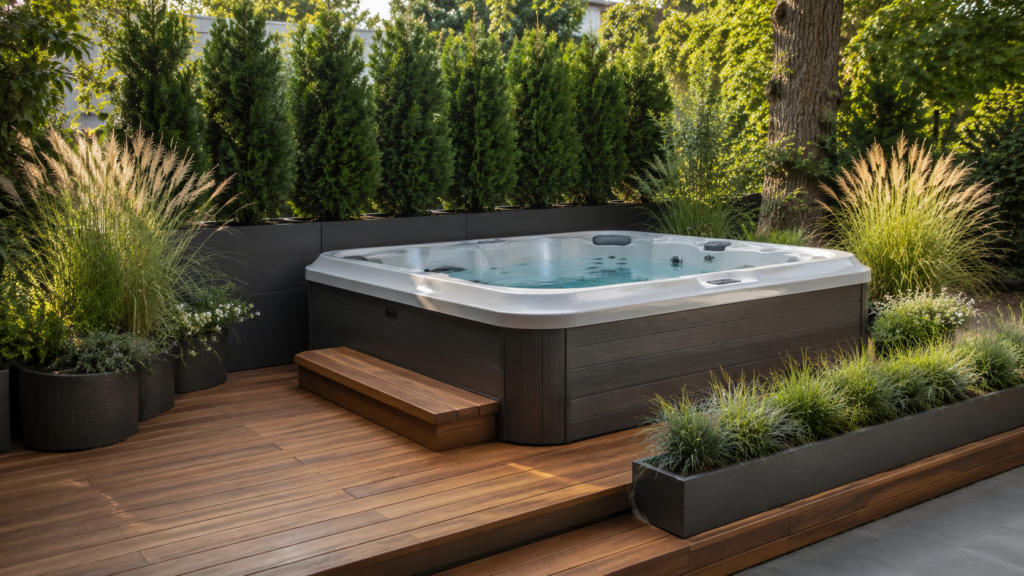
Hot tub planters can make an exposed spa feel private, polished and connected to the backyard. Tall containers screen views, ornamental grasses soften the cabinet, and coordinated pots link the spa with the deck, patio or garden.
The best arrangement must fit the space, support mature plants and preserve the steps, controls, cover lifter and service panels. Drainage, wind, climate and treated-water splash also matter.
A successful layout improves privacy and atmosphere without creating access, drainage or maintenance problems.
How to Choose Hot Tub Planter Ideas
Choose the planter according to the main need. Privacy requires height, a narrow deck needs a slim footprint, and a windy patio needs a broad, heavy base. Cold climates may require frost-rated containers or removable inserts.
Treat the planter, plant and position as one system. A tall plant in a narrow pot may tip, while a filled trough may become effectively permanent.
| Main priority | Best starting option |
|---|---|
| Maximum privacy | Long rectangular trough |
| Small deck | Tall narrow planter |
| Flexible layout | Rolling planter |
| Low maintenance | Large evergreen planter |
| Modern style | Fiberglass or composite pot |
| Cold climate | Frost-rated planter |
| Windy location | Low, broad container |
Before buying, confirm full cover movement, clear access, safe runoff, suitable light, mature plant width and total wet weight—especially on raised decking.
How We Selected These Ideas
These ideas were chosen for practical value, not appearance alone. Each option was assessed for privacy, floor-space use, root volume, drainage, wind stability, climate adaptability and compatibility with normal hot tub operation. An idea was kept only when it could improve the space without making the cover, steps or equipment harder to use.
This matters because attractive photographs often hide operational problems. A tall screen may block the cover lifter, a decorative pot may provide too little root space, and a lightweight container may become unstable after the plant matures. The strongest ideas balance:
- Privacy or visual impact
- Safe movement around the spa
- Cover and service access
- Mature plant size
- Reliable drainage
- Climate suitability
- Realistic maintenance
The goal is not to recommend one universal layout. It is to help readers match the planter format to their backyard, plant choice and long-term use.
Where to Place Hot Tub Planter
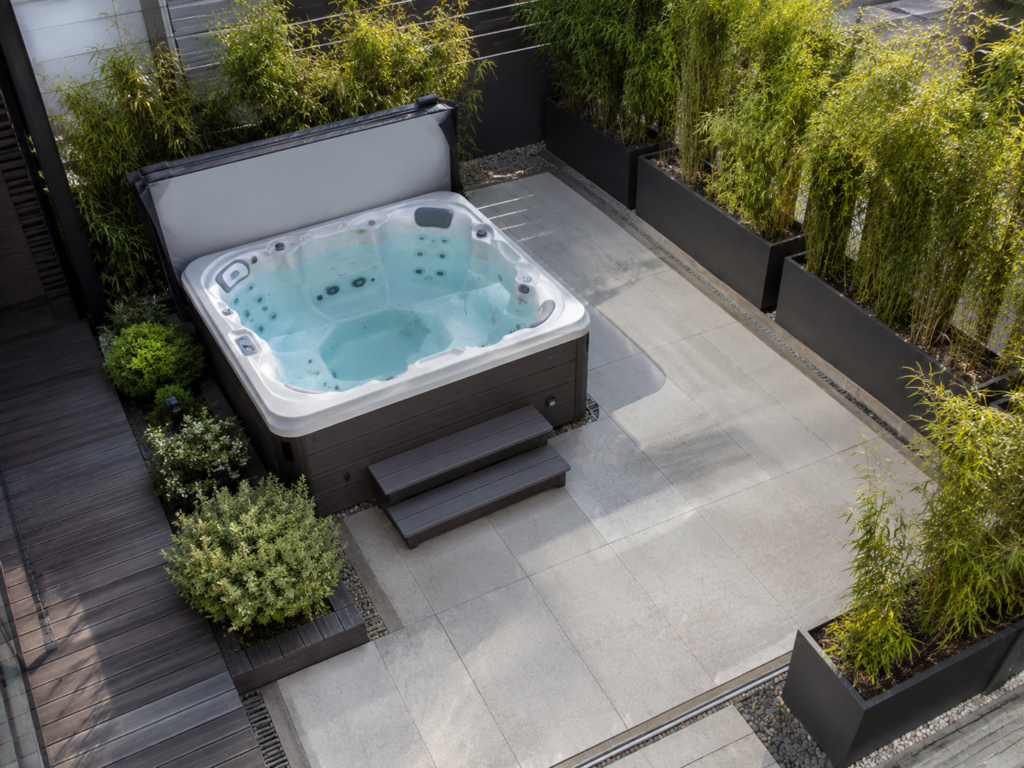
Use three practical zones. The direct-splash zone sits beside the rim and needs durable, low-debris, non-sharp plants. The transition zone includes steps, paths, towels and seating, so keep it open.
The privacy zone is usually along the outer deck or patio edge, where taller planters can block views without crowding bathers.
Before final placement:
- Open the cover completely.
- Keep controls, steps and handrails clear.
- Preserve access to service panels.
- Maintain a direct walking route.
- Direct runoff away from the spa cabinet.
- Check mature plant height and width.
- Avoid thorny or high-debris plants near the entry.
- Keep irrigation away from electrical equipment.
Hot Tub Planter Ideas for Privacy
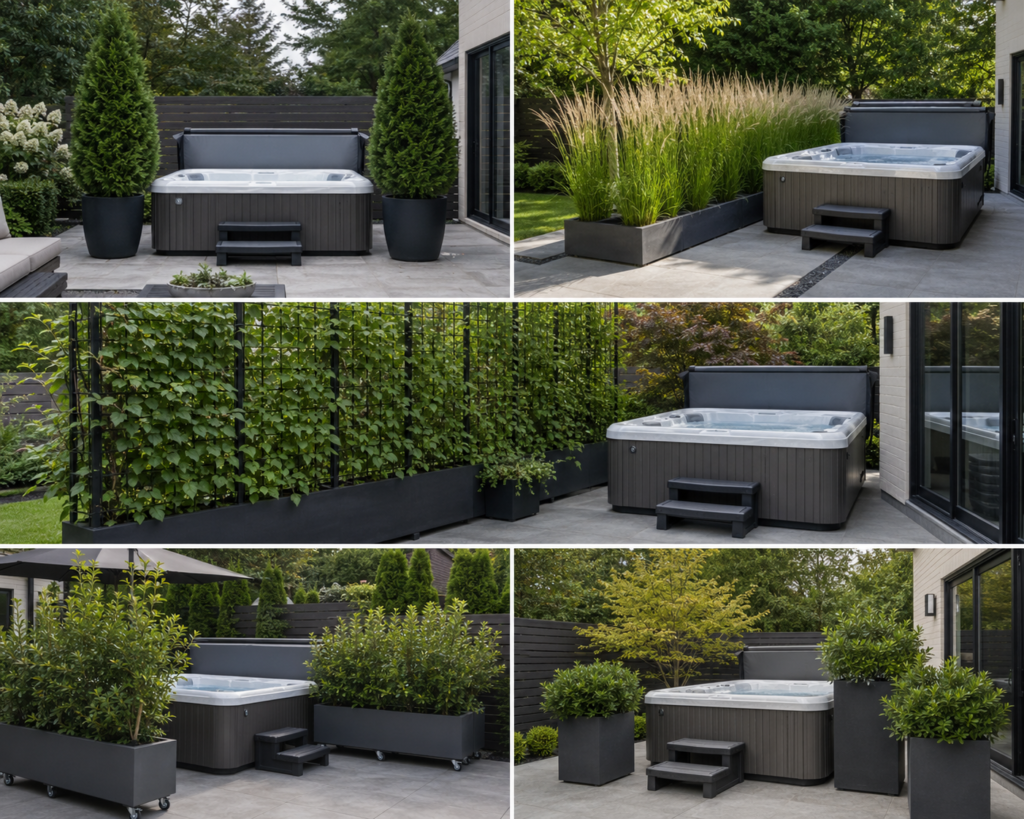
Privacy planters work best when they block a specific line of sight. Sit inside the empty spa and identify views from windows, paths, balconies or raised decks.
1. Pair Tall Planters Behind the Hot Tub
Two matching tall planters create balanced screening behind the least-private side. Use upright evergreens, compact shrubs or clump-forming grasses with controlled mature widths.
Leave space for airflow and keep both containers clear of the cover hinge.
Best for: Overlooked suburban patios.
2. Use a Long Privacy Trough
A long trough provides continuous screening with fewer gaps than separate pots. It can sit along a fence, railing or exposed patio boundary.
Check internal planting volume, repeat grasses or narrow shrubs, and leave room for mature roots and foliage.
Best for: Screening one long exposed edge.
3. Add a Planter with a Trellis
A deep planter with a trellis creates height where floor space is limited. Choose the climber by climate, growth rate, seasonal behavior and mature weight.
Use evergreen growth for year-round coverage or deciduous vines for seasonal privacy.
Best for: Narrow courtyards and side patios.
4. Use Rolling Privacy Planters
Rolling planters move aside for cleaning, entertaining or servicing. Use outdoor-rated locking casters and a broad container with a low center of gravity.
They work best on smooth, level surfaces, not gravel or slopes.
Best for: Flexible and temporary layouts.
5. Create a Staggered Planter Screen
Combine tall, medium and low planters for layered privacy without a solid wall. Repeat one material, foliage color or plant type for cohesion.
Place the tallest container at the strongest viewing angle.
Best for: Corners and irregular patios.
Hot Tub Planter Ideas for a Spa Look
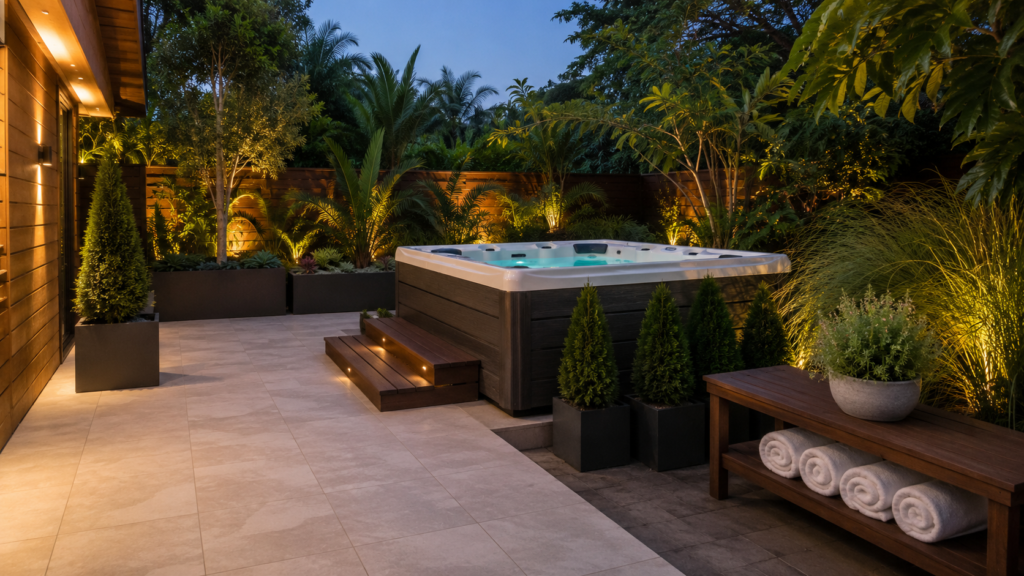
A spa-like setting uses controlled planting, repeated materials and a calm palette. Foliage, texture, fragrance and subtle lighting usually outperform excessive flower color.
6. Create a Tropical Foliage Corner
Combine one upright tropical plant, broad mid-level foliage and a restrained trailer. Keep the tallest plant at the back and away from the water.
In cold regions, use removable inner pots for winter protection.
Best for: Resort-inspired backyards.
7. Frame the Spa with Evergreen Pots
Matching evergreen pots at two corners provide year-round structure and visually frame the spa.
Choose genuinely compact cultivars rather than full-size shrubs that quickly outgrow containers.
Best for: Formal and modern patios.
8. Soften Hard Edges with Ornamental Grasses
Ornamental grasses soften concrete, composite decking and dark spa cabinets while providing filtered screening.
Choose climate-suitable clump-forming types, and place heavy seed heads or seasonal cutback farther from the water.
Best for: Naturalistic and contemporary designs.
9. Add Fragrant Planters Nearby
Place aromatic foliage near a bench, path or towel station. Rosemary, lavender and similar plants work where climate and light allow.
Keep strongly scented or heavily flowering pots away from steps to reduce overpowering fragrance and insect activity.
Best for: Relaxing sensory gardens.
10. Use Illuminated Planters
Soft internal lighting or concealed uplights reveal planter shapes after dark without strong glare.
Use outdoor-rated products, keep cords away from wet paths and test the position before permanent installation.
Best for: Evening hot tub use.
Small-Space Hot Tub Planter Ideas
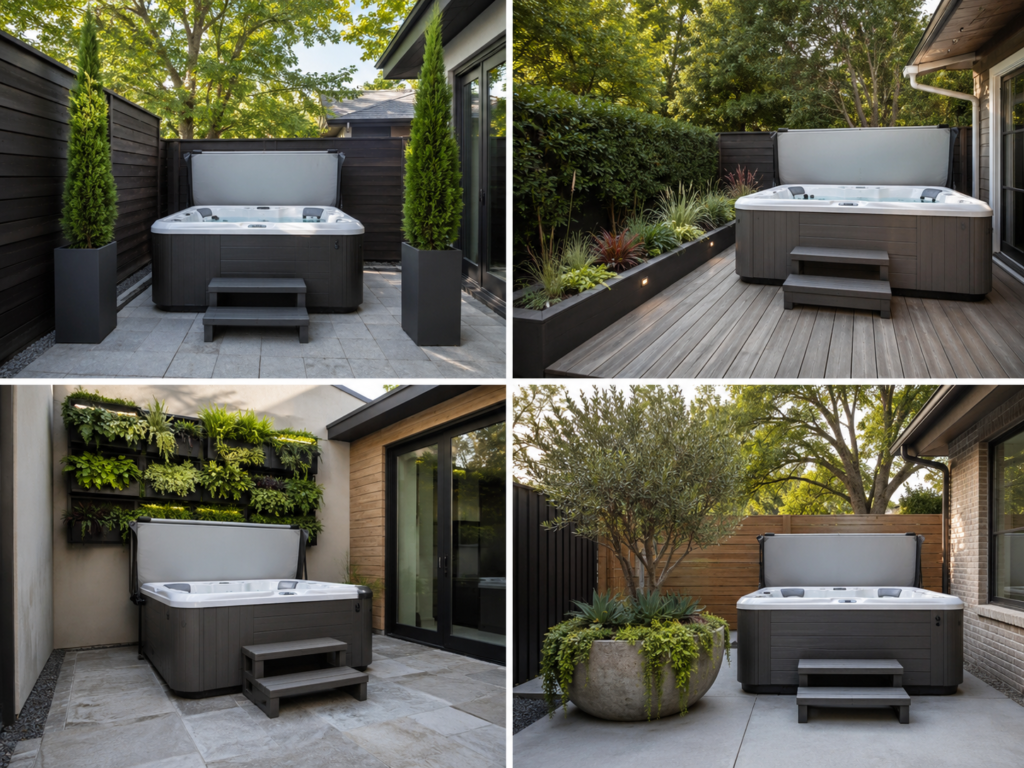
Small decks need vertical growth, narrow containers and a clear walking route. One strategic planter usually beats several small pots.
11. Choose Tall Narrow Planters
Tall slim containers add screening with little floor use. Place them beside fences, platforms or corners where wide pots would obstruct movement.
Check base width and wind exposure because mature plants can become top-heavy.
Best for: Tight corners and narrow decks.
12. Add a Slim Deck-Edge Trough
A narrow trough defines one side without reducing the main route. Repeat grasses, sedges or compact evergreens for a clean result.
Because slim troughs dry quickly, monitor moisture or add a drip line.
Best for: Long, narrow patios.
13. Use a Wall-Mounted Planter
Vertical planting moves greenery onto a fence, wall or screen where floor space is scarce. Use a restrained mix of compatible plants.
Direct irrigation overflow away from the spa, paths and electrical equipment.
Best for: Very compact patios.
14. Choose One Statement Planter
One substantial planter can feel calmer than several small pots. Position it where it delivers the greatest privacy or visual benefit.
Match its scale to the spa and measure the walking route first.
Best for: Minimalist hot tub layouts.
Low-Maintenance Hot Tub Planter Ideas
Low-maintenance arrangements match plants to the site, provide adequate root volume and drain reliably. They still need watering and seasonal care.
15. Use Compact Evergreens
Compact evergreens provide year-round structure. Choose container-suitable cultivars matched to the local winter.
Because container roots face stronger temperature swings, extra cold tolerance may be necessary.
Best for: Four-season privacy.
16. Create a Foliage-Only Planter
Use leaf shape, texture and color instead of continuous flowers. Foliage-led containers create less debris.
Combine plants with similar light, water and feeding needs.
Best for: Long-lasting, low-debris displays.
17. Use Drought-Tolerant Plants
Sunny spa patios become hot because paving and dark surfaces reflect heat. Large pots with drought-tolerant plants reduce watering after establishment.
Avoid sharp succulents or thorns near barefoot paths.
Best for: Hot and exposed patios.
18. Add Removable Seasonal Inserts
Place a removable nursery pot inside a permanent decorative container so planting can be changed or protected.
Ensure the inner pot drains freely and never sits in concealed water.
Best for: Cold climates and changing displays.
Best Plants for Hot Tub Planters
The best plants match climate, sunlight, wind and container size while producing manageable debris. Start with function, then narrow choices by local conditions.
| Function | Useful plant direction |
|---|---|
| Tall privacy | Upright evergreen or clumping grass |
| Tropical style | Canna, cordyline or broad foliage |
| Partial shade | Ferns, sedges or compact shade shrubs |
| Hot sunny patio | Drought-tolerant grasses or shrubs |
| Four-season structure | Dwarf conifer or compact evergreen |
| Trailing effect | Low-debris cascading foliage |
For privacy, mature width matters as much as height. Full-sun plants must tolerate reflected heat, while covered shade may still dry quickly.
Foliage plants and compact evergreens usually need less cleaning than heavy-fruiting or continuously flowering species. Place higher-debris choices farther away.
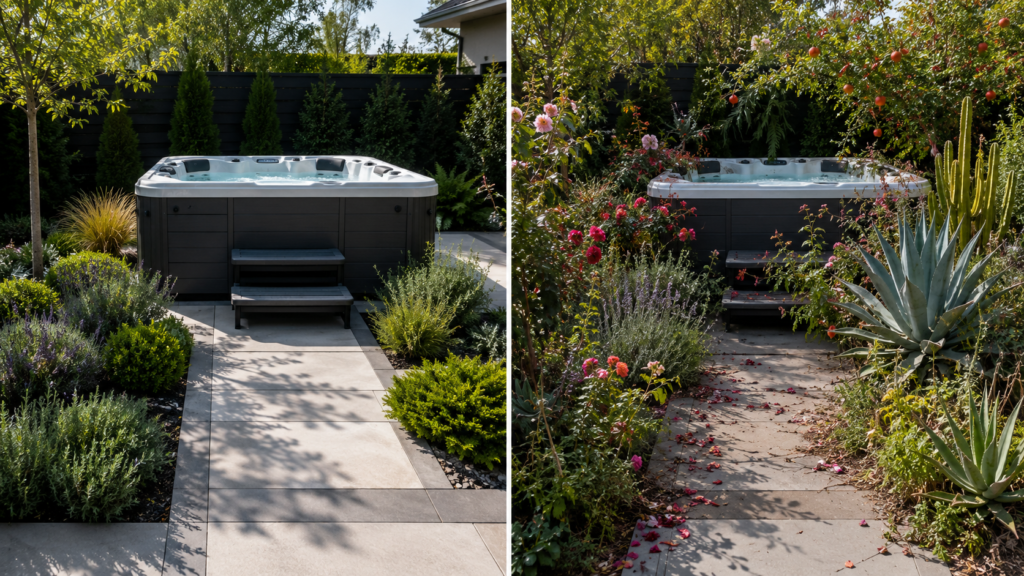
Plants to Avoid Near a Hot Tub
Avoid thorny or sharply edged plants beside paths. Also avoid excessive fruit, petals, seeds, sticky sap, invasive roots and plants needing frequent pesticide treatment.
Use caution with:
- Thorny shrubs and roses
- Cacti and rigid succulents
- Heavy-fruiting plants
- High-litter trees
- Running bamboo
- Toxic plants in family areas
- Sticky-sap plants
- Plants unable to tolerate local winters
- Growth that will overhang the cover
What Size Hot Tub Planter Do You Need?
Choose by available floor space, internal root volume, mature plant dimensions and filled weight. Measure with the cover open, subtract walking and service clearance, then compare external size with usable internal volume.
| Measurement | Why it matters |
|---|---|
| External width | Determines walking and cover clearance |
| Internal volume | Determines root space |
| Mature plant width | Prevents future obstruction |
| Filled weight | Determines mobility and deck suitability |
Use broad pots for tall grasses, deeper pots for evergreens and troughs for multiple plants. Match movable screens to a rated caddy.
Filled planter load = empty planter + saturated potting mix + plant and roots + reservoir water + decorative material.
This calculation is especially important on raised timber or composite decks.
Best Materials for Hot Tub Planters
Fiberglass and composite balance durability, weight and design flexibility. Concrete adds wind stability, while ceramic, metal and wood need more site-specific care.
| Material | Best feature | Main limitation |
|---|---|---|
| Fiberglass | Lightweight and versatile | Quality varies |
| Composite | Low maintenance | Construction varies |
| Concrete | Heavy and stable | Difficult to move |
| Ceramic | Decorative | Freeze-damage risk |
| Metal | Modern appearance | Can overheat |
| Wood | Natural appearance | Needs moisture protection |
| Terracotta | Traditional | Dries quickly |
Fiberglass suits occasional movement, composite suits low-maintenance decks, and concrete suits permanent exposed patios but may be too heavy for raised structures.
Ceramic and terracotta need freeze protection. Check metal for heat and corrosion, and protect wood with durable construction, a liner and open drainage. Verify dimensions, ratings, weight and warranty before buying.
Budget Hot Tub Planter Ideas
Solve the strongest privacy or design problem first. One well-positioned planter often outperforms several cheap pots.
Spend on root volume, stability, durability and drainage. Save with younger plants, repeated species and removable inserts.
| Budget | Practical approach |
|---|---|
| Lower | One strategic planter with smaller plants |
| Mid-range | Two coordinated fiberglass or composite pots |
| Premium | Architectural troughs, irrigation and lighting |
Do not reduce costs by choosing an undersized pot, weak rolling base or indoor-only container. Those decisions commonly lead to plant failure or replacement costs later.
How to Drain Hot Tub Planters
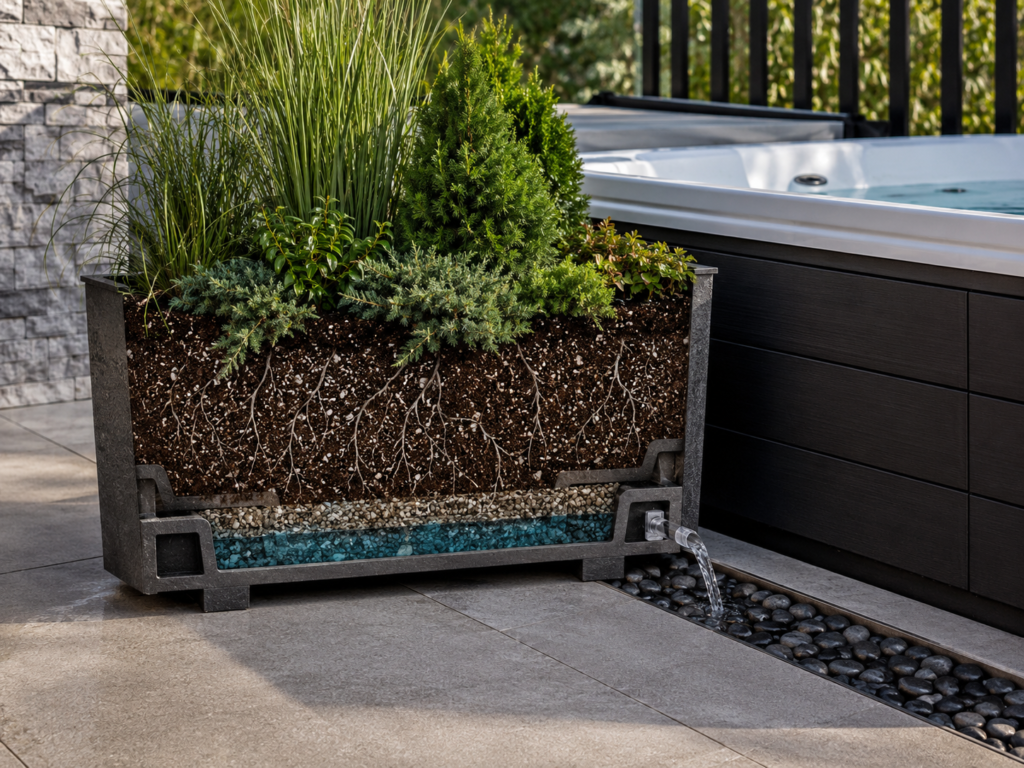
Outdoor planters need open drainage holes and controlled runoff. Water should leave the roots without crossing steps, collecting beside the cabinet or reaching electrical equipment.
Use container potting mix, raise blocked outlets on stable feet and provide overflow for self-watering pots.
A reliable setup includes:
- Open drainage holes
- Stable planter feet
- Aerated outdoor potting mix
- A clear runoff direction
- Reservoir overflow
- Accessible irrigation
Do not use gravel as a substitute for drainage holes. Before planting, pour water into the empty container and observe where it travels.
Built-In vs Freestanding Hot Tub Planters
Freestanding planters suit most existing spas because they are easier to move and maintain. Built-ins offer stronger integration but need planned waterproofing, drainage and service access.
| Factor | Built-in | Freestanding |
|---|---|---|
| Visual integration | Excellent | Good |
| Mobility | None | Moderate to high |
| Service access | Must be designed | Easier |
| Drainage complexity | Higher | Lower |
| Seasonal changes | Difficult | Easier |
| Rental suitability | Poor | Excellent |
Choose built-in planters during a professionally planned deck or patio project. Choose freestanding planters when the spa is already installed, the layout may change or plants need winter protection.
Hot Tub Planters for Different Climates
Hot, dry climates need large soil volumes, light-colored containers and drought-tolerant plants. Humid climates need strong drainage, airflow and less crowding.
Cold areas require frost-rated pots, hardy plants and sometimes removable inserts. Coastal sites need broad containers and salt-tolerant foliage. Tropical sites need fast drainage and regular pruning.
Match both planter and plant to climate; a suitable plant can still fail in an overheating or non-frost-rated container.
Hot Tub Planter Ideas by Backyard Type
| Backyard situation | Recommended setup |
|---|---|
| Overlooked patio | Long privacy trough |
| Narrow deck | Two slim vertical planters |
| Rental property | Rolling planters |
| Windy rooftop | Low broad containers |
| Shaded yard | Fern and foliage pots |
| Modern patio | Matching matte planters |
| Family area | Soft low-debris plants |
| Cold climate | Frost-rated pots with inserts |
| Large backyard | Staggered planter groups |
| Coastal terrace | Low salt-tolerant planting |
Use slim planters on narrow decks, a long trough on open patios and removable inserts in cold climates. Most backyards need only one to three well-proportioned containers.
Three Practical Layout Examples
For a narrow deck, use two slim planters along the exposed edge and leave the cover-lifter side open. Choose upright plants that provide height without spreading into the walking route.
For an open suburban patio, place one long trough behind the spa and one matching planter near an opposite corner. Repeated grasses or compact evergreens create privacy without enclosing every side.
For a cold-climate backyard, use frost-rated outer containers with compact evergreens and removable seasonal inserts. Raise the pots slightly for drainage and keep them away from heavy roof runoff.
For a rental patio, use broad planters on locking caddies. Keep one normal growing position and move them only when access or temporary privacy requires it.
These layouts are starting points. Adjust them to the exact cover direction, service-panel location, available light and mature plant width.
Hot Tub Planter Mistakes to Avoid
Most problems result from poor placement or plant selection.
Avoid:
- Blocking service panels
- Restricting the cover lifter
- Using pots without drainage
- Directing runoff across paths
- Choosing plants by appearance alone
- Underestimating mature size
- Using too many small containers
- Ignoring filled weight
- Mixing plants with opposite needs
- Allowing foliage to overhang the spa
Complete the access and drainage checks before adding soil. An empty container is easy to move; a saturated planted trough may not be.
How to Arrange Hot Tub Planters
- Define the main goal: privacy, framing, color or atmosphere.
- Mark the steps, controls, cover movement and service panels.
- Check sunlight, wind, reflected heat and splash exposure.
- Choose the appropriate planter format.
- Select plants with compatible growing needs.
- Plan for mature height and width.
- Confirm the drainage route.
- Add outdoor container potting mix.
- Position the planter before filling.
- Plant at the original growing depth.
- Water thoroughly and inspect runoff.
- Add irrigation where needed.
- Review the layout after dark.
- Monitor moisture and stability.
- Reassess growth after one season.
Adjust pruning, spacing and watering before overcrowding becomes permanent.
Review the arrangement after its first season. Check whether privacy has improved, plants remain proportionate, drainage still works and the cover opens freely. Prune early, replace unsuitable plants and move containers before roots, weight or overgrowth make simple corrections difficult or expensive to complete later.
Are Hot Tub Planter Ideas Worth It?
Hot tub planters are worthwhile when they improve privacy or visual integration without restricting spa use. They are more flexible than permanent screens and can change with the backyard.
Start with one strategic planter and add more only when they solve a clear problem.
Hot Tub Planter Ideas FAQs
What Are the Best Plants for Hot Tub Planters?
Choose compact evergreens, clump-forming grasses or low-debris foliage suited to local climate, light and container size.
How Can Planters Create Hot Tub Privacy?
Place tall pots, a trough or trellis planter along the strongest viewing angle while keeping access open.
How Tall Should Hot Tub Privacy Planters Be?
The planter and mature plant should block the main view. Judge height while seated inside the spa.
How Close Can Planters Be to a Hot Tub?
Planters can sit nearby if they do not block entry, controls, cover movement or service access.
Can Hot Tub Water Damage Plants?
Repeated chlorinated or salty splash can damage plants. Keep sensitive pots outside the splash zone.
Should Hot Tub Planters Have Drainage Holes?
Yes. Open holes prevent saturated roots; direct runoff away from the cabinet, steps and electrics.
What Size Planter Is Best for Privacy?
Choose enough root volume for mature growth. Broad containers also stabilize tall privacy plants.
What Is the Best Hot Tub Planter Material?
Fiberglass and composite balance durability and weight. Concrete is steadier; ceramic needs freeze protection.
How Do You Stop Tall Planters from Tipping?
Use a broad, heavy base, avoid top-heavy growth and fit movable pots with rated locking casters.
Can Large Planters Sit on Decking?
Yes, if the deck supports the full wet load, including soil, plant, water and decorative material.
Do Self-Watering Planters Work Near Hot Tubs?
Yes, when the reservoir has an overflow and does not keep roots permanently saturated.
Are Artificial Plants Suitable Around a Hot Tub?
Outdoor artificial plants can screen low-light areas. Choose UV-resistant foliage and anchor it securely.
Plan Your Hot Tub Planter Layout
Measure with the cover fully open, identify the strongest viewing angle, locate service panels and plan runoff.
Choose slim pots for compact privacy, troughs for continuous screening, rolling planters for flexibility, frost-rated containers for cold regions and broad pots for wind.
Start with one strategic container and expand only when another planter adds clear value.
Myra is the founder and lead writer of Backyard Planter Ideas, where she shares practical, well-researched guidance on planter design, plant selection, and outdoor styling. Her goal is to help homeowners create attractive, functional garden spaces with clear, reliable, and easy-to-apply advice.