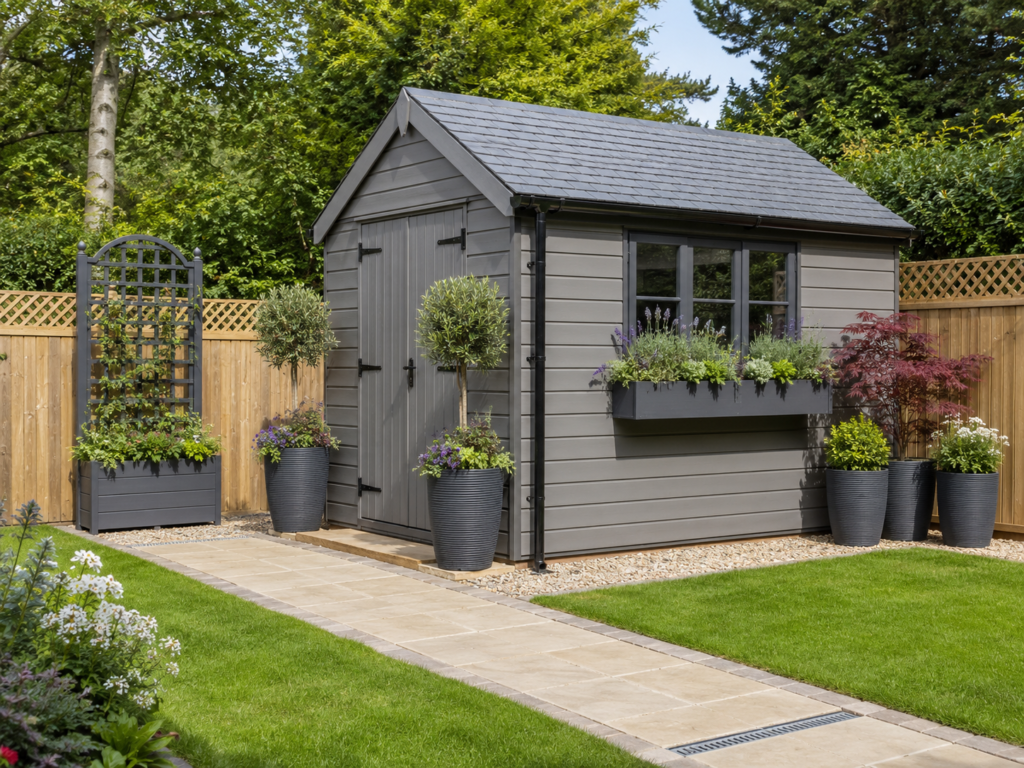
Backyard shed planter ideas can turn a plain storage building into an attractive garden feature without blocking access or creating moisture problems. Matching doorway pots, a low window trough, a freestanding trellis or a coordinated corner group can visually connect the shed with the surrounding landscape.
The best arrangement depends on shed size, available sunlight, roof runoff, material and mature plant size. Start with movable containers, leave space for doors and equipment, and direct excess water away from the shed base. This guide compares practical layouts for entrances, windows, walls, corners and narrow side areas. These backyard shed planter ideas work best when container size, sunlight and access are considered together.
Choose Shed Planters in 60 Seconds
Begin by identifying the part of the shed that looks unfinished. A plain entrance benefits from matching pots, while a blank wall may need a trellis planter. A narrow side passage requires a slim container, and a small shed usually looks better with one statement pot than several unrelated planters.
The planter should solve both a design and practical problem. It should improve the view without blocking the door, covering a vent or making exterior maintenance difficult.
| Shed condition | Best planter idea | Main consideration |
|---|---|---|
| Plain entrance | Matching doorway planters | Preserve the full door swing |
| Small shed | One statement planter | Keep the scale proportional |
| Blank wall | Freestanding trellis planter | Maintain wall access |
| Windowed shed | Low trough or window box | Keep the window usable |
| Narrow passage | Slim movable trough | Preserve the walking route |
| Shaded corner | Foliage container group | Avoid overwatering |
| Hot metal wall | Pale offset planters | Reduce heat stress |
| Cottage shed | Mixed flower pots | Repeat colors and materials |
| Modern shed | Rectangular planters | Use a limited plant palette |
| Poor drainage | Pots on feet | Move water away from the shed |
For most backyards, a pair of movable entrance pots combined with one offset corner planter offers the best balance of appearance, access and flexibility. The most practical backyard shed planter ideas improve the building’s appearance while keeping doors, windows and equipment routes clear.
5 Backyard Shed Planter Zones
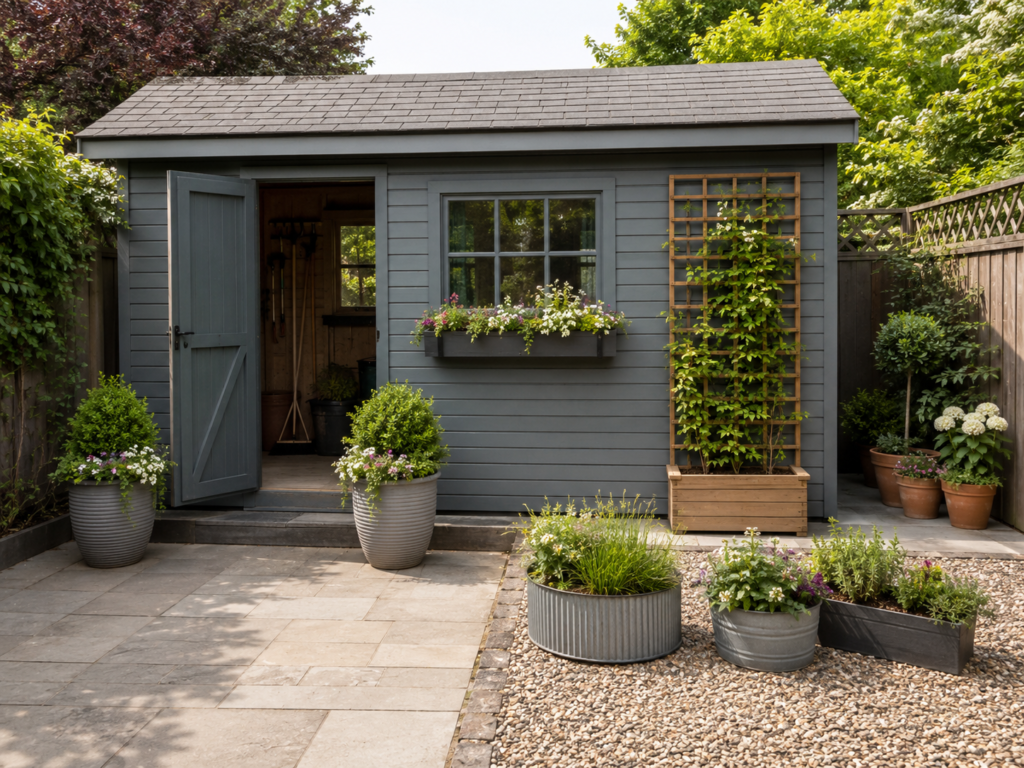
Dividing the shed into five planting zones creates a more organized layout than placing pots randomly around the structure.
| Zone | Best planter | Main purpose |
|---|---|---|
| Entrance | Matching pots or statement planter | Frame the doorway |
| Window | Low trough or detachable box | Add eye-level color |
| Blank wall | Trellis or vertical planter | Add height |
| Corner | Three-pot group | Soften a hard edge |
| Base | Gravel strip with movable pots | Connect shed and garden |
A small shed normally needs only two or three zones. A larger shed can support several planting points, but one area should remain visually dominant. Leaving some wall space uncovered prevents the building from looking overcrowded.
Use the entrance zone when the shed is viewed from the front. Use the blank-wall zone when the shed faces a patio or neighboring property. Choose the base zone when drainage, access and seasonal flexibility are the main priorities.
Shed Planter Layouts by Size
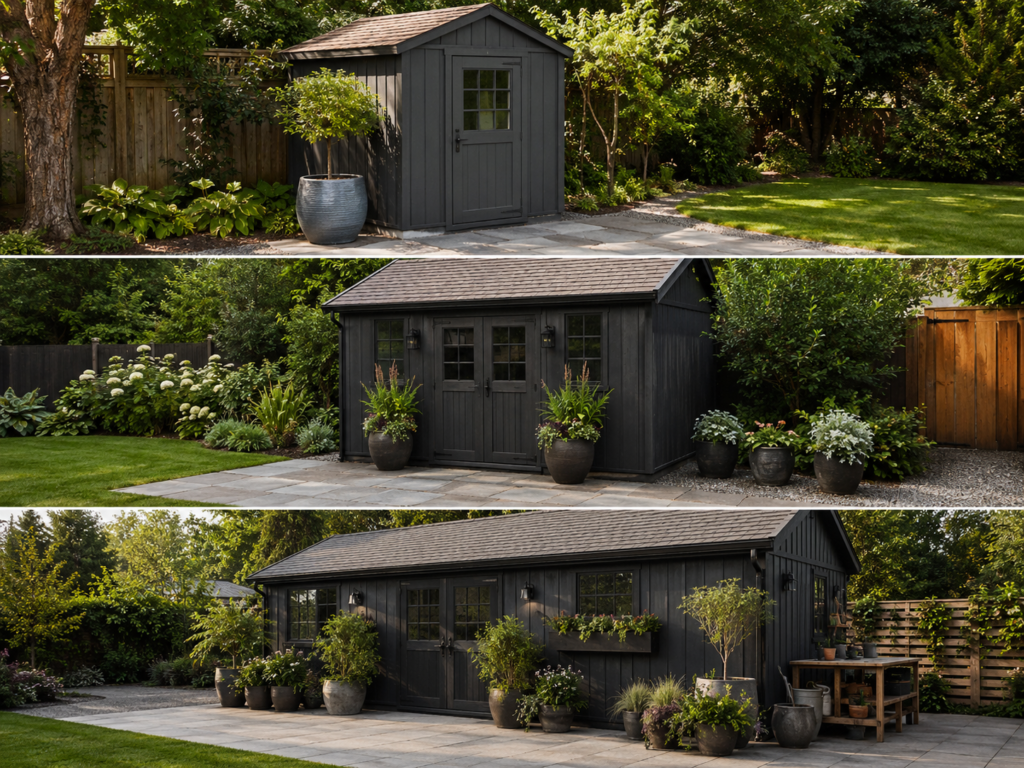
The best backyard shed planter ideas should match the shed’s size, door width and available equipment access. Measure the largest item regularly moved in and out before positioning heavy containers.
Small Shed
Use one main focal arrangement:
- One statement planter
- Two compact entrance pots
- One low window trough
- A maximum of one vertical feature
Avoid surrounding a compact structure with many small containers. One or two strong arrangements create more impact with less maintenance.
Medium Shed
A medium shed can support:
- Two entrance planters
- One corner group
- One window trough
- One independent trellis
- A short gravel maintenance strip
Repeat one color, material or plant form to connect the different areas.
Large Shed
A larger shed can include separate decorative and functional zones:
- Repeated entrance containers
- A long wall planter
- A pollinator or edible section
- A potting bench
- A gravel border
- Several evergreen anchors
Keep these zones distinct rather than creating one continuous border around the entire building.
How We Evaluated These Ideas
Each idea was evaluated according to appearance, plant health and long-term shed access. The goal is not simply to create an attractive photograph, but to build a layout that remains functional after plants grow and weather conditions change.
The main evaluation factors were:
- Visual improvement
- Door and window access
- Drainage
- Wall airflow
- Mature plant size
- Container stability
- Watering convenience
- Seasonal flexibility
- Shed-material compatibility
- Ease of maintenance
Movable planters, independent trellises and freestanding troughs generally offer more flexibility than beds or boxes permanently attached to the shed.
Plan Shed Planters Safely
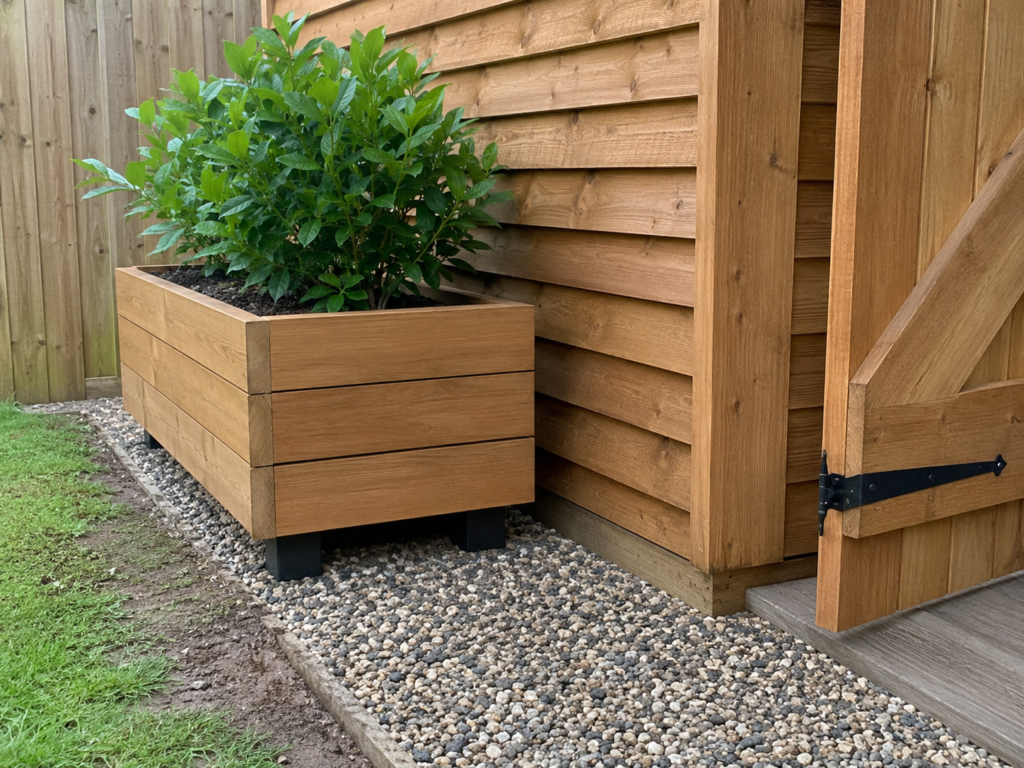
A shed creates several small growing environments. One side may receive strong afternoon sun while another remains cool and shaded. Roof eaves may keep some pots dry, while runoff may saturate containers on another side.
Observe sunlight, rain and normal shed use before purchasing large planters.
Check Sun and Roof Runoff
Watch the shed in the morning, at midday and during the afternoon. A western metal wall may become much hotter than the wider garden, while a shaded wall may stay damp for longer.
During rain, check:
- Where water leaves the roof
- Whether gutters overflow
- Which areas remain dry
- Where puddles form
- Whether downpipes discharge near planters
Do not assume rainfall waters every container evenly. Pots beneath deep eaves may still need regular watering.
Keep Access Clear
Open every door and window fully before marking planter positions. Test the route with the largest stored item, such as a lawnmower, bicycle or wheelbarrow.
Keep these areas clear:
- Door handles and hinges
- Sliding tracks
- Windows
- Vents
- Electrical outlets
- Taps
- Gutters
- Equipment routes
Remember that mature foliage may spread beyond the edge of the pot.
Manage Drainage
Every outdoor planter needs open drainage holes. Water must also move away from the shed after leaving the container.
Use pot feet or stable risers where needed, and avoid allowing containers to drain toward wooden siding or the shed foundation. A gravel border can create a useful maintenance area, but it should not hide persistent standing water.
Planters may contribute to shed damage when wet soil, foliage or drainage water remains against the structure. Independent containers and a clear inspection gap reduce this risk.
Preserve Wall Access
Leave enough space behind pots to remove leaves, inspect siding and complete repairs. Climbers should usually grow on an independent trellis rather than attaching directly to the shed.
Choose plants before choosing containers. Mature height, root depth, spread and wind exposure should determine the required planter size.
21 Backyard Shed Planter Ideas
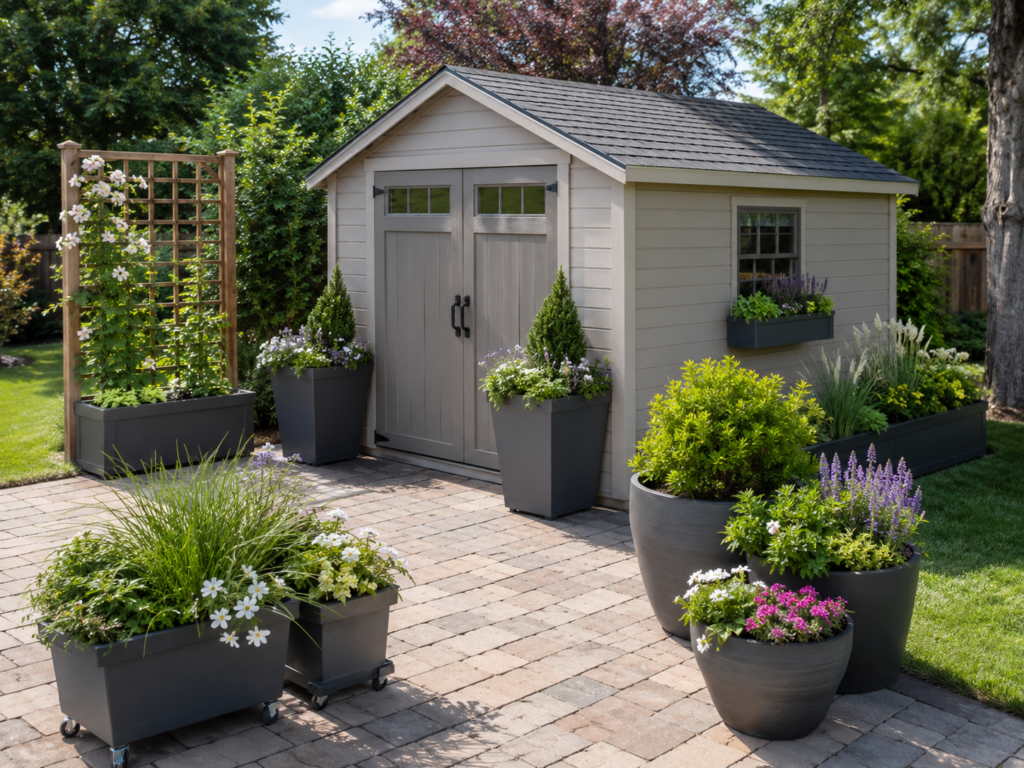
The following backyard shed planter ideas include movable, freestanding and space-saving arrangements for different shed styles.
1. Matching Doorway Planters
Place matching pots on both sides of the entrance to create symmetry. Choose containers large enough to balance the doors without narrowing the route. Compact evergreens with seasonal flowers provide year-round structure.
2. One Statement Planter
A single large container works well beside a small shed. Position it near the door or at the most visible corner. Use an upright grass, compact shrub or architectural foliage plant.
3. Low Window Trough
A freestanding trough beneath a shed window adds planting without attaching weight to the wall. Use low-growing flowers, herbs or trailing foliage that remain below the windowsill.
4. Detachable Window Box
A window box adds color at eye level. Attach it only to suitable structural framing and use a removable liner. Keep drainage controlled so water does not run continuously down the siding.
5. Freestanding Trellis Planter
Use a trellis planter to soften a blank wall or add privacy. Position it slightly away from the shed and select a climber that will not overwhelm the container or support.
6. Long Vine Screen
A long trough with an independent screen can create a living backdrop beside a patio. Use one or two compatible climbers and leave access for pruning and wall maintenance.
7. Three-Pot Corner Group
Combine one tall, one medium and one low planter at a shed corner. Repeat the container material or foliage color to keep the group cohesive.
8. Slim Side Trough
Use a narrow movable trough in a side passage. Choose upright plants and preserve enough width for walking, tools and wall access.
9. Gravel Border With Pots
A gravel strip with movable containers creates a clean edge and makes the shed easier to inspect. Place pots on level supports and direct water away from the base.
10. Offset Raised Planter
Build an independent raised planter near the shed rather than against it. It can support flowers, vegetables or herbs while providing more root volume than ordinary pots.
11. Hanging Baskets
Hang baskets beneath suitable eaves where structural support, head clearance and watering access are available. Remember that roof overhangs may block rainfall.
12. Vertical Planter Frame
A freestanding vertical frame can hold herbs, flowers or strawberries in a small space. Secure it against wind and monitor upper pockets because they often dry faster.
13. Potting-Bench Herb Station
Place labeled herb pots on a potting bench beside a working shed. Keep the main surface clear for planting and store tools below.
14. Bench With End Planters
A bench with integrated planters creates seating and greenery in one feature. Choose compact plants that will not trail across the seat or block the path.
15. Cottage Flower Group
Combine terracotta or muted metal pots with flowers and trailing foliage. Repeat two or three colors and use one evergreen plant to anchor the seasonal display.
16. Modern Rectangular Planters
Use repeated rectangular troughs or cubes beside a modern shed. Limit the design to one or two plant forms and align the containers with doors or windows.
17. Ornamental Grass Planters
Grasses soften hard metal or resin walls and add movement. Use pale or insulated pots near hot surfaces and select clump-forming varieties suited to containers.
18. Evergreen Planters
Compact conifers or shrubs provide structure throughout the year. Use a frost-resistant container and confirm that the plant is suitable for long-term container growth.
19. Pollinator Container Strip
Arrange flowering pots with different bloom periods along a sunny shed wall. Select locally appropriate, non-invasive plants and avoid unnecessary pesticide use.
20. Edible Shed-Side Garden
Grow herbs, strawberries, salad crops or compact vegetables where sunlight is suitable. Use food-safe containers and keep edible plants away from contaminated runoff or stored chemicals.
21. Wheeled Planters
Wheeled containers are ideal where access or sunlight changes through the year. Use lockable casters rated for the full weight of the filled planter.
Compare Shed Planter Ideas
| Idea | Best for | Flexibility | Main limitation |
|---|---|---|---|
| Statement planter | Small sheds | High | Limited planting variety |
| Doorway pair | Formal entrances | High | Can reduce access |
| Window trough | Windowed sheds | High | Needs floor space |
| Window box | Limited ground space | Low | Requires safe mounting |
| Trellis planter | Blank walls | Medium | Needs pruning |
| Gravel and pots | Wooden sheds | High | Requires stable base |
| Raised planter | Productive planting | Low | Difficult to move |
| Vertical frame | Narrow areas | Medium | Dries quickly |
| Wheeled planter | Changing layouts | Very high | Needs level ground |
For renters and frequently maintained sheds, movable containers are the strongest option. Permanent raised planters work better where the final layout, drainage and access have already been confirmed.
Best Plants for Shed Areas
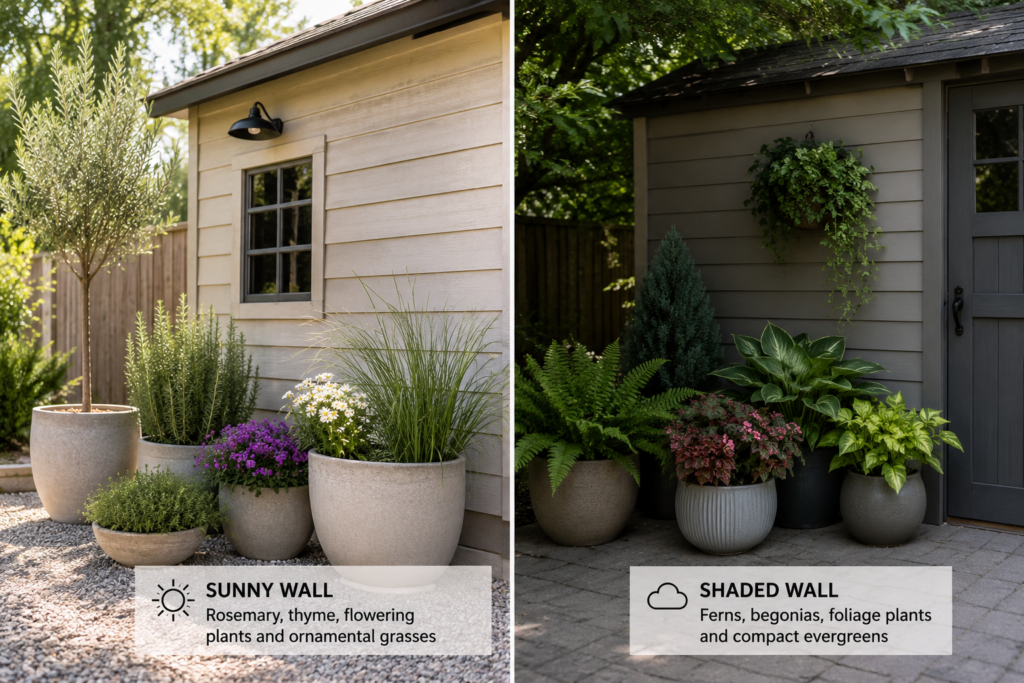
Choose plants according to the wall’s actual sunlight, heat, wind and rainfall. Successful backyard shed planter ideas depend on choosing plants suited to the wall’s sunlight, heat, wind and rainfall.
| Condition | Suitable plant types |
|---|---|
| Full sun | Herbs, flowers, succulents, grasses |
| Partial shade | Ferns, begonias, foliage plants |
| Deep shade | Shade foliage and compact evergreens |
| Hot wall | Drought-tolerant plants in pale pots |
| Humid wall | Airy planting with good spacing |
| Cold winter | Hardy shrubs and seasonal plants |
| Windy area | Low plants in broad heavy containers |
Sunny walls may support flowering annuals, ornamental grasses, rosemary, thyme and many vegetables. Use larger pots where possible because small containers dry rapidly.
Shaded walls work better with foliage, ferns and shade-tolerant plants. Check moisture before watering because shaded containers often stay damp longer.
In hot climates, use pale containers, larger soil volume and heat-adapted plants. In humid climates, prioritize airflow and drainage. In cold regions, select frost-resistant pots and locally hardy plants.
Plants to Avoid Near Sheds
Avoid plants that create long-term access, moisture or maintenance problems.
Poor choices include:
- Aggressive self-clinging vines
- Locally invasive plants
- Thorny shrubs beside doors
- Large trees in small containers
- Spreading bamboo
- Moisture-loving plants beside timber
- Brittle tall plants in strong wind
- Heavy fruiting plants above entrances
- Plants that block gutters or vents
- Varieties needing constant severe pruning
Choose naturally compact shrubs, clump-forming grasses and manageable climbers instead.
Best Shed Planter Materials
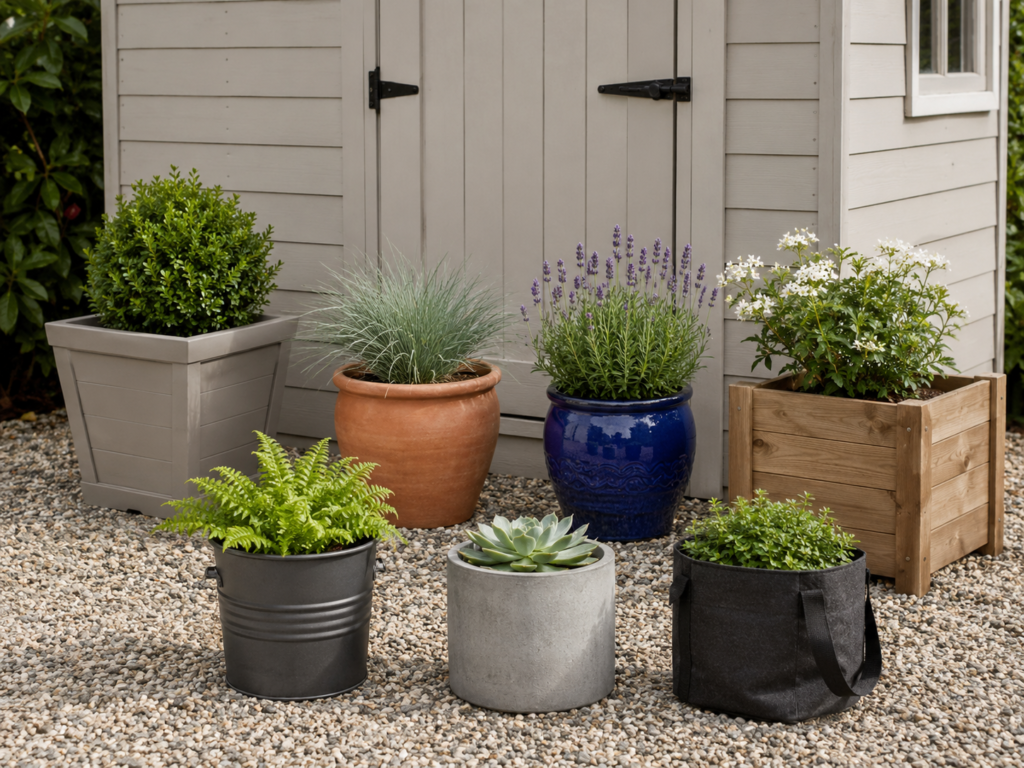
| Material | Best use | Main limitation |
|---|---|---|
| Resin or fiberglass | Large movable pots | May need ballast |
| Terracotta | Cottage gardens and herbs | Dries quickly |
| Glazed ceramic | Doorway focal points | Heavy and breakable |
| Wood | Custom boxes | Requires maintenance |
| Metal | Modern designs | Can overheat |
| Concrete | Windy locations | Difficult to move |
| Fabric grow bags | Vegetables | Less decorative |
Choose lightweight materials for flexible backyard shed planter ideas and heavier containers for windy or exposed locations.
Use resin or fiberglass when mobility matters, terracotta for traditional styling, wood for custom dimensions and concrete where stability is the main priority.
Avoid small dark metal pots beside hot metal sheds because both surfaces can increase root-zone heat.
Shed Planter Clearance Guide
There is no universal planter clearance because equipment size and plant spread vary.
Use this practical rule:
Working route width = widest stored item + comfortable hand clearance on both sides
Before filling a heavy pot:
- Mark its position.
- Open nearby doors and windows.
- Move the largest stored item past it.
- Estimate mature foliage spread.
- Check wall access.
- Confirm drainage direction.
- Reposition if necessary.
A smaller planter with unrestricted access is better than a large container that creates daily inconvenience.
Planters for Different Shed Materials
Wooden Sheds
Use movable containers, independent trellises and controlled drainage. Keep soil and dense foliage away from timber, and preserve access for repainting or treatment.
Metal Sheds
Metal panels can reflect heat. Use pale containers, heat-tolerant plants and offset placement. Avoid drilling into the shed without checking manufacturer guidance.
Resin Sheds
Resin panels may not support heavy window boxes. Freestanding troughs, pots and vertical frames are usually safer. Add weight to lightweight containers in windy gardens.
Painted Sheds
Repeat one door or trim color in the planters. Move containers during repainting and prevent leaves or stems from rubbing against the finish.
Potting Sheds
Combine decorative planters with herbs, propagation trays and a working bench. Keep tools organized and place frequently used plants near the entrance.
DIY vs Ready-Made Shed Planters
| Option | Main advantage | Main limitation |
|---|---|---|
| Ready-made pot | Fast and movable | Limited custom sizing |
| DIY wooden box | Exact dimensions | Requires maintenance |
| Window box | Saves ground space | Needs support |
| Trellis planter | Adds height | Mature vine weight |
| Raised planter | More root volume | Heavy |
| Vertical frame | Uses limited space | Frequent watering |
| Wheeled planter | Maximum flexibility | Needs strong casters |
Choose ready-made planters when the layout may change or fast installation matters. Choose DIY when exact dimensions or matching boxes are required.
A DIY planter should remain structurally independent. Do not use shed siding as the rear wall of the planter.
Common Shed Planter Mistakes
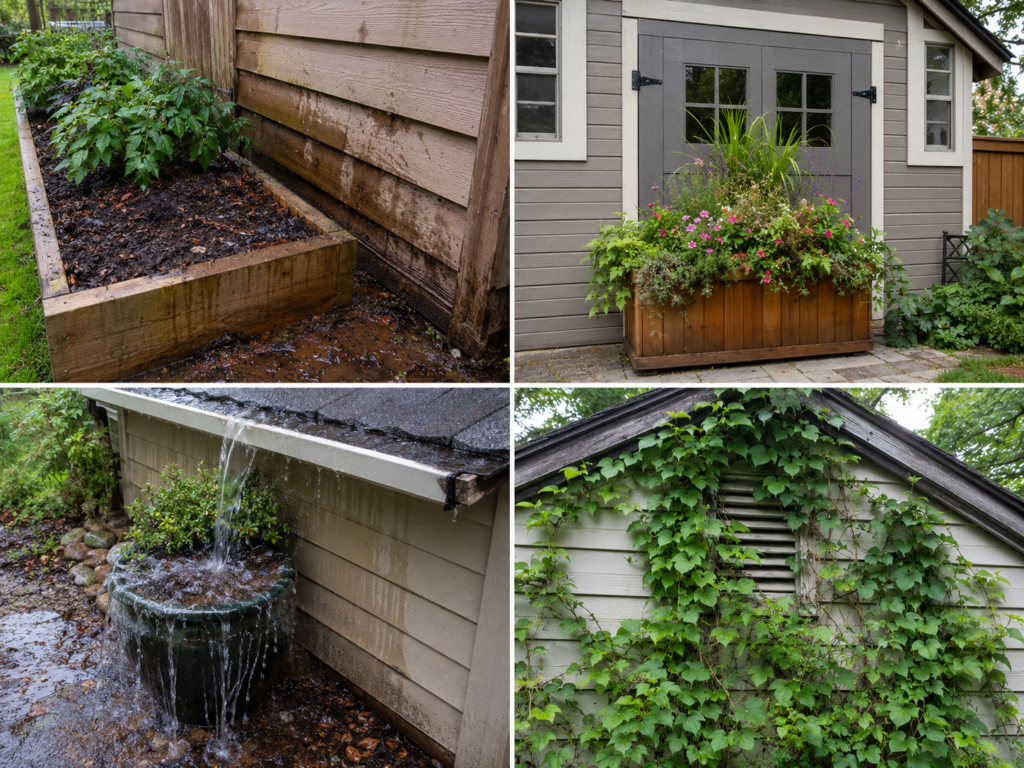
Even attractive backyard shed planter ideas can fail when containers block access, trap moisture or direct water toward the building.
Placing Soil Against the Shed
Wet soil and mulch can trap moisture and hide exterior damage. Use an independent planter with a gap behind it.
Blocking Doors
Test the full door swing and equipment route before filling containers.
Ignoring Roof Runoff
Observe the shed during rain. Move pots away from concentrated water or improve guttering.
Using Pots Without Drainage
Choose containers with open drainage holes and use suitable potting mix.
Draining Water Toward the Shed
Check the surface slope and direct excess water away from the base.
Mounting Heavy Boxes on Weak Panels
Attach boxes only to suitable structural framing or use a freestanding trough.
Growing Aggressive Climbers
Use an independent trellis and choose a manageable plant.
Choosing Plants Before Checking Light
Observe the wall at different times of day before selecting plants.
Overcrowding a Small Shed
Use one statement pot, a matched pair or one coordinated group instead of many unrelated containers.
Ignoring Mature Plant Size
Check expected height and width before planting.
Using Lightweight Pots in Wind
Use broad, weighted containers for tall plants and exposed locations.
Backyard Shed Planter Checklist
Shed and Site
- Measure doors, windows and wall zones.
- Test equipment access.
- Locate vents, outlets and downpipes.
- Check the shed base and surface drainage.
Environment
- Observe morning and afternoon sunlight.
- Watch roof runoff.
- Check wind exposure.
- Consider winter conditions.
Plants and Containers
- Check mature plant size.
- Match plants with similar needs.
- Use suitable root depth.
- Confirm filled planter weight.
- Use functional drainage holes.
- Keep water away from the shed.
Maintenance
- Preserve wall access.
- Keep watering convenient.
- Remove trapped leaves.
- Check supports annually.
- Review plant growth each season.
A successful arrangement should pass three tests:
- Visual: It improves the shed and surrounding garden.
- Plant: It provides suitable light, roots and water.
- Building: It preserves drainage, airflow and access.
Review these backyard shed planter ideas each season as plants mature, sunlight changes and maintenance needs develop.
Backyard Shed Planter FAQs
What are the best planter ideas for around a backyard shed?
Good options include matching doorway pots, one statement planter, a window trough, a trellis planter and a three-pot corner group. Choose according to space, sunlight and access.
How many planters should go around a small shed?
One to three coordinated planters are usually enough. Use one statement pot, a matching doorway pair or one compact corner group.
What size planter is best beside a shed?
Choose a planter that supports the plant’s mature roots and top growth. It should remain proportional to the shed and stable in wind.
Can planters sit directly against a shed?
Planters should normally sit away from the wall. Leave space for drainage, airflow, cleaning and exterior repairs.
Can planters cause shed rot?
They may contribute to moisture problems when wet soil, leaves or water remain against timber. Offset containers and direct water away from the base.
What plants grow well around a shed?
Compact evergreens, ornamental grasses, herbs, flowers, foliage plants and manageable climbers can work well. Match them to local light and climate.
What can I plant beside a shaded shed?
Use ferns, foliage plants, begonias, shade grasses or compact evergreens. Focus on leaf color and texture rather than flowers alone.
Are climbing plants safe for shed walls?
Climbers are safer on an independent trellis positioned away from the siding. Prevent stems from reaching vents, gutters and roof gaps.
Can I attach a window box to a shed?
Yes, when the framing can support the box, wet soil and mature plants. Use a freestanding trough when structural support is uncertain.
Can vegetables grow beside a shed?
Yes, when the area receives suitable sunlight and clean runoff. Use food-safe containers with adequate drainage and root depth.
Myra is the founder and lead writer of Backyard Planter Ideas, where she shares practical, well-researched guidance on planter design, plant selection, and outdoor styling. Her goal is to help homeowners create attractive, functional garden spaces with clear, reliable, and easy-to-apply advice.