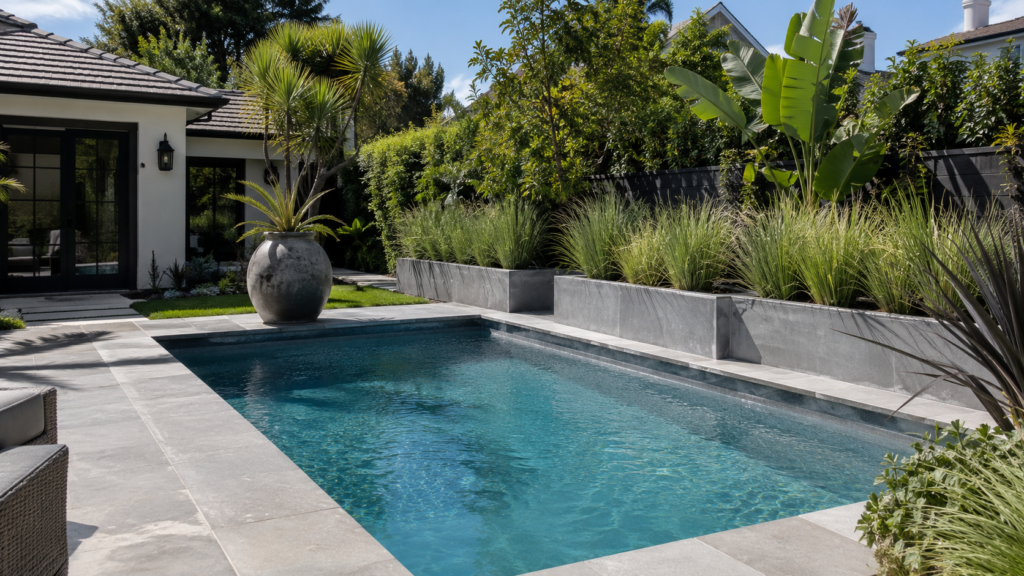
The best backyard pool planter ideas combine stable containers, low-debris plants, effective drainage, and clear access around gates, ladders, covers, and equipment. Use tall troughs for privacy, oversized pots for empty corners, matching geometric planters for modern pools, or climate-adapted foliage for easier maintenance.
| Goal | Best solution |
|---|---|
| Privacy | Tall troughs with upright foliage |
| Luxury look | Matching oversized pots |
| Small pool | One focal planter or coordinated trio |
| Low maintenance | Large pots with low-debris plants |
| Tropical style | Dwarf palms and bold foliage |
| Strong wind | Concrete or weighted planters |
| Flexible layout | Movable fiberglass or resin pots |
Poolside Planter Compatibility Checklist
Treat the container, plant, and location as one complete system. Before installation, confirm:
- Functional drainage with runoff directed away from the pool and paths
- Stability in local wind
- Suitable sun, heat, humidity, and splash exposure
- Enough root space for mature growth
- Manageable leaf, flower, fruit, and seed drop
- Clear access to gates, ladders, covers, drains, and equipment
- No sharp foliage or climbing aid beside a pool barrier
- Easy watering, pruning, cleaning, and repotting access
When two designs look equally attractive, choose the one with better stability, drainage, mature-size compatibility, and maintenance access.
How to Choose Planters for a Backyard Pool
Start with function. A pool planter may need to screen a view, soften a wall, frame an entrance, divide activity zones, or create a focal point. That purpose determines the best height, width, material, weight, and planting style.
Study the location throughout the day. Paving, walls, and glass can intensify heat, while open water may expose tall plants to wind. Evaluate deck space, walking routes, sunlight, reflected heat, splash exposure, mature plant size, debris, drainage, local climate, and access to pool systems.
Use this order:
- Choose the location.
- Define the function.
- Measure the usable space.
- Select the container.
- Choose a compatible plant.
This location-first method prevents buying a plant that later proves too large, unstable, messy, or unsuitable for the poolside microclimate.
Poolside Planter Fit Score
Use this editorial score to compare general arrangements:
| Factor | 0 | 1 | 2 |
|---|---|---|---|
| Debris | Frequent | Moderate | Limited |
| Splash fit | Protected only | Light splash | Better exposed fit |
| Heat fit | Sensitive | Needs monitoring | Strong tolerance |
| Stability | Easily tipped | Weighted or sheltered | Naturally stable |
| Drainage | Difficult | Needs adjustment | Easily controlled |
| Traffic safety | Obstructive | Placement-dependent | Route-friendly |
A score of 9–12 indicates a strong general fit. A score of 6–8 may work with better placement or more maintenance. The score is a planning tool, not a scientific plant rating.
Modern and Minimalist Pool Planter Ideas
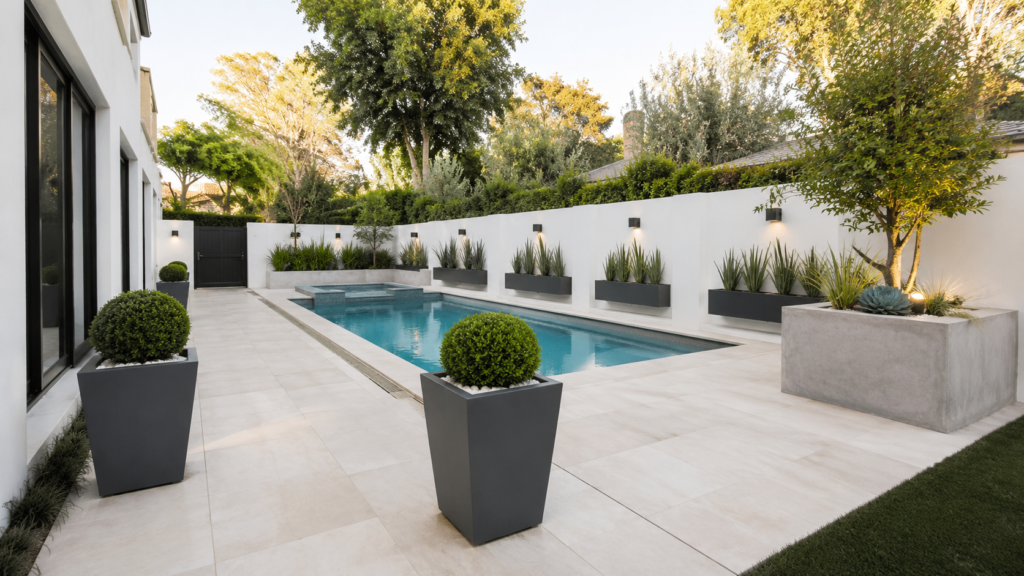
Modern pool planters work best with simple shapes, repeated finishes, controlled foliage, and open space.
1. Matching Black Entrance Planters
Best for: Pale paving and symmetrical entrances
Avoid when: Reflected heat is extreme
Fit: 9/12
Place two charcoal or black planters beside the main entrance. Use upright grasses or compact evergreen foliage for a clean transition.
2. Oversized Concrete Corner Pots
Best for: Windy areas and permanent focal points
Avoid when: The deck cannot support the weight
Fit: 11/12
One large concrete pot can anchor an empty corner beside a wall, fence, or outdoor kitchen. Confirm its position before filling.
3. Narrow Troughs Along a Wall
Best for: Narrow decks and blank walls
Avoid when: Mature foliage will enter the walkway
Fit: 10/12
Long troughs soften a wall without projecting as far as round pots. Repeat one grass, shrub, or architectural foliage plant.
4. White Geometric Planters
Best for: Light paving and contemporary architecture
Avoid when: Frequent cleaning is impractical
Fit: 9/12
White or pale-grey containers create a calm look and emphasize foliage. Choose washable finishes because pale pots show soil and algae.
5. One Sculptural Focal Planter
Best for: Small pools and uncluttered layouts
Avoid when: It blocks a route or key view
Fit: 8/12
Place one distinctive planter at the far end of the pool or against a blank wall. Match low bowls with low plants and tall pots with upright foliage.
Privacy and Zoning Planter Ideas
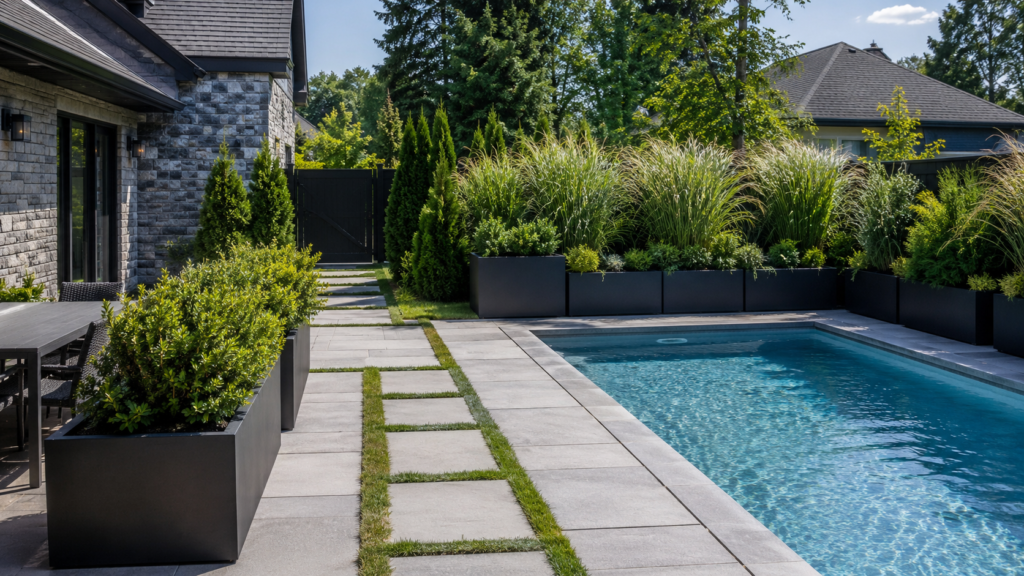
Test the actual sightline before installing privacy planters. The most effective position may be near the seating area rather than directly against the boundary.
6. Tall Boundary Troughs
Best for: Long fences and neighboring views
Avoid when: The planter could assist climbing
Fit: 10/12
Use stable troughs with upright grasses or compact shrubs while keeping gates, drains, lighting, and maintenance access clear.
7. Repeated Clumping Grasses
Best for: Soft privacy and modern landscapes
Avoid when: The variety spreads or sheds heavily
Fit: 10/12
Clumping grasses add movement and partial screening without forming a solid wall. Choose a locally appropriate, non-invasive variety.
8. Container-Grown Clumping Bamboo
Best for: Fast vertical screening
Avoid when: Watering and pruning will be inconsistent
Fit: 7/12
Use genuine clumping bamboo in a large, stable planter. Avoid running bamboo and lightweight pots because mature plants can become top-heavy.
9. Planters Between Pool and Dining Areas
Best for: Separating wet and dry zones
Avoid when: Containers narrow the serving route
Fit: 10/12
Medium-height planters define a dining space while preserving visibility. Choose compact, low-debris plants that will not trail across the floor.
10. Staggered Privacy Planters
Best for: Blocking one angled view
Avoid when: The layout reduces supervision
Fit: 9/12
Place two or three tall planters at different distances to interrupt a sightline. This often uses fewer containers than a full row.
Tropical and Resort-Style Pool Planter Ideas
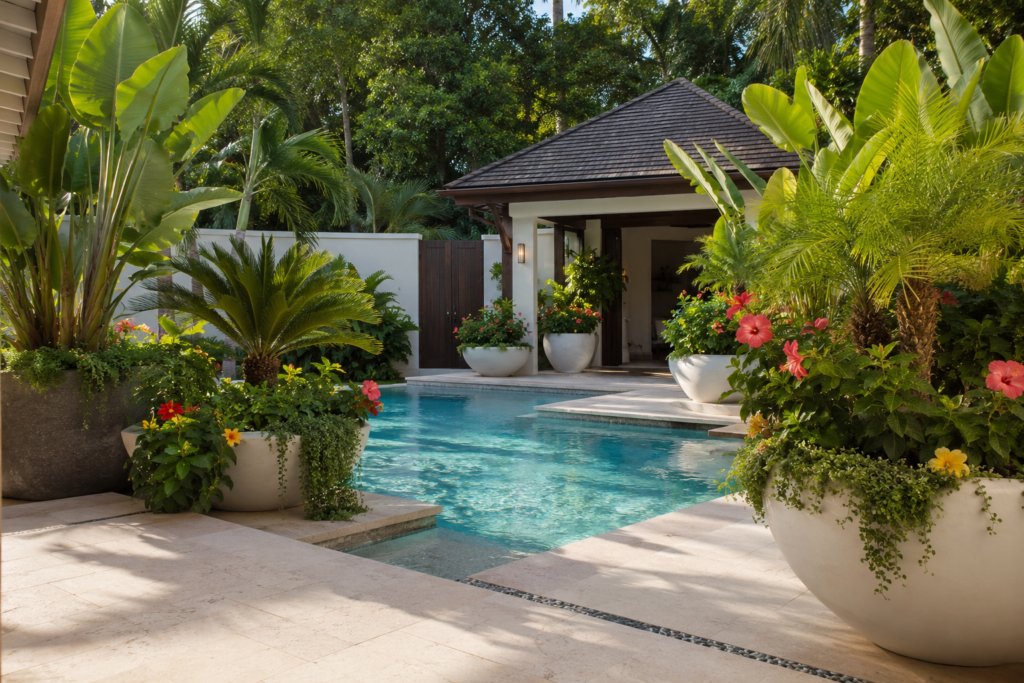
Use broad leaves and layered heights for a resort look. In cold climates, choose movable seasonal plants or hardy substitutes with similar forms.
11. Dwarf Palm Statement Pots
Best for: Cabanas and broad corners
Avoid when: Mature fronds will obstruct paths
Fit: 8/12
A dwarf or slow-growing palm creates instant tropical structure. Check mature size and use a broad, stable container.
12. Bird-of-Paradise Planters
Best for: Sheltered tropical corners
Avoid when: The site is cold or windy
Fit: 8/12
Bird of paradise provides bold foliage. Give its leaves enough room to expand without narrowing the walkway.
13. Banana and Trailing Foliage
Best for: Lush seasonal displays
Avoid when: Frequent watering is unrealistic
Fit: 6/12
Use a banana plant for height and compatible trailing foliage around the edge. Both plants must share similar moisture needs.
14. Hibiscus Color Planters
Best for: Warm outer deck areas
Avoid when: Flower drop near the pool is a concern
Fit: 6/12
Hibiscus adds strong seasonal color. Position it away from the immediate water edge and pair it with simple green foliage.
15. Layered Foliage Around a Pool House
Best for: Cabanas, bars, and sheltered walls
Avoid when: Planters block doors or service panels
Fit: 7/12
Combine one tall plant, one medium foliage plant, and one trailing plant in a generous container. Repeat the combination for balance.
Mediterranean, Coastal and Drought-Smart Pool Planter Ideas
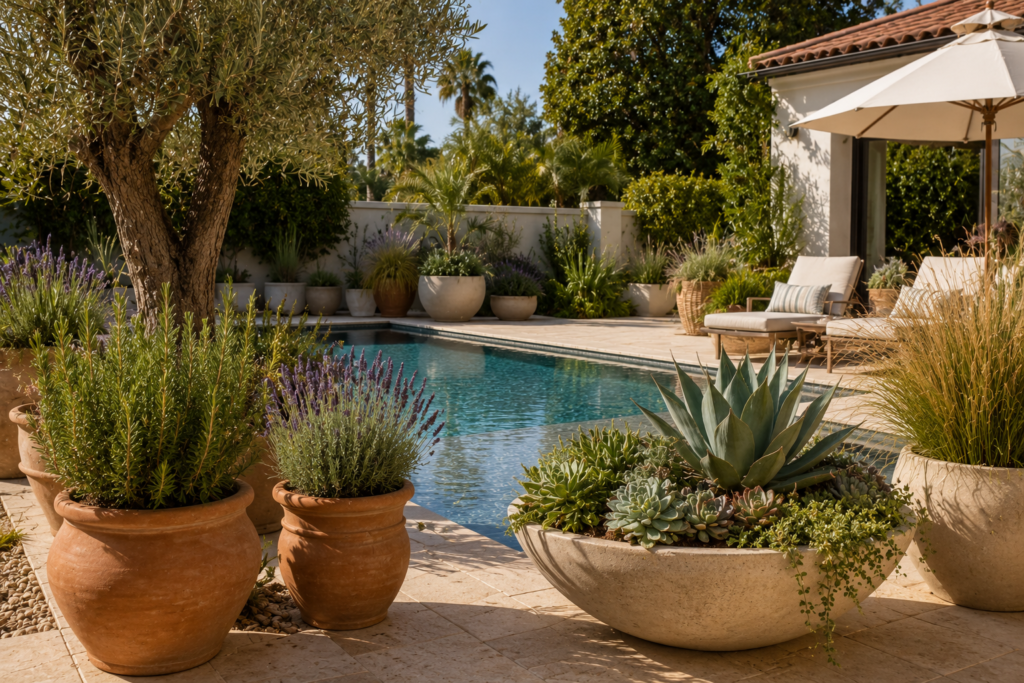
These styles use textured foliage, restrained color, and natural-looking containers. Drought-tolerant plants still need regular watering in hot, windy containers.
16. Terracotta Pots with Herbs
Best for: Sunny Mediterranean-style pools
Avoid when: Humidity or freezing is a problem
Fit: 8/12
Combine terracotta with rosemary, lavender, or suitable local herbs. Keep flowering herbs away from congested steps if pollinators are a concern.
17. Large Succulent Bowls
Best for: Hot, dry sites and low focal points
Avoid when: Sharp plants sit beside paths
Fit: 10/12
A wide succulent bowl adds texture without blocking views. Use softer forms near traffic areas and provide excellent drainage.
18. Olive-Style Focal Planters
Best for: Mediterranean terraces
Avoid when: Fruit drop, frost, or limited root space is problematic
Fit: 8/12
Use an olive or suitable silver-leaved tree as a focal point. Check mature canopy size, pruning needs, and seasonal debris.
19. Coastal Grass Planters
Best for: Windy and relaxed contemporary pools
Avoid when: The grass is invasive or sheds heavily
Fit: 10/12
Pair pale weather-resistant pots with flexible clumping grasses. Secure lightweight containers in exposed locations.
Small-Pool and Budget-Friendly Planter Ideas
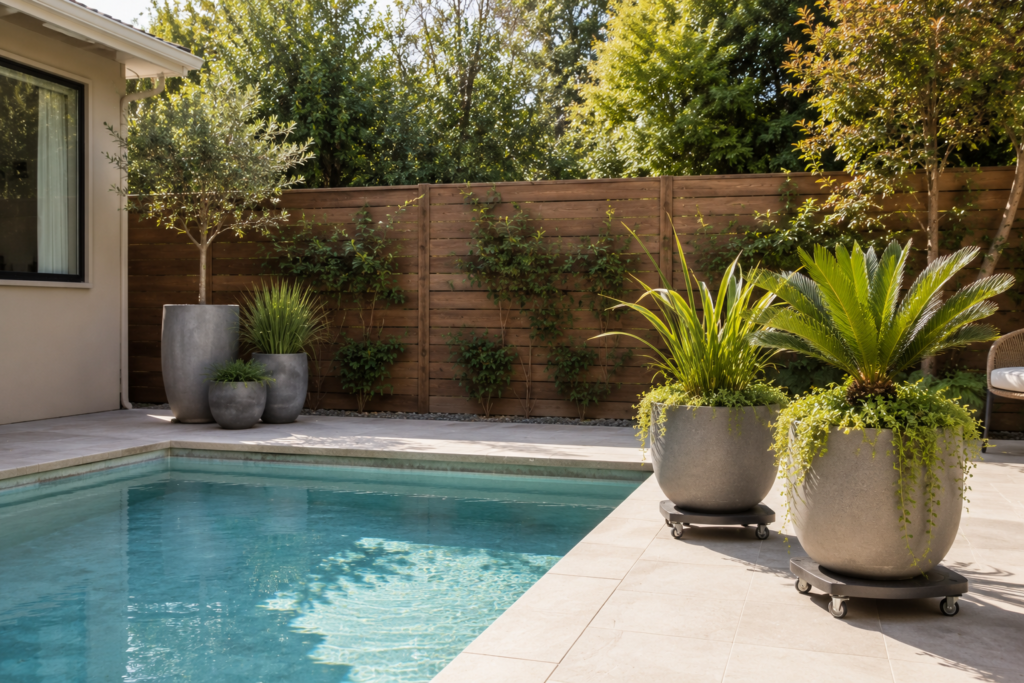
Small pools need fewer containers. Concentrate greenery in one or two useful locations instead of scattering pots around the deck.
20. A Coordinated Trio of Pots
Best for: Empty corners and modest budgets
Avoid when: The group narrows the walkway
Fit: 7/12
Combine one tall, one medium, and one low pot in the same material or color family. Vary plant height while keeping the group compact.
21. Movable Planters on Caddies
Best for: Rentals, seasonal layouts, and winter storage
Avoid when: The caddy cannot support the wet weight
Fit: 8/12
Use outdoor-rated locking caddies for cleaning, parties, storms, or winter protection. Avoid top-heavy planting combinations.
Best Plants for Poolside Planters
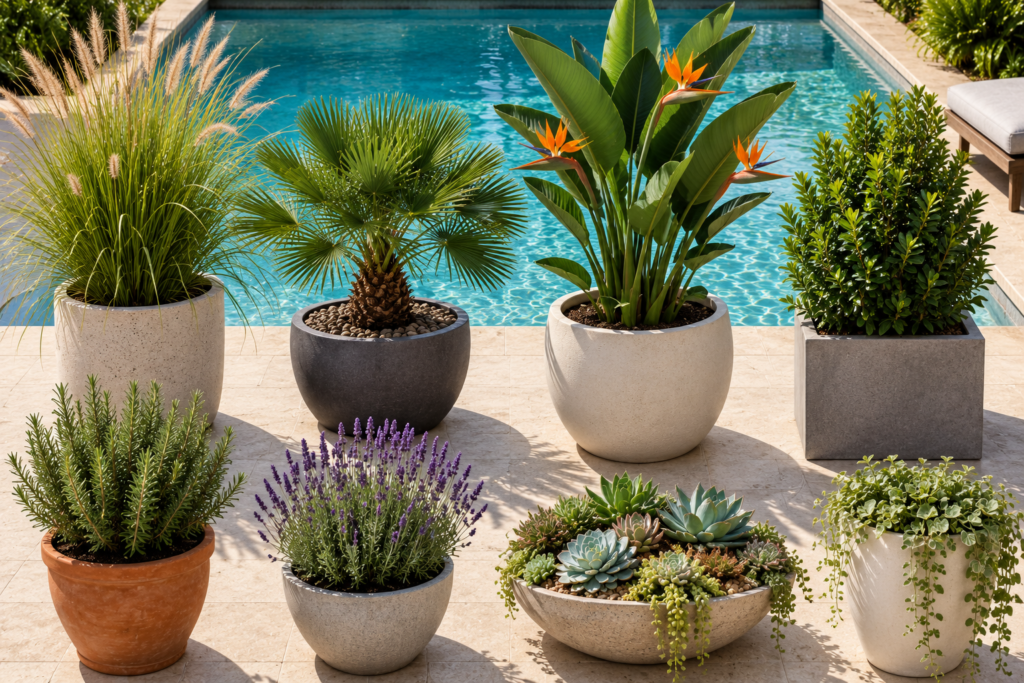
Choose plants with controlled growth, manageable debris, and tolerance for local sun, heat, wind, rainfall, and winter conditions.
| Plant type | Best role | Main caution |
|---|---|---|
| Clumping grasses | Privacy and movement | Check invasive status |
| Dwarf palms | Tropical structure | Mature size and climate |
| Bird of paradise | Architectural foliage | Wind and cold |
| Succulents | Hot, dry areas | Sharp leaves |
| Rosemary | Structure and fragrance | Strong drainage |
| Lavender | Seasonal color | Humidity and pollinators |
| Evergreen shrubs | Year-round screening | Root space and pruning |
| Trailing foliage | Soft pot edges | Keep away from paths |
Use upright plants for privacy, rounded plants for entrances, and low plants where open views matter. Place flowering or fruiting plants farther from the water if debris is a concern. Plants sharing one container must need similar light and water.
How to Adapt Pool Planters to Your Climate
Copy the function of a design rather than forcing an unsuitable species into the space.
| Climate | Better choices | Priority |
|---|---|---|
| Hot and humid | Tropical foliage and suitable palms | Drainage and airflow |
| Hot and dry | Succulents, herbs, adapted grasses | Soil volume and root protection |
| Frost-prone | Hardy shrubs and grasses | Frost-resistant materials |
| Coastal and windy | Compact foliage and flexible grasses | Weight and broad bases |
| Shaded pool | Shade-tolerant foliage | Accurate light assessment |
| High rainfall | Moisture-tolerant plants | Clear drainage outlets |
Choose plants for the most difficult season. Confirm local invasive-species guidance, temperature tolerance, and mature dimensions.
Poolside Planter Materials Compared
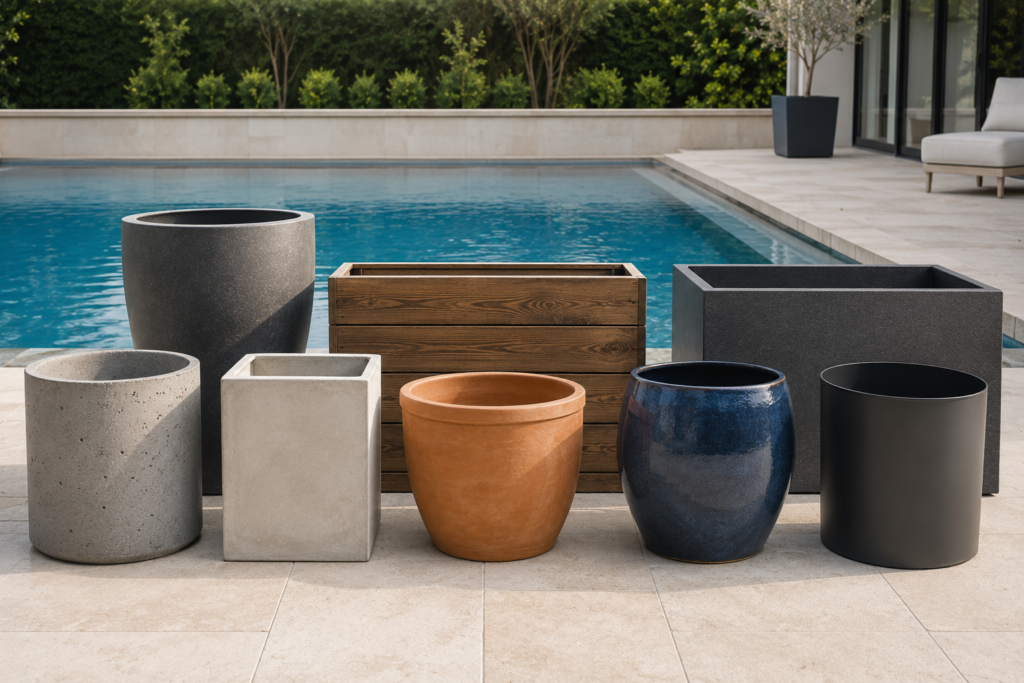
| Material | Strength | Limitation | Best use |
|---|---|---|---|
| Concrete | Heavy and stable | Difficult to move | Windy permanent sites |
| Fiberglass | Large but lighter | Quality varies | Privacy and focal pots |
| Resin | Affordable and movable | May need weighting | Flexible layouts |
| Terracotta | Natural appearance | Dries quickly | Mediterranean displays |
| Ceramic | Decorative and washable | Heavy and breakable | Sheltered accents |
| Metal | Clean modern form | Can heat in sun | Rectangular troughs |
| Wood | Warm appearance | Needs protection | Planter boxes |
| Composite | Weather-resistant | Quality varies | Long troughs |
Check drainage, UV resistance, frost suitability, finished weight, liner needs, and cleaning requirements before buying.
How to Choose the Right Poolside Planter Size
Choose planter size for the plant’s mature roots and top growth, not its nursery size. Small pots dry quickly; shrubs, palms, grasses, bamboo, and small trees need more soil volume and broader bases.
Ask whether the plant could become top-heavy, wider than the pot, difficult to water, or impossible to repot. Also check whether the deck can support the filled container. Fewer large planters usually provide stronger structure and steadier moisture than many small pots.
Poolside Planter Drainage Systems Explained
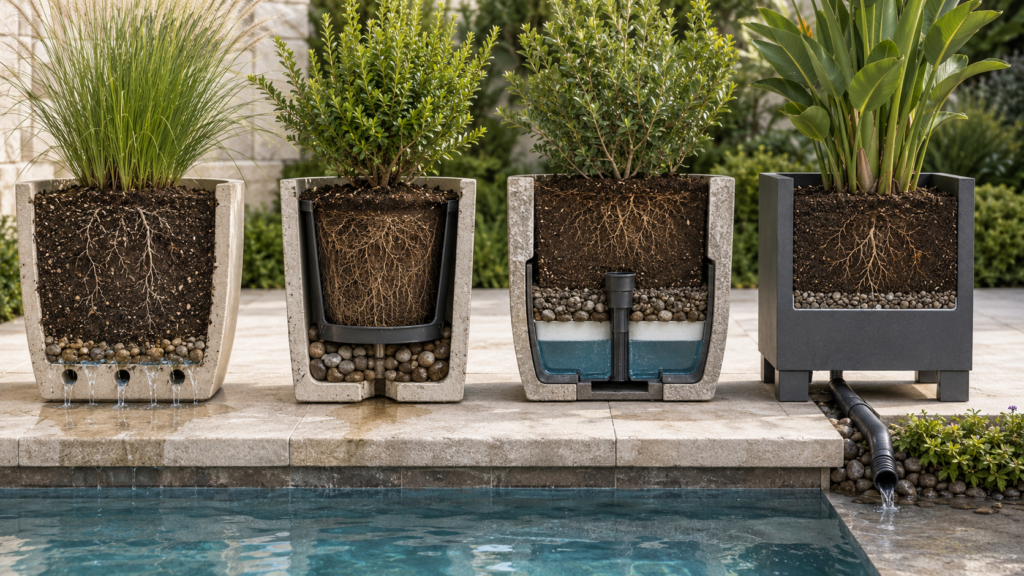
- Draining planter: Water exits through base holes.
- Internal nursery pot: Water may collect inside the outer pot.
- Sealed cachepot: Requires careful manual control.
- Self-watering pot: Uses a reservoir and overflow.
- Raised planter: Uses stable feet to keep outlets open.
- Connected drainage: Sends water through tubing to an outlet.
Keep drainage visible and accessible. Runoff should not cross the deck, enter the pool, or remain in saucers. Use outdoor container-growing medium instead of dense garden soil.
Where to Place Planters Around a Pool
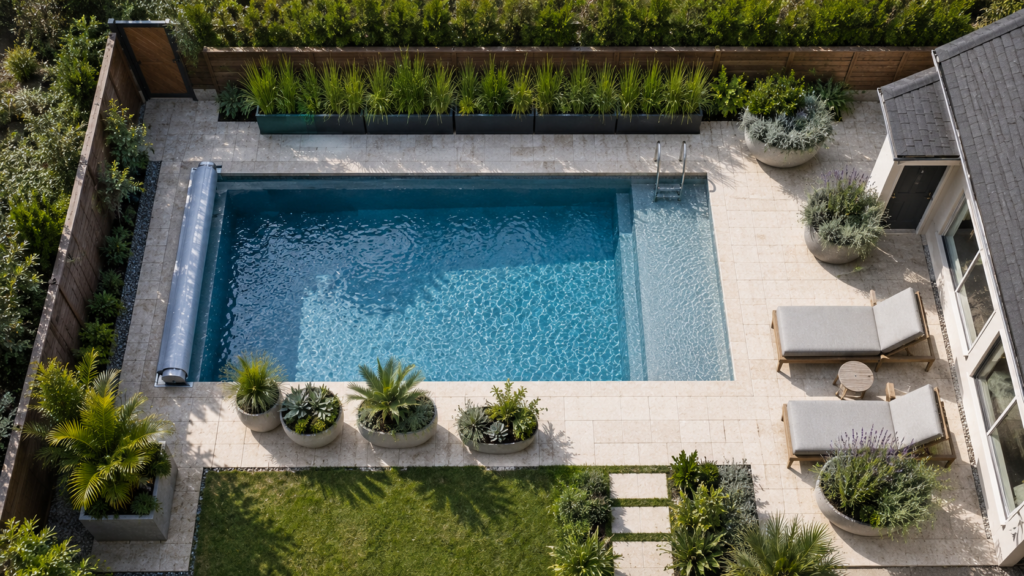
Splash Zone
Use compact, stable containers with controlled foliage. Keep them away from coping, ladders, handrails, and pool-cover mechanisms.
Heat-Reflection Zone
Use heat-tolerant plants and generous soil volume near sunny paving, glass, and walls. Small dark pots may overheat and dry quickly.
Privacy Perimeter
Use tall troughs and upright foliage while keeping gate latches, barriers, lighting, drains, and maintenance access clear.
Lounge and Entry Zone
Choose rounded pots and soft foliage. Avoid thorns, trailing stems, exposed irrigation lines, and runoff across walking routes.
Before planting, open every gate, move nearby chairs, operate the cover, and imagine the plant at mature width.
How to Plant and Maintain Poolside Containers
- Assess the microclimate: Record sun, shade, heat, wind, rainfall, and splash.
- Choose a stable container: Use a broad, heavy, or weighted planter.
- Confirm drainage: Keep outlets open and direct runoff safely.
- Use container-growing medium: Avoid dense garden soil.
- Combine compatible plants: Match light, moisture, and feeding needs.
- Leave watering space: Keep soil below the rim.
- Water by conditions: Check moisture instead of following one rigid schedule.
- Feed and prune: Remove growth before it enters the pool or paths.
- Prevent standing water: Inspect saucers, reservoirs, and blocked holes.
- Review the layout: Move, prune, or repot plants that become obstructive.
Add moisture checks, drainage inspection, fallen-leaf removal, irrigation testing, and stability checks to the regular pool-maintenance routine.
Which Backyard Pool Planter Idea Is Best for You?
| Situation | Best option |
|---|---|
| Narrow deck | One focal pot or shallow trough |
| Need privacy | Repeated tall planters |
| Strong wind | Concrete or weighted containers |
| Hot, dry site | Succulents or adapted grasses |
| Tropical climate | Palms and broad foliage |
| Cold winters | Movable containers |
| Modern home | Matching geometric pots |
| Traditional home | Terracotta or stone-look pots |
| Rental | Resin or fiberglass pots |
| Family pool | Stable rounded planters |
| Low maintenance | Evergreen low-debris foliage |
For most backyards, two or three coordinated medium-to-large planters provide better structure, root space, and moisture control than many small pots.
Children, Pets, and Poolside Plant Safety
Choose stable containers and check plants for thorns, sharp leaves, irritating sap, toxic berries, or other harmful parts. Keep planters away from play routes, steps, ladders, gates, and barriers. Secure irrigation tubes and avoid loose decorative stones where young children play.
Family-friendly arrangements generally use broad bases, soft controlled foliage, limited debris, and positions outside high-traffic areas.
Common Poolside Planter Mistakes to Avoid
- Buying pots before measuring the deck
- Ignoring mature plant width
- Using small pots for large privacy plants
- Placing lightweight tall pots in wind
- Blocking ladders, gates, covers, or equipment
- Mixing incompatible plants
- Using sharp foliage beside paths
- Allowing runoff across paving
- Leaving standing water in saucers
- Choosing high-debris plants beside the pool
- Ignoring seasonal protection
- Selecting invasive plants
- Using pots without workable drainage
A planter that feels obstructive while empty will create a larger problem after the plant matures.
How These Backyard Pool Planter Ideas Were Evaluated
The 21 ideas were compared for debris, splash exposure, reflected heat, stability, drainage, traffic safety, mature size, root volume, climate adaptability, maintenance, privacy, and household safety.
The Fit Score is an editorial planning tool, not a scientific rating. Final suitability depends on the exact plant, local climate, container quality, installation, and maintenance.
FAQs
What are the best plants for planters around a pool?
Choose low-debris plants with controlled growth that tolerate local sun, heat, wind, and occasional splash. Options may include clumping grasses, compact shrubs, dwarf palms, herbs, and suitable succulents.
What plants should you avoid around a swimming pool?
Avoid plants with thorns, sharp leaves, invasive roots, heavy fruit, sticky flowers, or excessive leaf and seed drop. Also avoid plants that quickly outgrow the available space.
Can chlorine or saltwater damage poolside plants?
Repeated exposure can damage foliage and soil conditions. Position sensitive plants farther from the pool edge and prevent overflow or backwash from entering containers.
What planter material works best around a pool?
Concrete suits permanent windy locations, while fiberglass and resin are easier to move. Terracotta looks natural but dries faster and may be vulnerable to freezing.
Do poolside planters need drainage holes?
Conventional outdoor planters need functional drainage holes. Direct discharged water away from the pool and frequently used walking surfaces.
How do you arrange planters around a small pool?
Use one focal planter, two matching pots, or one coordinated trio. Keep containers in unused corners and preserve direct walking routes.
How can planters create privacy around a pool?
Place tall troughs or upright planters within the unwanted sightline. Keep them stable and away from gates, barriers, equipment, and supervision routes.
How do you prevent mosquitoes in poolside planters?
Remove standing water from saucers, empty pots, blocked drainage holes, and exposed reservoirs. Inspect and clean water-holding areas regularly.
Final Thoughts
The best backyard pool planter ideas balance appearance with drainage, stability, climate suitability, mature plant size, and safe placement. Start by defining the planter’s purpose, then measure the location and choose a container that can support the plant for several seasons.
A successful pool area does not need dozens of pots. Two matching entrance planters, one oversized focal container, a coordinated trio, or a short privacy row can deliver stronger impact with less maintenance.
For most homes, two or three medium-to-large planters with controlled, low-debris foliage provide the best balance of appearance, root space, and manageable upkeep. Keep gates, covers, ladders, walkways, and equipment clear, and reassess the layout as plants mature.
Editorial Sources
Verify plant suitability and safety using reliable local horticultural guidance, pool-safety authorities, container-care resources, and manufacturer instructions. Include only sources genuinely used during editorial review.
Myra is the founder and lead writer of Backyard Planter Ideas, where she shares practical, well-researched guidance on planter design, plant selection, and outdoor styling. Her goal is to help homeowners create attractive, functional garden spaces with clear, reliable, and easy-to-apply advice.