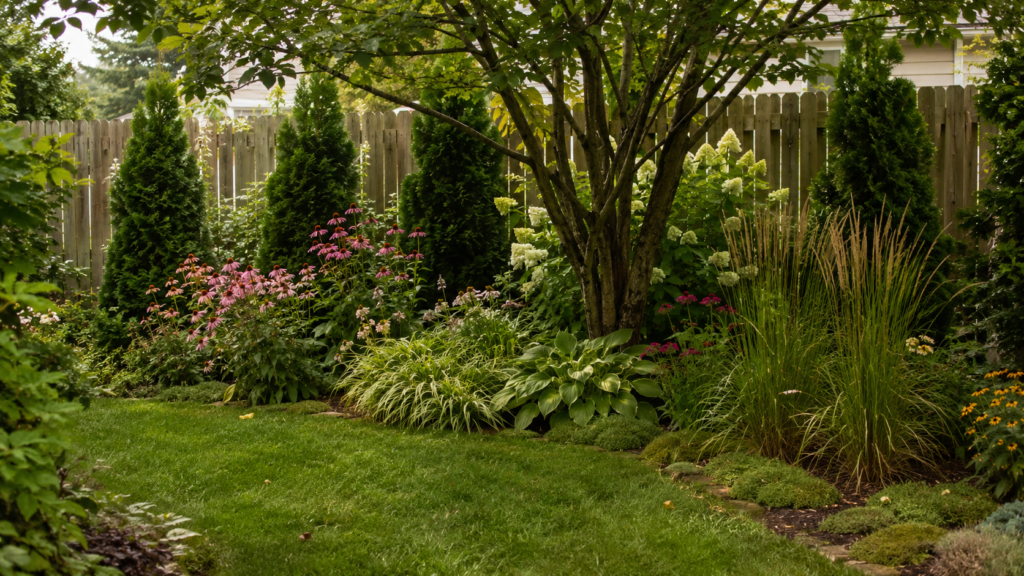
The best backyard plant ideas depend on your yard’s sunlight, climate, soil, available space, and purpose. Use evergreen shrubs and climbers for privacy, shade-tolerant plants for darker areas, flowering perennials for color, and well-adapted drought-tolerant plants for easier care.
A successful backyard is not about planting the greatest number of attractive plants. It is about choosing plants that can perform a useful job while fitting the conditions already present.
This guide compares 35 backyard plants for privacy, shade, color, small spaces, low maintenance, fences, and different climates. Because plant performance varies internationally, always verify the exact species or cultivar for your local temperatures, rainfall, humidity, soil, and invasive-plant guidance.
The most useful rule is simple:
Choose by purpose first, growing conditions second, mature size third, and appearance after those essentials are satisfied.
Best Backyard Plant Ideas for Every Yard
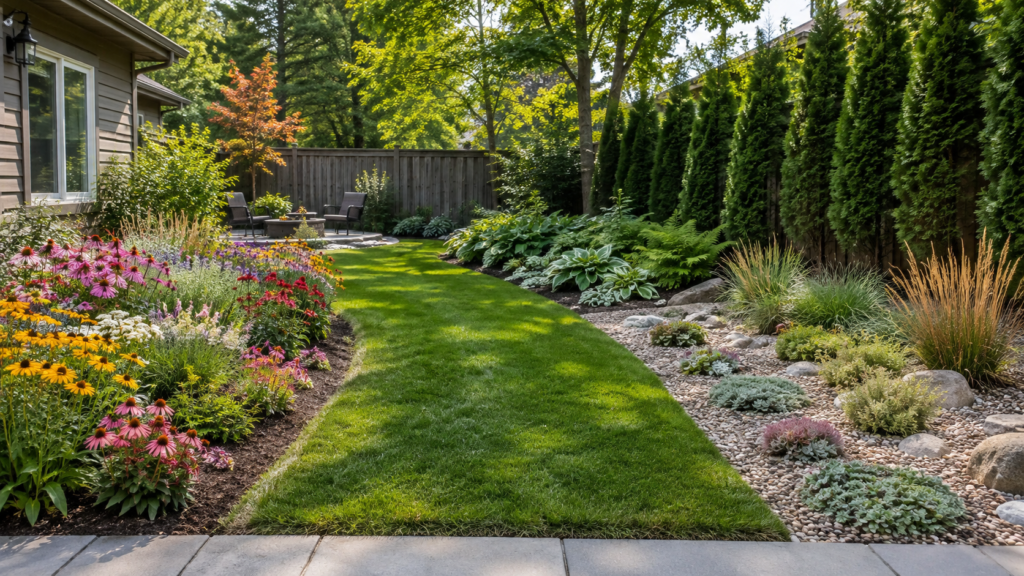
Start by identifying the main problem your backyard needs to solve. A sunny dry yard, a shaded courtyard, a narrow fence line, and a privacy-focused garden require different plant types even if all four need more greenery.
Use these quick starting points:
- Year-round privacy: evergreen shrubs or hedges
- Narrow privacy: upright plants or trellis climbers
- Shade: foliage plants adapted to reduced light
- Dry shade: plants tolerant of both shade and lower moisture
- Full-sun color: flowering perennials with overlapping bloom periods
- Low maintenance: plants naturally adapted to the site
- Small yard: narrow plants, climbers, compact cultivars, and containers
- Dry yard: drought-tolerant plants with good drainage
- Pet-used yard: verify toxicity before planting
- Fence line: choose according to available planting width
A useful decision rule is to eliminate unsuitable plants first. If the area receives deep shade, remove full-sun plants from the shortlist. If the planting strip is narrow, remove broad shrubs that will eventually overwhelm it.
How to Choose Backyard Plants
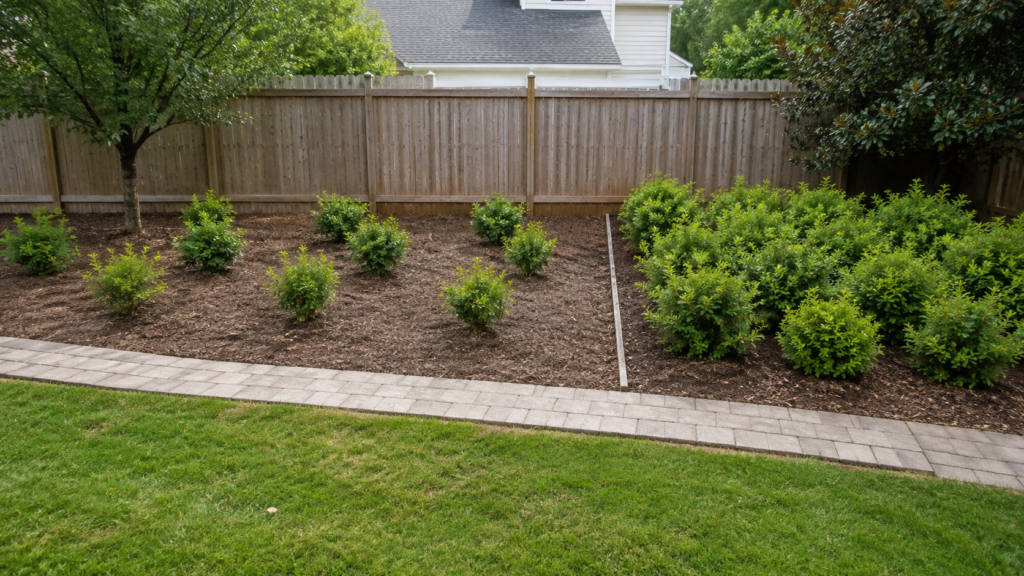
Before buying plants, evaluate sunlight, climate, drainage, mature size, and maintenance.
Check Sunlight
Observe the area during the morning, midday, and afternoon.
A site may be shaded in the morning but receive intense afternoon sun. Areas beneath deciduous trees may also become much darker after the summer canopy develops.
Think in broad categories:
- Full sun
- Part shade
- Full shade
- Dappled shade
Sun intensity matters too. Hot afternoon sun reflected from paving or walls can be much harsher than morning light.
Check Climate
Plant survival does not automatically mean good performance.
Consider:
- Winter minimum temperatures
- Summer heat
- Humidity
- Rainfall
- Frost
- Wind
- Seasonal drought
A plant suited to dry Mediterranean-style conditions may struggle in humid, persistently wet soil. A mild-climate evergreen may perform poorly where winters are severe.
Check Soil and Drainage
After heavy rain, observe whether water disappears quickly or remains around the planting area.
Free-draining plants such as lavender, rosemary, and thyme can struggle in persistently wet soil. Moisture-loving shade plants can fail when planted beneath large trees that compete heavily for water.
If standing water remains for long periods, diagnose drainage before choosing permanent plants.
Check Mature Size
Plan around the plant’s eventual height and spread rather than its nursery size.
Crowding can create:
- Poor airflow
- Heavy competition
- Constant pruning
- Blocked paths
- Fence conflicts
- Reduced flowering
Check the exact cultivar because mature dimensions can vary significantly within the same species.
Use the Backyard Plant Fit Score
Score each candidate from 0 to 2 in five categories.
| Factor | 0 | 1 | 2 |
|---|---|---|---|
| Light | Poor match | Tolerable | Preferred |
| Climate | Unsuitable | Marginal | Well adapted |
| Soil/drainage | Poor match | Manageable | Naturally suitable |
| Mature size | Does not fit | Needs control | Fits naturally |
| Maintenance | Too demanding | Acceptable | Fits your routine |
8–10: strong candidate
5–7: workable with compromises
0–4: choose another plant
The score is not a scientific guarantee. It is a practical way to prevent one attractive feature, such as flowers or fast growth, from dominating the decision.
35 Backyard Plant Ideas Compared
1. Yew (Taxus spp.)
Best for dense evergreen privacy in suitable temperate gardens.
Yew tolerates more shade than many screening plants and responds well to pruning. It works well where year-round coverage matters but sunlight is limited.
Avoid waterlogged soil. Yew is also toxic if ingested, so consider household circumstances before planting.
2. Arborvitae or Thuja
Best for traditional evergreen screening.
Upright cultivars can create tall boundary coverage without using excessive width. They are commonly used where a consistent evergreen screen is preferred.
Check the cultivar carefully because mature height and width vary greatly.
3. Holly (Ilex spp.)
Best for evergreen structure with seasonal interest.
Hollies can provide dense foliage, berries, and architectural form. Some make substantial screens while others remain compact.
Check local climate, mature size, and whether the selected species requires male and female plants for fruit.
4. Viburnum
Best for softer privacy with flowers or seasonal interest.
Viburnums include evergreen and deciduous shrubs with different heights, flowers, fruits, and autumn colors.
They work especially well in mixed screens where a natural appearance is preferred over a tightly clipped hedge.
5. Photinia
Best for colorful evergreen screening.
Photinia provides privacy while producing bright red new foliage that matures to green.
Regular pruning encourages colorful growth but also increases maintenance. Give it enough width and airflow.
6. Pittosporum
Best for mild or coastal evergreen hedges.
Pittosporum has relatively fine foliage and works well in contemporary or informal screens.
Cold tolerance varies, so it is more suitable for mild and warm-temperate climates than severe winter regions.
7. Podocarpus
Best for narrow evergreen screening in warmer climates.
Its upright habit makes suitable cultivars useful where vertical privacy is needed but planting width is limited.
Check the exact species for mature dimensions, climate suitability, and household safety.
8. Clump-Forming Bamboo
Best for fast, narrow privacy where appropriate.
Bamboo can create rapid vertical coverage, but growth habit is critical.
Choose confirmed clump-forming types when containment matters. Running bamboo spreads through underground rhizomes and can become difficult to control.
9. Hornbeam
Best for a traditional deciduous hedge.
Hornbeam tolerates regular clipping and creates strong structure in temperate gardens.
Although it is deciduous, its dense branching and retained dry leaves can provide useful seasonal screening.
10. Star Jasmine
Best for narrow privacy on a trellis.
Star jasmine provides vertical coverage without occupying the same ground width as a broad shrub.
It needs a strong support and performs best in suitable mild climates.
11. Hosta
Best for bold foliage in shade.
Hostas create strong visual mass with green, blue-green, lime, or variegated leaves.
They work particularly well in groups and contrast beautifully with ferns and finer-textured grasses.
12. Heuchera
Best for colorful foliage in part shade.
Heuchera cultivars offer burgundy, purple, caramel, lime, silver, and green leaves.
They are especially useful where shade planting needs color that lasts longer than a short flowering period.
13. Astilbe
Best for flowers in moist shade.
Astilbe produces feathery flower plumes above fine foliage.
It is much better suited to moisture-retentive shade than dry soil beneath mature trees.
14. Hellebore
Best for early-season shade color.
Hellebores flower when many other garden plants are still dormant.
They work well beneath deciduous shrubs and trees in suitable climates.
15. Brunnera
Best for silver foliage in shade.
Many Brunnera cultivars have silver-patterned leaves that brighten darker garden areas.
Small blue flowers add spring interest, but the foliage provides longer-lasting value.
16. Japanese Forest Grass
Best for movement and texture in shade.
Its cascading foliage works well beside paths, slopes, and broad-leaved plants such as Hostas.
Use it where the graceful arching form will remain visible.
17. Ferns
Best for natural woodland texture.
Ferns provide finely divided foliage and work well in shaded gardens.
Different species tolerate different moisture and temperature conditions, so choose a fern for the actual site rather than assuming all ferns behave alike.
18. Hydrangea
Best for large flowers in part shade.
Hydrangeas can create substantial seasonal color without requiring full-day sun.
Check the exact species or cultivar because mature size and sun tolerance vary considerably.
19. Aucuba
Best for evergreen structure in deeper shade.
Aucuba provides broad foliage where many flowering shrubs struggle.
Variegated forms can brighten dark corners and work well behind lower shade plants.
20. Begonia
Best for seasonal color in shade.
Begonias are useful in shaded beds, patios, and containers.
In colder climates they are often treated as warm-season plants rather than permanent structure.
21. Lavender
Best for sunny color, fragrance, and silver foliage.
Lavender prefers full sun and free-draining soil.
It can be relatively low maintenance where climate and drainage suit it but may struggle in persistently wet or humid conditions.
22. Salvia
Best for long flower spikes.
Salvias provide blue, purple, pink, red, or white flowers depending on species.
Many combine well with lavender, Nepeta, grasses, and Rudbeckia.
23. Coneflower
Best for strong summer perennial color.
Echinacea produces upright daisy-like flowers and works well in sunny borders.
Flowering generally declines when light levels are too low.
24. Black-Eyed Susan
Best for strong yellow and gold color.
Rudbeckia works particularly well with purple-flowering plants and ornamental grasses.
Repeated groups usually create more impact than isolated plants.
25. Catmint
Best for soft blue-purple edging.
Nepeta creates relaxed mounds of foliage with abundant flowers.
Use it near paths and sunny border fronts, but allow enough room for its spreading habit.
26. Coreopsis
Best for bright repeating flowers.
Coreopsis commonly produces cheerful yellow or gold daisy-like flowers.
Check whether the selected type is annual or perennial in your climate.
27. Hardy Geranium
Best for flexible border color.
Hardy Geranium species create low mounds of foliage and flowers in pink, violet, blue, or white.
Many useful types tolerate sun or partial shade.
28. Zinnia
Best for fast seasonal color.
Zinnias provide bold flowers in sunny beds and containers.
Use them to fill seasonal gaps around permanent shrubs and perennials.
29. Marigold
Best for compact warm seasonal color.
Marigolds provide yellow, orange, and red flowers.
They work well along border fronts, in containers, and between permanent plants.
30. Bougainvillea
Best for dramatic warm-climate color.
Bougainvillea can cover walls, pergolas, and strong supports in sunny warm climates.
Many forms have thorns, so keep them away from narrow high-traffic areas.
31. Hylotelephium or Sedum
Best for sunny, dry, low-care beds.
The fleshy foliage stores moisture, while later-season flowers provide additional interest.
Avoid persistently wet soil.
32. Rosemary
Best for edible evergreen structure.
Rosemary combines ornamental foliage, flowers, fragrance, and culinary value.
It prefers sunny, free-draining conditions and may need winter protection in colder climates.
33. Creeping Thyme
Best for low sunny groundcover.
Creeping thyme works around paving, gravel, and dry border edges.
Prepare the site well first because it will not automatically suppress established perennial weeds.
34. Switchgrass
Best for easy-care height and movement.
Switchgrass provides vertical structure and seasonal texture in sunny gardens.
Suitable cultivars work well with Echinacea, Rudbeckia, and other flowering perennials.
35. Agapanthus
Best for architectural flowers.
Agapanthus produces strap-like foliage and tall rounded flower heads.
It performs especially well in sunny, well-drained sites and containers where climate is suitable.
Best Backyard Plants by Climate
Use climate as a shortlist filter.
Cool or cold temperate: yew, Thuja, hornbeam, Hosta, Hellebore, Brunnera, Echinacea, Rudbeckia.
Mild temperate or coastal: Pittosporum, star jasmine, rosemary, Agapanthus, Viburnum, lavender where drainage is good.
Warm temperate or subtropical: Podocarpus, Bougainvillea, star jasmine, Agapanthus, appropriate Viburnum and Salvia.
Hot and dry: lavender, rosemary, thyme, Salvia, Hylotelephium, and drought-adapted grasses.
Humid or tropical: prioritize locally proven tropical and subtropical equivalents rather than forcing Mediterranean plants into persistent heat and moisture.
When two plants solve the same problem, compare a locally native or regionally proven alternative before purchasing.
Best Backyard Privacy Plant Types
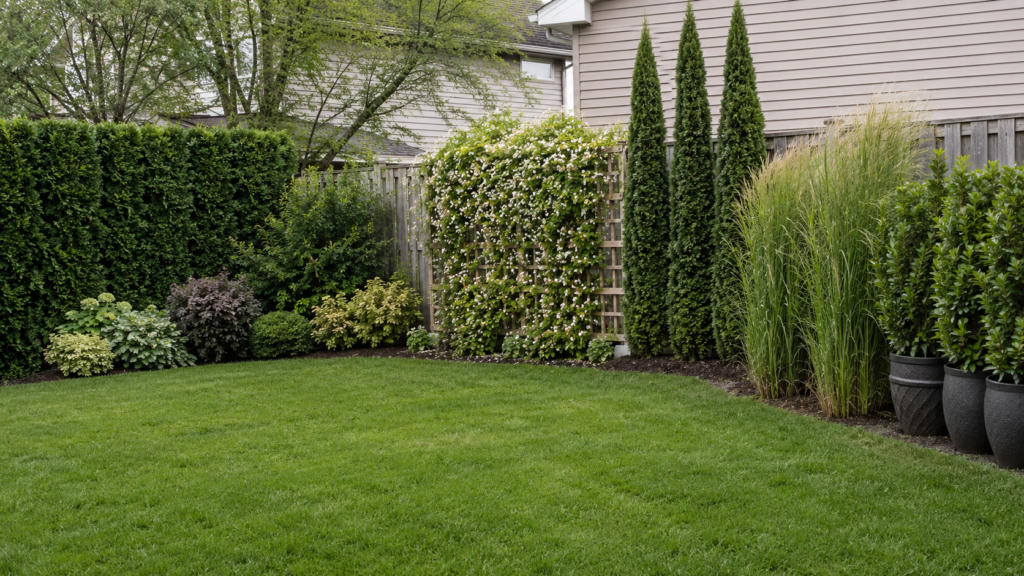
The best privacy solution depends on the sightline and available width.
Use:
- Hedges for continuous boundary coverage
- Individual shrubs for softer mixed screening
- Climbers where horizontal space is restricted
- Trees where privacy is needed above normal hedge height
- Grasses for softer seasonal screening
- Bamboo only after identifying growth habit
- Containers for patios, paved areas, or movable screens
Fast growth should not be the only goal.
Choose the fastest privacy plant that still fits the site at maturity.
Best Backyard Plants for Shade
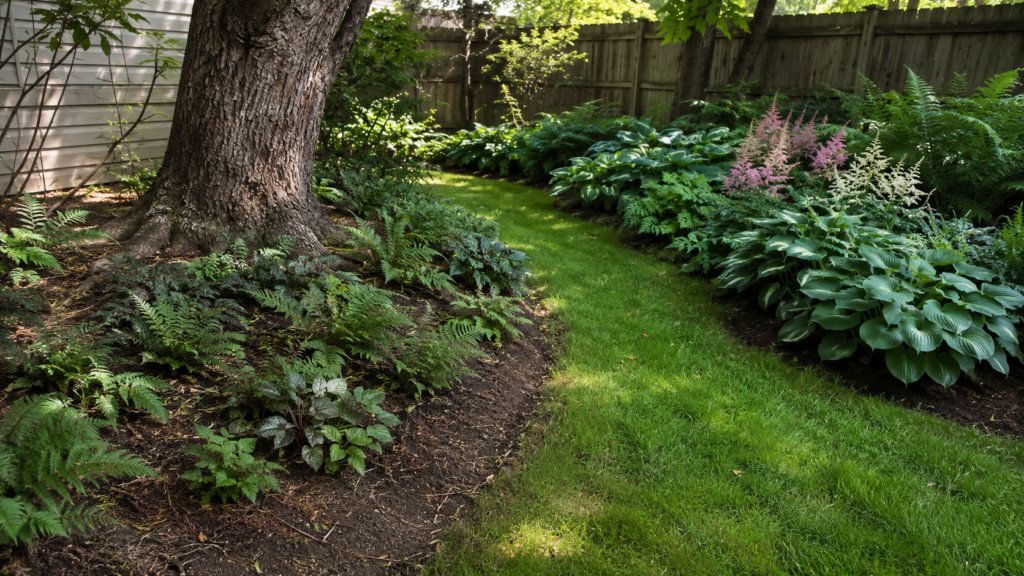
Shade planting works best when light and moisture are considered together.
Good starting points include:
- Hosta
- Heuchera
- Brunnera
- Ferns
- Japanese forest grass
- Hellebore
- Aucuba
- Hydrangea
- Astilbe
- Begonia
Dry shade beneath mature trees is especially challenging because tree roots compete for water.
Moist shade is different. Astilbe and moisture-loving ferns may perform well where soil remains consistently damp.
If water remains standing after rainfall, diagnose drainage before assuming a moisture-loving plant is the solution.
Best Backyard Plants for Color
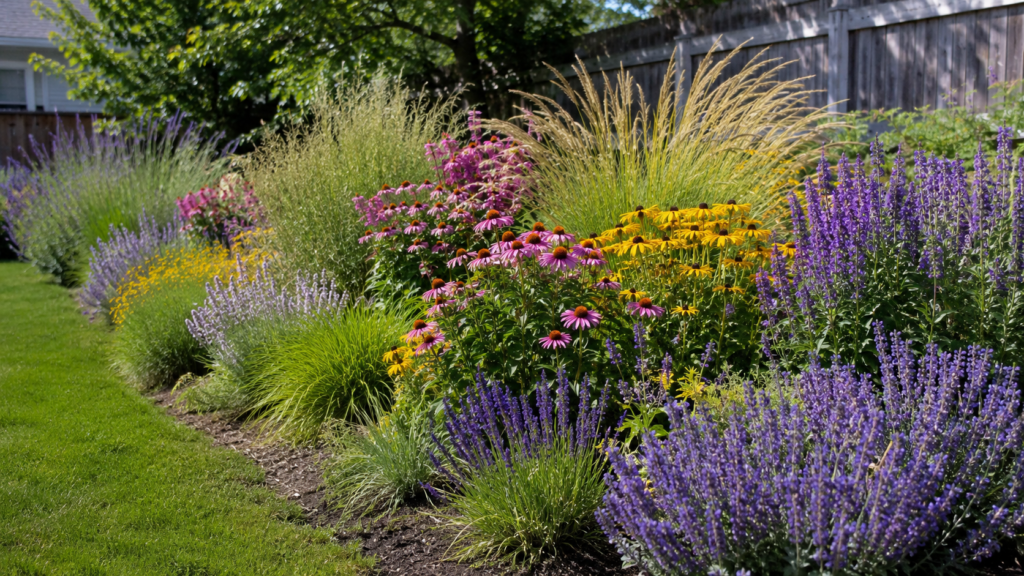
Long-lasting color comes from combining plants that provide interest at different times.
A useful sunny mix could include:
- Lavender
- Salvia
- Echinacea
- Rudbeckia
- Nepeta
- Coreopsis
- Hylotelephium
- Seasonal zinnias or marigolds
Do not depend entirely on flowers.
Heuchera foliage, ornamental grasses, evergreen shrubs, and seed heads can maintain interest when flowers fade.
Plan color by season, not by shopping trip.
Best Low-Maintenance Backyard Plants
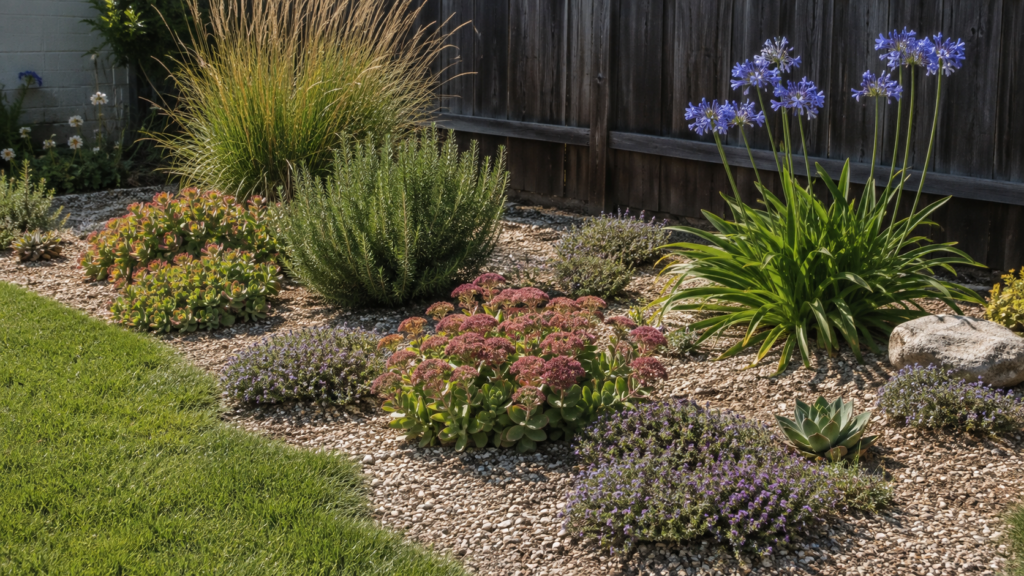
Low maintenance comes from compatibility, not from a plant label.
Useful options in suitable conditions include:
- Hylotelephium
- Creeping thyme
- Rosemary
- Nepeta
- Switchgrass
- Lavender
- Other locally adapted perennials
Drought-tolerant plants still need watering while establishing.
The lowest-maintenance planting usually groups plants with similar light, soil, and moisture needs rather than mixing plants requiring completely different care.
Backyard Plant Ideas by Garden Problem
| Problem | Start With |
|---|---|
| Year-round privacy | Evergreen hedge |
| Narrow privacy | Upright shrub or climber |
| Deep shade | Ferns and foliage plants |
| Moist shade | Astilbe, Hosta, suitable ferns |
| Dry shade | Locally proven dry-shade plants |
| Sunny dry border | Lavender, Salvia, thyme |
| Long-season color | Salvia, Nepeta, Echinacea, Rudbeckia |
| Fast seasonal color | Zinnia, marigold |
| Small patio | Containers |
| Warm vertical color | Bougainvillea |
| Low groundcover | Creeping thyme |
| Early shade color | Hellebore |
Start with the problem, identify the plant characteristic that solves it, then choose the locally suitable species.
Best Plants for Small Backyards
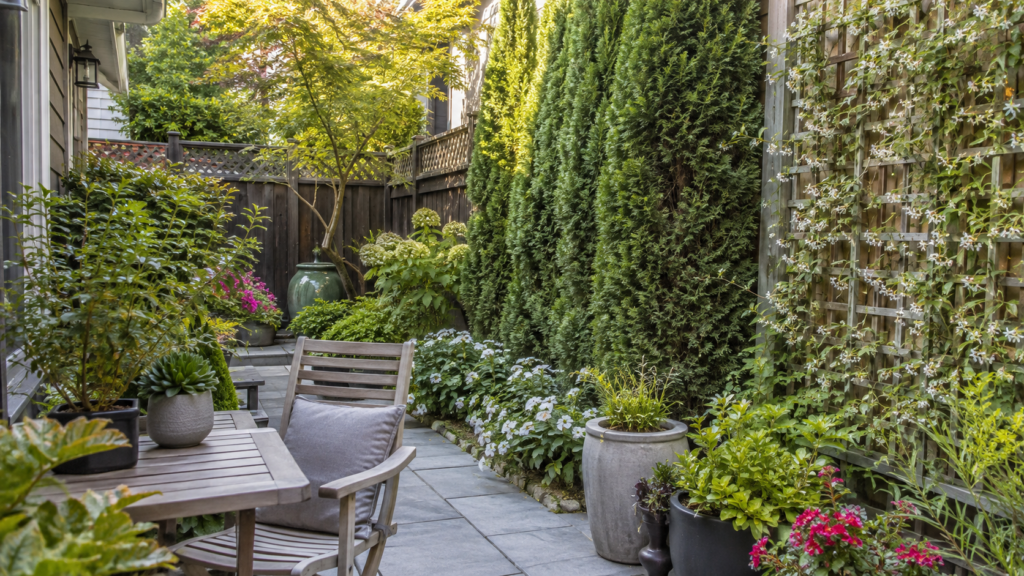
Small backyards benefit from plants that use vertical space efficiently.
Choose:
- Narrow evergreen shrubs
- Trellis climbers
- Compact cultivars
- Container plants
- Smaller perennials
Do not confuse small with short.
A 3 m (10 ft) plant that remains 60–90 cm (2–3 ft) wide may fit a narrow boundary better than a 1.5 m (5 ft) shrub that spreads 2.5 m (8 ft).
For small yards, measure width before height.
Best Plants Along a Backyard Fence
Fence plants should be selected according to planting depth, light, privacy needs, mature width, and future maintenance access.
Use broad shrubs where enough space exists.
For narrow boundaries, consider:
- Climbers
- Upright evergreen forms
- Trellises
- Compact shrubs
Leave enough room to repaint, repair, or replace the fence later.
Common Backyard Planting Mistakes
Avoid these common problems:
- Planting too close together
- Ignoring drainage
- Treating all shade as the same
- Choosing the fastest privacy plant without checking mature size
- Planting running bamboo without understanding its spread
- Assuming low maintenance means no maintenance
- Ignoring local invasive status
- Buying by nursery size instead of mature size
A plant that looks slightly small in year one can be perfectly spaced for year five.
What to Check Before Buying Plants
Before purchasing, confirm:
- Botanical name
- Cultivar
- Mature height
- Mature spread
- Light requirement
- Soil and drainage
- Water needs
- Climate tolerance
- Pruning requirements
- Structural support
- Invasive status
- Thorns
- Toxicity
- Distance from paths and structures
Important safety examples include:
Yew: toxic if ingested.
Podocarpus: check species-specific safety.
Bamboo: verify clumping or running habit.
Bougainvillea: many forms are thorny.
Sometimes the correct decision is to delay planting.
Wait if drainage remains unresolved, a fence needs replacing, major construction is planned, pet safety is uncertain, or the mature planting space has not been measured.
Ask:
Will I still want this plant here when it reaches full size?
How We Selected These 35 Plants
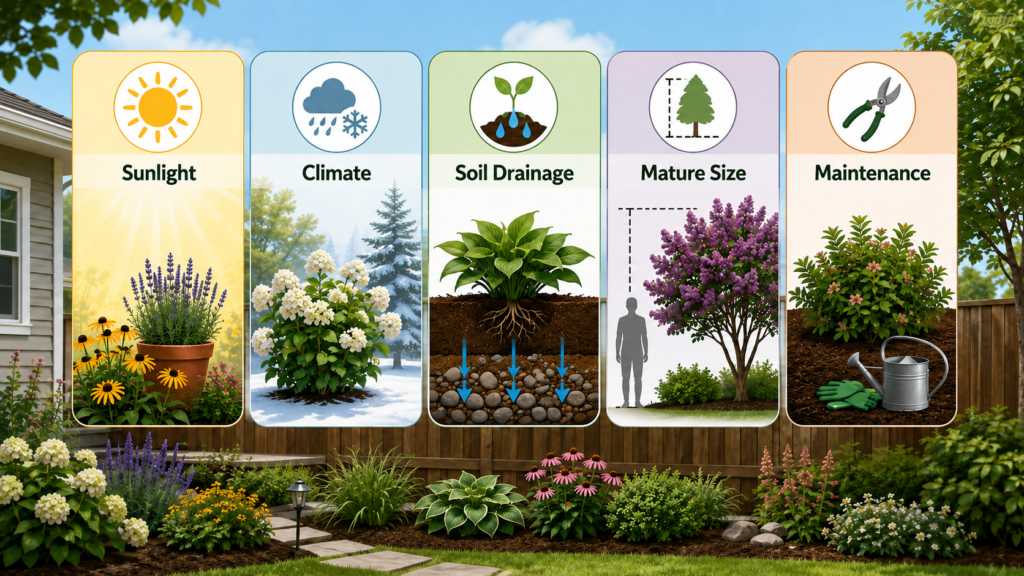
These plants were selected according to garden function rather than being ranked universally.
The main criteria were:
- Privacy potential
- Shade tolerance
- Color
- Easy care
- Light requirements
- Climate adaptability
- Drainage
- Mature size
- Container suitability
- Small-space usefulness
- Safety and invasive concerns
The Backyard Plant Fit Score is an editorial framework from Backyard Planter Ideas designed to help readers compare site compatibility before buying.
When genuine field data becomes available, this framework can be strengthened further with measured sunlight, bed dimensions, original photographs, and 30–90 day follow-up results.
Backyard Plant Ideas FAQs
What Are the Best Plants for a Backyard?
The best backyard plants match your sunlight, climate, soil, available space, and main goal. Privacy shrubs, shade plants, flowering perennials, and low-maintenance plants should be chosen for the conditions already present.
What Are the Best Plants for Backyard Privacy?
Yew, Thuja, holly, Viburnum, Pittosporum, Podocarpus, bamboo, and star jasmine can provide privacy in suitable climates. Compare mature height, width, light, and evergreen coverage.
What Are the Best Plants for a Shady Backyard?
Hosta, Heuchera, Brunnera, ferns, Hellebore, Aucuba, and suitable Hydrangeas are useful shade options. Always distinguish dry shade from moist shade.
What Are the Best Low-Maintenance Backyard Plants?
Hylotelephium, thyme, rosemary, Nepeta, lavender, and ornamental grasses can be relatively easy to maintain when their preferred conditions match the site.
What Are the Best Plants for a Small Backyard?
Use narrow shrubs, climbers, compact cultivars, and containers. Mature width is often more important than height in a small yard.
What Should I Plant Along a Backyard Fence?
Choose narrow evergreens, climbers, flowering shrubs, or mixed borders according to available width and privacy needs. Leave enough room for mature growth and fence maintenance.
What Are the Best Backyard Plants for Dry Conditions?
Lavender, rosemary, thyme, Salvia, Hylotelephium, and drought-adapted grasses are useful starting points for sunny, well-drained sites.
Is Bamboo Good for Backyard Privacy?
Clump-forming bamboo can provide fast narrow screening. Running bamboo can spread aggressively, so always identify the exact species and growth habit first.
How Far Apart Should Backyard Plants Be Spaced?
Base spacing mainly on mature spread rather than nursery size. Hedges can be planted for controlled overlap, while specimen shrubs generally need more natural space.
What Backyard Plants Are Best for Beginners?
Choose locally reliable plants suited to the site’s light, soil, and climate. Use fewer plant types, repeat successful choices, and avoid plants requiring constant intervention.
Final Backyard Planting Checklist
Before planting, confirm:
- The plant has a clear purpose
- Light requirements match
- Climate is suitable
- Drainage is appropriate
- Mature height fits
- Mature width fits
- Water needs are realistic
- Maintenance is acceptable
- Safety has been checked
- Invasive status has been checked
- Enough space remains for paths, fences, and neighboring plants
- A locally proven alternative has been considered
The best backyard plant ideas are not simply the plants with the brightest flowers or fastest growth. They are the plants whose purpose, mature size, light needs, climate tolerance, soil requirements, and maintenance level match the backyard where they will actually grow.
Myra is the founder and lead writer of Backyard Planter Ideas, where she shares practical, well-researched guidance on planter design, plant selection, and outdoor styling. Her goal is to help homeowners create attractive, functional garden spaces with clear, reliable, and easy-to-apply advice.