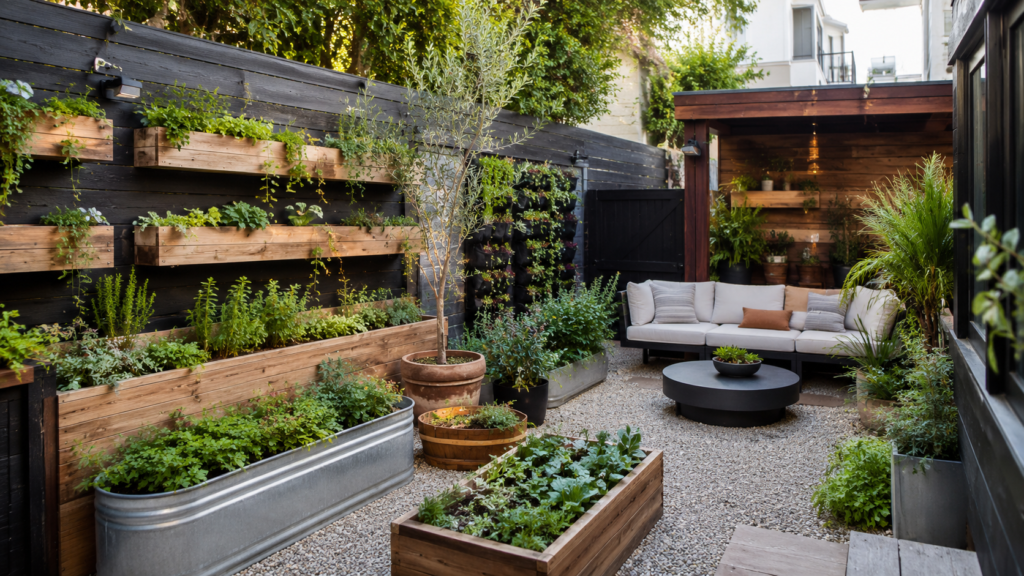
Backyard planter ideas no longer require expensive landscaping. Affordable containers, raised beds, and recycled materials can still create clean and functional patios. Small patios, narrow side yards, and limited outdoor areas can still feel attractive when planters are arranged carefully instead of scattered randomly.
Current gardening trends favor simple planting arrangements, raised beds, and vertical containers that maximize space while remaining easy to maintain. Even inexpensive containers can dramatically improve a yard when plant selection and material coordination work together properly.
Popular backyard planter trends include:
- Vertical gardening
- Raised beds
- Portable containers
- Recycled planters
- Minimalist patios
- Decorative herb gardens
This guide covers affordable planter ideas, material selection, small-space gardening, low-maintenance setups, and practical design strategies that help create attractive patios on a realistic budget.
Cheap Backyard Planter Ideas That Look Stylish
Cheap backyard planter ideas usually look best when arrangements remain simple instead of overcrowded. Coordinated materials and healthy plants usually matter more than budget. Simple materials like pallet wood, galvanized tubs, hanging baskets, concrete blocks, and raised beds can still create a clean outdoor appearance when colors and textures remain coordinated.
Small patios usually feel cleaner when containers remain simple and well spaced. Tall plants near fences add structure, while smaller pots soften patio edges.
Popular low-cost planter ideas include:
- Wooden pallet herb gardens
- Recycled crate planters
- Bucket vegetable gardens
- Hanging baskets
- Vertical ladder planters
- Galvanized tubs
- Grow bags
- Raised beds
Neutral planter colors such as cedar brown, black, and gray help patios feel cleaner and less crowded. Repeating similar planter materials also improves coordination.
Simple planting arrangements usually look cleaner and remain easier to maintain.
Backyard Planter Budget Guide
Backyard planter budgets vary depending on material quality, container size, and gardening goals. Many beginners overspend because they assume stylish patios require premium landscaping products, but carefully planned containers often create stronger results than overcrowded expensive designs.
Simple herb gardens built from recycled containers may cost under $25, while compact raised-bed setups with gravel pathways and hanging baskets often range between $75 and $200. Larger projects involving custom raised beds and irrigation systems can cost more, but attractive patios do not require major investments.
Typical planter budgets include:
- Under $25 → herb gardens and recycled containers
- $50–$100 → raised bed setups
- $100–$250 → patio gardens
- $250+ → premium landscaping features
Soil quality, drainage, sunlight exposure, and weather-resistant materials usually matter more than decorative accessories. Many experienced gardeners gradually expand their patios over time instead of purchasing everything at once.
Thin plastic containers often crack after weather exposure, while cedar and galvanized steel last much longer. Recycled materials such as crates, pallets, barrels, and metal tubs can also reduce costs while creating a more natural outdoor appearance.
Simple, sturdy containers generally provide better value than decorative products that require frequent replacement.
Best Cheap Outdoor Planter Materials
Planter materials directly affect durability, drainage, moisture retention, and overall appearance. Some inexpensive containers look affordable initially but deteriorate quickly after rain, sunlight, and seasonal weather exposure. Choosing better materials improves both plant health and maintenance efficiency.
Cedar wood remains one of the best affordable planter materials because it naturally resists moisture, insects, and decay. Cedar containers also pair well with gravel pathways, herbs, and minimalist patios. Galvanized steel remains another popular option because it tolerates harsh weather while supporting a cleaner industrial appearance.
The best outdoor planter materials include:
- Cedar wood
- Galvanized steel
- Concrete blocks
- Terracotta pots
- Grow bags
- Recycled barrels
Thin plastic pots trap heat, while grow bags improve airflow and drainage. Concrete planters remain highly durable but may appear too heavy in smaller patios.
Drainage remains critical regardless of container type. Containers without drainage holes often cause root rot and fungal growth. Many gardeners slightly elevate containers using gravel or planter feet to improve airflow underneath. Coordinated containers create a more cohesive patio design.
Best Planter Materials by Climate
Climate strongly affects how planter materials perform outdoors. Moisture, direct sunlight, freezing temperatures, and wind exposure constantly stress containers throughout the year. Some materials work well in dry climates but deteriorate quickly in humid regions.
Hot climates usually benefit from breathable containers that prevent roots from overheating. Fabric grow bags and lighter-colored pots often work especially well because they reduce heat buildup. Humid climates generally favor cedar and galvanized steel because they resist prolonged moisture exposure more effectively.
Best materials by climate include:
- Hot climates → breathable grow bags
- Rainy climates → cedar and galvanized steel
- Cold winters → freeze-resistant concrete
- Windy patios → heavier raised beds
- Dry climates → moisture-retaining containers
Winter freezing creates additional challenges because trapped water expands during freeze-thaw cycles. Thin plastic and terracotta pots frequently crack under these conditions, while cedar and reinforced concrete tolerate winter weather better.
Drainage also becomes more important during rainy seasons. Many gardeners improve drainage by elevating containers slightly above the ground. Wind exposure additionally affects stability, making heavier raised beds more practical for exposed patios and balconies.
Climate-appropriate containers usually last longer and reduce replacement costs.
How Vertical Planters Save Space
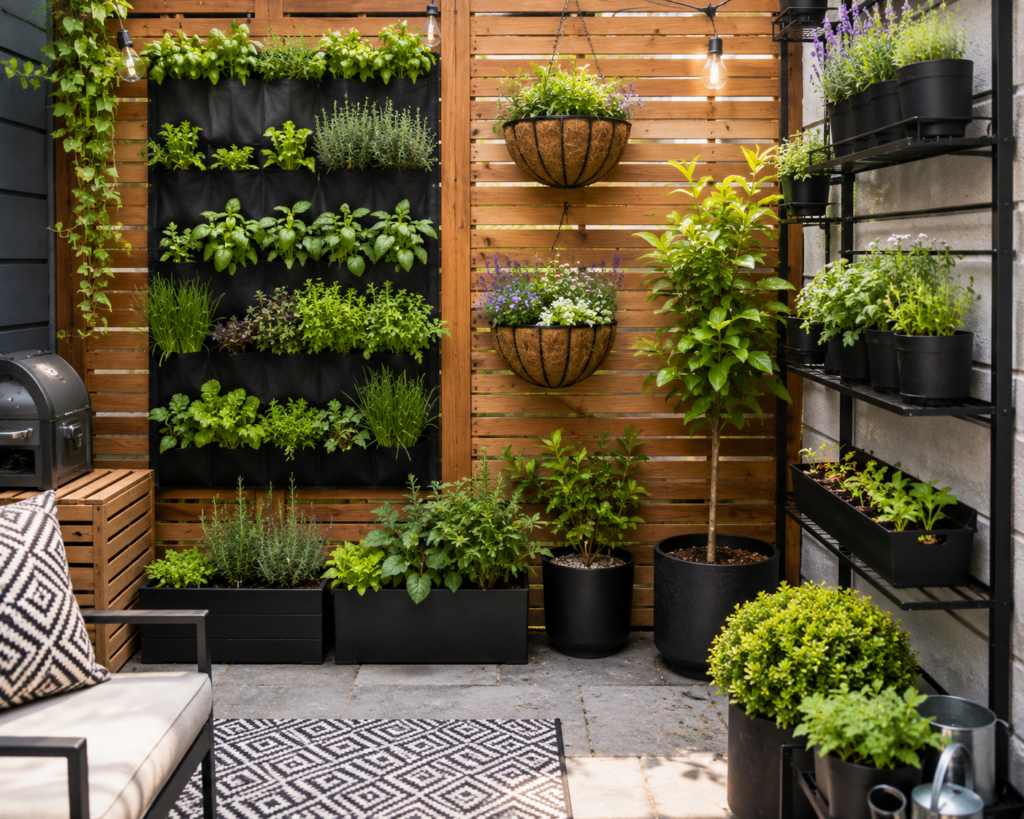
Vertical planters remain one of the best ways to maximize planting space without overcrowding patios. Instead of spreading containers across walkways, vertical gardening uses walls, shelves, fences, and hanging systems to grow upward. This preserves floor space while increasing planting capacity.
Small patios often rely on vertical gardening because ground space remains limited. Wall-mounted herb gardens, hanging baskets, and ladder shelves allow gardeners to use previously unused surfaces while keeping patios more open.
Popular vertical systems include:
- Wall herb gardens
- Hanging baskets
- Ladder shelves
- Fence planters
- Trellis supports
- Stackable towers
Vertical planting adds depth and improves visual interest in smaller patios. Many small backyard makeovers use fence-mounted planters and stacked shelves because they improve planting capacity without limiting movement.
Vertical systems simplify watering and harvesting, but overcrowding may reduce airflow and sunlight. Small patios generally feel larger when greenery grows upward instead of spreading across walking areas.
Are Raised Planters Worth It?
Raised planters cost more initially but improve drainage, soil quality, and maintenance. Many patios rely heavily on raised beds because they create cleaner planting boundaries while improving overall gardening performance.
Ground soil often contains weeds, clay, and drainage problems. Raised beds allow gardeners to fully control soil composition using nutrient-rich mixes that improve root growth and moisture balance.
Benefits of raised planters include:
- Better drainage
- Improved root growth
- Easier weed control
- Cleaner appearance
- Better organization
- Easier access
- Higher soil quality
Raised beds improve drainage and reduce maintenance work.
Budget-friendly raised beds are commonly built from:
- Reclaimed lumber
- Concrete blocks
- Galvanized steel
- Cedar boards
- Corrugated metal panels
Defined raised beds additionally separate gardening zones from seating areas and pathways, helping patios feel cleaner and more intentional.
Best Cheap Planters for Small Spaces
Small backyards require planters that maximize planting capacity without overcrowding the yard. Oversized containers often overwhelm narrow patios and make small areas feel cramped. The best low-cost planter ideas for compact spaces usually combine vertical gardening, portable containers, and corner planting.
Open floor space helps small yards feel larger. Many successful patio makeovers intentionally leave visible walkways between planting zones because open areas help patios feel larger and calmer. Hanging baskets and corner planters use unused areas without blocking walkways.
The most effective small-space planter ideas include:
- Vertical herb walls
- Hanging baskets
- Raised beds
- Stackable planters
- Grow bags
Tall plants add structure, while smaller containers soften patio edges without overcrowding the yard. Portable containers work well in small patios because they can move easily based on sunlight and seasonal use. Small outdoor areas usually work best when gardeners focus on coordinated materials and practical arrangements instead of maximum planting density.
How Planters Make Small Yards Look Bigger
Small backyards often feel larger when planters improve structure instead of overcrowding the yard. Many gardeners assume adding more greenery automatically improves compact patios, but excessive containers usually reduce openness. Successful small-yard designs rely more on smart placement and simplified planting.
Vertical gardening remains one of the strongest space-saving strategies because it moves greenery upward while preserving floor space. Hanging baskets, fence planters, and wall herb gardens create more depth without blocking walking areas.
The best small-yard planter strategies include:
- Vertical herb walls
- Hanging baskets
- Railing planters
- Gravel pathways
- Corner planters
- Light-colored containers
Light-colored containers such as white, gray, and cedar tones also help patios feel brighter and more open. Repeating planter materials appear more polished.
Furniture size additionally affects how spacious a patio feels. Oversized seating paired with large decorative containers can quickly overwhelm narrow spaces. Many successful small-yard makeovers improve dramatically after reducing unnecessary décor and simplifying planting arrangements.
Compact patios usually perform best when containers remain proportional to the available space.
Can Recycled Backyard Planters Still Look Modern?
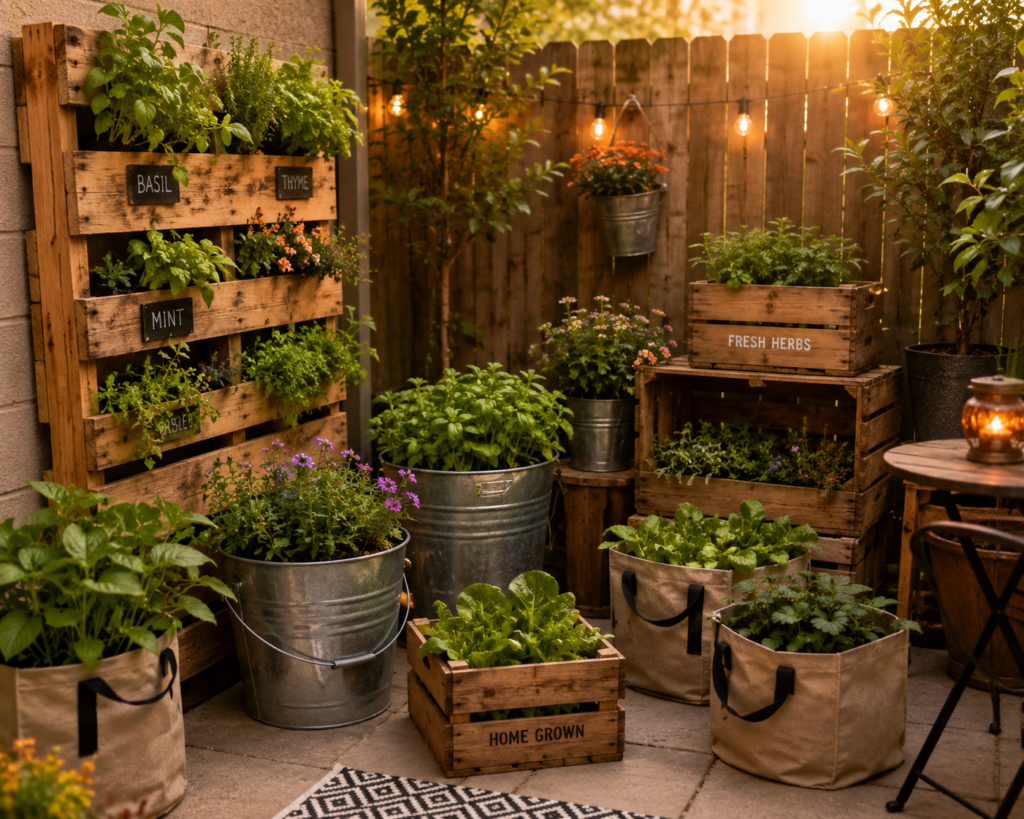
Recycled planters can still look clean and attractive when materials and colors remain coordinated. Many patios now use reclaimed wood, galvanized containers, recycled barrels, and repurposed crates because these materials create character without requiring large landscaping budgets.
Excessive variation is the biggest mistake with recycled containers. Random colors, shapes, and materials often create a messy appearance instead of a balanced patio design. Repeating similar materials throughout the yard usually creates a cleaner result.
Popular recycled planter ideas include:
- Wooden crate gardens
- Reclaimed pallet herb walls
- Galvanized tubs
- Recycled barrels
- Repurposed drawers
- Metal buckets
Neutral tones such as cedar brown, black, and gray help recycled planters feel cleaner and more coordinated.
Drainage also remains important when repurposing containers. Many gardeners drill drainage holes and elevate recycled planters slightly above the ground to improve airflow and moisture control.
Small patio transformations often look far better after simplifying recycled planter arrangements instead of adding excessive decorative items.
Best Planter Styles for Every Backyard
Different planter styles work better with specific patio themes because planter shapes, materials, and textures strongly affect the overall atmosphere. Minimalist patios often rely on clean lines and neutral colors, while rustic gardens usually favor reclaimed wood and terracotta containers.
Matching planter styles with patio design creates a cleaner overall appearance. Modern patios frequently combine black containers, concrete textures, and geometric planters with simple outdoor furniture. Rustic patios often use wood planters, galvanized tubs, and natural greenery for a softer look.
Popular planter styles include:
- Modern → black metal and concrete
- Rustic → reclaimed wood and barrels
- Boho → hanging greenery
- Industrial → galvanized steel
- Mediterranean → terracotta and herbs
- Farmhouse → cedar wood and white pots
Mediterranean patios favor terracotta and herbs, while industrial styles often use galvanized steel and dark frames.
Patios usually look cleaner with fewer material variations. Repeating planter shapes and colors generally creates a more balanced design than mixing unrelated styles throughout the yard.
What Plants Grow Best in Cheap Backyard Planters?
Plant selection strongly affects the success of backyard planters because some species adapt to containers far better than others. Herbs remain among the easiest choices because they tolerate smaller root zones while growing quickly in compact containers.
Basil, mint, parsley, oregano, thyme, and chives all grow especially well in raised beds and small pots. Vegetables and flowers also perform successfully when sunlight exposure and container depth match plant requirements.
Plants that grow well in backyard planters include:
- Basil
- Mint
- Lettuce
- Tomatoes
- Kale
- Peppers
- Lavender
- Marigolds
- Succulents
Lavender, petunias, and marigolds add color while attracting pollinators to container gardens.
Sunlight strongly affects container gardening success. Most vegetables require at least six hours of direct sunlight daily, while shade-tolerant plants adapt better to covered patios and narrow side yards.
Low-maintenance plant combinations usually create stronger long-term results because they remain easier to manage throughout changing seasons.
Backyard Planter Layout Ideas
Planter arrangement strongly affects patio appearance. Even inexpensive planters can look professionally arranged when height variation, focal points, and coordinated materials work together properly. Many attractive patios rely more on clean planting arrangements than expensive landscaping features.
Tall plants placed near fences create background structure, medium containers help separate seating areas, and smaller pots soften patio edges. Repeating planter materials throughout the yard also helps patios feel cleaner and more intentional.
Strong planter arrangements often include:
- Mixed plant heights
- Open walkways
- Repeated planter materials
- Focal-point containers
- Corner greenery
- Defined seating zones
Many gardeners combine planters with gravel pathways, wood accents, and outdoor lighting to improve patio structure. Defined planting zones separate seating areas from gardens without permanent hardscaping.
| Layout Type | Best For | Space Size |
| Vertical wall | Small patios | Compact |
| Raised beds | Vegetables | Medium |
| Hanging baskets | Flowers | Small |
| Tiered shelves | Herbs | Compact |
| Corner planters | Unused spaces | Tiny |
Many patios look better after simplifying overcrowded container arrangements. Simple planting arrangements usually create stronger results than excessive decorative setups.
Mistakes That Make Planters Look Cluttered
Cheap backyard planters often look cluttered when too many colors, materials, or container styles compete within the same patio. Many gardeners overcrowd walkways because they focus on adding more plants instead of improving structure.
One of the most common mistakes involves mixing unrelated planter styles together without coordination. Bright plastic pots beside rustic wood containers and industrial metal tubs can quickly create a disorganized appearance. Oversized containers also overwhelm narrow patios and reduce usable floor space.
The most common planter mistakes include:
- Too many planter styles
- Overcrowded walkways
- Poor drainage
- Random color palettes
- Oversized containers
- Weak sunlight placement
- Excess décor
Poor drainage damages both appearance and plant health. Standing water damages roots while making containers appear neglected. Many gardeners elevate containers slightly above the ground using gravel or planter feet to improve airflow underneath. Small patios usually improve after simplifying plant arrangements.
Best Beginner Backyard Planter Setup
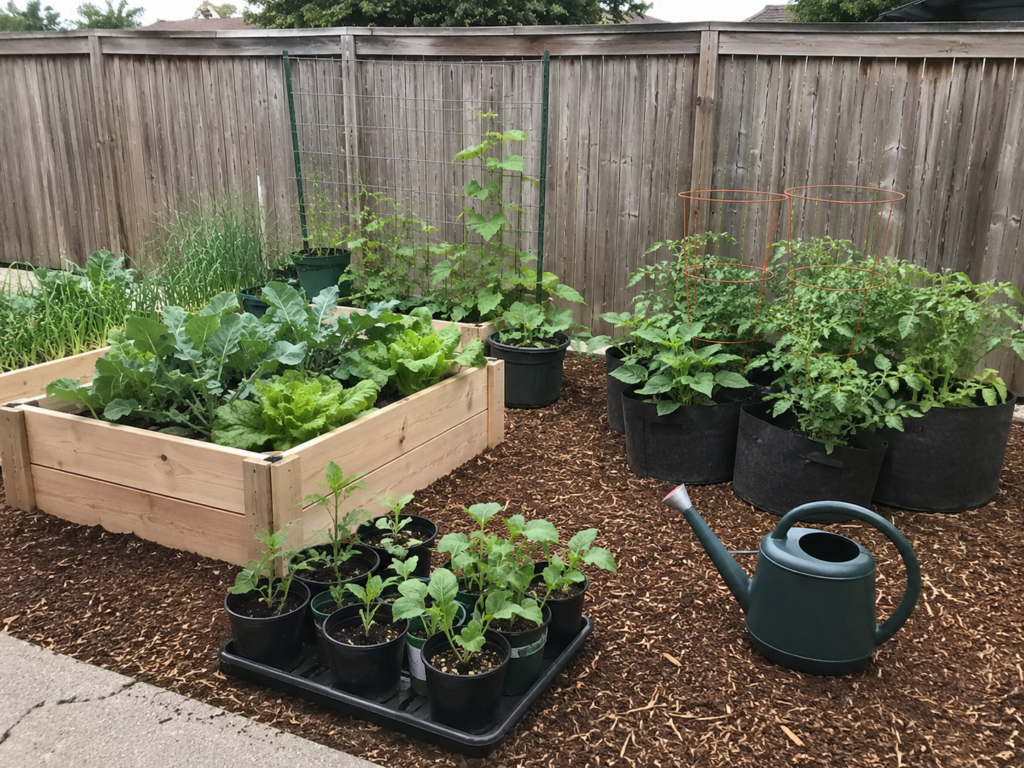
Beginners usually succeed faster when starting with simple container gardens instead of large complicated patio projects. A small setup using a few containers, one vertical herb planter, and easy plants allows new gardeners to learn watering, drainage, and sunlight management without becoming overwhelmed.
Beginner gardens work best with low-maintenance plants, lightweight soil, and proper drainage. Herbs and leafy greens usually provide the fastest rewards because they tolerate beginner mistakes better than delicate ornamental plants.
A strong beginner setup includes:
- One herb planter
- Two medium containers
- Potting soil
- Drainage gravel
- Easy herbs and flowers
- Basic watering tools
Common beginner mistakes include overwatering, overcrowding containers, poor drainage, and choosing difficult plants too early. Dense garden soil usually performs poorly in containers because it traps excessive moisture around roots.
Beginner-friendly plants include:
- Basil
- Mint
- Lettuce
- Parsley
- Marigolds
- Lavender
Portable containers help beginners adjust plant placement as sunlight changes throughout the season.
Smaller successful setups usually create better long-term gardening habits than oversized projects that become difficult to maintain.
Lowest-Maintenance Backyard Planters
Low-maintenance planters usually combine durable materials, proper drainage, drought-tolerant plants, and simple watering routines. Most setups work better with patios that remain easy to maintain throughout the week.
Self-watering containers remain one of the best low-maintenance options because they reduce watering frequency while stabilizing soil moisture. Raised beds with mulch layers also help retain water while reducing weeds.
The lowest-maintenance planter setups include:
- Self-watering containers
- Mulched raised beds
- Grow bags
- Drip irrigation systems
- Drought-tolerant herbs
- Native flowering plants
Lavender, rosemary, succulents, and ornamental grasses generally require far less maintenance than delicate flowering species. Grouping plants with similar watering needs simplifies maintenance and reduces overwatering.
Low-maintenance patios usually rely on:
- Native plants
- Mulch retention
- Minimal décor
- Durable containers
- Simple watering systems
Simpler patios usually remain healthier because they are easier to maintain consistently.
Sustainable backyard gardening usually depends more on consistency and realistic maintenance than complicated decorative landscaping.
Are Portable Planters Better for Renters?
Portable planters work well for renters because they require no permanent landscaping changes. Lightweight containers, grow bags, rolling planters, and vertical shelves can move easily between patios, balconies, and rental properties while still creating attractive garden setups.
Grow bags remain popular because they are lightweight, breathable, and easy to store. Stackable systems also maximize planting capacity in compact rental patios where floor space remains limited.
The best portable planter options for renters include:
- Grow bags
- Rolling planter boxes
- Lightweight containers
- Stackable planters
- Herb shelves
- Hanging railing planters
Portable containers work well for apartment patios because they can move easily without damaging surfaces.
Renter-friendly patio gardens usually focus on:
- Vertical planting
- Portable containers
- Lightweight materials
- Easy rearrangement
- Minimal installation
Movable planters additionally help renters experiment with patio arrangements before investing heavily in larger permanent gardens later.
Portable container gardens remain ideal for changing rental spaces and patio sizes.
Final Thoughts
Cheap backyard planter ideas can transform small patios and gardens without requiring expensive landscaping projects. Simple planning, weather-resistant materials, and efficient use of limited space usually create better results than overcrowded decorative setups. Cedar wood, galvanized steel, raised beds, and recycled containers remain some of the most reliable low-cost options because they balance affordability with durability.
Small yards often perform best when gardeners focus on practical container placement instead of excessive decoration. Raised beds, compact containers, and simple planting arrangements help maximize usable space while keeping patios easier to maintain. Choosing sturdy materials also reduces replacement costs and improves long-term gardening value.
Affordable backyard gardening works best when patios remain simple and easy to maintain. Even basic containers can create a productive setup when durability and space efficiency remain the priority.
FAQs
What are the cheapest backyard planter ideas for beginners?
Bucket gardens, pallet herb walls, grow bags, and simple raised beds are some of the cheapest planter ideas for beginners. These setups are affordable, easy to maintain, and work especially well in small patios.
How can I make cheap backyard planters look modern?
Cheap planters look cleaner when colors and materials remain coordinated. Neutral containers, vertical planting, and simplified arrangements usually create a more refined patio appearance.
Which planter materials last the longest outdoors?
Cedar wood, galvanized steel, concrete, and high-quality resin containers usually last the longest outdoors because they tolerate weather exposure better than thin plastic pots.
Are raised backyard planters worth the cost?
Raised planters improve drainage, soil quality, accessibility, and weed control while creating cleaner planting zones with stronger long-term durability.
How do vertical backyard planters save space?
Vertical planters grow upward instead of spreading across patios and walkways. Wall-mounted systems and stacked containers maximize planting capacity in small yards.
Which backyard planter ideas work best for small spaces?
Vertical herb gardens, hanging baskets, railing planters, and stackable containers work especially well in compact patios because they maximize planting without overcrowding the yard.
What mistakes make backyard planters look cluttered?
Too many planter styles, oversized containers, poor spacing, and random colors often make patios feel overcrowded. Simpler arrangements usually create cleaner results.
What is the best low-maintenance backyard planter setup?
Raised beds, self-watering containers, mulch layers, and drought-tolerant plants create the best low-maintenance planter setup because they reduce watering and upkeep.
Are portable backyard planters better for renters?
Portable planters work well for renters because they do not require permanent landscaping changes. Grow bags and lightweight containers remain especially flexible and easy to move.
How do I make a small backyard feel bigger with planters?
Small patios feel larger when planters use vertical space and maintain open walkways. Coordinated containers and simplified arrangements also help reduce overcrowding.
Myra is the founder and lead writer of Backyard Planter Ideas, where she shares practical, well-researched guidance on planter design, plant selection, and outdoor styling. Her goal is to help homeowners create attractive, functional garden spaces with clear, reliable, and easy-to-apply advice.